Ruminations

Blog dedicated primarily to randomly selected news items; comments reflecting personal perceptions

Tuesday, December 28, 2021

The Ageism-Gendered Gap

"Everyone started this pandemic saying COVID doesn't discriminate. It absolutely does. And it preys on every societal vulnerability we have ... biological and social, in particular."
"Older women are much more likely to be living in poverty -- and women outlive men. We know the greatest at-risk older population are older single women as they are disproportionately poorer. And those who are racialized are hit the hardest."
Dr.Samir Sinha, geriatrician, co-chair, National Institute on Ageing, Ryerson University 
Coney Island Resturant
In Brooklyn, N.Y., a cafe on the Coney Island boardwalk draws people of all ages, soaking up the sun in the pandemic, October 2020. Ageism, a new study finds, is “prevalent, ubiquitous and insidious” and not getting enough global attention.  JOHN PENNEY
 
According to geriatrician Dr.Paula Rochon, founding director of the Women's Age Lab at Women's College Hospital, Toronto, the global pandemic has highlighted inequities already in society. For example, poverty and pension gaps for older women, making them more reliant on underfunded social services like long-term care.

Over 47 percent of women over age 90 live in collective housing like nursing homes, in comparison with 33.3 percent of men in similar living arrangements, according to Statistics Canada. And while 33.2 percent of men in their 90s live as part of a couple, only 4.3 percent of women do. There are complexities leading to this situation, where women are likelier to become caregivers, first to children and then to older family members.

They may, as a result of these biological, social commitments, spend less time in the paid workforce and thus earn less and therefore become less likely to end up with a well-funded retirement. Women tend to live longer and since they tend as well to marry men slightly older than themselves, their future brings them a longer period of time alone.

Women receive 26 percent less in annual pension payments than men in the 38-member countries of the Organization for Economic Co-operation and Development. In Canada, poverty rates for older women register close to 1.5 times that of men, increasing with age. Sometimes women are more likely to require long-term care than men simply as a result of being unable to afford home care.
 
 
2021 to 2030 has been declared by the United Nations as the "decade of healthy aging". The World Health Organization earlier this year announced that the pandemic response has had the effect of revealing the extent of ageism leading to poorer health outcomes, isolation and ultimately premature death ... accompanying billions in socio-economic costs.

It is in fact, both because of their age and their gender that women face the double curse of "gendered ageism". "It's not just about aging or about women, but the intersection of the two", explains Dr. Rochon. Early in the pandemic's onset women in Canada faced greater risk factors for developing COVID-19 since two of three long-term care residents are women and the vast majority of health-care workers are themselves female.

On the other hand, as the pandemic continued, rates of infection,  hospitalization and death were steeper for men.  Slightly over half of all pandemic deaths have been male in Ontario. In Ontario, over 2,000 men between ages 60 and 79 died, in comparison to about 1,200 women in the same age group. Likely because men may also have taken more risks in precautionary mask wearing. Men are also known to be more likely to smoke leading to chronic conditions that leave them more vulnerable.

Older men and women have different risk factors for loneliness and social isolation, other syndromes the conditions arising from pandemic challenges has revealed. Those people who experience loneliness are more likely to seek out medical services. A key gap in medical knowledge is whether older women and men bear unique risk factors for loneliness.

"It's important to know how gender affects risk, because that affects potential treatments", explained epidemiologist Rachel Savage, a scientist with the Women's Age Lab, in acknowledging that contributors to loneliness include widowhood and declining health, conditions seemingly equal for both older men and women. "And lastly, women may just be more candid about being lonely. It may be more of a matter of how we ask the question", said Dr.Savage.

Only three of the ten countries with the highest number of COVID deaths -- Italy, Spain and Germany -- kept data by gender, and none of the ten countries reported a gender breakdown of deaths in long-term care homes, pointed out Dr.Savage.
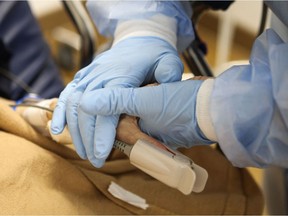
The COVID-19 pandemic has underlined the inequities faced by older women, say researchers.

Labels: , , , , ,

Wednesday, December 01, 2021

The TRIPS Waiver -- In The Round

"Back in March, the president of Tanzania, John Magufuli, died, very likely due to complications from COVID-19. Ironically, the autocratic ruler of the east African nation had been a staunch COVID-19 denier, refusing to vaccinate his country’s population and instead recommending traditional cures and prayer."
"Tanzania is by no means a basket case, nor is it embroiled in civil war, as some other African countries are, and it has a relatively high literacy rate of 77 per cent. Yet, at present, only 1.5 per cent of Tanzanians are fully vaccinated. Their former leader routinely refused offers of vaccine doses for his country, only grudgingly accepting that COVID-19 was a reality shortly before his own death."
"No sensible observer would say that Tanzania’s low vaccination rate is due to “global vaccine inequity,” yet many advocates for global social justice would have you believe that the large disparity in vaccination rates around the world is driven by hoarding in the global north, thus making doses unavailable in the global south. The Tanzania case and others like it disprove this simplistic narrative."
Rupa Subramanya, National Post
A health-care worker administers the Johnson & Johnson vaccine to a woman in Soweto, South Africa, on Nov. 1.
"[The patent waiver would remove one barrier to] more companies being able to produce more vaccine doses in different parts of the world which should lead to greater availability of doses and greater access to them."
"All along, we and many other public health experts have been saying that it is absolutely essential that the world scales out access to COVID vaccine."
"[Both because it is the] morally correct thing to do [and because when it comes to public health] we know that vaccinating people helps to reduce transmission, and that should decrease the chances of the variants emerging from an unvaccinated unprotected population."
Jason Nickerson, humanitarian adviser to Canada, Doctors Without Borders
Pic:getty/olivierlemoal
Getty, OlivierLemoal

The World Health Organization is fond of excoriating the wealthy nations of the world for its selfish behaviour in focusing on inoculating their populations against the SARS-CoV-2 virus, insisting that the stock of vaccines available must be shared. The sharing program, COVAX, set up by the WHO as a method of equalization to be administered by the UN health body accepts donations from wealthy countries both in cash and kind. It also permits those countries to draw from its store of vaccines when needed, even while what it stockpiles is meant to be distributed among the less-advantaged nations of the world.

WHO director-general Tedros Adhanom Ghebreyesus has nagged first-world countries to forestall administering third, or 'booster' doses to address the issue of waning vaccine potency over time, in favour of sending those 'extra' doses to Africa and India. Now that a problematical COVID strain has been identified in South Africa that is rapidly spreading around the world, given its high transmissibility rate, and as-yet unknown virulence, the world community is anxiously awaiting word on what its outcome may spell.
 
After a recent meeting of the World Trade Organization it announced "members expressed unanimous support for maintaining the momentum of the discussions on a common intellectual property response to COVID", referring to a proposal by India and South Africa requesting a patent waiver for COVID vaccines to enable them to produce the vaccines to serve their public, bypassing the pharmaceutical companies' distribution and sales in reflection of a formula they created, patented, and have financially gained from.

In Canada, South African High Commissioner Sibongiseni Diamini-Mntambo spoke to The Canadian Press, stating that the Omicron variant emerged in South Africa as a direct result of vaccine inequality, emphasizing that in South Africa, less than a quarter of the population is fully vaccinated. Any who fail to support a patent waiver, she averred, would "rather protect the profits of pharmaceutical companies than help in the global battle against the pandemic".

"I call on the nations gathering next week for the World Trade Organization ministerial meeting to meet the U.S. challenge to waive intellectual property protections for COVID vaccines, so these vaccines can be manufactured globally", U.S. President Joe Biden said prior to the WTO meeting. The Council for Trade-Related Aspects of Intellectual Property Rights took on the issue. "Members expressed unanimous support for maintaining the momentum of the discussions on a common intellectual property (IP) response to COVID-19".

"[Delegations are] committed to continue engaging in various configurations in the coming weeks to try and harvest any outcome that may still be possible." 
 
In the Canadian House of Commons, a letter was circulated signed by Members of Parliament representing all parties; an open letter calling on support for the waiver: "Opponents of the waiver proposal argue that patent monopolies are necessary to allow firms to recover their investments in research and development. However, given that COVID-19 vaccine development was primarily financed through public investment and advanced market commitments, we strongly believe this justification does not apply."
 
According to the details examined, appraised and published by Rupa Subramanya, vaccine hesitation among populations, alongside denial of COVID threats manifest as one of the reasons for low vaccination rates in India and Africa. Where South Africa, the epicentre of the Omicron variant had a stockpile of vaccine doses it was unable to administer since vaccine hesitancy resulted in a slow rollout. At that juncture, South Africa postponed delivery of new Johnson & Jonson and Pfizer vaccines in a country where distrust of vaccines is nothing new.
 
She points out that Europe, particularly Austria, Germany and Switzerland are struggling with a fourth wave that has devastated their populations and their hospitals' ability to cope. Since the advent of vaccines, Austria has distinguished itself for, out of desperation, being the first developed country to fully lock down. Those three countries are among the wealthiest in the world and though they possess more than ample vaccine doses, they are also reflective of a high degree of vaccine hesitancy among their populations, resulting in low vaccination rates.
 
Not vaccine inequity, but the results of vaccine hesitancy, a situation reflective of that which pertains to the poor countries where the West is being informed their performance in protection of their populations is one of selfish disregard for the well-being of others on the planet without their wealth and accessibility to vaccines.  Two days ago it was announced that the White House spokesperson revealed that South Africa turned down an offer by the US to provide it with additional COVID-19 vaccines.
 
jen psaki
White House Press Secretary Jen Psaki speaks during a daily news briefing at the James S. Brady Press Briefing Room of the White House November 19, 2021.
Alex Wong/Getty Images
 

Labels: , , , , , ,

 
()() Follow @rheytah Tweet