Blog dedicated primarily to randomly selected news items; comments reflecting personal perceptions
Tuesday, December 28, 2021
The Ageism-Gendered Gap
"Everyone started this pandemic saying COVID doesn't discriminate. It absolutely does. And it preys on every societal vulnerability we have ... biological and social, in particular."
"Older women are much more likely to be living in poverty -- and women outlive men. We know the greatest at-risk older population are older single women as they are disproportionately poorer. And those who are racialized are hit the hardest."
Dr.Samir Sinha, geriatrician, co-chair, National Institute on Ageing, Ryerson University
In Brooklyn, N.Y., a cafe on the Coney Island boardwalk draws people
of all ages, soaking up the sun in the pandemic, October 2020. Ageism, a
new study finds, is “prevalent, ubiquitous and insidious” and not
getting enough global attention. JOHN PENNEY
According to geriatrician Dr.Paula Rochon, founding director of the Women's Age Lab at Women's College Hospital, Toronto, the global pandemic has highlighted inequities already in society. For example, poverty and pension gaps for older women, making them more reliant on underfunded social services like long-term care.
Over 47 percent of women over age 90 live in collective housing like nursing homes, in comparison with 33.3 percent of men in similar living arrangements, according to Statistics Canada. And while 33.2 percent of men in their 90s live as part of a couple, only 4.3 percent of women do. There are complexities leading to this situation, where women are likelier to become caregivers, first to children and then to older family members.
They may, as a result of these biological, social commitments, spend less time in the paid workforce and thus earn less and therefore become less likely to end up with a well-funded retirement. Women tend to live longer and since they tend as well to marry men slightly older than themselves, their future brings them a longer period of time alone.
Women receive 26 percent less in annual pension payments than men in the 38-member countries of the Organization for Economic Co-operation and Development. In Canada, poverty rates for older women register close to 1.5 times that of men, increasing with age. Sometimes women are more likely to require long-term care than men simply as a result of being unable to afford home care.
2021 to 2030 has been declared by the United Nations as the "decade of healthy aging". The World Health Organization earlier this year announced that the pandemic response has had the effect of revealing the extent of ageism leading to poorer health outcomes, isolation and ultimately premature death ... accompanying billions in socio-economic costs.
It is in fact, both because of their age and their gender that women face the double curse of "gendered ageism". "It's not just about aging or about women, but the intersection of the two", explains Dr. Rochon. Early in the pandemic's onset women in Canada faced greater risk factors for developing COVID-19 since two of three long-term care residents are women and the vast majority of health-care workers are themselves female.
On the other hand, as the pandemic continued, rates of infection, hospitalization and death were steeper for men. Slightly over half of all pandemic deaths have been male in Ontario. In Ontario, over 2,000 men between ages 60 and 79 died, in comparison to about 1,200 women in the same age group. Likely because men may also have taken more risks in precautionary mask wearing. Men are also known to be more likely to smoke leading to chronic conditions that leave them more vulnerable.
Older men and women have different risk factors for loneliness and social isolation, other syndromes the conditions arising from pandemic challenges has revealed. Those people who experience loneliness are more likely to seek out medical services. A key gap in medical knowledge is whether older women and men bear unique risk factors for loneliness.
"It's important to know how gender affects risk, because that affects potential treatments", explained epidemiologist Rachel Savage, a scientist with the Women's Age Lab, in acknowledging that contributors to loneliness include widowhood and declining health, conditions seemingly equal for both older men and women. "And lastly, women may just be more candid about being lonely. It may be more of a matter of how we ask the question", said Dr.Savage.
Only three of the ten countries with the highest number of COVID deaths -- Italy, Spain and Germany -- kept data by gender, and none of the ten countries reported a gender breakdown of deaths in long-term care homes, pointed out Dr.Savage.

The COVID-19 pandemic has underlined the inequities faced by older women, say researchers. Photo by PASCAL POCHARD-CASABIANCA /AFP via Getty Images
A worker
packages marijuana-infused chocolate bars at Kiva Confections in
Oakland, California. In Canada edible marijuana products must not be
“appealing to kids” and cannot be manufactured in the same facility
where regular food products are made.Photo by Justin Sullivan/Getty Images
"[It isn't clear whether sweets and gummies alter the addictive potential of cannabis], but if it gets people using products at a younger age, that creates a situation of greater risk of addiction."
"[Roughly nine percent of those using marijuana will end up dependent on it, a number that rises to about 17 percent for those who begin using in their teen years]."
Susan Weiss, director of research, National Institute on Drug Abuse
"In states where marijuana is legal, pot comes in cookies,
mints, gummies, protein bars — even pretzels. These commercial products
are labelled with the amount of high-inducing THC. That helps medical
marijuana patients get the desired dose and other consumers attune their
buzz. But
something about chocolate, chemists say, seems to interfere with potency
testing. A chocolate labelled as 10 milligrams of THC could have far
more and send someone to the emergency room with hallucinations. "The chocolate itself is affecting our ability to measure the
cannabinoids within it," said David Dawson, chemist and lead researcher
at CW Analytical Laboratories in Oakland, Calif., which tests marijuana."CBC
Marijuana brownie, demonstration in front of Mexican Senate building. (Yuri Cortez/AFP/Getty Images)
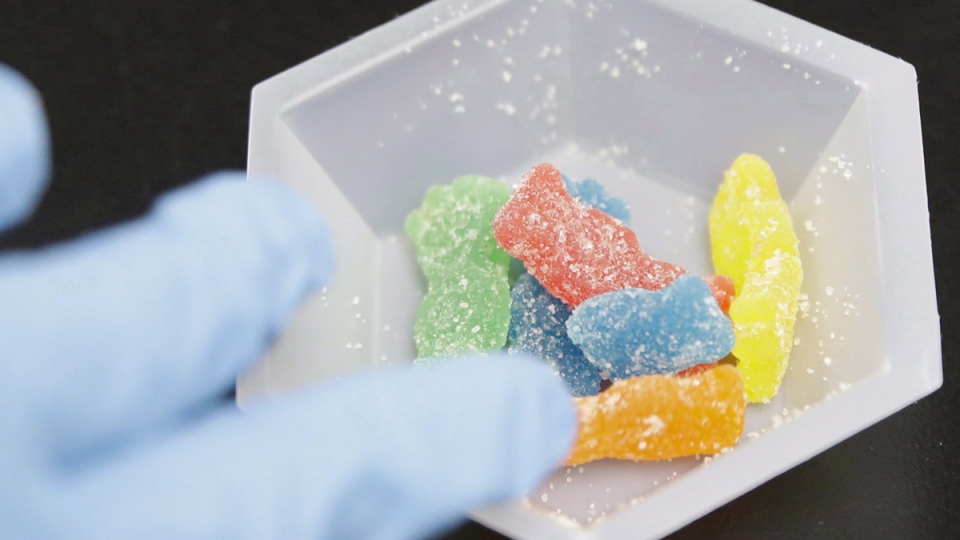
Fruit-flavoured THC 'pearls' are heading into the fall market for edible marijuana and they come with a #highforhalloween hashtag. Another edibles producer advertises a 'Scary Savings' promotion on CBD chocolates. These new seasonal promotions simply are the product of a maturing market, just like any other consumer products being advertised in promotional material geared to take consumers' attention that something new and exciting is being brought to the retail market.
Colours, shapes, flavours, what's not to like? Well, that old cautionary tale that what is available for adults holds an appealing attraction for younger people for whom the product is not meant, for health and development reasons. And, after all, the younger generation -- among whom many will go to any lengths to acquire what is denied them because if it's attractive to adults, it's irresistible to juveniles -- will in all likelihood come to harm resulting from their adventurism.
An increasingly wider variety of products are being produced in the marijuana industry with cannabis edibles in enticingly larger distribution of attractive new shapes, tastes and strengths, seductive to pot lovers. According to tracking industry data, there are reliable estimates that edibles in the United States saw sales rise 80 percent over the past two years.
Gummies, now intriguingly available in bear shapes, rainbow colours and flavours ranging from raspberry-lemonade to exotic Hawaiian fruits, are particularly well placed on consumers' shopping lists. Geared for consumption to buyers 21 and over, alarm bells are ringing that just as the vaping industry ended up attracting under-age users with their development of fruity flavours, a similar situation is on its way to reality with candy-shaped-and-tasting marijuana.
The U.S. Food and Drug Administration has yet to decide which category cannabis should fall into; a food or a dietary supplement. Companies for the present, discuss how difficult it is to get their dosing just right with cannabis edibles. According to Susan Weiss, a director of research at the National Institute on Drug Abuse, an increasing incidence of accidental cannabis overdoses is worrying, among children in particular.
Edible marijuana samples Santa Ana, Calif. (Chris Carlson /CP/AP)
Of the colourful, flavourful new edibles, the most enthusiastic and largest group of users are those in the age 18 to 25 range, viewed as a critical time for neural development that may be affected by cannabis use. Around nine percent of people using marijuana will become dependent on it, a figure that rises to around 17 percent in those who begin using in their teens.
According to Daniel Fabricant, CEO of the Natural Products Association, former director of Dietary Supplements at the FDA, even with non-psychoactive CBD, manufacturers should err on the side of caution. They need to ask themselves: "Have you taken the steps someone would expect a reasonable corporate citizen to take?"
"A 2018 survey of 1,520
Canadians by the Angus Reid Institute asked 'When two people plan to
spend the rest of their lives together, how important is it to you that
they legally marry, meaning exchange vows in a public ceremony, whether
civil or religious?' Fifty-three per cent said it wasn’t important.
According to the pollster, this means a majority of Canadians now think 'marriage is simply not necessary'." "Evidence that the institution of marriage is in decline hardly counts
as news anymore. Marriage rates have been sliding for decades. In 1981,
over 60 per cent of Canadians above the age of 15 were married; today
that’s fallen to 45 per cent as cohabitating couples and lone parent
households rise in step. The fact a majority of Canadians now think
legal marriage is obsolete looks to be the logical conclusion of this
long-term trend."
"In the U.S., where
the relative success of racial groups is an area of intense focus,
research by the Brookings Institution points to the 'success sequence'
as a key factor in avoiding poverty. This refers to a multi-stage
process of finishing high school, getting a job, getting married and
then having children. Do these steps in this order and your chances of entering the middle class or higher rise dramatically, regardless of race." "Recent work by the Institute for Family Studies shows that among
Americans aged 28 to 34 who failed to complete the sequence in order, 53
per cent were poor. By comparison, those who followed the traditional
path to adulthood had a 90 per cent change of being middle class or
above. Marriage is the central aspect of this sequence; and as a defense
against poverty it is an option available to all in a way that a
college education – another indicator of future success – may not be.
(Although children from married homes are more likely to graduate
college.) Being married combines 'sex, parenthood, economic cooperation
and emotional intimacy into a permanent union', observes Bradford
Wilcox, a University of Virginia sociologist and co-author of the above
report. It also makes you happy." Peter Shawn Taylor, Macleans Magazine
A new poll suggests nearly half of
Canadians aren't interested in getting married.
Getty Images
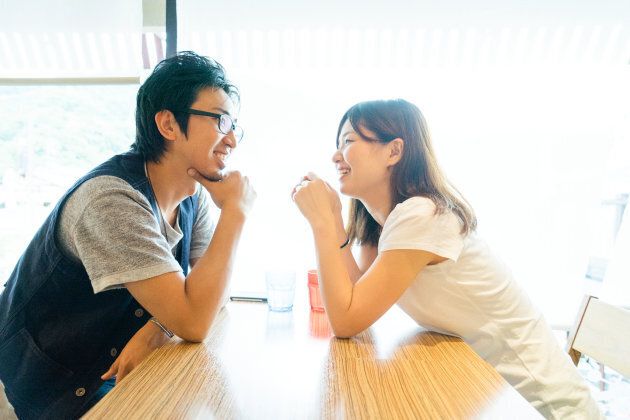
So there's all of that information, data, speculation on marriage, and why the younger generation shrugs its collective shoulder at the venerable institution of marriage, the marriage vows and the marriage covenant as irrelevant to their personal, intimate lives which value more casual relationships or intimate relationships unburdened by society's and religions' compacts and strictures on sexual intimacy and partnerships.
It is not only generational differences that will predict how people will react to the institution of traditional marriage, versus simply living together as in common-law relationships.
Recently, the Institute for Family Studies launched a study and its conclusion, perhaps unsurprisingly, is that conservatives and liberals regard the institution of marriage and all its traditions differently, with 62 percent of conservatives taking marriage vows, while 29 percent of liberals feel it necessary to, along with 46 percent of 'moderates', neither conservative nor liberal, but somewhere in between. Conservatives were observed to be likelier to marry, even controlling for factors such as age.
RoBeDeRo via Getty Images
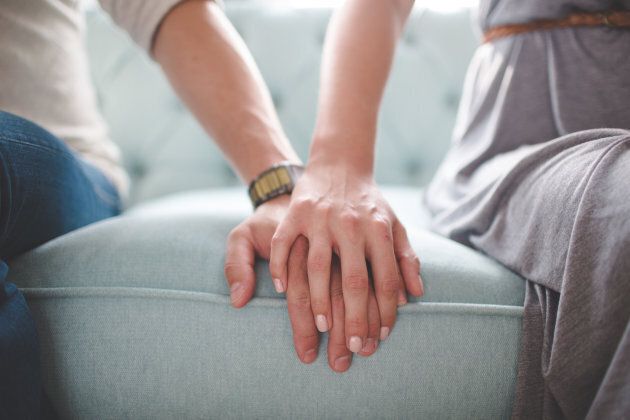
Social scientists have long pointed out the equally obvious, that sharing life with someone else has its bonuses. People managing to live together in harmony, sharing common values and priorities find greater pleasure in life. Within a stable marriage people are generally healthier, and certainly more satisfied with life. That, apart from the fact that with a shared partnership, raising children is easier with two people to share the burden, responsibility and happiness that is generated within an intact family group.
And then there is the purely practical "social insurance" of being able to rely on someone emotionally close to you, when you're depressed, feeling ill, facing poor health outcomes, lose employment, even the elemental sharing of child-centered tasks when one parent is called away, leaving the other to take sole charge temporarily. There is no over-estimating the emotional security in knowing that someone is deeply concerned about your welfare, and is there to prop you up when needed by circumstances. The comfort inherent in knowing love and returning it makes for a happier person.
Conservatives, according to the IFS study simply value marriage more than do moderates or liberals to the point where 80 percent feel marriage is critical to the creation of strong families, whereas among liberals the figure descends to 33 percent who feel similarly. Greater numbers of conservatives commit to marriage simply because they feel marriage is an important part of one's life, and all the more so before children are born.
www.davingphotography.com via Getty Images
This results in 52 percent of conservatives claiming to be completely satisfied with their family lives in comparison to 41 percent of liberals and moderates. The social sciences tend to agree with this generalized conservative tendency to value marriage and practise what they value in greater numbers than their liberal counterparts. Marriage is recognized as vitally critical to individual and societal health altogether. Research has verified that married people tend to live longer, happier and more prosperous lives.
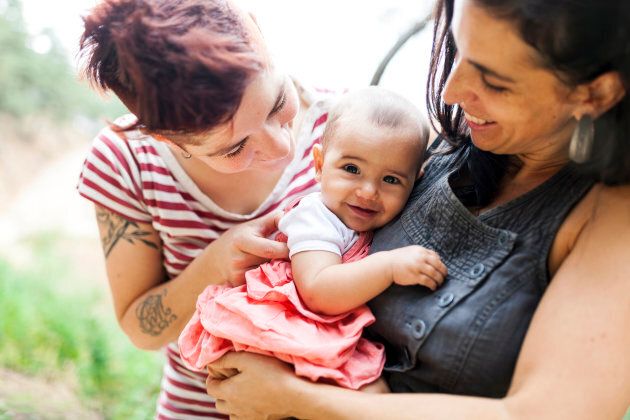
Benefits to children within a family situation where two parents are equally engaged in child care and support, are innumerable and irreplaceable. With the attention of two parents focusing attention and emotional and practical resources on a child's needs, a more structured, healthier situation results, both for the parents and for their offspring. A study of economic mobility concluded that one of the most reliable predictors of income mobility was to grow up within a neighbourhood of majority two-parent families, irrespective of a child being raised by a single parent.
In light of which, the fact that an estimated 40 percent of children are born in the current generation outside marriage to parents who largely feel that it is preferential to bypass marriage, when studies and actual outcomes reflect otherwise, is troubling.
"Unlike drugs or alcohol, from which we can be totally abstinent if we want to be, shopping and eating have to be done." Dr. April Benson, psychologist
"Here's how it works: The initial pleasurable experience -- ooh la la, that bag! -- releases the neurotransmitter dopamine in the nucleus accumbens, a part of the brain that plays a major role in our neural reward circuitry. Each time we do this pleasurable thing, dopamine is released faster, more intensely. The bits of the brain charged with memory encoding record the purchase as a nice experience, thus generating a conditioned emotional response to the cue." Linda Rodrigues McRobbie, freelance writer, London
"Over time, the pleasure associated with an addictive behaviour subsides, but because the memory of the desired effect and the need to recreate it persists, desire becomes compulsion." Dr. Carolyn Mair, psychology consultant
"[Corporate interests and marketers exploit our acquisitiveness desires to convince us that specific foods, porn, alcohol are desirable, their language steeped in self-reward.] That's part of the strategy to normalize and make innocuous these things that really aren't." "Their revenue streams are really dependent on the heavy consumers. Corporations, especially those that market temptation goods, depend on excessive consumption for their bottom line." Dr. David Courtwright, emeritus professor of history, University of North Florida
"With more materialistic attitudes and more marketing, it's making it harder in general for people to deal with this stuff." "We have all this media, and yet we're supposed to be able to control our shopping and we're looked down upon if we don't." Dr. Ricardo Rieppi, psychotherapist
The shopping compulsion: it teases and attracts and compels us to respond to all the advertising we're exposed to on so many levels that have become commonplace and an adjunct to our lives. Everywhere we go, everything we tune into from radio to television, videos and social media make it all so accessible and so interesting, piquing our already-heightened sense of acquisitiveness in a consumer-oriented society. So many items become 'must-haves'. All the more so when they're being flogged by celebrity figures.
Shopping once entailed a physical presence; you deliberately embarked on a mission to go downtown to a shopping area to look about at what was on offer. Now you know what's on offer, advertisements pop up each time you're on line, every time you use your smartphone, everywhere you look while out driving and billboards beckon. And really, it's no longer an effort to shop. In days gone by shopping was carried out in rural areas by the use of mail order items. Now people don't have to haul themselves to shopping centres, the Internet makes it all so simple.
We are indoctrinated and geared through social media influence to want to shop, to acquire the most up-to-date fashions, the latest technological gear, the current home fashions, so readily accessible, all we do is click and it's in the virtual shopping basket and payment is remote, no handing over of cash. In excess of 197 million people buy goods through Amazon monthly. According to Walmart, the largest retailer in the world, $500-billion in sales last year alone beefed up their bottom line. Their top-selling items? laptops, crayons, Instant Pots....really!
In the United States last year, American credit card debt represented a record $870-billion; that's a lot of 'stuff' and it's linked to "compulsive buying disorder"; at least the 19 million Americans who represent the obsessive purchasing segment of the population falling into the category of buying-stuff-they-don't-really-need grouping. German psychiatrist Emil Kraepelin originated the term "oniomania"(buying mania) in 1915 to identify a compulsion he thought of as close to kleptomania.
One survey identified 64 percent of Americans who bought items on impulse later regretted that indiscretion, a condition we call buyer's remorse. So many things that aren't needed, aren't even wanted or particularly liked, but purchased in response to a compulsion to buy items that will later end up being donated to thrift shops, original tags and all. It all began in earnest in the 1980s with the proliferation of malls alongside an increase in disposable incomes. According to experts in the field, compulsive shopping affects a minimum of six percent of the population.
What may be even more surprising is that it isn't only women but men too who tend to compulsion-shop. Researchers point out that shopping helps many people over rough spots in their lives; coasting over depression as a distraction, however temporary. We are tempted by dissatisfaction with life, by feelings of anxiety to elevate our emotions to a more tractable and pleasant position by pleasing ourselves with new acquisitions; a band-aid solution to whatever ails us. It is an addiction that is difficult to regulate and discipline.