Ruminations

Blog dedicated primarily to randomly selected news items; comments reflecting personal perceptions

Tuesday, December 28, 2021

The Ageism-Gendered Gap

"Everyone started this pandemic saying COVID doesn't discriminate. It absolutely does. And it preys on every societal vulnerability we have ... biological and social, in particular."
"Older women are much more likely to be living in poverty -- and women outlive men. We know the greatest at-risk older population are older single women as they are disproportionately poorer. And those who are racialized are hit the hardest."
Dr.Samir Sinha, geriatrician, co-chair, National Institute on Ageing, Ryerson University 
Coney Island Resturant
In Brooklyn, N.Y., a cafe on the Coney Island boardwalk draws people of all ages, soaking up the sun in the pandemic, October 2020. Ageism, a new study finds, is “prevalent, ubiquitous and insidious” and not getting enough global attention.  JOHN PENNEY
 
According to geriatrician Dr.Paula Rochon, founding director of the Women's Age Lab at Women's College Hospital, Toronto, the global pandemic has highlighted inequities already in society. For example, poverty and pension gaps for older women, making them more reliant on underfunded social services like long-term care.

Over 47 percent of women over age 90 live in collective housing like nursing homes, in comparison with 33.3 percent of men in similar living arrangements, according to Statistics Canada. And while 33.2 percent of men in their 90s live as part of a couple, only 4.3 percent of women do. There are complexities leading to this situation, where women are likelier to become caregivers, first to children and then to older family members.

They may, as a result of these biological, social commitments, spend less time in the paid workforce and thus earn less and therefore become less likely to end up with a well-funded retirement. Women tend to live longer and since they tend as well to marry men slightly older than themselves, their future brings them a longer period of time alone.

Women receive 26 percent less in annual pension payments than men in the 38-member countries of the Organization for Economic Co-operation and Development. In Canada, poverty rates for older women register close to 1.5 times that of men, increasing with age. Sometimes women are more likely to require long-term care than men simply as a result of being unable to afford home care.
 
 
2021 to 2030 has been declared by the United Nations as the "decade of healthy aging". The World Health Organization earlier this year announced that the pandemic response has had the effect of revealing the extent of ageism leading to poorer health outcomes, isolation and ultimately premature death ... accompanying billions in socio-economic costs.

It is in fact, both because of their age and their gender that women face the double curse of "gendered ageism". "It's not just about aging or about women, but the intersection of the two", explains Dr. Rochon. Early in the pandemic's onset women in Canada faced greater risk factors for developing COVID-19 since two of three long-term care residents are women and the vast majority of health-care workers are themselves female.

On the other hand, as the pandemic continued, rates of infection,  hospitalization and death were steeper for men.  Slightly over half of all pandemic deaths have been male in Ontario. In Ontario, over 2,000 men between ages 60 and 79 died, in comparison to about 1,200 women in the same age group. Likely because men may also have taken more risks in precautionary mask wearing. Men are also known to be more likely to smoke leading to chronic conditions that leave them more vulnerable.

Older men and women have different risk factors for loneliness and social isolation, other syndromes the conditions arising from pandemic challenges has revealed. Those people who experience loneliness are more likely to seek out medical services. A key gap in medical knowledge is whether older women and men bear unique risk factors for loneliness.

"It's important to know how gender affects risk, because that affects potential treatments", explained epidemiologist Rachel Savage, a scientist with the Women's Age Lab, in acknowledging that contributors to loneliness include widowhood and declining health, conditions seemingly equal for both older men and women. "And lastly, women may just be more candid about being lonely. It may be more of a matter of how we ask the question", said Dr.Savage.

Only three of the ten countries with the highest number of COVID deaths -- Italy, Spain and Germany -- kept data by gender, and none of the ten countries reported a gender breakdown of deaths in long-term care homes, pointed out Dr.Savage.
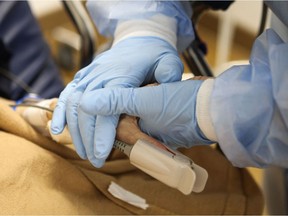
The COVID-19 pandemic has underlined the inequities faced by older women, say researchers.

Labels: , , , , ,

Monday, April 01, 2019

You Are How Old?

"For most people, chronological age corresponds well with emotional and biological age and thus it is often unproblematic that legal age equals chronological age. But this is not always the case."
"Psychologists and medical doctors should be consulted to find out how serious an age change candidate is [along with establishing motivation for the amendment in the birth date]."
"While we can stop whisky from aging by bottling it, we cannot stop humans from aging [but genes, epigenetic changes, lifestyle can influence outcomes], so why should legal age match how long a person has existed for? Why not match legal age with how able and functioning the person actually is?"
"We live in a time when you can change your name and change your gender. Why can't I decide my own age?"
"These are questions that I think biologists and medical doctors should consider together with philosophers and bioethicists."
"Chronological age does not always matter. So why are we so obsessed with it?"
Joona Rasanen, Finnish bioethicist, University of Oslo
young at heart
In Green / Shutterstock

According to this doctoral research fellow at the University of Oslo, there are moral arguments of a compelling nature to be made permitting people to turn back their age legally, where three set conditions are met:
  • The individual feels unreservedly that his/her "felt" age has a meaningful difference from his/her chronological age;
  • The person's biological (physiological) age -- the age that person's body and mind by objective measures -- actually differs from legally documented age;
  • The individual may be risking ageism such as workplace age discrimination.
The recently released study, published in the Journal of Medical Ethics boosts the belief that 'you are as old as you feel' could be carried forward to a legal recognition of a person's choice to alter their documented age. Legal age, argues this philosopher, need not match chronological age. How swiftly our arteries clog, our bones decay and our cells and organs become health-compromised with age can be attributable in part to the choices we make in life, as well as environmental influences and exposures, beyond diet and exercise.

His argument reflects an experience by Emile Ratelband who sought a legal ruling in his bid to alter his age by reducing it from his actual 60s to his proposed 40s. In so doing, he was willing to forgo the $1,500 Euro monthly pension allotted the elderly in exchange for the legal right to alter his birth date. Having worked as a fashion retailer, tour guide, pancake baker, real estate developer and politician, he states: "My feeling about my body and about my mind is that I'm about 40 or 45". A Dutch court turned him down.

Mr. Rasanen pointed to ageism in society and at the workplace, using as an example that employees at Google, Intel, and IBM, along with a number of other high-tech companies sued for age discrimination. "Young people are just smarter", Mark Zuckerberg was once heard to say in an unguarded moment of communication. As a 'young person', it is unsurprising given the attitude of the young toward the more mature among them, that he would express such an opinion, which facts often belie.

There is always the critical issue of when age in and of its effects on the human body make a truly aged individual inappropriate to hope to be employed in some critical positions that impinge on the safety of others; pilot comes to mind. With an age alteration, each candidate, stresses Mr. Rasanen, would ideally require testing and evaluation.And with the message that an entire new bureaucracy would of necessity have to arise out of what seems like an egotistical whim, one must ask: 'why bother'?
The new method to determine biological ageing could help researchers discover what keeps some people looking and feeling younger
The new method to determine biological ageing could help researchers discover what keeps some people looking and feeling younger   123RF.com

"[The law likes] bright lines and ease of application. It's why we decide that most people, roughly speaking, are mature enough at 18 to do things like get married. It's also fine to call you 70, because it triggers privileges to social programs and ticket discounts, some of it awarded just because you've been on the globe for a certain period of time, not because of your biology."
"If you went from 62 to 25, literally, in all aspects of biology ... it might even require the creation of a new person, meaning a new identity."
"If I reversed myself to 25-years-old, it's not like it's me any more. I have a history, but most of that is irrelevant. I may want to start again and declare myself Arthur Caplan, part two, or Arthur Caplan, beta."                                Bioethicist Arthur Caplan, New York University

Labels: , , , ,

 
()() Follow @rheytah Tweet