Ruminations

Blog dedicated primarily to randomly selected news items; comments reflecting personal perceptions

Monday, September 21, 2020

A Year 2020 'Twindemic'

It's flu shot season and Hastings Prince Edward Public Health is offering several community clinics over the next several weeks. Get your flu shot early because it takes two weeks to take effect. POSTMEDIA NETWORK
Flu vaccine   Postmedia
"Having two circulating respiratory viruses is not a good thing. This is something we can do something about. From a societal perspective, we have to reduce the pressure on our health-care system."
"Everyone should get the flu vaccine this year. It's a no-brainer." 
"We don't want people congregating as they usually do in gymnasium-type programs. We need to do it differently. And well."
"...If you could reduce your risk, why wouldn't you do it? Even in a worst-case scenario [difficulty in matching vaccines with current flu strain, resulting in reduced effectiveness], it's still worth it."
Dr.Kumanan Wilson, scientist, Ottawa Hospital Research Institute
"Most health-care workers would say we're barely managing in a normal flu season. We're always on the verge of collapse. If you add COVID, we're in big trouble."
"The biggest problem with how we view influenza is that there are other respiratory viruses circulating. The flu is a whole bunch of viruses with a whole bunch of different presentations. They're impossible to distinguish without lab tests."
"If people keep having parties, we'll have influenza. But if you can control COVID, you can control influenza."
Dr.Jeff Kwong, epidemiologist, professor, Dalla Lana School of Public Health, University of Toronto
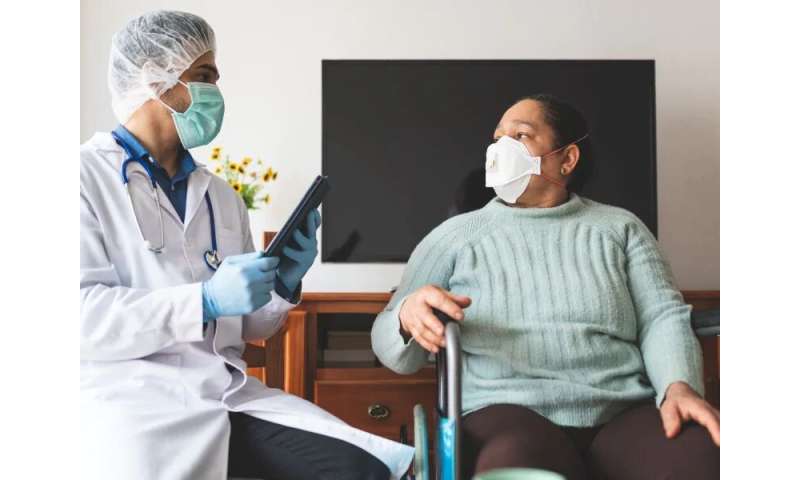
Is a 'Twindemic' of COVID-19 and flu coming this fall?
(HealthDay)—Fall is approaching, and so is the possibility of what public health officials are calling a "twindemic"—overlapping epidemics of both COVID-19 and influenza
"We're expecting increased demand. People are already making reservations [for flu shots delivered by pharmacists]."
"If there is one thing you can control this year, it's the flu shot. It's going to be a busy year."
Sheilita Dattani, director, professional affairs, Canadian Pharmacists Association

"[If you protect children, you are protecting everyone around them]. I'm hoping for a milder flu season, but you can't trust luck."
"We need to tell parents to roll up their sleeves ... and the sleeves of their children."
Dr.Ran Goldman, researcher, professor of pediatrics, University of British Columbia
This year's flu shot, according to infectious diseases experts, is crucial to avoid the potential of the northern hemisphere facing the perfect storm in the convergence of COVID-19 with its predecessor, the seasonal flu. Health care systems currently strained to cope with increased calls on their vital services are set to be endangered by the possibility of having to face and begin caring for a double surge in cases; COVID and flu. People who feel they have already been through the wringer in COVID infection avoidance, only just beginning to return to a wan semblance of normalcy will be facing a backtrack.

Having to remove oneself from the workplace because of any type of respiratory symptoms will set people, their workplaces and their communities back to square one. According to the Public Health Agency of Canada, an average of 12,200 hospitalizations and 3,500 deaths related to the flu take place annually. In 2019-2020, 42,541 cases of seasonal influenza surfaced based on laboratory testing. Leading to medical community concerns over the potential of the coming winter season presenting with a clash of COVID and influenza cases striking simultaneously.

Should people -- fed up with compliance over basic steps to avoid infection -- relax on the infection-protective wearing of masks, on physical distancing and hand hygiene, the likelihood of a 'twindemic' looms ahead in the near future. The rare potential to be afflicted with both flu and COVID is quite possible. The Journal of Medical Virology published a paper finding that among 1,103 patients diagnosed with COVID-19 in three hospitals in Istanbul, Turkey, six patients were diagnosed as infected with influenza as well.

COVID
THE CANADIAN PRESS/Darryl Dyck
Lest that be dismissed as a one-time quirk, co-infections have been reported in patients out of China, Germany, Iran, Japan, Spain and the United States. In Canada, disturbing reports have surfaced through Health Canada of a shortage of personal protection equipment for staff who are themselves a problem in diminishing availability. In the same token an anticipated increased take-up of flu inoculations will most certainly create a bottleneck situation that must be solved before it becomes reality.

To that end other possibilities are being bruited about by Health Canada such as the use of drive-thru and parking lot clinics, where car washes, arenas, insurance inspection centres and drive-thru tents may become additional venues useful to dispense vaccinations. Pharmacists have in the past been relied upon to administer between 40 and 50 percent of flu shots in Canada, and plans are that they be enlisted to continue in that vein and even increase such services.

The possibility of delivering flu shots by appointment, through dedicated hours for walk-in clinics, special hours for vulnerable patients, off-site services such as home visits and clinics established at community halls or temporary structures are all under consideration. In Australia, a report released on September 6 noted 21,119 cases of laboratory-confirmed influenza and 36 laboratory-confirmed deaths attributed to flu; a lower-than-average count for this time of year. A possible harbinger elsewhere for the coming winter season.
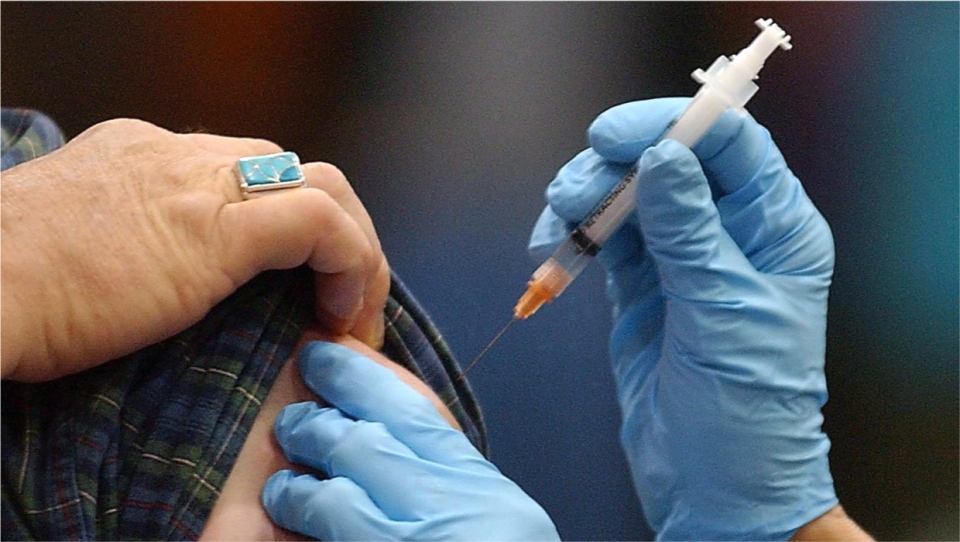
Influenza vaccine, flu vaccine
 (THE CANADIAN PRESS / AP / Toby Talbot)
The Journal of Pediatrics published a study of close to 3,000 families, finding that a greater number of parents planned to vaccinate their children this flu season. Researchers interviewed parents who visited 17 emergency departments in Canada, Israel, Japan, Spain, Switzerland and the U.S. of their wish to vaccinate their children and roughly 54 percent responded they would be willing to do so. Those who failed to vaccinate children last year saw 29 percent planning to this year.

Even that the flu shot is not robustly effective since public health authorities must make an educated guess about which strain will be circulating in any given year, thus it becomes difficult to assess vaccine match and effectiveness, the resulting vaccine is still credited with functionality. The flu strain circulating in November, as an example, may not be the same strain in March. "But if you could reduce your risk, why wouldn't you do it? Even in a worst-case scenario it's still worth it", urges Dr.Wilson.

Labels: , , , ,

Friday, August 21, 2020

Taking the Bite Out of Mosquitoes

"With all the urgent crises facing our nation and the State of Florida -- the COVID-19 pandemic, racial injustice, climate change -- the administration has used tax dollars and government resources for a Jurassic Park experiment."            Jaydee Hanson, policy director, International Center for Technology Assessment and Center for Food Safety

"It’s gone extremely well. We have released over a billion of our mosquitoes over the years. There is no potential for risk to the environment or humans."                 Kevin Gorman, Oxitec scientist 

"The mosquitoes created in a lab have not gone through a natural selection process, in which only the fittest survive and mate. Once they are released in the natural environment, will they be as fit as the naturally occurring males and able to outcompete them for mates?"                                                                                "An ecosystem is so complicated and involves so many species, it would be almost impossible to test them all in advance in a lab."                                                    Max Moreno, expert in mosquito-borne diseases, Indiana University

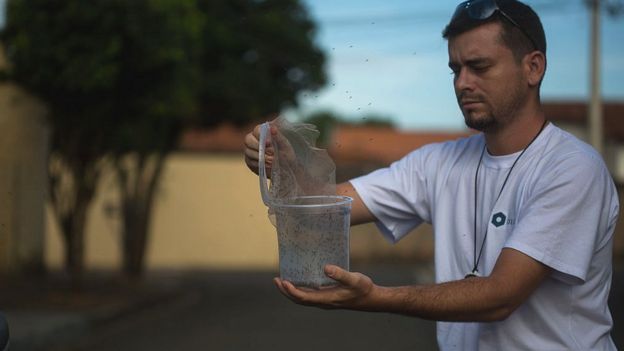
A biologist in Brazil releases Oxitec to combat a Zika outbreak
A biologist in Brazil releases mosquitoes to combat a Zika outbreak   Getty Images

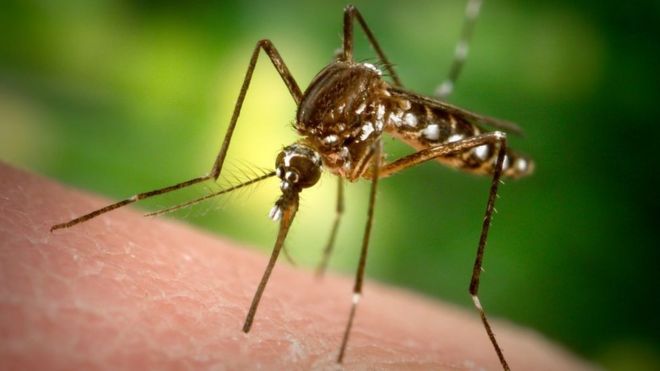
A project is underway in Florida, approved by authorities, to test if a genetically modified mosquito acts as an improved alternative to insecticides to control the spread of Aedes aegypti, the yellow fever mosquito. Known to bite to obtain blood to mature her eggs, the female mosquito spreads a number of exotic diseases like dengue fever, zika and chikungunya. 

A British-based lab, Oxitec, which created the mosquito named OX5034, succeeded in altering female mosquitoes to produce female offspring destined to die in their larval stage, thus preventing them from hatching and maturing to the point of biting for blood and successfully reproducing. Male mosquitoes, which are not disease carriers, have been programmed as well, to kill female mosquitoes.

Aedes aegypti mosquitoes
The aim is to reduce the population of Aedes aegypti mosquitoes Getty

The company's promotions have emphasized that the genetically altered mosquitoes will not bite, despite which a public backlash against the experiment has arisen fiercely opposed to the experiment, with some residents stating they will not be treated as "guinea pigs" with the "Robo-Frankenstein" mosquito.

The concern among environmental activists is that a massive population of mosquitoes released for any purpose could result in a detrimental effect on wildlife, endangering bird species, insects and mammals that feed on mosquitoes. 

This is not the first occasion when Oxitec's altered mosquitoes have been put into action for the purpose of battling mosquito-borne disease.

The first such tests with the altered mosquitoes took place in May of 2018 when the mosquitoes were released within four communities in the city of Indalatuba, Brazil.There, success was realized when the outcome resulted in a reduction in the numbers of Aedes aegypti of 95% in a trial conducted in an urban area of Brazil.

"This is an exciting development because it represents the ground-breaking work of hundreds of passionate people over more than a decade in multiple countries, all of whom want to protect communities from dengue, Zika, yellow fever, and other vector-borne diseases."                                                                                      Oxitec CEO Grey Frandsen


Labels: , , , ,

Saturday, June 06, 2020

The Post-COVID Workplace/City

"If pandemics become the new normal, then tens of millions of urban service jobs will disappear."
"The only chance to prevent this labour market Armageddon is to invest billions of dollars intelligently in anti-pandemic health care infrastructure so that this terrible outbreak can remain a one-time aberration."
Edward Glaeser, professor of economics, Harvard University

"Public transit agencies in many cities face extraordinary dual crises of both confidence and financial sustainability."
"[After the pandemic cities] will remain vibrant and dynamic centres of economic and cultural activity."
Jennifer Keesmaat, former chief planner, municipality of TorontoThe US jobs most vulnerable to COVID-19
"The Spanish Flu of 1918 killed as many as 50 million people worldwide, and yet New York, London, and Paris all boomed in its wake."
"In fact, history shows that people often moved to cities after pandemics because of the better job opportunities and the higher wages they offered after the sudden drop in population."
"Ambitious young people will continue to flock to cities in search of personal and professional opportunities. Artists and musicians may be drawn back by lower rents, thanks to the economic fallout from the virus."
"The crisis may provide a short window for our unaffordable hypergentrified cities to reset and re-energize their creative scenes."
Richard Florida, urban theorist, Toronto
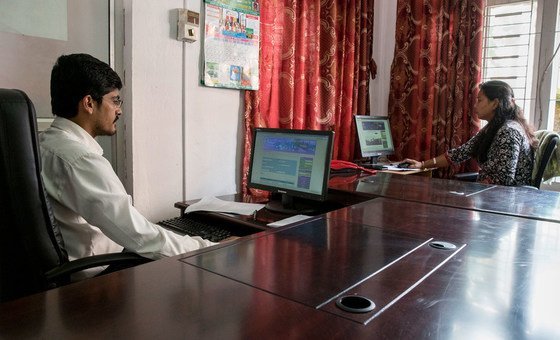
World Bank/Peter Kapuscinski

"There's going to be a forced evolution at the office."
"I think we're going to see a change there, where you're going to have employees spaced out, they won't maybe be facing each other in the office."
"Keyboards, mice, headsets, those things are going to be personal accessories now. So you'll have either a locker at the office that  you can lock yourself or you're hauling it back and forth every day."
Evan Hardie, researcher, future of work

Companies will be challenged to redesign work spaces to allow for new COVID-infection-aware physical and social distancing rules. The SARS-CoV-2 virus threat will be seen as a harbinger for things to come; other threatening types of viruses will begin to come onto the scene once the current epidemic subsides, either naturally as the world learns to deal with it, or through an effective vaccine eliminating its threat. But COVID-19 will not be the last such threat, and the world and society will be adjusting to this new, permanent reality.

The open office trend that became familiar everywhere is now set for a complete reversal. Beginning with spaced desks, personal lockers, voice-automated technology, staged elevators and one-way hallways, with new protocols like varying shifts, cleaning surfaces after use and the wearing of personal protective equipment to the office, according to the expert forewarning of Evan Hardie, forecasting what the new workplace will resemble.

This, in a world that suddenly became quiet and shut down, where great cities' central squares and main streets reversed swiftly from busy thoroughfares, noisy and roiled with activity, giving way to still urban landscapes, absent vehicles of any description, as people huddled in their homes in social isolation, as ordered by frantic governments, anxious to ensure their suddenly-inadequate hospitals and health care systems weren't overwhelmed as critical care patients flooded ICUs and undertakers struggled to cope with corpses of those who succumbed to the virus.

Subway systems and elevators in corporate real estate were transformed into epidemiological hot-spots in the new global pandemic environment. City dwellers and downtown workers swiftly adjusted to the new reality of working from home, while small businesses, hotels, restaurants and bars, gyms and child-care services went on hold, and many were shuttered for good. No more tourists, business travellers, conference groups to keep hotels and restaurants flourishing, putting the service industry on notice that they'd be hard hit.

The sleeping city and the business accommodated in it traditionally will have to be nudged awake, however. Discussions emerged revolving around new types of social etiquette, including widespread masking. "Until recently, work happened in the office. We've always had some people remote, but they used the Internet as a bridge to the office. This will reverse now. The future of the office is to act as an on-ramp to the same digital workplace that you can access from your [working from home] setup", elaborated Tobias Lutke, Shopify CEO.

The Economist, in the United Kingdom, reported firms are now in the process of reconsidering "what offices are for, and many are concluding that a lot of tasks are better done from home", quoting a real estate firm, that "the days of people taking a 74-minute average commute into town to process email, and then 74 minutes back out -- they're gone". A different future now awaits workplaces and city landscapes.

Working from home is teaching us new skills - and can give us time to learn new ones, too
Image: DarkWorkX on Unsplash


Labels: , , , ,

 
()() Follow @rheytah Tweet