Ruminations

Blog dedicated primarily to randomly selected news items; comments reflecting personal perceptions

Thursday, January 13, 2022

Double Virus Load : Flu and COVID-19 : "Flurona"

"Many regions are seeing higher flu activity and at the same time seeing high COVID activity. This leads to more co-infections with both pathogens."
"People working in the health-care system have always warned about the risk of having flu and COVID circulate at the same time."
"The flu is still at a very, very, very low activity at this point of time. Usually, we see a peak in January to February and currently we hardly see any flu."
"[If at risk of exposure, take precautions just as you would during any flu season or through the pandemic]; beyond that, I would say there's no need to be any more worried."
"The bottom line is simply get vaccinated against both. We have a flu vaccine and a COVID-19 vaccine that will protect from both."
Dominik Mertz, infectious disease specialist, professor, McMaster University
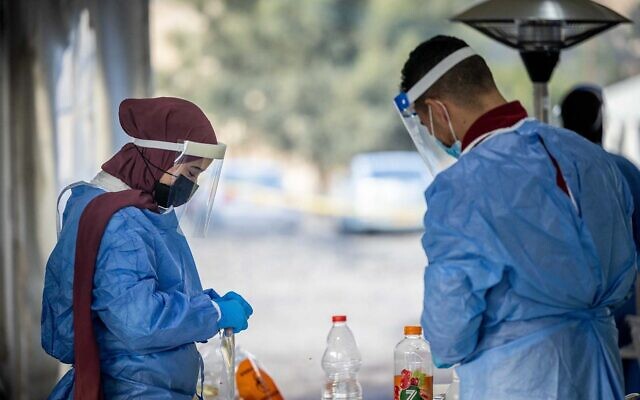
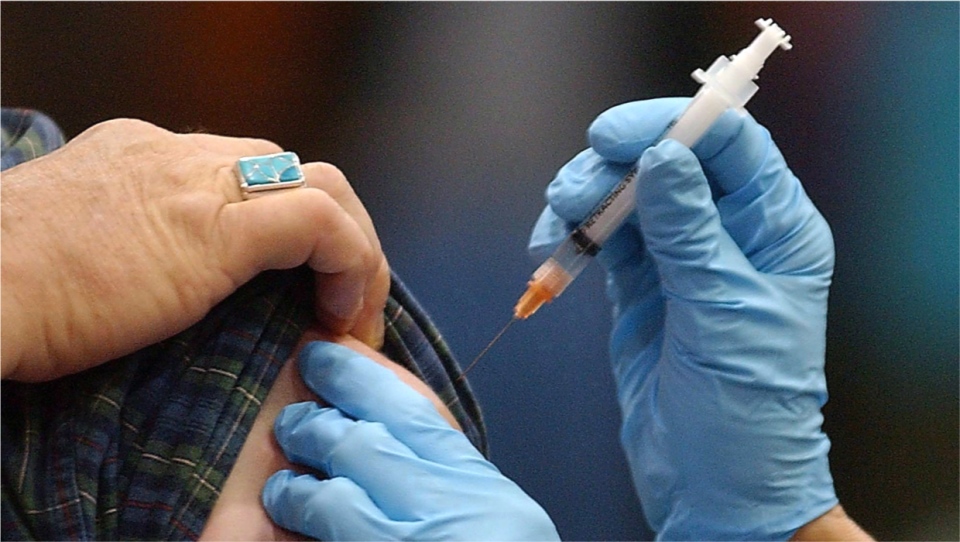
Health care workers take test samples in COVID-19 testing complex in Ma'ale Adumim, on December 30, 2021. (Yonatan Sindel/Flash90)
 
The term "flurona" originated from the Israeli Association of Public Health Physicians when in December 2020 an article on the vaccination rate for flu shots was published by the Association and the word "flurona" was used to describe "the potential for parallel outbreaks of influenza and COVID, and the resulting burden on the health system", according to Yitzah Cohen of the Corona Israel Information Headquarters.

At the end of 2021 there was a confirmed case of flurona in a 29-year-old pregnant woman who tested positive for both COVID-19 and flu. Israel's confirmed case was by no means the first such case. In June 2020 a study focused on doctors from Medilife Health Group in Istanbul, Turkey who reported six cases of co-infection in patients between March and May. Another study by doctors from Hospital Clinic Barcelona in Spain had four cases of "flurona" found in May 2020.

Flu cases are starting to rise across parts of the U.S. And that's concerning because fewer people are vaccinated for flu, compared to last year, according to the Centers for Disease Control and Prevention (CDC).
 
Co-infection incidents because they are still so rare, are needful of further study to more fully grasp such co-infections and determine what the best possible treatment might be comprised of, particularly for the elderly and the immunocompromised. The issue of flurona is now coming top of mind to medical experts in view of the  highly contagious nature of the Omicron variant, along with the new loosening of pandemic restrictions.
 
There were only 69 confirmed cases of flu in Canada during the 2020-2021 flu season. And while influenza activity remains low, a total of 158 detected cases of influenza were identified between December 12, 2021 and January 1, 2022.

Social distancing, masking, handwashing restrictions have been successful in helping to curb the spread of COVID-19, and they have been useful as well in helping to limit the transmission of the flu virus. Cases of the flu have risen, at the same time that these restrictions have been loosened. The concern is that people working in the overworked health-care system will be faced with growing numbers of patients to care for while they are stretched to the limits with COVID cases.

To the present, flurona has been documented in many countries, among them the United States, Israel, Turkey, Spain, Iran, Brazil, the Philippines and Hungary. Those most at risk of co-infection have been exposed to respiratory viruses frequently, as historically these viruses are active in daycare and school settings. Those who should be practising the greatest care in infection avoidance however, remain the elderly and immunocompromised, at high risk for both COVID and flu.

Both the flu and COVID-19 have similar symptoms. Those who are co-infected may not be able to distinguish which virus is causing which symptoms, as a result. Public Health advises that the most common flu symptoms are fever, cough and muscle aches and pains. Additional symptoms are those of headache, chills, fatigue, loss of appetite, sore threat and runny nose.

COVID symptoms on the other hand, are most frequently that of coughing, difficulty in breathing, fever, chills, fatigue, muscle aches and headaches. "I think the only exception is those who have a loss of taste and smell. That's very, very likely COVID-19", added Professor Mertz. On the other hand, the most ubiquitous coronavirus now in circulation worldwide is the Omicron variant, and loss of taste and smell appears not to be symptomatic for that mutated strain.

Given the current state of knowledge about co-infection it is not yet understood whether someone with a co-infection will experience more severe symptoms; sufficient information on the combination of the two viruses to support a clear understanding is as yet absent. Both flu and COVID own different treatments but with both, treatment will have to be coordinated with the prescription drugs used to treat each, particularly high-risk patients.

Both viruses are known to spread in similar ways facilitated by coughing, sneezing and talking in close quarters. Best avoidance practise with COVID is remaining isolated when ill, improving ventilation, wearing a mask, practising social distancing, washing hands, and disinfecting surfaces. Flu-specific preventive measures are similar, including hand washing, avoiding touching nose and mouth, coughing into bend of arm, disinfecting surfaces and remaining sheltered at home when ill.

Flu and COVID? 'Flurona' is real, and doctors expect to see more of it

Health experts expect to see more “flurona” as flu cases rise and coronavirus cases continue to surge due to the omicron variant   USA Today

Labels: , , , , ,

Monday, September 21, 2020

A Year 2020 'Twindemic'

It's flu shot season and Hastings Prince Edward Public Health is offering several community clinics over the next several weeks. Get your flu shot early because it takes two weeks to take effect. POSTMEDIA NETWORK
Flu vaccine   Postmedia
"Having two circulating respiratory viruses is not a good thing. This is something we can do something about. From a societal perspective, we have to reduce the pressure on our health-care system."
"Everyone should get the flu vaccine this year. It's a no-brainer." 
"We don't want people congregating as they usually do in gymnasium-type programs. We need to do it differently. And well."
"...If you could reduce your risk, why wouldn't you do it? Even in a worst-case scenario [difficulty in matching vaccines with current flu strain, resulting in reduced effectiveness], it's still worth it."
Dr.Kumanan Wilson, scientist, Ottawa Hospital Research Institute
"Most health-care workers would say we're barely managing in a normal flu season. We're always on the verge of collapse. If you add COVID, we're in big trouble."
"The biggest problem with how we view influenza is that there are other respiratory viruses circulating. The flu is a whole bunch of viruses with a whole bunch of different presentations. They're impossible to distinguish without lab tests."
"If people keep having parties, we'll have influenza. But if you can control COVID, you can control influenza."
Dr.Jeff Kwong, epidemiologist, professor, Dalla Lana School of Public Health, University of Toronto
Is a 'Twindemic' of COVID-19 and flu coming this fall?
(HealthDay)—Fall is approaching, and so is the possibility of what public health officials are calling a "twindemic"—overlapping epidemics of both COVID-19 and influenza
"We're expecting increased demand. People are already making reservations [for flu shots delivered by pharmacists]."
"If there is one thing you can control this year, it's the flu shot. It's going to be a busy year."
Sheilita Dattani, director, professional affairs, Canadian Pharmacists Association

"[If you protect children, you are protecting everyone around them]. I'm hoping for a milder flu season, but you can't trust luck."
"We need to tell parents to roll up their sleeves ... and the sleeves of their children."
Dr.Ran Goldman, researcher, professor of pediatrics, University of British Columbia
This year's flu shot, according to infectious diseases experts, is crucial to avoid the potential of the northern hemisphere facing the perfect storm in the convergence of COVID-19 with its predecessor, the seasonal flu. Health care systems currently strained to cope with increased calls on their vital services are set to be endangered by the possibility of having to face and begin caring for a double surge in cases; COVID and flu. People who feel they have already been through the wringer in COVID infection avoidance, only just beginning to return to a wan semblance of normalcy will be facing a backtrack.

Having to remove oneself from the workplace because of any type of respiratory symptoms will set people, their workplaces and their communities back to square one. According to the Public Health Agency of Canada, an average of 12,200 hospitalizations and 3,500 deaths related to the flu take place annually. In 2019-2020, 42,541 cases of seasonal influenza surfaced based on laboratory testing. Leading to medical community concerns over the potential of the coming winter season presenting with a clash of COVID and influenza cases striking simultaneously.

Should people -- fed up with compliance over basic steps to avoid infection -- relax on the infection-protective wearing of masks, on physical distancing and hand hygiene, the likelihood of a 'twindemic' looms ahead in the near future. The rare potential to be afflicted with both flu and COVID is quite possible. The Journal of Medical Virology published a paper finding that among 1,103 patients diagnosed with COVID-19 in three hospitals in Istanbul, Turkey, six patients were diagnosed as infected with influenza as well.

COVID
THE CANADIAN PRESS/Darryl Dyck
Lest that be dismissed as a one-time quirk, co-infections have been reported in patients out of China, Germany, Iran, Japan, Spain and the United States. In Canada, disturbing reports have surfaced through Health Canada of a shortage of personal protection equipment for staff who are themselves a problem in diminishing availability. In the same token an anticipated increased take-up of flu inoculations will most certainly create a bottleneck situation that must be solved before it becomes reality.

To that end other possibilities are being bruited about by Health Canada such as the use of drive-thru and parking lot clinics, where car washes, arenas, insurance inspection centres and drive-thru tents may become additional venues useful to dispense vaccinations. Pharmacists have in the past been relied upon to administer between 40 and 50 percent of flu shots in Canada, and plans are that they be enlisted to continue in that vein and even increase such services.

The possibility of delivering flu shots by appointment, through dedicated hours for walk-in clinics, special hours for vulnerable patients, off-site services such as home visits and clinics established at community halls or temporary structures are all under consideration. In Australia, a report released on September 6 noted 21,119 cases of laboratory-confirmed influenza and 36 laboratory-confirmed deaths attributed to flu; a lower-than-average count for this time of year. A possible harbinger elsewhere for the coming winter season.

Influenza vaccine, flu vaccine
 (THE CANADIAN PRESS / AP / Toby Talbot)
The Journal of Pediatrics published a study of close to 3,000 families, finding that a greater number of parents planned to vaccinate their children this flu season. Researchers interviewed parents who visited 17 emergency departments in Canada, Israel, Japan, Spain, Switzerland and the U.S. of their wish to vaccinate their children and roughly 54 percent responded they would be willing to do so. Those who failed to vaccinate children last year saw 29 percent planning to this year.

Even that the flu shot is not robustly effective since public health authorities must make an educated guess about which strain will be circulating in any given year, thus it becomes difficult to assess vaccine match and effectiveness, the resulting vaccine is still credited with functionality. The flu strain circulating in November, as an example, may not be the same strain in March. "But if you could reduce your risk, why wouldn't you do it? Even in a worst-case scenario it's still worth it", urges Dr.Wilson.

Labels: , , , ,

Monday, February 10, 2020

Gathering Real-Time Flu Data

"Responding more quickly to influenza outbreaks can prevent further spread and infection, and we were curious to see if sensor data could improve real-time surveillance."
"We demonstrate the potential for metrics from wearable devices to enhance flu surveillance and consequently improve public health responses."
"In the future as these devices improve, and with access to 24/7 real-time data, it may be possible to identify rates of influenza on a daily instead of weekly basis."
Jennifer Radin, U.S. Scripps Research Translational Institute, California

"[More work is needed] to gauge how reliable these data are over time, how specific these measurements are for flu, and how representative Fitbit users are of the whole population."
Rosalind Eggo, public health expert, London School of Hygiene  Tropical Medicine
mobihealthnews

''Currently, CDC [influenza-like illness (ILI)] data are typically reported [one to three] weeks late and reported numbers are often revised months later."
"The ability to harness wearable device data at a large scale might help to improve objective, real-time estimates of ILI rates at a more local level, giving public health responders the ability to act quickly and precisely on suspected outbreaks."
"To our knowledge, this is the first study to evaluate and show that objective data collected from wearables significantly improved nowcasting of influenza-like illness."
"This study shows that using RHR and other metrics from wearables has the potential to improve realtime ILI surveillance. New wearables that include continuous sensors for temperature, blood pressure, pulse oximetry, ECG, or even cough recognition are likely to further improve our ability to identify population and even individual-level influenza activity."
"In the future, with access to real-time data from these devices, it might be possible to identify ILI rates on a daily, instead of weekly, basis, providing even more timely surveillance. As these devices become more ubiquitous, this sensor-based surveillance technique could even be applied at a more global level where surveillance sites and laboratories are not always available."
Study researchers

An American study, published in The Lancet Digital Health journal, showed that statewide predictions of flu outbreaks, with the use of Fitbit data, were improved and accelerated. The study found that heart rate and sleep data extracted from wearable fitness tracker watches can help predict and alert public health officials to outbreaks of flu more accurately in real-time than methods of surveillance currently in use.


This is the first time heart rate trackers and sleep data have been used to predict flu, or any infectious disease, in real-time (Bloomberg)
Tracking heart rate and sleep data to predict flu in real-time (Bloomberg)

Using data from over 47,000 Fitbit users in five U.S. states enabled the researchers to establish the usefulness to health authorities of more reliable, quicker data than the usual surveillance reporting method which can take up to three weeks to process. Response measures as in the deployment of vaccines or anti-virals can often lag, as a result. The World Health Organization estimates that up to 650,000 people die of respiratory diseases annually world wide, linked to annual seasonal flu.

Crowdsourcing data like Google Flu Trends and Twitter upon which previous studies were based, experienced variable levels of success -- in part -- according to experts in the field, because it is not possible to separate behaviour of those with flu from people who merely embark on an online search for information, given more broad media and public attention to the issue during outbreaks.

The research team, co-led by Jennifer Radin, de-identified data from 200,000 people whose Fitbits tracked their activity, heart rate and sleep for a minimum of 60 days during March 2016 to March 2018, the study period. Of the 200,000 subjects, 47,248 Fitbit wearers from California, Texas, New York, Illinois and Pennsylvania whose average age was 43 and 60 percent female, wore the devices consistently throughout the study period.

Resting heart rate and sleep duration were monitored and flagged as abnormal if the average weekly heart rate was significantly above their overall average and weekly average sleep was not below their overall average. The resulting data was then compared to the U.S. Centers for Disease control's weekly estimates for flu-like illness.

Fitbit- updated
Using de-identified data from more than 47,000 Fitbit users across five states, researchers were able to evaluate over 13.3 million daily measurements and track deviations from each individual's personal norm. (Fitbit)

Labels: , , ,

Thursday, December 06, 2018

Preparing for a Pandemic

"Are we ready in 2018? The answer is we are better off than we were before 2009 but not where we need to be and vaccine readiness has a long way to go."
"The 1918 pandemic was exceptionally severe. A similar pandemic today would cause tremendous illness, death and economic cost [ranging between 105 to 110 million possible deaths]. That is a very sobering number."
Nancy Cox, past head, U.S. Centres for Disease Control Influenza Branch
Biologist Jason Plyler prepares to test how immune cells react to possible flu vaccines at the Vaccine Research Center at the National Institutes of Health, in Bethesda, Md. As scientists mark the 100th anniversary of the 'Spanish' influenza pandemic, labs are hunting better vaccines. (Carolyn Kaster/Associated Press)

"People think of 2009 [the H1N1 pandemic] as being very mild, but if the Olympics [Winter Olympics held in Vancouver the winter of 2009] had been planned for the fall of 2009, we would have had to cancel because we did not have [enough] ICU [intensive care] beds [to cope]."
"Many of us remember the challenges of not knowing when vaccines would come [be delivered from source]. A lot of things happened that we were not prepared for that led to inconsistencies."
"We are still not where we need to be [in preparation for the next pandemic]."
Dr. Bonnie Henry, provincial health officer, British Columbia, chair, Canadian pandemic influenza task group
Flu vaccinations. Ed Kaiser / Edmonton Journal

Pandemic influenza represents an outbreak of influenza on a global scale, occurring when a new flu virus has manifested for which humans have little or no immunity and once having emerged, then rapidly spreads to infect great numbers of people. The deadly Spanish flu took the lives of millions of people around the world. Experts warn, as they have been doing for quite some time, that conditions leading to the emergence of yet another such deadly influenza strain are in place, and it is merely a matter of time before a dread pandemic emerges.

And the world is not prepared to meet the challenge of protecting itself against the inevitable; a viral strain of influenza so lethal that it will speedily cut a wide swath of death on populations unable to defend themselves. The Spanish influenza pandemic caused the death of between 50-million to 100- million people globally. Those gathered at the biannual Canadian Immunization Conference in Ottawa this week, heard leading international experts warning that more work is urgently required before the next severe pandemic arrives.
In this November 1918 photo from the Library of Congress, a nurse takes the pulse of a patient in the influenza ward of the Walter Reed hospital in Washington. Historians think the pandemic actually started in Kansas in early 1918. (Harris & Ewing/Associated Press)

Yes, there have been been wide-sweeping medical advances following the 1918 Spanish pandemic. Despite which, though vaccines and anti-viral treatments have been produced, none are as near to reliably effective as medical science would have hoped them to be, particularly as new strains of influenza constantly evolve in response to new vaccines whose efficacy at best is partial, but to which the virus responds by mutating and evolving, producing new threats.

Every year brings along new strains of influenza, some more powerful than those that erupt in other years. A universal flu vaccine in replacement of seasonal vaccines developed in response to science evaluating current strains of flu, remains an as-yet unattainable goal. Seasonal vaccines that are relied upon to armour society's vulnerable against the predation of the virus are only partially effective. Hope and progress go hand-in-hand even while concern over global surveillance and treatment availability remains high.

Should a severe pandemic arise, Dr. Cox emphasized, sufficient ventilators or reusable respiratory protective devices in support of protecting people world-wide would be in short supply. Dr. Cox revealed estimates of a current-day pandemic in terms of a universal death count and that number would range from 105-million to 110-million possible deaths. Dr. Henry spoke of medical authorities in Canada working to prepare the country for the next pandemic, leaning heavily on lessons learned from 2009.

Though there has been progress, she stated to delegates, should even a relatively mild pandemic erupt, responding health services would be overwhelmed. British Columbia's health system, for example, months before the Winter Olympics was to be held in Vancouver, was completely overwhelmed, so the task group aiming to minimize serious illness and disruption has a goal; the provision of a safe and effective vaccine along with the monitoring of the safety and efficacy of that vaccine.

One lesson learned during the 2009 H1N1 outbreak was the emergent uncertainty over vaccine supply. Canada, learning from that event, has contracted to ensure that two doses of vaccine for every Canadian would be instantly available in the event of a pandemic, and has strengthened that assurance with the redundancy of a backup contract. Along with ensuring that vaccine is available to remote communities, prioritizing who receives the more immediate vaccinations.
Influenza victims crowd into an emergency hospital near Fort Riley, Kansas during the 1918 Spanish flu pandemic  PROVINCE Vancouver Sun

Labels: , , , , ,

Wednesday, November 07, 2018

Outwitting a Virus

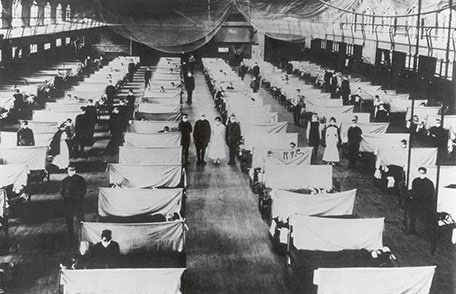
Black and white photograph of hundreds of medical pop-up stations within a large warehouse building. Patients lay in medical beds.
"The disease we know as the flu is caused by the influenza virus, which mostly lives in fowl and pigs; humans catch it through close contact with those animals."
"The 1918 outbreak was caused by an H1N1 variant that was first noticed in an army camp in the United States."
"It's hard today to describe the speed of the virus's spread and the scale of its staggering devastation."
Mike Callaghan, medical anthropologist, Switzerland
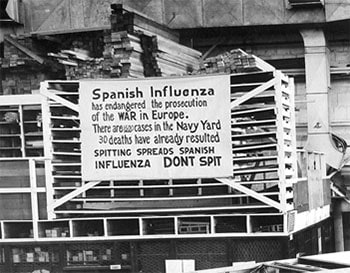
Photograph of an Influenza precaution sign at the Naval Aircraft Factory, Philadelphia, October 19, 1918. Reads “Spanish Influenza has endangered the prosecution of the war in Europe. There are 1500 cases in the navy yard 30. Deaths have already resulted. Spitting spreads Spanish influenza. Don’t spit.
The 1918 flu pandemic is sometimes called “The Spanish Flu” not because it originated in Spain, but because that nation had remained neutral during the war and freely reported news of flu activity.

"The 1918 flu pandemic occurred during World War I; close quarters and massive troop movements helped fuel the spread of disease."
"In the United States, unusual flu activity was first detected in military camps and some cities during the spring of 1918. For the U.S. and other countries involved in the war, communications about the severity and spread of disease was kept quiet as officials were concerned about keeping up public morale, and not giving away information about illness among soldiers during wartime. These spring outbreaks are now considered a “first wave” of the pandemic; illness was limited and much milder than would be observed during the two waves that followed."
"In September 1918, the second wave of pandemic flu emerged at Camp Devens, a U.S. Army training camp just outside of Boston, and at a naval facility in Boston. This wave was brutal and peaked in the U.S. from September through November. More than 100,000 Americans died during October alone. The third and final wave began in early 1919 and ran through spring, causing yet more illness and death. While serious, this wave was not as lethal as the second wave. The flu pandemic in the U.S. finally subsided in the summer of 1919, leaving decimated families and communities to pick up the pieces. Scientists now know this pandemic was caused by an H1N1 virus, which continued to circulate as a seasonal virus worldwide for the next 38 years."
Centers for Disease Control and Prevention. CDC twenty four seven. Saving Lives, Protecting People 

What was familiarly called the "Spanish flu" was a pandemic; it broke out all over the world. A world at war. Where, it was explained, an aggregation of people in close quarters helped its swift spread. Great swaths of military personnel were moved around from country to country, helping the virus which turned deadly, to spread with swift ease. At one time, it would be mostly country people, people who lived and worked on farms and had close contact with animals and birds who were at risk and the spread of the virus was limited because they remained where they were, locally.

At the very time that the world is remembering the two great world wars that brought death and destruction to the global community, the hundred-year anniversary of the start of the First World War, considered in its wholesale death toll, to be 'the war to end all wars' is being recognized. In lock-step with that global conflict was the global affliction of the "Spanish flu". Spain, as a neutral country at the time of World War I, had no restrictions imposed on news of the influenza epidemic it was suffering, unlike those countries at conflict who kept the news from their public already struggling with the demoralizing stories out of war zones.

That strain of influenza destroyed more lives than both world wars' totals of military and civilian deaths as consequences of the two global conflicts. In the first six months of the flu's onslaught close to 50 million people died worldwide. By the time it was over, when no further waves of infection occurred, an estimated 100 million people were dead as a result of the flu. It was not the flu we face yearly with its recognized symptoms that puts people low for several days to weeks. This was a pathological scourge that killed.

When one in three people world-wide became infected and died, combating armies became short of fighting men. Half their soldiers were bedridden. Civilians were instructed to wear face masks at all times. Eventually the lethal strain wore itself out by 1920. Since then medical science has been anticipating another massive viral flu outbreak with dread. But the combination of contagious impact and lethality has not yet been replicated. And the yearly recommendations that populations be inoculated against the flu has its genesis in hopes of averting a worst possible scenario.

People with compromised immune systems, people with chronic illness and disease, the elderly and the very young depend on the herd immunity concept; the greater the numbers of people for whom the onset of illness through the impact of protective inoculation the less likely the possibility of a widespread breakout in a largely unprotected population. In 1918's globalized flu pandemic populations with no immunity were suddenly exposed to the virus. Because of the war populations migrated, both military and civilian.

At that time long-distance travel was accomplished through rail and ship primarily. In our modern era with rapid transit where airline passenger jets can traverse the globe in hours, not weeks, where products are shipped globally and with them germs are transmitted with incredible speed. That speed accomplishes an amazing feat of transmission by a virus that reacts swiftly to impediments. Each year a combination of the commonest flu strains prevalent in China the year before is produced in the hope that the following year's strain would be closely aligned for successful immunity.

The flu virus is a swiftly mutating trickster, shifting in response to the presence of any remedy produced to impact its deadly efficacy. By the time a vaccine is produced the virus has undergone change and becomes more effective in its deadly delivery. Because it is so capable of mutating to meet the challenges meant to destroy its efficacy, it is always one step ahead of remedies to modify its effectiveness and potentially bring its impact to a halt, boosting the body's immune system to deflect its ingress.
The big one is coming, and it's going to be a flu pandemic
It has proven itself adept at developing new strategies to resist medication, to survive in new environments and to negate its transmission. It is a formidable foe for medical science, a medical community anticipating that a day will arrive when it will once again forcefully impact on a global scale with deadly precision. There is no global conflict ongoing at the present time, other than an increasingly chilly 'cold war', to enhance and invite a viral outbreak in response to a dense gathering of warring factions worldwide.

But there are other types of wars, in a world where trade and economics and mercantile interests come into play. Such as sanctions as punishment by one entity against another in a conflict of a different kind. The current trade war between the United States and China has been a complicating factor in stalling the ongoing trade between China's production capabilities and its far reach throughout the world where its products are always in demand. Among other items that are in demand is China's cooperation in providing intelligence on flu strains.

China's ownership of this intellectual property has enabled it to turn its sole-source data into a critical bargaining chip, one that leaves vaccine researchers struggling to come up with a combination that will present as a deterrent to this year's flu strain -- without the vital data it depends upon from China.
Researchers in pathogen transmission know that should a deadly new strain of flu arrive it would impact their capacity to mobilize resources quickly and effectively to combat airborne, contagious, fast-acting viruses.

To succeed, however, there must be a scaffolding comprised of cooperation, restraint and above all unprecedented levels of research focusing on a virus whose reactive abilities and mobility are frighteningly legendary.

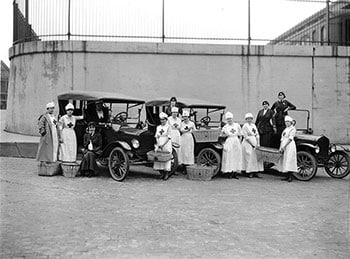
Red Cross volunteers in Detroit
Ready and willing, these volunteers were on the forefront of the 1918 pandemic response. Today, influenza viruses continue to pose one of the world’s greatest health challenges.

Labels: , , , , , ,

Wednesday, January 24, 2018

Not Too Late for Flu Inoculation

"It's tragic whenever there is a death due to influenza in a child. No question about it, it's heartbreaking. Fortunately, it is a rare event."
"But that doesn't mean that deaths due to influenza in otherwise healthy people -- including children -- doesn't happen. They do. They're just rare."
"Most otherwise healthy individuals are going to fully recover from influenza with no intervention."
"We don't want to set off alarm bells. We need to put this into context."
Dr. Danuta Skowronski, influenza expert, B.C. Centre for Disease Control

"We have a tendency to think that because influenza is so common and because almost all of the time you get it, you feel miserable for a few days and then you get better."
"That's our view of influenza and we don't recognize that there are a small number of catastrophically serious cases in children and young, otherwise healthy adults."
Dr. Allison McGeer, director of infection control, Mount Sinai Hospital, Toronto

There are indeed shocking instances when a bout with influenza ends the lives of otherwise healthy and young people. That's what it did for 21-year-old Kyler Baughman of Pennsylvania who died as a result of septic shock related to the flu he was infected with. With flu it's possible, albeit rare, for a secondary bacterial infection to invade the lungs. Occasionally such a lung infection is capable of finding its way into the bloodstream, and that's where sepsis is introduced, when blood so infected can lead to septic shock.

With septic shock, the body's organs shut down, and death ensues. Infectious disease specialists caution that children and adults with pre-existing health conditions who develop the symptoms of flu, inclusive of high fever, chills, body aches, extreme fatigue, cough and sore throat, should seek out immediate medical attention. Treatment with an antiviral medication reduces the risk of complications. Flu can also exacerbate chronic underlying medical conditions such as asthma and cystic fibrosis both in children and adults.

Chronic obstructive pulmonary disease (COPD) and congestive heart failure in older adults produce a more vulnerable target for the flu virus to wreak its ill effects. Pneumonia rates among the most common complications arising from infection, brought on with one of the influenza viruses in circulation this season: A/H3N2 and B/Yamagata are the dominant strains of influenza in this 2017/18 flu season.
A nurse displays a flu vaccine at a free medical and dental health clinic in Los Angeles, California, U.S., April 27, 2016.
Making vaccines isn't always a straightforward process. (Reuters/Lucy Nicholson)

In the United States, thirty pediatric deaths have been recorded from influenza for this season. A ten-year-old boy in Connecticut developed pneumonia and sepsis in the days following his flu infection. His mother described the boy, Nico Mallozzi, as healthy and strong "as an ox", but that condition failed to protect him from death caused by the flu, just as being highly fit failed to protect aspiring personal trainer Kyler Baughman in Pennsylvania.
Nico Mallozzi.
Nico Mallozzi. Photo courtesy of Mimma Mallozzi

As of January 13, when the latest seasonal statistics became available, fewer than five flu-related pediatric deaths were reported in Canada (bearing in mind that Canada has one-tenth the population of he United States), yet 303 children under the age of 17 had been admitted to hospital in Canada, with 48 of them sufficiently ill with influenza that they were admitted to the ICU, according to the Public Health Agency of Canada, on its FluWatch website.

Even though the vaccine now in circulation -- and widely used to inoculate those who respond to public health agencies' urgent appeals to the public to protect themselves -- happens to have a lower-than-expected efficacy given the flu viruses's confounding ability to transform itself into various strains and combinations of strains, making the vaccine formula as much informed guesswork as the occasion permits, health authorities insist it can still aid in reducing the severity of symptoms in those who may contract the flu.

Labels: , , , ,

Monday, January 22, 2018

Breathing Out Viral Aerosols

"We found that flu cases contaminated the air around them with infectious virus just by breathing, without coughing or sneezing."
"People with flu generate infectious aerosols even when they are not coughing, and especially during the first days of illness. So when someone is coming down with influenza, they should go home and not remain in the workplace and infect others."
Donald Milton, professor of environmental health, University of Maryland

"The study findings suggest that keeping surfaces clean, washing our hands all the time and avoiding people who are coughing does not provide complete protection from getting the flu."
"Staying home and out of public spaces could make a difference in the spread of the influenza virus."
Sheryl Ehrman, chemical and biomolecular engineering professor, San Jose State University
Lead researcher Donald Milton said, “people with flu generate infectious aerosols even when they are not coughing, and especially during the first days of illness.” Gregory Bull / THE ASSOCIATED PRESS
A new paper resulting from a study of influenza's transmission recently published in the Proceedings of the National Academy of Sciences, more or less puts to rest the common wisdom that sneezing and coughing are the primary methods through which aerosol sprays containing the flu virus contaminate an environment. This winter's flu season is turning out to be one of those in which an especially virulent flu is going the rounds. The inoculation serum has proven not to be as effective as hoped; in fact, particularly ineffective. But, as scientists shrug, better than nothing.

What researchers discovered through this study is that it provides "overwhelming evidence" that tiny droplets of the flu virus float on the atmosphere as an aerosol and remain suspended there for a lengthy period, and they do this through the normal human mechanism of simply breathing; no coughs, no sneezes required to propel the virus. What has been taken for granted up to now -- that transmission takes place when droplets are propelled by coughs and sneezes -- is somewhat more complex.

Of course, those affected can also spread the virus by touch, contaminating surfaces, or sharing food, but these contacts no longer represent a meaningful measure of transmission. The study by a University of Maryland-led team of researchers makes it obvious that those affected need only breathe in and out and they've distributed the virus freely through that simple mechanism of existence. The viral load of the flu virus expelled through natural breathing, speaking, coughing and sneezing was measured by scientists to determine the surprising results.

And the results are important in our understanding of how such viruses spread. So that the public can be advised how best to react for the purpose of reducing the spread of the flu and in the process helping to control the possibility of epidemics and pandemics. For the research, 355 volunteers with symptoms, identifiable as acute respiratory illness were screened. In the process 142 of that number were isolated with confirmed influenza infection and they were asked to provide several types of breath samples over several days of their illness.

Viral loads were measured by the scientists from the samples provided when patients were breathing, speaking, spontaneously coughing and sneezing. The relative infectivity was then assessed. Influenza patients did not commonly sneeze, the researchers discovered, but when they did, they also coughed yet despite the force of a sneeze, the viral load of the flu virus was roughly similar to a cough leading to the conclusion that sneezing is not, after all, to be considered a significant transmission method for the flu.
a man breathing in cold temperaturesResearchers say that simply breathing out is enough to spread the flu virus. Medical News Today
 
In sampling sessions where no coughs were observed, on the other hand, the virus was detected in 48 percent of samples and as well, infectious virus was discovered in 39 percent of fine-aerosol samples taken in 30 minutes of normal breathing, leading to the conclusion that a significant fraction of influenza cases present at risk for airborne transmission in the absence of coughing or sneezing.

Men generated viral shedding from coughing quite a bit more than did women, and there was greater viral shedding through the mechanics of simply breathing taken from overweight and obese participants. Moreover, since a rapid decline of the viral load was found in samples representing the last of three days of collection, the intimation was that as the virus progresses in a patient, there is a decreased airborne contagion.

If people take the familiar caution to remain at home at the first symptoms of flu onset seriously, the potential of infecting other people is vastly reduced. In the same token, as the days of infection mature, it seems the risk of contaminating others is also reduced. Of course, in the throes of flu symptoms there is less desire to leave home and return to work -- until such time as the symptoms have fully abated and the patient feels relief; at the same time becoming less contagious.

Labels: , ,

Thursday, January 18, 2018

Proactively Anticipating the Next Influenza Pandemic

"We have to do better and by better, we mean a universal flu vaccine. A vaccine that is going to protect you against essentially all, or most, strains of flu."
"It's folly to predict [what a potential next pandemic might result in]. We just need to be prepared."
Dr. Anthony Fauci, U.S. National Institutes of Health

"We've made some serious inroads into understanding how we can better protect ourselves. Now we have to put that into fruition."
"Say a pandemic came along and you didn't have time to make vaccine. You'd want something to block infection if possible."
Ian Wilson, flu biologist, The Scripps Research Institute, La Jolla, California

"[The Chinese H7N9 bird flu] worries me a lot. For a virus like influenza that is a master at adapting and mutating and evolving to meet new circumstances, it's crucially important to understand how these processes occur in nature."
"How does an avian virus become adapted to a mammal?"
Dr. Jeffery Taubenberger, pathologist, NIH
Biologist Jason Plyler prepares to test how immune cells react to possible flu vaccines at the Vaccine Research Center at the National Institutes of Health, Tuesday, Dec. 19, 2017, in Bethesda, Md.  As scientists mark the 100th anniversary of the 'Spanish' influenza pandemic, labs are hunting better vaccines.
Biologist Jason Plyler prepares to test how immune cells react to possible flu vaccines at the Vaccine Research Center at the National Institutes of Health, Tuesday, Dec. 19, 2017, in Bethesda, Md. As scientists mark the 100th anniversary of the 'Spanish' influenza pandemic, labs are hunting better vaccines. (Carolyn Kaster/Associated Press)

To Dr. Taubenberger, the 1918 influenza outbreak represents the mother of all pandemics. Little wonder he would designate it in that category. That pandemic turned out to be one of the world's most catastrophic outbreaks of a disease which at that time had no antidote, no vaccine tailored by science to overcome its dread symptoms and even more dreadful conclusion. That year, influenza was responsible for the deaths of tens of millions of people across the globe.

Its trajectory from onset to final morbidity was swift. Its victims felt no symptoms of adverse health in the morning and by the time night fell they were dead, their faces turned a ghastly blue and they coughed up blood before they left this mortal coil to join the bodies of others for whom there were insufficient coffins to service funerals. And that 1918 outbreak of almost instant death consumes the minds of present-day scientists hoping they may succeed through research in overcoming the threat of another deadly outbreak.

There were no defences back then, a century ago, and though there are some now, in yearly-produced formulae of serum to inoculate against the upcoming strain of influenza, the formulae represent informed guesswork more than positive certainty as to the strain that will evolve and the efficacy of the vaccine produced on the basis of knowledge about the strain before its appearance. Invariably when the strain is finally identified the vaccine meant to inoculate against it fails to fully reflect a defence against the type of virus presenting.

Dr. Taubenberger led the team working for the military as a pathologist that succeeded in identifying and reconstructing the 1918 virus that was so globally deadly, and now extinct. With the use of traces unearthed in autopsy samples from First World War soldiers along with samples taken from an individual felled by the 1918 virus, discovered buried in the Alaskan permafrost of the flu that turned the world into a killing zone (paraphrasing John M. Barry's The Great Influenza: The Story of the Deadliest Pandemic in History), the molecular structure of the virus was identified.

There is a good degree of confidence among historians that the pandemic began in early 1918 in Kansas; a year later, in winter of 1919 the virus had succeeded in infecting one third of the entire global population, destroying the lives of an estimated 50 million people. The latter-day AIDS epidemic in comparison, has taken 35 million lives over a forty-year period. Since there is no known way to predict what strain of the flu virus might be capable of triggering another pandemic, science badly needs a defence.

Medical laboratories are on the hunt for a proposed super-shot capable of eliminating the annual fall vaccination, to produce one that might require only one shot in five or ten years. Even more ambitious would be a vaccine to be taken once in a lifetime as a childhood immunization. Dr. Fauci has focused on a universal flu vaccine for NIH's National Institute of Allergy and Infectious Diseases, as a primary priority. Scientists are attempting to dissect how the virus is disguised so the immune system fails to detect its presence.

The problem with the flu vaccines as they are produced today is that they are never more effective than at a 60 percent level at most, and fall in efficacy to 19 percent when new viral strains erupt and the vaccine fails to match the viral composition. Once a new flu strain comes into being it consumes months of research to tailor a new, appropriate vaccine, and in the interval another strain entirely can be manifested. Animal flu strains that have the potential to become the next human threat is one focus of Dr. Fauci's search.

The foremost concern at the present time relates to a lethal bird flu that leaped species from poultry to infect over 1,500 people in China in the last four years. That strain produced a mutation rendering millions of just-in-case vaccine doses in storage in an American stockpile fairly useless. There were three additional flu pandemics that arose since the 1918 event. The second in 1957, another in 1968 and a final one to date, occurring in 2009 which spread widely but turned out to be minimally deadly in comparison to the original.

In 2009 a discovery was made that there are occasions when people produce a limited number of antibodies in response to the circulating virus invading their bodies targeting the virus elements that don't mutate. "These antibodies were much broader than anything we've seen" heretofore capable of blocking multiple subtypes of flu, according to The Scripps Research Institute's Dr. Ian Wilson. Leading scientists to attempt various methodologies in hopes of spurring production of those antibodies, among other strategies.

The 1918 flu pandemic killed an estimated 50 million people
The 1918 flu pandemic killed an estimated 50 million people    Photo Researchers via Getty Images

Labels: , , ,

 
()() Follow @rheytah Tweet