Ruminations

Blog dedicated primarily to randomly selected news items; comments reflecting personal perceptions

Friday, February 26, 2021

The Mysterious COVID 'Long Haul'

Act Now! Wear a mask. Stay 6 feet apart. Avoid crowds.
"The Government of Canada is increasingly adopting the term 'resolved' ... as this better describes the public health implications of the case status, while allowing for the fact that the individual may not be recovered in terms of symptoms or longer-term health effects."
Health Canada

"A large percentage of this cohort of 'recovered' people are still suffering, and calling them 'recovered' is inaccurate, misleading and insensitive."
"We need to start counting long-haul COVID cases."
"We are not recognized and there seems to be no real urgency in dealing with us. We don't qualify for financial support because we're not actively looking for work and our EI sickness benefits are dried up."
"We're being forced to start selling homes and other assets. I haven't had benefits since before Christmas."
Susie Goulding, founder, COVID Long-Haulers Support Group Canada, Oakville, Ontario

"You actually have to be able to define it [before any decisions can be reached whether a disease should be prioritized and resources mobilized against it]."
The first step is going to be to say, OK, what precisely is this long COVID syndrome we're talking about. Are there actually several different conditions, or a single condition?"
"What's really interesting to me about long COVID is that it's clearly different from the consequence of simply having been gravely ill."
"[Changing] recovered [to] non-infectious [is a] great suggestion."
Dr.John Marshall, trauma surgeon, St.Michael's Hospital, Toronto
https://i.ytimg.com/vi/tsUG_AKIkpE/maxresdefault.jpg
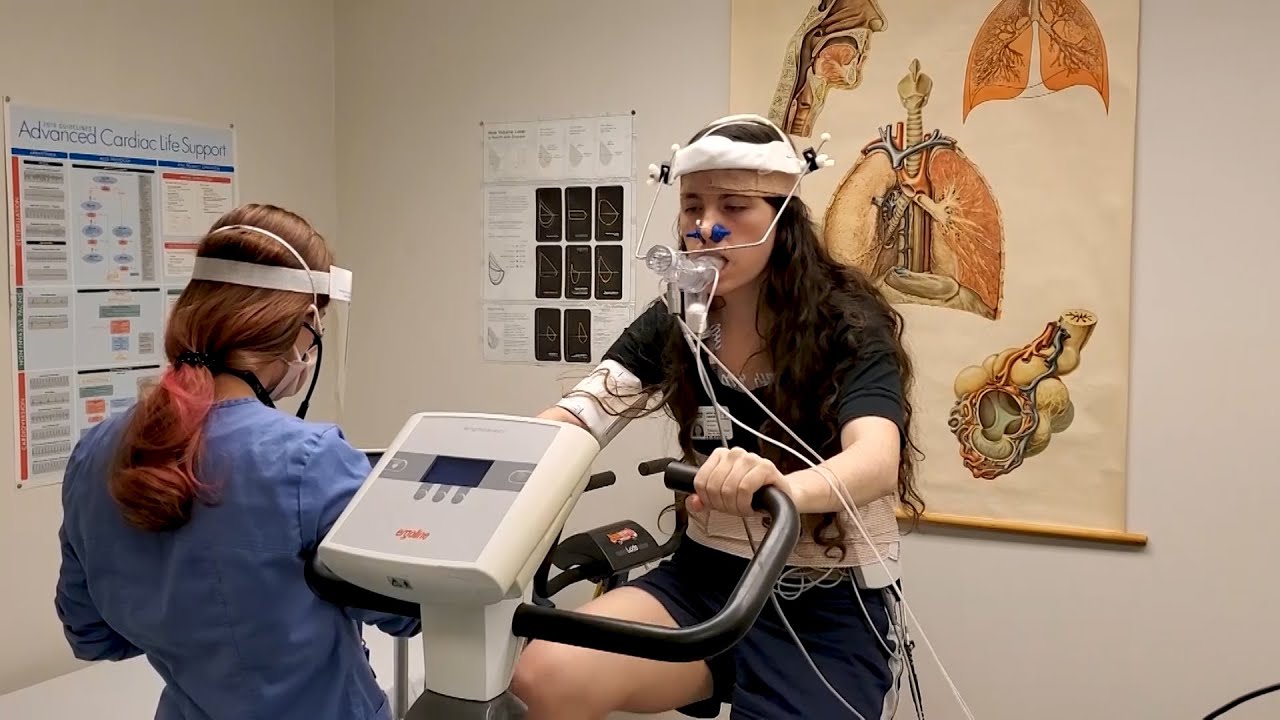
Novel coronavirus (COVID-19) symptoms can last weeks or months for some people. These patients, given the name "long haulers", have in theory recovered from the worst impacts of COVID-19 and have tested negative. However, they still have symptoms. There seems to be no consistent reason for this to happen.
 
British and U.S. researchers conducted a web-based survey involving over 3,700 people who had suspected or confirmed COVID-19 -- the effects of which were seen to be prolonged over more than 28 days. And out of that survey no fewer than 205 symptoms were categorized in ten organ systems.One-third of respondents with lab-confirmed COVID-19, part of a study published this week in JAMA Network Open involving 177 people, experienced lingering symptoms persistently continuing for a median of six months. This, even among those people who had experienced mild illness.
 
Professor Daniel Altmann specializing in immunology at Imperial College London, estimated the number of those affected by long COVID in the United Kingdom "is  roughly equivalent" to the number of people in the U.K. with rheumatoid arthritis. Professor Altmann and Rosemary Boyton stated that at least ten percent of people with symptomatic COVID-19 can leave a "lingering trail" of changes visible on CT scans of the lungs. The virus causing inflammation of the heart muscle, by attacking the same receptors in the heart, they wrote in the British Medical Journal.
 
Drs. Altmannn and Boyton wrote that gastrointestinal biopsies taken four months following an infection "show persistent live virus in about a third of individuals", in line with some studies that suggest SARS-CoV-2 virus can persist in the liver and spleen. What puzzles them is whether this indicates that people haven't managed to clear the virus, or some other underlying cause yet to be determined is involved. 
 
Dr.Marshall, on the other hand, theorizes that in most long-haul instances symptoms may be consistent with an autoimmune disorder -- itself caused by the body's widespread inflammatory response to the virus when someone's immune system goes completely out-of-whack, over-compensating harmfully to the viral intruder.
 
Act Now! Wear a mask. Stay 6 feet apart. Avoid crowds.
An international effort is now underway for doctors to explore the situation rigorously in an effort to arrive at a global consensus regarding what "long COVID" represents in an effort to explicate its cause. The lingering effects of COVID-19 has been afflicting quite a large number of post-COVID individuals left anxious and depressed; even while the medical community considers them to be 'recovered', they suffer from lingering effects of the virus, post-infection.

Most people undergo mild and short-lived effects from the coronavirus yet increasing numbers of other people report a puzzling array of symptoms, including breathlessness, exhaustion, tingling throughout the body, anxiety, brain fog and memory problems going on for weeks, even months after what appeared to be a mild infection. Health Canada considers 'recovery' to be consistent with the passage of at least ten days since the start of symptoms at which point infectiousness has passed, there is no longer fever, and "their symptoms have improved (even if not yet fully resolved)".

"It's a whitewash that conceals the fact that a large percentage of people are not recovering in 14 days", scoffs Susie Goulding. To which Dr.Marshal, a trauma surgeon, responds "You have to be able to define it". Recently Dr.Marshall co-chaired a World Health Organization group tasked with developing criteria for a working diagnosis for what the WHO calls the Post COVID-19 condition". And what Dr.Marshall looks for, is answers to:What's the epidemiology -- how common are the different symptoms: How many who've had COVID get it? Are there risk factors for acquiring it?

 
https://healthydebate.ca/wp-content/uploads/2020/12/pexels-edward-jenner-4033152-scaled-e1608316138569g.jpg
 Canadian Researchers looking into COVID "long-haul" effects.  Maeve Gamble

Older people and people with many serious medical conditions are the most likely to experience lingering COVID-19 symptoms, but even young, otherwise healthy people can feel unwell for weeks to months after infection. The most common signs and symptoms that linger over time include:

  • Fatigue
  • Shortness of breath
  • Cough
  • Joint pain
  • Chest pain

Other long-term signs and symptoms may include:

  • Muscle pain or headache
  • Fast or pounding heartbeat
  • Loss of smell or taste
  • Memory, concentration or sleep problems
  • Rash or hair loss
Mayo Clinic

Labels: , , , ,

Saturday, November 28, 2020

Perplexing, Overwhelming : Who Gets The Bed

"It was like a forest fire, and all I had was a garden hose. [She died] and we watched this. What were her fears? Her hopes? None of that."
"I don't think the community knows that these conversations [with hospital ethicists on how to ration care] are going on. We're talking about them -- we're not talking about something esoteric about ourselves. We're talking about how ICUs, if we reach the limitation of our capacity to treat COVID patients, then we're going to have to make decisions about who gets the bed." 
"We're going to be following some of the sequelae of this acute, news-grabbing issue [people who don't appear to fully recover from COVID-19] for the next several years."
"Only it won't be so news-grabbing, because it will just be people with chronic disease that happened a long time ago with something we called COVID."
Dr.Peter Goldberg, head, critical care program, McGill University Health Centre
Doctors are looking for markers to predict the likelihood of “critical events” and death from COVID-19 — signs, like fast breathing, high blood pressure or elevated proteins in the blood, that someone might go from sitting on the edge of his or her hospital bed eating lunch, to sudden intense distress, to being sedated, and being lost.
Doctors are looking for markers to predict the likelihood of “critical events” and death from COVID-19 — signs, like fast breathing, high blood pressure or elevated proteins in the blood, that someone might go from sitting on the edge of his or her hospital bed eating lunch, to sudden intense distress, to being sedated, and being lost. Saltwire
"The way his abdomen was contorting and the way his muscles in his chest wall and thoracic cage were contracting -- when I contrast that to the same guy who poked fun at me in my broken Italian, that was truly heartbreaking for me."
"He didn't use a cane. He was full of personality. He was gregarious, he had his wits about him, he was a father. He was life."
"These are the stories, this is the burden of trauma that I'm seeing inside those walls. I feel like so much of this pandemic has been reduced to this narrative of what form of life is more valuable or expendable than other forms of life."
Dr.Abda Sharkawy, infectious disease specialist, Toronto General Hospital

"If these are young people or middle-aged people we can offer some extraordinary support measures, like putting you on cardiopulmonary bypass basically [where a machine pumps and oxygenates blood]."
"The one unusual way that people with COVID-19 die is with bleeding and clotting problems."
"If there is anything more distressing than seeing someone die, it is seeing them die alone, or a nurse holding up a phone on Zoom or Skype so that family members can watch this."
Dr.Anand Kumar, intensive care doctor, Winnipeg Regional Health Authority
The number of patients in Ontario hospitals typically peaks in January. Data obtained by CBC News shows acute care hospitals with high occupancy rates even in early fall. (Frank Gunn/The Canadian Press)
 
The cardiopulmonary bypass mentioned by Dr.Kumar is a procedure that in extremis can temporarily take over heart-lung function to allow the organs to begin healing after a traumatic assault by COVID.  The process can work for a limited time, perhaps weeks in the hope that lungs may heal although the result can lead to two-thirds of patients developing multiple organ failure. The heart begins to fail, the kidneys fail, the liver begins to fail. It's similar to what happens to people on dialysis or those with diabetes-related organ injury.

Mystery of the COVID 'long-haulers'  PBS.org
Medical experts continue to be perplexed over the complexity of the SARS-CoV-2 virus's effect on the human body as they attempt to understand the nature of COVID-19; unpredictable, barely affecting some people and dreadfully harming and even killing others. 
 
Age is known to be one of the variables, along with underlying medical conditions, but there are no guarantees; many victims don't fit those neat categories; young, fit people collapse, suffer organ failure and die, while some in fully advanced age and burdened with medical conditions somehow manage to survive.

Still, some progress has been made. Doctors recognize emerging patterns and developing models, studying them, searching out predictive markers for the likelihood of 'critical events' and death occurring. Symptoms such as fast breathing, high blood pressure, elevated proteins in the blood that might cause someone to transit from being seated on the edge of a hospital bed having lunch, to suddenly exhibiting intense distress, having to be sedated, doctors watching helplessly as they expire from life. 

In Canada, cases are rising so steadily in this second wave that it's expected to begin seeing 20,000 to 60,000 daily cases by December's end, according to federal modelling. The official death toll is 11,856 and counting. Deaths are on the rise in all regions of the country, according to University of Toronto infectious disease researcher, Dr.Tara Moriarty. Canada has attained the third-highest case fatality rate of 3.5 to date among its peer countries: "higher even than Spain, France, the U.S.A. and Germany". And yet the case fatality ratio estimates only the number of deaths among identified, confirmed cases "meaning that we're likely significantly underestimating the full size of the epidemic".

Oakville, Ont. resident Rose Foy was already worried about her son-in-law having quadruple bypass surgery. The 48-year-old husband of Foy's daughter has long suffered from health problems, including a stroke five years ago and a heart attack earlier this fall.After his five-hour open-heart procedure on Nov. 10, Foy's concerns grew — scans showed her son-in-law had a popped internal stitch. Then, on his fourth day recovering at Toronto General Hospital, he was discharged. Staff told her daughter the hospital was getting ready for an influx of COVID-19 patients, Foy said."I can't believe I had to drive him home so soon," she recalled, adding that at every bump on the highway ride to her son-in-law's Oakville home, he would cry out in pain.The family's experience comes as Ontario hospitals are increasingly facing a juggling act. Many of the thousands of surgeries put off by the first wave of the pandemic are now being scheduled, all while COVID-19 admissions keep rising. The family was initially told her son-in-law would be in intensive care for two to three days, Foy explained, plus another four to five days in a cardiac unit. "He had serious surgery. He needed to be in that hospital for at least a few days more," she said. "You can't just discharge people because of COVID." CBC

Of the more than 9,500 people in Canada who died of COVID in the first wave -- March to July -- 90 percent had one other cause, condition or complication at least, reported on the death certificate (comorbidity), according to Statistics Canada. Dementia or Alzheimer's being the most common condition associated with deaths involving COVID, listed on death certificates of 42 percent of women, 33 percent of men. Over half of those seniors age 80 and older who live in long-term care have dementia.

Cancer, nervous system disorders such as Parkinson's, or ALS, respiratory disease, diabetes, kidney failure, heart disease, high blood pressure and pneumonia all increase the risk of a lethal case of COVID occurrence, and all are more common within age groups 65 and up, accounting for 94 percent of all COVID-related deaths in the first wave. On the other hand, those chronic conditions and diseases affect millions of other Canadians, three million of whom regardless of age live with diabetes, over seven million with hypertension.

COVID Long-Hauler "Suppose you suddenly are stricken with COVID-19. You become very ill for several weeks. On awakening every morning, you wonder if this day might be your last."
"And then you begin to turn the corner. Every day your worst symptoms — the fever, the terrible cough, the breathlessness — get a little better. You are winning, beating a life-threatening disease, and you no longer wonder if each day might be your last. In another week or two, you’ll be your old self."
"But weeks pass, and while the worst symptoms are gone, you’re not your old self — not even close. You can’t meet your responsibilities at home or at work: no energy. Even routine physical exertion, like vacuuming, leaves you feeling exhausted. You ache all over. You’re having trouble concentrating on anything, even watching TV; you’re unusually forgetful; you stumble over simple calculations. Your brain feels like it’s in a fog."
Your doctor congratulates you: the virus can no longer be detected in your body. That means you should be feeling fine. But you’re not feeling fine."
Anthony Komaroff, MD Editor in Chief, Harvard Health Letter
COVID-19 survivors open up about lingering symptom
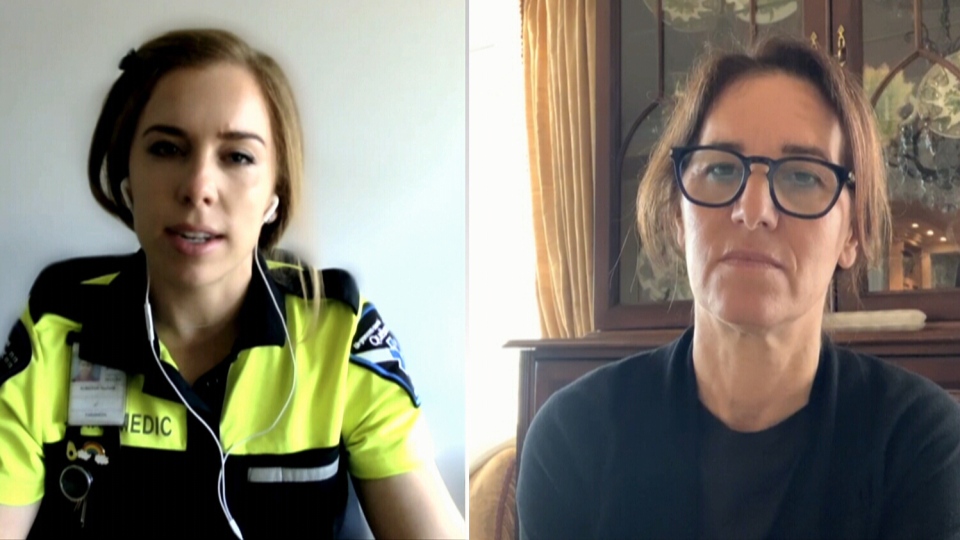
Rachelle Aubichon, left, and Jodi Fellner share what it's like to experience lingering COVID-19 symptoms months after they contracted the disease.  CTV News
 

Labels: , , , , ,

 
()() Follow @rheytah Tweet