Ruminations

Blog dedicated primarily to randomly selected news items; comments reflecting personal perceptions

Tuesday, March 18, 2025

Protecting Canada's Medical Supplies from Tariffs

"The announced tariffs on Canadian exports, along with retaliatory tariffs imposed by Canada on the U.S., will likely bring significant risks to Ontario's health care system, including the disruption of access to vital equipment and supplies."
"The OHA [Ontario Hospital Association] is very concerned about the impact of this trade war on the delivery of care and is engaging with the federal and provincial governments and other stakeholders to fully understand and minimize the impact on hospitals."
"[Much is still unknown in the] evolving [political climate]."
Melissa Prokopy, vice-president, policy and advocacy, Ontario Hospital Association 

"We do stand with the government, you know, that U.S. tariffs cannot go unanswered. However, health care must be protected."
"We are looking for exemption of health-care products from any retaliatory tariffs."
"This will be very important to protect supply chain stability and prevent any kind of cost escalations." 
Christine Donaldson, chief executive, Health PRO Canada
https://smartcdn.gprod.postmedia.digital/financialpost/wp-content/uploads/2025/03/0315-mg-healthcare.jpg?quality=90&strip=all&w=564&h=423&type=webp&sig=MJVzLy4yfllrxGYTtf1FmQ
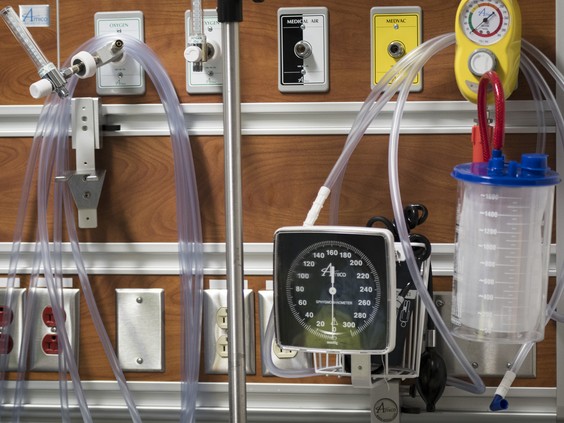
In a global supply system, making pharmaceuticals and medical devices often involves multiple countries, so it might be difficult to pinpoint all the specific components that come through the U.S. that might be subject to counter-tariffs. Photo by Tijana Martin/The Canadian Press files

Federal and provincial governments in Canada are being urged by health associations to make certain that patients in Canada will not become caught in the crossfire of the trade war that the new Trump administration in the U.S. has imposed upon Canada. HealthPRO Canada, a company which purchases medications, supplies and equipment for over 2,000 hospitals, health-care facilities and long-term care homes across the country announced it is seeking clarity on potential future counter-tariffs. 

The company's chief executive made a comparison to the automotive industry, with the manufacturing process for many health-care supplies where raw materials and components often cross borders "several times before they reach their finished production". In other words, a fully integrated system of production shared by the U.S. and Canada. The imposition of tariffs entirely disrupts the free flow of materials and finished products.

While it is not yet clear which products in particular could potentially be affected by future counter-tariffs, some essential medications, medical devices and diagnostic imaging equipment -- including MRI and CT scanners, surgical tools and ventilators -- frequently are manufactured in the United States. 

Hospitals could also be affected through counter-tariffs on food, mattresses and other non-medical goods in the uncertainty brought about by the ongoing trade war, when U.S. President Donald Trump decided that he was dissatisfied with the existing U.S.-Canada-Mexico free trade agreement that he signed on to during his first presidential term, expressing his satisfaction at the time that negotiators representing the three North American countries had hammered out a good free trade agreement.
 
https://www.ctvnews.ca/resizer/v2/JPM4YDWPIZDQPHAVGOREGEA3KU.jpg?smart=true&auth=177e9d7742c980e952ef8e7e0686793755c0bc50b02ce03cffb238ad72b278c9&width=1600&height=899
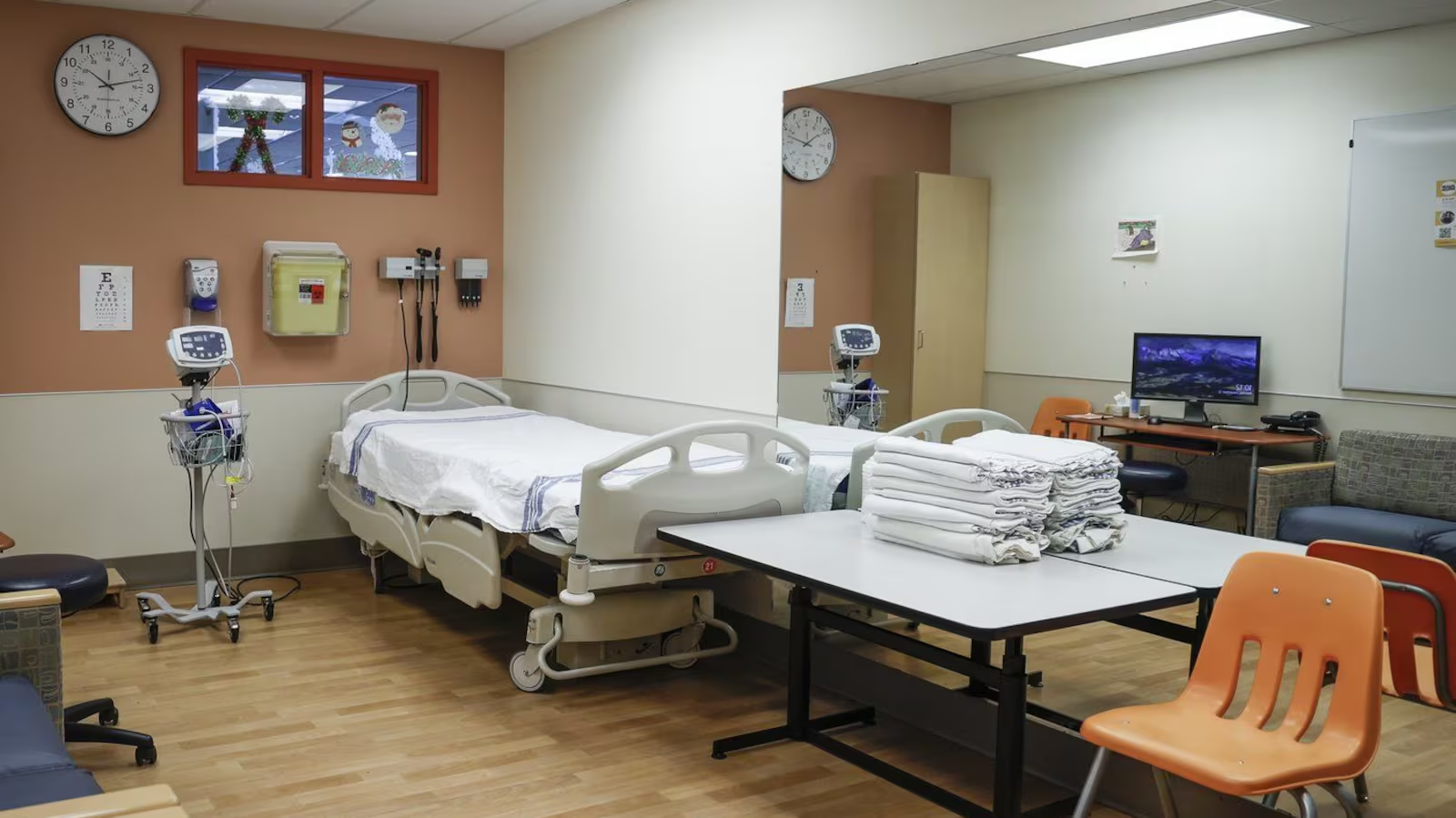
A treatment room is pictured at the Alberta Children's Hospital in Calgary, Alta. THE CANADIAN PRESS/Jeff McIntosh
 

The types of medical devices most affected by tariffs on China, Mexico, and Canada include:

  1. Medical Imaging Equipment: Devices such as MRI machines, CT scanners, and X-ray machines are heavily impacted due to their reliance on imported components.
  2. Surgical Instruments: Many surgical tools and instruments are imported, and tariffs can significantly increase their costs.
  3. Diagnostic Equipment: Devices used for diagnostics, including blood analyzers and other laboratory equipment, are also affected.
  4. Electronic Medical Devices: This category includes devices like pacemakers, defibrillators, and other electronic health monitoring equipment.
  5. Personal Protective Equipment (PPE): Items such as gloves, masks, and gowns, which are crucial for healthcare workers, face increased costs due to tariffs.

Labels: , , , , ,

Wednesday, March 29, 2023

Drug-Resistant , Hospital Acquired Fungal Pathogen

"[They're not] thermo-tolerant. They don't grow well in hot conditions and by hot, I mean body temperatures, like us. Like, 37 degrees [Celsius]."
"Fungi are an entire kingdom of life of their own. They're quite distinct from other organisms."
"[They're microscopic, in many cases] except when they come up as mushrooms." 
"They consist of everything from yeast that raise bread and make beer, to moulds and mildews and all the terrible things that affect our crop plants."
"[But they're also] fantastic chemists. They make such amazing molecules. [Penicillin comes from a fungus; the antibiotic era was launched out of the discovery of penicillin]."
"It probably jumps onto your skin first. You can imagine, especially if you're in a hospital, where there's lots of lines into you, and you're being poked and prodded a lot, it creates an opportunity for the skin to break and the fungus to get in."
Professor Gerry Wright, Department of Biochemistry and Biomedical Sciences, McMaster University
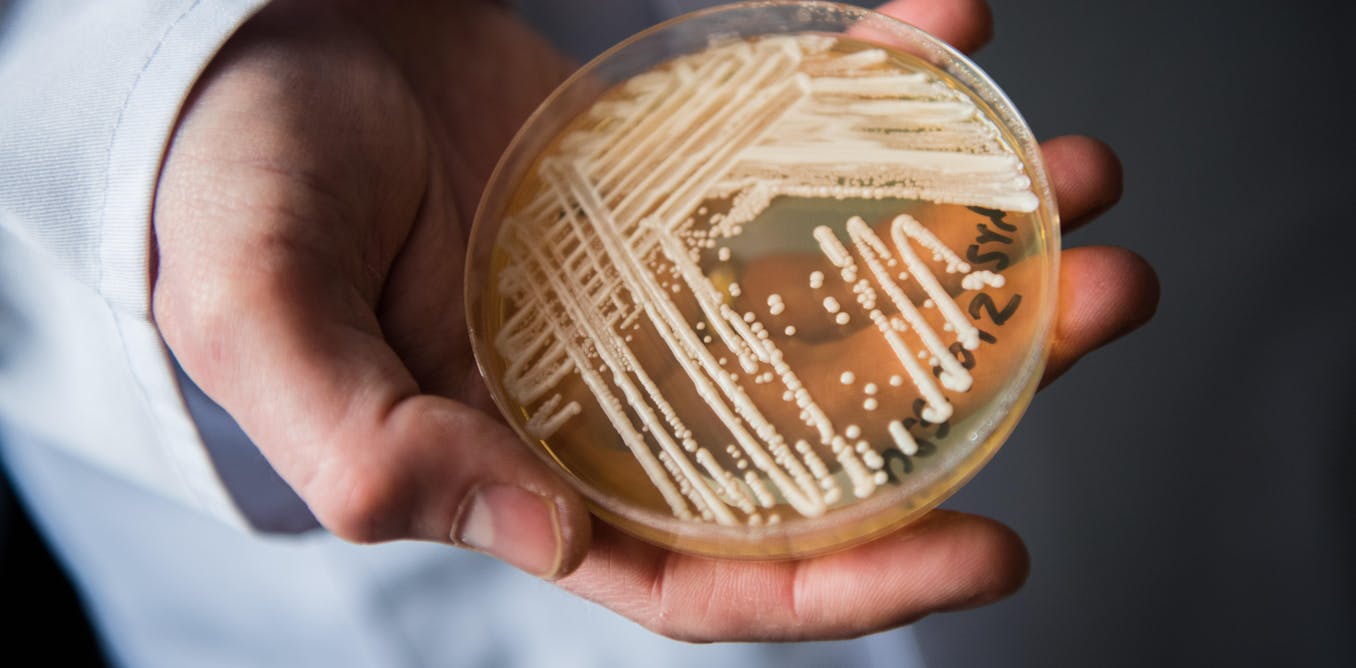
a strain of Candida auris cultured in a petri dish at a CDC laboratory.
Also concerning was a tripling in 2021 of drug-resistant cases. Photograph: Shawn Lockhart/AP
 
The name of the fungus that is causing such consternation for its lethality and its future spread considered a new and burgeoning "urgent threat" to humans is candida auris. Unlike most fungi that affect humans this one is able to reproduce in warm-blooded bodies and it is "intrinsically resistant" to multi antifungal drugs. Candida auris has alarmed American hospitals where it has been spreading at an alarming rate. According to the U.S. Centers for Disease Control and Prevention, candida auris cases tripled between 2020 and 2021,

People who are extremely ill or who are immunocompromised represent those at increased risk of acquiring C. auris; generally it does not represent a health threat to healthy people. Its death rate is 28 to 53 percent, According to the World Health Organization. Canada's Public Health Agency has reported a total of 43 cases. In the U.S. the total is 4,041.

Professor Wright has focused on the study of fungi for the past 40 years, beginning when the HIV crisis was peaking. "Folks were dying", because their collapsing immune systems were unable to fend off "opportunistic" infections such as fungal infections.  Candida Auris is a form of yeast first discovered in 2009 in Japan, when a 70-year-old-woman's ear canal was found to be hosting the fungus. Infections of the blood, heart, central nervous system, eyes, bones and internal organs can be caused by the organism.

CDC issues warning about increase of drug-resistant Candida ...
Candida auris, CDC
Candida Auris has been found on sinks in hospitals, on bed rails, on curtains and floors "where it can persist for up to a month", according to the University of Minnesota Centers for Infectious Disease Research and Policy. "Right now this is not something that people walking down the street should be frightened of", cautions Professor Wright. Those with weak immune systems and hospital patients with "indwelling" medical devices such as ventilators and catheters are the most vulnerable.

"We really didn't know anything about candida auris until the first report [in 2009]. But almost simultaneously, it was discovered pretty much all around the world, and it sort of emerged all at once", explained Professor Wright. According to one hypothesis, as the world's temperature increased, the fungus adapted to survive in warmer environments "and that provided it with an opportunity to infect humans", stated Dr. Wright. In the mid-1980s once antiretroviral drug cocktails became "groundbreakingly" effective against HIV, invasive fungal infections were reduced in number to a dramatic extent.

And now, Professor Wright believes the time is right to take infectious diseases as seriously as medical science takes chronic diseases like diabetes and cancer. Complacency surrounding infectious diseases because of vaccines and antibiotics has led medical science to neglect the need to focus on research that will prepare the world for ever greater numbers of emerging pathogens and the steps needed to deal with their presence either through cures, new vaccines or therapies that can prolong life, not the pathogens.

https://images.theconversation.com/files/517909/original/file-20230328-22-th38o.jpg?ixlib=rb-1.1.0&rect=0%2C738%2C6016%2C3008&q=45&auto=format&w=1356&h=668&fit=crop
dpa picture alliance/Alamy Stock Photo
"This is like the genie out of the bottle. These bugs are here,they're in our hospital systems, they're in our long-term care facilities. They're not going to get any easier to treat."
"We don't know how bad it's going to be, but people are going to die, and we need to be aware of it and find ways to detect it in the first place, but also to treat it."
"...If you're in a long-term care facility it's unlikey that you're going to be able to detect it until there's an outbreak. It's not routinely looked for. It might be in the future, as this starts to grow."
"[The result:] You have this sort of almost perfect storm. You don't have a lot of drugs available to treat a fungal infection in the first place, you've got a pathogen that has evolved the ability to infect us because it's learned how to live at higher temperatures, and that fungus happens to be intrinsically drug-resistant to begin with."
Professor Gerry Wright

Labels: , , , , , ,

Friday, October 01, 2021

"A Crisis of the Unvaccinated"

"I think burnout and trauma looks like dreaming about those deaths or seeing those faces [of former patients who died]."
"When I heard 34 deaths [in Alberta, Wednesday], that's what triggered it. I heard, oh my goodness, so many deaths. Now I'm remembering every -- every-- story that I could remember." 
"What bothers us -- or torments us, I guess -- is that these patients often are alone, and nobody should die alone. But it's also difficult that we have the volume that we have -- you can't be with every single patient."
"I think more and more physicians, particularly, and health-care workers are speaking about how they're feeling, how exhausted they're feeling, and there's some comfort in that -- misery likes company."
"You feel better that you're not the only one going through it."
Dr.Neeja Bakshi, internal medicine ward, Royal Alexandra Hospital, Edmonton, Alberta

"What's become really clear is it's really the people, the workforce, that becomes a critical issue."
"It's been tough on morale and people are tired, lots of people are off, being burnt out, and such and it's put a lot of demand on the people that are here."
Dr.Paul Boucher, intensive care, president, Alberta Medical Association

"By the time they come in to us they're so sick that they just can't focus on anything other than just trying to stay alive. This one is hitting us hard and fast every time we turn around and we can barely keep up with the patients."
"Right up to the point where we're saying 'Listen, we're getting to the point where we're going to have to put a breathing tube into you', they're denying that they have COVID." 
"Part of that denial is what's bringing them in so sick in the first place, because they've spent so much time at home trying to ignore the fact they're sick."
Carlene Cooke, emergency room nurse, Royal Alexandra Hospital, Edmonton
 
"Every time there's been a wave, the ICU becomes increasingly more involved."
"Pretty much anybody, when  you come to ICU, you're scared. That's a bad day. So they're unhappy."
"The families, they're fearful, too, no matter what the situation is, and it's made worse by the fact they can't visit."
Dr.Erika MacIntyre, Edmonton Zone Medical Staff Association president, intensivist and respirologist, Misericordia hospital, Edmonton 
A staff member works in an Alberta hospital ICU during the COVID-19 pandemic. On Wednesday, there were 1,084 people being treated for COVID in hospital, 268 of whom were in intensive care beds. (AHS)
 
Of all of Canada's provinces, Alberta is facing the most extreme episodes of hospitalization and deaths due to the Delta variant of COVID, and the fact that it has the highest rate of vaccine rejection among its population, particularly in rural areas. Anti-vaxxer pushback against government and medical authorities' efforts to convince Albertans that the contagion will ebb only when enough people are vaccinated fall on deaf ears. And these are the very people, most vulnerable in the province, who are clogging the health-care system.

A shocking 34 COVID patients died on Wednesday alone, in Alberta representing the  highest death toll due to the SARS-CoV-2 virus since the pandemic began, to take place within a 24-hour stretch. The internal medicine ward at the Royal Alexandra Hospital is where patients are admitted for treatment when they're not yet sufficiently ill to be transferred to the intensive care unit. The former is where patients are told to lay on their stomach, to heave deep breaths, to walk if they can manage it, in an effort to assist the body fighting off the disease.

There are 1,084 people in Alberta Hospitals, according to provincial statics, 268 of whom are now fighting for their lives in intensive care units. The total number of active cases stands at 20,306 in the province where its premier, Jason Kenney speaks of it as a "crisis of the unvaccinated". Seriously ill patients unable to be accommodated in COVID-crammed hospitals have been air-lifted elsewhere, to other provinces willing to take them because their hospitals are in a less parlous state.

Hospitals in Alberta with cases rising since mid-August, are on the verge of implementing a triage protocol which would lead to doctors having to determine who would receive hospital treatment and who would be turned away in a situation where, over the past two weeks, case  rates are escalating in rural areas and among school-age children. Modelling predicts that cases will peak some time around mid-October, leaving hospitals expecting at least another two weeks of continuing pressure on their services.

The crisis is multi-faceted given the reality of a space crisis with patients requiring beds, ventilators, oxygen. Multiple patients are placed together per room doctors and nurses applying their skills in cramped spaces checking on patients keeping up with increasing rates of vital signs reflecting the unpredictability of the virus. All that being a given, the crisis's real and most serious shortage is medical personnel. Morale among medical staff is low, and there are fears that the strain will lead ultimately to people leaving their jobs and their profession.

What strikes doctors on the front lines is not quite only the number of increasing mortalities, but that this is an illness that is preventable, and those who succumb to it without taking the most basic of precautions -- inoculation -- present at hospital seriously ill. And then there is the crux of the problem; misinformation absorbed by people refusing vaccines, demanding instead alternative treatments such as ivermectin, the anti-parasitic many are led to believe represents an effective COVID treatment.
"The ones that are really gung-ho about sometimes refusing intubation, demanding ivermectin, for example, and really not accepting the diagnosis of COVID, those are very, very rare circumstances, but because they're so extreme they're really the ones that stand out."
"You can see the emotional drain that everybody has been facing. The physical exhaustion of managing these patients, managing the current environment in terms of ongoing staff shortages, and people working harder than they normally would be working."
Dr.Shazma Mithani, intensive care unit, Royal Alexandra Hospital, Edmonton
Bernie Cook was hesitant to get the vaccine when he caught COVID. His sickness gave him first-hand experience through one of Alberta's crowded ICUs. Now he's warning others to take action to avoid the same fate.   CBC

Labels: , , ,

Saturday, September 04, 2021

Frustration and Agitation

"I think it's the ultimate selfishness that individuals choose not to vaccinate themselves. And I think they don't realize they are too arrogant to understand that we live in a society where we all have to make sacrifices."
"For the [hospital] staff, it's exhausting. It's challenging when you have somebody come in who is there when there was a simple route to preventing what they came in with-- a COVID infection."
"Our job is to be professional, but it's very trying for nurses and doctors and all the other health-care professionals to look at somebody who made a conscious decision not to get vaccinated."
Dr.Steven Fedder, emergency MD, Richmond, British Columbia

"It's really hard to grasp why any group of people would be protesting outside of hospitals, where we have vulnerable people coming in to seek medical care."
"I think people are getting really aggressive about the vaccine issue and I'm scared. I'm scared for my family,"
"I have little children as well and I know many other colleagues in the same sort of boat as me have faced a lot of pushback."
Dr.Amit Arya, palliative care physician, Kensington Health, Toronto
passport protest
Thousands of demonstrators attended an anti-vaccine passport protest in Montreal on Aug. 28. CTV
 
As the global experience with the pandemic wears on with one wave after another and governments enact restrictions in response when all else seems to fail, including restrictions, many in the general public have taken to loudly expressing their counter-opinions of everything wrong with the decisions made by health authorities advising government action. In Canada, since some provinces brought forward plans to require vaccination 'passports' to access restaurants, movie theatres and gyms, anti-vaxxers have increased their incensed protests of impediments to their human rights.

Protesters grouping and shouting vociferously outside the University Health Network particularly incensed palliative care physician Dr. Amit Arya for disrupting patients and staff to the extent where both were unable to enter the hospital. Both patients seeking urgent medical assistance at one of the gravest periods in their lives and staff under pressure to provide emotional and professional assistance to these vulnerable people, are in no condition to be confronted by irate people furious over the self-protective steps the novel coronavirus' unstoppable surges require.

The large and unruly groups of anti-vaccination protesters that assemble outside hospitals across the country reflect similar occurrences elsewhere in the world as people ventilate their frustration and grievances against both medical advisers and government agencies all of whom are consumed by the need to enact responsible response mechanisms in an effort to reduce virus infections among the population at large.That the most vulnerable in any population are those represented in worst-case-infection scenarios and are further impacted by those who are least likely to face serious consequences only adds to the frustration of medical staff.

Invariably, many of those leading or taking part in the protests, denouncing vaccines, refusing to follow distancing and mask-wearing regulations eventually contract COVID. When they appear for treatment consequently, it can be difficult for medical staff to muster sympathy as they work to restore these people to health. According to Dr.Fedder, it is past time that employers -- private and public -- mandate vaccines. In so doing, messaging people who prefer to ignore the science upholding vaccinations. Fear of unemployment, he feels, could act as a spur to convince the unconvinced.

While case numbers remain troublesome and begin to accelerate in size and hospitals scramble to service the needs of all who are hospitalized, people with other serious illnesses defer decision-making to expose themselves to the potential of contracting the virus. Hospitals and medical workers are distracted by COVID numbers requiring treatment and are unable to respond to those requiring medical care for other, serious illnesses, and needed surgeries are placed on hold.
 
Thousands of people unhappy over the B.C. vaccine pass and other COVID-19 restrictions protested outside Vancouver General Hospital and Vancouver city hall on Wednesday.
With COVID sufferers occupying all available beds, there is no room to accommodate the needs of those suffering ill health aside from the coronavirus complications. People suffering from the effects of chronic impaired health conditions will often avoid appearing at hospital emergency facilities when COVID cases are spiking, and in the process their health conditions spiral out of control. 

Meanwhile, many of those same protesters who claim that government and big Pharma have concocted the SARS-CoV-2 virus threat for the purpose of control on the part of government, and for fattening the bottom line in the instance of the pharmaceutical industry, while denying the efficacy of vaccines and claiming that inoculation brings on COVID and worse, barely hesitate before clasping the pseudo-science of unproven drugs as COVID 'cures'.
"Ivermectin advocates pool effects from observational studies that are very questionable, and from randomized controlled trials that may or may not be randomized and, in general, are poorly conducted and, in some cases fraudulent."
"Ivermectin overdoses can cause nausea, vomiting, diarrhea, hallucinations, blurred vision,  tremors, abnormally rapid breathing, seizures, coma and death."
"Ivermectin advocates claim governments, politicians, 'Big pharma' and mainstream media are suppressing evidence that the drug is effective. Ivermectin is a favourite of anti-vaccine, conspiracy theorists who claim COVID could easily be controlled with cheap, off-patent drugs like ivermectin."
Dr.Donald Vinh, infectious diseases specialist, Montreal
Protesters listen to a speaker as they gather outside Toronto Police Headquarters to voice opposition to COVID-19 vaccines and other COVID-19 related restrictions on Thursday September 2, 2021. THE CANADIAN PRESS/Chris Young.

Labels: , , ,

Saturday, November 28, 2020

Perplexing, Overwhelming : Who Gets The Bed

"It was like a forest fire, and all I had was a garden hose. [She died] and we watched this. What were her fears? Her hopes? None of that."
"I don't think the community knows that these conversations [with hospital ethicists on how to ration care] are going on. We're talking about them -- we're not talking about something esoteric about ourselves. We're talking about how ICUs, if we reach the limitation of our capacity to treat COVID patients, then we're going to have to make decisions about who gets the bed." 
"We're going to be following some of the sequelae of this acute, news-grabbing issue [people who don't appear to fully recover from COVID-19] for the next several years."
"Only it won't be so news-grabbing, because it will just be people with chronic disease that happened a long time ago with something we called COVID."
Dr.Peter Goldberg, head, critical care program, McGill University Health Centre
Doctors are looking for markers to predict the likelihood of “critical events” and death from COVID-19 — signs, like fast breathing, high blood pressure or elevated proteins in the blood, that someone might go from sitting on the edge of his or her hospital bed eating lunch, to sudden intense distress, to being sedated, and being lost.
Doctors are looking for markers to predict the likelihood of “critical events” and death from COVID-19 — signs, like fast breathing, high blood pressure or elevated proteins in the blood, that someone might go from sitting on the edge of his or her hospital bed eating lunch, to sudden intense distress, to being sedated, and being lost. Saltwire
"The way his abdomen was contorting and the way his muscles in his chest wall and thoracic cage were contracting -- when I contrast that to the same guy who poked fun at me in my broken Italian, that was truly heartbreaking for me."
"He didn't use a cane. He was full of personality. He was gregarious, he had his wits about him, he was a father. He was life."
"These are the stories, this is the burden of trauma that I'm seeing inside those walls. I feel like so much of this pandemic has been reduced to this narrative of what form of life is more valuable or expendable than other forms of life."
Dr.Abda Sharkawy, infectious disease specialist, Toronto General Hospital

"If these are young people or middle-aged people we can offer some extraordinary support measures, like putting you on cardiopulmonary bypass basically [where a machine pumps and oxygenates blood]."
"The one unusual way that people with COVID-19 die is with bleeding and clotting problems."
"If there is anything more distressing than seeing someone die, it is seeing them die alone, or a nurse holding up a phone on Zoom or Skype so that family members can watch this."
Dr.Anand Kumar, intensive care doctor, Winnipeg Regional Health Authority
The number of patients in Ontario hospitals typically peaks in January. Data obtained by CBC News shows acute care hospitals with high occupancy rates even in early fall. (Frank Gunn/The Canadian Press)
 
The cardiopulmonary bypass mentioned by Dr.Kumar is a procedure that in extremis can temporarily take over heart-lung function to allow the organs to begin healing after a traumatic assault by COVID.  The process can work for a limited time, perhaps weeks in the hope that lungs may heal although the result can lead to two-thirds of patients developing multiple organ failure. The heart begins to fail, the kidneys fail, the liver begins to fail. It's similar to what happens to people on dialysis or those with diabetes-related organ injury.

Mystery of the COVID 'long-haulers'  PBS.org
Medical experts continue to be perplexed over the complexity of the SARS-CoV-2 virus's effect on the human body as they attempt to understand the nature of COVID-19; unpredictable, barely affecting some people and dreadfully harming and even killing others. 
 
Age is known to be one of the variables, along with underlying medical conditions, but there are no guarantees; many victims don't fit those neat categories; young, fit people collapse, suffer organ failure and die, while some in fully advanced age and burdened with medical conditions somehow manage to survive.

Still, some progress has been made. Doctors recognize emerging patterns and developing models, studying them, searching out predictive markers for the likelihood of 'critical events' and death occurring. Symptoms such as fast breathing, high blood pressure, elevated proteins in the blood that might cause someone to transit from being seated on the edge of a hospital bed having lunch, to suddenly exhibiting intense distress, having to be sedated, doctors watching helplessly as they expire from life. 

In Canada, cases are rising so steadily in this second wave that it's expected to begin seeing 20,000 to 60,000 daily cases by December's end, according to federal modelling. The official death toll is 11,856 and counting. Deaths are on the rise in all regions of the country, according to University of Toronto infectious disease researcher, Dr.Tara Moriarty. Canada has attained the third-highest case fatality rate of 3.5 to date among its peer countries: "higher even than Spain, France, the U.S.A. and Germany". And yet the case fatality ratio estimates only the number of deaths among identified, confirmed cases "meaning that we're likely significantly underestimating the full size of the epidemic".

Oakville, Ont. resident Rose Foy was already worried about her son-in-law having quadruple bypass surgery. The 48-year-old husband of Foy's daughter has long suffered from health problems, including a stroke five years ago and a heart attack earlier this fall.After his five-hour open-heart procedure on Nov. 10, Foy's concerns grew — scans showed her son-in-law had a popped internal stitch. Then, on his fourth day recovering at Toronto General Hospital, he was discharged. Staff told her daughter the hospital was getting ready for an influx of COVID-19 patients, Foy said."I can't believe I had to drive him home so soon," she recalled, adding that at every bump on the highway ride to her son-in-law's Oakville home, he would cry out in pain.The family's experience comes as Ontario hospitals are increasingly facing a juggling act. Many of the thousands of surgeries put off by the first wave of the pandemic are now being scheduled, all while COVID-19 admissions keep rising. The family was initially told her son-in-law would be in intensive care for two to three days, Foy explained, plus another four to five days in a cardiac unit. "He had serious surgery. He needed to be in that hospital for at least a few days more," she said. "You can't just discharge people because of COVID." CBC

Of the more than 9,500 people in Canada who died of COVID in the first wave -- March to July -- 90 percent had one other cause, condition or complication at least, reported on the death certificate (comorbidity), according to Statistics Canada. Dementia or Alzheimer's being the most common condition associated with deaths involving COVID, listed on death certificates of 42 percent of women, 33 percent of men. Over half of those seniors age 80 and older who live in long-term care have dementia.

Cancer, nervous system disorders such as Parkinson's, or ALS, respiratory disease, diabetes, kidney failure, heart disease, high blood pressure and pneumonia all increase the risk of a lethal case of COVID occurrence, and all are more common within age groups 65 and up, accounting for 94 percent of all COVID-related deaths in the first wave. On the other hand, those chronic conditions and diseases affect millions of other Canadians, three million of whom regardless of age live with diabetes, over seven million with hypertension.

COVID Long-Hauler "Suppose you suddenly are stricken with COVID-19. You become very ill for several weeks. On awakening every morning, you wonder if this day might be your last."
"And then you begin to turn the corner. Every day your worst symptoms — the fever, the terrible cough, the breathlessness — get a little better. You are winning, beating a life-threatening disease, and you no longer wonder if each day might be your last. In another week or two, you’ll be your old self."
"But weeks pass, and while the worst symptoms are gone, you’re not your old self — not even close. You can’t meet your responsibilities at home or at work: no energy. Even routine physical exertion, like vacuuming, leaves you feeling exhausted. You ache all over. You’re having trouble concentrating on anything, even watching TV; you’re unusually forgetful; you stumble over simple calculations. Your brain feels like it’s in a fog."
Your doctor congratulates you: the virus can no longer be detected in your body. That means you should be feeling fine. But you’re not feeling fine."
Anthony Komaroff, MD Editor in Chief, Harvard Health Letter
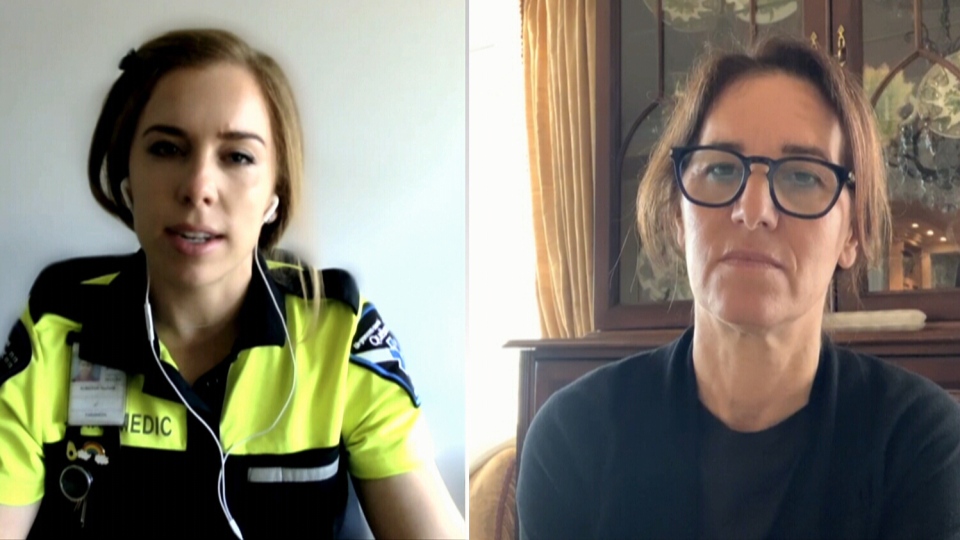
COVID-19 survivors open up about lingering symptom
Rachelle Aubichon, left, and Jodi Fellner share what it's like to experience lingering COVID-19 symptoms months after they contracted the disease.  CTV News
 

Labels: , , , , ,

Friday, April 03, 2020

Hospitals Gearing Up for COVID Rush, Emergency Admissions Decrease

"Before that trip [visit to New York] we were obviously all hearing about COVID, but everything was mostly business as usual. Now, going into the hospital, COVID is everywhere."
"I am hearing this is fairly similar across other emergency rooms in the Toronto area. We are seeing way, way, lower volumes of admissions overall."
"We're certainly hearing stories of people with abdominal pains and chest pains and all sorts of bad symptoms, like stroke symptoms, who are just not coming to the hospital because they're too afraid. It's actually somewhat of a tragedy."
Dr.Brett Belchetz, Emergency Room doctor, Scarborough, Ontario
An emergency department in Toronto prepared to screen patients who could be infected with COVID-19 earlier this month. (Craig Chivers/CBC)

"Emergency volumes have plummeted all over the country. People are so fearful of hospitals, understandably, they just aren't coming in."
"I'd be scared as a lay person to come in to the hospital with something unrelated to COVID. I'm very concerned that there are people who are having heart attacks and strokes and significant injuries at  home -- deep cuts that aren't getting sutured."
"I think this crisis is going to [cause] huge collateral damage to the medical system for non-COVID-positive patients."
"Very fortunately, we haven't seen this big surge in the super sick, which we were prepared for, and have been expecting. God willing, we'll never see it, but the next two weeks will tell."
Dr.Daniel Kalla, head, emergency department, St.Paul's Hospital, Vancouver

"There are less heart attacks coming to the emergency department now."
"And I don't know why, but I presume that some of the people who are having heart attacks are just not coming in."
"We can't help you with your heart attack if you stay home. Similarly, if you'r ehaving your severe abdominal pain, you're vomiting, you [have] shortness of breath, and you stay at home, we're not going to be able to help you."
Dr.Ari Greenwald, emergency medicine, Toronto and Hamilton
'We just know we have to be ready,' said Dr. Carolyn Snider, medical director of the emergency department at Toronto's St. Michael's Hospital. (Michael Wilson/CBC)

There is plenty of fallout and to spare, from the sudden emergency situation that hospitals and their medical staff are now facing. Although hospitals are any society's first line of defence against the onset of an epidemic, this global pandemic has proven an arduously, mysteriously difficult one to handle; too much is as yet unknown about it, and its indomitably sinister spread alongside the novel coronavirus's death rate has shaken both the confidence of the medical community and the trust of the public.

A disease of this virulent nature ensures a hospital setting will have an even greater teeming of communicable pathogens than usual. And where hospitals' vital role in diagnosing and treating calamitous maladies is acknowledged, entering one in a medically vulnerable condition, and thus exposing oneself to a potentially deadly infection on top of the medical condition that might have spurred a visit to a hospital emergency room becomes infinitely less palatable as a first choice, even at the cost of self-harm, the fear is that great.

The health community has made no secret of its trepidation and concern over a firestorm of emergency admissions with people suffering grievous consequences of having contracted COVID-19. and nor have their concerns over a shortfall of essential medical equipment such as ventilators and personal protection equipment for medical staff been kept from the public, much less the health communities' own fears respecting their personal safety, given that quite a number have now been diagnosed with the coronavirus.

Dr.Belchetz had been away to New York on a trip before COVID-19 had fully descended on the city to mark it out as the central point of infections in the U.S. He had gone into self-isolation at home following his two-week trip, and in the interim the hospital he works an emergency shift in had undergone a sea change, where reworked triage procedures had been designed, and his colleagues were in a state of deep anxiety. Yet, to his astonishment, he discovered that the emergency department itself was uncharacteristically quiet.
Quiet ERs could be a sign that social isolation is working. But doctors warn it could also foreshadow a significant problem to come. Getty Images

All over the country -- and this phenomenon could fairly be considered representative of hospitals globally, given similar conditions prevailing -- hospitals have been seeing a significant decrease in emergency admissions. Word of mouth between emergency room physicians appears to validate that startling new situation where, with the arrival of the pandemic, as in Seattle, Washington State, admissions to emergency rooms have fallen between ten and 20 percent at six large hospitals. In one there was a 40 percent drop while the pandemic savaged the region.

There could be several interpretations; the good-news optimistic one is that fewer admissions reflect people diligently practising social distancing, as required to stem the tide of infection. Fewer people out and about equates with fewer vehicle accidents, drunken fights and other social dysfunctions that often bring victims to a hospital ER. Most doctors, however, attribute the drop in admissions to stark fear of contracting the coronavirus; that in the current climate, the last thing anyone wants to do is go to a hospital.

With serious health collapses such as heart attack, stroke and appendicitis, early intervention is critical to a hoped-for outcome. Hospitals have done their best to separate COVID treatment areas from low-risk treatment areas, to lower chances of an opportunistic virus rampaging through hospital departments, infecting the already ill and vulnerable. On the other hand, quieter emergency rooms translates as a respite and the chance for medical personnel to breathe a little easier before the anticipated flood begins to overwhelm the system everyone depends upon.

A B.C. ambulance paramedic is seen outside the Lions Gate Hospital in North Vancouver on Monday. Contrary to what one might think, several emergency room doctors report relatively quiet ERs these days. (Jonathan Hayward/The Canadian Press)

Labels: , , , ,

Thursday, April 25, 2019

Hospital Infection Nightmare: Fungus Candida auris

"Typically, we have never really been concerned about fungi or yeast spreading from person to person."
"It seems to be acting a little bit differently. We haven't really thought about fungi this way before."
"It highlights that we are still vulnerable to infectious disease. We will not be able to rely on antibiotics forever."
"Should [Canadians] be worried? In Canada we are doing a pretty good job so far in containing it. We haven't had the same experience as is happening in the States."
"I would say from the community level, I would not worry about it. But it is a good thing to talk about."
Dr.Julianne Kus, clinical microbiologist, Public Health Ontario
File photo

In Winnipeg, a resident who had been to India became a patient in a local hospital in 2017. That 64-year-old is now recognized as Canada's Patient Zero, the first individual to bring back a new threat steadily emerging across the globe, hitting hospitals everywhere and placing them on high alert. Having undergone dental surgery in India, the individual became infected with a drug-resistant bacteria called Candida auris, a fungal infection found in the person's ear after being drained and tested.

This is an infection resistant to multiple drugs, one able to spread from patient to patient. Candida auris is able to live on skin, walls, curtains, handles, cellphone; virtually any surface. It poses little risk to healthy patients, but can colonize the skin of patients with seemingly no deleterious impact. They, in turn can communicate the bacteria to others with suppressed immune systems, causing a serious infection that can enter their bloodstreams and can result in lethality.

It flourishes in some countries as a now-common infection, and there mortality rates for people with invasive Canadida auris are above 50 percent with limited treatment options, making it a viral and often-deadly threat difficult to eradicate. Hospitals in particular view its impact with alarm, since it is there that populations of patients with suppressed immune systems congregate; undergoing cancer treatment or transplants, as an example.

To complicate matters even further, Candida auris is difficult to identify, diagnose, treat and contain; it is particularly persistent. "I think it is something that all hospitals are worried about", remarked Dr. Kus at Public Health Ontario. Thus far, Canada has recognized 19 cases of Candida auris. A cluster of cases in British Columbia, and five others in southern Ontario, although none of the cases surfacing in Ontario was multi-drug resistant.

Candida auris was identified first in 2009 in Japan. Since then it has morphed into a global threat, behaving differently than other infectious threats; its ability to cling to synthetic surfaces to form a biofilm makes it particularly difficult to eradicate. While humans are normally colonized with various strains of Candida which can sometimes cause infections like vaginal yeast and athlete's foot, those strains are considered a nuisance, rather than serious infections.

Treatment for fungal infections is limited, posing yet another complication with Candida auris. Aside from which antifungal drugs can be harmful, and this being the case, they must be judiciously used to avoid harm. Advice to physicians from Public Health Ontario is that rooms of patients or residents colonized with C.auris must be cleaned and disinfected on a daily basis; even twice daily -- with medical equipment used only on that patient, none others.

Ultraviolet light holds out hope as a treatment to eradicate its presence, and evidence exists that hydrogen peroxide vapour together with ultraviolent light can be capable of reducing levels of environmental contamination with C.auris. It is as yet unknown whether this will ultimately reduce transmission rates.

Stephanie Spoor, second from the right, is pictured here with her family. The Chicago woman died in February after contracting a drug-resistant superbug in hospital. (Submitted by Jason Spoor-Harvey.)
Stephanie Spoor, 64, died in February after contracting the fungal superbug Candida auris at Chicago's Northwestern Memorial Hospital while awaiting a lung transplant. She had lived with lupus for years, but the infection killed her within weeks.
 

Labels: , , , ,

Thursday, April 11, 2019

Growing Incidence of Deadly Fungal Threat: Candida auris

"Everything was positive -- the walls, the bed, the doors, the curtains, the phones, the sink, the whiteboard, the poles, the pump."
"The mattress, the bed rails, the canister holes, the window shades, the ceiling, everything in the room was positive [for the presence of Canadida auris; fungal germ]."
Dr. Scott Lorin, Mount Sinai Hospital, Brooklyn, New York

"It's an enormous problem [explosion of anti-fungal treatment-resistant fungi]."
"We depend on being able to treat those patients with anti-fungals."
Matthew Fisher, professor of fungal epidemiology, Imperial College London

"It is a creature from the black lagoon [the Canadida auris fungus]. It bubbled up and now it is everywhere."
"[Candida auris is] causing invasive infections globally. It acquires resistance fast, and then it remains resistant. It has the ability to develop pan resistance."
"It’s not acting like a typical candida. This candida is acting much more like a bacteria. We’re not used to yeast acting that way. It’s been challenging to identify, but we’re getting better at doing that."
"To me right now the threatening part is in the sickest of the sick. Those patients who have medically invasive procedures, who are hospitalized. Those are the real at-risk patients."
Dr. Tom Chiller, head, fungal branch, Centers for Disease Control
sick cold tissues
People with weakened immune systems due to illness or age are more likely to be infected with candida auris.
iStock

Antibiotics and antifungals are considered essential tools in combating peoples' infections. But then commercial interests thought it would be a great idea to market antibacterial soaps as a cleanliness and personal hygiene feature and the public in turn responded by buying all manner of soaps that were advertised for their antibiotic content. At the same time veterinarians widely approved of antibiotics for use in farm animals for the prevention of disease, while antifungals have been widely utilized in the prevention of rotting in agricultural plants.

Scientists eventually discovered that this careless wholesale use of fungicides applied to crops has contributed to a surge in drug-resistant fungi that infect humans, just as the epiphany that bacteria became skilled in outwitting anti-bacterials by undergoing swift genetic changes to make them less vulnerable to the effects of the anti-bacterials, eventually morphing into deadly bacteria where infections that became deadly to people with compromised immune systems invaded hospitals.

In the past five years the fungal germ Candida auris has spread swiftly across the globe. Candida auris invaded a neonatal unit in Venezuela, swept through a hospital in Spain, did the same to a British medical centre, forcing it to close its intensive care unit -- and India, Pakistan and South Africa have all suffered the emergence and threats associated with this deadly germ to their most vulnerable populations; the elderly, the very young and the immune-compromised.

New York, New Jersey and Illinois have more recently been invaded with Candida auris to the extent that the federal Centers for Disease Control and Prevention now labels it an "urgent threat", adding it to a list they maintain containing other disturbingly lethal bacterial threats. In May, Mount Sinai Hospital admitted an elderly man for abdominal surgery, when a blood test revealed the C.auris fungus infection. He died at the hospital, but C.auris hung on there.

Subsequent tests revealed that the fungus had invaded his hospital room so completely that special cleaning equipment was required to eradicate it, including the need to rip out part of the ceiling and floor tiles to ensure it was completely destroyed. This is a fungal germ that is impervious to major antifungal medications, revealing it to be an example newly on the scene of one of the world's most intractable health threats concerning health authorities: drug-resistant infections.

That the overuse of antibiotics has led to the effectiveness reduction of drugs by altering bacterial composition to allow them to elude the suppressive effects of antibiotics is well known; the campaign to convince the medical community to prescribe fewer antibiotics -- when to do so is inappropriate or unnecessary -- is decades old. What is new is the growing lethality of fungal infections for which antifungals are increasingly ineffective.

The public has been largely unaware of this newly growing problem, since health authorities want people to have confidence in their hospitals, not fear having to enter them only to contract infections. Hospitals have always been a breeding ground for infections, since they are where people who are ill and who carry infections tend to congregate. Transmission of infections has been fairly well controlled until recent decades, with the emergence of bacteria resistant to eradication.

Yet, once established in a hospital they are increasingly difficult to expunge. And once there are readily spread; carried on hands and equipment within hospitals, present on meat and vegetables fertilized with mature on farms transported by travellers and by exports and imports across international borders as well as patients from nursing homes to hospitals and back again aiding their transfer.

C.auris has turned out to be one of the most dangerous bacteria and fungi that have developed resistance. Over 90 percent of C.auris infections are resistant to one drug and 30 percent are resistant to two or more. "It's pretty much unbeatable and difficult to identify" as "the top" threat among resistant infections is how C.auris, was how it was described by Dr. Lynn Sosa, deputy state epidemiologist  in Connecticut.

According to the Centers for Disease Control, close to fifty percent of patients contracting C.auris will die within 90 days. Despite which researchers have not yet succeeded in discovering where this malignant threat to human health first surfaced. Dr. Johanna Rhodes, an infectious disease expert at Imperial College London recalls a panicked call in 2015 from the Royal Brompton Hospital. The hospital was unable to clear C.auris which had infested the hospital.

"We have no idea where it's coming from. We've never heard of it. It's just spread like wildfire", the hospital informed Dr. Rhodes.

Candida
A non-auris form of Candida from a liver sample is shown under a microscope.
CDC PHIL

Labels: , , , , ,

Tuesday, December 04, 2018

COPD Evaluations

"The dilemma in the Canadian health-care system is that we can't admit them [chronic obstructive pulmonary disorder patients] all. We don't have enough beds."
"We [his research team] were trying to come up with a risk score to predict who was at risk of doing poorly so we could be more accurate in identifying those who needed [hospital] admission."
"That's sort of a trade-off [increased hospital admissions] we'll have to deal with if we want the best outcomes for our patients." 
"You have to put it together [social factors], discuss it with the patient and family, and make a recommendation as to whether or not to go home. It's a tool that makes our care safer for people."
"An emergency department is a crazy place to work [within]. You have huge numbers of people coming in the door 24/7, and they all have different problems. But some of these problems we see time after time after time, and it's now possible to systematize and standardize assessments in a way that wasn't done before."
Dr. Ian Stiell, Emergency Room physician, senior scientist, The Ottawa Hospital
iStock_000011190593LargeCOPD, an umbrella term for a number of diseases including chronic bronchitis and emphysema, is a chronic disease caused largely by smoking and characterized by shortness of breath, cough and sputum production. It progresses slowly over many years. As it advances, shortness of breath limits the activity levels of individuals and reduces their quality of life. It can also lead to premature death.                          Council of Academic Hospitals of Ontario
 
Dr. Stiell is recognized across the global medical community for his work in producing data to drive rule-making within hospital settings. Guidelines to assist emergencv room doctors have been developed by him, so ER physicians are enabled logically to determine when medical tests should be prescribed for knee injuries, concussions and spinal injuries, as well as a risk scale for heart failure. More recently he has been instrumental in producing a new study to demonstrate how an assessment tool can be of immeasurable help to emergency-room doctors required to make critical decisions about how to respond to patients with breathing difficulties.

Patients experiencing difficulties breathing as a result of chronic obstructive pulmonary disorder (COPD) are frequent visitors to hospital emergency rooms, presenting doctors with a dilemma. COPD is a serious disease of the lungs that is often attributed to smoking. The condition can be severely aggravated with the onset of a simple cold or flu, leaving COPD patients struggling for air with their compromised lungs. Faced with such patients, doctors on duty must arrive at a decision whether to admit patients to hospital or to send them back home after treatment, based on their assessment.

Dr. Stiell, with his immense experience as a seasoned ER physician emphasizes the importance for patients and hospitals that the correct COPD patients -- those most likely to develop dangerous complications -- be admitted. Emergency doctors have relied on their experience and clinical judgment in the past, along with consultations on occasion, when they reach their informed determinations. But that decision-making can be fraught with the potential for deleterious results arising on occasion.

About 38 percent of COPD patients in Canada were admitted to hospital after arrival at an emergency department with shortness of breath, according to earlier research published by Dr. Stiell. Many of those presenting with such symptoms have been sent home following their assessment and treatment, and among them some patients suffered seriously compromising events, the result of which was that some of these patients died. This is an obviously critical issue requiring a solution.

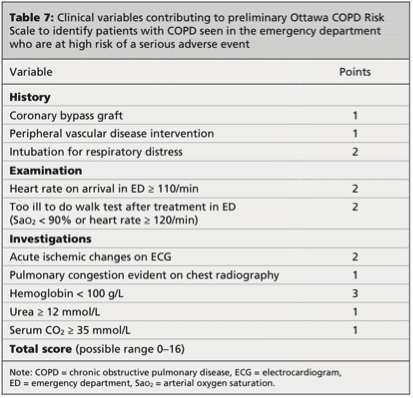
Ottawa-COPD-Risk-Scale

So together with his research team Dr. Stiell examined medical data arising out of 945 COPD cases to identify the common characteristics of high-risk patients which they then used to develop a ten-point "risk scale" to be used by ER doctors to more accurately identify those patients who are most likely to develop dangerous complications. The study tested the validity of the risk scale based on the experience of ER doctors from six Canadian hospitals, and it was published in the Canadian Medical Association Journal.

The finding was that through employment of the features identified in the scale, emergency-room physicians were enabled to improve their predictions significantly to identify which patients  were likely to suffer dangerous complications in the short term. A total of 1,415 COPD patient records were studied. Of that number, 135 had suffered serious setbacks in the month following their visit to an emergency room. Using conventional assessment methodology 52 percent of cases were correctly predicted for serious complications. With the use of the risk scale that number jumped to 79.3 percent correct predictions.

What resulted from that increased accuracy, predictably, was a modest hospital admission increase. Dr. Stiell is satisfied that the COPD scale presents doctors with an objective measure of the risk faced by patients with COPD, a score that is not considered in isolation of social factors, as, for example, whether the patient has access to a caregiver and family doctor.

Labels: , , , , ,

Tuesday, November 27, 2018

China's Wild East Public/Private Medicine

"The patients still give us recognition, isn't that correct? This proves that we have no problems."
"The state has also not taken any measures against us, right? Because our hospitals themselves are very good."
Wu Xidong, Putian health industry association

"The reports were nonsense. Now, when people go and see a doctor, they'll ask: 'Is this a private hospital? Should we go in?' There's a question mark."
"Will they be deceived? It's making things difficult for us."
"I was the first person to create everything." 
"We are not selling fake drugs, nor are we deceiving people. The government has done nothing to us."
Chen Deliang, 67, Dongzhuang, Putian, China

"China's health care fraud is pretty rampant."
"With China's private hospitals, there are a lot of traps."
Dr. Ma Jun, director, Harbin Institute of Hematology and Oncology
Scandalous Origins of China's Biggest Private Hospital Group Putian Health Exposed   YICAI Global

Mr. Chen doesn't mean 'everything', he does mean he was the founder of the hospital dynasty that has a presence throughout China, a private hospital system that he began and expanded and networked, inviting family and friends to invest their own efforts in the enterprise. It was, and remains, an enterprise that succeeded beyond their wildest dreams. In Dongzhuang where Mr. Chen and his colleagues live, they live in style. All owing mansions, driving luxury vehicles like Ferraris and Lamborghinis. Mr. Chen is now retired, enjoying the fruits of his labours.

He began the empire that is now the Putian health industry modestly enough. Starting out as a salesman of a remedy to treat scabies his enterprise eventually became a chain of clinics to serve clients with sexually transmitted diseases. From that vantage point, the largest network of private hospitals developed and as they developed all those who joined Mr. Chen in his successful network of private hospitals became immensely wealthy.

Putian hospitals account for eight of all ten private hospitals in the country, adding up to 8,000 facilities to serve the health needs of the country. All these hospitals came into being as the work of people with ties to the Putian area. Where the old state hospitals lacked well-trained specialists, quick appointments, state-of-the-art equipment, the Putian hospitals had it all. Public authorities had nothing but praise for the network; even Wall Street invested billions.

The Putian network is a lesson in success. Public hospitals remain subject to tight scrutiny but private hospitals are the responsibility of local governments, most of which lack the resources and expertise to vet the medical profession. It has come to light that some hospitals in the Putian group took to fabricating patients' testimonies and doctors' credentials while others listed false certifications or used outdated treatments. And that led directly into a case that has shocked the country into awareness.

A university student at a Putian-linked hospital was treated with a discredited form of immunotherapy for his cancer. Wei Zexi, the 22-year-old student, had a diagnosis of synovial sarcoma, a rare type of cancer attacking tissue in the muscle joints. He thought the best chance he would have for survival could be accessed at a Putian hospital. He underwent three operations, four chemotherapy sessions and 25 radiation therapy sessions. He took traditional Chinese medicines repeatedly.

Donations gave him the opportunity to buy Keytruda, an immune-therapy drug not available in most parts of the Chinese mainland, paying $5,000 to access it in Hong Kong. Nothing worked for him, and in desperation he looked online for other options. A Putian center at a military hospital in Beijing was listed at the top of his search results, offering an immunotherapy program called DC-CIK. A specialist for the Putian treatment center told him the treatment had a 80 to 90 percent success rate that could extend his life by 20 years, speaking of a partnership with Stanford University.

$30,000 to pay for the treatment was borrowed by the student's parents. And then, as a few months went by, the cancer spread to  his kidneys and ten months following his first treatment at the Putian-linked hospital, he was dead. The DC-CIK treatment was seen to be largely ineffective in the U.S. and it had been phased out, and nor was there any partnership with Stanford. In the public view, suddenly the Putian network was emblematic of unfettered corruption reflecting the private health care system.
A military hospital in Beijing that has departments contracted to the medical group from Putian Photo: IC

It all started when during the Cultural Revolution, scabies afflicted many Chinese at a time when doctors were in short supply and access to medicine was limited. Causing Mr. Chen to recognize an opportunity to make a  home-made remedy comprised of nitric acid, mercury and vinegar. With it he travelled throughout China, selling his medicine for 30 cents a bottle representing ten times what it cost to produce. At a time in China when public servants were earning about $5 monthly, Mr. Chen was raking in $2,200 annually.

Disciples surrounded him, and he trained them in his practise. "None of us had any medical background", he reminisced. He and his apprentices began renting rooms in small hotels close to bus stations guaranteed to have plenty of foot traffic, and posted ads on utility poles. They began to branch out, opening clinics to treat STDs at a time when prostitution was rising and people were too embarrassed to go to public hospitals. Patients could register anonymously at the clinics.

The Putian network expanded, opening clinics for infertility, dermatology and cosmetic surgery, and then they graduated to opening complete hospitals. In 2003 China gave private hospitals tax-free status in response to severe acute respiratory syndrome sweeping the country, making it imperative that more hospital beds be available along with more quarantine facilities. From there the government agreed to encourage the development of private hospitals to fill an obvious need in that immense population base.

In its online marketing materials Putian features dozens of specialists complete with impressive resumes promoting "abundant clinical experience" and "praise from peers within the industry". Testimonials from happy patients with emotional narratives were placed on line. Some of the Putian hospitals boasted of credentials they were not in possession of. In 2017 a provincial court claimed a hospital had violated local regulations, renting out specialist departments in andrology and dermatology to a man from Putian whom they shut down.

At a marketing firm for Putian hospitals, economics student Xing Jiaming began an internship to gain experience at a successful and growing business. He was assigned to write up credentials for a doctor's replacement, discovering the resume of the replacement was perfectly identical to that of his predecessor's. Mr. Xing was told to promote treatment success rate at the Nanjing Brain Hospital as 100 percent. And he was told to produce testimonials of his own making. "Everything was fabricated by us. None of them was a real case", he admitted.
Mr. Li is one of many Chinese men who has been made impotent by surgery conducted at poorly regulated private hospitals. Photo by Li Wei

Labels: , ,

 
()() Follow @rheytah Tweet