Ruminations

Blog dedicated primarily to randomly selected news items; comments reflecting personal perceptions

Sunday, June 06, 2021

The COVID-Induced Black Fungus Epidemic in India

"This new variant is causing damage to the beta cells in the pancreas, which produce insulin and regulate blood glucose levels."
We need more investigation into this --- around 40 percent more patients are developing diabetes after having COVID-19 during this second wave [of COVID to hit India]."
Dr.Shailesh Kothalkar, Ear, nose and throat surgeon (ENT), Seven Star Hospital, Maharashtra state, India

"I have seen 45 [mucormycosis] patients in my entire career and now we have had 66 patients admitted in just one month."
"Over the last five days, we've barely slept, we've done 40 surgeries."
Shrinivas Chavan, head, ENT department, Grant Medical College and Sir JJ Hospital, Mumbai
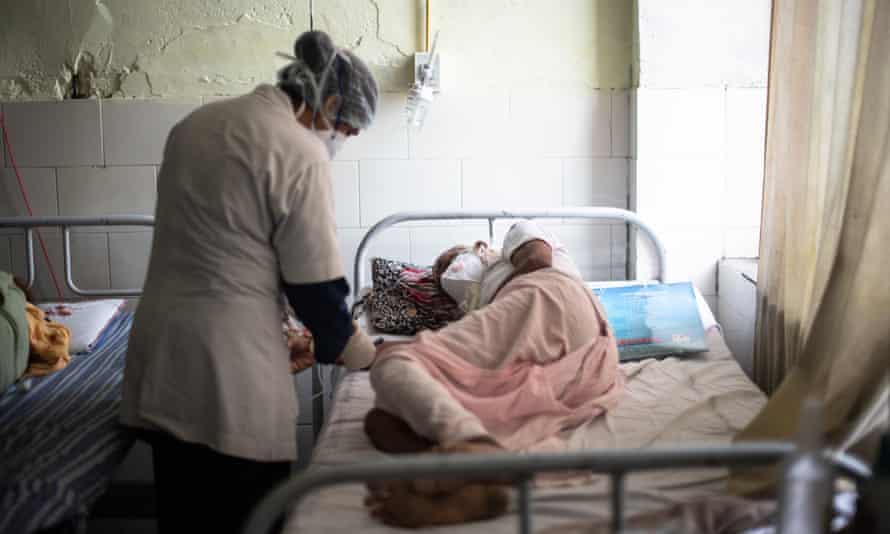
A nurse treats a patient suffering from mucormycosis in Jaipur, India
Mucormycosis is rapidly fatal without prompt diagnosis.’ A nurse treats a patient suffering from mucormycosis in Jaipur, India. Photograph: Rebecca Conway/Getty Images 
 
COVID has any number of surprises backgrounding the prodigious efforts on the part of the medical community, research scientists and government health departments to gain control over the virus as it swiftly mutates, progressing to new, more infectious and serious strains to confound and befuddle efforts to come to grips with its vicious presence, spreading from one geographic location to another, introducing new variants to form the basis of new, more dangerous outbreaks.

Hundreds of people have now died from the gruesome effects of the flesh-eating black fungus disease rampant across India, which appears to have hitched a ride on the Indian variant now known as Delta. Which has been the cause of unprecedented damage to the pancreas of otherwise-healthy people, in turn triggering sudden-onset diabetes resulting in soaring blood glucose levels on which the fungus thrives. Mucormycosis cases has seen the fungal infection causing nose blackening or discolouration, blurred or double vision, chest pain, difficulties breathing and coughing up blood.

Public Health England issued a report finding the dominant Delta strain to be likelier to lead to increased hospital treatment requirements than the Alpha variant first detected in the southeastern county of Kent. In ten hospitals sprawled across the western Indian state of Maharashtra, doctors are treating patients among the 11,000 people now known to have been struck down by the aggressive infection post-COVID-recovery.

Initially doctors believed over-prescription of steroids for COVID treatment, an inexpensive, effective treatment to counter severe cases which can also suppress the immune system, was responsible for the sudden explosion in black fungus cases.  Exhausted doctors across Maharashtra state warn that while long-term exposure to steroids was a contributory factor for some patients, mucormycosis cases exploded among diabetes patients only once the Delta variant emerged.

Before March 1, 41 cases of black fungus were recorded worldwide. There has been a spate of cases of coronavirus-induced mucormycosis recorded in India's neighbours, Nepal and Bangladesh among them, where Delta has become dominant. Mucormycosis is caused by a mucor found commonly in soils and decaying vegetation leading to the fungus that infects the sinuses and lungs of an immuno-compromised individual before spreading to the brain.

According to the doctors working on the situation, early detection reliant on regular blood glucose screening among recovered COVID-19 patients is seen as critical in a bid to control the fungus. If the condition progresses undetected for merely several days the fatality rate can soar to 50 percent. Ward after ward in the Seven Star Hospital in Nagpur is crowded with patients who had recovered from COVID-19, but despite having been healthy before COVID onset, were struck by mucormycosis symptoms.
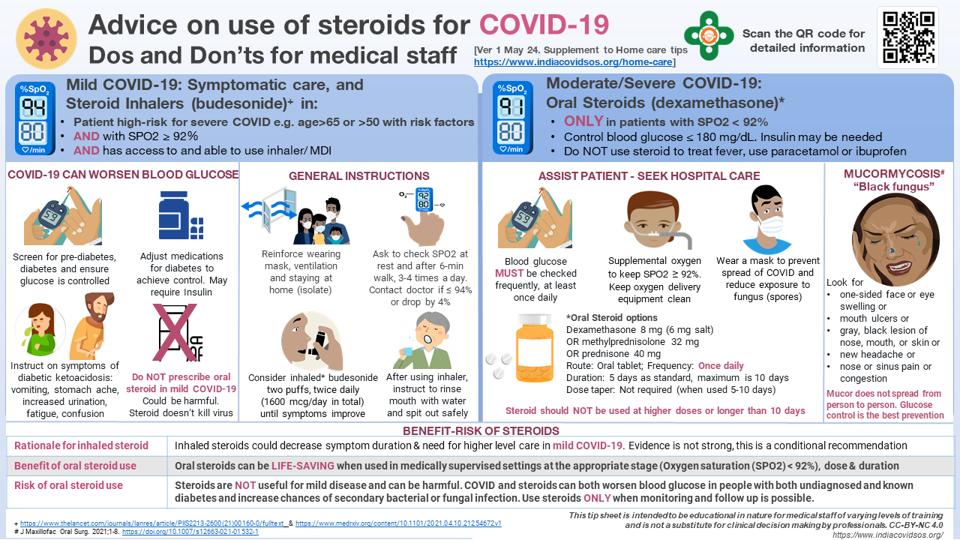
infographic on safe steroid us

Labels: , , , ,

Thursday, May 13, 2021

Another Curse of COVID-19; Black Fungus

"The issue is when people don’t have a strong enough immune system to fight off these fungi that are really fairly widespread in the environment."
"It can be really lethal. It is a pretty nasty fungus."
"Once it’s inside the body, it can then spread throughout the bloodstream and affect all kinds of organs."
"The use of steroids can be absolutely life saving, but it also creates these huge risks and vulnerabilities. Doctors need to be very, very careful with how they’re monitoring those kind of treatment regimens."
"It's expensive, it's damaging, it's toxic, it requires IV every day for up to eight weeks and often, it's not curative [antifungal drug called amphotericin B]."
"That can happen in the brain, right in the eye. There’s this really common issue now with having to remove the eye of these patients to save their lives."
"There's a much bigger field and a lot more money behind antibacterials and antivirals than there are supporting antifungal research. So we think there's a really huge, huge and growing unmet medical need here."
Leah Cowen, professor and Associate Vice President, Research, University of Toronto
India patients
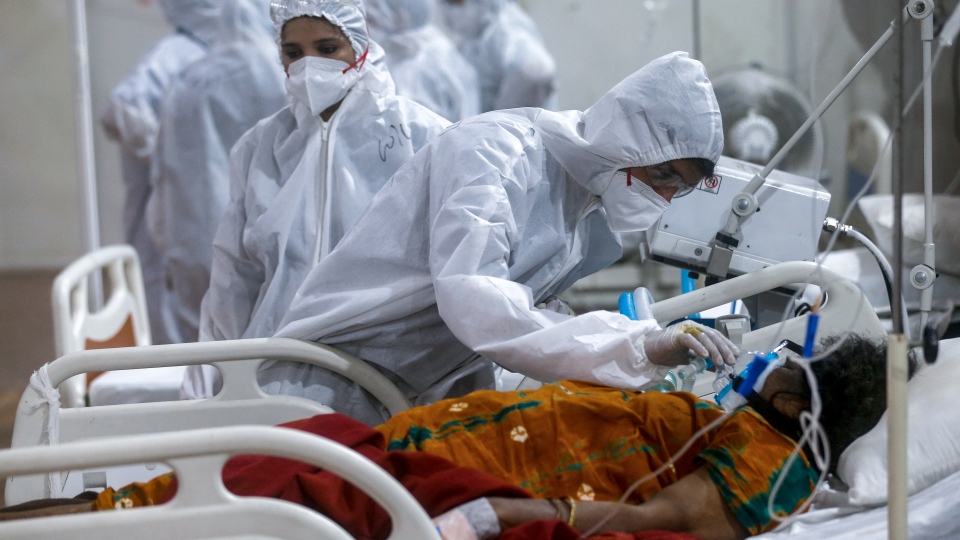
A health worker tries to adjust the oxygen mask of a patient at the BKC jumbo field hospital, one of the largest COVID-19 facilities in Mumbai, India, Thursday, May 6, 2021.  (AP Photo/Rafiq Maqbool)

"The situation here has improved in terms of numbers of COVID-19 patients requiring admission, but mucormycosis is now playing absolute havoc."
"[The survival rate for Mucormycosis, also called black fungus, significantly increases with early diagnosis and treatment]."
Dr.Prashant Rahate, chairman, SevenStar Hospital, Nagpur, India
The devastating second wave of COVID-19 that has placed India to the unenviable fore of countries overwhelmed by the novel coronavirus and struggling to contain its contagion in the wake of a colossal death count that has challenged the capacity of the nation's hospitals to accommodate the dire needs of seriously ill COVID patients, as well as the ability of its crematoria to keep pace with the disposal of dead bodies. 
 
India has been reporting over 300,000 new infections daily for the past twenty days. Predictions are that by August it will surpass one million COVID-related deaths. And in the midst of this horrible turmoil has come a new threat related to the SARS-CoV-2 virus to focus the mind, a deadly fungus with a mortality rate of 50 percent (according to the U.S.Centers for Disease Control and Prevention).
 
The common name for the fungus calls on the imagination to visualize a fungal invasion that turns the human interior black, mortally wounding human cells and organs (necrosis) to cause death. Its formal name, mucomycosis identifies an extremely rare infection caused by mucor mould exposure. The mould is found in soil, plants, manure and decaying produce. "It is ubiquitous and found in soil and air and even in the nose and mucus of healthy people", explained Dr. Akshay Nair, an eye surgeon based in Mumbai.

Severely immunocompromised people like those with cancer, or people with HIV/AIDS, as well as people with diabetes are at high risk for their lives being threatened by the fungus that affects the sinuses, the brain and the lungs. It is in recovering COVID-19 patients that the rare disease has been cropping up in astonishing numbers, leading to life-saving surgeries to remove affected areas and preventing deadly spread.

Steroids, administered for the purpose of reducing inflammation in the lungs of people with COVID-19 are used as an aid to help to reduce some of the tissue damage that occurs on occasion when the body's immune system goes berserk in an effort to fight off the invading coronavirus. Those same steroids, unfortunately, also have the effect of reducing immunity, and work to push up blood sugar levels both in diabetics and non-diabetics with COVID-19. The hypothesis is that the reduction in immunity may act as an invitation for mucomycosis to invade.

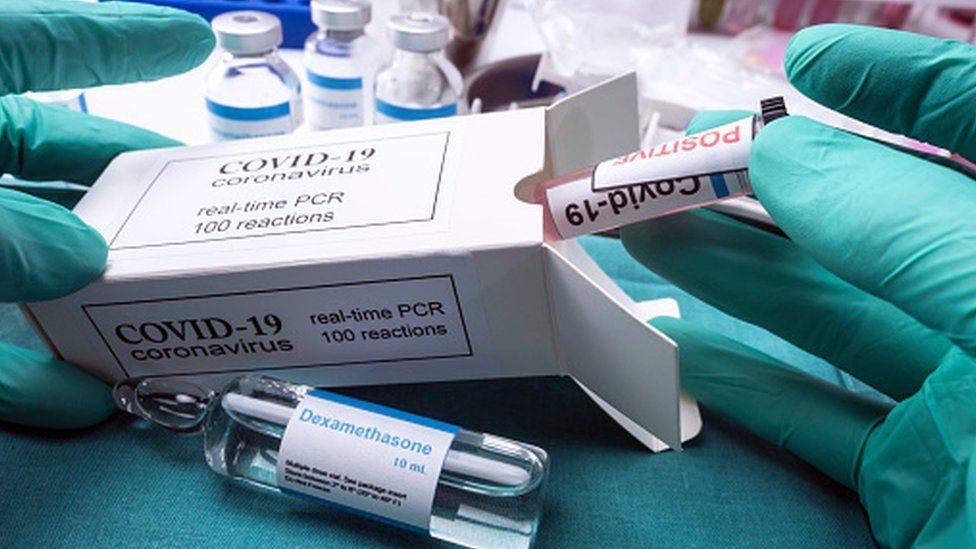
Nurse preparing with medical treatment with Dexamethasone vial in the hospita
Steroids are an essential life-saving drug for Covid patients   Getty images

"Diabetes lowers the body's immune defences, coronavirus exacerbates it, and then steroids which help fight Covid-19 act like fuel to the fire", Dr.Nair explains. The Sion Hospital in Mumbai has had 24 cases of the fungal infection in two months, a marked increase from the usual six cases annually. Of the total, eleven lost an eye, six died. Most were middle-aged people with diabetes who developed the fungal infection two weeks following recovery from COVID. 

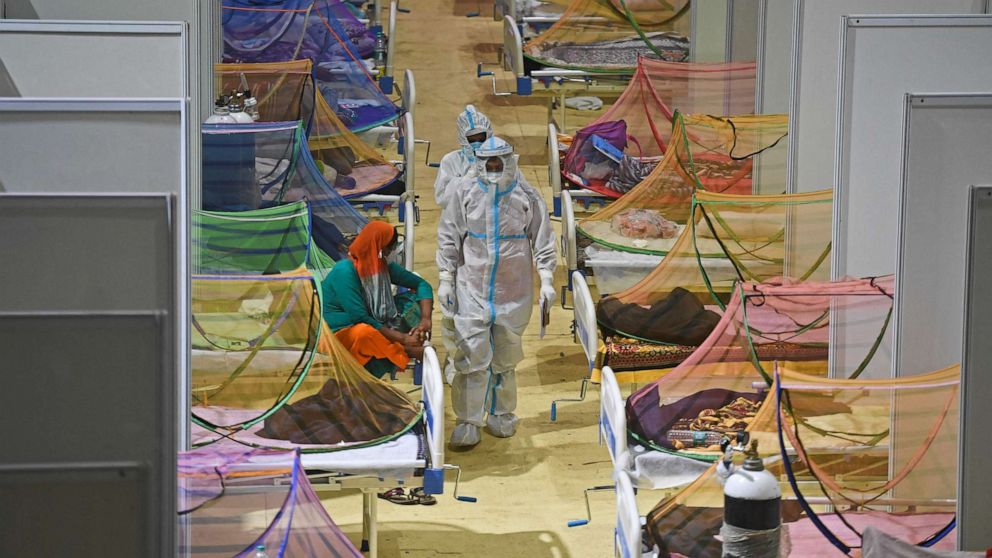
PHOTO: Health workers wearing personal protective equipment suits attend to COVID-19 coronavirus patients inside a temporary COVID care facility in New Delhi on May 2, 2021.
Health workers wearing personal protective equipment suits attend to COVID-19 coronavirus patients inside a temporary COVID care facility in New Delhi on May 2, 2021.  Tauseef Mustafa/AFP via Getty Images

"We are already seeing two to three cases a week here. It's a nightmare inside a pandemic", said Dr.Renuka Bradoo, head of the hospital's ear, nose and throat wing. Leading hospitals right across India now see multiple cases of black fungus on a daily basis. If attending physicians examining the condition in patients diagnose that the mucor will spread to the brain, invasive surgery is called for, as a final recourse, Indian surgeons forced to remove the infected jawbone, nose and eyes of patients.


Labels: , , , ,

 
()() Follow @rheytah Tweet