Ruminations

Blog dedicated primarily to randomly selected news items; comments reflecting personal perceptions

Monday, February 02, 2026

Terra Nullius, Svalbard: Cold Shore

"Norway now finds itself in the most serious security situation since 1945."
"[Svalbard has for too long been seen by nations as a place where] everyone who wants to can come up and do almost whatever they want."
"That's not the fact. This is Norwegian sovereign territory. So we're making that a bit clearer."
Eivind Vad Petersson State Secretary, Ministry of Foreign Affairs, Norway 
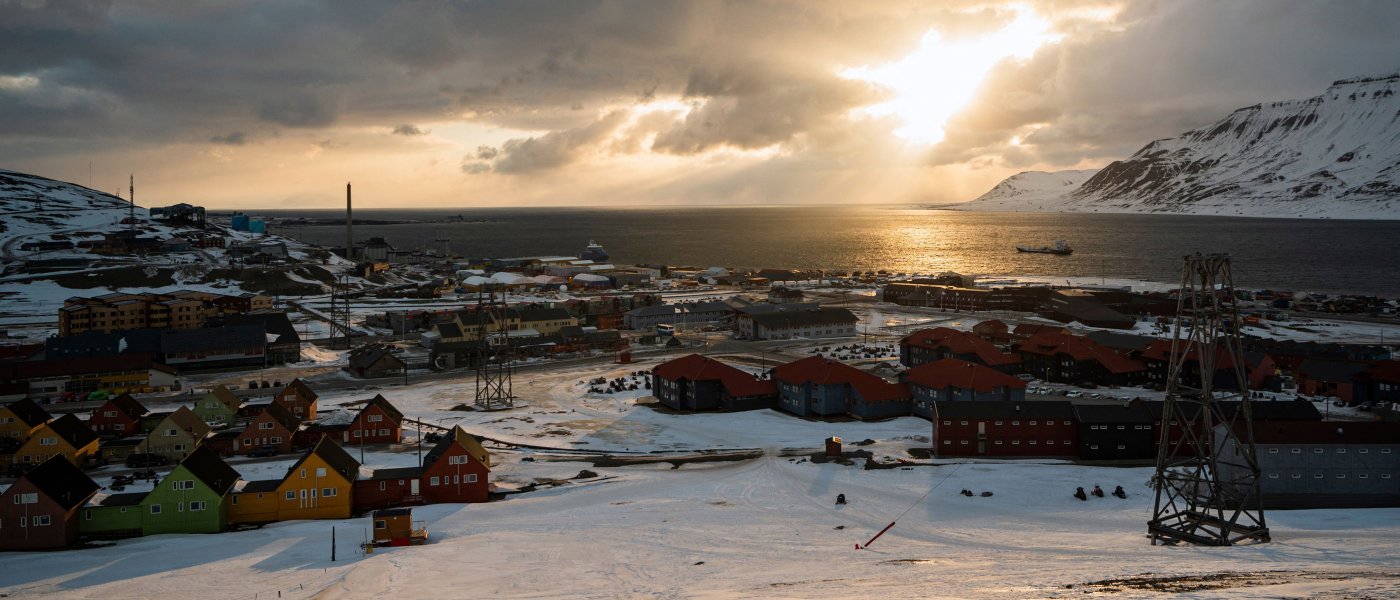
https://csis-website-prod.s3.amazonaws.com/s3fs-public/styles/1400x600/s3/2023-09/GettyImages-1240741560_Crop1.jpg?VersionId=mWKSkGPe0GKiiz9cG_mcY1Bo2xQci7Ps&h=266da715&itok=RNVD8uor
The Svalbard Archipelago   Photo: Jonathan Nackstrand/AFP via Getty Images
 
Following World War 1, Norway's claim to the Arctic archipelago and its islands was officially recognized. The Svalbard Treaty of 1920 banned the presence of activity linked to the military while granting all other nations choosing to sign on to the agreed-upon treaty access to hunting, fishing, mining and land ownership. Over the years, close to fifty countries added their names to the treaty which allowed them access.
 
Of late, studies of the geology of Svalbard and the ocean floor surrounding it have identified vast amounts of copper, zinc, cobalt, lithium and rare earth elements buried in the ocean floor. These are eagerly-sought-after minerals that power electric car battery technologies and wind turbines. It was  generally taken that the Svalbard Treaty granted signatories rights to its surrounding seas and seabed. Until January 2024 when Norway's governing party announced it would pursue deep-sea mineral exploration in an enormous sweep of its seabed.
 
The remote, frigid island, viewed as hostile to human life on a prolonged basis where minus 34 Celsius temperatures were not unknown, were initially home to Norwegian miners and Russian fur trappers. Longyearbyen, Svalbard's largest town, these days boasts candlelit restaurants, hotels, daily flights to the mainland, and is home to 2,500 people from 50 countries. According to the town's mayor, a surge in investment, official visits and strategic attention has recently focused on Svalbard.
 
https://csis-website-prod.s3.amazonaws.com/s3fs-public/styles/original_aspect_ratio_style/s3/2023-09/230913_ERE_Svalbard_Map.jpg?VersionId=6St.B4o5DWrkzOdGqX9xuMpPNfkmFdoO&itok=OWDx1xTK
 
Recently, the Energy Ministry of Norway publicly declared that Norway's goal in exploiting the natural geology of the area had a defined purpose; the goal of "profitable and sustainable" pursuit of seabed minerals, including the seabed around Svalbard. As Norway moves toward consolidating its sovereign rule over the island, its attitude toward foreigners and civil rights has hardened. Foreigners since 2021 were able to cast a vote in the political arena. 
 
That changed when authorities declared that voting in local elections would be off limits to foreigners living on Svalbard if they had not lived on Norway's mainland for the previous three years. "Should have been done a long time ago", said Mr. Petersson. The Svalbard Treaty guaranteed "equal access, not equal rights", he said, pointing out that in other countries foreigners are not given the right to vote. 
 
Svalbard is located about 800 kilometers from the North Pole, one of the only places on Earth where instant connection is possible with polar-orbiting satellites, leading to uninterrupted, clearer feeds and faster downloading speeds; more advantageous than anywhere else on the planet. In fact SvalSat, the world's largest satellite downloading station is based on Svalbard. 
 
https://csis-website-prod.s3.amazonaws.com/s3fs-public/styles/original_aspect_ratio_style/s3/2023-09/GettyImages-1240634673.jpg?VersionId=QZhSaW8ej6MSzDQa6fE02YGYNHnnPq6Z&itok=xu5dbLeF

Telecommunications domes of KSAT, Kongsberg Satellite Services, on a mountain near Longyearbyen. Photo: Jonathan Nackstrand/AFP via Getty Images 

Fur traders from the Pomor region in northwestern Russia arrived at Svalbard some 300 years ago. The Soviets established several coal mining towns in Svalbard a century ago and had signed the Treaty. Of the mining towns, only one, Barentsburg, remains and still operates minimally. Once there was a population of 1,000, now reduced to around 300. One Russian official claimed the archipelago should be renamed the "Pomor Islands".
 
A powerful radar system monitoring space weather and the atmosphere is at the service of Chinese scientists. Data gathered from this equipment have been shared with the China Research Institute of Radiowave Propagation, a Chinese defense organization. Members of the U.S. House Select Commission on the Chinese Communist Party are convinced China is performing military research on Svalbard in defiance of the Treaty proscription. 
 
Outside the Yellow River Station where the Chinese scientists live a pair of granite lions stands guard.  
Norway ordered the Chinese to remove the lions, each of which weighs 900 kilograms, installed 20 years ago when the Chinese government agents arrived on Svalbard. For the first time last summer, the archipelago's sole university,   the University Center, operated by the Norwegian government, barred entry to Chinese students, identified by Norwegian intelligence agencies as a potential security risk. 
 
Criticisms of China's activities represent "nothing but distortion of facts and groundless speculation", according to officials at the the Chinese Embassy in Norway. As for the lions standing guard, they continue to remain where they were placed two decades earlier. 
"While the Russian geopolitical threat remains paramount, Chinese encroachments facilitated by an isolated Russia may complicate the Arctic security landscape in the longer term. The coast guard agencies of Russia and China recently signed a cooperation agreement on strengthening maritime law enforcement to great fanfare in Murmansk, a city on Russia’s western flank close to Norway."
"Moreover, when all other Arctic coast guard agencies suspended their participation in the Arctic Coast Guard Forum, Russia invited China to join the forum—clear signs of China’s expanding presence in the High North."
"As Iris A. Ferguson, U.S. deputy assistant secretary of defense for arctic and global resilience, has put it, Chinese efforts aim “to normalize its presence and pursue a larger role in shaping Arctic regional governance and security affairs.”"
Center for Strategic and International Studies  
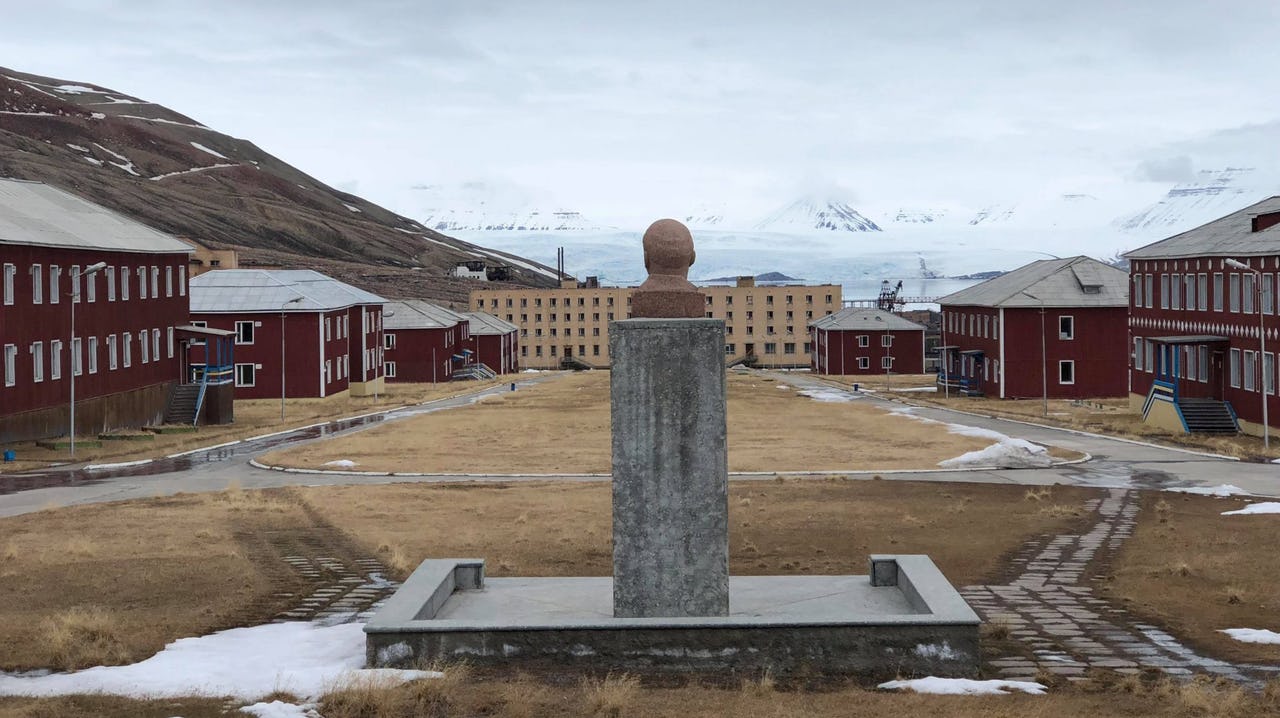
https://www.thearcticinstitute.org/wp-content/uploads/2019/12/Lenin-statue_Pyramiden-Svalbard.jpg
The world’s northernmost Lenin statue looks over the abandoned Russian city of Pyramiden on Svalbard, summer 2018. Photo: Alina Bykova
 

Labels: , , , , ,

Saturday, September 21, 2024

Canadian Arctic -- Defend It Or Lose it

"I look forward to seeing those actions [Canadian Liberal government promises of new fighter jets and submarines] but there's not a history of [Canada] taking those actions."
"There is no sense of urgency, for the most part, from the leadership of the government of Canada. It is easy to say we're going to buy F-35 [fighter jets], we're going to buy submarines. But with that comes a lot of requirements to build infrastructure, set up logistics pipelines, set up training pipelines."
"And my question is, is Canada ready to do that?"
U.S. (ret) General Glen Vanherck, former commander NORAD
 
"[Alliances like NORAD and NATO are particularly important with authoritarian leaders like Russia's Vladimir Putin] on the prowl [but Canada's part in those groups is] sorely lacking."
"You have to contribute your fair share and, quite frankly, Canada, over the last nine to ten years has not done so."
"There's one issue that seems to galvanize and unify [U.S.] Republicans and Democrats, both in the House of Representatives and the Senate. That is their concern and dismay over Canada's paltry contributions to international peace and security and the unacceptable -- and I'll use that word again, unacceptable -- levels of money spent on defence capabilities."
"[The Army is short 16,000 personnel, while] 70 percent of the army's vehicles don't work because they're either waiting for spare parts or they don't have the mechanics to fix them."
"Half our Navy's fleet, their ships can't actually set sail because they don't have the sailors or the spare parts to get them out of port."
Retired Canadian General Andrew Leslie, former Liberal MP
 
"[The U.S. Defense Department] is focused on fighting the away game, hamstringing the commander of NORAD, U.S. Northern Command [USNORTHCOM], and belying the vulnerability of our homeland."
"As the Middle East missions evolved -- ISIS, al Qaeda, the Taliban, whatever it was -- Russia began flexing its muscles with each and every incursion into the air defence identification zones of Canada and the United States."
"They approach our coastlines from all sides. They still do. And the most recent incursions -- include Chinese aircraft along with them."
"I have long said, where you see the intersection of Russian and Chinese interests, especially in military cooperation, we should be worried."
Retired Major General Scott Clancy, formerly NORAD director of operations
https://i.cbc.ca/1.3776785.1678031639!/fileImage/httpImage/image.jpg_gen/derivatives/16x9_780/canada-sovereignty.jpg
A Canadian part-time military volunteer drives over the frozen sea past an abandoned landing craft off Cornwallis Island, Nunavut on April 9, 2006. (David Ljunggren/Reuters)
 
A Mackenzie Institute forum on security in the Arctic taking place in Toronto brought together speakers all of whom contended Canada has a requirement to expeditiously increase lagging investment in defence, or risk seeing its control slip away of the Canadian Far North, leaving it in the hands of foreign adversaries. The Canadian Arctic comprises about 40 percent of Canada's geography. A military presence along with transportation infrastructure and resource development benefiting local Indigenous populations would counter increasing incursions by Russia and China. 

Alison LeClaire, one-time Canadian ambassador to Moscow, and before that one of the country's recognized Arctic officials, feels that Russian interest is primarily an ambition to exploit the Arctic for economic gain, to take command of its natural resources. While Canada derives less than one percent of its GDP from its Arctic, Russia counts upon 20 percent of the GDP from its part of the Arctic: "The reality is that everybody wants into the Arctic, and it's ours to protect. We need to stand up for ourselves and be present."

If there was one thing that all present agreed upon, it was that the current Liberal government under Justin Trudeau as prime minister will commit to nothing more than lip service. Stating that in its spring defence policy the government would acquire new fighter jets and submarines, yet no one has any expectation that these are any more than vague promises. 

Leona Alleslev, a former air force officer, former MP, felt that Canadian citizens, companies and think tanks have an obligation to strenuously support "nation building" in the country's north to protect it. Concerns that as climate change makes the Arctic more navigable for ships move countries like Russia with its recently rebuilt Arctic bases, and China, which represents itself as a "near-arctic" nation, albeit thousands of kilometres' distance, send military vessels and aircraft into the region. Incursions meant to deliver a message provocative challenging North America.

American airspace in Alaska can be reached within a half-hour by Russian planes, while in reverse the closest F-22 Raptor American fighter jet, would take two hours to arrive full-speed, at the same spot. The idea that Russia is a "paper tiger" given its long attrition-type conflict with Ukraine is misguided, according to General Vanherck. "In my three and a half years in command of NORAD and NORTHCOM, what I saw was exactly the opposite."

"Strategically, they deplored more, they deployed more bombers, they deployed more submarines.  They're still very capable, with the world's largest nuclear arsenal and hypersonic weapons." Others argued that Russia or China would actually attempt to invade the Canadian Arctic or otherwise attack North America, to be unlikely. Given that their goal is canted toward imposing themselves in the region with resource development and infrastructure such as ports and roads. 

Narratives from Indigenous organizations and other authorities in the North, report being offered major funding from Chinese interests, commented Mackenzie president Brian Hay.
 
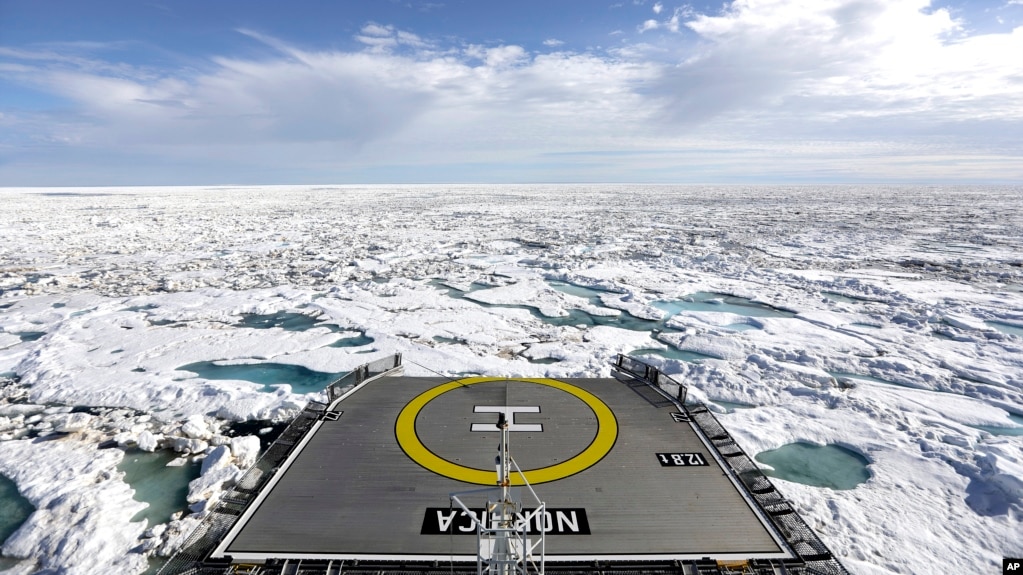
https://gdb.voanews.com/a4543e69-52ba-4059-8d97-e1dfc0f98aa9_cx0_cy8_cw0_w1023_r1_s.jpg
A Finnish icebreaker sails through sea ice floating on the Victoria Strait along the Northwest Passage in the Canadian Arctic Archipelago, July 21, 2017. The U.S., Canada and Finland on July 11, 2024, announced they will build up their icebreaker fleets.
 
"The actions that are ongoing are for influence -- Russian influence, Chinese influence."
"They're seeking to change international haw norms, get after resources through claims that put them in a better position globally, economically, diplomatically, than they are today."
"This is about influence and changing the world order."
General Glen Vanherck
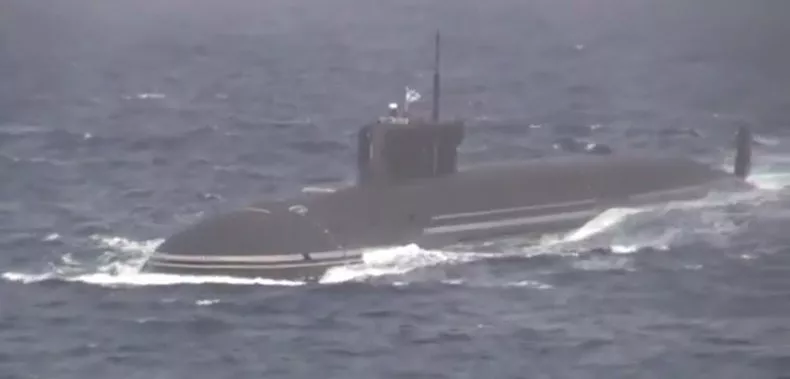
https://d.newsweek.com/en/full/2474292/russian-ballistic-missile-submarine.webp?w=790&f=4abac35108b873dc773dd86fc2ef48ae
In this photo taken from video released by the Russian Defense Ministry on September 16, Russian Borei-class ballistic missile submarine Imperator Aleksandr III sails toward the Rybachiy submarine base on the Kamchatka Peninsula. Russian defense ministry


Labels: , , , ,

 
()() Follow @rheytah Tweet