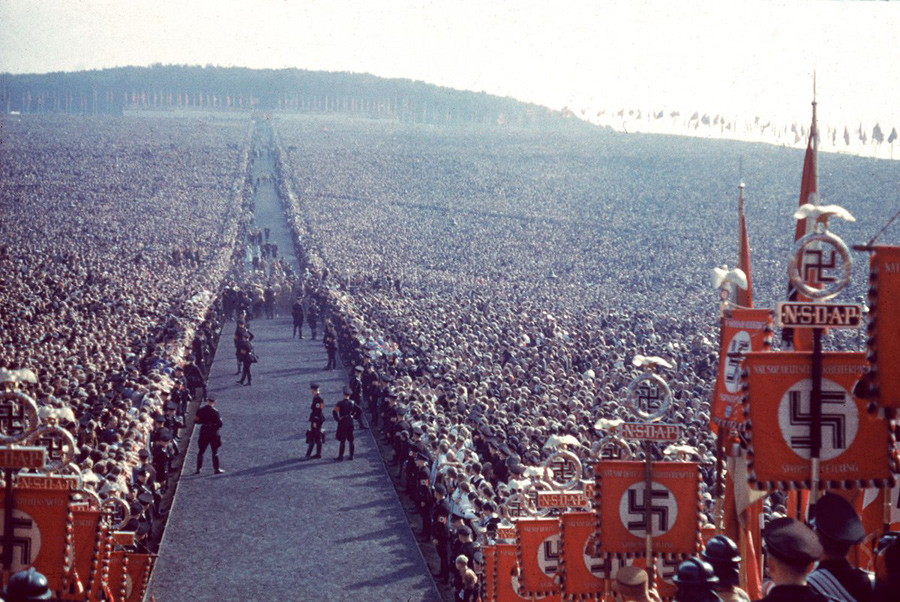
Putin Prowling Provocatorily ... Germany On Alert
"[Russia is determined to expand its] sphere of influence further westward into Europe.""To achieve this goal, Russia will not shy away from direct military confrontation with NATO if necessary.""We must not sit back and assume that a possible Russian attack would come in 2029 at the earliest. We are already under fire today.""The means Moscow uses are well-known – attempted manipulation of elections and public opinion, propaganda, provocations, disinformation, espionage, sabotage, airspace violations by drones and fighter jets, contract killings, persecution of opposition figures living abroad.""[The current] icy peace [with the European Union could erupt at any moment into] heated confrontation."German foreign intelligence chief, Martin Jaeger
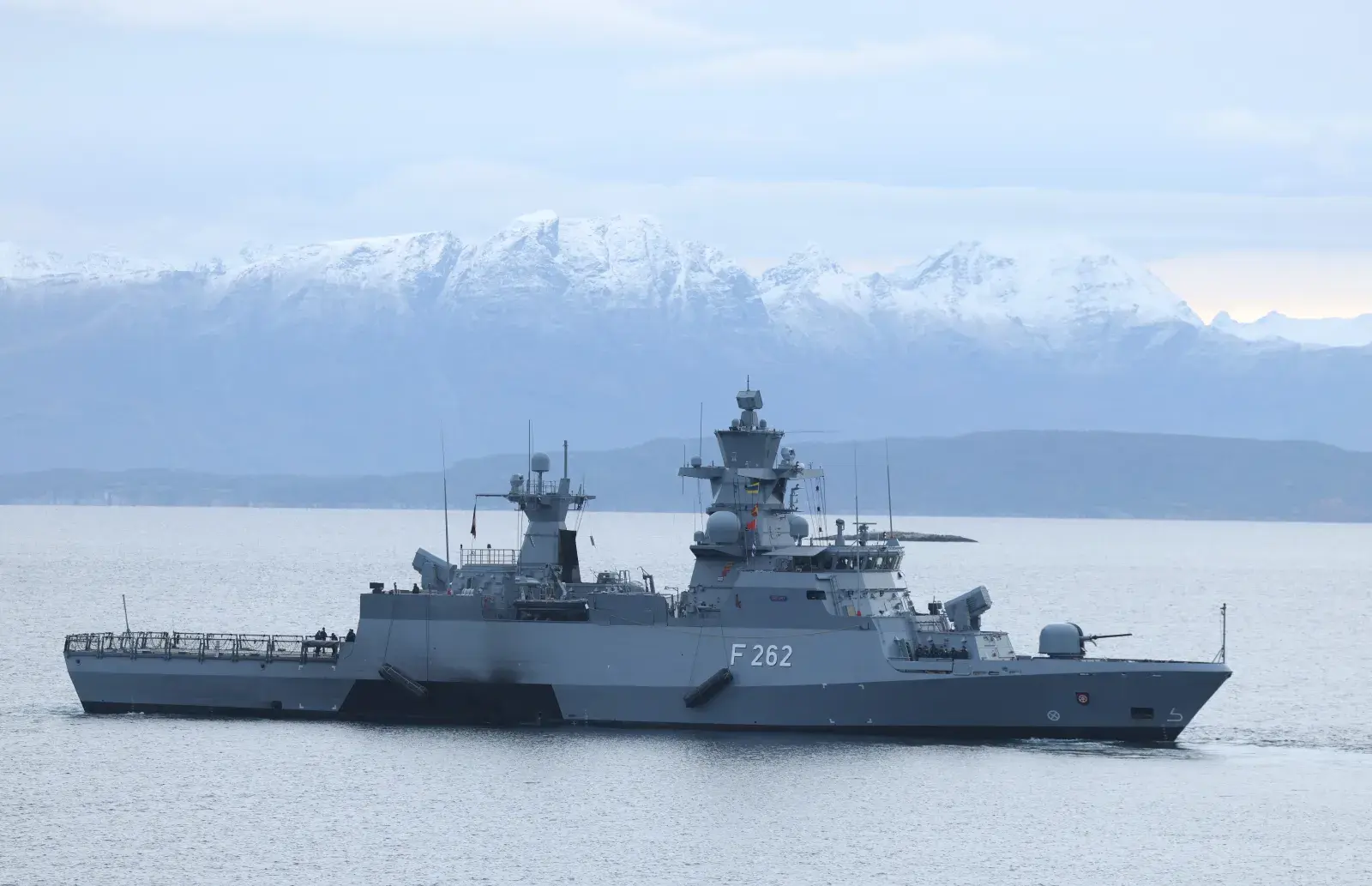 |
| This image from October 13, 2025 shows the German navy’s Braunschweig-class “Erfurt” corvette of during the Andoya military exercise in the North Sea near Harstad, Norway. Gerry Images |
"[Recent drone incidents underscored the potential] hybrid threat [to Germany and its European allies from Russia, even as investigations remain ongoing].""Russia is aggressively pursuing its political ambitions against Germany, the EU, and its Western allies. [Russian conduct is] increasingly escalatory.""Russian services continuously adjust the levels of escalation of their activities with the strategic aim of weakening liberal democracies.""As a result, we detect a wide range of espionage, disinformation, interference, sabotage, and cyberattacks conducted by foreign actors and states in Germany."Sinan Selen, president, German domestic intelligence service (BfV)
Russia, warned Martin Jaeger, head of Germany's BND (spy service) is prepared to expand its "sphere of influence further westward into Europe". To achieve this goal, Russia will not shy away from direct military confrontation with NATO if necessary." Mr. Jaeger addressed a public briefing with parliament members in Berlin, where he was joined by leaders of the country's domestic and military intelligence agencies.
Other threats were given mention which face Germany, in the realm of political and religious extremism, but it was the threat posed by Russia that dominated their statements. As Russia's "number one target in Europe", since Germany is the largest country in the EU alliance, and plays a "leading role in supporting Ukraine" in Russia's war of territorial expansion, Germany too must consider itself a leading target for Vladimir Putin's grand plan of domination in Europe and its increasingly military opposition to NATO, testing the resolve of the group by challenging the sovereignty of its eastern European members.
A series of incidents in recent weeks prodding members of the European Union, included Russian drones appearing in Poland, and Estonian airspace violated by Russian fighter jets. Germany also suspects that Russia is behind a number of drone incursions in Germany as well, including the most recent incident that interfered with flight operations at the Munich airport a week earlier necessitating a temporary close-down. Ongoing sabotage and disinformation campaigns also have European authorities on edge.
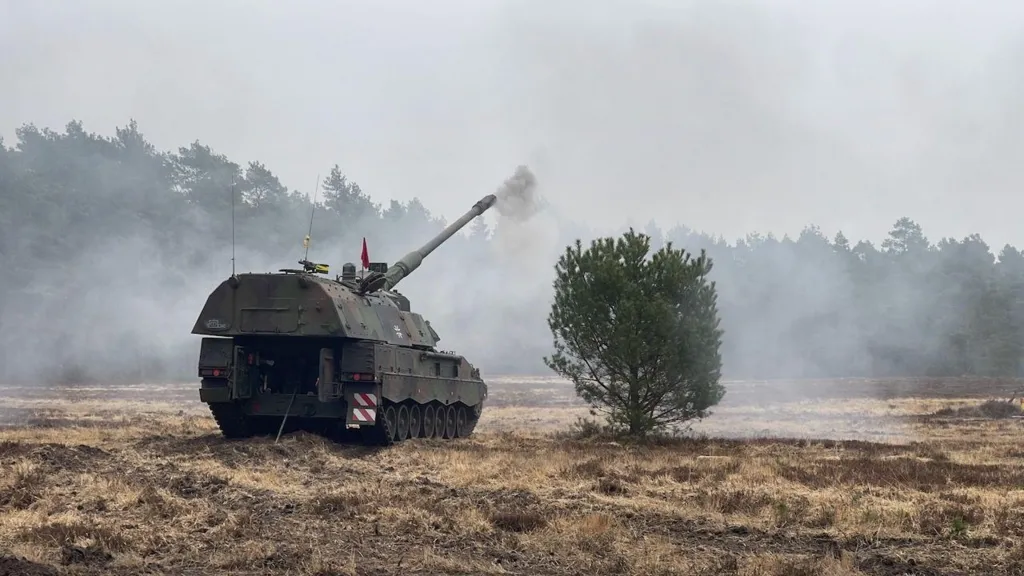 |
| Germany has voted to hugely invest in upgrading its military . BBC |
"We are threatened by Russia. We are threatened by Putin. We have to do whatever is needed to deter that. [NATO should be braced for a possible attack in as little as four years].""It's not about how much time I need, it's much more about how much time Putin gives us to be prepared." "And the sooner we are prepared the better.""Unlike the western world, Russia is not thinking in boxes. It's not about peacetime and war, it's a continuum: let's start with hybrid, then escalate, then back.""This is what makes me think we are facing a real threat."German General Carsten Breuer
Labels: Domination of Europe, European Union, Germany, NATO, Russian Invasion of Ukraine, Russian Territorial Threat
posted by Pieface @ 8:03 PM
0 comments