Ruminations

Blog dedicated primarily to randomly selected news items; comments reflecting personal perceptions

Tuesday, September 07, 2021

COVID's Impact on Children

UNICEF Canada (CNW Group/Canadian Unicef Committee)
"Although the COVID-19 pandemic will surely be remembered as one of the defining events in modern Canadian history -- cutting across all generations -- no generation will have experienced a greater impact than children."
"I t will be some time before we fully appreciate the impact of this disruption on their formative years."
"Clinicians have claimed that this increase [in eating disorders] is unlike anything they have seen before."
Children First Canada report
"We must put children at the heart of pandemic recovery plans and invest in the short- medium- and long-term solutions needed for children to survive and thrive."
"Children made enormous sacrifices throughout the pandemic to protect their elders and keep our country safe, but as a society we have failed them. Their rights to an education, survival and development have been largely ignored, and the cost of social and political inaction is too high."
Sara Austin, CEO, Children First Canada

"I think children and youth need to be in a social environment to grow. Friendships are really important for growth and development, and when you are not able to experience these friendships, it can get very lonely."
"I think loneliness is a big part of the deterioration of mental health for children and youth."
Sum Wah, representative, Children First Canada
In a letter to Premier Doug Ford, the 3,600-member Canadian Pediatric Society says the province can no longer afford to be “reactive” when dealing with the fallout of COVID-19 on kids, academic and otherwise.
 
Children are well known globally to have experienced major disruptions in all areas of their lives, beginning with social contacts, school attendance, recreational opportunities, sport and artistic activities, all have been constricted and restricted, with children finding themselves at critical times of their lives, sequestering at home with their families. Left with little outlets and opportunities to explore the world they will fully inherit, to make friends, to be exposed to new learning opportunities, they have languished, their mental health impacted along with their physical health.

The report issued by Children First Canada, Raising Canadian 2021 represents the fourth report issued from the organization which tracks threats to childhood nurturance, development and well-being. Right at the very apex of the expressed concerns was a red flag for mental health, long a focus of concern, now intensified with the incursion into daily life everywhere, by the global pandemic.

The four specialized pediatric hospitals operating in the province of Ontario realized child admissions for eating disorders in an increase of a whopping 223 percent over capacity in June of 2021. A situation described by community pediatricians as representing merely the tip of the iceberg. There have been reports from several children's hospitals of spikes in admissions for attempts at suicide, in the past year-and-a-half.

Special emphasis was given to the report where it addresses child abuse, with hospitals reporting increases in cases of child abuse where clinicians have treated twice as many infants as compared to previous years, for maltreatment-related concerns. Absences from school attendance have served to cover the instances of child abuse taking place in the home, often detected by sharply concerned eyes in the school environment.

Food insecurity among households in Canada has increased by 39 percent. Statistics indicate that households with children are likelier to be affected, the report revealed. Exposure and opportunities at physical activity and play throughout the pandemic period has been sharply reduced, impacting on children's development, and their physical and emotional balance.

In the decade just passed, Canada fell from tenth to 30th place in a UNICEF ranking of children's well-being in 38 affluent nations, based on a variety of measurements. Sum Wah with Children First Canada speaks of how difficult for many children school disruptions have been. "School can be a lifeline for a lot of children." And that can often include fulfilling children's most basic needs.

Meals, as example, are often part of school attendance for some children, with teachers representing another trusted adult helping to ensure that children are all right. Concerns such as mental health and poverty raised in this year's report have been equally noted in the past, the difference being that the pandemic has made these critical issues in children's path to adulthood more visible.
 
illustration of a girl on a COVID planet looking a screen surrounded by other floating COVIDs

Labels: , , , , ,

Wednesday, September 09, 2020

Coronavirus Stress

"We all know what tired fatigued, sagging skin looks like and we associate that with being old."
"Your skin is like the tip of an iceberg. Just ten percent is what you see is on the surface; it's what lies beneath that's really important."
"The good news is that it's temporary. Skin has a tremendous ability to bounce back and renew itself if you do the right things like eat a better diet, and those measures will vastly improve your overall health and banish the perception that you have prematurely aged."
Mark Birch-Machin, professor of molecular dermatology, National Innovation Centre for Ageing, Newcastle University, U.K.
Feeling More Tired Than Usual? Welcome to the Very Real World of Coronavirus Fatigue
"We get so much from our face-to-face social relationships, not just pleasure but reassurance, affirmation and information."
"The loss of those connections can feel devastating, and that has a knock-on effect on our mental health and self-esteem."
"It's easy to look after yourself when you feel [yourself to be] a valued member of a community or social network, but if you are depressed and have lost your confidence then it's far harder to invest in your own well-being."
Robin Hewings, director of policy and research, Campaign to End Loneliness
 
"The things we associate with growing older such as frailty or dementia are by no means a given."
"Someone can be in their 70s and have a biological age that is decades younger because they have been proactive about maintaining their body mass, muscle tone and brainpower."
Dr.Richard Siow, director of Aging Research, King's College London
"The thing that keeps us in good physiological health are the same boring four tenets -- being as active as possible, eating a balanced diet, not smoking and drinking in moderation."
Stephen Harridge, professor of human and applied physiology, King's
https://nirx74twfblvgbzze3cy4q5pja.gcdn.anvato.net/captures/4E3/4DB/4E34DB5DE0E54A3FA3F1B5A9FB8724A9.jpg?Expires=1599705902&KeyName=mcpkey1&Signature=b2X-ctyc_NqlXnQZ5ItqFN9zOn0
Science is now accepting what many people have long believed, and is now being supported by evidence that our well-being includes both physical and psychological health working in tandem. Experts in aging now tell us that we should target our aging with a positive attitude and that is achieved by remaining healthy and free of disease as long as conceivably possible. Admittedly, there has been a set-back to this invaluable advice, with the introduction of COVID-19 to our daily lives.

In Britain, an estimated six million people are of the opinion that lockdown during this time of the global pandemic brought on by the SARS-CoV-2 virus has taken a visible toll of us; we are tired of it all, feeling miserable about a constricted lifestyle, are nervous and upset about the threat that the disease augurs for us and the result is a perpetual moodiness, an inability to relax, a feeling of disbelief and resentment that this can all be happening, that the world is helpless in the face of a virus.
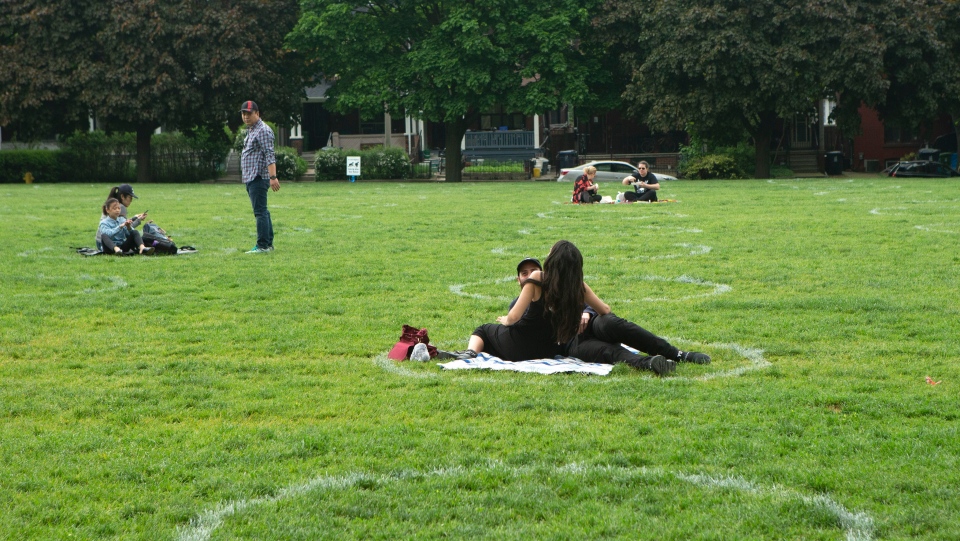
Trinity Bellwoods Park
People sit within circles painted by the city in Toronto's Trinity Bellwoods Park, as a measure to enforce physical distancing. THE CANADIAN PRESS/Chris Young

Many people believe that they, and everyone around them looks "at least" five years older, in the space of six months, since COVID-19 marched into our lives, closing down schools and governments, businesses and hopes for the near future. This conclusion courtesy of U.K.-based Uvence, commissioned to conduct research into the matter.
 
Everyone tries to make light of the fact that we have been harnessed to an ordered self-isolation, that we have had little choice but to school ourselves in the niceties of distance and mask-wearing, and having to become accustomed to avoiding 'crowds' of over 20 people in indoor settings. Gyms have been shuttered and so have hairdressers and it has become painful to view ourselves in a mirror.
 
A person sleeps in a bed with white sheets, with their feet visible.
Increased anxiety and depression; people feel fatigued. Pexels
When we do sneak a peak we're alarmed at the dark circles around our eyes, the dry, wrinkled skin, the face puffiness, all those mysterious pains and aches in joints and muscles that suddenly appear that we've never before experienced, so what's going on?!  What's going on, experts take pains to explain, is that we're in mental turmoil and that state of mind has influenced our total health condition, mind and body.
 
COVID stress and strain. You didn't really need anyone to tell you that. A survey of 2,254 people in a recent King's College London and Ipsos MORI survey revealed that 48 percent of survey respondents claim to have put on weight during lockdown. It's the same percentage reporting feelings of anxiety and depression, while 29 percent say they have made more use of alcohol as a relaxant. Source of extra calories along with late-night snacking.
 
Oh, you remember now, alcohol dehydrates bodies, including the largest organ we have, our skin, and that bloated and puffy appearance on our faces? Well, alcohol in all likelihood. How else ease tension than to pour a stiff drink; it's self-medication to ameliorate that feeling of isolation. What it eases is that lockdown loneliness that has become such a common ailment, a real-life issue with potentially consequential outcomes. 
 
People aged 16 to 24 appeared to be 50.8 percent likelier to experience lockdown loneliness than those aged between 55 to 69 among whom 24.1 percent feel lonelier. Loneliness is comparable to health and mortality risk factors such as obesity and smoking 15 cigarettes daily. Sufferers are placed at a 26 percent risk of early death as a range of diseases such as dementia can be the final outcome of loneliness. 
Many people have reported feeling exhausted

Labels: , , , ,

 
()() Follow @rheytah Tweet