Ruminations

Blog dedicated primarily to randomly selected news items; comments reflecting personal perceptions

Wednesday, April 13, 2022

The Role of Children in COVID Transmissibility

"I know many want to 'live with COVID' and abandon the layers of protection that were previously mandated, but it's important to be aware of the high transmissibility of this virus in closed, indoor settings, such as schools."
"Flash forward to where we are today with an extremely transmissible variant of COVID-19 and the majority of pandemic restrictions lifted; it's safe to say transmission rates will be  higher even though we have a  high vaccination rate amongst those who are eligible."
"As significant COVID-19 transmission continues within households and throughout the community, it's important to continue doing what you can to keep yourself and those around you safe -- mask while indoors, wash your hands, get vaccinated with all the doses you are eligible for, stay home if you're sick and limit close contacts."
Dr. Maala Bhatt, emergency physician, director of emergency medicine research, Children's Hospital of Eastern Ontario
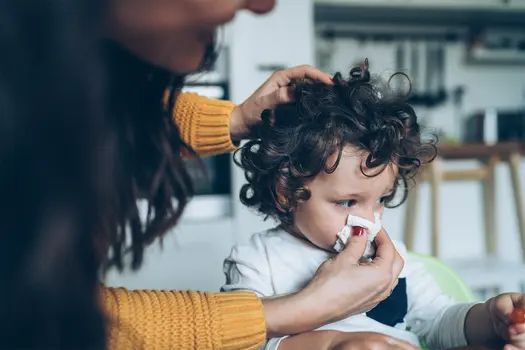
photo of kid parenting baby eating food
WebMD
 
A new study by researchers in Ottawa published in the journal CMAJ Open, which counters the earlier belief that children play a small role in COVID-19 transmission, finds that contrarily, children are indeed a significant source of the virus spread in households. While children transmit COVID at a lesser rate than do adults, researchers from the CHEO Research Institute, the Ottawa Hospital Research Institute and the University of Ottawa, found children contribute to significant spread within studied households, to the extent that they infect 37 percent of household members, as the first infected.

In contrast, roughly fifty percent of household members become infected by the initial individual to contact the virus. Children, it was found, were as likely as adults to become infected. The study authors hypothesized children would become "an even greater source of spread within households with the emergence of more infectious variants", including the BA.2 subvariant of Omicron, now dominating areas of the world.

One of the study's lead authors, Dr.Maala Bhatt, emphasizes the importance of understanding how the virus can transmit in enclosed settings, including schools, leading to a need for people to follow guidelines meant to protect themselves and others from virus transmission.The provincial COVID-19 Science Advisory Table in Ontario notes as well, that children have a larger role in the spread of the SARS-CoV-2 virus than was initially suspected.

The research team studied 694 household participants from 180 households in the Ottawa area, including households where one member at least had experienced COVID-19, and households with at minimum one child and upward. It is also worthwhile noting that the research was conducted in a period when the pandemic's virus strain was not as transmissible, a time when firm pandemic restrictions were in place.

While hospitals are currently not overwhelmed with COVID patients as in January, emergency departments are facing the stress of numbers, while confirmation rates of COVID infectivity are rising, even among the child demographic. Researchers continue to recognize more deeply the potential long-term health impacts of COVID-19, including how long immunity from vaccinations or from COVID-recovery remain potent.
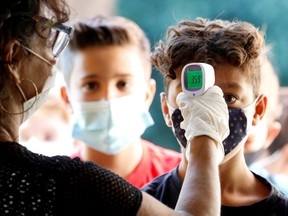
 
File: A pupil has his temperature checked at school.
A pupil has his temperature checked at school. Photo by REMO CASILLI /REUTERS

Labels: , , ,

Thursday, January 06, 2022

COVID-19 -- Age-Indifferent

"We have always expected that, if community rates went up, it would translate into the pediatric world. We talk a lot about COVID being mild in children. But, with increasing rates, we're seeing increasing hospitalizations in infants."
"There is a good transfer of antibodies to the newborn [when their mothers are vaccinated while pregnant]. We are extrapolating it will protect the baby for at least the first few months of life."
"I can understand the hesitancy, but I would like to assure [pregnant women] that it has been shown to be very safe."
"There is no doubt in our minds that this is beneficial. It's a vaccine-preventable illness. This is one thing that moms can do to protect their newborns."
Dr. Anne Pham-Huy, paediatric infections expert, Children's Hospital of Eastern Ontario (CHEO)

"All available COVID-19 vaccines approved in Canada can be used during pregnancy and breastfeeding, but the Society of Obstetricians and Gynaecologists of Canada [SOGC] recommends following provincial and territorial guidelines on type of vaccine to prioritize for pregnant and breast-feeding individuals."
Society of Obstetricians and Gynaecologists of Canada statement
American doctors are now treating over 500 kids a day for COVID-19. In Canada, admissions are also rising and pediatric hospitals are starting to see more infants with the virus.   CBC
 
The admission of four babies under a year of age to Ottawa's Children's Hospital of Eastern Ontario with COVID-19 infections in the past three weeks has raised alarms in the paedriatric medical community. That another two infants were admitted to the McMaster Children's Hospital in Hamilton aroused a desperate effort to persuade pregnant women to be vaccinated. Eight infants by comparison had been admitted to hospital with COVID during the entire two-year period of the pandemic.

Infant hospitalizations for COVID-19 infection prior to mid-December represented a rare event. A program at CHEO tracks vaccination status of mothers of infants admitted to the hospital. CHEO, along with the Hospital for Sick Children in Toronto, McMaster Children's Hospital and Kingston Health Sciences Centre formed a purposeful effort to urge pregnant women to be vaccinated -- not only for their babies' well-being but for their own protection against the pathogen stalking the world community.
 
A joint statement from the hospital group explained that "With the rise of Omicron, hospitals are starting to see a disturbing, potential new trend -- admissions of infants with COVID-19." Because infants have immature immune systems that make it difficult for them to combat infections, they are particularly at risk. Pregnant women who have been vaccinated mount excellent immune responses and that capacity is passed on to their newborns.

Absent a mother's vaccinated state, an infant has no protection of maternal antibodies that would be transferred during the third trimester of pregnancy, a reality that has been studied with other infectious diseases, like flu and whooping cough. CHEO's Better Outcomes Registry and Network (BORN) Ontario collects, interprets and shares data, and has been monitoring the impact of COVID in the provincial pregnant population. Research indicates no evidence that COVID-19 vaccines taken during pregnancy can be associated with adverse pregnancy outcomes.

Pregnant women infected with COVID-19 stand an increased risk of admission to hospital ending up needing critical care and invasive ventilation, in  comparison to their age-matched, non-pregnant peers. Almost 40,000 women received at least one dose of  COVID-19 vaccine during pregnancy between December 14, 2020 and June 30, 2021. 

Roughly seven to 11 percent of pregnant women are estimated to require hospitalization for COVID-related illness, while between one and four percent of pregnant women will require admission to intensive care units according to international and Canadian data. Being over 35 years of age, asthma, obesity, pre-existing diabetes, pre-existing hypertension and heart disease are factors associated with risk of severe illness.

An increased risk of preterm birth associated with COVID-19 has been identified in both Canadian and U.S. studies. Vaccine coverage in pregnant women has remained lower than within the general population, despite pregnant women having been prioritized for vaccinations, reports BORN Ontario.  
"The biggest difference is that Omicron is much more respiratory, so kids are presenting with cold-like symptoms, where before it was fever and maybe some gastrointestinal in the earlier waves."
"Now we're seeing kids, for example, with asthma. Their asthma is getting worse and bringing them into hospital."   
"We're way higher than we were previously. Part of that is because there are so many cases in the community that kids are coming in — some with COVID, some for other reasons — and we're screening COVID on admission."
"In previous waves, babies were essentially unaffected by COVID. But now we're seeing newborns. So in that first 30 days of life, significant disease."
Dr. Fatima Kakkar, paedriatic infectious diseases, specialist, Sainte-Justine Hospital, Montreal 
Multiple hospitals recently began seeing an uptick in young patients infected with the coronavirus, CBC News has learned, including some of the country's largest pediatric facilities in British Columbia, Ontario, and Quebec.  (Evan Mitsui/CBC)
 
According to figures from the U.S. Centers for Disease Control and Prevention, by the week ending January first, an average of over 570 children presenting with COVID were admitted to U.S. hospitals across the nation, daily. 
At the largest pediatric health care facility in the United States -- Texas Children's Hospital in Houston, over 700 children were treated in a single 24-hour period with COVID. The hospital reports an over four-fold increase in child hospitalization from COVID-19 just in the past two weeks, in lock-step with the emergence of the Omicron variant sweeping the world community.   
"As you're seeing a more transmissible variant plow through our communities, you are seeing more children get infected; primarily those who are unvaccinated."    
"Unfortunately, a subset of them are ending up in the hospital requiring, sometimes, ICU level care. So that certainly is alarming."    
Dr. Syra Madad, senior director, special pathogens, New York City Health System

Labels: , , , , , , ,

Wednesday, September 22, 2021

Inoculating Children Against COVID : Closing the Gap

"We are eager to extend the protection afforded by the vaccine to this younger population, subject to regulatory authorization, especially as we track the spread of the Delta variant and the substantial threat it poses to children."
Albert Bouria, chairman, CEO, Pfizer Inc.
 
"This is a good-news story. This is great news, in the right direction, but there are still multiple extra steps before we see the vaccine in kids' arms."
"It is going to take many weeks to review [Pfizer-BioNTech data], but probably not months."
"This will require rigorous review. That might take some time to ensure it is done with the highest standards. But obviously we are all anxious."
Dr.Anne PhamHuy, infectious-disease specialist, chair, Immunize Canada

"I think it would be a huge deal for quelling some of the anxieties of parents. When it comes to keeping outbreaks out of schools, I think it would help enormously. And it gets us closer to having the herd-immunity conversation."
"It is not clear whether herd immunity is possible. But, if it is, it can't be achieved without kids."
Dr.Raywat Deonandan, epidemiologist, University of Ottawa
Youth vaccinated
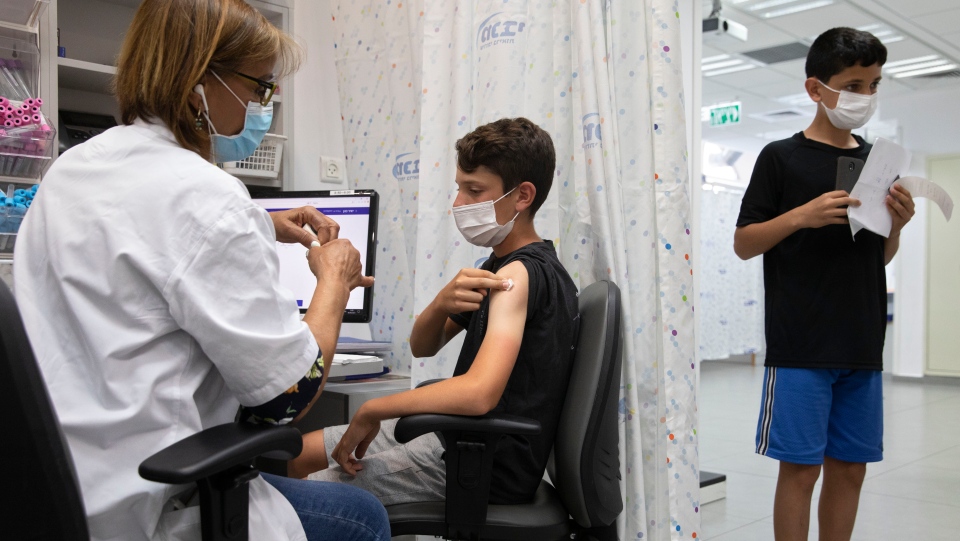
An Israeli youth receives a Pfizer-BioNTech COVID-19 vaccine in the central Israeli city of Rishon LeZion, Sunday, June 6, 2021. Israel started vaccinating children from 12 to 15 on Sunday. (AP Photo/Sebastian Scheiner)
 
Pfizer-BioNTech have announced that according to their clinical trials involving children of the ages between five and 11 their COVID-19 vaccine is safe, producing a robust immune response. Children in that age demographic were given a lower dose of vaccine -- one-third of the dosage given to older children and adults, and successfully produced antibodies to COVID, the signal measure of efficacy; with none suffering adverse effects.

The next step for the company is to apply for authorization from federal health agencies to enable the vaccine to be used for children in that age range in Canada, the United States, Europe and other places globally, wasting the least amount of time possible in a race against COVID.The announcement signalled the first indication that the vaccines should be available shortly for children. A reality of significant relief for both parents and the medical community.

That children under 12 years of age lacked an authorized vaccine is considered to represent a vacuum in an otherwise-well-covered area of safe and effective protection against the SARS-CoV-2 virus causing COVID-19, where the universal goal is to achieve herd immunity with the hopes of eventually moving away and out of the pandemic. As elsewhere, federal authorization must be achieved before young children can be inoculated.
 

Only kids 12 and older are eligible — so far — to get vaccinated against COVID-19 in the U.S. But the shots could be available for younger children as soon as this fall, say researchers studying the vaccine in that age group.  Chris O'Meara/AP

Health Canada, speculates Dr.Pham-Huy, would likely receive Pfizer's application by late September or early October before a review of its data on safety and efficacy in children can move forward. Since the dosage for younger children is smaller than that for adolescents, it may take longer for the review to be completed.

The results from a Phase 2 and 3 trial indicated in participants from five to eleven years of age that the low-dose vaccine was "safe, well tolerated and showed robust neutralizing antibody responses", though the data has not yet been made public. As Dr.Deonandan explained the matter, Pfizer relies on antibody response in children in the trial as evidence of the vaccine's efficacy since there was insufficient data to calculate vaccine success.

In the tests conducted for adults the measure of success in vaccine efficacy was determined by how many test subjects among vaccinated and unvaccinated people become ill with the virus. An insufficient number of children contracted the virus in the Pfizer study to enable calculations to flow from data. Substituting that measurement of success with showing robust antibody levels in vaccinated children resulted in a "favourable safety profile".

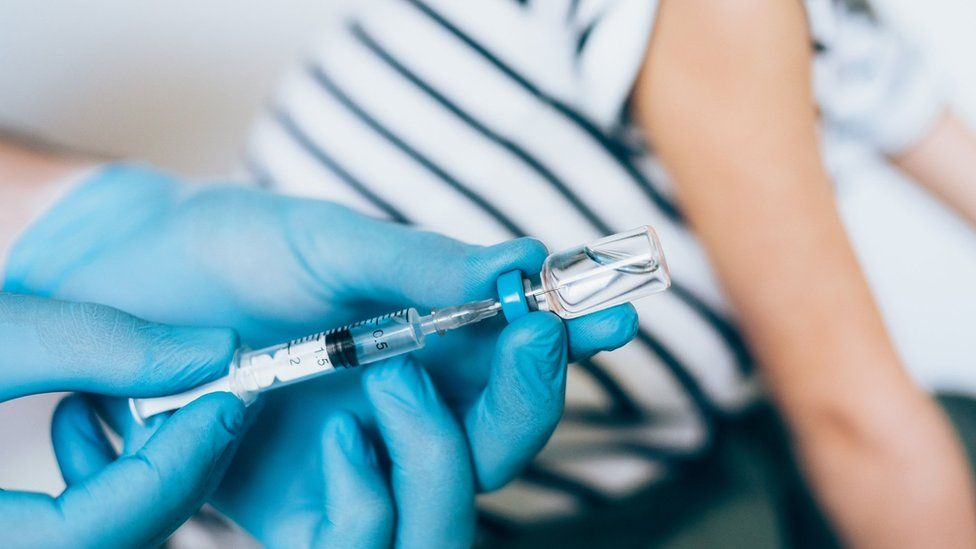
A needle with a child behind
The Pfizer/BioNTech coronavirus vaccine is "safe, well tolerated" and produces a "robust" antibody immune response in children aged five to 11, according to the findings of a US trial.  Getty Images

Labels: , , , ,

Tuesday, September 14, 2021

Safeguarding Children's All-Around Health

"When it comes to kids, what I think people have not done a good job of is looking at the overall well-being as important, as opposed to just focusing on COVID."
"And it's become completely clear over the last year-and-a-half that we're causing an immense amount of harm to kids by locking them in their homes."
"While some of those kids can get very sick, most of them respond really quickly to treatment. [The higher we can drive immunization rates of the 12 and older, putting a protective ring around children too young for vaccination] the better off we will be."
"At some point we're going to have to get used to it as another virus that is circulating. I don't know when that point is, but I think people need to start thinking about that." 
"[It's not a science perspective], it's more of a view of society and freedoms. And I am very loathe to impose on people things they don't want to do."
Dr.Ari Bitnun, pediatrician, SickKids, Toronto

"I won't lie. I'm worried myself. I'm really worried not just about hospitalizations, but long-term health consequences."
"It's extremely upsetting to me."
Dr,Dawn Bowdish, immunologist, McMaster University, Hamilton, Ontario
2019 Novel Coronavirus (COVID-19)
"That's probably the most important question we need to learn in the next six to 12 months [how Long COVID manifests in children]. How prevalent is Long COVID? What does it actually look like."
"Of course it's not fine [if a few kids get sick when we argue children need to be in school]. Every single individual who gets sick and has to go to hospital, God forbid is one too many."
"But what is the alternative? We've pretty much had children out of school here in Ontario for over half the year last year."
"Intolerable, it's untenable to think about."
Dr.Ronad Cohn, president CEO, SickKids 
Girl wearing a mask and sitting at a desk
 
Published data indicate heightened levels of anxiety and depression among children and youth, the acknowledged fallout from the seemingly endless pandemic, and the manner in which it affects children in our suddenly altered world culture of alienated society careful of the fearsome effects of the SARS-CoV-2 virus causing COVID-19. Dr. Bitnun is familiar with the sight of young patient home-schooled for an entire year, barely leaving home, with easy access to a refrigerator, who have gained an absurd 40 kilograms in that interim from normal life. 

Greater numbers of children in the United States are being admitted to hospital with COVID-19 in those states with low vaccination rates. Spurring concerns of just how safe is it to return children to the classroom, and most particularly those under age 11 who are unvaccinated...? The spread of the Delta variant has thrown hopes for control of the COVID infection rate for a loop. In some of the most populous areas of Canada case counts are increasing. 

Children infected with COVID tend to demonstrate mild symptoms such as headache and fatigue. For many, no symptoms whatever manifest. And COVID deaths among children remain rare events. Children of all ages can carry high SARS-CoV-2 viral loads whether they have symptoms, or none, according to a recently published paper. That same paper suggests that children are capable of spreading COVID; Children have the potential "to serve as a community reservoir of actively replicating virus, with implications for both new waves of infection and the evolution of new variants".

As for the Delta variant; is it more virulent, more dangerous to children, will it make them more ill than the U.K. variant, or the original strain? Above all, children's susceptibility to acquiring Long COVID is an unknown. It was first identified in adults when people reported a strange array of symptoms; brain fog, breathlessness, headache, heart palpitations for weeks, even months following a mild dose of COVID. For children, data has been puzzlingly conflicting.

Long COVID was found to occur in school-aged children, but remains uncommon, according to a large study out of the United Kingdom. 4.4 percent of 1,734 children involved in the study had lingering symptoms a month after experiencing a COVID infection, yet by eight weeks almost all had recovered. The Office of National Statistics in the U.K in another study estimated closer to 10 percent of two- to 11-year-olds and 13 percent of children ages 11 to 16 had at least one lingering symptom five weeks after infection.

In the United States in major children's hospitals in Florida, Texas, Missouri and Arkansas pediatric cases are on the rise. Almost all admissions involve children under age 12, not yet eligible for shots or teens who haven't been vaccinated. The more virus circulates, in particular hyper-contagious Delta, the more likely it is that children will get infected. Small numbers becoming sufficiently ill heading for hospitalization.

By mid-August, children under 19 accounted for 15, or 0.1 percent of COVID-related deaths, along with 1.9 percent of hospitalizations since the pandemic's start, in Canada. More admissions occurred, related to a post-COVID complication known as MIS-C (multi-system inflammatory syndrome in children) than for COVID. Different parts of the body such as heart, lungs and kidneys can become inflamed, typifying MIS-C. Obesity stands out thus far as the most common underlying risk factor for severe COVID. 

Polls indicate that American parents clamour for their children to return to in-class learning, despite the spike in U.S. COVID cases. No one is interested in downplaying risks of COVID to children. The risk-benefit analysis varies in every family, yet it is monumentally difficult to tolerate any risk whatsoever when it comes to the protection of children.
featured image
"Marinating in a toxic brine of fear and uncertainty can make us sick -- whether from fatigue and insomnia or irritability and burnout."
"And when our children hear us processing endless loops of what-if thinking, they can become worried and depressed too." 
"Fixating on a single threat to children's health can keep us from recognizing their broad human needs."
Dr.Lucy McBride, practising internist, Washington, D.C.

Labels: , , , ,

Tuesday, September 07, 2021

COVID's Impact on Children

UNICEF Canada (CNW Group/Canadian Unicef Committee)
"Although the COVID-19 pandemic will surely be remembered as one of the defining events in modern Canadian history -- cutting across all generations -- no generation will have experienced a greater impact than children."
"I t will be some time before we fully appreciate the impact of this disruption on their formative years."
"Clinicians have claimed that this increase [in eating disorders] is unlike anything they have seen before."
Children First Canada report
"We must put children at the heart of pandemic recovery plans and invest in the short- medium- and long-term solutions needed for children to survive and thrive."
"Children made enormous sacrifices throughout the pandemic to protect their elders and keep our country safe, but as a society we have failed them. Their rights to an education, survival and development have been largely ignored, and the cost of social and political inaction is too high."
Sara Austin, CEO, Children First Canada

"I think children and youth need to be in a social environment to grow. Friendships are really important for growth and development, and when you are not able to experience these friendships, it can get very lonely."
"I think loneliness is a big part of the deterioration of mental health for children and youth."
Sum Wah, representative, Children First Canada
In a letter to Premier Doug Ford, the 3,600-member Canadian Pediatric Society says the province can no longer afford to be “reactive” when dealing with the fallout of COVID-19 on kids, academic and otherwise.
 
Children are well known globally to have experienced major disruptions in all areas of their lives, beginning with social contacts, school attendance, recreational opportunities, sport and artistic activities, all have been constricted and restricted, with children finding themselves at critical times of their lives, sequestering at home with their families. Left with little outlets and opportunities to explore the world they will fully inherit, to make friends, to be exposed to new learning opportunities, they have languished, their mental health impacted along with their physical health.

The report issued by Children First Canada, Raising Canadian 2021 represents the fourth report issued from the organization which tracks threats to childhood nurturance, development and well-being. Right at the very apex of the expressed concerns was a red flag for mental health, long a focus of concern, now intensified with the incursion into daily life everywhere, by the global pandemic.

The four specialized pediatric hospitals operating in the province of Ontario realized child admissions for eating disorders in an increase of a whopping 223 percent over capacity in June of 2021. A situation described by community pediatricians as representing merely the tip of the iceberg. There have been reports from several children's hospitals of spikes in admissions for attempts at suicide, in the past year-and-a-half.

Special emphasis was given to the report where it addresses child abuse, with hospitals reporting increases in cases of child abuse where clinicians have treated twice as many infants as compared to previous years, for maltreatment-related concerns. Absences from school attendance have served to cover the instances of child abuse taking place in the home, often detected by sharply concerned eyes in the school environment.

Food insecurity among households in Canada has increased by 39 percent. Statistics indicate that households with children are likelier to be affected, the report revealed. Exposure and opportunities at physical activity and play throughout the pandemic period has been sharply reduced, impacting on children's development, and their physical and emotional balance.

In the decade just passed, Canada fell from tenth to 30th place in a UNICEF ranking of children's well-being in 38 affluent nations, based on a variety of measurements. Sum Wah with Children First Canada speaks of how difficult for many children school disruptions have been. "School can be a lifeline for a lot of children." And that can often include fulfilling children's most basic needs.

Meals, as example, are often part of school attendance for some children, with teachers representing another trusted adult helping to ensure that children are all right. Concerns such as mental health and poverty raised in this year's report have been equally noted in the past, the difference being that the pandemic has made these critical issues in children's path to adulthood more visible.
 
illustration of a girl on a COVID planet looking a screen surrounded by other floating COVIDs

Labels: , , , , ,

Friday, April 23, 2021

Achieved: The Holy Grail of Malaria Vaccine

"There are about 13 million children born each year in various areas of Africa that could really benefit from the malaria vaccine."
"There are three doses per schedule and a booster dose so 200 million [the number the pharmaceutical manufacturer in India has agreed to produce yearly] is a very good number."
"That's a real technical challenge. The vast majority of vaccines haven't worked because it's very difficult." 
"[However the trial results meant the vaccine was] very deployable [and] has the potential to have a major public health impact."
Adrian Hill, director, Jenner Institute Oxford University
 
"[The results were] very exciting [and showed] unprecedented efficacy levels".
"We look forward to the upcoming 'phase III' trial to demonstrate large-scale safety and efficacy data for a vaccine that is greatly needed in this region."
Halidou Tinto, professor in parasitology, principal trial investigator, Clinical Research Unit of Nanoro, Burkina Faso
Vaccines against malaria have been approved and rolled out in Africa before
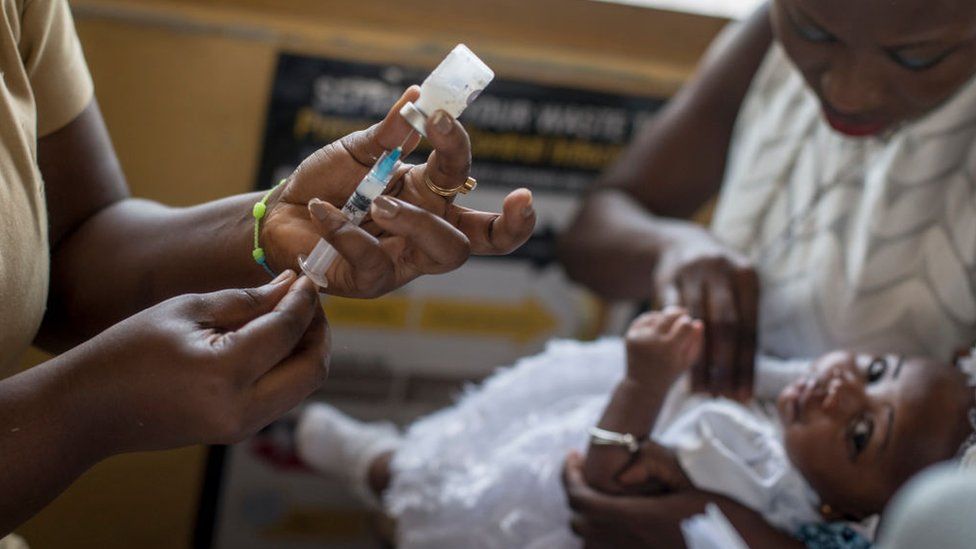
Vaccines against malaria have been rolled out before, such as this one in Ghana   Getty Images
 
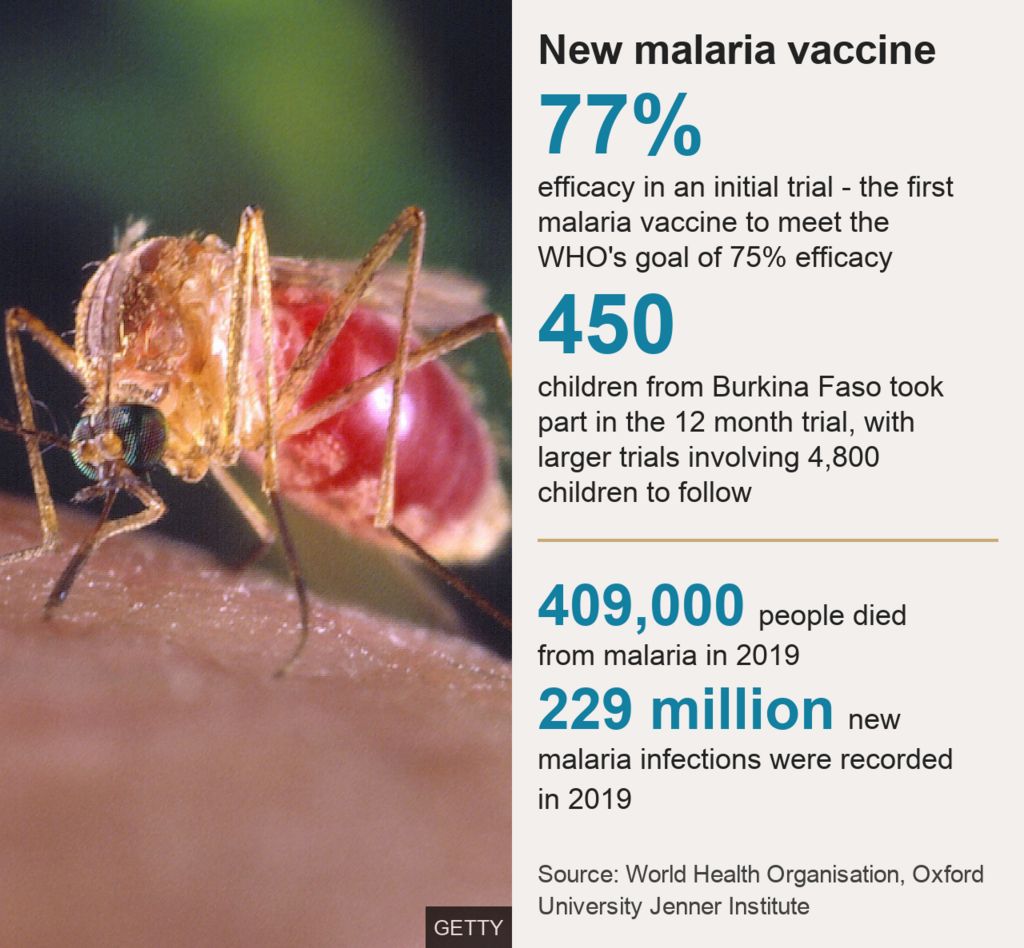
Malaria is a mosquito-borne disease that plagues the hot and humid areas of the world from Asia to Africa, the cause of sub-Sahara Africa losing approximately 400,000 people annually. Now, preliminary results of a phase two trial undertaken with 450 children in Burkina Faso indicates that the vaccine produced by scientists at Oxford University's Jenner Institute is 77 percent effective against malaria. The vaccine, called R21, is the first of its kind to rate such a high efficacy rate.
 
An agreement with the Serum Institute of India, one of the world's largest and most productive vaccine manufacturers, assures that they are committed to producing 200 million doses annually as soon as the vaccine has gained official approval. When that happens, the researchers anticipate that the vaccine doses will be available widely, and at low cost, to solve one of the world's most vexing environmental health risks through a vector that has always plagued humanity.
 
The existing anti-malaria vaccine,  of promise, the RTS.S vaccine produced by GlaxoSmithKline, its efficacy rate came out to 50 percent in late-stage trials, the barest minimum to declare it a success. While this vaccine has completed phase three clinical trials it has not yet been fully licensed as a result of safety concerns. It is, however, being administered at the present time in Kenya, Malawi and Ghana, representing part of a World Health Organization-led pilot project. 

Having a second vaccine in circulation would represent an immense assist to efforts geared toward eliminating malaria. Other preventive measures which are moderately effective include bed nets, indoor spraying, and preventive drugs, their use hampered by insufficient funding to ensure these methods are widely available where they are badly needed.

Children aged five to 17 months were given the R21 vaccine in three doses a month apart, with a booster dose a year later, in this latest trial. Three phase-three trials with 4,800 subject-participants for the vaccine are on the cusp of initiation in Africa. Challenge trials where volunteers in the U.K. were given the vaccine, then subjected to bites by malaria-carrying mosquitoes have earlier been completed.

Successful Malaria vaccines have been the goal of researchers for the past century, a goal that  has been difficult to achieve. Partially as a result of the disease being seasonal, where 90 percent of deaths happen three to four months following the rainy season, emphasizing the vital importance of inoculating with vaccines at the precise right opportunity.

New malaria vaccine data pic

Labels: , , , , ,

Friday, January 29, 2021

Socializing by Screen

"In the big picture, we're all spending too much time in front of screens. I see it in my workplace. I see kids who don't know how to pick up a phone and call someone for a job interview. I see kids who struggle with just having a conversation, with looking you in the eye. A lot of them are struggling with social skills that they would have figured out if they didn't have a screen getting in the way."
"Parents tell us, 'My kid is addicted to Fortnite. He's normally a sweet kid, but, after four hours of Fortnite, he's irritable. He can't focus. He's not calm. He's like a drug addict because when I try to get him off Fortnite, he has a tantrum."
"First and foremost, you have to connect with your kid. We call it 'connection before direction'. If you have a stressful relationship, you're going to cause even more stress by just telling them to get off their device. You have to be willing to show empathy and validation, to know how to listen rather than just give advice all the time."
Dr.Michael Cheng, child and family psychiatrist, Children's Hospital of Eastern Ontario
 
"Screen time is a constant battle. At that age, it's kind of their job to fight with us and develop their own independence. They're definitely happy to try to sneak some screen time whenever they can and to push every boundary that we set."
"As frustrating as that is, I recognize that it one day might make them really excellent lawyers. There's a lot of negotiations, so we think, 'OK, there's life skills we're building here', even if it makes me want to tear out my hair."
Dennis Murphy, father of nine- and six-year-old children
HarvardPilgrim.org
 
The 'no screens before noon' rule in the Murphy/Burns household is a difficult one to monitor much less adhere to, when put up against the determination of two young children accustomed to and comfortable with technology their parents were just being introduced to when they were no longer young, but which has at this juncture been advanced and streamlined for the use of children who've been familiar with screens all their lives for entertainment and education and communication.

That Dennis Murphy and Erin Burns are home-schooling their children, Lilith 9, and Garnet 6, during the pandemic hasn't made it any easier to discipline bright young minds to the necessity of limiting screen time. Dr.Cheng from his perspective as a psychiatrist is concerned not only with the physical effects of immobility and fixation, but the isolation aspect and the move away from real-time, real-life socialization with limited interaction between physical contact and the life-lessons derived therefrom, as opposed to an internal life harnessed to technology.

Smartphones and tablets have taken over children's lives, and are doing actual harm to their mental equilibrium. The iPhone phenomenon has celebrated its 13th anniversary and the iPad has been around almost as long; screens are ubiquitous and upfront in children's daily lives. An American study undertaken in 2019 confirmed over half of young children had their own smartphones by age 11, with 'tweens' --  age eight to twelve -- spending on average four hours and 44 minutes daily online, exclusive of school time.

Ages 12- to 18-year-olds have seen their recreational screen time leap into seven hours, 22 minutes' daily use. Since the emergence of the pandemic, screen time for young people has soared. Guidelines from the Canadian Paediatric Society pre-pandemic, recommended kindergarten children spend an hour daily, tops, in front of a screen -- with no screen time whatever the preferred option. Ontario's curriculum for online leaning requires kindergarten kids to be online for 180 minutes daily which Dr.Cheng considers "unprecedented" in time volume.
 
Siblings practice yoga for children with a classroom programme broadcast national television
UNICEF/UNI314054/Klincarov
Twins Maksim and Jan (5) practice yoga for children in their home following along with TV-classroom programme broadcast on national television.
 
According to Dr.Cheng, excessive screen time detracts children from basic needs required for mental wellness which includes face-to-face interactions, adequate sleep, physical movement, and quality time spent immersed in natural surroundings, along with a sense of belonging, purpose and hope. Yet fast-paced video games like Fortnite or Call of Duty, quick and addictive sources of dopamine satisfies the rush brains crave which can lead to hyper-arousal, interfering with a normal lifestyle; taking the place of a normal lifestyle.

Dr.Cheng dreams of possible solutions to this modern-day, COVID-complicated dilemma, imagining the utility of going cold-turkey, for a complete detoxification. Reasonably, the good doctor recommends "gentle nudges" to pry and persuade children from their smartphones by setting screen curfews and enforcing bedtime rules. Limiting who and what a child sees online is a parental responsibility. He eschews social media like Facebook and Instagram for children, pursuing "likes". At the same time he recognizes screens represent a mode of connecting with others at a time of isolation.
"Obviously you don't want your kids spending all their time looking at a screen, but the world they're growing up in is a virtual one. It's going to be a fight they'll have their entire lives, that battle of algorithms that's trying to make them keep clicking versus trying to maintain their own well-being."
"My eyeballs are getting cooked by the screen as much as anybody else's. It's a new way of life to learn how to navigate and there's not a lot of guidance for parents. It's one giant social experiment with everybody anyway."
Dennis Murphy
Child practices the alphabet on a tablet at home
UNICEF/UNI316266/Bajornas
Margot, 4, practices the alphabet on a tablet at home rather than being at daycare with her friends, with the city largely shut down as a prevention measure against the further spread of coronavirus

Labels: , , , ,

Thursday, May 21, 2020

Security, Comfort, Safety - Forts for Children

"I feel like  you're in a safe place  your own bubble of cosiness."
"There are no other things affecting you -- you're blocked out from the world. Everything is wrong right now, but it's a safe space where no one worries about you."
"If you lock yourself in your room, people would worry, but if you hide in your fort all day, no worries."
Grayson Drewry, 22, Port Townsend, Washington

"Kids make sense of the world through play. In quarantine, all our needs are amplified."
"Everything is different. They're facing uncertainty -- not knowing how long we're going to be doing this."
"They're feeling what we're all feeling -- great loss."
"Whatever kids create in their imaginative world feels safe and predictable to them. It's like 'Every time I go into this fort, it will be just like I left it'."
"Don't mess with their fort. Let them go to town on making it feel safe and comfortable. It's theirs."
Emily King, child psychologist, Raleigh, North Carolina

"It's primal. [Our brains react with] self therapy."
"It's all aout safety and control. We seek out comfort. We need to restore order. And in COVID, we're doing more of these things."
Carol Stock Kranowitz, educator, author
In Forest Hill, Maryland, six-year-old Nacelle Bumford has several forts, including a tent near her mother's work spot she has named her "office". "We use them as her safe place", her mother explains. Inside the forts Nacelle gets two minutes of "cuddle time", an aid to normalcy and comfort for both mother and child. "She calls me into her 'office' for meetings that we both schedule on her calendar. It makes her feel in control of her day", said Linette Bumford.

David Sobel, professor emeritus at Antioch University's department of education, author of Children's Special Places: Exploring the Role of Forts, Dens and Bush Houses in Middle Childhood, explains that forts have always been important in childhood. He has done research across cultures on the developmental function that forts assume in children's lives, and he concluded they are universal, driven by "biological genetic disposition" as children develop a "sense of self", separate from parents.

According to Dr.Sobel, children initiate fort-building indoors about at age four, and then begin venturing to the outside two to three years on, to construct dens, treehouses and fort-like structures independently. Building forts reflect children's emotional growth as individuals as they create a "home away from home", away from parental control. "A lot of magic happens inside [a fort, fostering creativity", he explains.


For Grayson Drewry, a school assignment to take part in a fort-building competition, gave meaning to her life during a time of confusion. Her mother describes Grayson's seeking comfort in "nests" and forts when stressed. She transformed her bedroom in pastel-pink, building a tent made with sheets and pillows centrally propped by a mop, then decorated it with photographs, and spent most of her day inside. "I needed that!", she said to her mother.

Dr. Sobel pointed out that children now have more time to be creative as their developing brains need a break from computer time, so forts encourage play, beneficial for children, more acutely at the present time. Familiar routines suddenly disrupted, children have a need to feel in control of something, said Emily King. Therapeutic in nature for children, being in an enclosed dark space, sound buffered, the space creating separation from everything surrounding it, children on the autistic spectrum or with attention-deficit disorder can find it soothing.

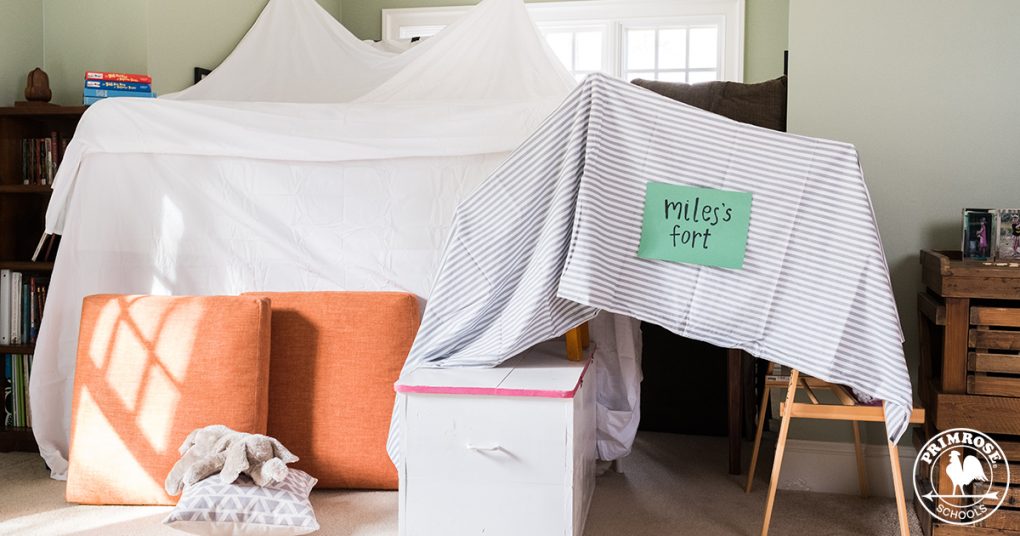
A fort made out of living room furniture, cushions and blankets, labelled 'Miles's fort'

Labels: , , , , ,

Saturday, May 09, 2020

Pediatric Multi-System Inflammatory Syndrome Associated with COVID-19

"There has been at least three fatalities because of this [new COVID-associated syndrome] and there may be others that are now under investigation. This is every parent's nightmare, right, that  your child may actually be affected by this virus."
"While rare, we are seeing some cases where children affected with the COVID virus can become ill with symptoms similar to the Kawasaki disease or toxic shock-like syndrome that literally causes inflammation in their blood vessels."
"We were laboring under the impression young people were not affected by Covid-19. ... We're not so sure that that is the fact anymore.We still have a lot to learn about this virus."
"The illness has taken the lives of three young New Yorkers. This is new. This is developing."
"We thought children could be vehicles of transmission ... but we didn’t think children would suffer from it."
Governor of New York, Andrew Cuomo
A nurse adjusts intravenous drug dosages being given to a Covid-19 patient at the Veterans Affairs medical center on 21 April 2020 in New York City.
A nurse adjusts intravenous drug dosages being given to a Covid-19 patient. Photograph: Robert Nickelsberg/Getty Images

Yet another shock for the world that had initially been convinced that the SARS-CoV-2 virus that causes COVID-19 poses little harm to children, focusing instead on the elderly and the immune-suppressed and other health-vulnerable people, leaving the great middle of any population relatively unscathed. Little by little as the highly infectious virus stealthily makes its successful way through one population after another around the world, surprising new discoveries are made of the complexities involved with its symptoms and the syndromes in specifically affected populations.

"We want to reassure parents – this appears to be uncommon. While Kawasaki disease can damage the heart or blood vessels, the heart problems usually go away in five or six weeks, and most children fully recover."
“Rarely, but sometimes, the coronary artery damage persists. Because of this, Kawasaki disease is the most common cause of acquired heart disease in children in developed countries. Prompt treatment is critical to prevent significant heart problems."
Dr Jane Newburger, director, Kawasaki program, Boston Children’s Hospital 

A new risk has arisen out of the global pandemic named COVID-19 caused by the SARS-CoV-2 virus that originally emerged in Hubei Province's Wuhan City, China. New York State has seen 73 admissions to hospital of children suffering a peculiar inflammatory syndrome being linked to the novel coronavirus. Three children have so far died of the syndrome experts identify as akin to toxic-shock of a kind known for the effects that Kawasaki disease identifies.

Britain first reported cases of rare, life-threatening inflammatory illnesses in children with a perceived connection with COVID-19 exposure, as did Italy and Spain. And now in the United States doctors are beginning to report clusters appearing in children admitted to hospital with the disorder, one that can attack multiple organs, impair heart function and weaken heart arteries. The deaths of three children (one a young teen) in New York attributed to COVID-19's effects are the first to be reported in the U.S.

This newly-recognized impact of the novel coronavirus on children has symptoms similar to those seen in toxic shock and Kawasaki disease, associated with fever, skin rashes, swelling of glands and inflammation of arteries of the heart in severe cases. Scientists are still not positively convinced whether the syndrome has firm links with the novel coronavirus since not all children suffering from it have tested positive for COVID.

The syndrome which may occur days to weeks following a COVID-19 infection, is yet another indicator that the novel coronavirus affects and attacks its host-victims in surprisingly unanticipated ways.Like Kawasaki disease, this new syndrome appears to be able to cause the immune system to go into “overdrive”, causing fever, severe diarrhea, rashes and conjunctivitis. And in more severe cases  the walls of the arteries can become inflamed, affecting bloodflow to the heart -- a potentially fatal outcome.
Symptoms: 
  • Prolonged fever (more than five days)
  • Difficulty feeding (infants) or is too sick to drink fluids
  • Severe abdominal pain, diarrhea or vomiting
  • Change in skin color - becoming pale, patchy and/or blue
  • Trouble breathing or is breathing very quickly
  • Racing heart or chest pain
  • Decreased amount of frequency in urine
  • Lethargy, irritability or confusion

Labels: , , ,

Thursday, April 23, 2020

COVID Intersection With Childhood Health Issues

"They're needing much more resuscitation and care than they should."
"I personally have seen some very sick diabetics."
"I hope parents aren't afraid to get their kids care or at least seek out help if they think their kids are sick."
Dr.Kevin Chan, chair, acute care committee, Canadian Paediatric Society / Hospital for Sick Children, Toronto
two children smiling
"Because they [children under novel coronavirus lock-down] are not coming into contact with as many people, typical viruses aren't spreading."
Dr.Bruce Wright, divisional director, Stollery Children's Hospital, Edmonton
During this time of national and international chaos over best-avoidance practices of contracting the voracious virus leading to COVID-19, hospital emergency departments have gone into overdrive in preparation for a massive surge of people struck down by COVID's most extreme symptoms. Respirators, breathing machines, personal protective equipment for health-care providers, ICU beds have had to be assembled, doctors alert to practising care for people presenting with acute respiratory syndrome, and hospital beds being cleared of patients, while elective surgeries have been cancelled.

People who would once have gone to hospital emergencies for injuries and sudden illness, no longer do, for fear of contracting the contagious virus, or mindful that the focus at hospitals has been overtaken with a panic over whether they can manage the expected number of cases of extremely sick people. With the impression that whatever has befallen them, they can make do on their own rather than attend a hospital, doubled by the concern that hospitals are now seeping with viral droppings, people have stayed away.

That includes people whose sudden appearance of symptoms of stroke, appendicitis or heart attack have decided to set aside any thoughts of entering a hospital emergency room at a time when family physicians no longer see their patients in person, or those who suffer serious accidents deciding to wait out their pain for home recovery. And it also includes children whose parents are loathe to take them to hospital, weighing whatever their symptoms are against the potential of a child contracting COVID-19 in a hospital setting.

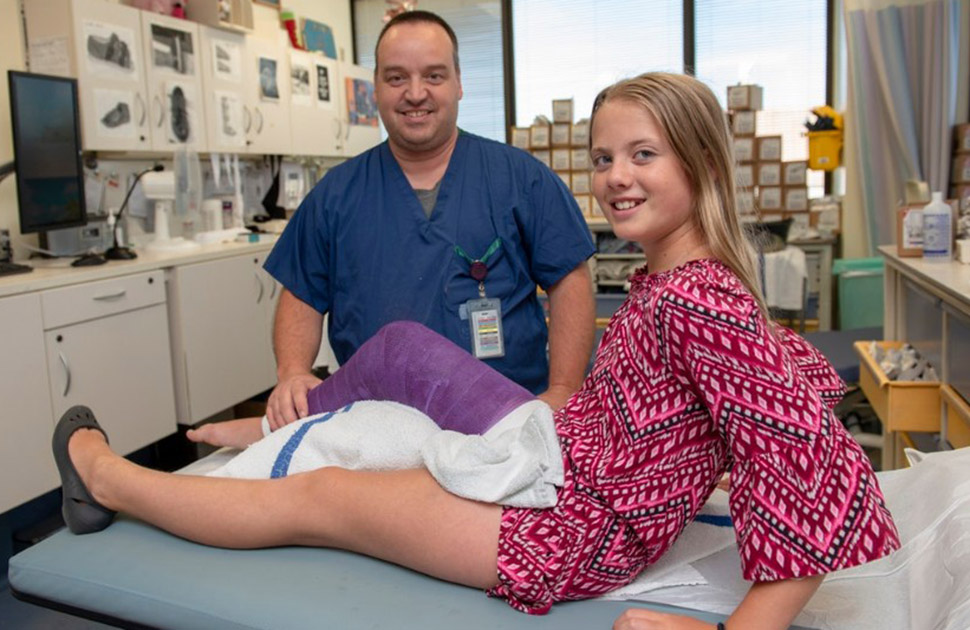
Girl getting leg cast from casting technician

Leaving doctors who man the emergency barricades at the nation's specialized children's hospitals scratching their heads in wonder and concern. That parents, fearing the virus could be keeping their children away from hospitals. A dramatic drop in emergency room visits has struck pediatricians across Canada, with some hospitals reporting that when parents do eventually bring their children around, whatever symptoms they had were by then well advanced.

Visits to the Hospital for Sick Children in Toronto for example have fallen by an estimated two-thirds since the global pandemic saw Canada infiltrated by the dread disease. In Ottawa, the Children's Hospital of Eastern Ontario has seen a 70 percent drop in new cases of diabetes in 30 days alone. And when children do appear at the emergency room they're sicker than doctors typically are accustomed to seeing.

Equally distressing is that child cancer patients are entering the hospitals' emergency departments to be seen, diagnosed and treated only after a prolonged period, when they've experienced symptoms for a longer period than should occur under other circumstances. Parents are struck with indecision whether the symptoms they're faced with in their children are merely transient and unimportant or signal something far more immediate and dangerous.

Coming to the Stollery

To the present, less than five percent of total cases of COVID-19 have been detected in children up to 19 years of age. Children are less likely to contract a serious case of the virus they're contracting in much smaller numbers than the general public, and researchers remain uncertain what role children have in the transmission of the virus. The general consensus, however, is that they may be carriers, passing the virus to older people at greater risk of complications.

For their part, hospitals take extreme precautions in an effort to prevent the occurrence of infections. Patients are carefully screened on entry, and those patients who might be harbouring infections are placed away from known non-infectious children. Dr.Wright, of Edmonton's Stollery Children's Hospital credits a relative absence of children at his hospital to the emergency public health measures to prevent COVID spread.

With schools cancelled, along with organized sports, the colds and flu typically that spread through schools and daycare centres winter-long have not appeared in the numbers usually anticipated, with less physical contact among children. With sports no longer high on children's agenda for the time being, injuries related to sports have diminished. Still, doctors are anxious to convey the message to uncertain parents that the emergency rooms are there for a distinct purpose, and no parent should hesitate to take their child there for quick attention when needed.

RJB10159394.jpg
The emergency waiting room at Sainte-Justine Hospital is shown on Thursday, January 16, 2020 in Montreal. Paediatricians across the country say far fewer parents are seeking emergency care for their children, likely over concerns about putting their kids in contact with COVID-19.THE CANADIAN PRESS/Ryan Remiorz

Labels: , , ,

Monday, February 17, 2020

Corporate Conscience of Contrition? 

"The World Health Organization names childhood obesity as one of the most serious public health issues of the 21st Century. And it's a key reason why Unilever is committing to new principles on marketing and advertising foods and beverages to children."
"It's a move designed to help parents, caregivers and kids make informed choices about the food and drinks they buy, and to address the rise of social media, and the vast increase in products on sale."
Unilever Company statement 

"Their bottom line is profit, not public health."
"Without policies that put some rules around marketing to children across all companies, it's hard to believe one company is going to sacrifice its profits to effectively reduce consumption of unhealthy foods."
"Policies would be good in that sense because they level the playing field."
Fran Fleming-Millei, director, marketing initiatives, Rudd Center for Food Policy and Obesity

"They can say, 'We've already done all these things and we're being proactive', as a delay tactic."
"They can pledge things that sound great but have a lot of loopholes."
Shu Wen Ng, associate professor, nutrition department, University of North Carolina, Chapel Hill
H/O: Ben and Jerry's Cherry Garcia
A scoop on Ben and Jerry’s Cherry Garcia ice cream on Free Cone Day in 2016.  Source: Ben and Jerry's

Dr.Ng takes a pragmatic view of one of the oldest multinational companies of consumer goods suddenly posing as a good corporate citizen with an empathetic outlook on the growing epidemic of obesity among children whose cause is fairly well recognized as processed and junk food availability as advertised by their makers as wholesome, delicious and just waiting for children to use all the wiles at their disposal to convince their mothers they'll eat their vegetables if they can anticipate 'treats' afterward.

Companies may make pledges of the kind that Unilever has just released in the interests of gaining credit for minuscule changes or ingredient reformulations, then touting them as improvements when those changes were already in the pipeline because head office is aware that the U.S. Food and Drug Administration's Nutrition Facts labelling would of necessity lead them in that direction. The new panels outlining nutritional data list total calories in a larger font and serving size requirements have been altered to reflect volumes actually eaten.

A Twister ad
Getty Images
Any added sugar content not merely those that product ingredients naturally consist of are to be listed along with updating the list of nutrients required or permitted for label declaration. Unilever has pledged that it will no longer market and advertise foods and beverages to children under age twelve on television, in print, and for children under thirteen through social media channels, by year's end. Products running the range from frozen dairy confections to cookies and breakfast cereals. No longer will it run ads on television and other media where children under 12 represent over 25 percent of the audience.

Ice cream products will no longer be promoted in schools or in children's films, and nor will Unilever continue to use celebrities or social media influencers, much less licensed cartoon characters in marketing to draw children's attention under age twelve. According to a National Survey of Children's Health report released in October, among youths aged ten to 17, obesity rates averaged 15.3 percent nationwide. In Mississippi that rate soared to 25.4 percent. Since the 1970s obesity rates for children and adolescents have tripled and more.

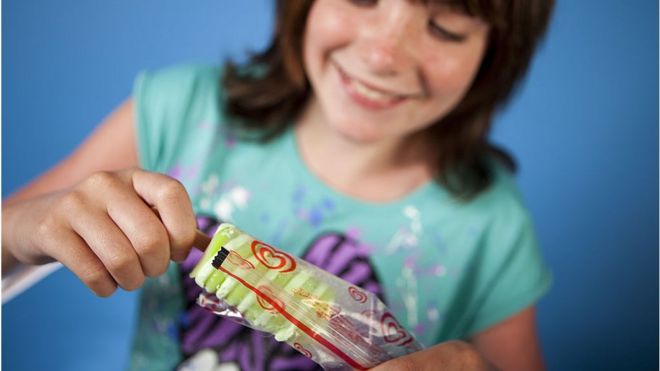
In 2010, Unilever and 18 of the world's largest food corporations signed the Children's Food and Beverage Advertising Initiative, where they pledged they would no longer advertise Skippy and Popsicle brands to children under six years of age.  It would advertise those food and beverage products that met certain nutritional criteria for children between ages six and 11. The company debuts, alongside its announcement, a "Responsibly Made for Kids" label.

Unilever, which makes many popular ice cream brands, has pledged to stop marketing ice cream products directly to kids. (Calla Kessler/The Washington Post)
Unilever to stop marketing products directly to kids.Calla Kessler/The Washington Post

Every ice cream in the kids' range will, by the end of 2020, contain no greater total calories than 220, with a maximum of 12 grams of sugar per portion. To meet that sugar limit, points out Fran Fleming-Millici of the Rudd Center for Food Policy and Obesity, many of the Unilever products will have seen artificial sugars added; additives not meant nor recommended for children's consumption. And, as associate professor Dr.Ng adds, many food and beverage companies choose voluntarily to restrict marketing to children with the thought of delaying stronger government-imposed regulations.

Chile, among other countries in Latin America, also confronted with rising obesity levels in children, has led the way to reduce advertisement exposure directed at children for foods high in added sugar, saturated fats, calories and added sodium. All these additives in food products require them to display black stop signs on front-of-package labels. Such black stop signs ensure these products cannot be sold or promoted in schools, or included in television advertisements targeting children -- or marketing strategies aimed at children.
These cookies are a triple-label threat: They're high in sugar, saturated fats and calories.
Eileen Smith for NPR

As a result of Chile's proactive vision, when these rules were adopted in 2016, consumption of sugar-sweetened drinks saw an almost 25 percent drop. Food, beverage and restaurant companies in the United States spent $13.5 billion in advertising costs across all media in 2016, according to the Rudd Center, representing a 7 percent increase since 2007, irrespective of the commitments from major food companies who had signed the Children's Food and Beverage Advertising Initiative.

Unilever
@Unilever
We’re changing the way we go about marketing and advertising our ice cream, food and drinks to children. Find out more here: bit.ly/31L3WdB
9:58 AM · Feb 12, 2020

Labels: , , , , ,

 
()() Follow @rheytah Tweet