Ruminations

Blog dedicated primarily to randomly selected news items; comments reflecting personal perceptions

Wednesday, May 03, 2023

The Global Pandemic of Loneliness

"We now know that loneliness is a common feeling that many people experience. It's like hunger or thirst. It's a feeling the body sends us when something we need for survival is missing."
"Millions of people in America are struggling in the shadows, and that's not right."
"That's why I issued this advisory, to pull back the curtain on a struggle that too many people are experiencing."
Dr. Vivek Murthy, former U.S. Surgeon-General
 
"You’ve probably known people who seem to have a lot of friends, but when they talk about it, they’ll say, ‘I don’t really feel like anybody knows me,’ or ‘I don’t really feel close to many people’."
"If you’re stressed chronically, your body may be in a low-level fight-or-flight response all the time. So what we are looking at is whether some people are in a chronic state of mild inflammation."
Robert Waldinger, professor of psychiatry, psychiatrist at Massachusetts General Hospital
 
"Social psychologists define loneliness as the gap between the social connections you would like to have and those you feel you experience. According to a 2018 report by the Henry J. Kaiser Family Foundation, 22 percent of adults in the United States say they often or always feel lonely or socially isolated. A national 2019 survey led by health insurer Cigna found that 61 percent of Americans report feeling lonely. Books like Bowling Alone (2000), by Malkin professor of public policy emeritus Robert D. Putnam, have highlighted the decline of social capital in the United States, but more recently, loneliness has become a serious issue of public health. In 2017, former U.S. Surgeon General Vivek Murthy ’97 called loneliness a public-health “epidemic.” The United Kingdom appointed a “minister for loneliness” a year later."
Jacob Sweet, 'The Loneliness Pandemic', Harvard Magazine
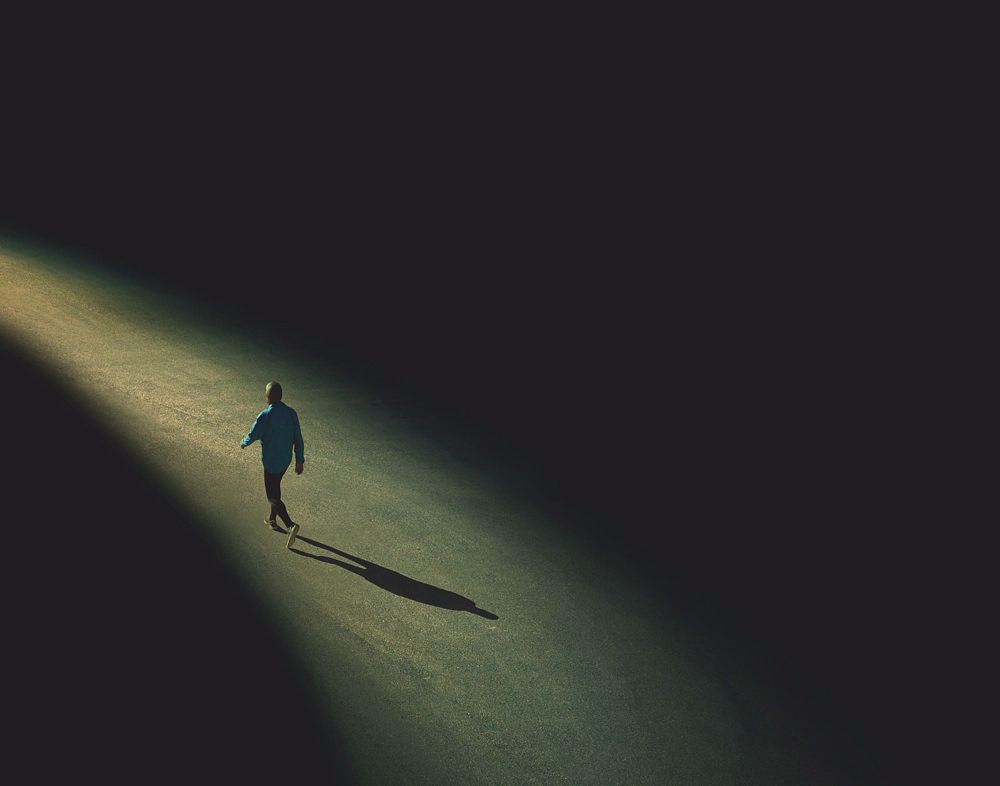
Illustration by Francescoch/iStock
"The pandemic does appear to have increased loneliness. Given the small effect sizes, dire warnings about a ‘loneliness pandemic’ may be overblown."
"However, as loneliness constitutes a risk for premature mortality and mental and physical health, it should be closely monitored."
"We think that loneliness should be made a priority in large-scale research projects aimed at investigating the health outcomes of the pandemic."
Mareike Ernst, PhD, Johannes Gutenberg-University, Mainz, Germany
Heavy use of social media can actually increase isolation
"According to the National Institute on Ageing (NIA), a think-tank at Toronto Metropolitan  University, social isolation has been linked to poorer cognitive function and a 50 percent higher risk of dementia, not to mention a significantly higher risk of stroke, heart disease and cancer mortality. It can increase anxiety and depression, and a study showed that Canadians in 2020 were more likely to think suicidal thoughts if they experienced loneliness."
"Loneliness is by no means confined to the elderly. The 2021 Statistics Canada survey found nearly one in every four young people aged 15-24 said they always or often felt lonely, a rate higher than other age groups and a finding matched in other countries as well. It’s not uncommon for the young to feel alone, of course – they are often leaving home for the first time – but there’s more to it than that. Young people are not only getting married later, they are having more trouble finding friends and romantic partners. More than half of Americans aged 18-34 don’t have a steady boyfriend or girlfriend, up from 33 percent in 2004, and 30 percent have no best friend. The age of first marriage and first sexual experience is getting later, and Millennials and Gen-Zers are less likely to be sexually active than the generations that went before."
CtoC Journal 
The latest public health epidemic: loneliness. Research points to people having become less socially engaged, a phenomenon that has become global. In the United States, research indicates that Americans attend houses of worship much less frequently, as well as engage with community organizations less, and see and commune with their own family members and friends far less often in recent decades. These are the people who report feelings of loneliness, a situation that has increased in the last several years.
 
When the global pandemic arrived, loneliness was already at a crisis level. When schools and workplaces shuttered and people were sent into isolation mode, the emotional toll accelerated. People tended to break their emotional link and dependence on the presence of others, saw family and friends far less often with the coronavirus pandemic threatening health and longevity. But the resulting isolation and overwhelming loneliness left people bereft of the very social supports natural to human nature's needs and that alone threatened health and longevity.
 
Americans, for example, spent no more than 20 minutes daily in the company of others in 2020, decreased from 60 minutes of social interaction common to most people several decades earlier. Young people, ages 15 to 24, appear to have become the demographic most hit by the loneliness epidemic. Those in that age group reported 70 percent less time spent in the company of friends in the past several years.

The risk of premature death is increased in an atmosphere of chronic emotional loss in loneliness, by 30 percent. Reports reveal those with poor social relationships faced greater risk of stroke and heart disease. An individual's penchant for experiencing depression, anxiety and dementia is elevated by isolation. Loneliness risks deleterious impacts on health to the same extent as smoking a pack of cigarettes daily.
"Being together with other humans conveys a distinct survival advantage for our species.  We are not the strongest or fastest animals.  But with a combination of brains, opposable thumbs and interpersonal cooperation we now dominate the planet."
"In ancient times, being alone, being cut-off from family, or banished from social groups was more or less a death sentence. Up through the 19th century, exile was still a form of punishment. And even today, some cultures will shun people who violate social or religious norms."
Dr. Grant Jackson, Holistic Primary Care

Chronic loneliness is a major health risk factor. According to a metanalysis of nearly 150 studies, people with weak social connections are 50% more likely to die prematurely than those who feel socially connected. The COVID pandemic has only exacerbated the problem. (Image: Studio4dich/Shutterstock)

Labels: , , , , ,

Friday, January 15, 2021

Antipsychotic Medication As an Answer to Elderly Depression, Loneliness

"In the days before nursing homes became so highly regulated, many facilities used medications to chemically sedate their residents. Elders who were calm and slept a lot were easier to manage and required less attention from staff members. Therefore, many homes considered drugging patients to be both efficient and cost effective."
"Anti-psychotics and sedatives were frequently prescribed to calm patients, especially those who had Alzheimer’s disease or other forms of dementia. In some cases, a low dose may have been beneficial for residents and staff alike, but these medications are very powerful. They can affect seniors and dementia patients differently compared to the general population, and some even carry black box warnings, indicating that adverse reactions may cause injury or death."
Carol Bradley Bursack, Minding Our Elders, AgingCare 

"[An] additional 1,000 residents are being prescribed antipsychotics who were not on the medication before the pandemic."
"[Such] knee-jerk reactions to try and medicate the distress of residents in nursing homes [during the COVID-19 pandemic] are a serious concern."
"[Antipsychotics come with a] black-box warning [for the elderly. They increase the] risk of stroke, falls and all-cause mortality, and are not recommended for frail, older adults [such as those with dementia, who make up about 70 per cent of nursing-home residents in Ontario]."
Toronto geriatrician Dr. Nathan Stall
Long-term care homes
 

During the pandemic, nursing homes have seen fit for safety reasons during a time of high viral contagion, to restrict visits from outside sources to elderly residents of long-term care homes. In some instances, residents have been confined to their rooms in a contagion-preventive measures, and see no one but the personal care worker assigned to them, on an irregular basis. They fall into a state of confusion and depression, and are consequentially drugged to make them more complacent, less aware, the drugs leading them to long periods of sleep when overworked and/or insufficient staff haven't the time to look after their needs.

This, at a time when nursing and long-term care institutions lack modern upgrades in hygiene practices, where in many homes, they place their residents in double-, triple- and more -occupied rooms with shared bathrooms where it is difficult to maintain distancing, much less adequate hygiene. Nursing homes throughout Ontario, throughout Canada, account for fully 80 percent of the national deaths attributed to COVID-19, among their frail, elderly residents. They are badly understaffed, unequipped and trained to be able to handle their patients at this critical time of a global pandemic.

The practise of dispensing drugs in this manner has been criticized in the past for using drugs to pacify elderly patients so that they require less care and fewer concerns, and the practise, given bad publicity, was seen to abate. Since the SARS-CoV-2 epidemic has entered country after country, threatening the elderly and the health-compromised, psychotropic medications prescribed for older people has once again entered the scene. Care homes see older people's emotional turmoil, a lapse in cognitive abilities, and have once again turned to drugging patients.

Antipsychotics, antidepressants and benzodiazepines like Valium or Klonopin are in increasing use. Scientific research shows links between social isolation and loneliness, contributing to physical and mental health deterioration and often contributing to the development of dementia -- including Alzheimer's. Above all, when the elderly are confused and isolated and the opportunity to see and touch those who love them is removed, a critical element of human need is denied them.

Lenora Cline, 88, has lived in a nursing home for years. She has Alzheimer’s disease.
Lenora Cline, 88, Alzheimer’s  Ed Kashi/Human Rights Watch
Seeing the use of these drugs as a remedy for the acute state of disequilibrium in the elderly, may keep them quiet, but its deleterious effects on the elderly can be just as devastating as contracting COVID-19. A dramatic increase in the use of medications to older people was found through a study of care homes in Ontario. In the United States, clinical studies have pointed to serious side-effects of antipsychotics; nervous system problems, cognitive decline, strokes and an increased risk of death in those with dementia. Benzodiazepine is associated with increased falls, pneumonia and death in the elderly.

"The effects of prolonged social isolation during lockdowns", including restrictions on visits from loved ones and suspension of social activities and group dining is linked to the increase of harm to the elderly in long-term care homes, according to the Ontario study. Similar findings were reached in the United Kingdom when it was noted increased loneliness and human touch deprivation during the pandemic led to an increase in drug use "probably in response to worsened agitation and psychosis" associated with restrictions due to COVID-19.

Research from 2017-18 in the United States and 2018-19 in Australia discovered psychotropic medications to be overused in nursing homes, according to documentation by Human Rights Watch. Typically, the medication comes into use when residents become more of a burden of care, the drugs leading to more compliant behaviour, the patients more easily handled. "Chemical restraint" is what medication used for the purpose of behaviour control lacking a therapeutic purpose, is referred as.

Photo of people sitting outside a nursing home.

Labels: , , , , , , ,

Thursday, December 10, 2020

The Depressing Trauma of COVID Oppression

Amid the COVID-19 pandemic, psychologists are worried about the mental health toll of rising cases and tightened restrictions during the winter ahead. (Evan Mitsui/CBC) 

"When we saw that everything we were doing was having an effect and the numbers were dropping, that empowered us. It made us feel like we're beating this thing, And that is great until the numbers start to go up and we start hearing that more restrictions are going to be in place and ... we might start to feel like everything we did didn't matter. It came back anyway."
"It requires a much quicker step towards getting somebody that really knows what they're doing to help. So if we're heading into winter with less sunshine, less ability to get social interaction, less opportunity for aerobic activity, less job security for some ... I worry we might see depression rates increase."
"It does feel like we're heading into a long, dark winter."
"[Physical signs of depression include very low levels of energy. Anxiety, meanwhile, can cause elevations in heart rate, breathing and sweating as it] basically makes our muscles ready to fight or flee. But we don't know how to fight, and we can't flee. So we're left with this feeling that's becoming chronic, it's engaged all the time." 
"Mental health is not something somebody else struggles with anymore — it's something we're all struggling with now, The critical point to remember is that it certainly will get better. It's a matter of persevering through the dark days and coming out to a better spring and a better summer next year." 
Steve Joordens, psychology professor, University of Toronto

The news, the news. Not very inspiring at the best of times and these are not the best of times. On the one hand we have the almost-imminent appearance of a vaccine that it is hoped will obliterate the presence of the horrible novel coronavirus that has afflicted the global community for almost a year.  The world economy has suffered, but above all, there is now one-and-a-half million dead whose family members will never come to terms with their loss.

But there appears to be another type of affliction that people suffer under, apart from the physical distress, apart from the disabling physical effects of the SARS-CoV-2 virus that so mysteriously entered the pantheon of deadly diseases preying on the animal kingdom, and that has relentlessly stalked the world in such a sinister manner. 

People have been doubly victimized, their organs succumbing to the dire destructive effects of the virus on the respiratory system and other vital organs, and aside from and together with that there is the psychological affect. People already suffering mental insecurity, and those newly introduced to the intensity of fear and loneliness are experiencing a greater loss of equilibrium; debilitating mental illness.
 
A new poll just released by the Mental Health Commission of Canada and the Canadian Centre on Substance Abuse has revealed that respondents who claim to be in "strong mental health" has realized a fall in numbers by 23 percent over the time the global pandemic was set loose on humanity. In 2019, 67 percent of Canadians felt themselves to be in a condition of strong mental health, and that number has now declined to 44 percent. Over half of Canadians now think of themselves as being at a perilous level of mental health. 
Suicide help lines have been beleaguered by a wholesale increase in calls of desperation, vastly outstretching their ability to effectively cope with a mental health crisis that has afflicted youth in particular with one in five seen to be acquiring or worsening a mental health disorder, according to the Canadian Institute for Health Information. Emergency department visits and hospitalizations for mental health disorders among young people rose in the last decade by 60 percent even as hospitalizations for other issues fell by 26 percent. And the numbers are rising, thanks to COVID.

In effect, this disaster that the public has been warned about for years has been realized at a time when no one appeared to take the warning seriously, that a global pandemic was due to appear, and would have to be dealt with. Governments ignored the warning, health authorities took heed but did little to prepare, since it takes financing to do so and public health is financed by the public through taxation, a dirty word when it is suggested that more taxes need to be forthcoming to handle an immense problem that might or might not appear in the near-to-distant future.

Well, it appeared in the near-enough future and that future is now, and we are living through the disaster that just about everyone found too difficult to assimilate into their unreceptive minds as being something that had to be prepared for. That lack of preparation has resulted in horrendous consequences. On the other hand, it's difficult to imagine  how matters could have turned out differently. There are simply so many issues of vital importance that have to be seen to and dealt with, even absent the appearance of a global pandemic.

Things have certainly changed for youth everywhere, from toddlers at day care to elementary-school children, through to high school and university. How comfortable and 'child friendly' would it seem to a child looking around and seeing everyone wearing masks? Conformity may make it appear non-threatening, but it is also, undeniably, off-putting not to be able to see peoples' faces, their smiles the kind of facial language that we learn to read so effortlessly from birth to adulthood. Now denied the young.

Close physical contact another denial, when this is precisely what the human psyche thrives on. And to explain to a child the necessity of distancing is to introduce to that child the concept of an evil, unseen threat waiting to pounce. Which may be true but would be of no comfort to a child being informed that life has its dangers. Teens have seen their casual world of pairing up, joining groups, sport activities suddenly disappear in the interests of health safety. Strictures of caution are introducing them to a solitary existence.

University students, masked and distancing are as exposed to the feeling of suspicion of the 'other' as a potential vector of a disease that may merely inconvenience them, or that may, under certain physical conditions of receptivity when their particular immune system goes amok may alternately result in internal organ disruptions that can be pretty serious, and in rare circumstances lead to life-long impairment, and possibly an early death.

Not very reassuring to those setting out on what should be a long, 'normal' trajectory toward adulthood and aspirational lifestyles. Now, the new normal is isolation and loneliness, confusion and resentment. And mental illness, newly arrived or lingering in the background and newly exacerbated. And there is this kind of whistling-in-the dark:
"Being alone doesn't have to mean being in isolation, We're going to be finding more creative ways of [interacting] again — having game night over Zoom, having a movie night where you're both watching the same movie separately."
"So it's [about] being cautious, but still continuing to do the same activities that we normally use to ground us." 
Noreen Sibanda, registered provisional psychologist, Edmonton

covid canada
Healthcare workers talk to a woman at a COVID-19 testing clinic Montreal, Sunday, October 11, 2020, as the COVID-19 pandemic continues in Canada and around the world.THE CANADIAN PRESS/Graham Hughes

Labels: , , , , , ,

Wednesday, September 09, 2020

Coronavirus Stress

"We all know what tired fatigued, sagging skin looks like and we associate that with being old."
"Your skin is like the tip of an iceberg. Just ten percent is what you see is on the surface; it's what lies beneath that's really important."
"The good news is that it's temporary. Skin has a tremendous ability to bounce back and renew itself if you do the right things like eat a better diet, and those measures will vastly improve your overall health and banish the perception that you have prematurely aged."
Mark Birch-Machin, professor of molecular dermatology, National Innovation Centre for Ageing, Newcastle University, U.K.
Feeling More Tired Than Usual? Welcome to the Very Real World of Coronavirus Fatigue
"We get so much from our face-to-face social relationships, not just pleasure but reassurance, affirmation and information."
"The loss of those connections can feel devastating, and that has a knock-on effect on our mental health and self-esteem."
"It's easy to look after yourself when you feel [yourself to be] a valued member of a community or social network, but if you are depressed and have lost your confidence then it's far harder to invest in your own well-being."
Robin Hewings, director of policy and research, Campaign to End Loneliness
 
"The things we associate with growing older such as frailty or dementia are by no means a given."
"Someone can be in their 70s and have a biological age that is decades younger because they have been proactive about maintaining their body mass, muscle tone and brainpower."
Dr.Richard Siow, director of Aging Research, King's College London
"The thing that keeps us in good physiological health are the same boring four tenets -- being as active as possible, eating a balanced diet, not smoking and drinking in moderation."
Stephen Harridge, professor of human and applied physiology, King's
https://nirx74twfblvgbzze3cy4q5pja.gcdn.anvato.net/captures/4E3/4DB/4E34DB5DE0E54A3FA3F1B5A9FB8724A9.jpg?Expires=1599705902&KeyName=mcpkey1&Signature=b2X-ctyc_NqlXnQZ5ItqFN9zOn0
Science is now accepting what many people have long believed, and is now being supported by evidence that our well-being includes both physical and psychological health working in tandem. Experts in aging now tell us that we should target our aging with a positive attitude and that is achieved by remaining healthy and free of disease as long as conceivably possible. Admittedly, there has been a set-back to this invaluable advice, with the introduction of COVID-19 to our daily lives.

In Britain, an estimated six million people are of the opinion that lockdown during this time of the global pandemic brought on by the SARS-CoV-2 virus has taken a visible toll of us; we are tired of it all, feeling miserable about a constricted lifestyle, are nervous and upset about the threat that the disease augurs for us and the result is a perpetual moodiness, an inability to relax, a feeling of disbelief and resentment that this can all be happening, that the world is helpless in the face of a virus.
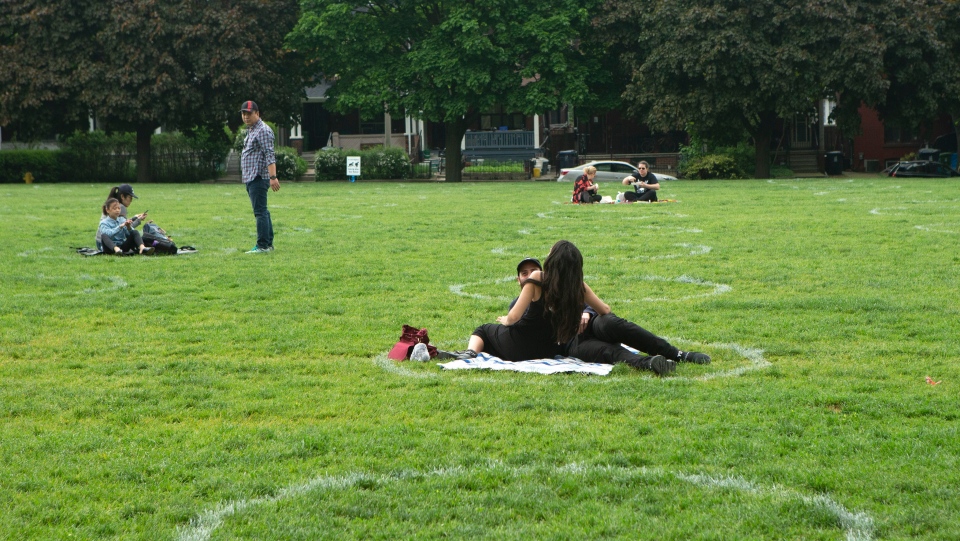
Trinity Bellwoods Park
People sit within circles painted by the city in Toronto's Trinity Bellwoods Park, as a measure to enforce physical distancing. THE CANADIAN PRESS/Chris Young

Many people believe that they, and everyone around them looks "at least" five years older, in the space of six months, since COVID-19 marched into our lives, closing down schools and governments, businesses and hopes for the near future. This conclusion courtesy of U.K.-based Uvence, commissioned to conduct research into the matter.
 
Everyone tries to make light of the fact that we have been harnessed to an ordered self-isolation, that we have had little choice but to school ourselves in the niceties of distance and mask-wearing, and having to become accustomed to avoiding 'crowds' of over 20 people in indoor settings. Gyms have been shuttered and so have hairdressers and it has become painful to view ourselves in a mirror.
 
A person sleeps in a bed with white sheets, with their feet visible.
Increased anxiety and depression; people feel fatigued. Pexels
When we do sneak a peak we're alarmed at the dark circles around our eyes, the dry, wrinkled skin, the face puffiness, all those mysterious pains and aches in joints and muscles that suddenly appear that we've never before experienced, so what's going on?!  What's going on, experts take pains to explain, is that we're in mental turmoil and that state of mind has influenced our total health condition, mind and body.
 
COVID stress and strain. You didn't really need anyone to tell you that. A survey of 2,254 people in a recent King's College London and Ipsos MORI survey revealed that 48 percent of survey respondents claim to have put on weight during lockdown. It's the same percentage reporting feelings of anxiety and depression, while 29 percent say they have made more use of alcohol as a relaxant. Source of extra calories along with late-night snacking.
 
Oh, you remember now, alcohol dehydrates bodies, including the largest organ we have, our skin, and that bloated and puffy appearance on our faces? Well, alcohol in all likelihood. How else ease tension than to pour a stiff drink; it's self-medication to ameliorate that feeling of isolation. What it eases is that lockdown loneliness that has become such a common ailment, a real-life issue with potentially consequential outcomes. 
 
People aged 16 to 24 appeared to be 50.8 percent likelier to experience lockdown loneliness than those aged between 55 to 69 among whom 24.1 percent feel lonelier. Loneliness is comparable to health and mortality risk factors such as obesity and smoking 15 cigarettes daily. Sufferers are placed at a 26 percent risk of early death as a range of diseases such as dementia can be the final outcome of loneliness. 
Many people have reported feeling exhausted

Labels: , , , ,

Sunday, January 19, 2020

Social Isolation and Loneliness

"I have pretty much always been introverted. I was used to being in the apartment all the time. It became almost a habit."
"If you're interacting with a group, people are expecting you. You're motivated."
"When you're by yourself, it's easy to get into that negativity spiral. It's important to get that reinforcement from people."
"Unless I motivate myself, I just go to fortress mentality. I have to come up with strategies to motivate myself and interact with the world."
Ken Roberts, 56

"The whole issue of aging alone is a huge issue for Canada for a number of reasons."
"You have densely-populated urban environments, where you can be alone in a crowd. There are suburban environments where lack of transportation can lead to social isolation."
"And then there are the distances for people in rural areas and the north."
Nora Spinks, CEO, Vanier Institute of the Family

"There is no other health condition that affects half of Americans."
"Nobody saw this issue a year and a half ago, and we're already getting legislation in Washington. This is starting to get traction."
"The market is starting to react to the ideas that loneliness is a condition that can be managed."
Andrew MacPherson, director, U.S. Coalition to End Social Isolation and Loneliness
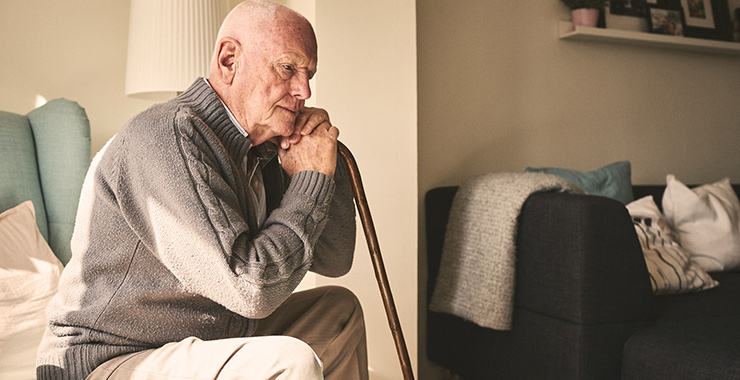
Older man sitting and leaning on a cane
American Psychological Association

The International Federation of Ageing report commissioned by Employment and Social Development Canada concluded the top issue facing seniors, only now emerging fully to public scrutiny, is ensuring that they be socially connected and active. "Everyone is looking for an answer about how to fix this", Mary Pat Sullivan, professor of social work and social gerontology at Nipissing University, observed.

She had travelled  to the United Kingdom where she undertook research on social isolation and loneliness for two decades, and recently returned to Canada. "I can see that interest is starting to pick up here". Last May, the first "summit on social isolation and companion animals", held in Washington, attracted public health officials, gerontologists and veterinary researchers.

Nicholas Kristof, New York Times columnist, last month urged a war on loneliness, recommending research that has demonstrated that dog owners -- not cat owners -- are less lonely, thanks to the companionship offered by dogs. That, even though a growing body of research finds no full agreement on whether pet ownership is a balm for loneliness as a certainty.

Menshealth.com posted an article in October with the argument that men form friendships differently than do women, requiring different methods to ward off loneliness. The article headline read: "Loneliness is fatal. Video games can keep men alive". Let No One Be Alone Week, encouraging people to reach out to seniors, is a special event observed in Manitoba. In Vancouver, Hey, Neighbour! was a pilot project attempting to connect apartment dwellers through shared activities; from board game nights to a workshop on emergency preparedness.

There are eleven community health centres in Ontario, part of a pilot project meant to issue "social prescriptions" for people who feel disconnected, the prescriptions featured for activities ranging from dance lessons to museum visits, to increase social connections. Clients can be referred by doctors, nurses and other health professionals identifying social disconnectedness from among their patients to "link workers" who then look for social opportunities tailored to the specifics of the individual.

This is a therapeutic notion pioneered on strategies used in the United Kingdom, whose National Health Service is engaged in social prescribing, calling it a "key component" of universal personalized care. Social prescribing is supported by 59 percent of general practitioners in the U.K. in the belief that it can aid in reducing their workload. An announcement was broadcast a year ago that the NHS was hiring another thousand link workers.

Young woman alone looking out window

Social isolation is not the same as loneliness; the former relates to the number and frequency of links in a person's social network; an objective issue, whereas loneliness is subjective in nature; an individual reaction to the quality of those connections. One can be socially isolated and not be lonely, given people's varying personalities and perceptions and values.

There are studies linking chronic loneliness with the risk of early death, coronary heart disease, stroke, cognitive decline, and dementia. There is no doubt that feelings of loneliness makes people more susceptible to a depressive state. In addition to which, loneliness and a dearth of social interactions are seen to be predictive of suicide among older people.

Researchers at the University of Manitoba Centre on Ageing reported in 2015 that among people in the 45-plus range who were hospitalized, loneliness was associated with a higher likelihood of returning to hospital. Social isolation was associated, on the other hand, with a higher likelihood of remaining in hospital for a longer period.

20 Facts about Senior Isolation That Will Stun You

Shifting demographics point to a solitary future for many people. For the first time in recorded Canadian history, the 2016 census discovered one-person households to be the most common household type in the country. Reasons for living alone are also undergoing change. About 22 percent of people living alone in 2016 were widowed, reduced from 33 percent in 1981, but 32 percent of people living alone were separated or divorced, close to tripling the 1981 rate.

Loneliness, according to former U.S. surgeon general Vivek Murthy, is a "growing health epidemic". Socially isolated seniors in the United States are estimated to be facing a 19 percent greater risk of death, and the cost in Medicare spending is $134 more monthly. Disconnectedness is seen to be more predictive of early death than effects of air pollution or being chronically sedentary, according to research by Julianne Holt-Lunstad of Brigham Young University.

A study of 5,100 Americans and their social contacts published in 2008 considered the possibility that loneliness is contagious, that when one person feels lonely, that feeling can communicate to others in a network and over time every additional day of loneliness per week led to an additional day of loneliness monthly for those in the social network.

Australia formulated the Coalition to End Loneliness; the U.S. the Coalition to End Social Isolation and Loneliness. The Dignity in Aging Act updates the 1965 Older Americans Act, placing a major focus on social isolation and empowering local organizations to evaluate solutions for social isolation, incorporating social isolation screening into health and supportive services for seniors in the U.S.
Loneliness is an issue around the world. KatarzynaBialasiewicz / Getty Images/iStockphoto

Labels: , , , ,

Wednesday, January 15, 2020

Prepare Yourself: Unhappiness at Age Half-Century

"Unhappiness is hill-shaped in age. There is an unhappiness curve."
"[These new papers indicate a] surprising pattern in the data in 132 countries & numerous surveys & millions of people runs contrary to claims of some and earlier psychology literature that there is no such pattern."
"The happiness curve is found in 132 countries. No myth. It’s true for people who are single. It’s true for people who have got children, who haven’t got children. For men, it’s true for women."
"It looks like something that's naturally occurring. You can get it in great apes. The results imply that human well-being’s curved shape is not uniquely human and that, although it may be partly explained by aspects of human life and society, its origins may lie partly in the biology we share with great apes."
"There is growing evidence from around the world that prime-age adults are struggling, and especially so if they have low levels of education. This is particularly apparent in the United States that has seen a rapid rise in deaths of despair, principally down to drug poisonings and suicide."
"It's about isolation, loneliness, lack of help and lack of community. We need to recognize that this is something real and then help people to get through it."
"If you’re in a midlife crisis, just understand that lots of other people are as well. The other one is don’t be alone. It says that in the data that sharing things, dining with your neighbours, talking to your family, spending time with your family, letting people come and help you because eventually it will get better."
David Blanchflower, professor of economics, Dartmouth College
MarketWatch photo illustration/Getty Images

In a newly published study in the National Bureau of Economic Research former Bank of England policy maker David Blanchflower identifies the age of 47.2 as the climax of unhappiness for people in the developed world. A very similar index applies to people in developing nations; they are slightly behind by one point, one year, with age 48.2 the time of maturity of least happiness. Data based on close to ten million people from 40 countries in Europe and the United States were used by this researcher for one of his studies to examine the relationship between unhappiness and age.
"You're past your prime, you're past your peak. You're on the downward slope of the physical side of things now."
"It's like the worst of both worlds [neither the fun of youth nor the security of old age]."
"Children don't have huge mortgages or jobs to hold down. You're provided for; you're taken care of. You're with your family all the time, so you don't have the loneliness and anxiety and isolation [that arrive in later years]."
"[And then age tends to arrive with increased financial security]. You have your house, your savings, your retirement plans, your family is grown up and self-sufficient."
"People have a lot less to look forward to now -- climate problems, economic problems, political problems."
"There will be a lot of very substantial cultural and sociological elements that drives a population's happiness in either direction."
Dean Burnett, British neuroscientist, author: The Happy Brain: The Science of Where Happiness Comes From and Why
Unhappiness
According to a new study, people in developed countries reach their peak misery at the age of 47.
Mr. Blanchflower identified 15 different indications of unhappiness which include despair, anxiety, loneliness, sadness, strain, depression and bad nerves, phobias and panic, being downhearted, loss of confidence, tension and 'thinking of yourself as a worthless person'. Two questions were also used in the index of unhappiness: was it difficult to feel hopeful about the future of the world; and was life in one's own country becoming worse? Whatever the criteria and response they seemed to add up to generalized unhappiness around age 50.

Mr. Blanchflower, himself 67 years of age, looked into age and subjective well-being in 132 countries in a separate paper titled 'Is Happiness U-shaped Everywhere?'. Taking education, marital and workforce status into account, he discovered that whether rich or poor, the outcomes were almost identical, merely a one-year differential between peak age when people are the least happy. Whether the identified median age was high or not, or whether people lived in countries with higher life expectancies, the curve's trajectory remained unchanged.

“The great sadness” of actor Ben Affleck,  47 years old. Alain Jocard/AFP via Getty

The most vulnerable people faced with this midlife crisis are being hit hard, he pointed out, even as marriage and religion are declining in many areas of the world. In the United Kingdom, a developed and wealthy country, wages are 4-1/2 percent below their 2008 position. With depression increasing among populations, the depth of general despair "looks to be disastrous" pointed out Mr. Blanchflower who had written Not Working: Where Have All the Good Jobs Gone?

Dr. Burnett, the British neuroscientist, pointed out that the brain is not a static organ, it adapts to whatever conditions appear before it. So the discovery that happiness becomes altered over long periods of time, or that a U-shaped curve in human mental states exists does not particularly present as a novel idea. And the good news is that as one grows into senior years matters have a tendency to improve, the happiness or satisfaction-with-life factor climbs upward....

David Blanchflower holds a massive snook fish while out fishing.
 The study's author David Blanchflower, now in his 60s, says his happiness is only trending upwards. (dartmouth.edu)


Labels: , , ,

Monday, September 19, 2016

Isolation and Loneliness in the Elderly

"There's been an explosion of public awareness here, from local authorities to the Department of Health to the media."
Paul Cann, founder, The Campaign to End Loneliness, London, U.K.

"The profound effects of loneliness on health and independence are a critical public health problem."
Dr. Carla M. Perissinotto, geriatrician, University of California, San Francisco

"This is the first time we've found a cellular substrate for this experience."
"And we saw the change after 24 hours of isolation."
Dr. Kay M. Tye, neuroscientist, Massachusetts Institute of Technology

"Denying you feel lonely makes no more sense than denying [that] you feel hunger."
Dr. John T. Cacioppo, professor of psychology, University of Chicago

"We have this kind of male pride thing. We say, 'I can look after myself. I don't need to talk to anyone', and it's a complete fallacy."
"Not communicating helps to kill us."
Mike Jenn, 70, retired charity worker, London

"I was a bit anxious walking into a roomful of people."
"But I immediately thought, 'Yeah, this is a place [the Men's Shed workshop/social gathering] that could work for me'."
Keith Pearshouse, 70, retired school principal, London 
Campaign To End Loneliness page header

Neuroscientists at MITT recently published new findings of research linked to the brain and loneliness. Their study, appearing in the journal Cell, identifies a region known as D.R.N., or dorsal raphe nucleas, earlier recognized as a link to depression. Dr. K.M. Tye and colleagues discovered that when mice were kept in a social unit dopamine neurons in the D.R.N. remained relatively inactive.

Once the mice were separated and isolated from one another, even for a short period of time, the neuron activity surged once they were reunited with other mice, after having been apart. Researchers have evidence that links loneliness to physical illness as well as to cognitive decline. Loneliness, as far as they are concerned, is a better predictor of early death than obesity.

In Blackpool, England, a 24-hour call center was established to aid older adults requiring help in filling a most basic need; contact with others. Loneliness is increasingly viewed in Britain as an issue seriously affecting health and as such has become a public health matter worthy of receiving public funds and attention. The call center, named The Silver Line helpline, handles roughly 10,000 calls on a weekly basis.

Local governments and the United Kingdom's National Health Service have established programs whose purpose is to mitigate loneliness and dozens of towns and cities in England, now host these programs.

Professor Cacioppo deplores the negative aspect given to loneliness, that it is a sign of weakness, or an indication that someone is incapable of independence. His laboratory work has demonstrated the effect of chronic loneliness, associated with increased levels of cortisol, a major stress hormone, along with higher vascular resistance, capable of raising blood pressure while decreasing blood flow to vital body organs.

White blood cells are affected by signals activated in the brain through loneliness whose affect has the potential to impair the effectiveness of the immune system. A national survey of older adults rendered data in 2012 enabling Dr. Perissinotto to analyze the relationship between loneliness and health outcomes in older people. Of the 1,604 study participant, 43 percent reported being lonely and they were seen to have significantly higher rates of declining mobility, of difficulty performing routine activities, along with higher rates of death six years on from the study.

It was noted that 70 percent of the calls to The Silver Line come from women; men are more loathe to admit they are lonely. Retired charity worker Mike Jenn operates a "Men's Shed" in London for the purpose of welcoming older men into a comfortable environment doubling as a woodworking shop. A concept that was initiated in Australia, it has been shown to work very well. Over 300 Men's Sheds now operate throughout England, Scotland and Ireland.


Labels: , ,

 
()() Follow @rheytah Tweet