Ruminations

Blog dedicated primarily to randomly selected news items; comments reflecting personal perceptions

Saturday, June 19, 2021

Convenience Foods, Processed Foods, Clean Label Lists

"Clean label definitely gives this idea that yes, this product is as natural as it can possibly be."
"Consumers demand different types of attributes, for example: Foods that are healthy; foods that are not produced using pesticides or chemicals; foods that are in agreement with environmental stewardship." 
"So it's that sort of misalignment between expectations and what can possibly be done with current technologies."
"Not to mention that it [microwave -assisted thermal sterilization] uses less energy. The carbon footprint emission of these technologies is lower than their counterpart. So it is not only good for the person who is going to have it in terms of satisfying their expectations of  taste and flavour and healthiness because it doesn't have the long list of additives, but it is also good for the environment."
"There are thousands of factors that can influence consumer behaviour when deciding what foods to purchase and consume."
Karina Gallardo, professor of economics Washington State University 
Clean label foods
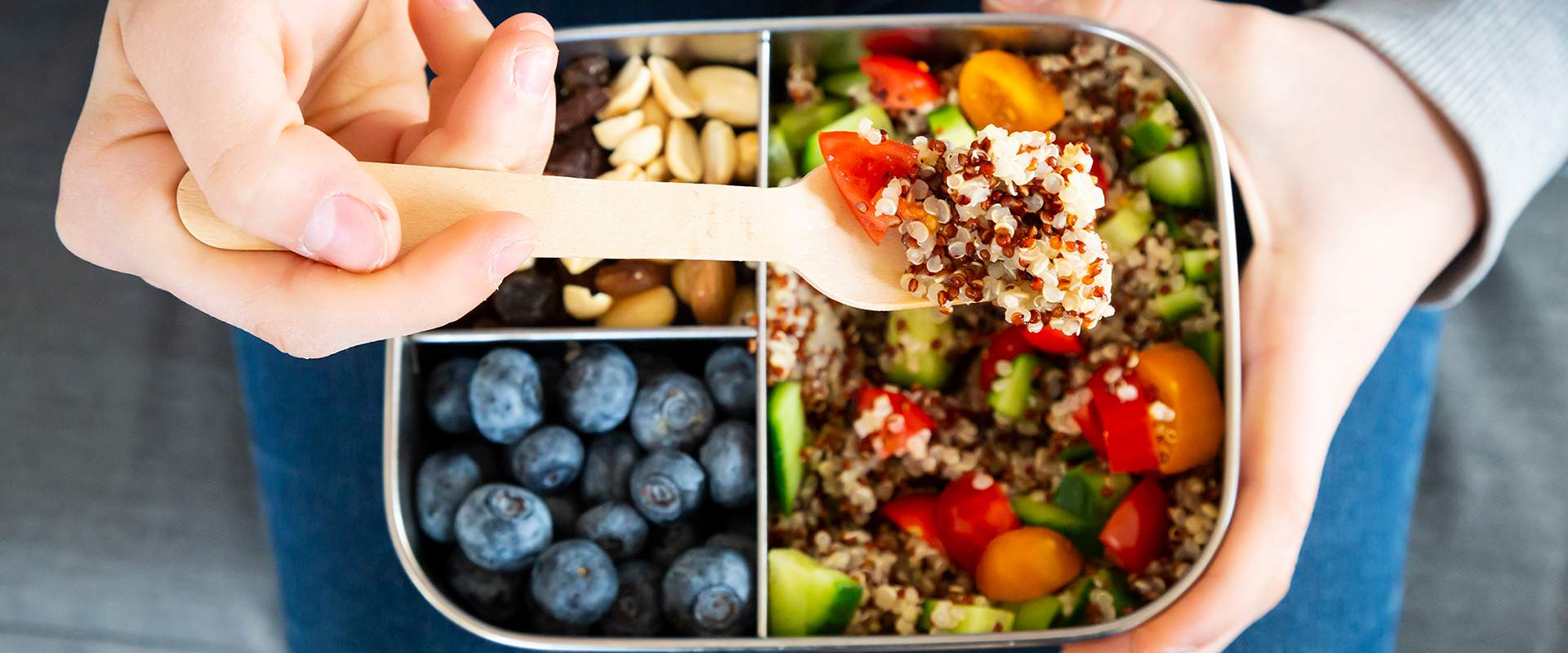
"Don't buy products with more than five ingredients or any ingredients you can't easily pronounce"; advice by  a best-selling author of the book In Defense of Food. And it's pretty good advice. "If you can't say it, don't eat it", the advice of Michael Pollan. It may have taken a while to penetrate, but at the present time consumers are increasingly looking out for what is called in the industry 'clean label foods'. These are labels listing few items in their processing, short lists of recognizable ingredients, mostly of natural derivation.

The follow-up question actually should be: Is it whole food, if it's been processed? But that's another, digressive story. People think of clean label convenience foods as healthier than foods whose ingredient lists seems interminable. Lists that include chemicals in the ingredients of unknown origin and purpose; tongue twisters like azodicarbonamide, butylated hydroxyanisole, and calcium disodium ethylene-diaminetetraacetate. Tongue-twisting challenges to mouth, much less to ingest. 

Those are the ingredient labels that make consumers who bother checking them, shudder. Whereas the clean labels listing no more than five explicated ingredients strike the consumer as superior and as a result, healthier. They are forgiven for the sin of being, in actual fact, processed food. Dr.Gallardo of Washington State University is author of a new study which set out to examine consumer preferences, published in the journal Agribusiness.

Dr.Gallardo, along with Washington State economist Jill McCluskey and Kara Grant, economist at Missouri Western University, concurred that many people are prepared to pay more for ready-to-eat foods whose composition lists bear fewer ingredients. Consumers appear inclined to select clean label foods produced with new technologies geared to limit the use of artificial or chemical components, in the name of extended shelf life properties.
 
https://www.lek.com/sites/default/files/hero-images/insights/2174-clean-label-food.jpg
Earlier published studies have indicated that people consider new food technologies to represent "risky or unhealthy, or even unethical" food preparations, although the expectation is that a continually expanding number of clean label convenience foods available in grocery stores will be available. And these are foods requiring innovative technologies in food production. 

The researchers defined clean label foods for their study as those with few ingredients without factoring in ingredients familiarity; surveying one group of participants to determine the value they place on clean label foods, and a second group to determine whether including the name of a new technology might affect their choices. Study participants were asked their thoughts on microwave-assisted thermal sterilization (MATS); using heat to kill pathogenic bacteria, much like a microwave oven.

Over half the participants stated their preference for clean label ready-to-eat meals marked with the new technology name. MATS technology results in processed meals that appear and taste as though they were prepared recently, unlike conventional food preservation technology where taste is compromised along with texture and vitamin content, to achieve longer shelf life.

With the new technology, vegetables retain their fresh crunch and vibrant colour "so there is no need to apply a long list of additives, chemicals or salt in order to preserve that", explains Dr. Gallardo. Obviously, the opinion of consumers is that all technologies are not created equal, since much depends on the name of the technology and the manner in which it is communicated. 

A label mentioning genetic modification elicits suspicion: "There is an intense rejection". When the word microwave appears in the technology name presented to participants it calls to mind a technology commonly used in a householder's kitchen, therefore acceptable in its familiarity. Both groups of study participants had a preference for clear labels, but a large minority was not willing to pay a premium for products with fewer ingredients.

Within the larger group, the study indicated, people who profess belief in clean label foods and those who favour a shorter list of ingredients dominate in a more relaxed way about these choices. In marked contrast to those who are strong believers in clean label foods, and on the opposite end, those indifferent to clean labels altogether.

Pic: GettyImages/gpointstudio
Getty Images

Labels: , , , ,

Wednesday, February 26, 2020

Preserving Heirlooms

"The seed vault is the backup in the global system of conservation to secure food security on Earth."
"We need to preserve this biodiversity, this crop diversity, to provide healthy diets and nutritious foods, and for providing farmers, especially smallholders, with sustainable livelihoods so that they can adapt to new conditions."
Stefan Schmitz, executive director, Crop Trust, Bonn
Journalists and cameramen walk under a gust of cold wind near the entrance of the Svalbard Global Seed Vault that was officially opened near Longyearbyen on February 26, 2008.Larsen, Hakon Mosvold/AFP/Getty Images
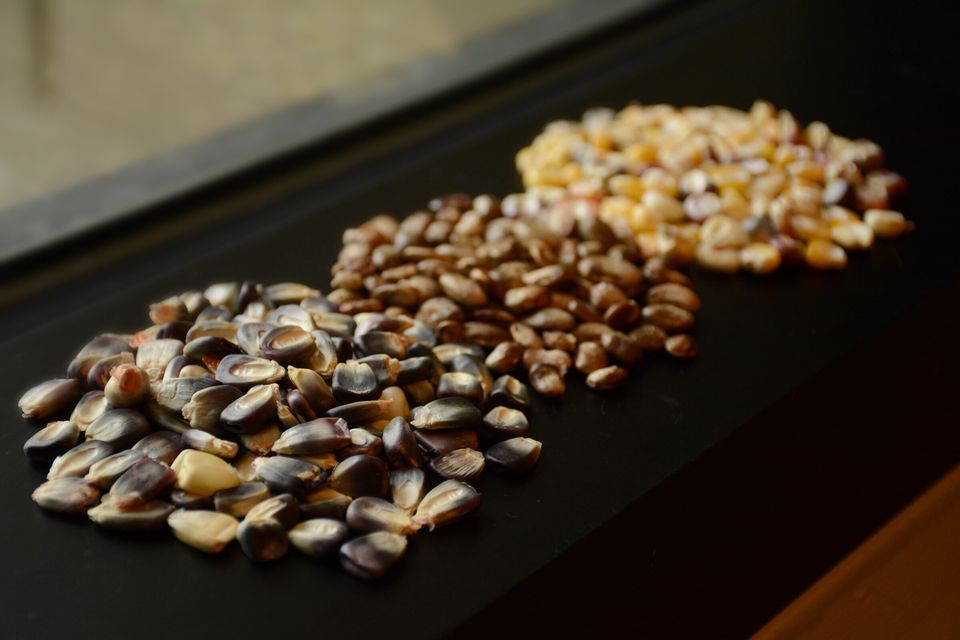
Cherokee Nation seeds destined for the Svalbard Global Seed
Cherokee Nation
Cherokee Nation seeds destined for the Svalbard Global Seed Vault
"It was the recognition of the vulnerability of the world’s gene banks that sparked the idea of establishing a global seed vault to serve as a backup storage facility. The purpose of the Vault is to store duplicates [backups] of seed samples from the world’s crop collections."
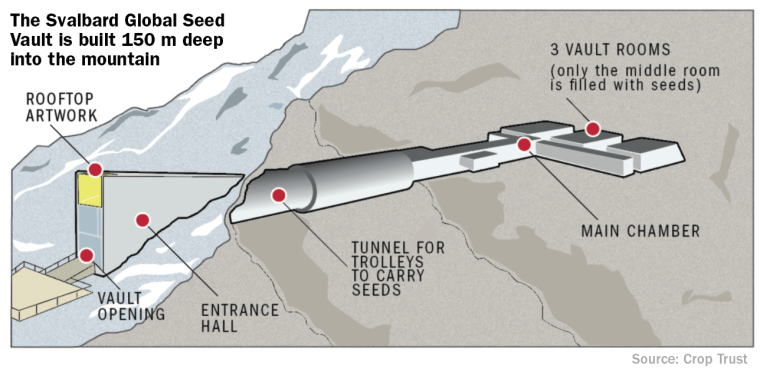
"Permafrost and thick rock ensure that the seed samples will remain frozen even without power. The Vault is the ultimate insurance policy for the world’s food supply, offering options for future generations to overcome the challenges of climate change and population growth. It will secure, for centuries, millions of seeds representing every important crop variety available in the world today. It is the final back up."
Crop Trust
There are a good many well organized, dedicated seed banks around the world, where heritage seeds are banked and maintained, and for many the purpose is to supply small-hold farmers and people living in poverty around the world with seeds to grow their own crops. Located in areas around the world from North America, Asia, sub-Saharan Africa, Central America, India and Oceania, among others, research and collection and distribution helps to ensure that seeds to produce grains and vegetables to feed the world will never be lost.

An employee of the Potato International Centre (CIP) in Lima, handles seeds of potatoes and sweet potatoes being cultivated at the Centre. January 25th, 2008. Seeds of these tubercules were sent to the Svalbard Global Seed Vault (SISV) in Norway. ERNESTO BENAVIDES/AFP/Getty Images
One of many interesting seed banks is maintained in a special vault in the Arctic meant to preserve seeds for rice, wheat and assorted food staples, where a million varieties are preserved. This place is the Svalbard Global Seed Vault, built into a mountainside and designed as a storage facility, with its goal to protect the integrity of vital crop seeds should cataclysms of nuclear war or plant pathogens strike the world order when it becomes imperative to safeguard global food supplies.

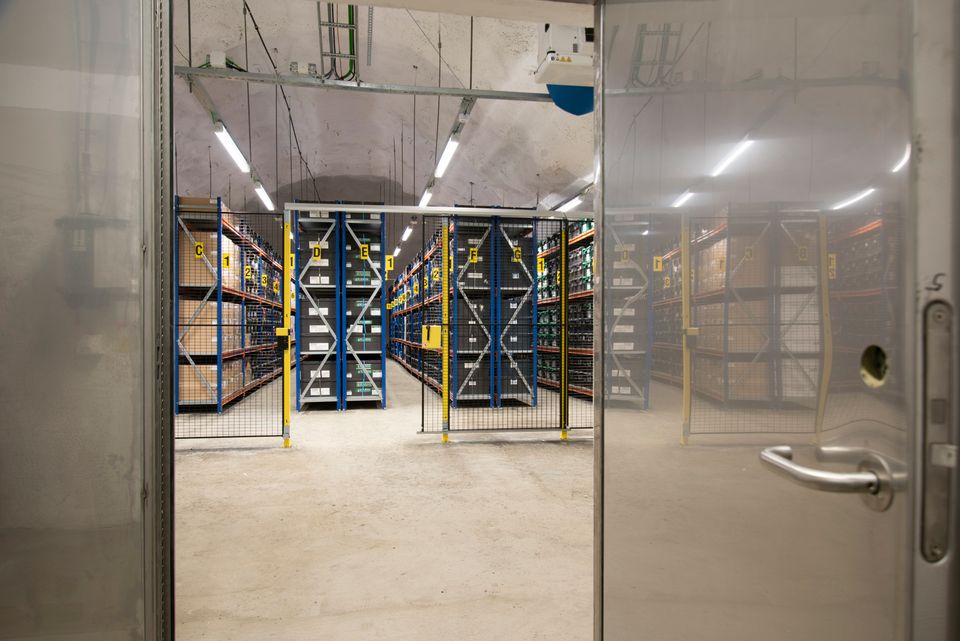
Boxes of seeds stored deep inside the mountain in the Svalbard Global Seed
Crop Diversity Trust
Boxes of seeds stored deep inside the mountain in the Svalbard Global Seed Vault.
It is also called the "doomsday vault", and was built in 2008 by the government of Norway on the island of Spitsbergen in the Svalbard archipelago located between Norway and the North Pole under the auspices of the global Food Trust. This week, the vault was opened to receive seeds from 30 gene banks including seeds from India, Mali and Peru, alongside Britain's Royal Botanical Gardens' banked seeds from Highgrove, Prince Charles' private estate.

At one time, an estimated 7,000 different plants were cultivated around the world. However, according to agricultural experts, at the present time about 60 percent of food comes from three main crops; maize, wheat and rice, a focus lacking in diversity to the extent that should each of those crops -- which use a diminishing number of seed types, lacking diversity -- fall victim to an overwhelming challenge due to climate change, vulnerable mono-seed harvests may fail.

Statistics warn that one in nine people around the globe -- according to the United Nations' World Food Programme -- go to bed hungry. According to scientists, erratic weather patterns could threaten both the quality and quantity of food available on a broad scale. Norway recently completed an $11 million upgrade to the building which had been constructed as a safe food vault at Svalbard in reflection of the preservation qualities of the Arctic cold.

And then it was discovered during a period of inclement weather in the form of an unexpected thaw of permafrost, that the doomsday vault had been compromised by meltwater entering the tunnel vestibule. The good news part in the alarming bad news story is that none of the seeds received water damage.

This photo March 1, 2016 shows a man carrying one of the newly arrived boxes containing seeds from Japan and USA into the international gene bank Svalbard Global Seed Vault (SGSV), outside Longyearbyen on Spitsbergen, Norway. HEIKO JUNGE/NTB Scanpix/AFP via Getty Images    

Labels: , , , , ,

Friday, February 21, 2020

Preserving Fine Motor Function in Brain Surgery

"The violin is my passion. I've been playing since I was ten years old. The thought of losing my ability to play was heartbreaking."
"Being a musician himself, Professor Ashkan understood my concerns. He and the team at King's went out of their way to plan the operation -- from mapping my brain to planning the position I needed to be in to play."
"Thanks to them, I'm hoping to be back with my orchestra very soon."
"[Doctors told me], 'Your tumor is on the right-hand side, so it will not affect your right-hand side, it will affect your left-hand side'. And I'm just like, 'Oh, hang on, this is my most important part. My job these days is playing the violin'."
Dagmar Turner, British violinist

"[The operation had forced his team to consider the] finer details [of violin playing]. Length of the string, pressure on the string, all those fast movements moving from one string to another."
"So that is what was unusual for us."
"We perform around four hundred resectons, tumour removals, each year, which often involves rousing patients to carry out language tests, but this was the first time I've had a patient play an instrument [during surgery]."
"We knew how important the violin is to Dagmar, so it was vital that we preserved function in the delicate areas of her brain that allowed her to play."
"We managed to remove over 90 percent of the tumour, including all areas suspicious of aggressive activity, while retaining full function of her left hand."
Dr.Keyoumars Ashkan, neurosurgeon, King's College Hospital, London
Dagmar Turner recently played her violin during brain surgery in London. "The violin is my passion," she said in a statement. "I've been playing since I was 10 years old."
King's College Hospital NHS Foundation Trust/Screen shot by NPR

Unusual, and rare that a musician would actually play their instrument during surgery, enabling surgeons to map the brain to distinguish which area would be affected through surgery so that steps could be taken to carefully avoid disturbing the area in question for the purpose of retaining the artist's ability to continue performing. There have been a few previous instances of neurosurgery that set about to produce a result very similar to that of this 53-year-old violinist who was determined to retain her ability to play a violin.

The surgery scheduled for DagmarTurner at King's College Hospital, London was to remove a tumour on her right frontal lobe. Which left her with the fear that post-surgery her ability to play her beloved violin might be compromised. As a member of the Isle of Wight Symphony Orchestra she was intent on doing all that was possible to make certain that no damage to the area controlling fine movement of the left hand -- a requirement for skilled, intricate violin playing -- would occur.

She discussed her fears with lead surgeon Keyoumars Ashkan and out of that discussion came the plan of action. As an accomplished pianist himself, Dr.Ashkan was compassionately invested in doing whatever he could to preserve Ms.Turner's left-hand neural controls. It was agreed that she would be awakened from a general anesthetic so she could play her violin once the team had conducted the craniotomy -- opening the skull. It took two hours with Ms.Turner playing all the while for her brain to be meticulously mapped.

While she played scales and improvised melodies and music compositions from memory, the parts of the lobe to be preserved for its necessity in controlling the left hand, were precisely identified. The violinist had been diagnosed with a large, slow-growing tumour, a grade-2 glioma, in 2013. During a public performance she had suffered a seizure. The tumour was identified as benign, but once it began to aggressively take on size despite radiotherapy, the decision was taken to remove it.

The surgical team had inserted a tiny electrical probe, activating it to determine whether it disrupted Ms.Turner's ability to playi with the understanding the surgeons could remove tissue where activation would not affect her playing ability. The procedure was repeatedly followed as the tumour was removed. Surgery was pronounced successful, following which Ms.Turner returned home in three days' time. Within two and a half weeks, she was able once again to take up her place with the orchestra.

After surgeons removed a tumor from Dan Fabbio's brain in 2017, they gave him his saxophone — to see whether he'd retained his ability to play. A year after his surgery, Fabbio is back to work full time as a music teacher.
YouTube/Screenshot by NPR 

Labels: , , ,

 
()() Follow @rheytah Tweet