Ruminations

Blog dedicated primarily to randomly selected news items; comments reflecting personal perceptions

Monday, February 02, 2026

Terra Nullius, Svalbard: Cold Shore

"Norway now finds itself in the most serious security situation since 1945."
"[Svalbard has for too long been seen by nations as a place where] everyone who wants to can come up and do almost whatever they want."
"That's not the fact. This is Norwegian sovereign territory. So we're making that a bit clearer."
Eivind Vad Petersson State Secretary, Ministry of Foreign Affairs, Norway 
https://csis-website-prod.s3.amazonaws.com/s3fs-public/styles/1400x600/s3/2023-09/GettyImages-1240741560_Crop1.jpg?VersionId=mWKSkGPe0GKiiz9cG_mcY1Bo2xQci7Ps&h=266da715&itok=RNVD8uor
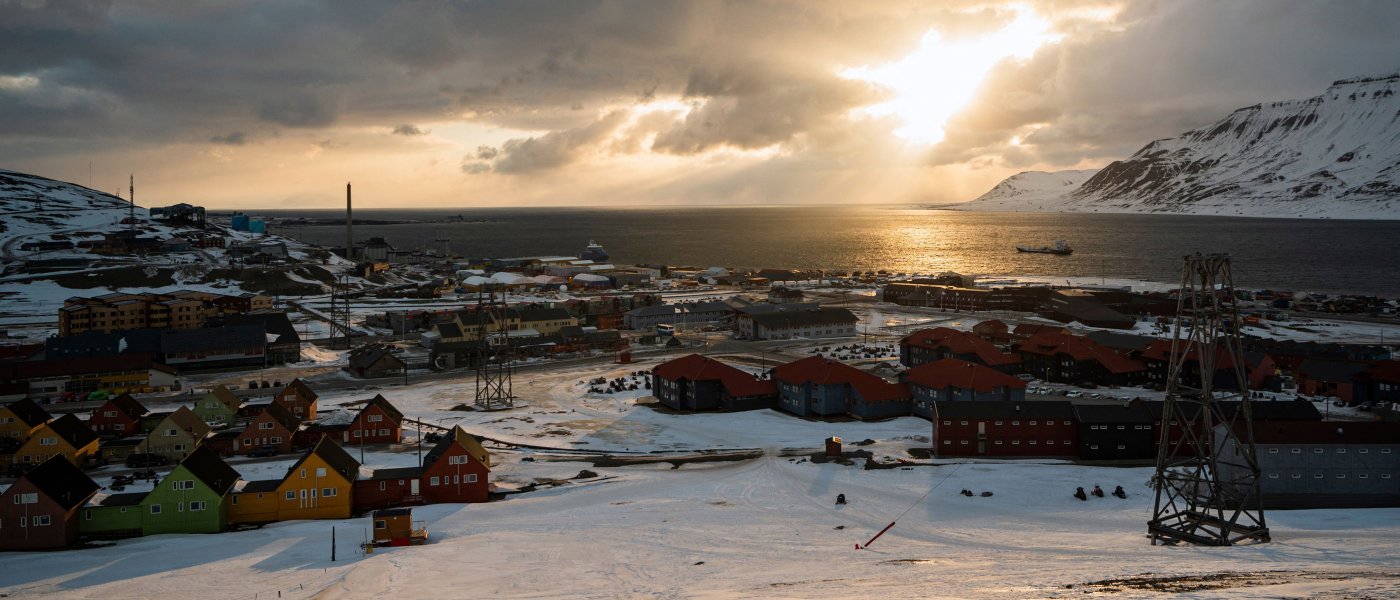
The Svalbard Archipelago   Photo: Jonathan Nackstrand/AFP via Getty Images
 
Following World War 1, Norway's claim to the Arctic archipelago and its islands was officially recognized. The Svalbard Treaty of 1920 banned the presence of activity linked to the military while granting all other nations choosing to sign on to the agreed-upon treaty access to hunting, fishing, mining and land ownership. Over the years, close to fifty countries added their names to the treaty which allowed them access.
 
Of late, studies of the geology of Svalbard and the ocean floor surrounding it have identified vast amounts of copper, zinc, cobalt, lithium and rare earth elements buried in the ocean floor. These are eagerly-sought-after minerals that power electric car battery technologies and wind turbines. It was  generally taken that the Svalbard Treaty granted signatories rights to its surrounding seas and seabed. Until January 2024 when Norway's governing party announced it would pursue deep-sea mineral exploration in an enormous sweep of its seabed.
 
The remote, frigid island, viewed as hostile to human life on a prolonged basis where minus 34 Celsius temperatures were not unknown, were initially home to Norwegian miners and Russian fur trappers. Longyearbyen, Svalbard's largest town, these days boasts candlelit restaurants, hotels, daily flights to the mainland, and is home to 2,500 people from 50 countries. According to the town's mayor, a surge in investment, official visits and strategic attention has recently focused on Svalbard.
 
https://csis-website-prod.s3.amazonaws.com/s3fs-public/styles/original_aspect_ratio_style/s3/2023-09/230913_ERE_Svalbard_Map.jpg?VersionId=6St.B4o5DWrkzOdGqX9xuMpPNfkmFdoO&itok=OWDx1xTK
 
Recently, the Energy Ministry of Norway publicly declared that Norway's goal in exploiting the natural geology of the area had a defined purpose; the goal of "profitable and sustainable" pursuit of seabed minerals, including the seabed around Svalbard. As Norway moves toward consolidating its sovereign rule over the island, its attitude toward foreigners and civil rights has hardened. Foreigners since 2021 were able to cast a vote in the political arena. 
 
That changed when authorities declared that voting in local elections would be off limits to foreigners living on Svalbard if they had not lived on Norway's mainland for the previous three years. "Should have been done a long time ago", said Mr. Petersson. The Svalbard Treaty guaranteed "equal access, not equal rights", he said, pointing out that in other countries foreigners are not given the right to vote. 
 
Svalbard is located about 800 kilometers from the North Pole, one of the only places on Earth where instant connection is possible with polar-orbiting satellites, leading to uninterrupted, clearer feeds and faster downloading speeds; more advantageous than anywhere else on the planet. In fact SvalSat, the world's largest satellite downloading station is based on Svalbard. 
 
https://csis-website-prod.s3.amazonaws.com/s3fs-public/styles/original_aspect_ratio_style/s3/2023-09/GettyImages-1240634673.jpg?VersionId=QZhSaW8ej6MSzDQa6fE02YGYNHnnPq6Z&itok=xu5dbLeF

Telecommunications domes of KSAT, Kongsberg Satellite Services, on a mountain near Longyearbyen. Photo: Jonathan Nackstrand/AFP via Getty Images 

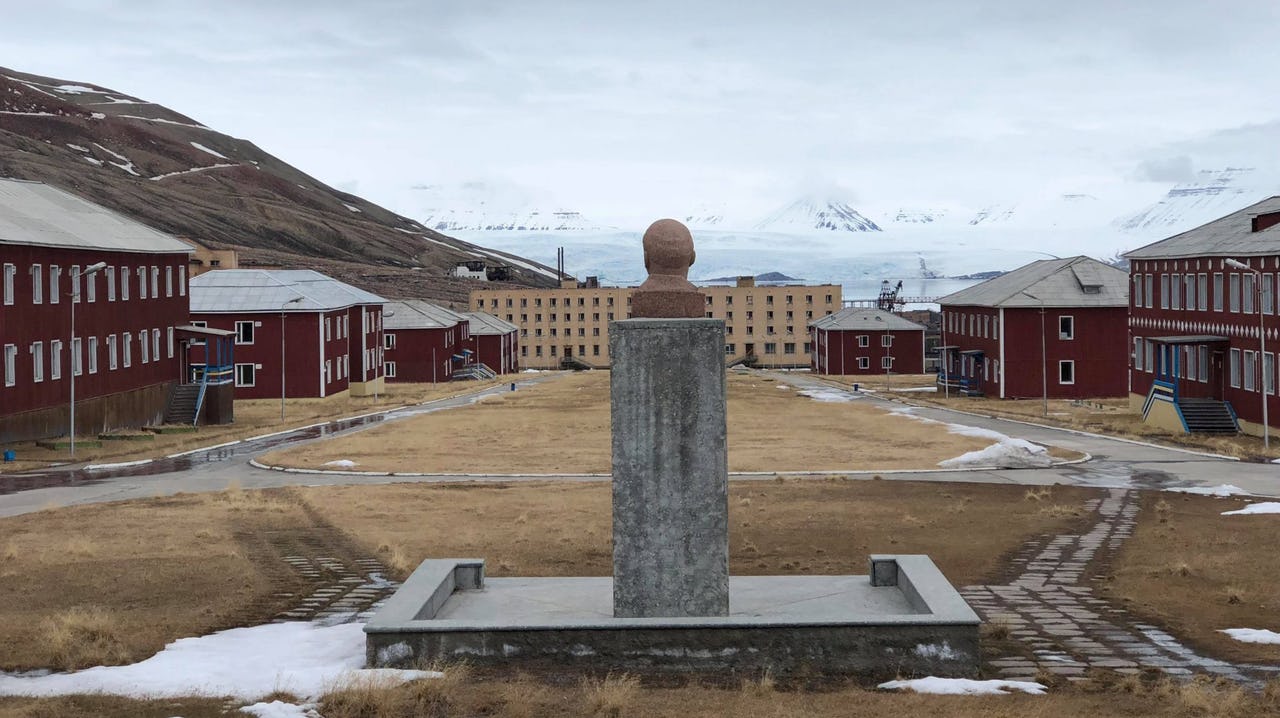
Fur traders from the Pomor region in northwestern Russia arrived at Svalbard some 300 years ago. The Soviets established several coal mining towns in Svalbard a century ago and had signed the Treaty. Of the mining towns, only one, Barentsburg, remains and still operates minimally. Once there was a population of 1,000, now reduced to around 300. One Russian official claimed the archipelago should be renamed the "Pomor Islands".
 
A powerful radar system monitoring space weather and the atmosphere is at the service of Chinese scientists. Data gathered from this equipment have been shared with the China Research Institute of Radiowave Propagation, a Chinese defense organization. Members of the U.S. House Select Commission on the Chinese Communist Party are convinced China is performing military research on Svalbard in defiance of the Treaty proscription. 
 
Outside the Yellow River Station where the Chinese scientists live a pair of granite lions stands guard.  
Norway ordered the Chinese to remove the lions, each of which weighs 900 kilograms, installed 20 years ago when the Chinese government agents arrived on Svalbard. For the first time last summer, the archipelago's sole university,   the University Center, operated by the Norwegian government, barred entry to Chinese students, identified by Norwegian intelligence agencies as a potential security risk. 
 
Criticisms of China's activities represent "nothing but distortion of facts and groundless speculation", according to officials at the the Chinese Embassy in Norway. As for the lions standing guard, they continue to remain where they were placed two decades earlier. 
"While the Russian geopolitical threat remains paramount, Chinese encroachments facilitated by an isolated Russia may complicate the Arctic security landscape in the longer term. The coast guard agencies of Russia and China recently signed a cooperation agreement on strengthening maritime law enforcement to great fanfare in Murmansk, a city on Russia’s western flank close to Norway."
"Moreover, when all other Arctic coast guard agencies suspended their participation in the Arctic Coast Guard Forum, Russia invited China to join the forum—clear signs of China’s expanding presence in the High North."
"As Iris A. Ferguson, U.S. deputy assistant secretary of defense for arctic and global resilience, has put it, Chinese efforts aim “to normalize its presence and pursue a larger role in shaping Arctic regional governance and security affairs.”"
Center for Strategic and International Studies  
https://www.thearcticinstitute.org/wp-content/uploads/2019/12/Lenin-statue_Pyramiden-Svalbard.jpg
The world’s northernmost Lenin statue looks over the abandoned Russian city of Pyramiden on Svalbard, summer 2018. Photo: Alina Bykova
 

Labels: , , , , ,

Saturday, August 08, 2020

Arctic Environmental Degredation

"Entire cities are that size. These are big pieces of ice."                                     "This was the largest remaining intact ice shelf, and it's disintegrated, basically." "The very small ones, we're losing them dramatically."                                              Luke Copland, glaciologist University of Ottawa 

"We saw them going, like someone with terminal cancer. It was only a matter of time."                                                                                                                 "When I was there in the 1980s I knew every square inch of those ice caps. You have the memories. It's like your first girlfriend."                                                       "I knew them as friends too, you know, and now they're gone.... It's like losing an old friend."                                                                                                            "We're in control of the climate now. Basically, we've taken on the reins.... So unless we as a people and as a society get a handle on this ... there's no way these things are ever going to come back."                                                               Mark Serreze, director, National Snow and Ice Data Center, Boulder, Colorado 

"[Recently, scientists uncovered a channel on the Milne ice sheet that was home to] a truly unique ecosystem of bottom-dwelling animals — scallops, sea anemones and so forth."                                                                                                       "[The discovery was] phenomenal, [but is now threatened.]"                                      "Our team was on the cusp of further documenting this unique environment, which may well have disappeared as a result of this collapse."                                                  Derek Mueller, Associate Professor of Geography and Environmental Studies, Carleton University

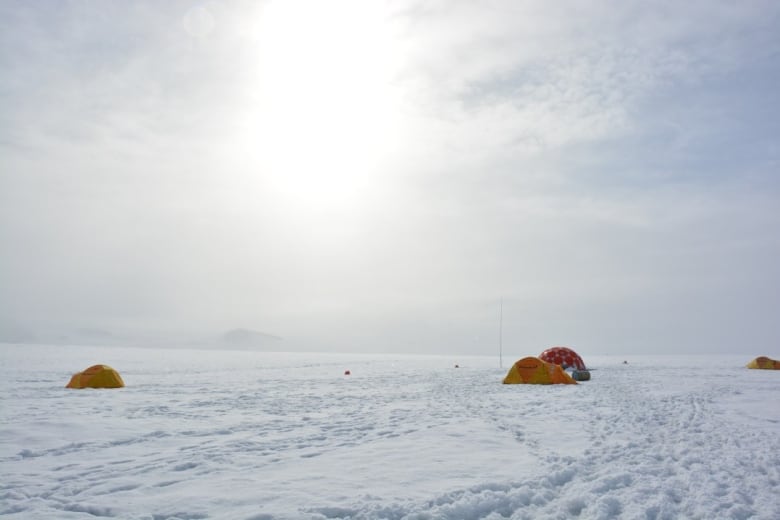
A Milne ice shelf research camp as seen in 2018. (Jeremie Bonneau)

The Milne Ice Shelf, at the very fringe of Ellesmere Island, the last fully intact ice shelf in the Canadian Arctic has collapsed. In so doing, more than 40 percent of its area has been lost in two days as the month of July closed. Located in Nunavut, a sparsely populated territory in Canada's Arctic, the loss has shocked, but not surprised the scientists that have followed its gradual decline in lock step with environmental change.

"Above normal air temperatures, offshore winds and open water in front of the ice shelf are all part of the recipe for ice shelf breakup", noted the announcement of the loss by the Canadian Ice Service. To imagine the size of the loss a comparison can be made with the island of Manhattan in New York which covers about 60 square kilometres. The shelf's collapse caused its area to shrink by approximately 80 square kilometres.

For the last thirty years, the Arctic has been warming at a rate twice that of the rate elsewhere on the globe. A process known as Arctic amplification is at play. The current year in particular has seen intense temperatures in the polar region causing the polar sea ice to shrink to its lowest extent for July in 40 years. An environmental warming that has brought record heat and wildfires to Siberian Russia as well.

This year in the Canadian Arctic summer has been 5 degrees Celsius above the average for the last thirty years, a situation that has threatened smaller ice caps which have the potential to melt quickly -- related to a lesser bulk than larger glaciers to resist the warming and remain colder longer. When a glacier vanishes bedrock becomes exposed, heating up and accelerating the melting process.

The last intact ice shelf in the Canadian Arctic has collapsed. The Milne ice shelf, which is situated in the Tuvaijuittuq marine protected area, is now adrift. (Adrienne White)

Another unique feature of the Arctic has been lost; the northern hemisphere's last known epishelf lake, caused by the ice shelf collapse. An epishelf lake represents a geographic feature on Ellesmere Island where a body of freshwater is dammed by the ice shelf and floats above ocean water. With the collapse of the ice shelf, a research camp complete with water-flow-through-the-ice-shelf-measuring instruments was lost. "It's lucky we were not on the ice shelf when this happened", remarked Derek Mueller.

In 2017, Mark Serreze of the National Snow and Ice Data Center in Boulder, produced and published a study along with other NSIDC researchers which predicted that within five years the ice caps which were believed to have formed several centuries ago, were likely to disappear. Last month NASA satellite shots revealed a complete lack of snow and ice in the region.

Two researchers walking along the Milne Ice Shelf. (Jeremie Bonneau)

Dr.Serreze reminisced over his first trip to the Arctic as a graduate student when he studied the caps. The caps had appeared to him back then like immovable parts of the geography. Another two ice caps on Ellesmere Island; Murray and Simmons, are also diminishing, and within a ten-year span, are destined to disappear as well, Dr.Serreze said with regret.

"It's very smooth undulating hills on this ice shelf ... and you're riding a snowmobile, so it's kind of like a very smooth slow going roller coaster over the hills and valleys on the ice shelf. These ice shelves are not going to regenerate anytime soon. So, these are ecosystems that are lost basically for good now", noted Andrew Hamilton, a research fellow at the University of Alberta.


Labels: , , ,

Wednesday, February 26, 2020

Preserving Heirlooms

"The seed vault is the backup in the global system of conservation to secure food security on Earth."
"We need to preserve this biodiversity, this crop diversity, to provide healthy diets and nutritious foods, and for providing farmers, especially smallholders, with sustainable livelihoods so that they can adapt to new conditions."
Stefan Schmitz, executive director, Crop Trust, Bonn
Journalists and cameramen walk under a gust of cold wind near the entrance of the Svalbard Global Seed Vault that was officially opened near Longyearbyen on February 26, 2008.Larsen, Hakon Mosvold/AFP/Getty Images
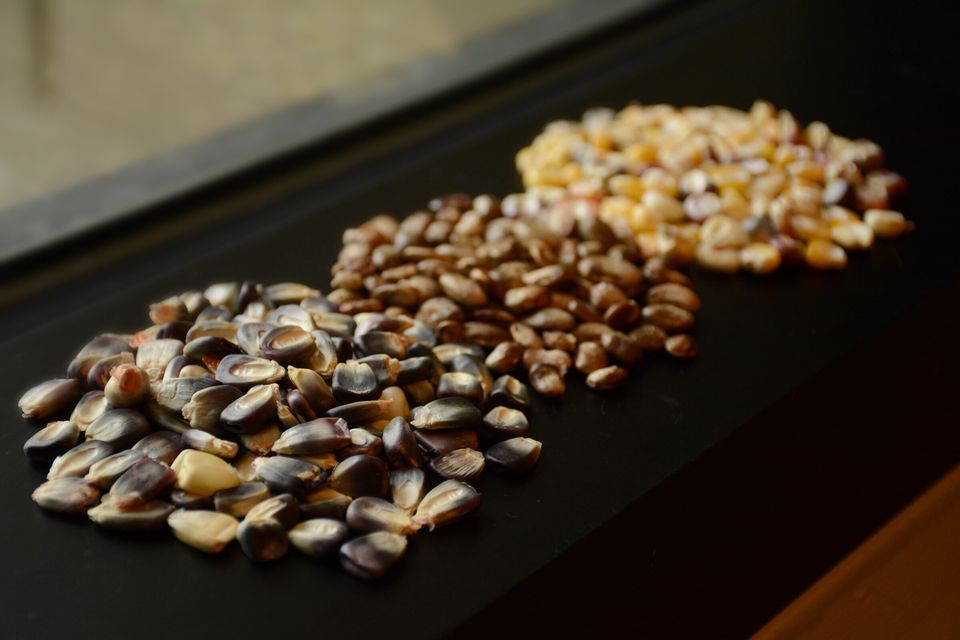
Cherokee Nation seeds destined for the Svalbard Global Seed
Cherokee Nation
Cherokee Nation seeds destined for the Svalbard Global Seed Vault
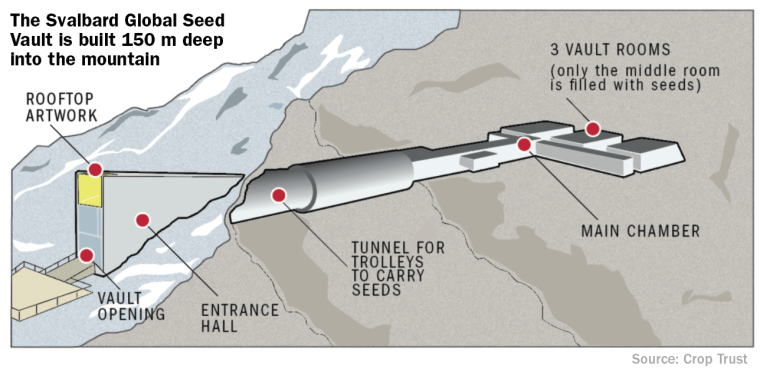
"It was the recognition of the vulnerability of the world’s gene banks that sparked the idea of establishing a global seed vault to serve as a backup storage facility. The purpose of the Vault is to store duplicates [backups] of seed samples from the world’s crop collections."
"Permafrost and thick rock ensure that the seed samples will remain frozen even without power. The Vault is the ultimate insurance policy for the world’s food supply, offering options for future generations to overcome the challenges of climate change and population growth. It will secure, for centuries, millions of seeds representing every important crop variety available in the world today. It is the final back up."
Crop Trust
There are a good many well organized, dedicated seed banks around the world, where heritage seeds are banked and maintained, and for many the purpose is to supply small-hold farmers and people living in poverty around the world with seeds to grow their own crops. Located in areas around the world from North America, Asia, sub-Saharan Africa, Central America, India and Oceania, among others, research and collection and distribution helps to ensure that seeds to produce grains and vegetables to feed the world will never be lost.

An employee of the Potato International Centre (CIP) in Lima, handles seeds of potatoes and sweet potatoes being cultivated at the Centre. January 25th, 2008. Seeds of these tubercules were sent to the Svalbard Global Seed Vault (SISV) in Norway. ERNESTO BENAVIDES/AFP/Getty Images
One of many interesting seed banks is maintained in a special vault in the Arctic meant to preserve seeds for rice, wheat and assorted food staples, where a million varieties are preserved. This place is the Svalbard Global Seed Vault, built into a mountainside and designed as a storage facility, with its goal to protect the integrity of vital crop seeds should cataclysms of nuclear war or plant pathogens strike the world order when it becomes imperative to safeguard global food supplies.

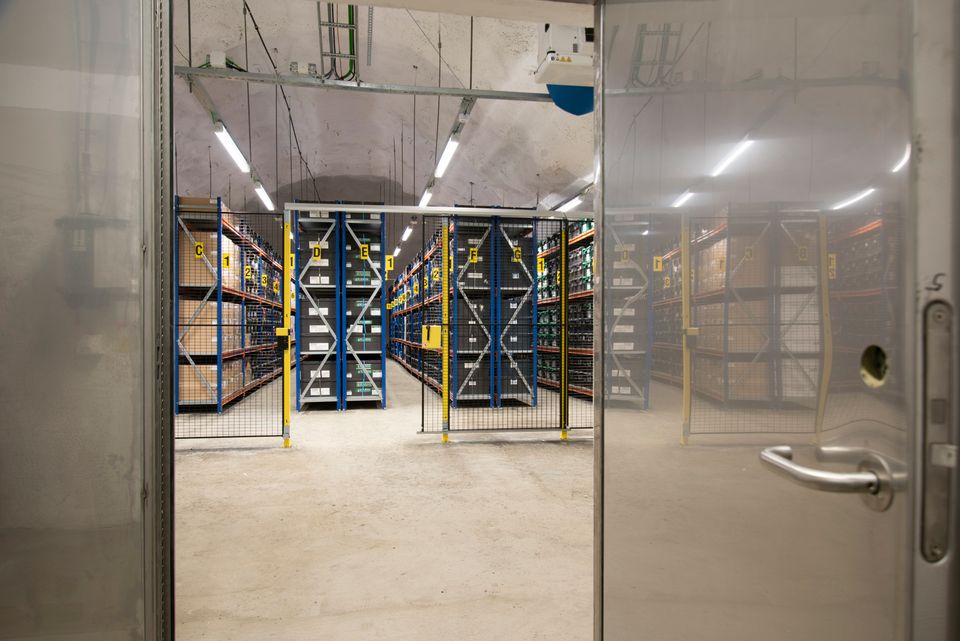
Boxes of seeds stored deep inside the mountain in the Svalbard Global Seed
Crop Diversity Trust
Boxes of seeds stored deep inside the mountain in the Svalbard Global Seed Vault.
It is also called the "doomsday vault", and was built in 2008 by the government of Norway on the island of Spitsbergen in the Svalbard archipelago located between Norway and the North Pole under the auspices of the global Food Trust. This week, the vault was opened to receive seeds from 30 gene banks including seeds from India, Mali and Peru, alongside Britain's Royal Botanical Gardens' banked seeds from Highgrove, Prince Charles' private estate.

At one time, an estimated 7,000 different plants were cultivated around the world. However, according to agricultural experts, at the present time about 60 percent of food comes from three main crops; maize, wheat and rice, a focus lacking in diversity to the extent that should each of those crops -- which use a diminishing number of seed types, lacking diversity -- fall victim to an overwhelming challenge due to climate change, vulnerable mono-seed harvests may fail.

Statistics warn that one in nine people around the globe -- according to the United Nations' World Food Programme -- go to bed hungry. According to scientists, erratic weather patterns could threaten both the quality and quantity of food available on a broad scale. Norway recently completed an $11 million upgrade to the building which had been constructed as a safe food vault at Svalbard in reflection of the preservation qualities of the Arctic cold.

And then it was discovered during a period of inclement weather in the form of an unexpected thaw of permafrost, that the doomsday vault had been compromised by meltwater entering the tunnel vestibule. The good news part in the alarming bad news story is that none of the seeds received water damage.

This photo March 1, 2016 shows a man carrying one of the newly arrived boxes containing seeds from Japan and USA into the international gene bank Svalbard Global Seed Vault (SGSV), outside Longyearbyen on Spitsbergen, Norway. HEIKO JUNGE/NTB Scanpix/AFP via Getty Images    

Labels: , , , , ,

Friday, May 03, 2019

Melting Arctic Permafrost

"The ground thaws and swallows it [scientific equipment]. We've put cameras in the ground, we've put temperature equipment in the ground, and it gets flooded. It often happens so fast we can't get out there and rescue it. We've lost dozens of field sites. We were collecting data on a forest and all of a sudden it's a lake."
"Permafrost at [that] depth, even a hundred years from now, probably would still be protected in the soil. Except here comes this really crazy liquefication where this abrupt thaw really churns up this stuff."
"These are minimum estimates. We've been very conservative. The landscape is going to be affected more and more every year by permafrost degradation."
"We've got a lot of people [in the Canadian Arctic] living on top of permafrost and building infrastructure on top of permafrost. It's enough to sink northern budgets."
Merritt Turetsky, research biologist, University of Guelph
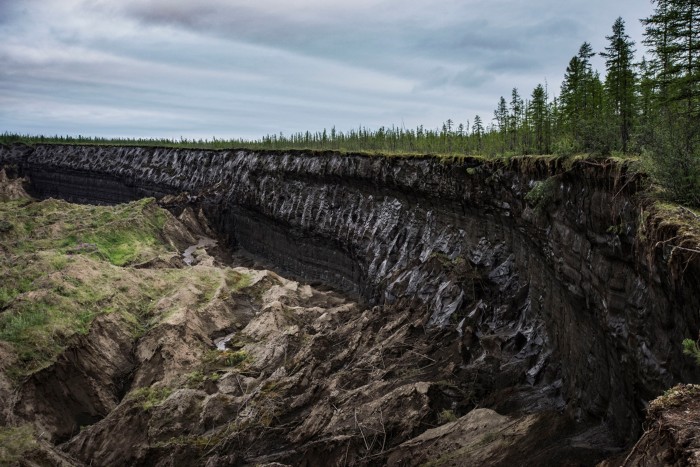
Soil erosion due to permafrost thaw in the Batagaika crater in eastern Siberia
The Batagaika crater in eastern Russia was formed when land began to sink in the 1960s owing to thawing permafrost. Credit: Yuri Kozyrev/NOOR/eyevine

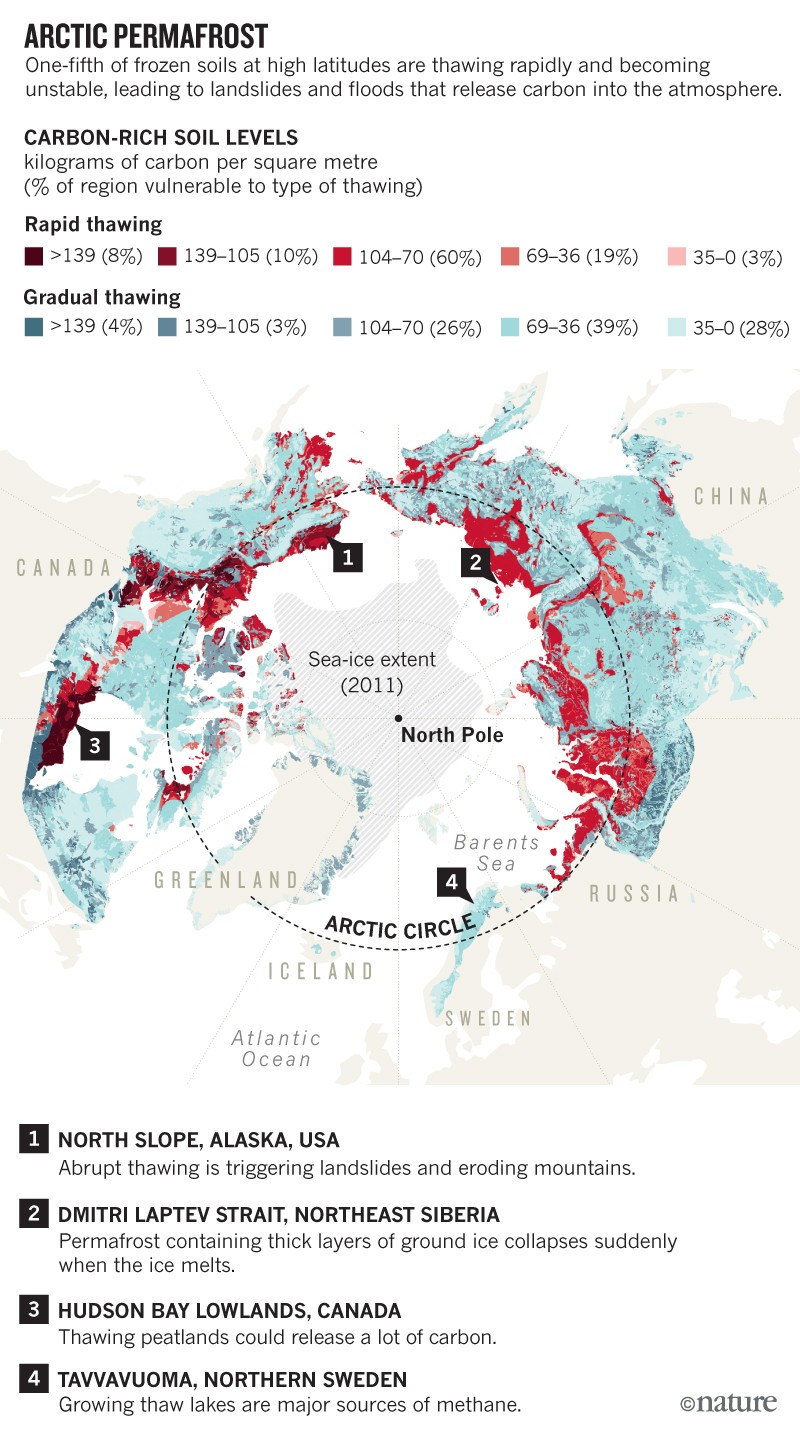
New research published in the journal Nature reflects a study of the rate of permafrost melt across the Canadian Arctic, with the intention of determining as much as possible what the eventual impact may turn out to be and how it will affect efforts to limit greenhouse gas emissions. In some areas of the Arctic permafrost is melting fast enough that it simply swallows scientific equipment left in research spots for the purpose of studying those areas.

The rapid rate of the permafrost melt has the potential to dramatically increase greenhouse gases released as the permafrost relaxes its grip, from ancient plants and animals that once lived within the tundra and are now caught in its depths. That large areas of frozen soil underlying most of the Northern regions are thawing as the Arctic warms has been understood to be happening for years; the organic carbon from plants once locked in the ice is allowing the organic carbon to melt and decompose.

What was visualized as the ongoing scenario of this change was that a gradual albeit steady erosion of permafrost with a corresponding pace of carbon release would be taking place. Through this research, however, a variable picture of the situation has emerged; rather than melting at a few centimetres rate annually, in actual fact it is several metres of soil that has been destabilizing and sometimes in the unbelievable space of mere days.

A thaw slump, a consequence of thawing permafrost, filled the Peel River Plateau with two million cubic metres of sediment. (Photo: Courtesy of Government of Northwest Territories and Canada Centre for Mapping and Earth Observation)

Sinkholes appear in the landscape -- and hillsides expose deep permafrost as they slide away through the melt process. Rapid permafrost melt is also impacted by larger and hotter wildfires occurring over the Canadian boreal forest. It has been found as well through soil analysis, that the melting areas contain greater amounts of carbon with close to 80 percent holding at least 70 kilograms of carbon per cubic metre.

Landslides caused by heavy rains in September 2017 scar the Caribou Hills near Inuvik, N.W.T. (Photo: Northwest Territories Geological Survey and Aurora Research Institute)

Revealing in the process that permafrost appears likely to release up to 50 percent more greenhouse gases than has been hitherto believed by climate scientists. Much of the gas will be released in the form of methane, about 30 percent more efficient at heat-trapping than is carbon dioxide. Rapid melt aside, the estimate is that decades will pass before the additional carbon release begins to influence global climate.

The news is not quite so hopeful for residents of the Canadian Arctic who will be affected long before the passage of decades as buildings positioned over the permafrost begin to sink, under the influence of its altered state.

Labels: , , ,

Thursday, November 08, 2018

The Thawing Arctic

"These lakes speed up permafrost thaw. It's an acceleration."
"I love the solitude of remote lakes and the mystery of what lies beneath the water surface."
"You’re just looking down into this stream of bubbles coming up right into your face, and they’re so soft they go all around you. And the sunlight’s on them. It’s like out of this world but under this world."
Katey Walter Anthony, aquatic ecologist, Arctic expert, University of Alaska, Fairbanks

"It’s kind of freaky. [Diving into the under 60 degree Wow 2 waters, in wetsuit and snorkel, feeling his way around the scant visibility].
"Right where the hole goes in, it slopes, and it’s flattened out, and it coned back down, and that was where some really loose sediment was, and I could stick my hands into it."
Philip Hanke, research assistant
Methane gas released from seep holes at the bottom of Esieh Lake send ripples to the surface. (Jonathan Newton/Washington Post)
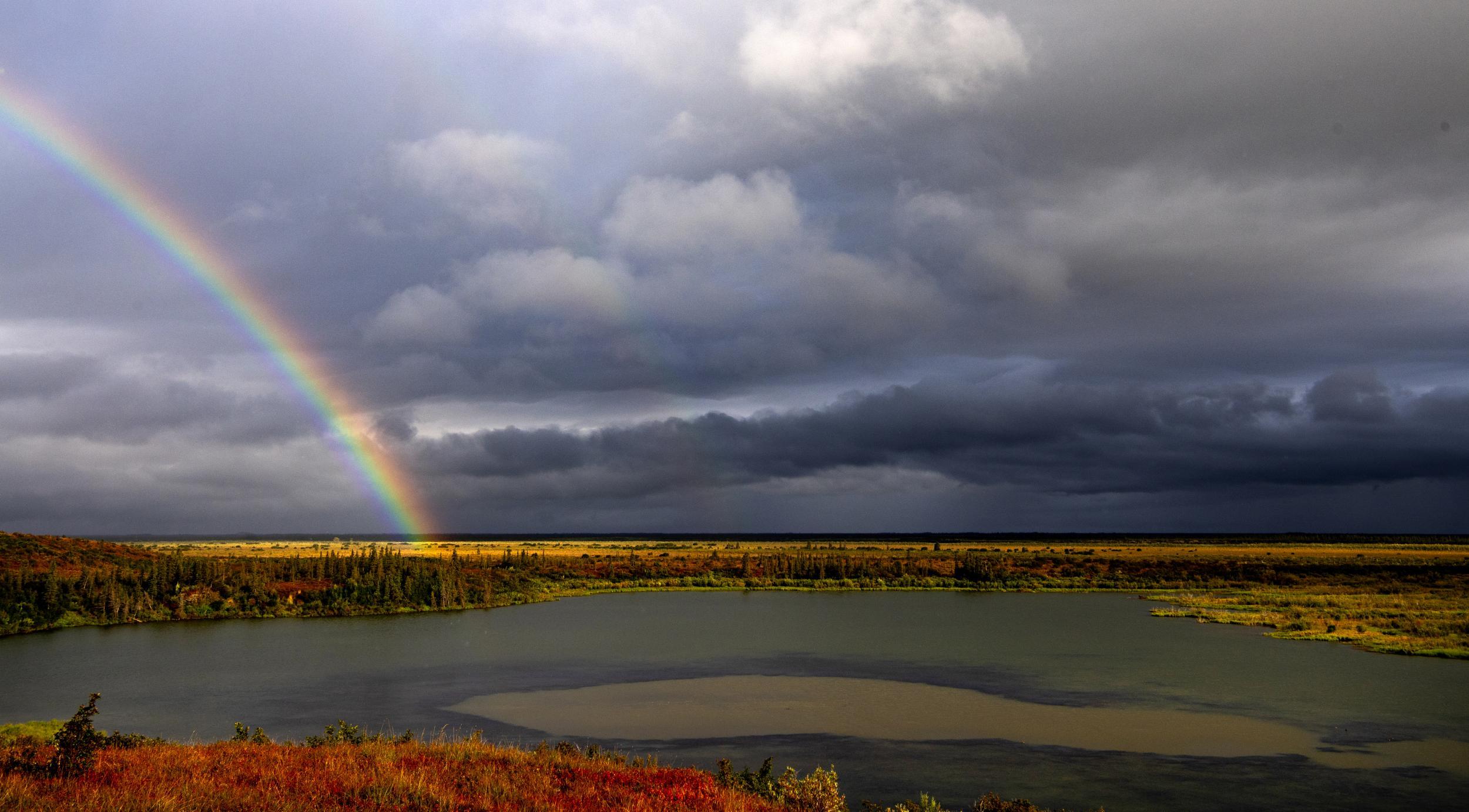
Below the peaks of the Western Brooks Range a vast lake had the appearance of boiling over as its water hissed, bubbled and popped, activated by gas escaping from the lake bed, bubbles rising as large as grapefruits, seen to 'lift' the water's surface, dredging up muck from the bed of the lake. This was different, this was unique, thought aquatic ecologist Katey Walter Anthony as she sat at the shoreline, watching the unusual action, knowing that the gas was in fact, methane.

As the Arctic continues to warm, permafrost begins to thaw, releasing carbon dioxide from soil to air. The thaws spur the growth of lakes in the sunken ground and these bodies of water have a tendency to unleash the gas known as methane from decomposing, ancient deposits of plant material. This lake, to the scientist, looked different than those she had become familiar with in her research, and she named it Esieh Lake. It was the volume of gas being produced that captivated her interest.

When she first saw the lake and witnessed the activity on its surface, the thought occurred that it might explode. The very thought of a methane-induced explosion was one that would reduce anyone knowing its potential to instant fear. She once took a video and posted it in 2010 of herself standing on the frozen surface of an Arctic lake, lighting a methane stream on fire as a tower of flame resulted whooshing over her own height.

She returned in August of this year with a small research team to further explore the possible secrets within Esieh Lake; whether what she had witnessed was an anomaly or a sign that the Arctic as it thawed had initiated a serious release of methane from an ancient source that might conceivably aggravate climate change. If the warming Arctic releases increasing amounts of planetary heating methane ... more warming could ensue.

She had been tasked by a Native Alaskan group, the NANA Regional Corporation, to search for seeps of methane gas in northwest Alaska, hoping to be able to take advantage of its presence as a source of fuel to benefit remote communities. In the course of that search she studied some 300 lakes across the Arctic tundra. In 2017 Walter Anthony sent a message to residents of KIotzebue, Alaska of her search for unusual lakes whose surface was unfrozen.

A pilot responded, leading her to the Noatak region, a near distance above the Arctic Circle, and last September her first visit to the lake took place, so remote days of camping are required to finally reach it. Once her initial fear elicited by the sight and potential of all that gas dissipated, her scientific mind took control as she grew more comfortable with the constant spluttering of the lake.
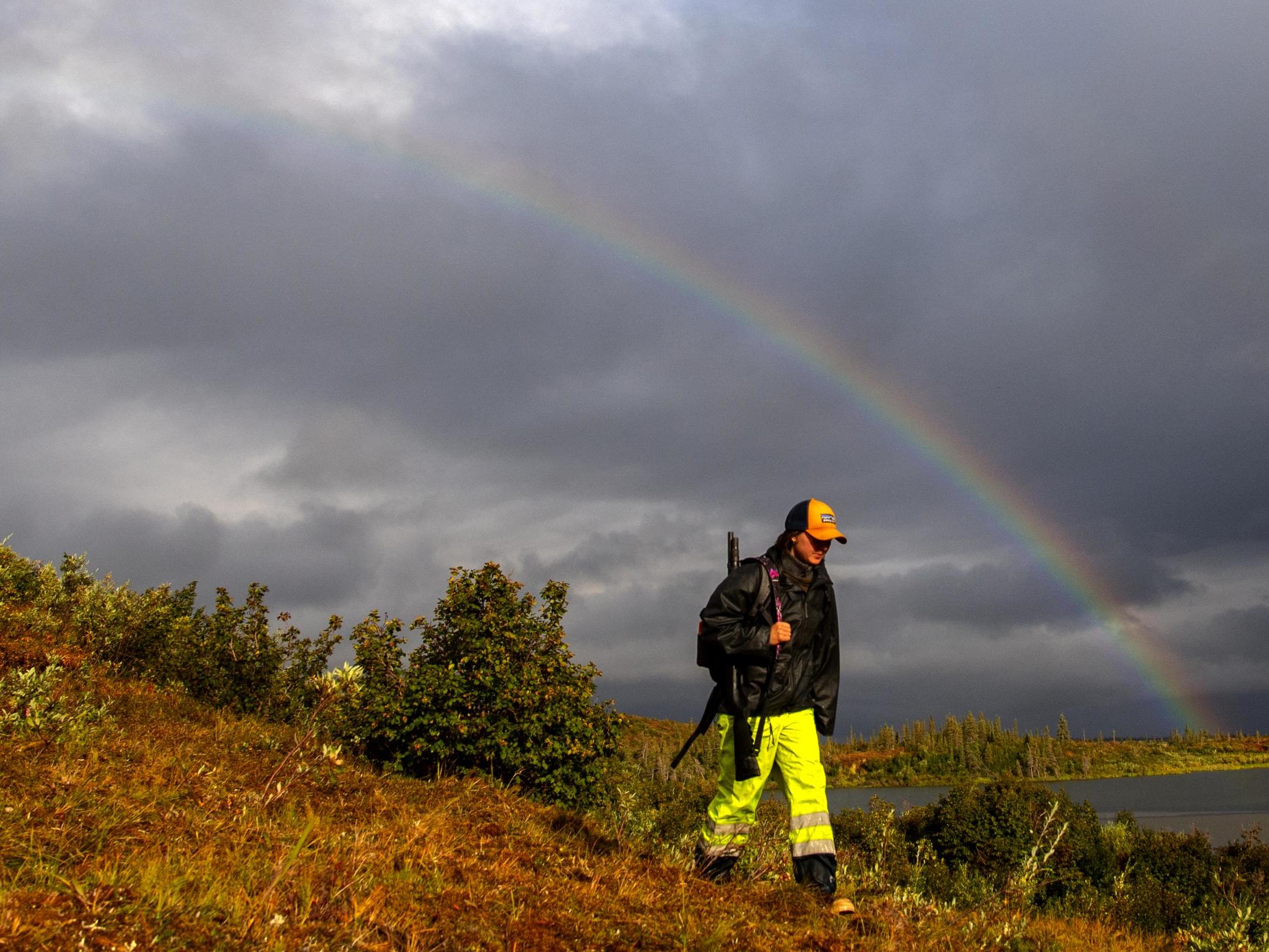
A rainbow shines over Esieh Lake, with the seep field of methane gas visible in the centre. (Jonathan Newton/Washington Post)

Sounding devices identified huge holes at the lake's bottom. Esieh Lake is shallow, averaging about a metre deep. However, the gas bubbles cluster indicate a floor beneath that suddenly drops, a plunge so deep all visible signs of plant life vanish and measurements indicate the lake dips to about 15 metres in one area and close to 4.5 metres in another. Those seep clusters were named W1 and W2.

When the scientific team examined samples of the gas in the laboratory they identified the chemical signature of a "geological" origin. The methane venting out of the lake emerged from a reservoir of far older fossil fuels than would be the case if direct thawing of frozen Arctic soil represented its source. The extrapolation seemed clear enough; should fossil fuels buried for thousands of years now be exposed to the atmosphere, the situation would represent a clear risk of greater warming threat.

As a result of the unremitting Arctic cold, carbon-rich remains of countless generations of vegetation that died and sank below the surface of the Arctic where permafrost soils can reach depths of 1,500 metres were preserved for tens of thousands of years if not more. The research team examined the presence of thermokarst lakes, formed when wedges of ice within permafrost melt to create voids that fill with water.
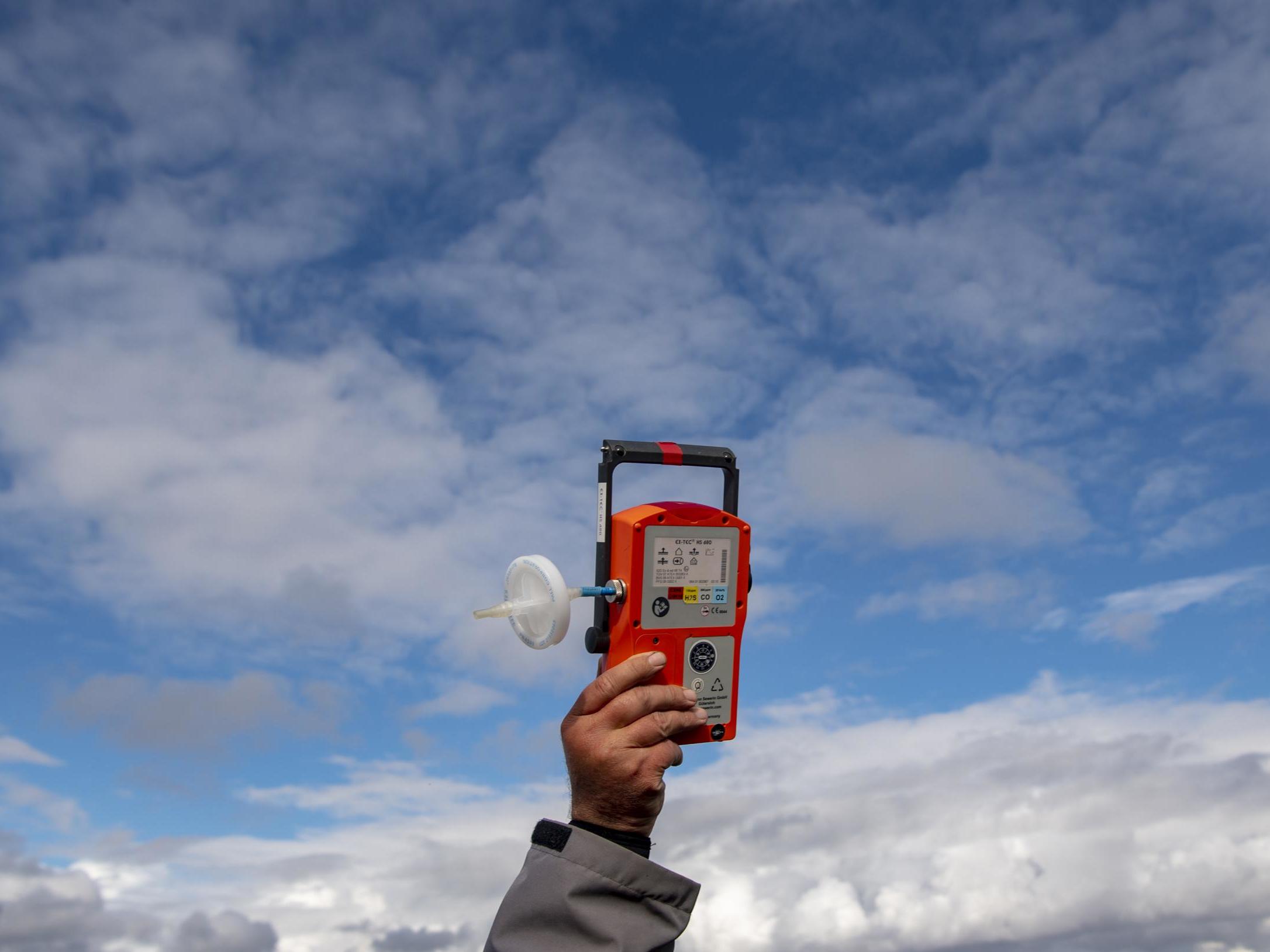
Frederic Thalasso, of the Center for Research and Advanced Studies at the National Polytechnic Institute in Mexico, uses a gas analyzer at Esieh Lake. (Jonathan Newton/Washington Post)
Continuing growth of those lakes formed in the tundra could more than double the greenhouse gas emissions emanating from Arctic soil by 2100. The use of instrumental gas measurements around the lake identified Esieh Lake emissions to be extremely high, identified with fossil fuels. Aside from methane, measurement instruments detected ethane, butane and propane representing classic signatures of fossil origin.
Graduate student Janelle Sharp who accompanied researcher Katey Walter Anthony to Esieh Lake. The team brought shotguns as protection against grizzly bears, which frequent the area. (Jonathan Newton/Washington Post)

Labels: , , , ,

Thursday, July 19, 2018

“Tundra be Dammed: Beaver Colonization of the Arctic.”

"That's when I started getting interested in beavers [speculating what species in a warming Arctic would be next to colonize its range]. These guys are small, highly industrious engineers."
"We have caught the beavers in the act. We are really only at step two of a ten-step process in understanding what is going on, and the implications of it."
"Is it a good thing or a bad thing? Put it this way: if someone went into a land manager's office and wanted to get a permit to do all the work that the beavers are doing in the Arctic right now, it would be a lot of paperwork. But I see these guys as facilitating change in the Arctic -- and accelerating the changes that are already underway."
"It’s kind of the next wildlife you’d expect in tundra, but with much bigger implications."
"I love the fact the beaver is the Canadian national animal. You just need to look at the map to see how well beavers recolonized the rest of North America after over-trapping."
"They are now in all the lower 48 states, and Alaska is the last standing -- and it's going to fall."
Ken Tape, associate professor, University of Alaska Fairbanks
Beaver (Castor canadensis) family enjoy the fruits of their considerable labors, Denali Nat'l Park, Alaska.  Getty Images/iStockphoto
"We do not know how beavers reached the Beaufort Coastal Plain, but they would have had to cross a mountain range or swim in the sea."
Yukon biologist Tom Jung, northern Yukon Territory
Beavers are everywhere there is water that can be dammed, a lodge built to hold a beaver colony and ample supplies of poplar from nearby forest enclaves are present, where the beavers with their sharp incisors easily cut through the thickness of a mature tree trunk, judging where the cut should go and where the tree will fall. Loggers know to cut a notch in a tree trunk to control the fall of the trees they're harvesting. Can it be possible that the logging industry studied the successes of beavers and simply emulated them in harvesting techniques?

Or does their similarity of operational techniques in best-practise logging reveal that beavers whom nature has equipped so splendidly to manipulate its natural surroundings to create a habitat for itself and in the process one that will appeal to other forest creatures from aquatic animals to wolves, coyotes, foxes, moose and more taking advantage of the industrious beavers' foresight in altering an environment to make it more likely to grow vegetation attractive to the greater populations of wildlife, indicate it has been as naturally endowed as humans to alter its landscape?

Beaver were once  viewed as a natural resource of great commercial value, when its pelts were desired for human garments and headgear. Certainly a renewable resource, but yet one so mercilessly hunted and trapped that the trapping profession that was so robust for far too long, collapsed along with the kind of culture that saw them as furnishings for sartorial purposes. With the absence of the beaver resulting from near-extinction in areas they had long been known to inhabit, the natural environment changed too, absent their engineering know-how and custodial care.

The landscape changed in their absence and all the creatures that so hugely depended on their presence in building dams, creating beaver meadows and ponds that in turn proved perfect habitat for both vegetation and animals, began to vanish; the previous lush presence of both turned barren as the lakes dried up, the vegetation receded, the animals looked elsewhere for the perfect environment where they could exist. Since then, however, those hardy, industrious animals have made a comeback, their presence common all over North America, including Mexico.
A beaver swims in a pond in Elk Island National Park east of Edmonton Alta. Max Maudie/Edmonton Sun
And now, it seems, with the advent of noticeable climate change and the warming effect that has melted areas of the Arctic's glaciers, altering the tundra in Alaska, beaver are now settling that far north. It's likely a toss-up which arrived first in the area known for its permafrost -- gradually losing the permanence of the tundra frozen rigid in frost -- the beavers or the moose now venturing out of forests to feed on woody shrubs, since beaver habitation is known to attract moose for the salubrious effect it has overall on the environment.

Dr. Tape and his colleagues have been studying the issue of the entrance of a previously unknown presence of animals venturing into the Alaskan tundra known more for the presence of Grizzlies than of beavers. They produced a new research paper titled Tundra be Damned: Beaver colonization of the Arctic. Never having actually seen a beaver living and working in a tundra environment, Dr. Tape and his fellow researchers began studying decades' worth of satellite images featuring a 18,293-square kilometre area of permafrost in northwest Alaska.

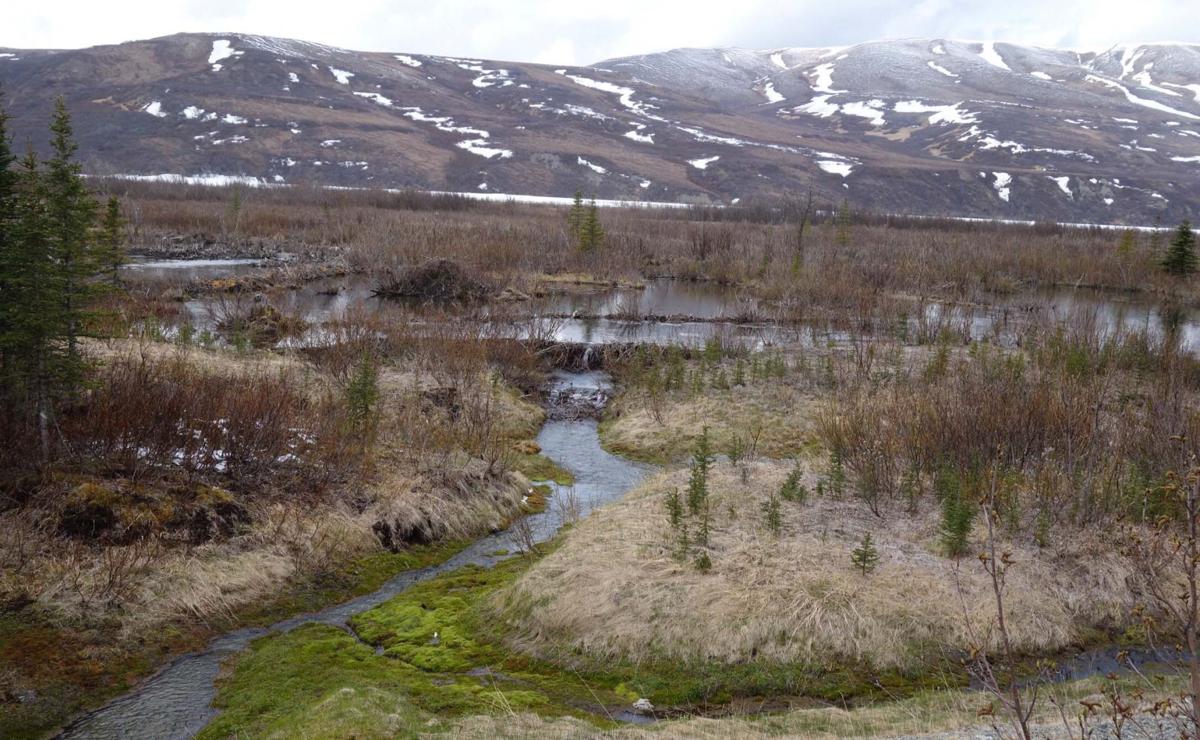
Aided immeasurably by the capacity of satellites to photograph images from space, they discovered 56 new beaver pond complexes in a landscape they knew to previously be absent of the presence of beavers. The beavers' activities have wide-ranging consequences, 'improving' the natural presence of geological features favourable to the presence of a wide variety of vegetation and animals forming a complete ecosystem in a chain of existence favoured by nature. As beavers dam up rivers and streams creating ponds, wetlands proliferate.

The ecosystem that has been altered is healthier when dams filter out pollutants and the resulting ponds fill with new life and the risk of flooding becomes more remote. Changes in the Arctic have the potential to be quite dramatic. A beaver pond that expands, washing over permafrost, degrades frozen ground, rinses soils away, releases carbon dioxide and methane in the process, as the frozen area no longer holds the carbon dioxide its melted state releases. The presence of beaver and their activity accelerates the permafrost retreat.  
Beavers at home
Signs of the American beaver in Alaska include a dam on Phelan Creek near Isabel Pass in the Alaska Range. Photo: Ned Rozell

Labels: , , , , , , ,

Wednesday, July 18, 2018

Canada's Diminishing Glaciers

"I've actually been able to see with my own eyes, to the point where there were some areas I couldn't recognize between years."
"One year you're Ski-Dooing over the ridges of these ice shelves, and then you go back the year after and [it's] like a city of icebergs."
"What I saw when I was measuring was 100 percent of glaciers retreating. They all retreated. Nothing is growing."
"I don't see snow surviving throughout the summer. You need that year-long snow to be able to accumulate and create more ice and I just don't see that."
"Over 50 percent of the glaciers are completely in the ablation zone, [where] 100 percent of the glacier area is undergoing melt. No part of that glacier is creating more ice."
"It is a big change."
Adrienne White, glaciologist, University of Ottawa
An iceberg floating in the Baffin Bay above the Arctic Circle dwarfs the Canadian Coast Guard icebreaker Louis S. St-Laurent on July 10, 2008. (Jonathan Hayward/CP)

Until the mid-1990s average temperature in the Arctic climbed about 0.12 degrees for each decade that passed, so what researcher-glaciologist Adrienne White discovered throughout her seven years of intensive study of the shrinking of glaciers in the Canadian High Arctic is not a recent phenomenon, although the rate of shrinkage has accelerated. From 1995 to 2016 glacier shrinkage had sped up to an increase of 0.78 degrees per decade.

Ms. White's work is similar to the kind of research undertaken in an earlier era discovering that Ellesmere Island's glaciers were in shrink mode; her work builds on that of the studies of decades before she began her own observations. According to the results she has observed the rate of warming is on the increase, but it had not yet been known whether the retreat of the ice has also been speeding up. Her work has taken place along the northern reaches of Ellesmere Island.

She has been busy through seven field seasons in cataloguing and studying over 1,700 glaciers on the High Arctic island to take note of their condition, assembling data derived both from her on-the-ground observations and from satellite imagery, each supporting the other in her final conclusions.
Of the 1,773 glaciers under her observation, 1,353 gave notice of significant shrinkage between 2000 and 2016; all were seen to have been diminished in size.
Ms. White examined the condition of glaciers on land, and as they flowed into the ocean, at ice shelves floating atop the sea and their shrinking presence validates her conclusions. This has been happening throughout the Arctic region, as well as at the South Pole, with Antarctica's immense ice cap and glaciers also losing significant mass. The Canadian Arctic is known to be experiencing some of the swiftest climate warming occurring anywhere on the planet. Ellesmere Island's annual average temperature has seen an increase of 3.6 degrees.

Through Ms. White's research, glaciers were found to have lost over 1,700 square kilometres, a loss of close to six percent over a sixteen year time frame, and what is being lost is likely to be a permanent loss; most glaciers, the experts feel, will never recover their former size. Moreover, according to data acquired from other areas in the Arctic, rising temperatures indicate that elevation required for snow to remain through the summer has also risen by 300 metres.

Most of Elesmere's glaciers are no longer in a sufficiently high range to enable them to accumulate snow, and without that accumulation due to higher temperatures prevailing, their capacity to grow has been critically hampered.
Ice floats in Slidre Fjord outside the Eureka weather station on Ellesmere Island, Nunavut, on July 24, 2006. New research finds that hundreds of glaciers in Canada's High Arctic are shrinking and that many are likely fated to disappear. (Jeff McIntosh/CP)

Labels: , , ,

Wednesday, July 04, 2018

Conserving the Arctic Biosphere

"That is one area [Lancaster Sound, Northwest Passage] that has the potential for high conflict. It's an obligatory pathway for both vessels that are going in and out of the passage as well as marine mammals that are migratory."
"There's been a lot of research to suggest that vessels may have impacts on marine mammals."
"We're at this precipice where vessels are poised to expand into these regions. The idea behind this study is to provide a comprehensive assessment to help plan for the future." 
"These obligatory pinch points [narrow passageways where ships and animals are most likely to intersect; the Bering Strait separating the U.S. and Russia, and Lancaster Sound in the northern Canadian territory of Nunavut] are used by migratory species to get in and out of the Arctic, but they are also necessary passageways for vessels using these sea routes."
"Identifying the relative risks in Arctic regions and among marine mammals can be helpful when establishing strategies to deal with potential effects."

Donna Hauser, marine scientist, University of Alaska
A unique Arctic species, already affected by climate change, could soon be facing another challenge, greatly increased Arctic shipping. ( Paul Nicklen-WWF)

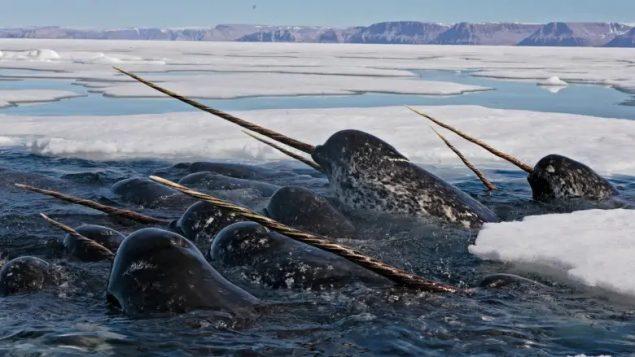
"Narwhals have all the traits that make them vulnerable to vessel disturbances -- they stick to really specific areas, they're pretty inflexible in where they spend the summer, they live in only about a quarter of the Arctic, and they're smack dab in the middle of shipping routes."
"They also rely on sound, and are notoriously skittish and sensitive to any kind of disturbance."
"I think we can learn a lot from areas that have already been thinking about these kinds of conflicts between ships and marine mammal populations -- for example the North Atlantic right whale, or fin and blue whales around California."
"We could aim to develop some mitigation strategies in the Arctic that help ships avoid key habitats, adjust their timing taking into account the migration of animals, make efforts to minimize sound disturbance, or in general help ships detect and deviate from [proximity with] animals."
Kristin Laidre, polar scientist, UW Applied Physics Laboratory's Polar Science Center, study co-author
A freighter in Navy Board Inlet near Lancaster Sound, Nunavut. CNW Group/WWF-Canada
Tens of thousands of bowhead, beluga and narwhal migrate through Lancaster Sound as well as along a part of the central Arctic coast of Russia; both considered to be vulnerable areas for regional wildlife. Although polar bears and seals are both accounted for in the region in great numbers, it is not they who face risks but other Arctic animals more vulnerable to certain harm due to increased, and the expectations of greater increases in sea traffic by ships.

Even though shipping through the passage remains as yet relatively sparse (China is looking to the Arctic to expedite and reduce costs for its vast enterprise of shipping Chinese-made products world-wide) because of the diminishing presence of sea ice responding to climate change and a warming environment in the Arctic, expectations are that each decade will see an approximately 13 percent change both in prevalent ice cover and the ongoing access of the passage to shipping traffic.

The presence of ships influence whales to alter swimming speed or dive rate. That combination of change for vulnerable sea animals can have the effect of driving them out of the territory or cause them to remain in fraught areas where sea ice can rapidly coalesce, freezing the mammals in place. These are also, as it happens, animals on which Arctic Inuit -- whose heritage culture includes hunting of the mammals -- depend upon as a vital food source.
Inuit hunters
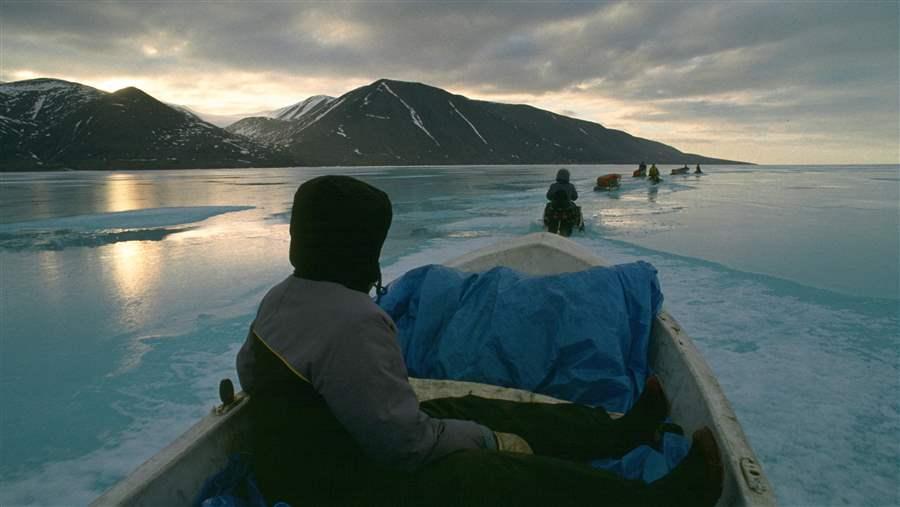
Lancaster Sound, at the entrance to Canada’s Northwest Passage, is slated to become the country’s fifth national marine conservation area. Inuit hunters, integral to the protection efforts, rely upon the area’s concentration of marine mammals to sustain their traditional way of life.    © Richard Olsenius/Getty Images

It was only a matter of time before travel through the Arctic Ocean became a target in shortening shipping routes with the discovery of the thinning of the Arctic ice fields. The Russian route appears to present the most potential for commercial ships. The Northern Sea Route hosted over 200 ships from 2011 to 2016, all large vessels. Over 100 vessels passed through the Northwest Passage in that same time frame, more than half of which were small, private vessels such as personal yachts.

Apart from purely commercial shipping on the increase, it also won't be long before passage through the Arctic waters that have for so long been closed to any possibility of marine shipping, will open for tourism entrepreneurship. No better time than the present before all the activities for various purposes become commonplace, impacting on marine life, to set rules and boundaries. And to adequately do that, acquiring reliable wildlife data of the region is a necessity.

Enter Dr. Hauser's and her colleagues' paper published in the Proceedings of the National Academy of Sciences. "We know from more temperate regions that vessels and whales don't always mix well, and yet vessels are poised to expand into this sensitive region. Even going right over the North Pole may be passable within a matter of decades. It raises questions of how to allow economic development while also protecting Arctic marine species." The study represents the first comprehensive survey of the population of vulnerable Arctic marine mammals' exposure to shipping along two main routes to estimate which of the routes and which mammals face the greatest risks from heavier regional traffic.

The researchers examined 80 different populations of narwhals, belugas, bowhead whales, seals, walrus and polar bears making the North their home, the goal being to judge just how vulnerable they would be in the presence of large ships transiting through the territory. The study focused on how habitat could intersect with likely sea routes in the target month of September when ice has its least presence and shipping would be increased as a result.

It is imperative that authorities get this just right; gauging the study results and the concomitant recommendations of the researchers for the purpose of addressing potential harm to Arctic wildlife so dependent on the area they migrate through, to provide the food they require for survival on their traditional migration route. In the best of all possible worlds, commercial shipping could be accommodated with certain restrictions meant to ensure the vital interests of protection of ocean biodiversity.

Polar Bear
In this July 21, 2017 file photo a polar bear walks over sea ice floating in the Victoria Strait in the Canadian Arctic Archipelago. New research suggests that increased shipping is likely to make parts of the Northwest Passage among the most dangerous places in the Arctic for the whales and other mammals that live there. THE CANADIAN PRESS/AP/David Goldman

Labels: , , , , , , ,

Friday, February 23, 2018

The Complexity of the Argument on Polar Bears

"Polar bear experts who falsely predicted that roughly 17,300 polar bears would be dead by now [given sea ice conditions since 2007] have realized their failure has not only kicked their own credibility to the curb, it has taken with it the reputations of their climate change colleagues."
Susan Crockford, adjunct professor, University of Victoria, polarbearscience.com

"Emaciated, it [starving bear] stumbled across a green Arctic  landscape without a speck of snow or ice in sight ... Media outlets seized on the video as an example of how climate change is killing its poster child. But behind the headlines is an awkward question: have climate change activists chosen the wrong mascot?"
"The polar bear population [with rising temperatures in the Arctic and less ice] should have crashed. It hasn't. If anything, numbers are up compared with ten years ago."
"The species is not at immediate risk of extinction."
British environment writer, Fred Pearce, New Scientist magazine

"There’s no doubt about what’s happening to Arctic sea ice … but their populations aren’t declining as was once expected."
"We’re way past being able to make generalizations … but a whole lot of people have a lot of positions staked on that, and that’s where things get politicized."
"The problem is, we could go along for some time thinking everything’s fine, and then populations fall off a cliff."
Douglas Clark, University of Saskatchewan researcher

"Both scientific data and traditional knowledge prove that nothing threatens our bears [in the Chukotka, Russia region across the Bering Sea from Alaska]."
"During spring counts of dens we often find female bears with three cubs, which proves that the population is in good shape and there is no danger of a decrease in the population."
Yegor Vereshchagin, Russian conservation official, Russian Geographical Society
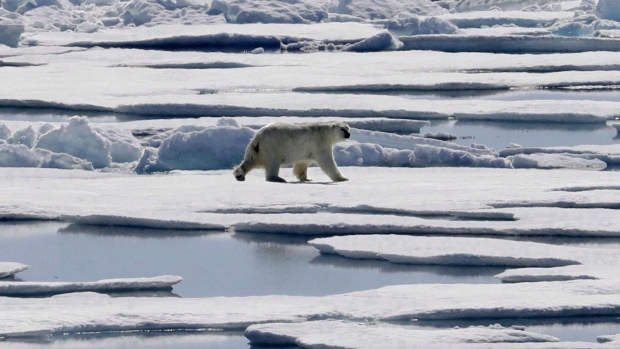
A polar bear walks on blue ice in the Canadian Arctic

Polar Bears International is holding its 2018 conference on the ongoing environmental threats posed by Global Warming on the international polar bear population. It is also a fund-raising event, a gala to raise funds for the protection of Arctic bears where $15,000 will net a corporate, high-profile table for those willing to sponsor the event and raise funds for this noble environmental battle to save polar bears from the ravages of monumental climate change.

Sponsored by The Globe and Mail, a number of corporations, several Canadian banks it will be a sumptuous occasion of superior food, classy entertainment and good company marking International Polar Bear Day, and drawing applause to Polar Bears International's science-based dedication to sound the alarm for the survival of polar bears. This event is taking place in Yorkville, Toronto, in the Four Seasons Hotel ballroom.

A sister event is simultaneously taking place at  the Toronto Reference Library, Founders' Room, sponsored by the Global Warming Policy Foundation of London, England, where a new report on the state of polar bears is set to be launched. With, alas, no entertainment scheduled, nor food. Those in attendance are there solely for the scientific data set to be released by Dr. Susan Crockford who has published some contraindications for the demise of the polar bear population.

Steven Amstrup, adjunct professor at the University of Wyoming, a leading purveyor of climate change theory that polar bears could be exterminated from the Arctic regions, is the chief scientist at Polar Bears International. In the lead-up to their opposing conferences, Dr. Amstrup launched attacks on Dr. Crockford's science relating to the state of existential health of the Arctic's largest, most ferocious predator, big, white and furry.

Dr. Crockford's recent publication of a critique of Dr. Armstup's casus belli which served as a rallying call for convinced Global Warming enthusiasts has been questioned. The portrayal of the majestic polar bear as an imminently endangered species whose threat to continued existence is identified as human degradation of the environment found a robust response in dedicated believers in human interference in nature.

The paper set to be released by the conference at which Dr. Crockford is the featured speaker will be delivered to an audience of teachers, scientists, students, decision-makers and the general public. The report, titled State of the Polar Bear Report 2017, lays out the argument that global polar-bear numbers have remained stable, or have even increased since 2005, despite a decrease in summer sea ice levels: "Overly pessimistic media responses to recent polar bear issues have made heartbreaking news out of scientifically insignificant events", she concludes.


Andre Forget/QMI Agency    
"The underlying concept is pretty simple. Bears need sea ice as a platform from which to hunt seals."
"The idea that they are just going to adapt somehow to a largely different ecological environment that they have been evolving into for a few hundred thousand years is simply unrealistic wishful thinking,"
"[Warming is not universal, and is having a unique effect on every region and every polar bear population. But], warming will eventually reach them all unless we are able to slow or stop it in time."
Biologist Ian Stirling, researcher, University of Alberta


Labels: , , , ,

Friday, February 02, 2018

Climate Change in Polar Regions' Bear Habitat

"This study was designed trying to get a much more detailed understanding of what the [Arctic polar] bears were actually doing on the ice."
"It allowed us to actually monitor the behaviour of the animals. [The camera] gave a perspective right underneath the bear's chin."
"Overall, the metabolic rates of these animals are similar to other marine and terrestrial carnivores. They need to be catching more seals than would have been predicted previously."
"It was quite fascinating and really exciting to watch."
"These animals are in extremely remote environments, where it’s typically impossible to observe individuals for a prolonged period of time."
"We wanted to get a better understanding of just how many seals these bears needed to be catching to meet their energy demands, but also to get an understanding of their basic behaviors on the sea ice — how much time are they spending resting versus walking versus swimming, how much time they’re spending trying to hunt and catch seals, and how often they’re successful."
Anthony Pagano, researcher, University of California, Santa Cruz
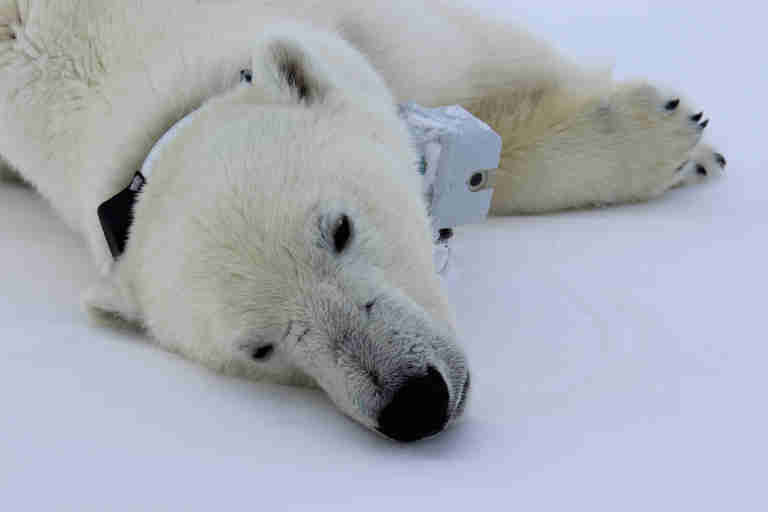
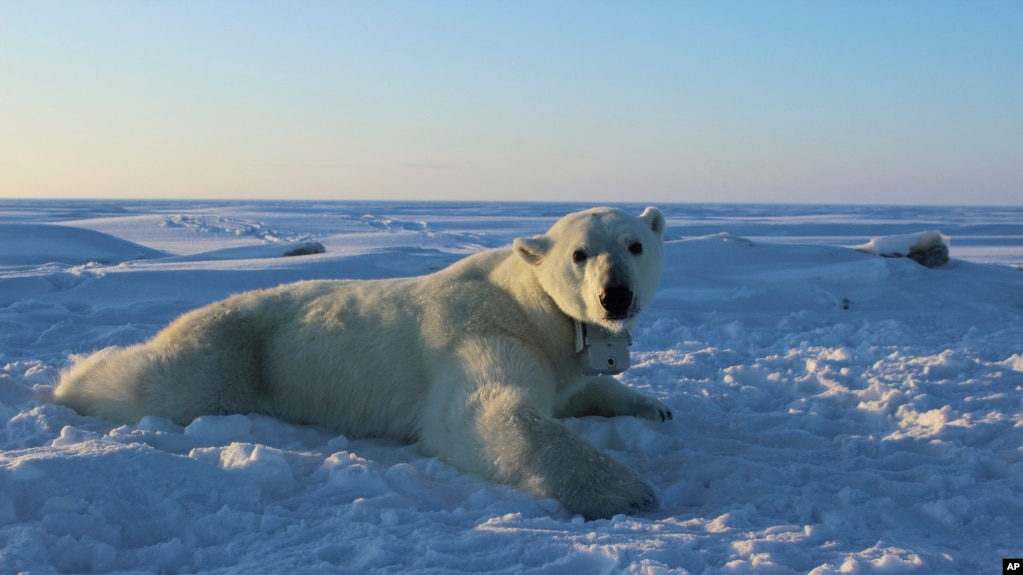
A polar bear wears a GPS collar equipped with video camera on the sea ice of the Beaufort Sea. | Maria Spriggs, Busch Gardens

"The beauty of this study I think really comes from the fact that it’s an all-in-one. The researchers have done it all in one, in one place, in a set of animals. That’s never been done before like this."
"[Follow-up research should follow more animals over a longer stretch. But], I think it confirms all the reasons to be concerned about polar bears from a conservation perspective are intact."
"You might get a very different picture on weight gain from many more individuals [in a wider-ranging, longer-term study]."
Andrew Derocher, polar bear biologist, University of Alberta
Polar bear on the sea ice. 
Photo by Brian Battaile, USGS

Attaching cameras to polar bears is a latter-day innovation on the study of the habits of these beasts of the far North. A new study, to capture data on how often bears manage to secure seals for dinner and how many ideally would be required to keep them healthy in their very demanding environment was undertaken by Dr. Pagano and his colleagues who studied nine of the animals, in the Beaufort Sea.

The bears were fitted with GPS-enabled video cameras along with instruments designed to measure speed and distance travelled, and how efficiently and swiftly energy was burned, along with how much time the bears spent in the frigid waters of their environment. The study conclusions recently saw publication in the journal Science.

Spring represents the bears' prime hunting season. They require vast amounts of food, usually seals, to remain in good  health. They consume over 12,000 kilocalories daily -- according to the new research findings -- considerably more than it was assumed by scientists up to now. As Arctic ice continues to melt, reflecting rising temperatures, polar bears, as suspected, may find their hunt compromised.
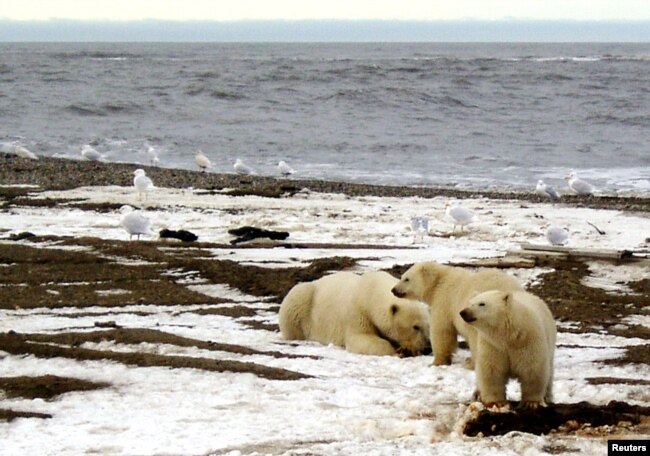
FILE - A polar bear sow and two cubs are seen on the Beaufort Sea coast within the 1002 Area of the Arctic National Wildlife Refuge in this undated handout photo provided by the U.S. Fish and Wildlife Service Alaska Image Library, Dec. 21, 2005.
A polar bear sow and two cubs are seen on the Beaufort Sea coast within the 1002 Area of the Arctic National Wildlife Refuge in this undated handout photo provided by the U.S. Fish and Wildlife Service Alaska Image Library

Over the course of a week on three successive Aprils from 2014 to 2016, the researchers gathered the data they would need to reach their conclusions. One of which is that the bears require considerably greater amounts of food than believed when scientists hypothesized that bears use little energy while waiting for a seal to come up through a blowhole. It was believed by many biologists that bears simply lowered their metabolism when there was little energy being expended.

What this study demonstrates is that those theories were incorrect. Bear metabolism, according to the study results, is 60 percent higher than believed through previous estimates. Bears require far more seals to maintain a healthy weight. Footage of bears catching seals and bringing them out of the ice, along with bears wrestling with large seals in frigid waters was captured by camera recordings of their activities.

In the final analysis, it was discovered by the researchers that five out of the nine bears in the study lost weight throughout the study period, representing up to ten percent of their body mass, despite the study's focus on the critical time when bears normally experience their most successful hunting of the year.

The population of polar beats in the Beaufort Sea has realized a decline in lock-step with declining sea ice. The study served a vital function in clarifying how polar bears manage to cope in the face of their habitat undergoing severe change, with the shrinking of sea ice.

In this April 15, 2015 photo provided by the United States Geological Survey, a polar bear wearing a GPS video-camera collar lies on a chunk of sea ice in the Beaufort Sea. A new study released Feb. 1, 2018 shows some polar bears in the Arctic are shedding pounds during the time they are supposed to be beefing up.

"Polar bears may start to suffer from declining sea ice more rapidly than they would have, had their metabolism been lower as was previously mentioned."
Steven Amstrup, chief scientist, Polar Bears International

Labels: , , , ,

 
()() Follow @rheytah Tweet