COVID Vaccines : Production, Approval, Distribution, Vaccination Take-Up
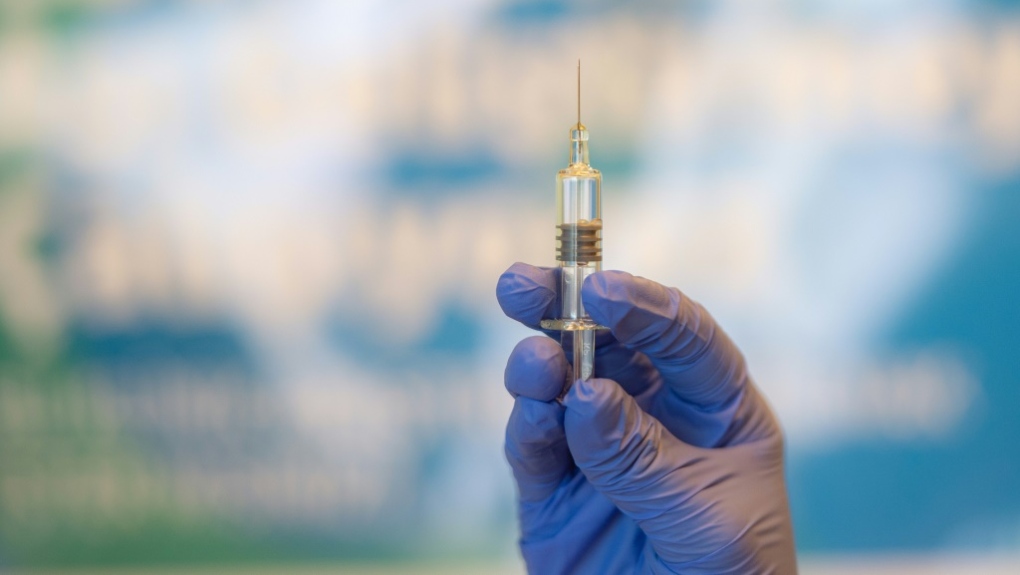 |
| Challenge of distribution for COVID-19 (AFP) |
"We need to be absolutely transparent about what is known and what is not known about each vaccine in order to allow people to weigh the risks and benefits of these novel vaccines.""We must be utterly clear about who the vaccines were tested on, what kinds of safety issues we might expect -- even when they are typically very rare in vaccines -- how long the immunity from the vaccine can be expected to last, and whether or not the vaccine stops you from being able to transmit the virus.""Messaging around these vaccines should be fairly neutral and stick to the facts as we know them at the time.""There simply isn't enough vaccine supply to achieve this [herd immunity] -- and we don't even know yet if these vaccines will halt transmission of COVID-19. So the choice to get the vaccine or not will be a personal health decision in the early days of immunization programs and people need to have the facts in order to make informed choices about whether and when to get vaccinated."Allison Thompson, researcher, University of Toronto
"We can plan, but at this point it's unknown which of the vaccines will be approved first and what quantities will come to Canada.""The military has significant expertise in logistics, especially in medical and health service support. They will be skilled in quickly setting up places where vaccines could be administered to patients, set up processes for administration, plan logistics, routes for shipping and transport if needed."Mahesh Nagarajan, professor of supply chain management and health care operations, Sauder School of Business, University of British Columbia"This is a completely new platform [messenger RNA in both the Pfizer and Moderna vaccines] for a vaccine.""The public has to understand how they work. We already have people who are worried about standard vaccines. These are even newer.""Many of the larger hospitals have that [sub-zero-plus] capability. But then you have to figure out how to get it out [safely to the end-user].""Fridges will break down. If we work hard and we're diligent, that wastage can be kept to a minimum."Dr.Gerald Evans, chair, division of infectious diseases, Queen's University"What we are doing is unprecedented in scale."Dr.Kate O'Brien, director, department of immunization, vaccines and biologicals, World Health Organization
 |
| Getty Images Natalia Kokhanova |
The WHO's Dr. O'Brien spoke at the Canadian Immunization Conference that took place last week, addressing the complex logistics health professionals will be facing in the effort to roll out approved vaccines, taking into account measures to safeguard their efficacy, and inoculating billions of people across the globe. Public health officials have a need to identify those in the public to be given priority status, she stressed, those most in need of immediate protection from the virus simply because they represent the demographic most at risk of serious complications, often death.
The three vaccine front-runners still awaiting final approval destined to be distributed in Canada; Pfizer/BioNTech, Moderna and Astra-Zeneca, are two-dose vaccines. Transport and storage of the Pfizer vaccine is in and of itself a challenge since it must be stored under ultra-chilled conditions requiring freezers able to keep products at -70C. To further complicate matters it's highly likely that multiple types of vaccines will be delivered simultaneously across the country, including those to be delivered to remote and isolated parts of the Canadian geography.
To develop a vaccine and market it typically takes between ten and fifteen years, under normal circumstances. The advent of the novel coronavirus is anything but typical, and this is an abnormal circumstance the world is now living in -- on tenterhooks to obtain a reliable, effective and safe vaccine. And because the scientific community took heed of the desperate need and worked feverishly in many countries of the world to develop a suitable vaccine, these COVID-19 vaccines took under a year for development, now contemplating distribution.
Having to be transported over long geographic distances, vaccines undergo many transfers and types of transportation, requiring constant cold temperatures to ensure their viability. Should a vulnerability occur in the transportation link and the integrity of their ultra-cold stability be interrupted, potency can be affected and the vaccine rendered unusable. Additionally, when vials are lost, damaged or have expired and when doses are left over in multi-dose vials, a certain percentage of vaccine is wasted.The average of spoilage and waste sits at around fifteen to 20 percent.
Due to its need of ultra-cold storage, the Pfizer vaccine -- which must be maintained at -70C and administered within five days after transfer to a refrigerator -- it is likely to be used in large cities. Having reached its destination, a dilutant is added to each vial containing vaccine to produce five doses which gives the solution six hours of effectiveness. In large cities, hospitals and research institutions equipped with suitable freezer units are to be found, whereas towns and small cities are unlikely to have these ultra-cold freezers in use which come with a price tag of $15,000 and $20,000 apiece.
Wastage occurs for the most part when the vaccine is sent to providers such as physicians' offices and clinics, unlikely to possess the refrigeration type whose quality is a requirement for vaccine efficacy preservation. According to Dr.Halperin, central and regional storage depots are monitored and alarmed, the type of equipment not generally to be found in the offices and clinics of the end-users. The Canadian military has been tasked to work with private companies with their own competent logistical systems and delivery trucks.
As an example, McKesson, a medical logistics provider, is able to ship, store, transport, plan and control inventory and resources for freezing and refrigeration.Vials of Pfizer's vaccine are to be shipped in large thermal boxes containing dry ice -- with companies like UPS and FedEx -- from its manufacturing site in Kalamazoo, Michigan. Moderna manufactures its vaccine in New Hampshire, Pennsylvania and Indiana, shipping through McKesson's Irving, Texas distribution centre where the hub of the U.S. government's Operation Warp Speed is located as a public-private vaccination initiative with the aim of producing and delivering 300 million doses beginning in December.
The shipping temperature for Moderna's vaccine is -20C, a temperature that will keep the vaccine stable for six months. Thawed, the vaccine can be refrigerated for up to 30 days and as such may be a more suitable candidate for dispatch to remote areas. Typically, people are required to wait for fifteen minutes post-injection, just in case an allergic reaction to the vaccine occurs. For the COVID vaccines, that wait time may be a little longer, during which time physical distancing must be maintained.
To the present, only short-term efficacy results are known. Unknown as yet is whether COVID vaccines will require boosters, and when, if required. There can be no expectation that immunity from vaccines will last longer than does natural immunity, and even that is an unknown at the present time. And then the issue of take-up presents; how many in the public will immediately agree to vaccinate. According to an Ipsos/Radio-Canada Internet poll of 3,001 people last week, 64 percent indicated they would likely or certainly get vaccinated; 16 percent that they definitely would not, and 21 percent were uncertain.
High rates of coverage always present a challenge. To achieve herd immunity for COVID, between 65 to 75 percent of the population would have to be immunized, lower as it happens than is required for infections like measles which requires substantially over 90 percent coverage. Data on long-term safety and effectiveness has been elusive outside the controlled atmosphere of clinical trials. Once it is clear a protective effect can be achieved for the community with higher uptake rates, messaging may need to change, observed Dr.Thompson. "People need to be reassured, not have their concerns dismissed as baseless."
"For the two vaccines that require very low temperature storage, this likely means there will be less wastage because the vaccine will be more centrally controlled.""Natural immunity lasts at least three to six months. We need to follow how people who recover from the disease do over time and we just haven't had long enough follow-up to know how long protection does last.""If protection lasts only a year, then we will need annual vaccination like with flu vaccines.""We need high levels of confidence and low levels of refusal.""Some say they will [get vaccinated] but don't, others say they won't but after a few months when they see that the vaccine is well tolerated, they will."Dr.Scott Halperin, director, Canadian Center for Vaccinology, Halifax
 |
| A person in Mainz, Germany gets a dose of the Pfizer/BioNTech vaccine as part of the product's clinical trial. Public health officials said as many as three million Canadians will be vaccinated in the first three months of 2021 (Reuters) |
Labels: Canada, COVID-19, Distribution Challenge, Inoculation Take-up, Refrigeration, Shipping, Storage
posted by Pieface @ 7:32 PM
0 comments