Ruminations

Blog dedicated primarily to randomly selected news items; comments reflecting personal perceptions

Thursday, October 10, 2019

Air Pollution and Baldness



Air Pollution and Baldness

"While the link between air pollution and serious diseases such as cancer, chronic obstructive pulmonary disease and cardiovascular disease are well established, there is little to no research on the effect of particulate matter exposure on the human skin and hair in particular."
"Our research explains the mode of action of air pollutants lead to hair loss."
"While it is difficult to escape ambient pollution, limiting time walking on busy streets, especially during rush hour, should help to reduce exposure."
"If you are exercising outdoors, try to do so in areas that are less polluted and do not spend too much time waiting at traffic hot spots such as traffic lights."
Dr.Hyuk Chul Kwon, Future Science Research  Centre, South Korea
A new study appears to confirm that air pollution may be the cause of premature adult baldness in its finding that fine particulate matter emitted by vehicles damaged skin that holds hair follicles in place on the human scalp. Laboratory tests on human cells indicated levels of the critical proteins required for hair to grow and be retained to be impacted with exposure to pollution particles. Simply put, the more exposure to those particles, the greater diminished capacity of proteins produced, leading to hair loss.

The latest study concluded with a series of laboratory tests, is the first to clarify that such a risk to the surface of the body exists, capping a growing body of evidence showing that tiny particles have the capacity to damage internal health by entering the bloodstream through the lungs. The researchers felt a likely recourse could be the choice to exercise indoors instead of outdoors in polluted cities, to prevent hair loss or to reduce the incident of hair loss.

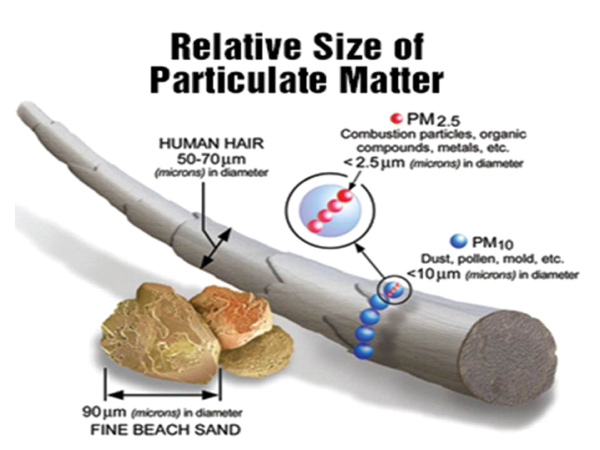
Human follicle dermal papilla cells (HFD-PCs) were exposed to various concentrations of PM10-like -- particulate 10 micrometres of less in diameter -- dust and diesel particulate and after the passage of a day researchers performed a process to detect levels of specific proteins in the cells, with the results showing the presence of PM10 and diesel particulate-decreased levels of Beta-catenin, responsible for hair growth. Also revealed was the levels of three other proteins -- cyclin D1, cyclin E andCDK2, responsible for hair growth and retention, decreased by PM10, in a "dose-dependent" manner.

It's feared that pollutants are having a terrible effect on our hairlines as well as our health (Image: Getty)
Pollution, impacting health and hair.  Getty Images

Men in their 20s were found to be going bald -- through recent research in China -- sooner than had previous generations. While balding typically is associated with aging, an increasing number of millennials in the United States admit to experiencing hair loss -- and eventually it is expected that two-thirds of all men will be affected. The most influential known cause of baldness is genetic inheritance; now circulating air pollution can be added as another potent influencer.

Burning of fossil fuels, including gas, diesel and other solid fuels such as coal, oil and biomass, along with industrial activities such as building, mining and manufacturing all add to the sources of producing circulating particulate matter in the atmosphere.
"Our research looked at the science behind what happens when the cells found at the base of hair follicles are exposed to common air pollutants."
"The research was undertaken in a laboratory and further research needs to be undertaken to understand just how quickly this affects people regularly exposed to pollutants in their day-to-day lives."
"It is possible to hypothesize that at certain levels of exposure this could lead to baldness, but further population-based research needs to be undertaken to confirm this."
Dr.Hyuk Chul Kwon
Labels: , , , , , ,

Wednesday, March 13, 2019

Researching New Emergency Therapy Approaches

"When somebody is wounded, there's a window of time they have to get to a medic or a hospital. So our over-arching goal is: how do you prolong that time?"
"The vision is to have a test bed where we can deploy lots of different styles of these proteins and find out which are the best."
"The ultimate dream would be to design totally new proteins, never seen before. The work can then become a new platform for designing proteins."
Pamela Silver, professor of systems biology, Harvard Medical School

"You can use that [an algorithm to search millions of protein sequences for recurring patterns], in turn, to understand things about protein structure, function, effects of mutation or, even more so, to generate sequences for design."
"This is not a black-box approach where we throw in every possible combination and put in a load of features, and see what sticks. It is a form of unsupervised machine learning that doesn’t presume an outcome. The universe of possible protein sequences is infinite, so we want to be directed and targeted."
Debora Marks, computational biologist, Harvard

"It seems far-fetched, but if we demonstrate efficacy at the level of cells and tissues, it's possible to start thinking about these things [preserving whole, live bodies]."
"I started conceiving how we could improve upon nature’s ‘raw’ materials and functionalize them for human use."
Roger Larken Chang, bioinformation and molecular biologist, director, systems biology laboratory, Harvard Medical School
Animal.jpeg
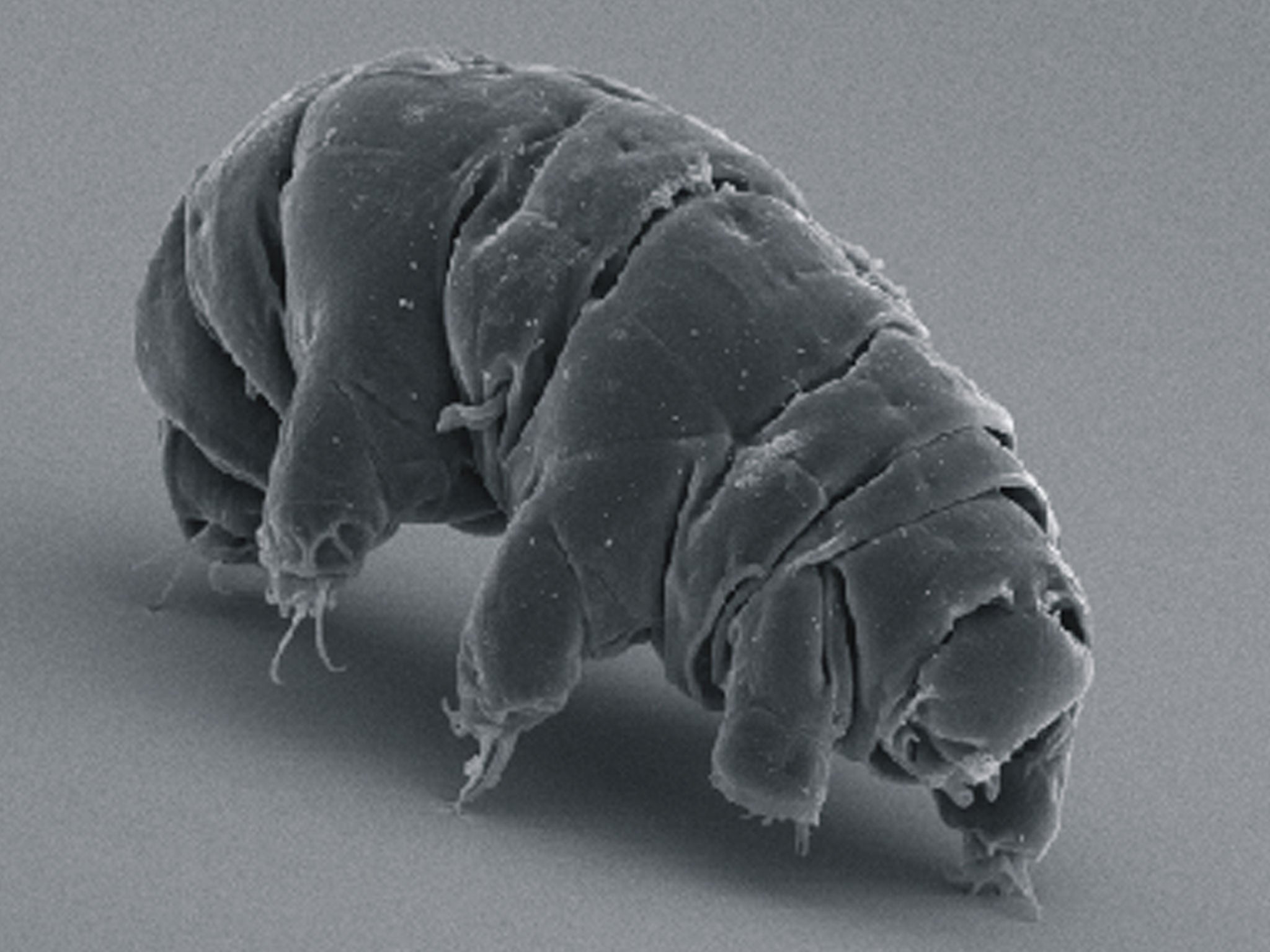
Tardigrades have special proteins that scientists believe help them achieve suspended animation when they are under stressful circumstances. Steve Sschmeissner/Science Source

Medicine would ideally like to be able to slow down or stop time when being able to do so might spare a limb from being amputated, prevent paralysis following a stroke, or save a life in the wake of a heart attack. Organisms do exist that are able to 'cheat time' by decelerating their biology. Possibly the best known among them is the tardigrade. This is an aquatic creature of absolute minuscule size; like a speck of sand. The tardigrade is able to survive severe pressures and extreme temperatures.

It can be found in places as diverse as mountain summits and deep oceans, as well as in the watering can in your backyard. When impossible-to-survive scenarios plague it, the tiny creature evades death through entering a dormant state called anhydrobiosis.  A research team at Harvard Medical School hopes to discover medical treatments that halt tissue damage, and to that end they are studying tardigrades for the special proteins they are thought to be imbued with which aid them to achieve that suspended animation.

The goal is to synthesize a version of the proteins with the intention of having them invade human cells to pause processes leading to cell death. In essence, finding that elusive 'pause in time' that could be critical to survival under otherwise life-terminating circumstances. These tiny creatures are also fondly known as water bears or moss piglets. The creature resembles anything one can think of; a sweet potato with eight legs, an eight-legged croissant, when viewed under a microscope.

They are invertebrates living anywhere where water can be found. They can be discovered in parking lots or in a clutch of moss, and alternately in the most weather-extreme environments on Earth, such as deep-sea trenches, hot spring, peaks of the Himalayas, to the depths of Antarctic ice. In periods of anhydrobiosis, tardigrades curl themselves into a desiccated ball, called a tun, lowering metabolism to 0.01 percent of normal. They can remain in this tun state for decades, then resume normal 'life' immediately upon rehydration.

Scientists discovered the presence of unique proteins called tardigrade-specific intrinsically disordered proteins in 2017. It is those proteins, unique to these creatures that may be responsible for placing tardigrades' cells in their protective state. And it is that very feature that is of primary interest to the research team at Harvard Medical School. How these proteins achieve that end is as yet unknown, but Dr. Chang feels they might form a biological glass to immobilize everything in a cell during stressful periods.

Dr. Chang is conducting a survey of these proteins, along with proteins associated with stress tolerance in other organisms. Debora Marks' laboratory has created an algorithm capable of searching millions of  protein sequences to identify recurring patterns, and she is part of the research team's efforts. Their research is funded by the U.S. military in the search for protein-based therapies to halt bleeding and tissue death in traumatic injuries, explained Dr. Silver

Such a functional and ground-breaking therapy would have countless additional applications in theory, from refrigeration-free preservation of protein-based drugs; preservation of eggs for in-vitro fertilization, or organs for transplantation. Even, looking far enough into the future, possibly paving the way to preserve whole, live bodies for space travel or unspecified emergency scenario responses.
Water bears can live just about anywhere. They prefer to live in sediment at the bottom of a lake, on moist pieces of moss or other wet environments. They can survive a wide range of temperatures and situations. 
Research has found that tardigrades can withstand environments as cold as minus 328 degrees Fahrenheit (minus 200 Celsius) or highs of more than 300 degrees F (148.9 C), according to Smithsonian magazine. They can also survive radiation, boiling liquids, massive amounts of pressure of up to six times the pressure of the deepest part of the ocean and even the vacuum of space without any protection. A 2008 study published in the journal Current Biology found that some species of tardigrade could survive 10 days at low Earth orbit while being exposed to a space vacuum and radiation.
LiveScience

Labels: , , , ,

 
()() Follow @rheytah Tweet