Ruminations

Blog dedicated primarily to randomly selected news items; comments reflecting personal perceptions

Friday, March 29, 2024

Ambient Air Pollution and Alzheimer's

"This suggests that environmental factors like air pollution could be a contributing factor to Alzheimer's disease, especially in patients in which the disease cannot be explained by genetics."
"Donors who lived in areas with particularly high levels of traffic-related air pollution showed more plaques related to Alzheimer's disease at death than donors who lived in areas with lower air pollution concentrations." 
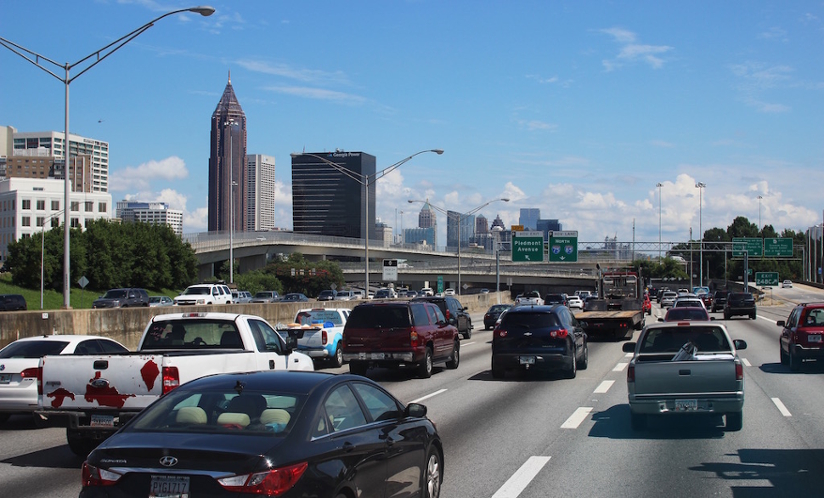
"In our study we used air pollution models, which can give us an estimate of the residential traffic-related air pollution concentration with a very fine resolution up to 200 to 250 meters. Of course you would see the highest levels of these pollutants around major highways, so people who lived very close to major highways had the highest exposure to traffic-related pollutants."
Anke Huels, assistant professor, Emory University, School of Public Health 
https://sph.emory.edu/news/_includes/images/sections/news-releases/2024/features/traffic-feature-alzheimers.jpg
Rollins School of Public Health, Emory University

 Recently published in the journal Neurology, a new study on the association between ambient air pollution concentrations and signs of Alzheimer's disease in the brain, led to the conclusion that people exposed to higher concentrations of fine particulate matter [air pollution; PM2.5] a year before death were likelier to have higher levels of plaques [abnormally high clusters of protein fragments accumulated between nerve cells, a sign of Alzheimer's present in brain tissue].
 
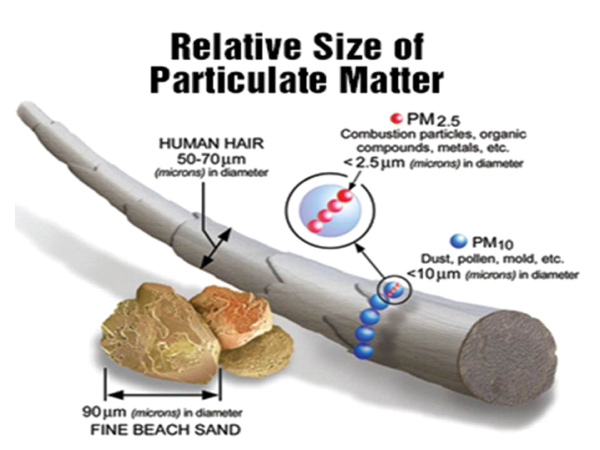
It has long been accepted by experts in the field that PM2.5 concentrations are capable of triggering short-term respiratory problems. The particulate matter is minuscule -- measuring 2.5 microns and even less in diameter, enabling them to enter the bloodstream following inhalation. Breathing smoke also can irritate sinuses, throat and eyes, according to the Centers for Disease Control and Prevention.
Severe exposure can also link to heart attacks, stroke, lung cancer and cognitive function damage.

A strong association was also found between the pollution and dementia in people not genetically predisposed to Alzheimer's. The study found an association between exposure to specific kinds of pollution and signs of the disease, but it does not provide evidence that Alzheimer's disease is caused by air pollution. Tissue from 224 donors in the Atlanta metropolitan area who had donated their brains to research formed the base of the study.

What the study results did clarify for the researchers was that exposure to high levels of pollution increases the risk of Alzheimer's. Over half of the donors were seen to have the APOE gene, a strong genetic risk factor for Alzheimer's disease. Researchers, however, found a stronger association between traffic-related air pollution and signs of Alzheimer's disease in donors not already genetically predisposed.

https://www.tampabay.com/resizer/v2/the-atlanta-skyline-is-seen-a-new-study-V2RY533NR5BWLOFATBW4MCNDYU.jpg?auth=cec432a709a118b38fde2ca484b9d29b351527b097c8991ecfa8bef270a2001b&height=506&width=900&smart=true
The Atlanta skyline. A new study from Emory University researchers using tissue donated by metro Atlanta residents found association between traffic-related air pollution and Alzheimer’s disease in humans. The study does not prove air pollution causes Alzheimer’s, but it found an association between exposure to air pollution caused by traffic and signs of Alzheimer’s in brain tissue. [ JOHN SPINK | TNS ]
"We often think about air pollution in the lungs, but it's critical that we put the brain at the forefront of the conversation of the ways that air pollution impacts our health."
Gaurab Basu, director of Education and policy, Harvard centre for climate, health and the environment


Labels: , ,

Thursday, February 06, 2020

Early Exposure to Air Pollution and Children's Developing Brains

Representative image. (AP Photo)
Representative image,  AP Photo

"The take-home message is that the quality of air we breathe matters, especially to our children."
"This [fewer brain cells and fewer brain connections resulting from poor air quality], in turn, can alter or impair function, depending on where it is located and when this is occurring."
"A question we haven't answered yet is whether these results are the brain failing to develop properly or if brain cells are dying due to exposure. If it's a developmental problem, it's possible the brain can rewire itself to compensate."
"If established cells are dying, the change to function can be more pronounced and possibly permanent."
Travis Beckwith, research fellow, Imaging Research Center, Cincinnati Children's Hospital Medical Center, Ohio
A new study, recently reported in PLoS ONE, suggests that high levels of exposure to traffic-related air pollution may lead to structural changes in the brain of the very young. Reduced thickness of the cortex and decreased grey matter volume were seen in 12-year-old children through brain scans. The children lived under a quarter of a mile distance from a major highway at one year of age. A thinner cortex and less grey matter may correlate with fewer brain cells and fewer connections to the brain.

Dr.Beckwith, lead author of the recently-published study, explains that the cerebellum whose function is to handle fine-tuning in motor control and which may also play a role in regulating emotions and behaviour, was also seen to be affected. In the interests of determining the potential impact of traffic-related air pollution, Dr.Beckwith and his research colleagues took MRI scans of 135 children who had participated in a larger research project.

That long-term study, the Cincinnati Childhood Allergy and Air Pollution Study, recruited families of children under six months of age for the purpose of examining the health impact of early childhood exposure to air pollution. At ages one, two, three, four and seven, child participants in the study were brought to the clinic until the last check-in at age twelve. Caregivers filled out questionnaires enquiring about the children's health, general well-being, housing characteristics and residential history, at each visit.

Air pollution may impact children's mental health

Children were assessed on reading ability, executive function, mental health, intelligence and other neurodevelopmental outcomes at age twelve. Using data from an air sampling network that included 27 sites in the Cincinnati area, estimates for pollution exposure for each child identified outcomes.

The researchers found that children exposed to the highest pollution levels possessed thinner cortexes in comparison with those children with little pollution exposure -- once other factors that might influence brain development, such as maternal IQ and neighbourhood poverty level were taken into account.
"The primary motor cortex is responsible for planning out movements and the execution of those movements."
"The primary sensory cortex [is involved in] tactile senses, such as how things feel, sensing temperature and vibrations as well as identifying objects based on touch."
"The results of this study, though exploratory, suggest that where you live and the air you breathe can affect how your brain develops"
"While the percentage of loss is far less than what might be seen in a degenerative disease state, this loss may be enough to influence the development of various physical and mental processes."
This shows brain scans from the study
These brain images of 12-year-old children show regions of the brain in red, orange and yellow that are most affected by traffic-related air pollution (TRAP). Those regions denote a reduction in cortical thickness linked to elemental carbon attributed to traffic. Of these images, the darker the color, the stronger the effect. Image is credited to Cincinnati Children’s Hospital Medical Center.

Labels: , , , ,

Thursday, October 10, 2019

Air Pollution and Baldness


Air Pollution and Baldness

"While the link between air pollution and serious diseases such as cancer, chronic obstructive pulmonary disease and cardiovascular disease are well established, there is little to no research on the effect of particulate matter exposure on the human skin and hair in particular."
"Our research explains the mode of action of air pollutants lead to hair loss."
"While it is difficult to escape ambient pollution, limiting time walking on busy streets, especially during rush hour, should help to reduce exposure."
"If you are exercising outdoors, try to do so in areas that are less polluted and do not spend too much time waiting at traffic hot spots such as traffic lights."
Dr.Hyuk Chul Kwon, Future Science Research  Centre, South Korea
A new study appears to confirm that air pollution may be the cause of premature adult baldness in its finding that fine particulate matter emitted by vehicles damaged skin that holds hair follicles in place on the human scalp. Laboratory tests on human cells indicated levels of the critical proteins required for hair to grow and be retained to be impacted with exposure to pollution particles. Simply put, the more exposure to those particles, the greater diminished capacity of proteins produced, leading to hair loss.

The latest study concluded with a series of laboratory tests, is the first to clarify that such a risk to the surface of the body exists, capping a growing body of evidence showing that tiny particles have the capacity to damage internal health by entering the bloodstream through the lungs. The researchers felt a likely recourse could be the choice to exercise indoors instead of outdoors in polluted cities, to prevent hair loss or to reduce the incident of hair loss.

Human follicle dermal papilla cells (HFD-PCs) were exposed to various concentrations of PM10-like -- particulate 10 micrometres of less in diameter -- dust and diesel particulate and after the passage of a day researchers performed a process to detect levels of specific proteins in the cells, with the results showing the presence of PM10 and diesel particulate-decreased levels of Beta-catenin, responsible for hair growth. Also revealed was the levels of three other proteins -- cyclin D1, cyclin E andCDK2, responsible for hair growth and retention, decreased by PM10, in a "dose-dependent" manner.

It's feared that pollutants are having a terrible effect on our hairlines as well as our health (Image: Getty)
Pollution, impacting health and hair.  Getty Images

Men in their 20s were found to be going bald -- through recent research in China -- sooner than had previous generations. While balding typically is associated with aging, an increasing number of millennials in the United States admit to experiencing hair loss -- and eventually it is expected that two-thirds of all men will be affected. The most influential known cause of baldness is genetic inheritance; now circulating air pollution can be added as another potent influencer.

Burning of fossil fuels, including gas, diesel and other solid fuels such as coal, oil and biomass, along with industrial activities such as building, mining and manufacturing all add to the sources of producing circulating particulate matter in the atmosphere.
"Our research looked at the science behind what happens when the cells found at the base of hair follicles are exposed to common air pollutants."
"The research was undertaken in a laboratory and further research needs to be undertaken to understand just how quickly this affects people regularly exposed to pollutants in their day-to-day lives."
"It is possible to hypothesize that at certain levels of exposure this could lead to baldness, but further population-based research needs to be undertaken to confirm this."
Dr.Hyuk Chul Kwon

Labels: , , , , , ,

 
()() Follow @rheytah Tweet