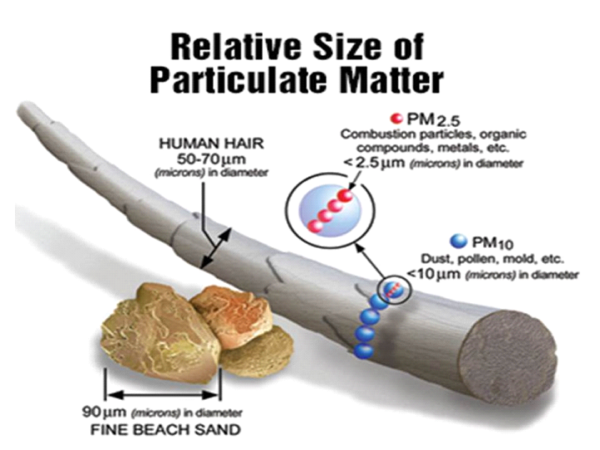
Wildfire Particulates in Smoke Dangerous to Brain Function
"Some particles from wildfire smoke have been shown to be able to cross the blood-brain barrier and cause inflammation of the brain."Kent Pinkerton, pediatrics professor, University of California, Davis"Hitchhiking on these tiny particulate matter are pieces that are toxic metals -- lead from leaded gasoline, iron from brake pads and platinum from catalytic converters.""It may be that this particulate matter entering into our nose and the gateway to our brain, which is normally protected by a blood-brain barrier, is getting exploited by the front door.""Whether you are a newborn baby or an older adult with Alzheimer's disease, air pollution is likely harmful to your brain."Ray Dorsey, neurology professor, University of Rochester, New York"Studying cognitive abilities is important because they are core to all daily life functioning and can be key to understanding individual needs as they rebuild and rehabilitate in disaster-affected communities."January study, journal PLOS Climate
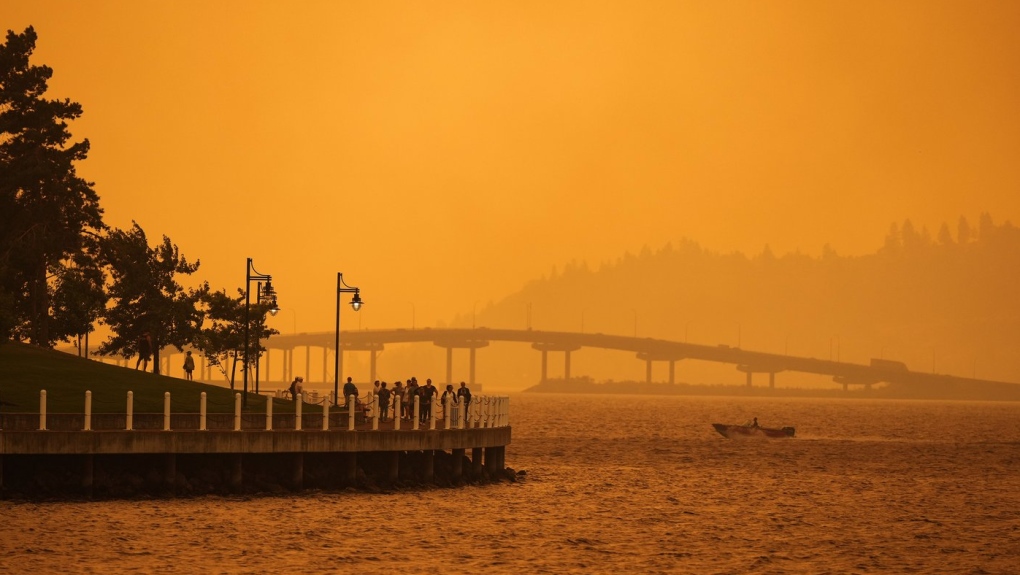 |
| A person travels in a boat past people walking on the boardwalk as smoke from the McDougall Creek wildfire blankets the area on Okanagan Lake, in Kelowna, B.C., Friday, Aug. 18, 2023. (THE CANADIAN PRESS/Darryl Dyck) |
Pollution from wildfire smoke -- according to a growing body of international research -- can produce cognitive deficits, post-traumatic stress and may increase the risk of dementia, Alzheimer's and Parkinson's disease. The effects of wildfires have conventionally and to the present, been studied on lungs, hearts and blood of affected patients. Researchers, however have begun studying how fine particulate matter from wildfire smoke can enter the body and travel to the brain.
According to Professor Pinkerton the nose acts as a filter to ensure some inhaled particles don't reach the lungs. During wildfires, though, concern has arisen that tiny soot particles and other chemicals in smoke have the capacity to enter body cells and nose nerves. Scientists know that these entries can have a direct brain connection. Cells and nerves can get inflamed and damaged by wildfire smoke, as they pass from nose to brain.
Wildfires in Canada's Northwest Territories and British Columbia saw thousands of people forced to vacate their homes, in one of the worst years for wildfires in the country, where close to 137,000 square kilometres of land have been scorched. The composition of wildfire smoke is not restricted to vegetation from trees and other plants, but includes as well products caught in the flames which would include metals from vehicles and homes, plastic and fabric fibers.
Some such particulate matter from wildfire smoke is sufficiently minuscule that it can travel into the smell centres of the brain, emphasized neurology professor Ray Dorsey. Higher concentrations of heavy metal are seen in the brains of people with Parkinson's and Alzheimer's. Smell centres of the brain damage is found almost universally in patients with these two diseases, Dr. Dorsey explains.
A July 2018 study published in the journal Environmental Research saw a group of international researchers find that people in Mexico City exposed to air pollution showed the signatures of Alzheimer's and Parkinson's in their brains. "Exposure to air pollutants plays a major role in the development and-or acceleration of Alzheimer's disease" the study, called Hallmarks of Alzheimer's Disease Are Evolving Relentlessly in Metropolitan Mexico City Infants, Children and Young Adults concluded.
Recent reports suggest that air pollution from wildfires presents a denser or higher concentration of particulate matter than does air pollution from vehicular traffic. A January study published in the journal PLOS Climate found people exposed to smoke from the 2018 Camp fire, the most destructive wildfire in the history of California, had "significantly" greater chronic symptoms of post-traumatic stress disorder, anxiety and depression than those not exposed to the fire.
A decrease in cognitive performance -- the ability to suppress distractions and focus on a task at hand -- results from exposure to wildfires, concluded lead author of the California Fire study, Jyoti Mishra. Six months following the wildfire the study was initiated, when the smoke had subsided. Thsre's a "lot of complex interactions" when a person suffers from loss of property, family and injury, explains Dr. Mishra.
Emotional responses generally associated with post-traumatic stress disorder can be set off by wildfires.
The body reacts to particulate matter from wildfire smoke, in the same way it would with inflammation. Particulates as well could enter the lungs and chronically affect the brain, at the height of the wildfires.
 |
"We don't know that exact link as to how the particulates can affect the brain systems over the long term, but what we found in a series of studies was that there was definitely prevalence of climate trauma.""We see the final outcome, we see that there's cognitive deficits, there are brain changes, there are psychiatric symptoms, but how do you get from wildfire smoke to that kind of an end point?""Those intermediate complexities ... are not well understood."Jyoti Mishra, lead author, California fire study, associate professor of psychiatry, University of California, San Diego
Labels: Brain Injuries, Chronic Dementia, Cognition Decline, Particulate Matter, Research, Wildfires
posted by Pieface @ 7:21 PM
0 comments