Pride Before a Fall
 |
Paul Almasy/Corbis/Getty Accidental Cliff Dive
A Polish couple's two young children watched as their parents climbed over the safety barrier and fell to their deaths while taking a
selfie on a cliff in Cabo da Roca, Portugal. Once they took a step
backwards to angle their shot, they tumbled off of the edge and into the
perilous Atlantic Ocean below. Both bodies were not recovered until a
day later, as dangerous weather and sea levels prevented their rescue.
The traumatized children, ages five and six, were put into the care of
Polish diplomats after witnessing the horrifying scene. |
"My behaviour on this front ['travel photo addiction'] has been out of control for some time."
"I pre-visualize holiday outfits on social media posts. And you know it's getting ridiculous when you and your friends take exactly the same group selfies on holiday, swapping between each others' camera phones -- then like each other's identical Facebook posts."
Sherelle Jacobs, assistant comment editor, Daily Telegraph
"[...The thinking behind Facebook social network was always how to consume as much of the public's time and attention as possible.] And that means that we need to sort of give you a little dopamine hit every once in a while, because someone liked or commented on a photo or a post or whatever."
"And that's going to get you to contribute more content."
Sean Parker, founding president, Facebook
"When you see an advertisement someone is pushing at you, it makes you reluctant to accept it. But what social media influencers have is the pull factor."
"[As a follower] you're pulling that information, no one is forcing you to see it. You've selected who you're aligned to."
Dimitrios Buhalis, head, tourism and hospitality department, Bournemouth University
 |
Getty “Ultimate Selfie” Gone Wrong
A teenage Romanian girl had attempted to take the special selfie on top of a train in the northern town of Iasi, Romania.
According to a friend, 18-year-old Anna Urso was planning to post this
"ultimate selfie" on Facebook. Urso decided to lie down on the roof of
the stationary train car, but when she reached up with one of her legs
to pose, but she hit an overhead live wire that shocked her with 27,000
volts. The young girl immediately burst into flames and was pronounced
dead at the hospital after suffering burns on over half her of her body.
|
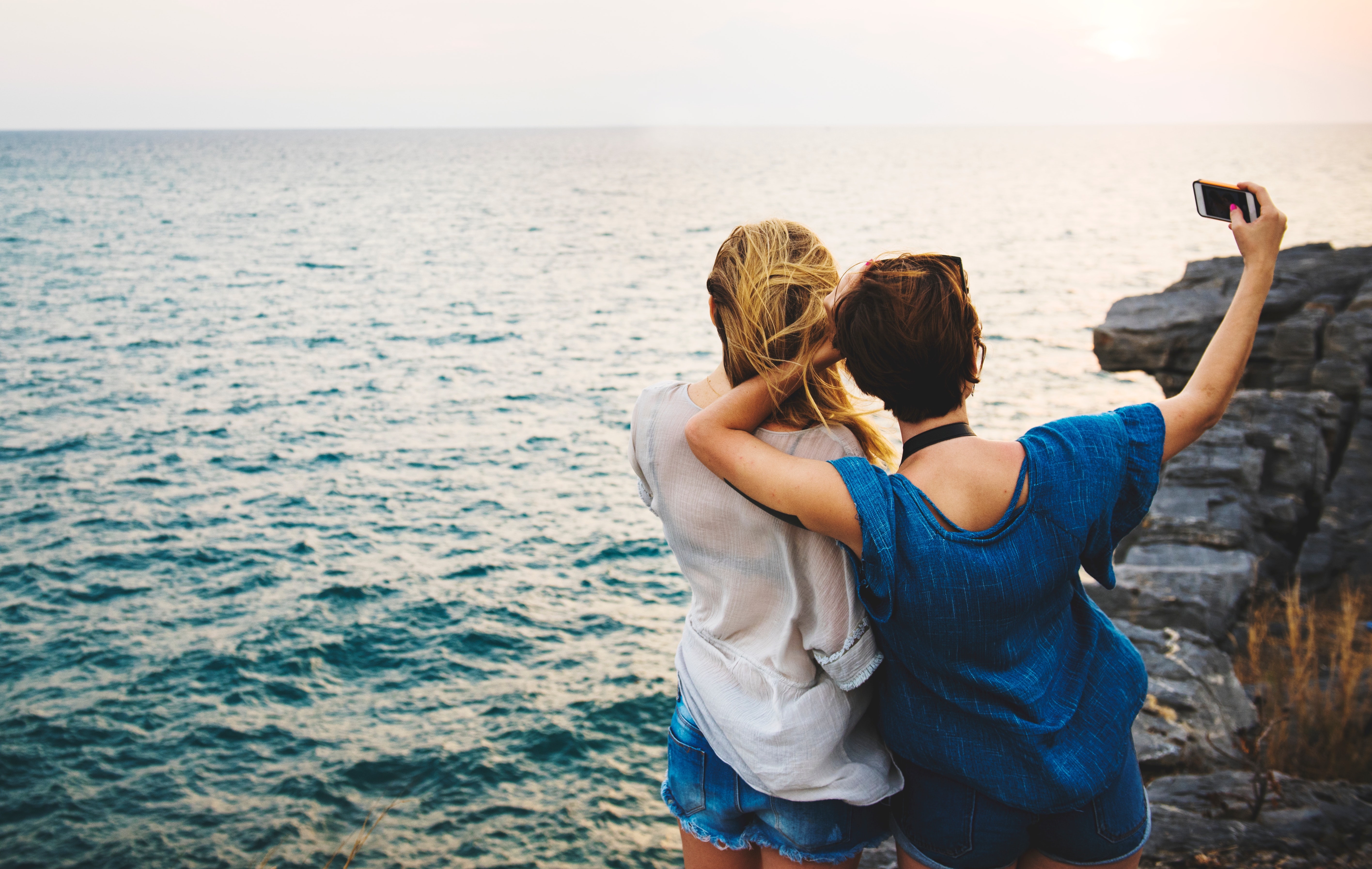
The irresistible draw of fame and fortune. The impulse and actual compulsion to be noticed. To be viewed as someone really on top of the world, a bold, smart, intriguing character eliciting the admiration of those who would like to do what you do and in the process of following and liking what you do, compelling you to ever more incautiously fascinating adventures, and the proof is right there, in the selfies you take of your smiling, audacious face, a phenomenal natural background framing your face as you achieve a micro-celebrity status, transitory, but pride-inducing.
 |
Getty A Deadly Current
Chezka Agas, a 17-year-old engineering student from the Philippines, was swept into a deadly wave on the beach on Bangui Bay during a birthday gathering. She was part of a
group of engineering students in attendance that posed for a
celebratory photo-op in front of the scenic Bangui windmills when the
group became caught in the overpowering ocean current. Several of the
party guests were injured, but only Agas drowned in the wave. |
Last July you were Gavin Zimmerman, 19, focused on taking selfies while standing on a New South Wales, Australia cliff, when pride and incaution catapulted you to imbalance and death. Then in September you were Tomer Frankfurter, 18, whose spectacular fall of 250 metres in Yosemite National Park in California made another victim of selfie fame. Manuela Da Costa Macedo, another selfie-famer who in October fell from a 27th-floor balcony in Panama City, all the while clutching her selfie stick.
Among the most common causes of death were drowning and transport accidents, and then there's animal attacks, electrocution, fire and firearms adding up to 259 documented deaths attributable to
"taking a selfie", even while those in the know believe that number is not the true reflection of selfie-induced deaths. Those who carefully plan their travel escapades with a view to capitalizing on exotic, strange, exciting, unusual or dangerous backgrounds, smugly happy face in the foreground represents an
"ego travel" phenomenon.
 |
Getty Deadly Walrus
A Chinese businessman named Jia Lijun tried to take a selfie
with a one-and-a-half-ton walrus at a zoo in Liaoning province,
China. Apparently, the man was a big fan of this particular walrus,
having previously sent photos and videos of it to his friends and family
along with the message, "so strong, so big. |
Tour company Thomas Cook in its 2018 holiday report posits that over half of 18 to 24 vacationers visualize how their choice of vacation spot will appear on their social media posts before making the final decision of where they will stay and where they plan to travel. Older travellers too involve themselves in the same way with 15 percent of over-55 vacationers considering what to share online
"to make their friends jealous", while deciding where they will book.
 |
Getty Accidental Explosion
Two Russian soldiers in the Urals region west of Siberia were posing for a selfie with a live grenade. The handheld explosive detonated unexpectedly and,
going off in their faces. Only the phone with the photo survived. |
The quest for extreme selfies led to the immediate deaths of 259 people, between the years 2011 and 2017, according to researchers at the U.S. National Library of Medicine last year, in their global study. For some of those involved, the recognition they crave goes beyond the social status they assume, but extends to the money they can attract as well. On Instagram
"travel influencers" whose large followings influence tour operators and hotels to cash in, create a collaboration promoting ads.
More likes and followers are attracted to more extreme posts, all of this eventually racking up and converting to considerable income. It is the "pull factor" identified by Mr. Buhalis that businesses respond to, with social media content becoming more useful than conventional marketing. To that end, some in the travel business have introduced Instagram
"butler" services, staff helpful in aiding clients to take the perfect selfies for their social media feed.
 |
Night thunder storm lightning in sky. Getty Selfie Stick Lightning Rod
In July 2015, an unnamed English hiker was struck by lightning while trekking through the Brecon Beacons National Park in Wales. The
fatal bolt was suspected to have hit the extended metal rod of a selfie
stick and electrocuted the young man. |
Labels: Danger, Human Nature, Selfies, Travel