Ruminations

Blog dedicated primarily to randomly selected news items; comments reflecting personal perceptions

Monday, April 11, 2022

Facial Distortion in Selfies

"There is a noted relationship between the increase in selfie photographs and an increase in rhinoplasty requests, particularly among younger patients."
"We need to increase awareness of how false perceptions on selfies may affect rhinoplasty requests, perceptions of self-image, and subsequent depression and anxiety."
Professor Bardia Amirlak, Department of Plastic Surgery, University of Texas

Requests for plastic surgery on younger peoples' noses have been on the rise. Scientists from the University of Texas, led by Professor Amirlak of the university's department of plastic surgery, found that younger patients in particular have been booking rhinoplasties, and the reason appears to be that selfies tend to distort their features. The study saw publication in the journal Plastic and Reconstructive Surgery.

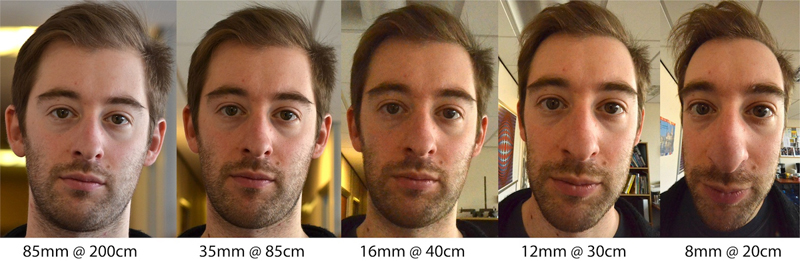
No consideration appears to have been given by those seeking to alter their noses to the fact that rhinoplasty is not an intelligent route to take in this instance; taking fewer selfies might represent a more intelligent option. Clearly, their birth nose is not at fault; whereas the optical result of a camera with a tendency to distort facial features is. Their smartphones make photographs turn out with their faces appearing longer and wider.

For their study, the scientists had thirty volunteers agree to sit for three photographs, two of which were taken with a smartphone, 12 and 18 inches distant from their faces, and the third photographs taken with a digital camera from a five feet distance. The next step was to compare each photo 'landmark' measurements -- including nose, lip, chin and facial width. Questionnaires were completed as well by participants, asked to rate their satisfaction with their image appearance on each of the photographs.

The result of the study was to reveal that noses looked up to 6.4 percent longer in the selfie as compared with how it appeared in a standard photograph. The volunteers' chins were shortened by up to 12 percent with the ratio of nose to chin rising by 17 percent in the selfies. Relative to the face, those selfies produced photos where the base of the nose appeared wider.

Photos taken up close. The image on the left is stretched. The nose is wider, face wider, and ears do not show.  Source: https://eblnews.com/video/why-selfies-can-make-your-nose-look-bigger-363183


Labels: , , , ,

Monday, July 01, 2019

Is Screentime Ruling Your Life?

"Every chronic disease we know of it exacerbated by stress."
"And our phones are absolutely contributing to this."
Dr. Robert Lustig, professor of neuroendocrinology, University of California, San Francisco

"The point is, your thread is yours, mine is mine, and we use it to regulate our emotions, to balance facts with fun, in our own idiosyncratic way."
"It’s very counterintuitive to say at this stage, but the fact is, no one really knows what the heck people are seeing on their screens."
Byron Reeves, paper co-author, Stanford University

"[The researchers contend that] scientists need to look over people's shoulders, digitally speaking, and record everything, on every device, that an individual sees, does and types [to obtain a full idea of a user's experience and the effects on them]."
Benedict Carey, The Times

"A few weeks ago, the world on my phone seemed more compelling than the offline world -- more colourful, faster-moving and with a bigger scope of rewards."
"I still love that world, and probably always will. But now, the physical world excites me too -- the one that has room for boredom, idle hands and space for thinking."
Kevin Roose, technology columnist, The Times
Consumers Research   Pexels

Well, they're everywhere, anywhere you look, people fixated on their iphones, anxious not to miss anything, a kind of pathology of utter dependence, an other-world one inhabits by choice-of-habit, eschewing their presence in a real world in favour of a wired, on-line world that seems far more satisfying than simply observing and taking part in what goes on around them directly, in person. It is, in fact, a kind of casual rejection of life as it is for life as it is portrayed through social media and online contacts.

It now is the rare individual who decides not to have a presence on Facebook. As time-consuming a portal to another kind of remote, reserved life as anyone could wish for, where one looks to be 'friended' and 'liked'. Personal, real-life interaction entirely superfluous as the Facebook-elected consumer becomes completely dependent, satisfied to have an alter-life revolve around an Internet-sourced presence.

It is the grip that the siren-song of that dependency and its impact on people's health, both physical and psychological that led a group of social scientists to begin to study the phenomenon. They conceived of a working method; to download software onto the smartphones and laptops of study volunteers. That software snapped shots every five seconds to record what was happening on screen; shots sent to be analyzed on the server used by the researchers.

They named the process "screenomes", enabling them to get a fairly representative and in fact concise picture of what was happening. What they discovered was that the test subjects switched every 20 seconds from one activity to the next, rarely tarrying over twenty minutes on any one particular activity. What they came away with was a sequence of disjointed screens unique to the individual; a kind of digital DNA.

There exists reliable evidence that smartphones interfere with sleep, with self-esteem, with relationships, memory, attention spans, creativity and problem-solving, as well as decision-making skills. Cortisol levels rise with each ping of a phone, and that hormone is linked to stress; its release triggering alterations in the body similar to spikes in blood pressure, heart rate and blood sugar.
A situation that ultimately contributes to diabetes, high blood pressure, heart attack and stroke.

In the United States, the average person spends four hours daily fixated on their phone, picking it up 52 times throughout the course of a day. This is done as a subconscious routine, somewhat like a nervous tic, so habitual it almost reflects instinct, only one that has been ingrained by endless repetition to become a nervous disposition. Leaving the user with social adaptations more suited to a hermit.

Face-to-face, eye-to-eye interactions become rare; they appear extraneous. As a result, interpersonal and intimate relationships suffer. Considering all that is known about this modern-day universal and favoured mode of 'communication', definitely injurious to one's physical health. Throw in the unsettling effect of the psychological impact and it's an insidious diminishing of the value of life.

Abstract:
Digital experiences capture an increasingly large part of life, making them a preferred, if not required, method to describe and theorize about human behavior. Digital media also shape behavior by enabling people to switch between different content easily, and create unique threads of experiences that pass quickly through numerous information categories. Current methods of recording digital experiences provide only partial reconstructions of digital lives that weave – often within seconds – among multiple applications, locations, functions, and media. We describe an end-to-end system for capturing and analyzing the “screenome” of life in media, i.e., the record of individual experiences represented as a sequence of screens that people view and interact with over time. The system includes software that collects screenshots, extracts text and images, and allows searching of a screenshot database. We discuss how the system can be used to elaborate current theories about psychological processing of technology, and suggest new theoretical questions that are enabled by multiple timescale analyses. Capabilities of the system are highlighted with eight research examples that analyze screens from adults who have generated data within the system. We end with a discussion of future uses, limitations, theory, and privacy.
Screenomics: A Framework to Capture and Analyze Personal Life Experiences and the Ways that Technology Shapes Them
Byron Reeves, Nilam Ram, Thomas N. Robinson, James J. Cummings, C. Lee Giles, Jennifer Pan, Agnese Chiatti,  Mj Cho,  Katie Roehrick,  Xiao Yang,  Anupriya Gagneja,  Miriam Brinberg, Daniel Muise,  Yingdan Lu,  Mufan Luo,  Andrew Fitzgerald & Leo Yeykelis
Human Computer Interaction journal


Labels: , , ,

Thursday, December 01, 2016

That Psychological Trap 

"I often feel that scientific models are decades behind the casinos."
"I don't think it's an accident that casinos are filled with lights and noise."
Catherine Winstanley, neuropsychologist, University of British Columbia

"Then I started using Facebook, and I started realizing that I had it all wrong [that computer users wanted to use their contacts discreetly). It was the opposite."
"People are dying to get notified. [They want to be noticed, valued, part of a social network]."
Roel Vertegaal, head, Human Media Lab, Queen's University, Kingston, Ontario
Dr. Vertegaal, an expert on human-computer interaction, studied eye-contact and convinced himself years ago that he could invent a protocol that would be really useful with the growing ubiquitousness of computing devices, that when the "Internet of Things" fully blazed into reality all manner of devices would compete for peoples' attention, and the situation would become unbearably weighty. He felt that controlling when a computer-user was alerted would solve the irritating problem, through eye-contact.

The user's eyes would be recognized, awakening the machine to action and only then would the computer spring into usefulness by following the user's gaze and alerting it to commence activities. With this imagined indispensable protocol he would help to revolutionize social media so people wouldn't be driven to distraction and only be involved when they wanted to be. Turning the situation from being on call at all times to only being alerted when the user is requesting contact.

He hadn't counted on the since-well-illustrated fact that people always wanted to be on call and involved in social networking of every kind. That people would never want to shut off the alert function, that they wanted to have attention focused on them in the immediate presence. And that, simply put, is why the ping of a text message elicits an immediate response. It demands to be answered and the user is only too happy to comply, to feel connected, important, valued.


And while researchers are investigating the ubiquity-compulsion of cellphone use at the most inappropriate times, as a pathology that has afflicted a generation who feel there is no problem in texting while, for example, driving, it seems that Las Vegas with its immense profit orientation motivation had already achieved the kind of manipulative success that smartphone providers were themselves experimenting with, hooking people with ever-more-advanced features to captivate them as users.

At Las Vegas, behavioural psychology finds its perfect laboratory. People are captured by flashing lights, by sounds, by hyper-oxygenated air, and by the alcoholic beverages freely available to help lose all inhibitions and become fully immersed in the environment. The compulsion to respond to these stimuli is all-consuming; excited gaming senses are aroused and restraint disappears. People begin to behave in a predictable manner, impulsively and repeatedly, determined to 'win'.

It seems that researchers are relating the success of this kind of captive marketing with Smartphone companies. Who engage in similar manipulation of human behaviour resulting from studied stimuli proven to work to promote an addictive type of consumerism completely compelled to activation resulting in the kinds of profit that drive manufacturers to use whatever means at their disposal to pump up their bottom line.

Problematic gambling, it appears, has much in common with smartphone use that is turning out to be a social problem; both are addictive, and both result in harm to the users and to those related to the user, whether it is an addicted gambler draining family financial resources, or a committed texter placing him/herself while driving in danger, while at the same time presenting as a deadly danger to all others on the road, unaware of their proximity to an attention-impaired driver.

Each, in aware efforts to wean themselves away from such self-harming and socially-detrimental behaviour undergoes the psychology of fear related to withdrawal from harmful behaviours. UBC neuropsychologist Catherine Winstanley recently published results of a study she named a "rat casino" where rats gambled for sugar treats which held out the risk of being locked out.

Adding lights and sounds, the rats were impelled by excited responses to increase their risky behaviour. At the same time, the rodents learned the game and they learned how to avoid risks. When they were administered a drug that blocks dopamine effects involved in the stimulus-reward cycle, a vital concept in he neuroscience of gambling, the effect vanished.

The theory was that addictively risky behaviour could conceivably have a common chemical cause. Gambling addicts believe random events can affect the trajectory of a cascade of events and eventually favour them with wins. The levers or buttons on slot machines give them the illusion of control. And the faster results manifested, the more often people tended to gamble.

The same urgency and swift response that motivates gamblers appear to stimulate users of smartphones. People responding to these compulsions seem to require newer, faster and more immediate gratification. Leading smartphone designers and manufacturers to produce ever more advanced gadgets creating more hype, anticipation and eager consumption of new products on the market. A hugely profitable production-consumer loop.

An industry that feeds off manipulating peoples' psychology to produce an addictive quality to the use of the product.

BlackBerry Passport device image

Labels: , , , ,

 
()() Follow @rheytah Tweet