Ruminations

Blog dedicated primarily to randomly selected news items; comments reflecting personal perceptions

Saturday, July 18, 2026

Natural Disasters Equal to Wars Compelling Government Responses

"FINAL WARNING TO CANADA: Manage your forests to prevent these fires. American lungs are paying the price for Canadian inaction, year after year."
"Sovereignty comes with responsibility, and the responsibility to prevent a foreseeable disaster from crossing into another country's airspace has not been met [we offered you status as the 51st state, after all]."
Michigan Rep. John James
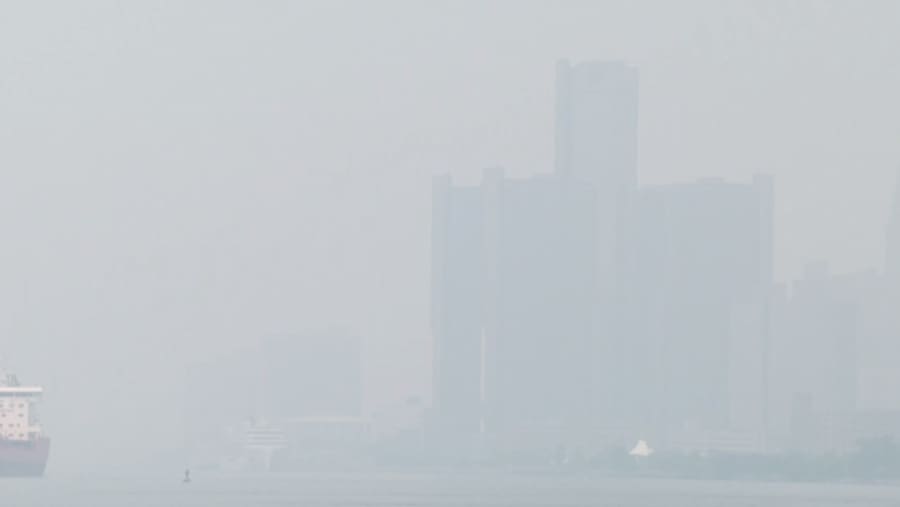
https://res.cloudinary.com/graham-media-group/image/upload/f_auto/q_auto/d_https:::media.clickondetroit.com:theme:images:placeholder-16x9-wdiv.png/c_scale,w_900/v1/media/gmg/663BV5IULNBK3F2TINNP5RHYHM.png?_a=DAJHqpDbZAAA
Hazardous air quality is creating another day of inconvenience across Metro Detroit, forcing families, visitors, and event organizers to rethink plans as smoke lingers in the region. (WDIV ClickOnDetroit)
 
"If there's some politician out there chirping away, maybe what you should do instead of complaining is send help, because we have done the exact same thing for our American friends." 
"I find it a shame the administration in the U.S. and Congress people [are] writing these letters and blaming us."
"We had the water bombers and everyone going over to California. It was last year.... That's what neighbours do." 
"You don’t get on and start threatening and criticizing, because guess what, one day it's going to be your turn and we're going to be down there without hesitation to support our neighbours, which we should be."
"It's unfortunate they want to politicize this." 
Ontario Premier Doug Ford 
https://i.cbc.ca/ais/9cc02f3e-8cfd-4f2e-83a7-652f541490e9,1784414744183/full/max/0/default.jpg?im=Crop%2Crect%3D%280%2C0%2C1920%2C1080%29%3BResize%3D620
A new evacuation centre has opened in Thunder Bay for people displaced by northern Ontario wildfires. Premier Doug Ford warned that people refusing evacuation orders are hindering firefighting efforts.  Still from video/CBC
 
Thankfully, some of Canada's friends in the United States have chosen a different approach to the matter of conquering the wildfires. In comparison, Massachusetts Governor Maura Healey, offered  state personnel to assist with wildfire prevention. There are 191 active wildfires across northern Ontario as of Saturday afternoon, 73 of which while being fought, are not yet under control, according to the provincial Aviation, Forest Fire and Emergency Services (AFFES) agency. 
 
The U.S. Republican myth -- which saw a number of U.S. Republican politicians writing a joint letter of warning to Ontario's premier -- that Canada is failing through "inaction" to meet the challenge of the wildfires is simply inaccurate. Ontario, pointed out Premier Ford, is twice the geographic size of the State of Texas. And in Texas authorities there have been battling catastrophic flooding following heavy rains. Were they negligent?
 
In Ontario last year $125 million was budgeted for emergency forest firefighting, but by year's end that budget expenditured to over double, reaching $271 million. Complaints aimed at the Conservative government in Ontario have also arrived from NDP and Liberal MPPs criticizing base budgeting numbers as too low.
 
https://i.cbc.ca/ais/636d1b9e-1aec-4899-bc9a-ed5f63bcf6d9,1784313094629/full/max/0/default.jpg?im=Crop%2Crect%3D%280%2C201%2C1920%2C1080%29%3BResize%3D620
More communities are under evacuation orders as wildfires rage across Ontario, with smoke affecting air quality across much of the province. Ontario Premier Doug Ford says the province is throwing all resources at the response. Still from video/CBC
 
"In times of crisis, all levels of government, including the opposition, need to come together." The criticism was "absolutely disgusting", responded Mr. Ford. "What I find despicable and disgusting is that opposition (members) would politicize the amount of being being spend and go out there and put false information out." 
 
Some northern communities in Ontario have complained that the response to wildfires by the provincial government was not sufficiently swift to react to rapidly changing conditions. As well, union members representing workers in forest fire response also commented that funding allocations have not kept pace with increasingly severe wildfire seasons in Ontario. 
 
https://i.cbc.ca/ais/ecfa94c3-3ed5-48ce-b265-1b448f1c600b,1784213083733/full/max/0/default.jpg?im=Crop%2Crect%3D%280%2C0%2C3000%2C2000%29%3BResize%3D796
Members of Namaygoosisagagun First Nation are seen in Thunder Bay, Ont., following an evacuation of the entire community on Monday due to a wildfire. (Sarah Law/CBC)
 
According to Mike Harris, Ontario minister of natural resources, the sheer scale of the wildfires leaves provincial authorities in the position of not being able to be everywhere at once. North of Thunder Bay, in Collins, a large fire broke out close to the community, moving so swiftly it reached the town even before a provincial response could be co-ordinated. Residents were evacuated to Thunder Bay, one of several places hosting those displaced by the fires ranging from Sioux Lookout to Niagara Falls, to Toronto.
 
In battling 191 separate fires in Ontario fire crews are performing at their utmost professionalism. Ten communities have been either evacuated or are under evacuation notice, with another four on standby pending the status of nearby fires. Last year's fire season saw some 600,000 hectares of forest burned. This year's total has already reached 650,000 hectares. Over 150 crews are currently engaged with forest fires in the north, with over 80 firefighting aircraft at work in the region, pointed out provincial minister of emergency preparedness and response, Jill Dunlop.  
Canada has refused to engage in basic Forest Management and Debris Removal, knowing that such refusal will lead to exactly this result. "
"This is Willful Negligence, and becoming a yearly occurrence, costing the United States Billions of Dollars, which cost of this pollution must of necessity be added to the TARIFFS Canada is currently paying."
U.S. President Donald J. Trump 
https://i.cbc.ca/ais/b9834a97-00d2-4991-8c8f-61c37f8e511e,1784377473646/full/max/0/default.jpg?im=Crop%2Crect%3D%280%2C0%2C1920%2C1080%29%3BResize%3D620
U.S. President Donald Trump is threatening to increase import tariffs on Canada over the 'unnecessary invasion' of smoke from the hundreds of wildfires that have destroyed communities and forced people from their homes. CBC News


Labels: , , , , ,

Friday, June 06, 2025

Far Reaching Consequences in Air Quality From Canadian Wildfires

https://www.ctvnews.ca/resizer/v2/QVD62FH6MRGUFHHMBHLHHJQI4Y.png?auth=b2a28004f09139fff52987be801292dc377f1790dfbec36664f6778f7241792c&width=1440&height=810
A smoky haze continues to linger over Ottawa on Friday afternoon.  (Westin Camera)
 
"We have these massive fires going on out west in Manitoba, in Saskatchewan, and all this smoke is being lofted high up into the atmosphere and then you have the jet stream, the strong winds higher up in the atmosphere blowing it over to Ontario."
"Even if you’re not smelling it at the ground, you’re probably noticing the sky is a bit of milky colour, kind of a white colour, this is all smoke that’s just been blown over from these massive prairie fires." 
Environment Canada meteorologist Crawford Luke
 
"Things like asthma, cough, headaches — we know that over time [smoke exposure] can increase your risk of things like respiratory infections. It can also increase your risk for long-term disease like lung cancer if you have high exposure."
"Clean air quality is definitely becoming more of an awareness concern because we are experiencing more wildfire seasons that are increasing. They’re longer, they start earlier, they get worse. We’re noticing a lot more air quality alerts."
"Check the air quality and if it’s over five, six, seven, that’s when you need to pay attention. That means air quality could be bad, even if the sky looks clear." 
"This affects the youth, seniors, as well as people with lung disease, heart disease. Anyone with a lowered immune system tends to be considered higher risk. They would be the ones we’d want them to watch the alert a little bit earlier."
Jamie Happy, health promotion coordinator, Alberta Lung
 
"The particle air pollution event is the result of extensive wildfires in central and Western Canada."
"Wind patterns are forecasted to transport plumes of smoke from these fires across much of New England and New Hampshire."
New Hampshire Department of Environmental Services 
https://i.cbc.ca/1.7554388.1749245549!/cantoImage/httpImage/image.jpg_gen/derivatives/original_1180/ottawa-gatineau-weather-wildfires-2025-smoke-downtown-parliament.jpg?im=Resize%3D1180
A skateboarder cruises down Rideau Street in Ottawa on Friday as drifting smoke from wildfires in Western Canada shrouded the city. (Gabrielle Huston/CBC)
 
Hundreds of wildfires are burning across Canada, many of them out of control with flames sending plumes of smoke skyward, resulting in unhealthy air wafting off with the prevailing winds, reaching distant places. The more gigantic of the blazes deliver thick smoke spreading southward into the United States and far across the Atlantic Ocean to the United Kingdom. 
 
Fires in British Columbia, Alberta, Saskatchewan, Manitoba, from Western Canada, as well as northern Ontario in central Canada burning out of control. Some of the fires range between 100,000 to 300,000 hectares. Fire season in Canada is earlier than usual this year. And this year more of the fires are considered to be man-made; fewer have resulted from lightning strikes and excessively dry conditions along with warmer temperatures than usual. 
 
These early-appearing wildfires have already consumed vast tracts of land and forest, in comparison to the long-term average with about a normal half year's worth of land at this early stage already scorched.  
 
https://static01.nyt.com/images/2025/06/04/multimedia/31int-canada-wildfires-explainer-hmlz/31int-canada-wildfires-explainer-hmlz-superJumbo.jpg?quality=75&auto=webp
A photo released by the government of the Canadian province of Manitoba shows wildfires burning last week in Flin Flon, Manitoba.   Credit...Government of Manitoba
 
Three provinces have evacuated over 25,000 people altogether, whose habitation is in the line of fire. In Manitoba alone 17,000 of the evacuations have left people stranded away from their homes in fire-vulnerable towns and villages. In Alberta roughly 1,300 people were forced to relocate, as well as some 8,000 people affected by the need to evacuate in Saskatchewan.
 
The largest of two fires in Manitoba scorched 189,834 hectares on the border with Ontario, about 100 km northeast of Winnipeg. On the border with Saskatchewan several fires around Flin Flon are responsible for most of the evacuations there, where this fire season has been recognized as the worst in decades. The fires burn largely in rural forest, threatening communities nearby that remain under evacuation orders, among 20 towns forced from homes in the province. 
 
Smoke that crossed the Atlantic Ocean is blowing over the United Kingdom, contained in a thin, high-altitude layer not expected to seriously affect air quality. "No impacts expected as it remains at height, but could lead to some striking sunsets and sunrises", advised Georgie Myers of the UK's Met Office.  
 
https://static01.nyt.com/images/2025/06/06/multimedia/06int-canada-wildfires-explainer02sub-photo-kzgt/06int-canada-wildfires-explainer02sub-photo-kzgt-superJumbo.jpg?quality=75&auto=webp
Members of the Royal Canadian Air Force help evacuees board an aircraft in Norway House, Manitoba, on June 3.   Credit...David Lipnowski/The Canadian Press, via Associated Press
 
Smoke, carried by the river of air in the sky known as the jet stream, ended up south as far as the coastal Southeast United States where skies turned hazy as far south as northern Florida. The Midwest saw smoke particularly thick with  high temperatures held down several degrees, irrespective of sunshine. Visibility dropped as low as a kilometre or so in North Dakota as smoke drifted groundwise. 
 
Parts of British Columbia to Ontario south of Hudson Bay, saw air quality alerts warn populations. Environment Canada warns residents in harder-hit areas of northern Alberta, Saskatchewan and Manitoba to limit outside time and cancel or reschedule outdoor events. Much of Minnesota, Wisconsin and close locations are under a code orange alert. 
 
The Canadian wildfires have already early in this season burned about half of the average major fire seasons up to 2023 and 2024, translating to over 1.1 million hectares this year so far.  Seasonal wildfire burns saw a yearly average of 2.1 million hectares as opposed the 2023 historic season when 17.3 million hectares were scorched.  
 
https://static01.nyt.com/images/2025/05/31/multimedia/31int-canada-wildfires-explainer03-photo-wzlc/31int-canada-wildfires-explainer03-photo-wzlc-superJumbo.jpg?quality=75&auto=webp
A photo from the Manitoba Royal Canadian Mounted Police shows firefighting efforts in northern Manitoba, in May.   Credit...The Canadian Press, via Associated Press


Labels: , , , , , ,

 
()() Follow @rheytah Tweet