Ruminations

Blog dedicated primarily to randomly selected news items; comments reflecting personal perceptions

Sunday, December 05, 2021

New COVID Discoveries Emerging; Transmission Human to Animal

"When COVID came around, one of the things we were really concerned about was the possibility the virus could go from people to animals, because all of the evidence up until this point is very strong and suggests that it is a zoonotic virus."
"And then, it would change. Because when a virus gets into a new species, it has to adapt to it."
"And then it could jump back. And jumping back, the changes could make it so that it was either more infectious for people, or that the vaccines we have against it don't work against it because it has changed sufficiently."
"There is convincing information that, at least in parts of the U.S., there has been transmission from people to deer and within the deer population."
"Even in the last part of 2020, there was no evidence of the virus in the deer population. Then the numbers started to increase. What we don't know -- and this is the important thing -- is how it got from people to deer."
"Once we find out how they got infected, we'll get a better feel for which species are susceptible."
"It's early days. Right now, we don't know much about it. There's no need for panic right now."
Vikram Misra, professor of veterinary microbiology, biochemistry and health sciences, Western College of Veterinary Medicine, Unive4rsity of Saskatchewan 

"We would prefer not to see wildlife reservoirs. It could lead to infections in the human population."
"We know that mink are susceptible because of evidence in mink farms."
Jeff Bowman, provincial wildlife research scientist, adjunct professor, Trent University 
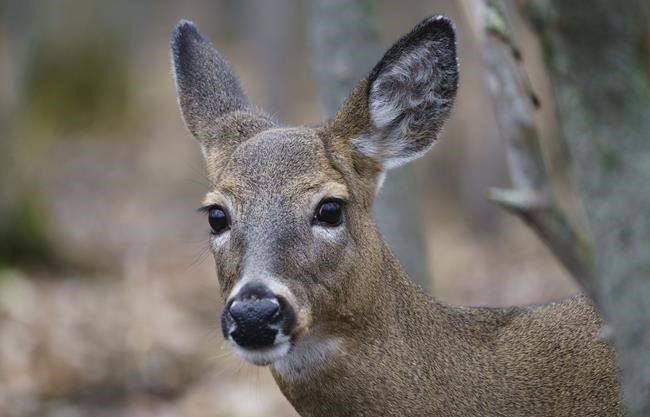
20211201161240-61a7ebf4fd6cc02f8b39df7bjpeg
A deer is seen at the Michel-Chartrand Park in Longueuil, Que., on November 13, 2020. THE CANADIAN PRESS/Paul Chiasson
 
Researchers early this fall reported that COVID-19 had spread both suddenly and widely in the white-tailed deer population in the United States. Deer didn't appear to be dangerously infected and to the present no known transmission has occurred of SARS-CoV-2 from deer to people. But this is yet another mystery that science is faced with, and scientists want to know how it happened that COVID-19 was transmitted to deer in the wild.

Logic has it scientifically that if the virus travelled from humans into other animal species that had not previously been introduced to the virus a perceived danger exists it could establish itself into other species. More latterly three white-tailed deer were discovered in Quebec to be infected with the virus causing COVID-19. SARS-CoV-2 was confirmed to have been found for the first time in three free-ranging deer in the province.

The National Centre for Foreign Animal Disease revealed that the deer were among those sampled in the Estrie region of Quebec through a big game registration station. According to the Canadian Animal Health Institute, some 60 percent of all human diseases can switch from human to animal and from animal to human. About 74 percent of new emerging human infections over the past three decades have been "zoonotic"; which is to say, of animal origin.

Reports have come in from around the globe of animals being infected with the virus causing COVID, ranging from pets such as felines and canines, to farmed mink and zoo animals, ranging from gorillas to tigers to hyenas. The deaths of three rare snow leopards in a Nebraska zoo made headlines precisely for the reason that animal deaths caused by COVID infections have been rare occurrences. 

Researchers in Ontario last winter tested mink, raccoons, skunks and bats, finding no evidence of infection in any of the species, including wild mink. Information relating to the spread of the virus in wild deer remains sketchy, but discovering it in the deer in Quebec "emphasizes the importance of ongoing surveillance for SARS-CoV-2 in wildlife to increase our understanding about SARS-CoV on the human-animal interface", explains Environment and Climate Change Canada.

A research project to monitor the situation  among deer, muskrats, beavers and otters, piggybacking other wildlife studies will commence in Ontario this winter, advised research scientist Jeff Bowman. A coalition comprised of the Public Health Agency of Canada, the Ontario Ministry of Health, the Canadian Wildlife Health Cooperative and virologists at the Sunnybrook Health Sciences Centre in Toronto will be involved in the research.
 
Hunters are being warned to take extra precautions if they are handling deer carcasses, to protect themselves from any possible risk of transmission. (Paul Chiasson/The Canadian Press)
 
Veterinarians at Pennsylvania State University found active infections in 30 percent of deer tested across Iowa, making these cases reported in the United States deer population particularly perplexing. Mr. Bowman is of the belief that something quite unique exists relating to deer-human interaction, resulting in the cross-species infections.

Professor Misra and colleagues are in the development stages of a universal blood test to be used for wildlife to flag exposure to the virus. Tests have been validated to the present in hamsters and ferrets, but a universal test is envisaged that could create a system to routinely screen a wider variety of susceptible species. "Then we could be able to determine when this occurred and then follow it through", explained Dr. Misra.

Zoos have already seen vaccines used to protect vulnerable animals housed there. Dr. Misra, whose study is within bat populations with no known infections believes it is theoretically possible to create an "infectious vaccine" where some animals could be inoculated and they then could "spread" the vaccine to other animals making use of another virus as a vector. "But at this point, it's early days because we don't know which species to aim for. In rabies, for example, the vaccine could be placed inside bait. With deer, it would present with a little difficulty".

The biological traits of five thousand mammals have been analyzed by a team of scientists in the interests of creating a model to enable prediction of the capacity of certain species to transmit the virus and to be able to identify areas of overlap between habitat and COVID-19 hot-spots. Published by the Royal Society this fall, the study found 540 species with high zoonotic capacity -- including white-tailed deer.

According to Dr.Misra, COVID-19 is likely to remain in the mammal population. No evidence exists of infection in birds or reptiles, or in farm animals. However, researchers are maintaining an aware eye on water buffalo, domesticated in some parts of the world as an important source of milk protein. "It's early days. Right now, we don't know much about it. There's no need for panic right now", he stated.

Three white-tailed deer found to be infected with the virus that causes COVID-19 appeared healthy and showed no signs of the disease, according to Environment and Climate Change Canada. (Paul Chiasson/The Canadian Press)

Labels: , , , , ,

Friday, August 13, 2021

A Riddle Within A Mystery

"A lab employee infected in the field while collecting samples in a bat cave -- such a scenario belongs both as a lab-leak hypothesis and as our first hypothesis of direct infection from bat to human. We've seen that hypothesis as a likely hypothesis."
"In the beginning, they didn't want anything about the lab [in the report], because it was impossible, so there was no need to waste time on that. We insisted on including it, because it was part of the whole issue about where the virus originated."
"It probably means there's a human error behind such an event, and they're not very happy to admit that. The whole system focuses a lot on being infallible, and everything must be perfect. Somebody could also wish to hide something. Who knows?"
"The politics was always in the room with us on the other side of the table."
Dr.Peter Ben Ebarek, head, World Health Organization Wuhan Virus Investigation

Peter Ben Embarek (center) and Marion Koopmans (right) say farewell to their Chinese counterpart Liang Wannian (left) after 9 February press conference to discuss the findings of a joint investigation into the pandemic’s origins. AP Photo/Ng Han Guan

The original hypothesis brought to the investigative table by the members comprising the investigating team representing the World Health Organization was the likelihood of a Chinese scientist in the field becoming infected with a coronavirus directly from a bat while collecting bat samples. A supposition based on the likelihood of such an event occurring since it was a rational explanation; a zoonotic disease suddenly appearing for the first time, emerging out of such an encounter had been documented before, in other cases.

However, as Dr. Ben Embarek explained, this was an educated hypothesis that the Chinese with whom his team engaged as a proviso of their being permitted to conduct an investigation in China into the origins of the SARS-CoV-2 virus causing COVID-19 which was first identified and linked to a live market in Wuhan, a city of teeming millions which also incidentally hosted two virus-investigative laboratories, one of which was highly restricted.

Danish television channel TV2 released a documentary this week evolving out of an interview with Dr. Ben Embarek who spoke of the "likely hypothesis" a lab employee at the Wuhan Institute of Virology might have been infected while working in the field. The Chinese researchers that had partnered with the WHO team in their investigation were not prepared to discuss such a scenario, insisting no possible link existed of the origins of the pandemic and a Wuhan research laboratory. 
 
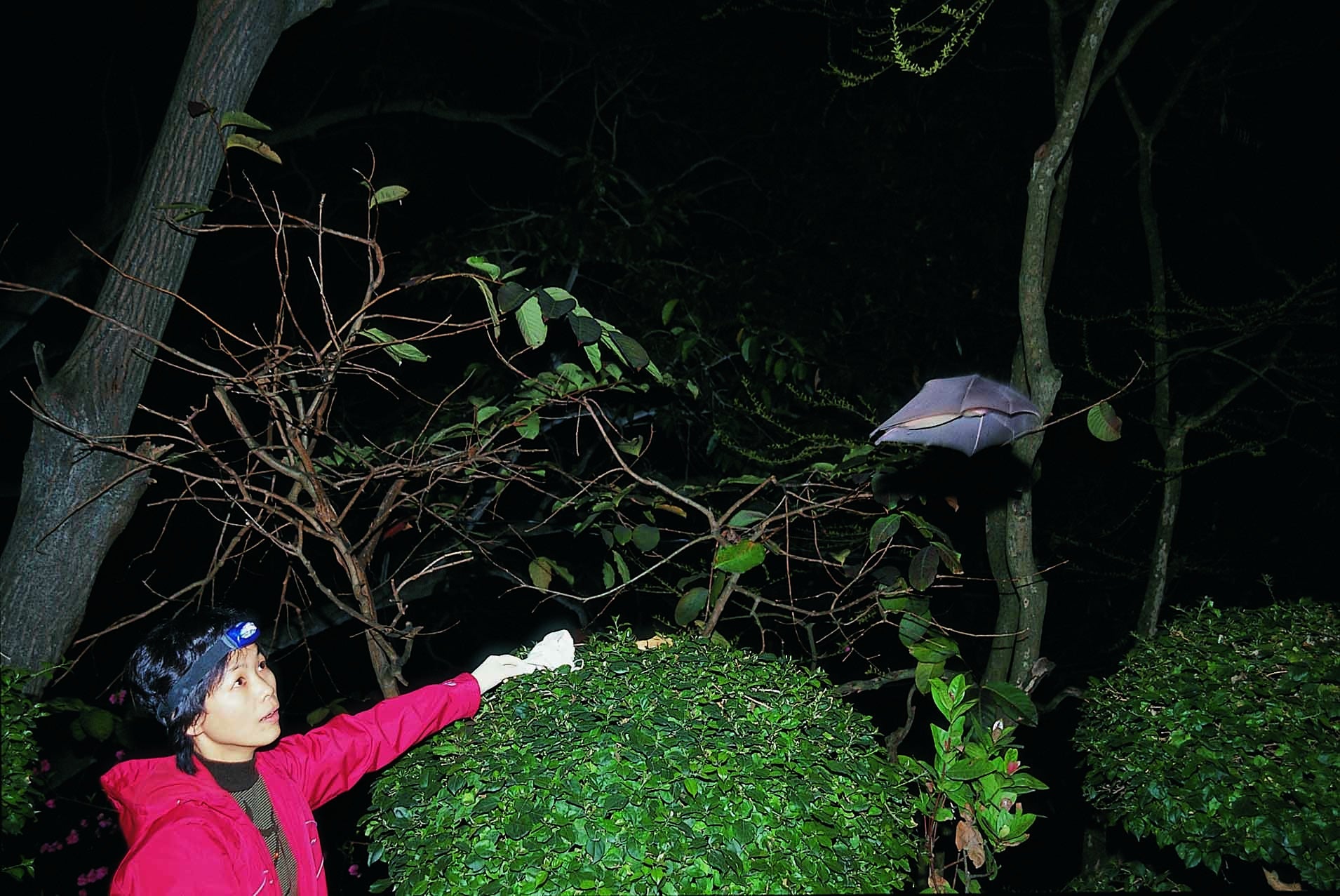
A BAT CAVE in China's Guangxi province in 2004, Shi Zhengli releases a fruit bat after taking a blood sample. Credit: Shuyi Zhang
 
The WHO-China team's follow-up report at the conclusion of the joint investigation claimed it to have been "very unlikely" the virus might accidentally have been leaked from the Wuhan Institute of Virology or any other facility in the city where the infections first emerged. No further investigation into the issue would be recommended by the joint research team. Whether to even include the lab-leak theory remained a thorn to the very end of the WHO team's stay in China.

By the time the mission concluded, Dr. Ben Embarek explained to Danish reporters that the Chinese counterparts of the investigative team finally came around to agreeing that a discussion might be in order "on the condition we didn't recommend any specific studies to further that hypothesis". As for the wording relating to the lab-leak theory of "extremely unlikely", Dr. Ben Embarek responded: "It was the category we chose to put it in at the end, yes"; at the same time it might have been categorized as possible, but simply unlikely.
 
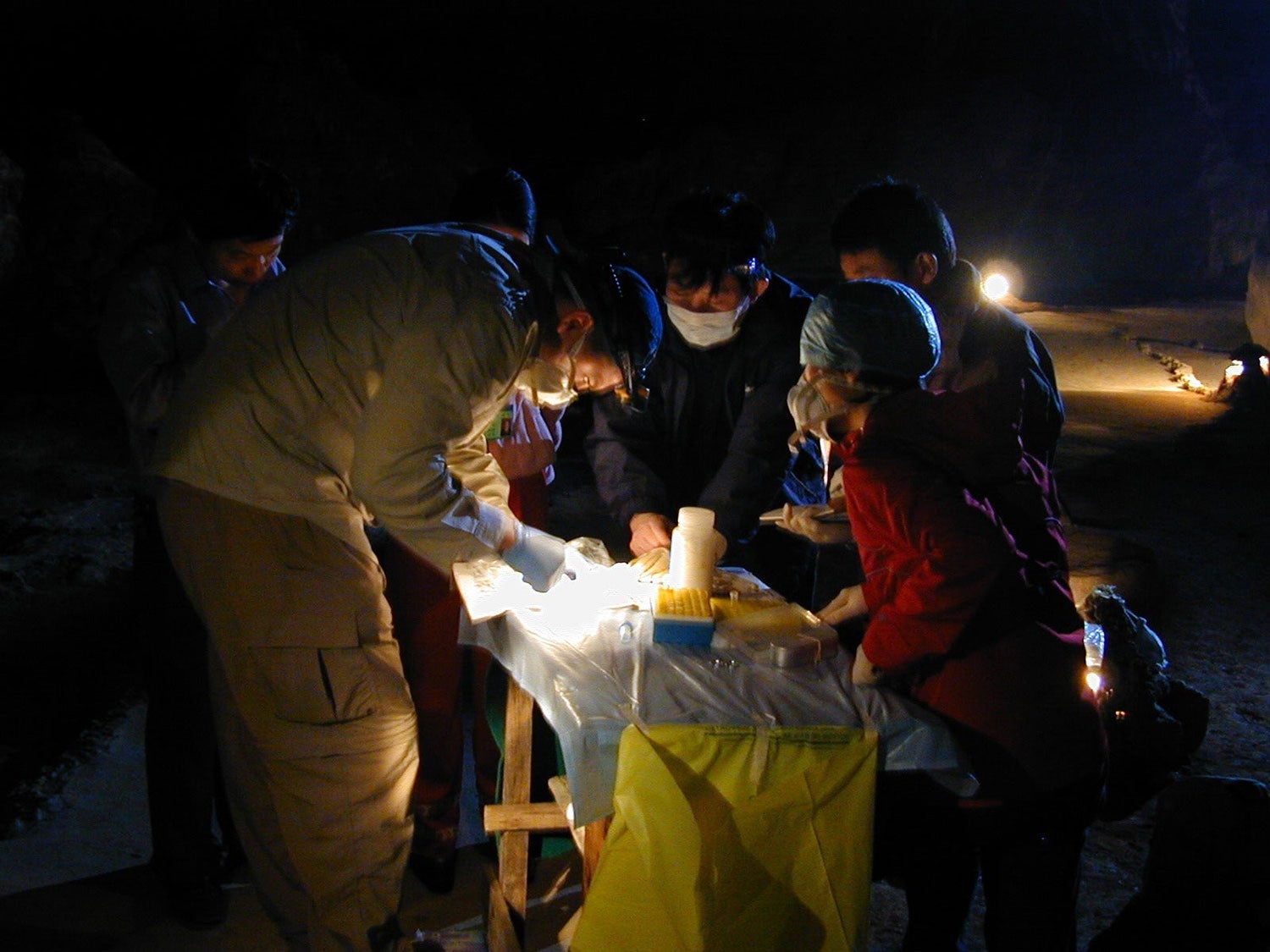
A group of researchers prepare bat blood samples that they will screen for viruses and other pathogens. Credit: Shuyi Zhang
 
The head of the WHO team also suggested that "human error" might have been involved, but given the Chinese political system disallowing authorities to admit such a possibility, it had to be discarded. Dr. Ben Embarek collaborated with the documentary filmmakers by filming his China trip on his cellphone for an inside view of a closely-kept trip. As the leader of the team of international scientists whose mission to China was to work with local officials in the investigation of the pandemic origins, he obviously feels an obligation to the world community to disclose any and all possible links to the origins of the pandemic.

A pandemic, after all, that still roils the world; one which up to the present caused over 200 million confirmed infections and at the very least 4.3 million deaths globally. The WHO team members alluded to the immense pressure brought to bear on them throughout the duration of the trip, with up to 60 Chinese colleagues working with the scientists but also collaborating with Chinese public health figures.
 
And while WHO chief Tedros Adhanom Ghebreyesus has declared that a deeper, more thorough investigation should proceed to clear up the remaining mysteries over the pandemic's source, Chinese officials declared it to be "impossible" to welcome a further China-focused probe. They will not expose themselves to anything they cannot control the outcome of.
 
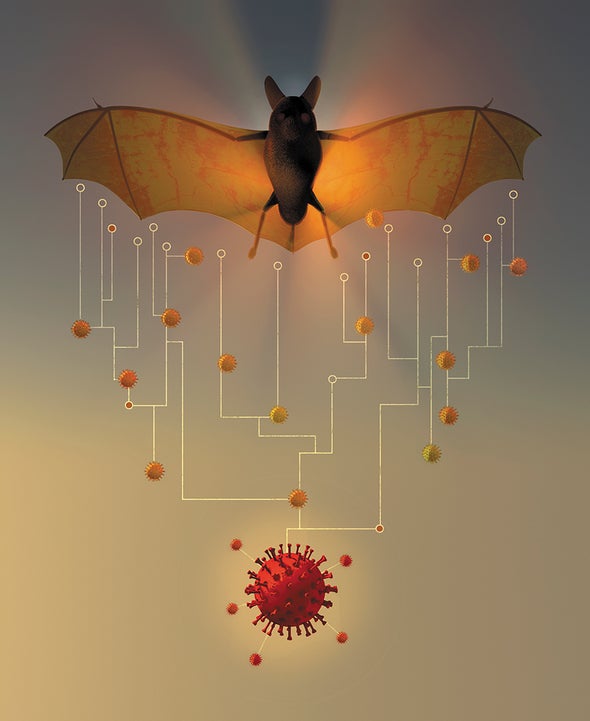
Credit: Richard Borge
"It’s now clear that during the second half of December [2019] there was wide circulation of the virus in Wuhan. The contribution of the market at that time was not so important anymore because the virus was also circulating elsewhere in the city. That, to me, is a big finding. That was not the picture we had before. The cases outside the market were showing differences in terms of [virus] sequence diversity. Whether that indicates multiple introductions to the city or a single introduction a little bit earlier, followed by spread in different parts of the city, is still unclear. But it all points towards an introduction in the human population in that area in the period October to early December 2019—most probably late November, not so long before the earliest cases were found. But the route of introduction remains a mystery."
Dr. Peter Ben Embarek, head, WHO investigation into the genesis of the COVID-19 pandemic, February 2021 interview


Labels: , , , , ,

Sunday, July 12, 2020


To Solve a Morbid Mystery

"We know it's very, very similar to the virus in the bat, but did it go through an intermediate species?"
"This is a question we all need answered."
WHO spokeswoman Margaret Harris

"Two WHO experts are currently en route to China to meet with fellow scientists and learn about the progress made in understanding the animal reservoir for COVID-19 and how the disease jumped between animals and humans."
"This will help lay the groundwork for the WHO-led international mission into the origins."
WHO director-general Tedros Adhanom Ghebreyesus

"Science must stay open to all possibilities [regarding the pandemic’s origins]."
"We need to lay out a series of investigations that will get the answers that I’m sure the Chinese government, governments around the world, and ourselves really need in order to manage the risk going forward into the future."
Mike Ryan, executive director, WHO's Health Emergencies Program
NYC virus
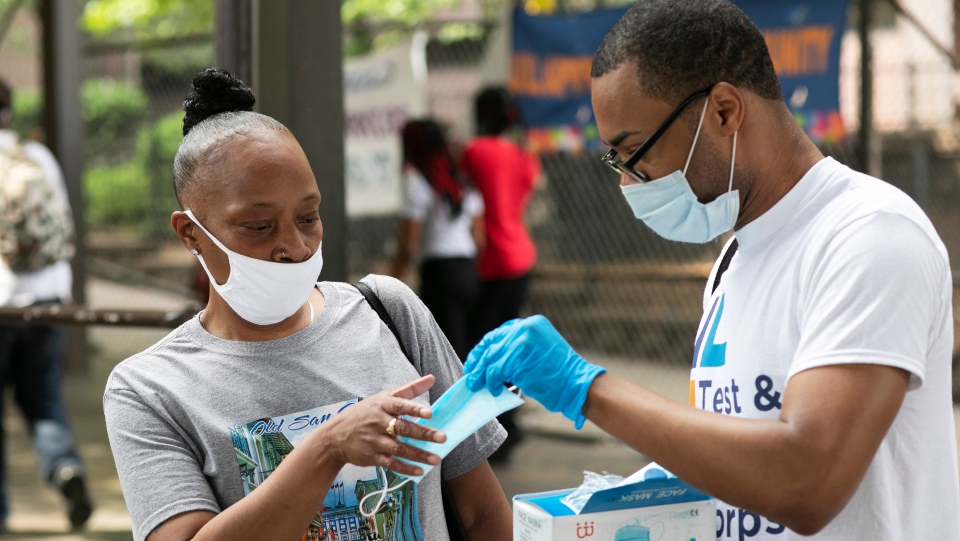
In this July 8, 2020, file photo, Stephane Labossiere, right, with the Mayor's Office of Immigrant Affairs, hands out masks and printed information about free COVID-19 testing in New York. (AP Photo/Mark Lennihan, File)
Scientists around the world are working feverishly, wracking their brains, engaging in research, involved in experimental trials, all in an effort under huge pressure, to discover a safe and effective vaccine for the SARS-CoV-2 virus that causes COVID-19, a respiratory disease that behaves like no other before it, sparing the majority of people it infects, and wreaking utterly morbid destruction in a minority of others. But this is a substantial minority, well over a half-million people have so far died from the dire effects of the novel coronavirus.

Few such zoonitics have proven to be so successfully opportunistic as this one. Spreading with lightning speed across an unready world. It was always known, and scientists warned governments that the global community was 'due' for a major pandemic. No one might have imagined the vast sweep and level of destruction such a global pandemic would be capable of causing, even with the historical record of the Black Plague that destroyed so many lives that Europe lost 25 million people.

Close to 13 million people worldwide have contracted COVID-19. This, in a technologically advanced world, with modern hospitals, well-trained health professionals, laboratories the world over using sophisticated research techniques, medical equipment relying on the latest in technical advances to aid in the desperate effort to save lives, stem the tide of infections, bring the virus under control.

But it is also an interconnected world, of travel and communications, trade and commerce of great assistance to the replicating and mutating disease seeking new homes in human bodies.


The Wuhan National Biosafety Laboratory researches some of the world's most dangerous viruses
The Wuhan National Biosafety Laboratory researches some of the world's most dangerous pathogens.  Photo: Wuhan Institute of Virology 

Science wants to know where the virus originated, when and how it transmitted from animals to humans to become a deadly zoonotic. It was initially held to have been transmitted to shoppers at an open-air market in Wuhan, China, where live animals were sold as well as fruits and vegetables and fish. But then, outbreaks were seen elsewhere in Wuhan, not from the market. The mystery compounded by the presence of two pathology research laboratories located in Wuhan, one quite close to the Wuhan market.

A theory was born that the virus was one produced in the laboratory, and that it had 'escaped'. Since then, tests on sewage in Italy and in Spain have detected traces of the virus that pre-date the first known emergence of the virus in China. None of the claims have been validated. But there are more than enough questions surrounding the mystery of where, how and when, that a scientific enquiry will be hard put to answer.

But the answers would provide some much-needed insights in the world of medical science to aid in combating this global pandemic, and to make preparations for those to follow.

The two WHO experts who are specialists in animal health and epidemiology are set to work in tandem with their Chinese counterparts. hoping to determine the scope and itinerary of the investigation. Among other questions to be probed, did the virus transfer through an intermediate species. As to its origins, as a chimera of a virus that the Wuhan laboratory worked on, then lost -- months before the outbreak was reported, U.S. diplomats visited the laboratory and were struck by its lax security, reporting back to Washington that they felt concerned.

All of which may, or may not be merely coincidental. The laboratory had discovered a SARS-like virus in bat caves in an isolated location and had been working on the virus for several years before the outbreak of the SARS-CoV-2 virus. In time, perfectly reasonable explanations in science may be discovered to clear up any mysteries relating to origin and transmission. In the meanwhile, there is an aura of distrust in t he scientific and political community worldwide, with accusations that China was less than forthcoming with its data.

Add to that the perception that the World Health Organization was less than objective in its relationship with China, and with the kind of information it was itself making available to governments worldwide in preparation for the spread of a highly infectious disease gaining a formidable reputation as a world-wide threat, and the impression is that whenever a report does
circulate that summarizes the analyses undertaken by the UN team, it may be viewed with skeptical caution.

Medical staff transfer a patient of a highly suspected case of a new coronavirus at the Queen Elizabeth Hospital in Hong Kong, China January 22, 2020. Picture taken January 22, 2020. cnsphoto via REUTERS. ATTENTION EDITORS - THIS IMAGE WAS PROVIDED BY A THIRD PARTY. CHINA OUT.
Medical staff transfer a patient at the Queen Elizabeth Hospital in Hong Kong, China. Photo Reuters
"We view the scientific investigation as a necessary step to having a complete and transparent understanding of how this virus has spread throughout the world."
"We expect that the Chinese Communist Party [CCP] will offer the team of scientists full access to data, samples, and localities, and look forward to its timely report."
Andrew Bremberg, U.S. ambassador to the United Nations, Geneva


Labels: , , , , ,

 
()() Follow @rheytah Tweet