Ruminations

Blog dedicated primarily to randomly selected news items; comments reflecting personal perceptions

Wednesday, September 08, 2021

Mobility Issues, Abdominal Fat, Low Strength, Older Demographics

"Our comparative analysis showed loss of gait speed occurring mainly when abdominal fat and weak muscles were associated. Gait  speed didn't decline so sharply in older people who had only abdominal fat or only weak muscles."
"In women, fat tends to accumulate around the thighs and hips but more fat also accumulates in the belly after the menopausal hormone drop. That's when the inflammatory cascade occurs. The buildup of abdominal fat fuels the inflammation, which consumes muscle mass and reduces muscle strength, while also impairing neural control of the muscles. The outcome is a steady loss of strength and accumulation of fat."
"Declining gait speed is an important indicator. It suggests mobility problems, a heightened risk of falls and potential incapacity in older people."
"Our aim in this study was to show the usefulness of this predictor for medical teams. A sizable number of elderly people have weak muscles and accumulated belly fat. Both can be corrected by exercise training and diet."
Tiago de Silva Alexandre, professor, department of gerontology, Centre for Biological and Health Sciences, Federal University of Sao Carlos, Brazil

"In the participants with abdominal obesity and muscle weakness, we observed a loss of 0.14 m/s in the eight-year period."
"At this rate there may come a time when they can't cross the street in the time allowed by traffic lights."
Roberta de Oliveira Maximo, study first author, doctoral candidate, UFSCar
The buildup of abdominal fat fuels inflammation, which consumes muscle mass. Getty
 
Published in the journal Age and Ageing, the study that concluded older people with abdominal fat and weak muscles face increased risk of suffering a deadly fall, emphasized that while a slower gait is natural in the process of growing older, when walking speed diminishes too swiftly ordinary everyday activities, like crossing a busy street at a crosswalk, threatens to become a real problem. Should risk of falling increase, it generally sees a loss of independence follow.

Data from 2,294 adults from age 60 and upwards who had enrolled in the English Longitudinal Study of Ageing formed the backbone of this study. Subject participants formed four groups distinguished by gait speed and dynapenia (age-related loss of muscle strength and power), Dynaspenic and abdominally obese; dynapenic only; abdominally obese only; and finally neither dynapenic nor abdominally obese.

Abdominal obesity was signified by a waist circumference over 102 centimetres for men, and 88 cm for women, for the purposes of the study, while dynapenia's metric was grip strength under 26 kilograms for men and 15 kg for women. At the study outset none of the participants experienced issues with mobility or gait speed, but over the eight-year course of observation, many did. Among people without mobility issues with a baseline speed of 08 m/s (2.88 km/h) the greatest decline occurred in those who were burdened by both obesity and dynapenia.
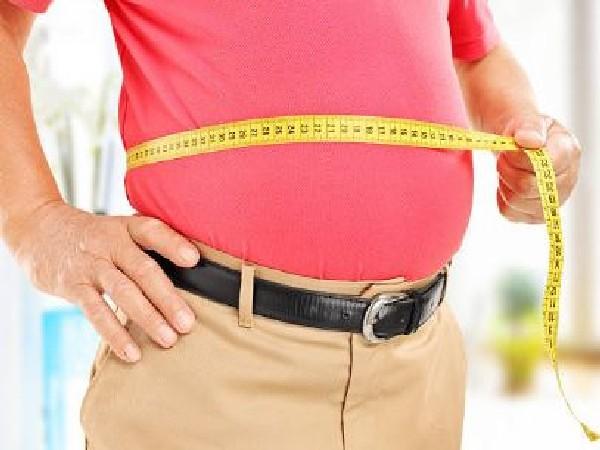
Abdominal fat, weak muscles develop mobility issues in older people: Study | Abdominal fat, weak muscles develop mobility issues in older people: Study
Mobility-issues-in-older-people-study
The accumulation of abdominal fat is capable of  triggering an intense inflammatory cascade according to researchers, that effectively depletes muscle mass while decreasing strength. "Hence the concept of dynapenic abdominal obesity, which we've been studying in our research group for several years", noted Professor Alexandre. "In previous studies, we found a correlation between these traits, which are very common in the population, and a heightened risk of falls, alterations to the lipid, carbohydrate, glucose and cholesterol metabolism, incapacity and even death. But this is the first study to associate them with mobility."

Both genders are affected by the conditions leading to the loss of mobility, increasing with age. The researchers' intention in releasing their findings was to alert health workers to the need to focus on these factors and identify them as precursors to a loss of mobility -- and following that, an eventual loss of independence.

Labels: , , , ,

Tuesday, May 11, 2021

Beer Belly and COVID-19 Morbidity

"Abdominal obesity might predict a high chest X-ray severity score better than general obesity in hospitalized patients with COVID-19."
"Therefore, in hospital, patients with abdominal obesity should be monitored closely."
IRCCS Policlinico San Donato, Italy report
 
"Studies that have examined the relationship between abdominal fat and cardiovascular outcomes confirm that visceral fat is a clear health hazard,"   
"Reaching a target of 150 minutes a week of physical activity, particularly aerobic physical activity, may be enough to help reduce abdominal fat."
"This decrease in abdominal fat without weight loss may be related to increasing fat-free mass [or muscle mass] with aerobic exercise,"
Dr. Tiffany Powell-Wiley, chief, social determinants of obesity and cardiovascular risk laboratory, National Institutes of Health, Bethesda, Maryland.
 
"As BMI rises above normal, the likelihood of a positive SARS-CoV-2 test result increases, even when adjusted for a number of patient variables."
"Furthermore, some of the comorbidities associated with obesity appear to either be associated with an increased risk of infection or to be protective."
Research study, Chaim Sheba Medical Centre, Israel
 
"These were otherwise healthy, hard-working people. Their major risk factor for getting this sick was obesity."
MaryEllen Antkowiak, critical care physician, intensive care unit, University of Vermont Medical Center
"We didn’t understand early on what a major risk factor obesity was. … It’s not until more recently that we’ve realized the devastating impact of obesity, particularly in younger people." 
"[That] may be one reason for the devastating impact of COVID-19 in the United States, where 40% of adults are obese."
Dr.Anne Dixon, physician-scientist , obesity and lung disease, University of Vermont 

Many very sick COVID-19 patients, like some in this Brazilian intensive care unit, have obesity.   Gustavo Basso/NurPhoto/Getty Images

A number of studies linking obesity with higher rates of COVID-19 infections and more serious outcomes have been published since the SARS-CoV-2 pandemic invaded the international community causing untold infections in the millions worldwide and a staggering number of deaths, leaving hospitals and medical staff scrambling to be able to serve the needs of seriously ill COVID patients requiring specialized emergency care in ICUs worldwide.

At the European Congress on Obesity held recently, a number of presenters spoke of their studies examining high BMI and more specifically a high concentration of belly fat and its relationship to higher rates of infection with the COVID pathogen, as well as poorer outcomes from those infections.
Among them were a study from Italy and another from Israel. Italy is well known to have been the European poster child of a nation assailed by wide COVID transmission.

Italy's emergency was looked upon by other countries as a worst-case-scenario they prayed could be averted in their own countries. The prospect of having to decide, as was forced upon the medical community in Italy by circumstances beyond their control, to have to make life-or-death decisions over which patients with serious COVID symptoms might survive if given scarce oxygen, and which among them might not -- given age and underlying medical conditions, to be denied supplemental oxygen -- horrified the world.

The study out of Italy concluded that beer bellies are associated with a whopping 75 percent elevated risk of developing serious COVID, with scientists urging that close monitoring be instituted for COVID patients with extreme abdominal fat. It was found that general body fat, measured by body mass index, seemed not to be linked to worse severity, unlike excess fat accumulated in the belly area.

The health records of 215 patients hospitalized with COVID were examined by Italian doctors, measuring the patients' BMI and waist circumference against chest X-rays (CXR) which they scored on a scale of zero to 18 for infection severity. Those with abdominal obesity gained a significantly higher X-ray score, with an average of 9, than did those without high abdominal fat, who were given an average of six.

Dr Francesco Tursi, who suffered from the COVID-19, works at Codogno hospital, Italy

 When patients' BMI was examined -- representing the traditional method of determining whether an individual is overweight -- the scientists found that chances of a high X-ray score between those who were obese, overweight and that of a healthy weight, were identical. While patients with abdominal obesity were at a 75 percent increased risk of a higher CXR severity score.

What was also seen was that bronchial asthma increased risk of a high CXR severity score by 73 percent. When the realization hit British Prime Minister Boris Johnson last year that his weight might have been a huge contributing factor to his having experienced severe COVID, he made a pledge to turn the government's attention to educating and influencing the British public to resist becoming obese. 

It was, in fact, increasing levels of obesity identified as having been a major cause of the high death toll in the United Kingdom from the onslaught of the pandemic.


Labels: , , , , , , ,

 
()() Follow @rheytah Tweet