Ruminations

Blog dedicated primarily to randomly selected news items; comments reflecting personal perceptions

Wednesday, November 30, 2022

Diagnosing Lyme Disease

"There still remains a critical unmet need, as this disease so often goes undiagnosed or misdiagnosed."
"A diagnostic for Lyme disease may not be a panacea but could represent meaningful progress toward a more reliable diagnosis and, as a result, potentially better management of this disease."
Avi Ma'ayan, director, Mount Sinai Center for Bionformatics, New York

Lyme disease tick
Published in Cell Reports Medicine, researchers explain their method of success in pinpointing a specific set of genes activated in people with long-term Lyme disease. Close to 20 percent of patients diagnosed with Lyme disease suffer from symptoms on a long-term basis.
 
Research that led to the discovery of a significant biomarker was conduced by scientists from the Icahn School of Medicine at Mount Sinai in New York, and the Johns Hopkins University School of Medicine. The expectation now, is that a genetic test would be an improvement on current FDA-approved tests to identify antibodies, tests that can take weeks to emerge.
 
According to the researchers involved int he study, their identification of biomarkers could make early diagnosis of Lyme disease more accurate and quicker. Potentially leading to more effective treatment of the estimated 476,000 individuals in the United States alone who are diagnosed with and treated for the tick-borne illness.
 
Symptoms of Lyme disease can include fatigue, brain fog and pain, for people who have been treated with antibiotics. For the study, the researchers compared data with RNA sequenced from 72 patients with acute Lyme disease -- early symptoms such as a rash or facial paralysis -- alongside 44 control subjects not infected.
 
Differences in gene expression in those with acute and chronic Lyme disease became apparent. The list was further pared down by researchers, in comparing the gene expression of those with Lyme disease with that observed in patients with other infectious diseases. AI machine learning was then made use of to shorten the list even further.
 
The research team feel confident they have identified 35 biomarkers that distinguish people with either type of Lyme disease from those not infected with the disease. The plan is to use the biomarkers to develop a diagnostic test. Such a genetic rest would represent an improvement over current tests.
 
Earlier in the year several of the researchers from Johns Hopkins published a study in tandem with scientists from the University of California at San Francisco with the announcement they had developed a panel of 31 biomarkers, allowing them to accurately identify Lyme disease in 95.2 percent of presenting patients.
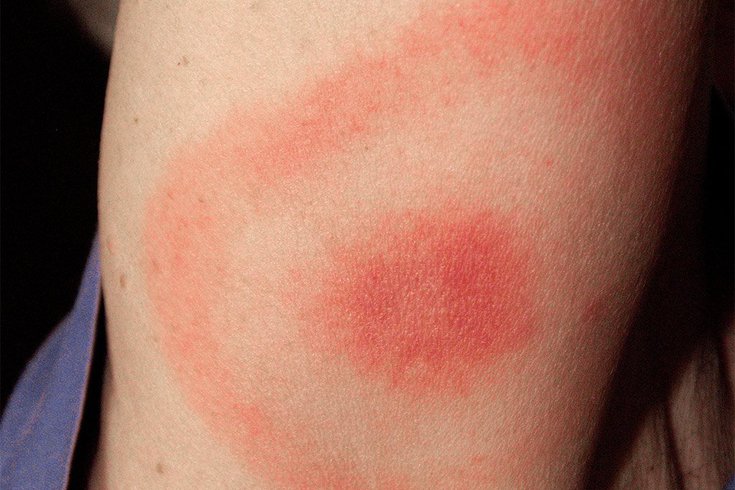
 
Diagnosing Lyme disease
Diagnosing Lyme disease remains a challenge, but the discovery of a set of 35 biomarkers may enable scientists to develop a better test for the tick-borne illness. James Gathany/CDC


Labels: , , ,

Tuesday, August 27, 2019

Accessing, Assessing a 'Death Test'

"You may say, 'don't tell me the time of my death', but your doctor may know. Your bank may demand to know, as may your creditors. Even admission to medical school or pilot training may require disclosure."
"Huge implications are coming as we get better at what we have been perfecting for aeons."
"Ever since the invention of astrology, humans have either been desperate to know when they will die or eager to find ways to beat the predictions."
"Life insurance is devoted to the prediction of customer deaths, and very good at it. So, improving predictions is inevitable and something ethically we need to come to grips with."
Arthur Caplan, bioethicism Langone Medical Center, New York University

"Although the majority of these biomarkers [biological molecules circulating in the bloodstream] have been associated with mortality before, this is the first study that shows their independent effect when combined into one model."
"The association of these biomarkers [with mortality] were consistent in men and women [of all ages]."
Research team, Leiden University Medical Centre, Netherlands

"We cannot say anything about single individuals, or the man in the street."
"[However], we want to tackle the vulnerability of people's health that is hidden and that doctors cannot see from the outside."
"I am still surprised by the fact that in a group of people you can take one blood sample at one point of time in their life, and that would say anything meaningful about their five- to ten-year mortality risk."
Eline Slagboom, molecular epidemiologist, senior study author
A man lies on a hospital bed. A new study attempts to foretell risk of death in the next 10 years,by analyzing blood samples.Getty Images

Most people, needless to say, would be happy living without the knowledge that medical science will shortly now deliver, of when and possibly how/why they will die at a given time. What we don't know won't interrupt the rhythm of our lives; in this instance ignorance certainly can be bliss. We can live our lives without that nagging reminder deep in our consciousness that we are scheduled to die at a certain point that has been identified, rather than simply putting aside the very thought of death being imminent.

Five or ten years isn't much of a heads-up. And knowing what lies in the near future would most certainly make us intensely aware of the passage of time, that previous amount of time presumably left to us before all is extinguished and we no longer are aware of anything. Reasoning that for business reasons alone the science will proceed to make it easier for commercial interests to know exactly the time-frame they may be dealing with for maximum efficiency and profit, is no reason at all to proceed with the science.

And should such tests become available as a normal screening process required before a life insurance contract can be signed; the insurance company having such intimate knowledge of the insurance petitioner would seem to devalue life itself as a mere commodity. The prediction is, however, that blood tests used to analyze and disclose when end-of-life will occur within a five-to-ten-year time frame will soon become routine.

The researchers at Leiden University Medical Centre reported their conclusions in Nature Communications, having identified 14 bio-markers which in total appear to predict all-cause mortality risk for people; the certain eventuality of any kind of death concluding the passage of life into its final stages is an assurance in the near future. Various fundamental biological processes related to molecules, such as involving the transportation of fat in the blood, fluid balance and inflammation helped identify cause-and-effect leading to death.

The largest of its kind yet undertaken, the study was based on samples of blood taken from 44,168 people from age 18 to 109 from the time they first gave blood samples to the followup time -- ranging from three to nearly 17 years during which time 5,512 of the study subjects died during follow-up. Links between levels of 226 different biomarkers in the blood of the living and the dead were targeted by the research team.

Starting out with 63 candidates, the study set out to identify biomarker association with mortality. Among those which stood out were some -- as example, the ratio of polyunsaturated fatty acids to total fatty acids, evidently linking with a lower risk of dying even as a higher risk of dying was associated for other biomarkers -- such as elevated glucose. The biomarkers' association were seen to be independent of the person's cause of death.

The research team tested the biomarkers in blood samples taken from 7,603 Finns in 1997; during follow-up 1,213 of the test subjects died. Greater accuracy was predicted by the biomarkers in the five- and ten-year risk of death than with classic risk factors such as blood pressure, total cholesterol and smoking. That the accuracy level was due to a single Finnish study in isolation, calls for additional research, however.

It is envisioned that should more research bear out the findings in the Finnish study, treatment decisions could be guided for health professionals --  such as whether an elderly patient may be too health-fragile to undergo invasion surgery. Dr.Slagboom's team succeeded in singling out only a fraction of the metabolites in human blood; by identifying ten more than were discovered by an earlier group in 2014 however, the science has been significantly advanced.

Metabolic Biomarker “Score” May Predict Death in Next 5–10 Years
Metabolic biomarker may predict death in next 5 to 10 years. Photo: TheScientists


Labels: , , , ,

 
()() Follow @rheytah Tweet