Ruminations

Blog dedicated primarily to randomly selected news items; comments reflecting personal perceptions

Monday, March 02, 2026

Alcohol Over-Consumption Health Risks

Drinking excessively on an occasion can lead to these harmful health effects:

  • Injuries—motor vehicle crashes, falls, drownings, and burns.
  • Violence—homicide, suicide, sexual violence, and intimate partner violence.
  • Alcohol poisoning—high blood alcohol levels that affect body functions like breathing and heart rate.
  • Overdose—from alcohol use with other drugs, like opioids.
  • Sexually transmitted infections or unplanned pregnancy—alcohol use can lead to sex without protection, which can cause these conditions.
  • Miscarriage, stillbirth, or fetal alcohol spectrum disorder (FASD)—from alcohol use during pregnancy. 
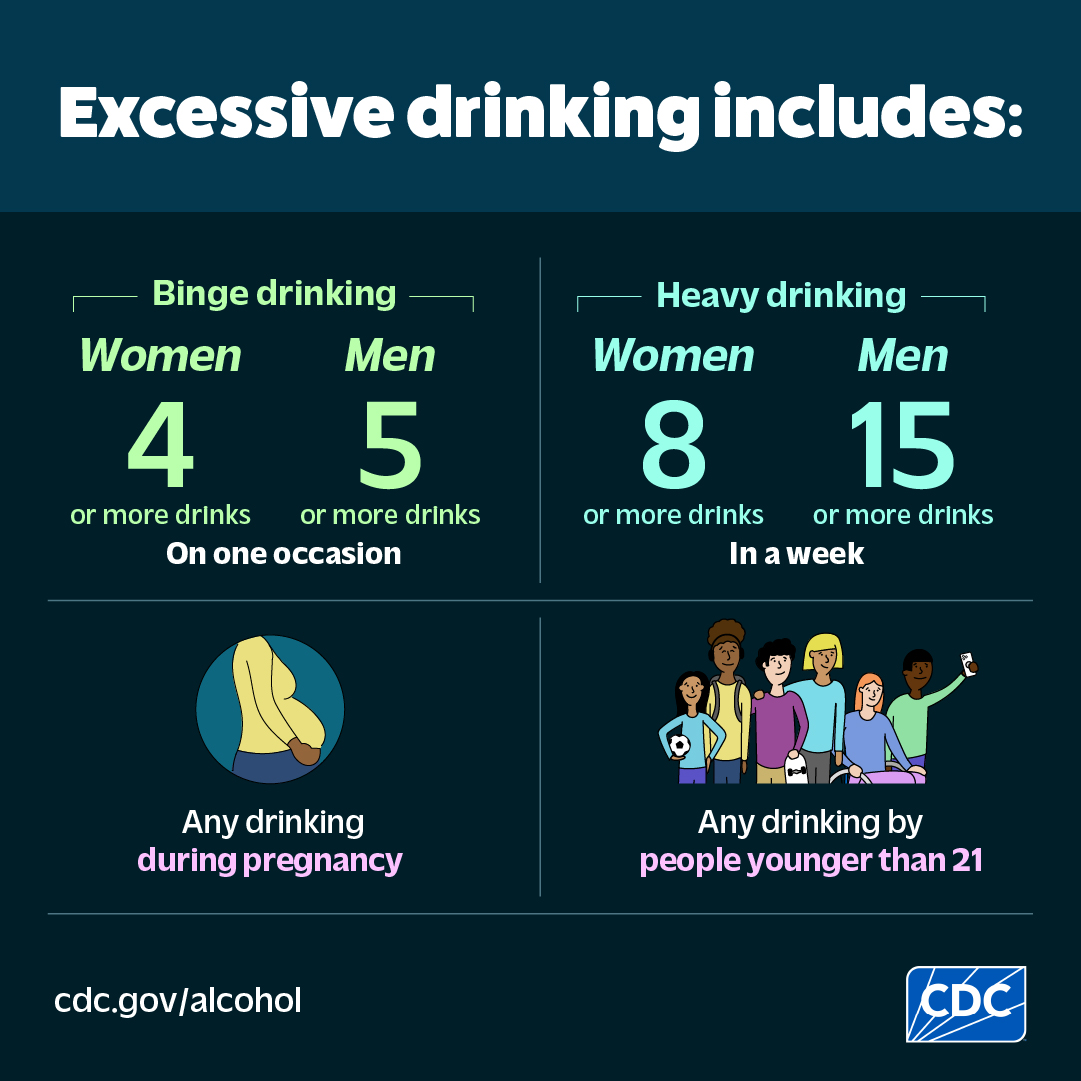
Excessive drinking includes binge drinking, heavy drinking, and any drinking during pregnancy or by people younger than 21.
The checklist above relates to short-term effects of drinking alcohol; by-products of alcohol consumption leading to events that can have life-altering effects in their harmfulness. But there are also the profound effects of alcohol consumption taking a toll on tipplers over time. Those effects are numerous and most people would like to avoid them if at all possible, but most people reaching for a drink at a social occasion or at home, or at a favourite pub don't really give the time of day to long-term health effect introspection at the moment they are anticipating the comforting high alcohol delivers.
 
Here are some of the health effects that alcohol consumption has the potential to deliver to the uninitiated whose awareness levels are absent not only in the moment but in their foreseeable future due to lack of exposure to scientific data and public  awareness announcements that slip by people's notice. For starters, a brief rundown:
 
*Alcohol use, while immediately pleasurable, relaxing and hugely anticipated for those benefits, poses a threat associated with brain structure alterations. Middle-aged and older adults who enjoy on average a single daily drink, according to some studies, tend to have somewhat less brain volume than those who don't consume alcohol at all. The brain shrinks in volume the more alcohol is consumed. Without knowing exactly what is involved one theory held by scientists is that the brain's immune system is altered by alcohol in an increase in inflammation, damaging neurons.
 
**There are also alcohol-linked effects in mouth and neck where microbes convert alcohol into acetaldehyde, a compound that remains in saliva, causing oxidative stress in cells with the potential for inflammation and tissue damage. The compound is a carcinogen able to modify DNA which can then lead to cancer-causing mutation. Risk of mouth and throat cancers increases by 13 percent, and 26 percent or the risk of esophageal cancer -- on merely one drink daily. The risk of all three cancers can rise with five or more drinks daily four times higher.

 
two women use wine glasses to cheers each other
***Regular alcohol use is associated with higher blood pressure, along with increased risk of hypertension due to alcohol's damaging effect on cells lining blood vessels. Regularly enjoying a drink a day increases the chance of breast cancer developing by 10 percent for women while two drinks daily raises the risk by 19 percent; possibly, experts believe, caused by alcohol increasing estrogen levels. 
 
****Heavy drinking relating to 3 or more drinks daily is associated with higher risk of heart attack and stroke -- with a few studies suggesting that one drink a day results in a modest increased risk. Mixed research results emerge with light to moderate drinking comprising two drinks or less daily. Other research however, report that moderate consumption may reduce risk, in comparison with non-drinkers.  
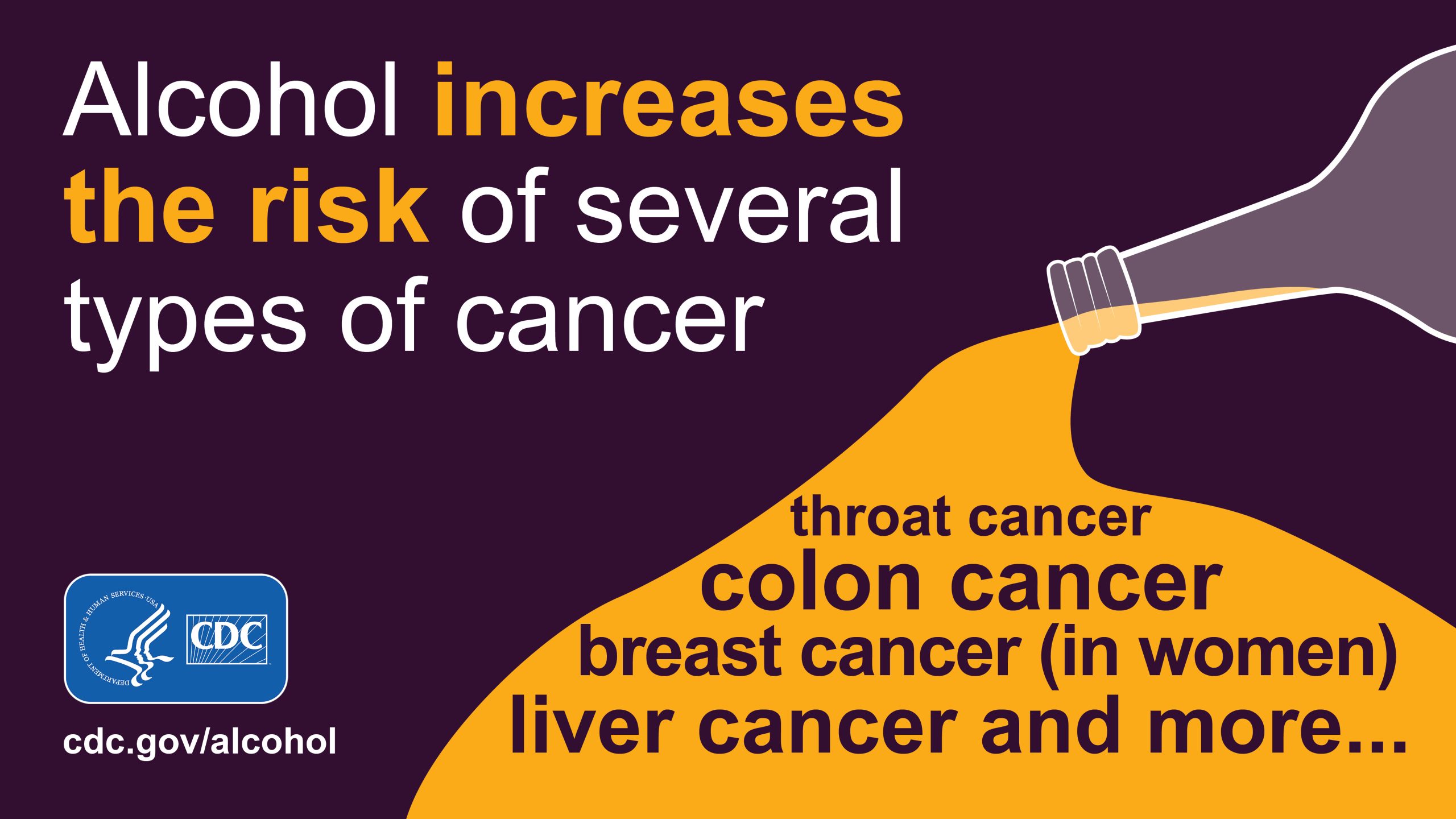
 
Text that says, "Alcohol increases the risk of several types of cancer: throat cancer, colon cancer, breast cancer (in women), liver cancer, and more..."
*****Intestinal lining leading to gastrointestinal bleeding and 'leaky gut syndrome', where food and microbes escape the intestines to enter the bloodstream is associated with long term, heavy drinking. People who consistently average two or more drinks daily, a recent study found, had a 25 percent increased risk of developing colorectal cancer in comparison with those averaging fewer than one drink per week. 
 
******The organ most vulnerable to drinking damage is the liver where alcohol-related liver disease is the leading cause of death related to excessive alcohol consumption. Some 30 percent of those who regularly take 3 or more drinks daily according to one estimate, will develop cirrhosis. Advanced cirrhosis is permanent, although alcohol-related fat deposits, inflammation and early fibrosis in the liver can be reversed. The risk of liver cancer resulting from DNA damage is linked to heavy drinking caused by acetaldehyde. 
 
According to experts, odds of experiencing health harms from drinking remain relatively low, averaging one drink or less each day. Risks rise at eight to 14 weekly drinks. An inherited disposition through genetics, along with pre-existing conditions can determine whether someone develops serious illness from alcohol over-consumption. Research also demonstrates that if heavy drinkers stop or cut their drinking level back severely, adverse health effects can be reversed. 
 
A person's hand pushes away an alcoholic cocktail.
John Hopkins Bloomberg School of Public Health
 

Labels: , , , , , ,

Saturday, April 29, 2023

AI Chatbot Medical-Educational Toolbox

"Patients with cirrhosis and/or liver cancer and their caregivers often have unmet needs and insufficient knowledge about managing and preventing complications of their disease."
"We found ChatGPT -- while it has limitations -- can help empower patients and improve health literacy for different populations."
"More research is still needed to better examine the tool in patient education, but we believe ChatGPT to be a very useful adjunctive tool for physicians -- not a replacement -- but adjunctive tool that provides access to reliable and accurate health information that is easy for many to understand."
"We hope that this can help physicians to empower patients and improve health literacy for patients facing challenging conditions such as cirrhosis and liver cancer."
Brennan Spiegel, director of Health Services Research, Cedars-Sinai Medical Center, Los Angeles

"The complexity of care required for this patient population makes patient empowerment with knowledge about their disease crucial for optimal outcomes."
"While there are currently online resources for patients and caregivers, the literature available is often lengthy and difficult for many to understanding, highlighting the limited options for this group."
Alexander Kuo, medical director, Liver Transplantation Medicine, Cedars-Sinai

"ChatGPT has [been] shown able to provide professional, yet highly comprehensible responses."
"However, this is one of the first studies to examine the ability of ChatGPT to answer clinically oriented, disease-specific questions correctly and compare its performance to [that of] physicians and trainees."
Yee Hui Yeo, clinical fellow, Karsh Division of Gastroenterology and Hepatology, Cedars-Sinai
A new Cedars-Sinai study found ChatGPT—while it has limitations—can help empower patients and improve health literacy for different populations. Photo by Getty.
 
According to a new study reflecting research out of Cedars-Sinai Medical Center in Los Angeles, published in the journal Clinical and Molecular Hepatology, ChatGPT, an artificial intelligence platform, has the potential of improving the prognosis of patients suffering from cirrhosis and liver cancer. The chatbot as controversial as it has been to date, could become a valuable tool, providing patients with knowledge of lifestyle and treatment information, conveyed in easily understood terms.
 
A photo of a woman accessing the ChatGPT program on her laptop.
MedPageToday
Of the 3,500 Canadians diagnosed with liver cancer in 2022, approximately 1,650 of the total are thought to have died of the disease in that same year. Liver cancer's five-year net survival rate is just 22 percent. Representing the end-stage form of liver disease, Cirrhosis is a major risk factor for liver cancer; and both conditions require an extensive litany of therapies, difficult for some patients to manage on their own.

ChatGPT (chat generative pre-trained transformer) are becoming popular for personalized education purposes resulting from their capacity to respond to user prompts with human-quality responses that are drawn from vast databases. The health-care industry has already understood the usefulness of the software through its ability to compose basic medical reports and respond correctly to questions commonly appearing on medical school exams.

The research team in testing ChatGPT's cirrhosis and liver cancer knowledge, presented the chatbot with 164 frequently asked questions divided into five categories: basic knowledge, diagnosis, treatment, lifestyle or preventive medicine. The results were studied and graded by two liver transplant specialists, according to whom ChatGPT answered roughly 77 percent of questions correctly, with high accuracy levels in over 90 percent of questions of varying categories.

The liver specialists who graded the answers however, found that 75 percent of responses relating to basic knowledge, treatment and lifestyle categories were correct, yet fell short in adequacy. In that the proportion of responses "mixed with correct and incorrect data", worked out to: basic knowledge (22 percent); diagnosis (33 percent); diagnosis (33 percent); treatment (25 percent); lifestyle (18 percent); and preventive medicine (50 percent). 
 
It was established that while the software succeeded in offering useful advice to patients and caregivers dealing with cirrhosis and liver cancer, the study clarified that superior information is given from a doctor directly. Peter Lee, corporate vice president at Microsoft had an essay published in The New England Journal of Medicine, addressing the issue. He contended that society faced a choice whether to use ChatGPT in the health-care industry. 

ChatGPT has been mired in controversy
The software has already demonstrated its value to the health-care industry with its ability to compose basic medical reports. GETTY
"We can try to slow down or shut down this technology, because we don't understand the risks completely."
"A second argument is more fatalist, saying: 'It's unstoppable. We might as well give it a try."
"A third choice, which I think is the only rational one, but it has to be made intentionally, is to think hard about how to integrate this technology into our lives so that we can be accomplishing things that neither humans nor AI alone can do."
"I'm hoping the medical community and the public will choose that third option."
Peter Lee, Microsoft corporate vice-president, research and incubation

Labels: , , , , , ,

Friday, December 14, 2018

Youth, Women and Non-Alcoholic Fatty Liver Disease

"Traditionally, cirrhosis has been thought to be a disease of older men, but our data show that the face of cirrhosis is changing."
"More young people are being diagnosed with cirrhosis at an earlier age than they had previously. If these sorts of trends continue, they are going to result in a significant burden on the health-care system."
"I see lots of people who consume amounts of alcohol that would not classify them as having an alcohol use disorder, but because of other factors it predisposes them to getting cirrhosis."
"This is a public health issue as many of the causes of cirrhosis, including viral hepatitis and alcohol consumption are treatable and cirrhosis can ultimately be prevented."
"We have certainly seen many young people requiring liver transplantation. The youngest person this year that I saw was 25."
Strategies to increase awareness of this silent epidemic in young adults and women are needed."
Dr. Jennifer Flemming, gastroenterologist, Kingston General Hospital, Kingston, Ontario
Young adults and women are a high-growth population for the potentially deadly liver disease. The risk of cirrhosis is 116 per cent higher for millennials who were born in 1990 than Baby Boomers born in 1951. For women, the risk is even higher. A woman born in 1990 was 160 per cent more likely to be diagnosed with cirrhosis than a woman born in 1951.

"I see 20 or more new patients with advanced inflammatory fatty liver disease every week. Two nurse practitioners see five to ten less severe new patients a week."
"It’s estimated that 25 per cent of adults around the globe have fatty liver disease. In Nova Scotia, an estimated 35 to 40 per cent of the adult population is affected."
"There are so many factors involved, from insulin resistance, to bile acid regulation, to the gut microbiome… a cocktail of agents may be required."
"Every patient is different… ultimately we’re looking at personalized medicine."
"Liver biopsy is the current gold standard, because blood tests of liver enzymes give high rates of false positives and false negatives. We have a fibroscan that uses ultrasound and other vibration waves to measure liver elasticity, but we’re collaborating with radiology to develop far more precise measures."
Dr. Magnus McLeod, internist, head, Division of Digestive Care & Endoscopy, Nova Scotia Health Authority
Cirrhosis of the liver is characterized when normal liver tissue is replaced by scar tissue. And although many people with fatty liver disease experience no symptoms, some of whom may recognize fatigue feelings and a general state of malaise, symptoms include jaundice, swelling of the ankles and abdomen, itching, fatigue and loss of appetite. It has been known for some time that young adults and women are recognized in the medical community as a steadily growing population hosting the potentially deadly liver disease.

For those born in the 1990s, the risk of cirrhosis onset is 116 percent higher than for baby boomers born in 1951. For women alone the risk soars higher; there is a 160 percent likelier diagnosis for a woman born in 1990 for cirrhosis in contrast to a women born in 1951. Alcohol use and hepatitis C are the well-known factors historically as causes of cirrhosis of the liver. However, since effective treatment is available for hepatitis C, the medical community increasingly searches for the cause of non-alcoholic fatty liver disease.

Some 20 to 30 percent of the population is affected by non-alcoholic fatty liver disease, among whom twenty percent are considered more severe, at risk of cirrhosis. A new study out of (Kingston) Ontario published in the journal The Lancet Gastroenterology and Hepatology headed by Dr. Flemming, adjunct scientist at ICES Queen's University and an assistant professor at Queen's  points out details such as that among those with diabetes, rates of NAFLD (non-alcoholic fatty liver disease) are 80 percent. The disease's potential to become severe can result in liver transplants.

Between 1997 when 5,318 people were diagnosed and 2016 when 12,047 people were diagnosed, new cases of cirrhosis of the liver close to doubled. To the point where close to one percent of the Ontario population now has cirrhosis, figures reached through a retrospective population-based study from the Institute for Clinical Evaluative Sciences.

Stock art of a doctor with a patient. Tyler Olson Simplefoto 

There is a recognized link with obesity, but NAFLD is not just characteristic of people who are obese, for genetics also play a part to place some people at higher risk. It is a condition, however, that can be reversed, following a healthy lifestyle, inclusive of a balanced diet and exercise, according to the Canadian Liver Foundation. It is being increasingly viewed that high rates of NAFLD, particularly among millennials represent some of the reason behind increasing cases of cirrhosis among young adults and women, points out the study report.

The study's conclusions are meant to place a spotlight on drinking trends among young adults in recognition that alcohol consumption remains a key cause of cirrhosis, once seen as the precinct of older male alcoholics. Young women in North America now imbibe alcohol at similar rates to young men, according to some studies. Since women are more susceptible to developing alcohol-related liver disease it is seen as an imperative that full information be available to the public.

Dr. Flemming stresses the need for public health strategies to inform awareness among young adults and women about cirrhosis, particularly since these represent groups not normally associated with high risk of acquiring the disease. Frequently when patients are diagnosed they are astonished, having had no idea beforehand that acquiring the disease was even possible. 

Liver disease by the numbers

  • 7 million Canadians have non-alcoholic fatty liver disease
  • 20 per cent of people with non-alcoholic steatohepatitis (NASH), the most severe form of non-alcoholic fatty liver disease, can develop cirrhosis
  • 11 per cent of NASH patients may die from the disease
  • In 2016: 500 liver transplants took place in Canada                                                                   400 people were waiting for a liver transplant                                                                                 90 children and adults died while waiting
  • Since 1970, liver cancer has doubled in women
Source: The Canadian Liver Foundation


Labels: , , ,

 
()() Follow @rheytah Tweet