Ruminations

Blog dedicated primarily to randomly selected news items; comments reflecting personal perceptions

Thursday, August 06, 2020

Acute Flaccid Myelitis

"AFM [acute flaccid myelitis] is a priority for the CDC [Centers for Disease Control and Prevention], as we expect an outbreak this year."                                            "The virus comes in two-year cycles, it will be circulating the same time as flu and COVID-19."                                                                                                               "We do not know how the COVID 19 pandemic and social distancing measures will affect AFM; cases may be fewer, or outbreak could be delayed."                               Robert Redfield, MD, director, Centers for Disease Control and Prevention (CDC)

Boy in wheelchair on balcony
Kari Hoglund / iStock

What are the symptoms of acute flaccid myelitis (AFM)?

Most people with AFM will suddenly have

  • Arm or leg weakness
  • A loss of muscle tone and reflexes

Some people also have other symptoms, including

  • Facial drooping/weakness
  • Trouble moving the eyes
  • Drooping eyelids
  • Trouble swallowing
  • Slurred speech


The word has gone out from the U.S. Centers for Disease Control and Prevention for parents and pediatricians to be on special alert for the appearance of a rare neurological condition afflicting children. The condition is capable of leading to long-term paralysis and even, albeit infrequently, death. Acute flaccid myelitis has been known to strike children at low levels for years, and then in 2014 serious outbreaks of the condition occurred in the U.S. when 120 children were struck by it. Since that time, the condition has appeared in steadily increased numbers every other year, late summer and fall.

This year has seen its emergence with sixteen American children diagnosed and one death resulting, to the end of July while another 38 cases are under investigation. Though the precise cause of the condition is not yet known, AFM is thought to result from a complication of a viral infection, the likeliest culprit identified as an outbreak strain of enterovirus D68. 

The most immediate symptom of its onset is muscular weakness. Once identified, children who develop the symptoms should be taken immediately to hospital. "AFM is a medical emergency that requires immediate care", cautioned CDC director Robert Redfield, explaining it to be a serious condition of the spinal cord where paralysis can develop in a matter of hours.

The concern within the agency is that in the atmosphere prevailing with the coronavirus outbreak, parents may tend to hesitate before rushing children to a doctor, choosing to wait instead to see whether the symptoms will pass and the child will recover at home. Early and aggressive physical therapy, explained Dr.Redfield, may help strengthen the muscular function retained to help avoid permanent weakness or paralysis.

Fever or respiratory difficulties may present as the initial symptoms, so common that they can readily be mistaken for preliminary symptoms of any number of oncoming illnesses. Because of the general presence of COVID-19 and fears of contracting the coronavirus there are hopes that vigilance for unusual symptoms may spike greater awareness leading to an abundance of caution. Yet fears have arisen that cautions taken to avoid coronavirus may also serve to avert, reduce or delay attention to AFM outbreaks in 2020, the year when the focus is entirely on the SARS-CoV-2 virus.

Sharing some of the same symptoms of polio, which has been eliminated from the dire conditions pool threatening humanity through a concerted vaccine eradication of the disease, patients with AFM test negative to the poliovirus. The medical community is bracing for the possibility that 2020 will turn out to be the worst year ever, given a rising number of cases with each outbreak. 

In 2018 over half of the 238 children affected required intensive care. A quarter of those children were placed on ventilators. This is a condition for which there is no cure. And which on average strikes children at age five.

How is acute flaccid myelitis (AFM) diagnosed?

AFM causes many of the same symptoms as other neurologic diseases, such as transverse myelitis and Guillain-Barre syndrome. This can make it difficult to diagnose. To make a diagnosis, a doctor

  • Will do a neurologic exam, including looking at where there is weakness, poor muscle tone, and decreased reflexes
  • Will look at pictures of the spinal cord and brain. This may include images from an MRI.
  • May do lab tests on the cerebrospinal fluid (the fluid around the brain and spinal cord)
  • May check nerve speed (nerve conduction velocity) and the response of muscles to the messages from the nerves (electromyography)

It is important that the tests are done as soon as possible after the symptoms start.

What are the treatments for acute flaccid myelitis (AFM)?

There is no specific treatment for AFM. A doctor who specializes in treating brain and spinal cord illnesses (neurologist) may recommend treatments for specific symptoms. For example, physical and/or occupational therapy may help with arm or leg weakness. Researchers do not know the long-term outcomes of people with AFM.

Can acute flaccid myelitis (AFM) be prevented?

Since the cause of AFM is unknown, there is no there is no specific way to prevent it. However, viruses may play a role in AFM, and you can take steps to help prevent getting or spreading viral infections by

  • Washing hands often with soap and water
  • Avoiding touching your face with unwashed hands
  • Avoiding close contact with people who are sick
  • Cleaning and disinfecting surfaces that you frequently touch, including toys
  • Covering coughs and sneezes with a tissue or upper shirt sleeve, not hands
  • Staying home when sick

Centers for Disease Control and Prevention


Labels: , , , ,

Monday, June 15, 2020

What Emergence From COVID Lockdown May Hold for Child Psychological Development

"To get child care back up and running, governments must find ways to bring employees back to the sector."
"This means addressing the problem of low wages and inadequate compensation, and putting in place special funding to make sure that child care facilities are safe for both children and staff."
Don Giesbrecht, chief executive officer, Canadian Child Care Federation

"Children who were isolated or quarantined during pandemic diseases were more likely to develop acute stress disorder, adjustment disorder and grief."
"Thirty percent of the children who were isolated or quarantined met the clinical criteria for post-traumatic stress disorder. Furthermore, separation from parents or parental loss during childhood also has long-term adverse effects on mental health, including a higher risk of developing mood disorders and psychosis, and 'death by suicide' in adulthood."
"Adults need to be vigilant that children are not inappropriately blaming themselves or feeling that the illness is a punishment for previous bad behaviour."
The Lancet Child & Adolescent Health 
Amparo Aguilera puts a protective face mask on her grandchild Kilian, 6, after restrictions were partially lifted for children, during the coronavirus disease (COVID-19) outbreak, in Igualada, Spain April 26, 2020. REUTERS/Nacho Doce - RC2GCG90NK6P
Amparo Aguilera puts a protective face mask on her grandchild Kilian in Igualada, Spain April 26, 2020
Image: REUTERS/Nacho Doce - RC2GCG90NK6P
There is no question that most children would have reacted initially to school closures with triumphant pleasure that their time would be their own to do with as they pleased. Until the realization set in that though they had ample time, they were unable to do as they pleased with it. All normal channels of pleasure, physical expression, entertainment were closed off. And it was explained to them by exasperated, fearful parents that the family had to remain indoors together to tough out the spread of a serious disease.

Children are sensitive to dangers impacting on their family, threatening their security with their guardian parents, and they can be sensitive to unspoken fears that communicate to their comprehension of a total turn-about in the way their world has operated to the present. All the old familiar routines were to be abandoned, and new ones take their place, more rigid, protective, alien to their familiar way of life; claustrophobic in type and character.

And if those children are within a family unit further stressed by a lack of employment, of tight physical living conditions, of food shortage, and short-tempered parents stressed to the limit, an overwhelming sense of insecurity and fear for the future tempers their discomfort with the new reality. Child anxiety, depression, loneliness and despair are the perfect breeding grounds for mental illness.

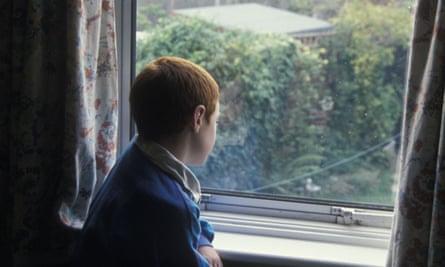
Boy looking out of the window (posed by model)
Photograph: Photofusion/REX/Shutterstock

Kids Help Phone reported that in the early lockdown period the service reported a 350 percent increase in calls received by the national help line geared toward responding to children's needs. Each day an average of 2,000 calls, texts and chats were anticipated from young people in the ongoing lockdown; children who were looking for explanations, for empathy, for reassurance that all would turn out well.

A Spanish survey reported that close to nine in ten parents had noticed alterations in their children's expressed emotions and behaviours, with many suffering concentration difficulties, irritability and profound anxiety. In Canada, 72 percent of child care centres closed, making living arrangements more acute for parents, unprepared to look after their children full-time.

Clinical psychologists in the United Kingdom published some useful advice for parents in The Lancet Child & Adolescent Health, urging parents to be aware their children needed appropriate, age-centric information about the pandemic; to consider that between the ages of four and seven, children develop a sense of conscience, at the same time they have a poor understanding of the science of disease.
"Loneliness that may result from disease containment measures in the COVID-19 context could be associated with subsequent mental health problems in young people."
"Children and adolescents are probably more likely to experience high rates of depression and probably anxiety during and after enforced isolation ends."
"This may increase as enforced isolation continues. Clinical services should offer preventative support and early intervention where possible and be prepared for an increase in mental health problems."
British researchers, large-scale meta-analysis
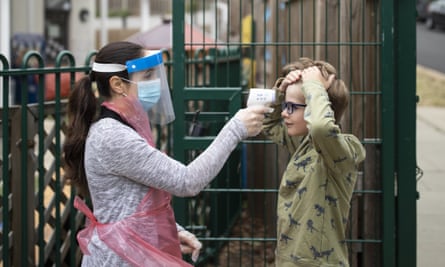
A member of staff takes a child’s temperature at the Harris primary academy Shortlands, London, on 4 June.
The truth is children’s lives are not really back to normal, and will not be for some time.’ A member of staff takes a child’s temperature at the Harris primary academy Shortlands, London, on 4 June. Photograph: Dan Kitwood/Getty Image

Labels: , , , , ,

Wednesday, May 27, 2020

COVID Children Puzzlers

"There is a lot we don't know yet, but what we do know is that there are fewer children infected compared to adults and the children are less severely affected if they are infected."
"It has surprised everybody. The good thing is at least there is one group that isn't getting hit as much."
"Why children aren't infected as often is a really good question. Hopefully, there will be lots of research and we will figure it out."
Dr.Nicole LeSaux, infectious disease physician, Children's Hospital of Eastern Ontario

"Over the last two to three weeks, we have seen about 20 children presenting with a combination of high fever and signs of inflammation, affecting one or more organs, quite similar to what has been reported internationally."
"I have to say that the 20 children that we have seen have not been as sick or as severe as some of the reports that we've heard about."
“I think that's the million-dollar question [that the children often test negative for COVID-19, but later show antibodies to the virus]. I would have to say that all 20 cases we've seen have all tested negative for COVID-19 on the nasal swab."
"What has been found internationally -- certainly in Europe and now in the United States -- is that many of these children who are tested for antibodies will test positive, which suggests that they were infected, maybe weeks before they presented at SickKids." 
Dr. Jeremy Friedman, associate paediatrician-in-chief, Hospital for Sick Children, Toronto
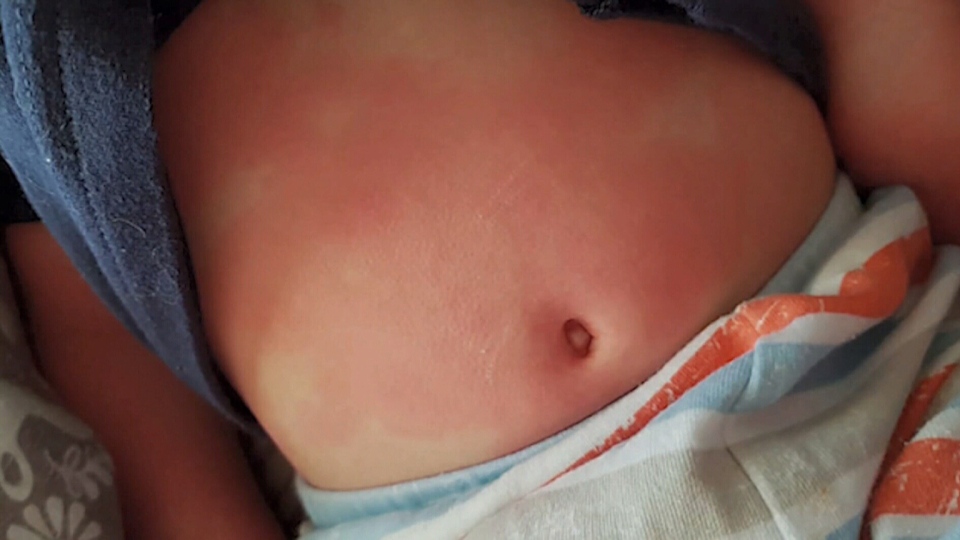
multisystem inflammatory syndrome in children
Child with multisystem inflammatory syndrome (MIS-C) in this image.

There has latterly been news in the media of rare and serious complications where COVID-19 may be implicated, an uncertainty yet to be clarified, of small and alarming clusters of children being admitted to hospital with symptoms more commonly seen in Kawasaki disease, of inflammatory symptoms which if not successfully treated can lead to heart damage and even death. That's the unfolding news that COVID-19 has serious effects on some children. The more palatable news is that most children suffer few effects when infected by the disease.

According to Dr. LeSaux of CHEO, while reported cases of severe illness around the world among young children is alarming -- causing doctors everywhere to be on alert for such cases of a rare hyper-inflammatory syndrome, even in children who have tested negative for the disease, and these  unusual symptoms have been causing severe illness and occasionally death, in the worst-impacted parts of the world -- initial fears that children would become social vectors of the disease, transmitting it to others while themselves experiencing few symptoms, have not been borne out.

Doctors are puzzled by the demonstrated fact that for the most part, against all expectations,  children have been less seriously impacted by COVID symptoms than the general population as a whole. Children under age 19 represented merely 5.69 percent of all COVID cases confirmed to the present time. Across Canada a total of 34 children have been hospitalized for COVID-19 for treatment, only two of whom have required intensive care.

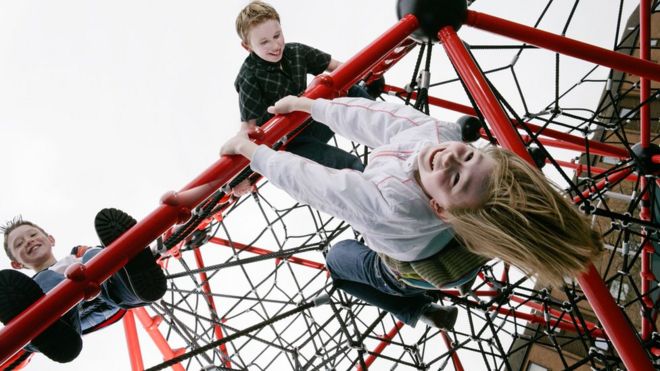
Children playing on a climbing frame
Children appear less likely to die from COVID  Science Photo Library

No children or teens under 19 have died from the novel infectious disease up to the present, while over 6,500 people in Canada have died from COVID to date. The conventional pattern of seasonal influenza was used initially as a guide by the medical community in their expectations of how this new virus would impact on children and by extension the entire community. With seasonal flu, children are frequently affected severely, and have been recognized as 'super-spreaders', where schools become epicentres of infection as children bring flu home and infect their parents and grandparents.

"It does not appear that way so far with COVID. The epidemiology appears different", pointed out Dr.LeSaux. According to evidence gathered globally, family clusters tend not to be launched with an infected child; furthermore only a small minority of children become infected, even when a household is infected with COVID-19, according to research out of Wuhan, China, where the SARS-CoV-2 virus initially emerged.

Fewer asymptomatic children are seen to test positive for COVID-19 in comparison to adults, and regions that have tested their entire populations have discovered that up to 2.6 percent of asymptomatic adults were seen as COVID-infected, yet no asymptomatic children were infected; whether attributable to children having a low viral load, is as yet unknown to health officials. Children's lungs have attracted some research, with their fewer receptors for the virus to attach to as compared to an adult.

Doctor Covid-19
The CPSP has launched a study that will collect data from 2,800 paediatricians across the country every week

Labels: ,

 
()() Follow @rheytah Tweet