Ruminations

Blog dedicated primarily to randomly selected news items; comments reflecting personal perceptions

Wednesday, November 17, 2021

Pandemic Epicentre

"[With high levels of COVID immunity and a strong booster vaccination program, the UK is] unlikely [to experience a] catastrophic winter wave [of infections that would require a Christmas lockdown similar to last year]."
"[The UK is seeing a] hint of an uptick in the last few days [following weeks of declining case numbers and hospital admissions]. We've had very high case numbers - between 30,000 and 50,000 a day - really for the last four months, since the beginning of July.That has obviously had some downsides."
"It has also paradoxically had an upside of boosting the immunity of the population compared with countries like Germany, the Netherlands and France, which have had much lower case numbers and are only now seeing an uptick."
Professor Neil Ferguson, Scientific Advisory Group for Emergencies, U.K.
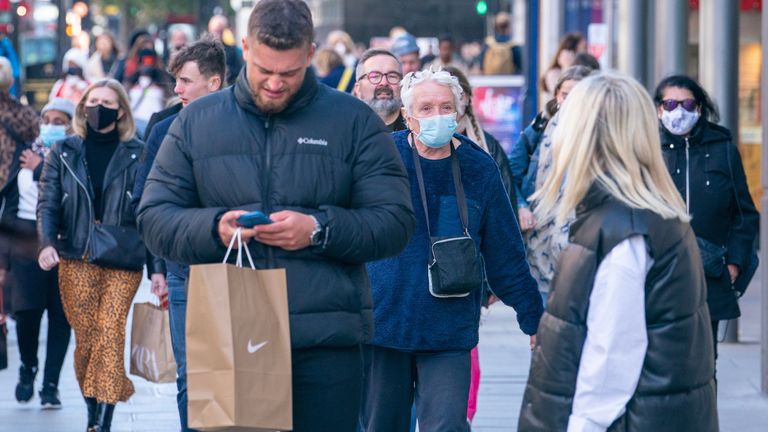
Shoppers wearing face masks on Oxford Street, in central London, as the Department of Health and Social Care is calling upon eligible people to get their covid-19 booster vaccinations. Picture date: Friday October 22, 2021.
The UK government is urging the public to get their booster shots   SkyNews
"Europe is back at the epicentre of the pandemic, where we were one year ago."
"[Countries in the region are at] varying stages of vaccination rollout [and region-wide an average of 47 percent of people are fully vaccinated."
"Only eight countries have fully vaccinated 70 percent of their population."
Dr.Hans Kluge, director, WHO 53-country Europe region

"We are clearly in another wave."
"The increased spread is entirely concentrated in Europe."
Anders Tegnell, chief epidemiologist, Sweden

"The epidemiological situation in Europe is very concerning now as we head into the winter with increases in infection rates [and] hospitalization." 
"And we can also see the increase in fatalities."
Fergus Sweeney, head of clinical studies/manufacturing task force, European Medicines Agency
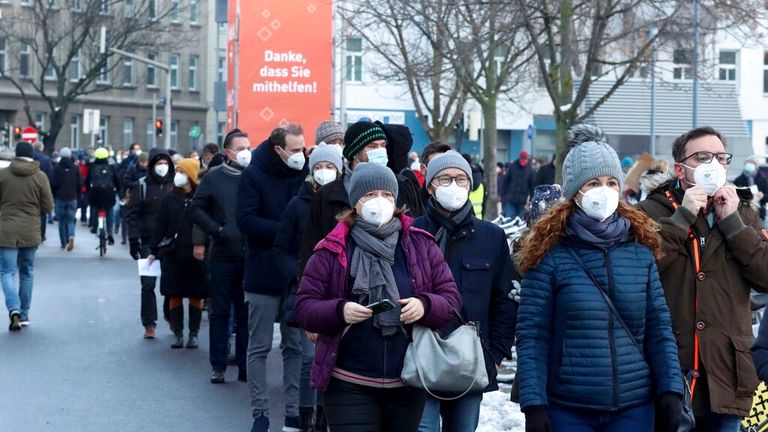
People waiting for a mass COVID-19 testing in Vienna, Austria
People waiting for a mass COVID-19 testing in Vienna, Austria   Sky News

Even as the WHO's director general declared Europe to now represent the global pandemic's epicentre, Austria took steps to place millions of its unvaccinated citizens under strict lockdown. Those over age 11 not double-vaccinated only permitted to leave their homes to attend school, work, for exercise or to secure essential supplies. Two million of the country's 8.9 million population were affected by the order. It is, in fact, similar in nature to Beijing's severe orders in response to COVID outbreaks.

A greater than 50 percent leap in coronavirus cases in the past month in Europe has made it the epicentre of the coronavirus pandemic; this irrespective of a more than ample supply of available vaccines. "There may be plenty of vaccine available, but uptake of vaccine has not been equal", observed WHO emergencies chief, Dr.Michael Ryan.

A woman wearing a mask looks at street art as she walks at the International Street Art Museum following the new social restrictions announced by the Dutch government, as the Netherlands battle to control the spread of the coronavirus disease (COVID-19), in Amsterdam, Netherlands 14 October 2020
The Dutch government has also announced new social restrictions for the Netherlands  Sky News
 
European authorities were urged to "close the gap" in the tempo and coverage of inoculation. Tedros Adhanom Ghebreyesus, the WHO director general, stated that those countries that immunized over 40 percent of their population should now take a halt in proceedings and donate doses to developing countries not yet able to offer their citizens a first dose of vaccine.

"No more boosters should be administered except to immunocompromised people", he said, calling for vaccine producers to prioritize the supplying of COVAX, a distribution agency developed by the UN to share vaccine doses on a global scale. Just one percent of Pfizer's supply of vaccines has ended up with COVAX, with Moderna providing a million doses to the developing world from late October. 

Although developing countries have to the present received fewer than one percent of the globe's     COVID-19 production of vaccines, in Africa and Southeast Asia cases fell by nine percent last week. In the meantime, over 60 countries began giving booster doses to combat weakening immunity before the onset of winter, which is when the latest wave of COVID-19 is anticipated.

Children ages five to 11 began receiving COVID-19 doses in the United States once authorities there made the decision of the benefits outweighing potential risks. Dr.Hans Kluge from Copenhagen's offices as director of the Europe region, warned that coronavirus hospitalization rates had more than doubled in one week alone, predicting that the trajectory would lead the region to see another half-million pandemic deaths by February.

The WHO Europe region stretches east as far as the former Soviet republics in Central Asia, tallying close to 1.8 million new cases weekly, representing an increase of some six percent from the week before, and 24,000 weekly deaths caused by COVID; a 12 percent gain.
 
A specialist wearing personal protective equipment (PPE) sprays disinfectant while sanitizing a chapel inside the building of the Leningradsky railway station amid the outbreak of the coronavirus disease (COVID-19) in Moscow, Russia October 19, 2021. REUTERS/Maxim Shemetov/File Photo
A specialist wearing personal protective equipment (PPE) sprays disinfectant while sanitizing a chapel inside the building of the Leningradsky railway station amid the outbreak of the coronavirus disease (COVID-19) in Moscow, Russia October 19, 2021. REUTERS/Maxim Shemetov

 Case increases of COVID-19 have risen across the continent, identifying it as the only region in the world where COVID-19 continues increasing. In Central and Eastern Europe there are several countries in particular seeing daily case numbers shoot skyward. The Amsterdam-based European Medicines Agency experts have urged people to get themselves vaccinated.

Labels: , , , , , ,

Tuesday, September 21, 2021

A Tragic Reality in Human Fallibility

"If you would have talked to me in 2019, I would have said I'd be surprised. But if you talked to me in probably April or May 2020, I would say I would not be surprised we'd hit this point."
"A lot of the mistakes that we definitely fell into in 1918, we hoped we wouldn't fall into in 2020. We did."
"The internet can be a double-edged sword. It provides us with the opportunity to receive the CDC and the World Health Organization [updates] and to share information much more quickly. But that also means we can spread misinformation quickly as well."
"We have absolutely seen -- especially with long COVID -- that young people are far from invincible.
[No matter how good the science and public health advice are], those things are only as good as the behavioral response."
"We'll get new variants [including some that might cause reinfection. But eventually], I do think those variants will be closely enough related, probably, to the things we've already been vaccinated against or  the things we've already been exposed to that it won't cause the same sort of severe disease."
"Essentially, what the vaccine does is it gives you your first and second exposure for free -- without the dangers of Covid-19."
"That's extremely helpful, and that goes a long way to reducing mortality."
Stephen Kissler, epidemiologist, Harvard T.H. Chan School of Public Health
The "In America: Remember" public art installation in Washington, DC, commemorates all Americans who have died from Covid-19. On September 18, more than 660,000 small plastic flags were at the site, some with personal messages to those who died.
The "In America: Remember" public art installation in Washington, DC, commemorates all Americans who have died from Covid-19. On September 18, more than 660,000 small plastic flags were at the site, some with personal messages to those who died.  CNN

The United States -- arguably the most technologically advanced and the most powerful and wealthy country in the world -- has become the country whose experience in protecting its population and controlling the spread of the SARS-CoV-2 virus causing COVID-19 stands out as the most miserable of performances with few exceptions. Italy and Spain in Europe come to mind when thinking of COVID-control failures. But the United States stands out as the ultimate failure, given its advantages.

In the United States the COVID-19 pandemic has now surpassed the death toll of the 1918 influenza pandemic, a situation that most American experts feel was completely avoidable, once the miracle of effective and safe vaccines emerged. Now, from day one of the emergence of COVID-19 in the U.S. to the present, a total death count of 675,445 has been revealed in the account of data compiled by Johns Hopkins University. A century ago the influenza pandemic killed 675,000 Americans.
 
The Oakland Municipal Auditorium in California was converted to a temporary hospital with volunteer nurses from the American Red Cross in 1918.

During the time of the great and deadly influenza epidemic there were no vaccines, and nor were there respirators. In this modern era of the deadly COVID-19 pandemic there are approved, efficacious and safe vaccines developed in a surprisingly short interval between the arrival of COVID and the first wave that shook the world. Medical science rose to the occasion enabling vast populations to be inoculated against the virus and promising to stop COVID in its tracks. It has done just that in some areas of the world, while many others are still struggling to achieve control.

In the United States, out of its total population of about 350 million people, 70 million Americans eligible to receive the vaccine doses and urged by the medical community and government agencies to do so, have refused. They are the vulnerable wedge that defeats the country's efforts to achieve a level of control over the virus. These are not vaccine-hesitant people who wait for more definitive data and assurances that those who have been vaccinated suffer no great harm -- but the hard-core anti-vaccination corps in society.

"To have so many people who have died with modern medicine is distressing. The number we are at represents a number that is far worse than it should be in the U.S.", stated Eric Topol, director of the Scripps Translational Research Institute. This, at a time when the original virus's onslaught has succumbed to the Delta variant, a far more contagious mutant. The initial wave struck the country a hard blow until it leveled off, leaving the hope that the solution had been found, with vaccine availability.

Now, with the Delta variant representing the new face of COVID's destructive power the U.S. sees itself in a danerous new phase, fading the hope that control was close. There are some differences from the 1918 plague; there was a much smaller population in the U.S. at the tme The Influenza pandemic struck  young people, unlike COVID which to the present has been less of a threat to the young than it is to those 65 and older. The 1918 pandemic cut a swath of death in a 14-to15-week period. COVID-19 has lasted an interminable 18 months and is ongoing.

And then there is this to consider about numbers; the excess death total estimated out of the U.S.Centers for Disease Control and Prevention has the total number at 830,443 fatalities, leaving the possibility that the numbers cited could represent an undercount, a situation common to many countries as they struggle to decipher the damage wrought to population health. In the U.S. it was December of 2020 when the vaccinations became available for immediate use. Since that time, the great majority of  deaths have occurred among the unvaccinated.

"Vaccines are a paramount part of the strategy, but we have failed on other measures as well.
We're fighting this war with two hands behind our back", observed Eric Topol the Scripps director.
 
A nurse tends to a Covid-19 patient at a hospital in Oklahoma City
A nurse tends to a Covid patient at a hospital in Oklahoma City. Some hospitals in the worst-affected US states are rationing care due to the latest wave of the virus  Nick Oxford/Reuters
"Controlling the pandemic depends on two factors: the leadership provided by government and public behaviour." 
"On both fronts the U.S. has done poorly compared to other countries."
Dr. Ali Mokdad, professor of global health, University of Washington

"It is so frustrating that we are facing another Covid surge in hospitals, which could have been prevented." 
"About 99 per cent of COVID patients we see in ICU are unvaccinated . . . That is the impact of misinformation."
Matthew Crecelius, intensive care unit nurse, Michigan

Labels: , , ,

Thursday, July 30, 2020

In COVID-19 Fatalities Age Matters

"Individual and collective efforts that minimize infections in older adults could substantially decrease total deaths."
"In a scenario where the infection rate of the U.S. population reaches nearly 30 percent, our analysis indicates that protecting vulnerable age groups could prevent over 200,000 deaths."
National Bureau of Economic Research, research study, U.S.

Researchers from Dartmouth College sought out an accurate gauge of COVID-19 infection rate using dozens of studies around the world, sorting the deaths by age groups -- at the same time they were aware that greater numbers were most likely afflicted with the novel coronavirus than were tested positive -- taking into account asymptomatic cases along with people contracting the virus before adequate testing capabilities were available.

According to their conclusions there is almost no chance children or young adults contracting COVID-19 would die from its effects. Research is also accumulating indicating young children are vastly less likely to spread the virus than are adults. What the study also indicated is that those older than 80 are massively more likely to die from complications relating to the disease, making it urgent that policy responses meant to protect seniors be implemented to save thousands of lives.

Those in the demographics of elderly above 80 years of age were seen to have a 24 percent fatality rate due to the effects of the SARS-CoV-2 virus causing COVID. People aged between 70 to 79 years were given a four percent fatality while death rates are more elevated than previously indicated for healthy, middle-aged adults who were linked with an infection fatality rate of 0.3 percent for ages 50 to 59, and one percent for those falling into the category of 60 to 69.

Age, it transpires, is more indicative of an increase in the rate of fatality caused by COVID-19 than are other health factors such as obesity or diabetes. The numbers, according to the researchers, are not fixed; new findings emphasize the need for public health measures meant to mitigate risk to middle-aged and older adults.

A medical worker performs a mouth swab on a patient to test for Covid-19 coronavirus on Thursday, April 2, 2020.
Another research review just released by McMaster University analyzed 33 publications to find it highly unlikely for children under ten years of age to spread the virus, findings consistent across all evidence the researchers at McMaster surveyed. A larger study out of South Korea discovered that children younger than ten are much less likely to be infected and to spread the disease even within their own household.

South Korea maintained open schools throughout the influx of the virus since January, with little problems being evidenced. Children were found to be poor virus spreaders with those infected coming into contact with 57 people on average, with three only contracting the virus, the meaning of which should a small child contract COVID-19, people in that child's household have a roughly five percent chance of contracting the virus from the child.

Older children appear to spread the virus within households at the same rate as adults, but less outside the household, according to the South Korean study. On the other hand, older children were less likely to contract the virus than were adults, a consistent conclusion dating to the beginning of the pandemic.

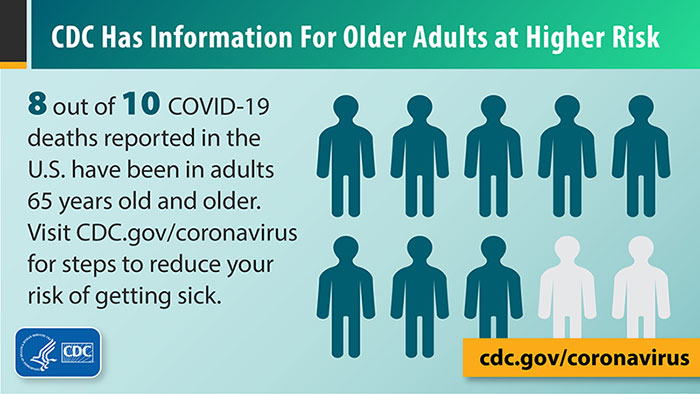
8 out of 10 COVID-19 related deaths reported in the United States have been in adults 65 years old and older.

Labels: , , ,

Sunday, May 17, 2020

Smoking and COVID - Setting the Record Straight

"Tobacco and e-cigarette companies are exploiting the COVID-19 crisis to advertise their harmful and addictive products on social media, undermine minimum age purchase restrictions meant to protect youth and make unproven and illegal health claims, according to new analysis published by the Campaign for Tobacco-Free Kids. The analysis includes tactics from big tobacco companies, e-cigarette makers and vape shops in 28 countries."
"On social media, Philip Morris International and British American Tobacco – the world's two largest tobacco companies – are appropriating popular "Stay at Home" hashtags promoted by governments and health authorities to instead market heated cigarette products like Glo and IQOS and e-cigarettes like Vype. In Spain, British American Tobacco has posted photos advertising Vype e-cigarettes accompanied by the hashtag #FrenaLaCurva (#FlattenTheCurve) and in Italy, Philip Morris has used #DistantiMaVicini (#DistantButClose) to advertise IQOS. The companies have also promoted at-home music series and launched exclusive music videos to promote tobacco products online."
Cision

"Few of those hospitalized with the coronavirus are smokers, and researchers are trying to understand why, according to VICE."
"One hypothesis is that nicotine, which has anti-inflammatory properties, may interfere with the way that COVID-19 causes an overreaction of the immune system."
"The hypothesis comes from Konstantinos Farsalinos, a cardiologist in Greece who focuses on tobacco-use reduction. Farsalinos noticed that few COVID-19 patients who were hospitalized in China were smokers, though about half of men in the country smoke."
"Farsalinos and colleagues wrote a new paper available as a preprint and scheduled to be published in Internal and Emergency Medicine. They found that among 13 studies in China with nearly 6,000 hospitalized COVID-19 patients, the rate of smokers ranged from 1.4% to 12.6%. No studies recorded e-cigarette use."
"'The results were remarkably consistent across all studies and were recently verified in the first case series of COVID-19 cases in the U.S.', the authors wrote, calling for an 'urgent investigation'."
"Of course, Farsalinos doesn't recommend that people should begin smoking simply to attempt to avoid a severe case of COVID-19. Smoking is still a leading cause of preventable death across the globe."
WebMD News Brief


In the never-ending annals of 'this does not compute' there are now contradictory reports going the rounds on the role of smoking and COVID-2. Initially, the World Health Organization put out a general alert that makes eminently good sense; smokers are more imperilled by the effects of the novel coronavirus than non-smokers. Who could conceivably contest that finding? After all, the virus goes on to play havoc with human organs, and its effect on the respiratory system is what ultimately takes the lives of sufferers. Smoking affects the lungs, other organs and certainly the respiratory system, setting smokers up for trouble down the road when a disease arrives targeting the respiratory system.
Image result for smoking causes tracheal cancer?
"Tobacco-leaf COVID-19 vaccine ready for human trials: World’s No.2 cigarette company British American Tobacco said on Friday it was ready to test its potential COVID-19 vaccine using proteins from tobacco leaves on humans, after it generated a positive immune response in pre-clinical trials."
"The maker of Lucky Strike cigarette said once it gets approval from the U.S. Food and Drug Administration (FDA) for the vaccine, it would progress to Phase 1 trials or testing on humans. The company raised eyebrows in April when it said it was developing a COVID-19 vaccine from tobacco leaves and could produce 1 million to 3 million doses per week if it got the support of government agencies and the right manufacturers. Drugmakers across the globe have been racing to develop a vaccine for COVID-19, caused by the new coronavirus, with some of the vaccines already in human trials. Experts have suggested that a COVID-19 vaccine could take 12-18 months to develop. On Friday, London-based BAT said it had submitted a pre-investigative new drug application to the FDA and that the agency had acknowledged the submission. BAT said it was also talking with other government agencies around the world about the vaccine."
Montreal Gazette
If the news from some sources can be credited current smokers were seen to have a markedly lower risk of COVID-19 death than do those who never smoked and former smokers, correcting for other variables. Smokers, current and former smokers are threatened with all the complications arising out of ingesting nicotine harming the body system, most notably the heart, lungs and respiratory system, quite apart from the issue of lung, esophagus, larynx, mouth, throat, kidney, bladder, liver, pancreas, stomach, cervix, colon, and rectum, cancers as well as acute myeloid leukemia.

If that isn't sufficient, in and of itself, to cure anyone of the idea that smoking is a non-harmful and enjoyable habit, not at all an addiction leading to dreadful health outcomes, what could possibly convince anyone of its dread toll? Until COVID-19 arrived, and suddenly smokers can feel justified in resisting the best advice of the medical community to do everything possible to wean themselves away from addiction to nicotine. The conflicting messages of smoking avoidance versus nicotine providing protection against the effects of COVID has created confusion for some, a sense of triumph for smokers.

A study out of the U.K. Biobank had reported that "regular smokers" appear to have lower incidents of  contracting the novel coronavirus. Among the Biobank study participants 580 took part with a significant ratio in favour of smokers avoiding the virus. In a much larger, in fact huge study released in early May, a collaboration between the University of Oxford and the London School of Hygiene and Tropical Medicine, anonymized records of 17 million adults were used from the U.K.'s National Health Service.

The idea was to create a list of various risk-factors for COVID-19 deaths, and what brought this to the attention of the public were peculiar numbers seeming to imply that smokers of current vintage less frequently died of the novel coronavirus than non-smokers or former smokers. "The media immediately picked it up and ran with the idea that smoking is protecting people from dying from COVID, [along with other] really strong causal claims, which were not at all the goal of the paper", pointed out Eleanor Murray, of Boston University.
"The reason it's getting play is I think it's sort of feeding into things that people kind of wanted to be true. I'm seeing them report just the prevalence of smoking in the COVID patients and the prevalence of smoking in the general population. But for most areas, COVID patients are much older than the general population."
"The life expectancy among smokers is lower than among non-smokers. And so it's entirely possible that if you're looking at a sample that's mostly older individuals, you might just expect any sample like that to have fewer smokers than the overall general population."
“If smokers already have decreased lung capacity, they may not notice the milder symptoms of COVID, for example, and they may not [be] getting tested as much."
"Taking the conclusion from [preliminary studies] that there's some protective effect of nicotine is probably wishful thinking, just because there's really no clear evidence here either way of whether smoking is at all protective [against] COVID,"
Eleanor Murray, assistant professor of epidemiology, Boston University 

Labels: , , , ,

 
()() Follow @rheytah Tweet