Ruminations

Blog dedicated primarily to randomly selected news items; comments reflecting personal perceptions

Sunday, August 30, 2026

Our Warming El Nino Oceans

"[This new record being set  for hottest temperatures in the world's oceans is] very troubling." 
"An ocean this warm destabilizes weather patterns and threatens food security, economic prosperity and marine life."
"A warmer ocean is not our friend."
Jane Lubchenco, oceanographer, former chief of U.S. National Oceanic and Atmospheric Administration
 
"This is yet another sign of our climate system under strain and the ocean under immense pressure."
"When we have a warmer ocean such as we've had in Europe this summer, it amplifies the impact of heat waves because you don't get the cooler nighttime temperatures with the sea breeze coming off the ocean when the ocean is very warm."
"Samantha Burgess, strategic climate lead, Copernicus climate service, Europe
 
"The thing that makes my heart sink is that this starts so early and it's so out-of-normal that you know when it hits its peak it's going to be unprecedented."
"The ocean is not supposed to do this. It's just that there is no normal anymore."
"[With hotter water], not everybody is hit equally, obviously, but the whole system collapses."
"It's like when you pull out the rug from underneath an economy. The whole thing collapses. Some sectors may do a little bit better but, overall, everybody suffers."
Boris Worm, biology professor, Dalhousie University, Canada 
https://i.cbc.ca/ais/80a62de5-63c5-4f20-9c6c-3fb4465b7573,1787335003339/full/max/0/default.jpg?im=Crop%2Crect%3D%280%2C507%2C6500%2C3656%29%3BResize%3D860
A very strong El Niño developing in the southern Pacific Ocean will disrupt global weather patterns in the months ahead, but climate scientists say it's not something we can attribute to the heat waves and wildfires that raged across the northern hemisphere this summer, like the ones in British Columbia's interior earlier this month. (Darryl Dyck/The Canadian Press)
 
This year's El Nino has already reached the peak of other recent such appearances, and it's continuing to grow and expected to reach unprecedented levels when it does eventually peak. With the current El Nino, the oceans will keep heating  up, and it is  expected to peak at some time between November and January. That's abnormal since most of the Southern Hemisphere is ocean, and the world's sea surface temperature generally peaks around March and April as the southern summer draws to its close. But not this year.
 
El Nino is nature's temporary warming of portions of the Pacific Ocean which warps weather, raising global temperatures. This is a weather phenomenon recognized as being responsible for most of the heat that develops in the world's oceans -- along with long-term warming resulting from burning coal, oil and gas. This year, ocean waters have warmed by 0.8C, seeing the world's oceans at their hottest temperatures on record last weekend. That's bad news, but even worse is that they're entirely likely to keep warming. 

 
https://d1jyxxz9imt9yb.cloudfront.net/medialib/4744/image/s1300x1300/AdobeStock_277159209_565251_reduced.jpg
Coral in Tubbatah Reef in the Philippines.  Adobe
 
Aquatic lifeforms are placed under stress with warming water. The supersized El Nino of this year is proving to be of greater concern than the record previously set in March of 2024. A warming ocean becomes more acidic with less oxygen, inimical to the health of its sealife. Ocean currents become altered along with changed weather patterns. Storm systems are enhanced by the warming oceans, becoming wetter and producing larger storm surges.
 
According to Dr. Bruno, heat-sensitive corals now are roughly one-fifth of the levels of 1990. Some species of coral -- not the longer-lived staghorn corals -- are adapting to the hotter water, although they're 'weedy'. The current situation of warmer oceans and even warmer yet as time moves on and the heating persists, is predictive of collapsed fisheries resulting in universal food shortages.The Peruvian anchovy fishery, considered the largest world fishery, generally collapses during El Nino.
 
https://media.cnn.com/api/v1/images/stellar/prod/galapagos-reef.jpg?c=original&q=w_860,c_fill/f_avif
Corals from the Galápagos Islands contain chemical signatures that scientists were able to use to trace a 1,000-year history of El Niño events.   Greg Asner/DivePhoto.org
 
The food web becomes altered, since larger fish are able to swim off to cooler water to escape the heat, as far as halfway across an ocean. "Anchovies can't leave so they just don't reproduce, or [they] starve", explained Dr. Worm, affecting both the humans and the seabirds who depend on them. The presence of more jellyfish is being observed off Europe, stated Dr. Bruno, believing something similar will be seen on the East Coast of the United States.
 
"Jellyfish are often opportunistic and they like warm waters. So yes, I would expect them to do a little bit better", added Dr. Worm. And when's the last time you saw jellyfish on the dinner menu? "As long as we depend on a healthy ocean for our safety, prosperity and well-being, these record-breaking sea surface temperatures portend even greater challenges for us all", added Rick Spinrad, another former NOAA chief. 
"It's frightening. We're not even in October yet."
"You know, usually the Caribbean peaks at like late September, early October."
"And I think next year in the Southern Ocean, the Great Barrier Reef, yeah I'm really worried about what's going to happen in the southern hemisphere in February, March."
John Bruno, marine ecologist, University of North Carolina 
https://i.cbc.ca/ais/c42a76e4-a903-46b9-8133-c0e54027b835,1787338046703/full/max/0/default.jpg?im=Crop%2Crect%3D%280%2C0%2C1017%2C640%29%3BResize%3D796
A satellite map from the U.S. National Oceanic and Atmospheric Administration shows sea surface temperature anomalies recorded on Aug. 20, with hotter than average temperatures stretching across the El Niño region toward the west coast of South America. (NOAA)

Labels: , , , , , , ,

Wednesday, March 26, 2025

It'll Take Awhile To Live This One Down : Learning On The Job

"[The uproar] represents a] co-ordinated effort to distract from the successful actions taken by President Trump and his administration to make America's enemies pay and keep Americans safe."
White House statement 

"[The Atlantic's Jeffrey Goldberg is] deceitful, [a] discredited so-called journalist."
"Nobody was texting war plans and that's all I have to say about that."
Defense Secretary Peter Hegseth 

"[It was] the only glitch in two months [of his administration]."
"Michael Waltz has learned a lesson and he's a good man."
"It was one of Michael's people [staffer] on the phone. A staffer had his [Goldberg's] number on there."
U.S. President Donald J. Trump
 
"In the amazing story of the Signal group coordinating Yemen airstrikes, Vice-resident J.D. Vance once again comes out as driven by deep anti-European resentment."
Former Swedish prime minister Carl Bildt
 
"U.S. Vice-President and Secretary of Defense loathe Europe [as they try to extort money out of it]."
Mike Martin British Parliamentarian
https://static01.nyt.com/images/2025/03/25/multimedia/25dc-trump-TOP-vlft/25dc-trump-TOP-vlft-superJumbo.jpg?quality=75&auto=webp
At the White House on Tuesday, President Donald Trump said his critics were inflating the incident. “They’ve made a big deal out of this because we’ve had two perfect months,” he said.  Credit...Doug Mills/The New York Times

Quite obviously that old self-help book "How to make Friends and Influence People" is not a go-to tract in the White House library to which old diplomatic hands can refer new White House personnel and elected officials to, for the efficacy of putting their best foot forward when dealing with friendly nations. The members of the Trump administration appear to share a deep-seated hostility toward just about all the member-democracies of NATO and the G7 nations. Evidently stemming from the burden that Europe and other democratic allies place upon the United States as the most powerful country on the globe, to ensure security for all.
 
In all fairness, it wasn't Europe that imposed this burden on the United States. This is a holdover from World War II when Europe was under attack by Nazi Germany and its Axis members in a brutal conflict that the entry of the United States for the Allied side turned the tide after Imperial Japan, part of the Nazi Axis, had attacked Pearl Harbour in an act of war. The American military involvement in stemming the  tide of fascism and eventually ending the war with the world's only nuclear strikes, resulted in the acknowledgement of its singular status as the world's policeman. A role that the U.S. was pleased to take up, cementing its legacy as world power without equal.
 
That status appears to have grown stale; the U.S. is fed up with being taken for granted, for being the shield that protects other internationally law-abiding nations from harm threatened by those countries of the world for which territorial expansion through force of arms and conflicting ideological roots create chaos and war. Now, under the second Trump administration, the message was sent that all countries formerly dependent on the protection canopy of the U.S. had better shore up their own defences for the burden will no longer be accepted by the United States of America.
 
An America that is prepared to react militarily only when it perceives threats aimed directly toward it.  And since the Houthi rebels in Yemen have complicated international marine traffic, and threatened both the U.S. and Israel (which Washington deems deserving of a place under its canopy), just as its sponsor, the Islamic Republic of Iran is a close looming threat with its nuclear and rocketry development, itself earning close scrutiny and threats, the American military has been ordered to disable the Houthi war machinery and by extension the nuclear plans of Iran.
 
https://static01.nyt.com/images/2025/03/25/multimedia/25signal-leak-goldberg-podcast-comments-pztk/25signal-leak-goldberg-podcast-comments-pztk-superJumbo.jpg?quality=75&auto=webp
Atlantic editor in chief, Jeffrey Goldberg, in 2023. Credit...Justin T. Gellerson for The New York Times

An inadvertent, and quite amateurish online meeting on the Signal platform between Trump associates and Cabinet members saw the erroneous inclusion of The Atlantic's editor-in-chief Jeffrey Goldberg who was by inclusion made privy to the strategic military plans. As a journalist his first instinct was to use the data he was exposed to, once the initial shock of receiving it had passed. And as he published the timeline of the almost comedic misadventure, the shock to the public, the news media, and the political opposition was that of outrage at the sheer clumsiness of making sensitive plans available through sheer sloppiness.
 
From the European perspective, however, it was the revelation of senior executive Cabinet members sneering at Europe that drew the most attention. President Trump's inner circle shares his contempt for Europe's leaders, are wholly sympathetic to the president's decision to downgrade relations with embattled Ukraine, while make friendly overtures to Moscow. When the U.S. spurned Europe's fears of Vladimir Putin's outright threats to the stability of eastern Europe through his annexation of a fifth of Ukrainian territory, NATO members reeled in disbelief.
 
As for the documents revealed through an inadequate lapse of intelligent judgement, retired French Army Lt. Gen. Michel Yakovleff with his own history at NATO headquarters, described the U.S. officials involved in the debacle as "a bunch of incompetent, arrogant idiots" with "no clue" about operational security. "When you have that level of incompetence, anything is possible", he stated.
 
European leaders were stung by the revelation through the Signal chat that JD Vance questioned whether the U.S. expending military assets on securing nearby shipping lanes would be just another example of "bailing Europe out again". To which Defense Secretary Pete Hegseth replied: "I fully share your loathing of European freeloading. It's PATHETIC." 

https://d3i6fh83elv35t.cloudfront.net/static/2025/03/2025-03-24T223604Z_1120193703_RC2SHDAXA2W0_RTRMADP_3_USA-TRUMP-HOUTHIS-INTEL-1200x800.jpg
U.S. Defense Secretary Pete Hegseth stands by U.S. President Donald Trump, in the Oval Office at the White House, in Washington, D.C., U.S., March 21, 2025. Photo by Carlos Barria/REUTERS


Labels: , , , , , ,

Saturday, February 15, 2025

None So Holy As He

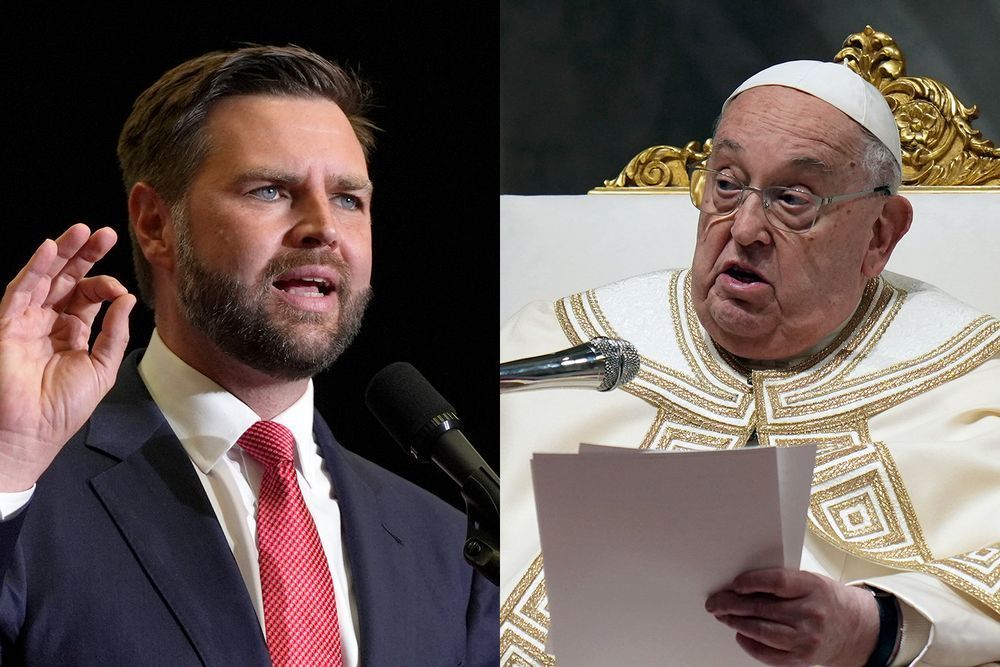
"There is a Christian concept that you love your family, and then you love your neighbor, and then you love your community, and then you love your fellow citizens in your own country."
"And then after that, you can focus and prioritize the rest of the world."
"[The] far left [got the order backward]."
U.S. Vice-President J.D. Vance (new convert to Catholicism)
 
"The true ordo amoris that must be promoted is that which we discover by meditating constantly on the parable of the ‘Good Samaritan’ (cf. Lk 10:25-37), that is, by meditating on the love that builds a fraternity open to all, without exception."
"But worrying about personal, community or national identity, apart from these considerations, easily introduces an ideological criterion that distorts social life and imposes the will of the strongest as the criterion of truth."
Pope Francis
https://cdn.bsky.app/img/feed_thumbnail/plain/did:plc:mjwatbcziskf47sa54xyo7oj/bafkreido57736s5tlvrxx3io52kxcjqqphcm3nera4vbx4v7by2vznxajy@jpeg
VATICAN CITY (RNS) — Vice President JD Vance used the old Catholic theology to defend the Trump administration's immigration policy. Pope Francis made clear that's not the church's interpretation. AP
 
"This morning, at the end of the audiences, Pope Francis will be admitted to the Agostino Gemelli Polyclinic for some necessary diagnostic tests and to continue in a hospital setting treatment for bronchitis that is still ongoing."
Vatican statement
In hospital for an indeterminate period of time to treat his latest ailments, the Pope will not be available for the Saturday Jubilee, a Sunday Mass and other engagements. A Vatican cardinal has been tasked with  presiding in Pope Francis' place over the Mass and other events were cancelled "due to the impossibility of the Pope to participate".
 
Pope Francis has found much to be displeased over, with the new U.S. administration in the White House. Specifically one item has raised his holy ire; the issue of floods of migrants from Africa, Central America and the Middle East churning their arduously determined way on foot and by sea to the wealthy countries of the world which also happen to be Western democrats. It is this man's opinion at the Holy See that any and all who declare themselves refugees are obliged by Europe and North America to be met with open arms.
 
Europe has had its fill of economic migrants and their illegal and unwanted entries, as has the United States, neither oblivious to the reality that the tide of humanity attempting to breach their shores is virtually unstoppable, but each is doing their utmost finally to put a stop to these unwanted entries. Furthermore, the populations of all these reluctantly receiving countries are themselves fed up with the presence of people who fail to respect the social culture and laws of countries they invade.
 
https://media.cnn.com/api/v1/images/stellar/prod/ap24088609358492.jpg?c=16x9&q=h_653,w_1160,c_fill/f_webp

The Pope is not a well man; his age for one thing has caught up with him, at 88, and his constitution can hardly be described as robust. He has been bedeviled with ill health for many years. Governments come and go regularly, and so, in fact, do popes. A week-long bout of bronchitis has seen to Pope Francis's hospitalization where he is  undergoing diagnostic tests. He had lately been experiencing breathing problems, rendering him functionally incapable of maintaining his rigorous audiences and public events schedules.
 
As a young man he had part of one of his lungs removed. He experiences regular bouts of acute bronchitis during the winter season. He now makes regular use of a wheelchair, a walker or cane even while moving around ordinarily in his apartment. He recently fell on two occasions, doing harm to his arm and his chin. He was last admitted to Rome's Gemelli  hospital in June of 2023 for surgery to remove intestinal scar tissue and repair a hernia in his abdominal wall.
 
Three days were spent prior to that in Gemelli receiving intravenous antibiotics for a respiratory infection. He had been rushed to the hospital after spiking a  high fever and feeling a sharp pain in his chest in March 2023, diagnosed with "an acute and strong pneumonia, in the lower part of the lungs". Popes have a private suite on the 10th floor of the Gemelli Hospital. 
 
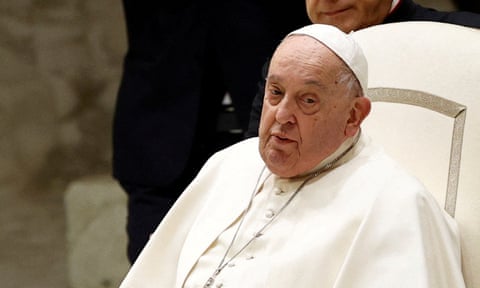
Pope Francis sitting in white chair
Pope Francis was also hospitalized in March 2023 to be treated for acute bronchitis. Photograph: Ciro De Luca/Reuters
 
In his 2023 hospitalization where pneumonia was diagnosed, he was placed on intravenous antibiotics and released on April 1, quipping he was "still alive. Thank God I can tell the story, because the organism, the body, responded well to the treatment", he later said. But 'the organism' cannot be expected to rally so well each time a new health crisis arrives. In the meanwhile, he performs his duties as he is inclined to do, sharply criticizing world leaders for their solutions to problems, running afoul of this pope's reading of Church doctrine.


Labels: , , , , , ,

Monday, February 03, 2025

The European Union's Changed Migrant Attitude

The European Commission is set to propose new rules on deporting migrants entering the bloc illegally, according to three European Union diplomats.
The Commission is currently consulting EU capitals to determine the specifics of the directive, one diplomat said. Migration regulations are notoriously complex, involving overlapping national, EU and international law.
A few principles are likely to feature in the new directive, including defining rights and obligations for migrants who have exhausted legal options to stay in the EU and clarifying rules for deporting them to third countries — which could either be their country of origin or a place where they have spent a significant amount of time.
Since the EU adopted its Return Directive in 2008, the push for more and quicker deportations has grown. Europe has shifted markedly right on migration in recent years at both the national and EU levels, with far-right parties making major gains on an anti-immigrant platform and right-wing forces increasingly influential in Brussels.
Politico 
FINLAND-RUSSIA-MIGRANTS
A draft directive on returns could be circulated to member countries' permanent representations as early as February. | Jussi Nukari/Lehtikuva/AFP via Getty Images

Europe, over the past decade,  has found itself pushed too hard by swarms of illegal migrants entering by overland routes or crowded into dinghies through sea passages where tens of thousands of people from Africa and the Middle East risk their lives and their futures determined to make passage to Europe to settle in wealthy states like Germany which in the past obligingly took in altogether a million migrants. Austria found space for many, and the European Union at first expected its members to accept an equal share of the never-ending streams of people -- mostly young men -- intent on finding refuge for whatever reason -- escaping poverty, or discrimination, or war, but not excluding others with a nefarious purpose.

Once the phenomenon of waves of thousands of illegal migrants risking all to make their journey a success became a routine and Europe was groaning at its cultural/social/empathetic seams the uniqueness of the situation became stale and the burden of finding place for foreign nationals whose cultures, heritage, values and tribal sectarianism grated on public sensibilities to the point of final rejection. While Western Europe grudgingly did its part in accepting the foreign waves of migrants, Eastern Europe had a tendency to hunker down in rejection.

That rejection has hardened to envelope the entire European Union. And much as occurred when Turkey demanded funding from the EU to keep its humanitarian haven of millions of Syrian refugees who had escaped the brutality of the Syrian civil war, intact within its own borders rather than maliciously aiding their sea passage to Italy's shores and then on to the greater European target, the EU has turned to making financial deals with African countries to avoid having to accommodate any further non-legal entries. And from there to engage in wholesale deportations.
 
https://static.euronews.com/articles/stories/07/03/15/26/1024x576_cmsv2_2299cd76-6004-5467-abb9-8e0497e8651a-7031526.jpg
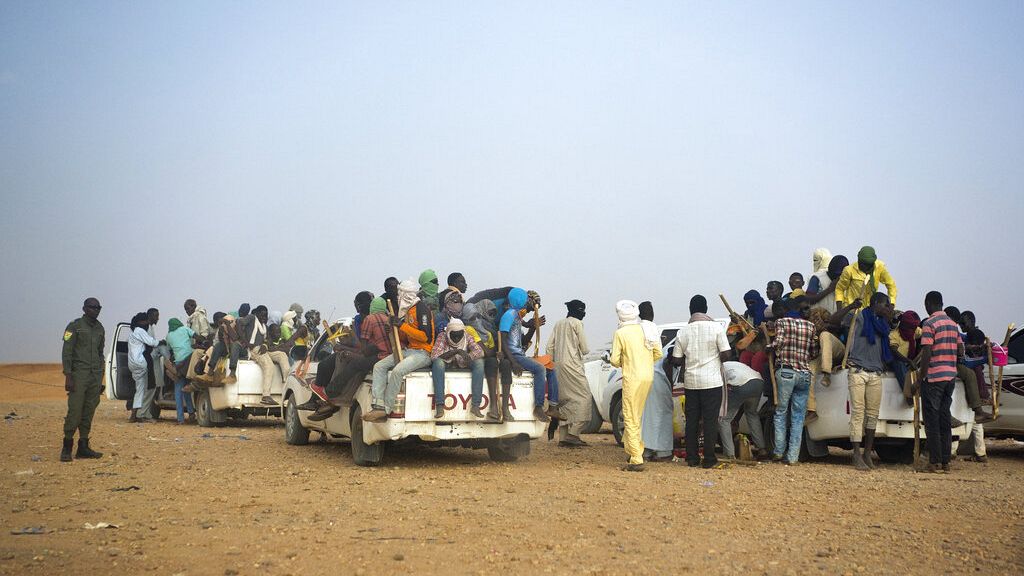
 Nigerians and third country migrants  Jerome Delay/The Associated Press

Anti-migrant sentiments throughout Europe have matured to the point where, from France and Germany stretching over to Hungary, sub-Saharan Africans intent on reaching the continent are now  facing push-back. North African governments that signed on to bilateral agreements with the E.U. include Tunisia, Morocco, Libya and Mauritania, for whom financial incentives have led to curbing of migrant flows. Illegal border crossings dropped substantially in 2024. 
 
Predictably, rights groups deplore this new rejection of illegal migrants from Europe, claiming methods used to ensure sub-Sahara migrants cannot travel unopposed have led to human rights violations. Migrants are being dumped and abandoned without food or water in the Sahara; alternately placed in North African prisons where they face torture, sexual violence and starvation. 
 
Mass deportation from Libya reflects like movements from Algeria where last year over 31,000 people were deported to Niger. Algerian authorities leave migrants at the border with Niger, where migrants are then left with no option but to walk for  hours through the desert before reaching the closest town. Migrants become victim to beatings and other physical violence in Algerian prisons. Deported migrants in Africa are returned to their home countries by the United Nations' International Organization for Migration. 

https://scd.infomigrants.net/media/resize/my_image_big/45d024b5b735ec5cb8e09d2e30809f0b2e1a523e.jpg
Many migrants deported from Algeria are still stuck in Agadez, in Northern Niger. Photo : Mehdi Chebil / InfoMigrants

Labels: , ,

Monday, January 13, 2025

Repatriating Syrian Refugees to Syria

"It is very uncomfortable."
"We are not some people who just arrived in Germany. We have lived here for ten to twelve years."
"We are part of the [German] society."
Sulaiman Abdullah, Syrian journalist/refugee 

"This is mentally devastating. It's difficult that after you set your mind to live here, build a new life here, learn the language and integrate in this country, you now have to return to your homeland where basic necessities are still missing."
"The fall of Assad is a huge joy for all Syrians, but we who came here and went into debt to finance this journey, every time we arrive in a new place, we have to start over again. It's difficult to think about returning to Syria now."
Hasan Alzagher, Syrian asylum seeker, Germany
https://images.theconversation.com/files/641244/original/file-20250108-17-kxmuee.jpg?ixlib=rb-4.1.0&q=45&auto=format&w=754&h=503&fit=crop&dpr=1
Containers used as houses for refugees at former Berlin Tempelhof airport in Berlin. Germany has frozen the application process fo asylum seekers from Syria. EPA-EFE/Filip Singer
Syria's new government the head of which, Ahmad al-Sharaa of Hayat Tahrir al-Sham, appears to have convinced some Western governments that his party is no longer affiliated with al-Qaeda, no longer a terrorist entity, but transformed to one that is dedicated to saving Syria from the failure it became under now-deposed Bashar al-Assad; that under his new direction for the country it will emerge an entirely different nation, one with room and respect for its minorities, one where the rule of law (Sharia law) will prevail, one that will no longer seek incursions into other countries' territories, nor wage conflict with neighbours.
 
The European countries to which displaced Syrians fled during the Syrian civil war when the Baath party led by the Alawite (Shi'ite) minority went to war under the Assad regime with its Sunni Syrian majority when Sunni discontent at being treated like second-class citizens convinced the regime it need not negotiate when violent repression was an option of choice, are viewing the downfall of the Assad regime with relief, believing that now is the time to return the refugees to their homeland.
 
Syrians who fled the civil war that ravaged their communities are now facing the prospect of the countries where they settled in Europe are prepared to wave them adieu, and they are anything but pleased at the turn of events. Germany alone holds 1.3 million Syrian refugees, while Turkey had given haven to multiple millions and soon became restive under the burden of harbouring them at huge economic cost. Turkey, in fact, did not wait for Assad's departure before returning tens of thousands of those it sheltered to Syria.
 
In Europe, many of the refugees ran afoul of the law and cultural/social mores ... and posed a threat to women and other minorities. Conservative elements within Europe, along with some mainstream politicians discussed the feasibility of chartering planes to Syria to return their Syrian refugees as soon as Assad departed Syria. They were willing to pay each refugee $1,000 euros as a bonus if they agreed to leave. Denmark has offered a $20,000 euro repatriation package to any Syrian residing in Denmark as an incentive to leave.

The asylum status of Syrian refugees in Germany has not yet been reviewed, with the European Union cautioning its members not to rush in deporting people, in that the peace now prevailing in Syria is preliminary and it remains to be seen what may occur yet in the near future, as the country grapples with its newfound freedom, and whether the euphoria over Assad's departure is pasted over the actual presence of yet another oppressive regime temporarily posing as the country's saviour.
 
https://www.newarab.com/sites/default/files/styles/large_16_9/public/1233271067.jpeg?h=7c9d977b&itok=CDNGIYrq
A protest outside the Danish Embassy in Dublin in June 2021 in support of Syrians who were deported from Denmark back to Syria [Getty]
 
The situation is now such that many of those refugees who settled across Europe have become uneasily apprehensive of their future. In Germany the presence of Syrians is that of the largest refugee population. One that has become an integral part of the country's workforce, some operating their own businesses. They labour in the service sector or as drivers, delivery people or warehouse workers.

In addition, a significant number of Syrians are in the professions of medicine and health care. Leaving German officials to warn that dire consequences could ensue for the German health care sector should they lose the medical specialists of Syrian origins operating within a strained German health care system. Syrians who are now comfortable with the language and the lives they have established in Germany are alarmed at how swiftly their status in Europe is now being questioned.

https://www.newarab.com/sites/default/files/styles/image_1440x810/public/2024-10/GettyImages-1718514937.jpg?h=9855f42d&itok=WCWFapcO
Getty Images


Labels: , , ,

Thursday, March 24, 2022

Trooping the Colours of Democratic Liberalism

"Putin's attack on Ukraine is an attack on the values that form the pillars of all democracies. We have a responsibility to make the case to people about why these values matter so much -- not just to Ukrainians but to us all."
"We must recommit ourselves to the work of strengthening our democracies, and demonstrate the principled leadership people are looking for."
Canadian Prime Minister Justin Trudeau
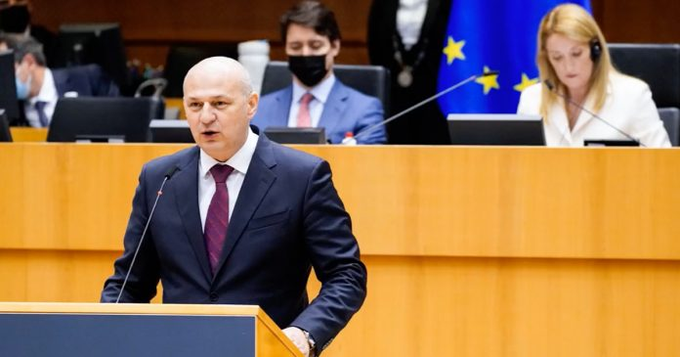
Despite Canadian legacy media outlets burying the story, the reprimand of Prime Minister Justin Trudeau by European parliamentarians in Brussels has made headlines around the world. True North

Canada's 'charismatic' prime minister, the man who rode to success during the 2015 election that brought him to the helm of government, enjoyed telling the international community at events taking him outside his country that "Canada is back!". He never stopped deriding the previous, Conservative-led government that preceded him, led by former Prime Minister Stephen Harper. His initial actions on coming to power included reversing most of the moves of the previous government, and then he put his own personal imprint on government departments, renaming them all. 
 
This man preened and presented himself as a 'feminist' and a supporter of Indigenous rights, yet when his government's female/Indigenous Minister of Justice and Attorney General refused to surrender to the pressure he and his cronies subjected her to in the interests of airbrushing away prosecution of a prominent Quebec company accused of international corruption, he moved her from her position, demoting her to a lesser portfolio, and finally removed her from caucus.

When the second-in-command of the Canadian military attempted to support the need for a re-supply vessel for Canada's ill-equipped navy, Justin Trudeau persecuted him, saw to his removal from office, and ordered a judicial enquiry into alleged wrong-doing, the consequences of which were an absolute acquittal. Justin Trudeau as prime minister of Canada has done more to drive a wedge between Western Canada and Eastern Canada than any of his predecessors.

He saw fit to elevate a spurious charitable enterprise during the initial days of the COVID pandemic; a group unqualified to fill a questionable position that would profit them greatly. A charitable enterprise whose operators were personal 'friends' engaged in questionable ethics, which paid the prime minister's mother and brother handsomely for celebrity appearances geared to give greater credibility to the charity, but which ended in a public scandal, forcing the Minister of Finance to step away from office.

During his time as prime minister of Canada, democracy has been eroded by decisions made by Justin Trudeau, with limited appearances in the House of Commons, and remotely-gathered sessions to conduct government business. He unnecessarily prorogued government for sustained periods of time, and would not be answerable for the lapse in government business, preferring lengthy adjournments attributable to his personal agenda.

This is a man who felt entitled to travel once again to Europe to speak to European parliamentarians to plead for unity in responding to the Russian invasion of Ukraine, a man who drove separatist impulse in Western Canada over his unequal and dismissive treatment of provincial assets and governments with which he would not agree. Democracies, he informed the European parliamentarians, is under attack in Ukraine, as though he was a leading exponent of democratic justice.

Trudeau's penchant for personal unaccountability, his practised aversion to direct response to questions, indulging in circumlocution, his automatic response to critics, lapsing into accusations of 'racism' and 'anti LGBTQ2' prejudices are legendary, known beyond Canada. When he mentioned as an example the recent truckers' protests in the streets around Parliament Hill in Ottawa last month, citing the Freedom Convoy as a conspiracy to turn citizens against a democratic system he described as best-suited, he drew a principled response from a handful of European delegates.

A response that made long-suffering Canadians sigh in appreciation that the hypocrisy and egocentricity of the man who has spoken of Canada as a 'racist' country, a country without any culture of its own, along with his aspiration to make of it a 'post-national' country has received recognition. The protesters in Ottawa, fed up with their government's autocratic mandates verging on dictatorship asked to be listened to. Their government had mandated that the ten percent of truckers who were unvaccinated must be.

People who for whatever reason would not submit to vaccination became, under Trudeau, third-class citizens whom he regarded with repugnance as unspeakable riffraff. He directed that they be unemployable without vaccination. Families with no incomes, struggling to get through a difficult period in their collective lives wanted an explanation and an answer from their prime minister, who refused to meet with them. Their protest was an affront to his sense of infallibility. 
"To defend our rights and the rights of our children, which we have acquired over the centuries, many of us – including myself – are willing to risk our own freedom and our own lives. Unfortunately, today there are those among us who trample on these fundamental values."
"Canada, once a symbol of the modern world, has become a symbol of civil rights violations under your quasi-liberal boot in recent months."
"We watched how you trample women with horses, how you block the bank accounts of single parents so that they can’t even pay their children’s education and medicine, that they can’t pay utilities, mortgages for their homes. To you, these may be liberal methods, for many citizens of the world, it is a dictatorship of the worst kind. Rest assured that the citizens of the world, united, can stop any regime that wants to destroy."
Croatian MEP Mislav Kolakusic
Image 

"Based on article 195, I would like to point out that it would have been appropriate for Mr. Trudeau, Prime Minister of Canada, to address this house, according to article 144. An article, which was specifically designed to debate the violations of human rights, democracy, and the rule of law which is clearly the case with Mr. Trudeau."
"[You are a] disgrace for any democracy. Please spare us your presence."
German MP Christine Anderson
"You are a disgrace": German MP calls out Trudeau to his face during intense speech (VIDEO)
Anderson accused Trudeau of openly admiring the Chinese basic dictatorship and called out the prime minister for trampling on “fundamental rights by persecuting and criminalizing his own citizens as terrorists just because they dare to stand up to his perverted concept of democracy.”

Labels: , , ,

Wednesday, November 24, 2021

The Many Puzzling Outcomes of COVID

"It seems that the Oxford-AstraZeneca vaccine initially induces higher levels of T-cells than the mRNA vaccines."
"These T-cells are important for long-term immune memory and also for inhibiting virus replication and killing infected cells once an infection becomes established."
"Since the AZ vaccine is slightly better at inducing these T-cells, the implication is that it may provide longer-term protection against hospitalization and death."
"I think this is the point that Dr.Soriot was making."
Eleanor Riley, professor of immunology and infectious disease, University of Edinburgh
New Scientist Default Image

A woman receives her covid-19 vaccination booster jab, London, UK  Leon Neal/Getty Images

The chief executive of AstraZeneca, Pascal Soriot on Tuesday responded to a puzzle that scientists are mulling over. That while the defences of Europe are crumbling against COVID-19 with steadily mounting infections and deaths related to the coronavirus, Britain in contrast is managing to keep its serious cases relatively low in both hospitalizations and resulting deaths. The explanation he offered was that the Oxford vaccine produces a more durable T-cell response, which could be what is ensuring that older people in Britain are safer than their continental counterparts in the prevention of hospitalization and death.

Cases remain high in Britain, the country is struggling just like other parts of Europe, with rising numbers but hospitalization and death appears under a firmer control than elsewhere. The AstraZeneca vaccine has been hugely unpopular in Europe, viewed with great suspicion. Leading to France, Germany, Spain and Belgium restricting its use to those under 65 in the early roll-out stage. Suspicion was aroused that there was insufficient data to ensure it was effective in older people.

Now, Dr.Soriot suggests that data demonstrate the AstraZeneca shot offers long-term protection, with a response that appears more durable than the mRNA vaccines produced by Pfizer and Moderna. The data of which he speaks is not yet published and has not as a result been reviewed by any outside sources for whom it would be of consuming interest. T-cells, without a shadow of a doubt, have an important role to play in protection against COVID. Antibodies wane over time, but T-cells remain able to trigger powerful immune responses, and to directly destroy infected cells, as well to work against new variants.
New Scientist Default Image

Closed Christmas stands in the city centre, Vienna, Austria.  Lisa Leutner/AP/Shutterstock

The University of Birmingham in April found five weeks following a first dose people over 80 given AstraZeneca or Pfizer showed similar antibody responses. In the AstraZeneca  group, double T-cell response was observed. Along with the strength of the T-cell response held to be three times higher than for the Pfizer group. Oxford University researchers found, in mid-June a still robust T-cell response from AstraZeneca doses at six months that even with a single dose; antibody immunity drops aside.

Scientists from Oxford and Switzerland in July concluded that long-term immunity could be greater for adenovirus vaccines like AstraZeneca resulting from "cellular training camps" for T-cells that they create. On the other hand, in the long term, mRNA vaccines also produce strong T-cell responses, perhaps more so than AstraZeneca, according to more recent research. A new paper published in Nature found Pfizer produced close to a six times greater number of T-cells than AstraZeneca, some 18 to 42 days following the second dose.

Data collected in real-world situations consistently indicate that the mRNA vaccines gain a slight improvement in prevention of infection and avoidance of serious disease than does AstraZeneca, an inconsistency with claims better protection is provided by the Oxford vaccine. Another interpretation of the situation could be that Britain has had so much recent infection that COVID is near to becoming an endemic virus. In the United Kingdom the booster program began earlier so that at present over 12 million adults now have had their third, 'booster' dose, which is recognized as having prevented tens of thousands of deaths.
 
A man walks through fallen leaves beside a wall covered in hand-drawn hearts and messages commemorating COVID victims in London

A wall in London commemorates people who died of COVID-19.  Credit: Toby Melville/Alamy/Reuters


Labels: , , , , , ,

Tuesday, November 23, 2021

Europe COVID Ridden, Locking Down

"It's like a luxury prison. It's definitely limited freedom and for me it's not great psychologically."
"People were promised that if they got vaccinated they would be able to lead a normal life, but now that's not true."
Sascha Jamkovyi, food sector entrepreneur, Vienna
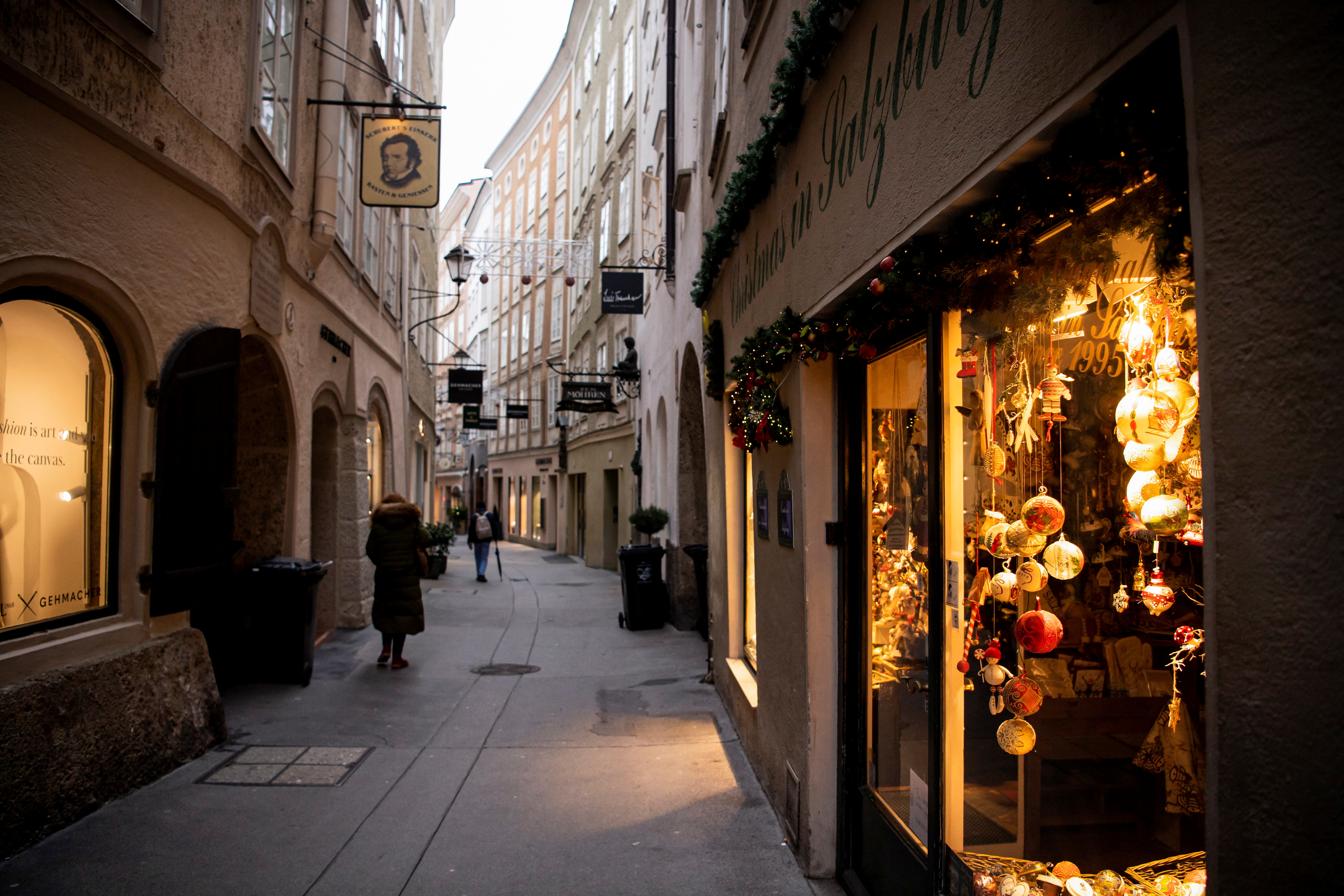
Pedestrians walk at the city centre during the coronavirus disease (COVID-19) outbreak, as Austria's government imposed a general lockdown from Monday, in Salzburg, Austria, November 22, 2021. REUTERS/Lukas Barth

Austria now is the first country in Western Europe reimposing lockdown since inoculations first began in the country. Non-essential shops, bars and cafes are now shuttered as caseloads surge, making the continent's leaders fearful of a second straight winter where the entire continent will be in deep freeze, so to speak. Tighter restrictions are also on the way in Germany in an effort to control a record-setting wave of infections.

Europe is now again the epicentre of the global pandemic that caused lockdowns first in March of 2020. The imposition of new restrictions and new vaccine mandates are expected to affect more countries struggling with rising caseloads, marking the approach of the second full year of spreading infections since the SARS-CoV-2 viruses that causes COVID-19 first emerged in China.

Confirming her position on the need to begin another closing of society, Chancellor Merkel informed leaders of her conservative CDU party: "We are in a highly dramatic situation. What is in place now is not sufficient" to dampen rising COVID case numbers. An urgent message from Jens Spahn the German health minister for people to be vaccinated, followed his confidential assurance of certainty that by winter's end everyone in the country would be "vaccinated, recovered or dead"; a message geared to spell out dire consequences.
Workers dismantle Christmas market a booth in Munich
Workers dismantle a booth in Munich, the capital of Bavaria, which, like Saxony, has cancelled its Christmas markets to help control Covid-19. Photograph: Christof Stache/AFP/Getty Images
 
Austrians are being urged to work from home if at all possible; warning that restaurants, theatres and non-essential shops would be closed for a period of ten days. Citing a limited number of reasons for leaving home, such as attending school, going out to a workplace, shopping for essential products, or walking outdoors for exercise, Austrian authorities have made it clear that normal life habits must temporarily undergo change.

As of February 1st, in Austria, vaccinations will become compulsory, within a public where many remain skeptical of vaccinations, a suspicion of medical science encouraged by the far-right Freedom Party, third largest in parliament. Some 40,000 protesters were out on the streets in Vienna. In Brussels and across the Netherlands, protests turned violent over the weekend.

Unvaccinated people were banned from services, including going out to pubs and cafes and restaurants in the Czech Republic and in Slovakia. In Austria a third of the population remain unvaccinated, one of the highest unvaccinated rates in Western Europe, a situation that authorities blame for the COVID wave the country is currently struggling under.
 
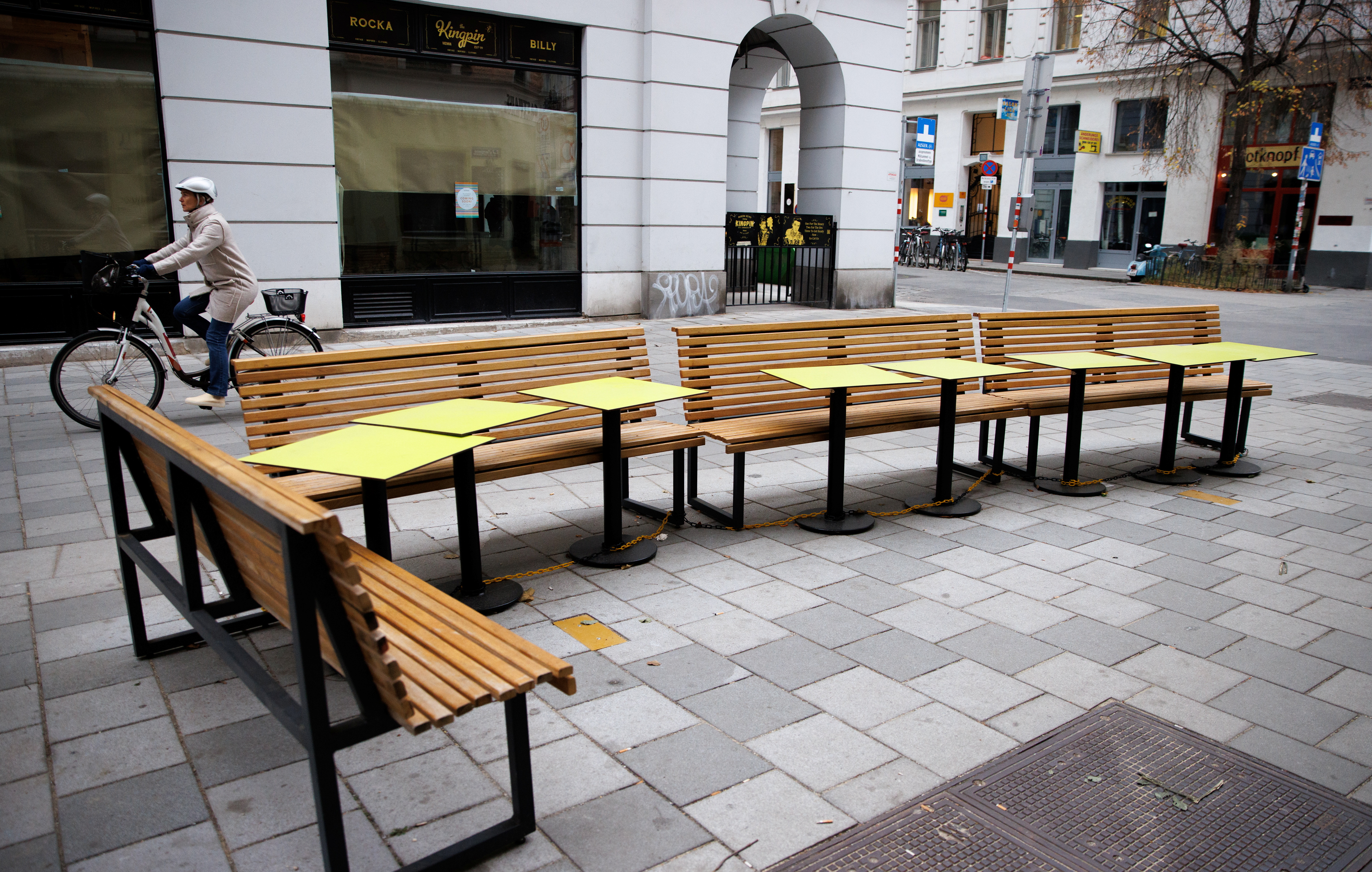
Abandoned tables of a closed restaurant are seen in a street as the Austrian government imposed fourth national coronavirus disease (COVID-19) lockdown in Vienna, Austria, November 22, 2021. REUTERS/Lisi Niesner

Despite the imposition of a lockdown on the unvaccinated last week, daily infections continue rising far above the previous peak, leading to a full lockdown this week. In Berlin and other parts of Germany Christmas markets have opened for the first time in two years, but in states bordering Austria and the Czech Republic with Germany's highest case loads, stricter rules prevail with the cancellation of Christmas markets and barring the unvaccinated from restaurants and bars, along with night-time curfews.

Vaccination rates are lower still in Eastern European countries where some of the highest death tolls per capita in the world have been experienced. In countries like Bulgaria and Romania, hospitals are overrun with serious cases of COVID-19, the surging caseloads leaving medical personnel in a quandary of hopelessness over vaccine hesitancy.

AP Photo/Petr David Josek
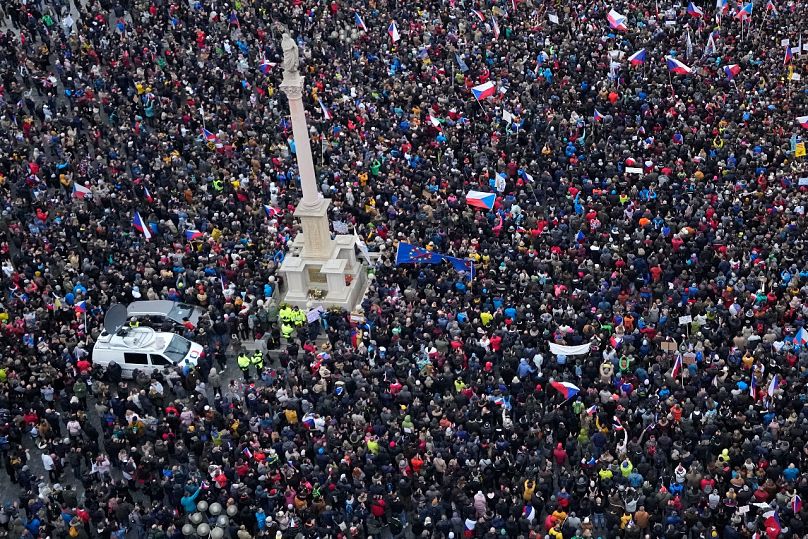
Demonstrators protest against government COVID-19 restrictions during anniversary celebrations of the 1989 Velvet Revolution ending communist rule, Prague, Nov. 17, 2021.  AP Photo/Petr David Josek

Labels: , , , ,

Wednesday, November 17, 2021

Pandemic Epicentre

"[With high levels of COVID immunity and a strong booster vaccination program, the UK is] unlikely [to experience a] catastrophic winter wave [of infections that would require a Christmas lockdown similar to last year]."
"[The UK is seeing a] hint of an uptick in the last few days [following weeks of declining case numbers and hospital admissions]. We've had very high case numbers - between 30,000 and 50,000 a day - really for the last four months, since the beginning of July.That has obviously had some downsides."
"It has also paradoxically had an upside of boosting the immunity of the population compared with countries like Germany, the Netherlands and France, which have had much lower case numbers and are only now seeing an uptick."
Professor Neil Ferguson, Scientific Advisory Group for Emergencies, U.K.
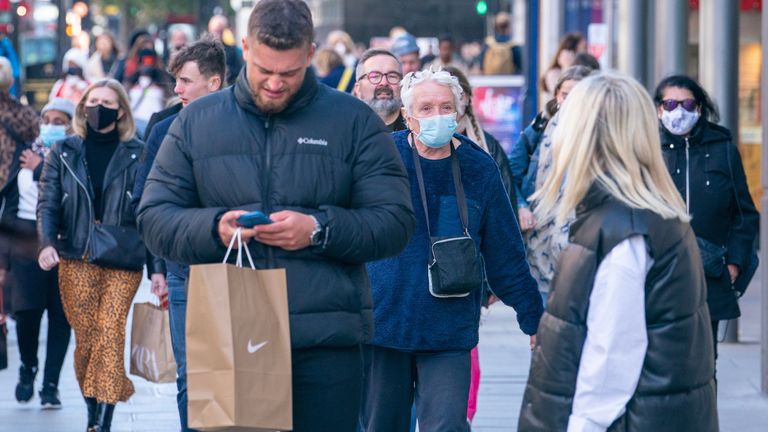
Shoppers wearing face masks on Oxford Street, in central London, as the Department of Health and Social Care is calling upon eligible people to get their covid-19 booster vaccinations. Picture date: Friday October 22, 2021.
The UK government is urging the public to get their booster shots   SkyNews
"Europe is back at the epicentre of the pandemic, where we were one year ago."
"[Countries in the region are at] varying stages of vaccination rollout [and region-wide an average of 47 percent of people are fully vaccinated."
"Only eight countries have fully vaccinated 70 percent of their population."
Dr.Hans Kluge, director, WHO 53-country Europe region

"We are clearly in another wave."
"The increased spread is entirely concentrated in Europe."
Anders Tegnell, chief epidemiologist, Sweden

"The epidemiological situation in Europe is very concerning now as we head into the winter with increases in infection rates [and] hospitalization." 
"And we can also see the increase in fatalities."
Fergus Sweeney, head of clinical studies/manufacturing task force, European Medicines Agency
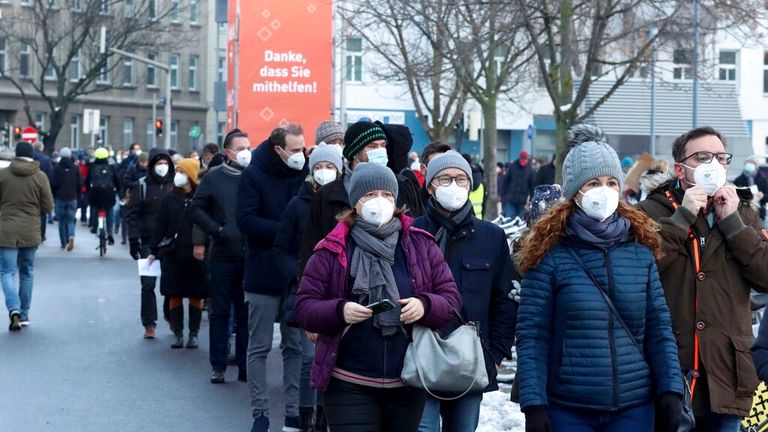
People waiting for a mass COVID-19 testing in Vienna, Austria
People waiting for a mass COVID-19 testing in Vienna, Austria   Sky News

Even as the WHO's director general declared Europe to now represent the global pandemic's epicentre, Austria took steps to place millions of its unvaccinated citizens under strict lockdown. Those over age 11 not double-vaccinated only permitted to leave their homes to attend school, work, for exercise or to secure essential supplies. Two million of the country's 8.9 million population were affected by the order. It is, in fact, similar in nature to Beijing's severe orders in response to COVID outbreaks.

A greater than 50 percent leap in coronavirus cases in the past month in Europe has made it the epicentre of the coronavirus pandemic; this irrespective of a more than ample supply of available vaccines. "There may be plenty of vaccine available, but uptake of vaccine has not been equal", observed WHO emergencies chief, Dr.Michael Ryan.

A woman wearing a mask looks at street art as she walks at the International Street Art Museum following the new social restrictions announced by the Dutch government, as the Netherlands battle to control the spread of the coronavirus disease (COVID-19), in Amsterdam, Netherlands 14 October 2020
The Dutch government has also announced new social restrictions for the Netherlands  Sky News
 
European authorities were urged to "close the gap" in the tempo and coverage of inoculation. Tedros Adhanom Ghebreyesus, the WHO director general, stated that those countries that immunized over 40 percent of their population should now take a halt in proceedings and donate doses to developing countries not yet able to offer their citizens a first dose of vaccine.

"No more boosters should be administered except to immunocompromised people", he said, calling for vaccine producers to prioritize the supplying of COVAX, a distribution agency developed by the UN to share vaccine doses on a global scale. Just one percent of Pfizer's supply of vaccines has ended up with COVAX, with Moderna providing a million doses to the developing world from late October. 

Although developing countries have to the present received fewer than one percent of the globe's     COVID-19 production of vaccines, in Africa and Southeast Asia cases fell by nine percent last week. In the meantime, over 60 countries began giving booster doses to combat weakening immunity before the onset of winter, which is when the latest wave of COVID-19 is anticipated.

Children ages five to 11 began receiving COVID-19 doses in the United States once authorities there made the decision of the benefits outweighing potential risks. Dr.Hans Kluge from Copenhagen's offices as director of the Europe region, warned that coronavirus hospitalization rates had more than doubled in one week alone, predicting that the trajectory would lead the region to see another half-million pandemic deaths by February.

The WHO Europe region stretches east as far as the former Soviet republics in Central Asia, tallying close to 1.8 million new cases weekly, representing an increase of some six percent from the week before, and 24,000 weekly deaths caused by COVID; a 12 percent gain.
 
A specialist wearing personal protective equipment (PPE) sprays disinfectant while sanitizing a chapel inside the building of the Leningradsky railway station amid the outbreak of the coronavirus disease (COVID-19) in Moscow, Russia October 19, 2021. REUTERS/Maxim Shemetov/File Photo
A specialist wearing personal protective equipment (PPE) sprays disinfectant while sanitizing a chapel inside the building of the Leningradsky railway station amid the outbreak of the coronavirus disease (COVID-19) in Moscow, Russia October 19, 2021. REUTERS/Maxim Shemetov

 Case increases of COVID-19 have risen across the continent, identifying it as the only region in the world where COVID-19 continues increasing. In Central and Eastern Europe there are several countries in particular seeing daily case numbers shoot skyward. The Amsterdam-based European Medicines Agency experts have urged people to get themselves vaccinated.

Labels: , , , , , ,

Saturday, March 13, 2021

AstraZeneca-Oxford Vaccine's Bad Press

"It's very important to understand that, yes, we should continue to be using the AstraZeneca vaccine."
"[The vaccine is] excellent."
"All that we look at is what we always look at: Any safety signal must be investigated."
Margaret Harris, spokeswoman, World Health Organization

"[Of the ten million patients who received the vaccine AstraZenec Canada's review has uncovered] no evidence of an increased risk of pulmonary embolism or deep vein thrombosis in any defined age group, gender, batch or in any particular country."
"In fact, the observed number of these types of events are significantly lower in those vaccinated than what would be expected among the general population."
Carlo Mastrangelo, head, corporate affairs, communications and sustainability, AstraZeneca Canada
Empty vials of the AstraZeneca-Oxford COVID-19 vaccine at a vaccination centre in western France. Some countries have temporarily halted use of the vaccine while clotting reports are investigated. Canada is among the countries continuing to use it. (Fred Tanneau/AFP/Getty)
 
According to Dr.Zain Chagla, infectious disease physician at St.Joseph Hospital in Hamilton, Ontario, the normal incidence of blood clots is roughly one in 1,000 patients over the course of a year and when millions of people are being vaccinated, the development of clots is not unusual. Whether those developing clots might have done so without the inoculation however, is perhaps the crux of the matter.

Nine countries in Europe along with Thailand have put a pause on use of AstraZenca's vaccine doses. Some permanently, others targeting only certain batches -- awaiting further investigation of the occurrence of blood clots which some have linked to the use of the AstraZeneca-Oxford vaccine. In actual fact no experts have suggested a link exists between the vaccine and the development of blood clots.

On Friday, the World Health Organization emphasized what they've been saying since rumours of a link surfaced, by unequivocally endorsing AstraZeneca's vaccine for its efficacy and safety. It has been pointed out that the WHO views the shot as the least expensive, most high-volume of the vaccines launched to date, identifying it as the mainstay of the developing world's vaccination programs.

In Canada, its initial 500,000 doses of AstraZeneca are being used in inoculating target groups -- with the exception of anyone over age 65 until such time as further research clarifies its usefulness for an older demographic. Health Canada announced its authorization of the vaccine based on a thorough, independent review of the evidence presented by the pharmaceutical company, determining the vaccine meets Canada's stringent safety, efficacy and quality standards.

As far as Canadian health authorities are concerned, while maintaining a vigilance over the European investigations of the Oxford-AstraZeneca vaccine following reports of blood clots post-inoculation, there appears no evidence the vaccine caused the clots. "To date, no adverse events related to the AstraZeneca COVID -19 vaccine or the version manufactured by the Serum Institute of India (where the Canada-destined vaccine is sourced) have been reported to Health Canada or the Public Health Agency of Canada".

It would be well to bear in mind that Israel, the country which has outstripped all others around the globe in swiftly and successfully administering the AstraZeneca vaccine to a majority of its population has seen no problems arise there. Its success has been celebrated and the country's initiative and efficiency in administering the vaccine so widely is held as an astounding success story the rest of the world aspires to emulate.

In Denmark which halted AstraZeneca vaccine after an undisclosed number of blood clots were reported and a patient died, health authorities explained they halted the use of the vaccine in a spirit of caution and not because there were any suspicions that a connection existed between the vaccine and the blood clot development.

The issue is under study by the EU regulator European Medicines Agency which observes that 30 blood clots in over five million patients who received the vaccine is not unusual nor out of step with what is considered the normal rate of blood clots in the general population.  So while Denmark, Iceland, Norway and a handful of other European countries have suspended use of the vaccine, other countries including Germany, France, Poland, Nigeria, the United Kingdom and Canada continue its use in view of a lack of evidence it poses a health risk.

Health Canada's chief medical adviser Dr. Supriya Sharma, adds that with no scientific basis for a link between blood clots and the AstraZeneca shot there is no reason to discontinue or pause its use: "There's not a good biological explanation about why a vaccine of this type, injected into a muscle, would cause that kind of adverse event ."

Image
The available data suggest that among 5 million people who received the AZ vaccine, 30 developed a blood clot. So, 30 in 5 million. Our research team has shown that among those with COVID about 2% developed a blood clot. So about 100,000 in 5 million. cmaj.ca/content/193/1/


Labels: , , , , , ,

 
()() Follow @rheytah Tweet