The Openly-Acknowledged Black Market in MOTS-c Peptide
 |
"Turns out that tens of thousand of people are injecting themselves with MOTS-c. [That's] black market, illegal, from unknown sources, unknown purity, unknown sterility, and I strongly object to that.""We can't stop the black market. So I think it's a better choice to at least guarantee the quality, the sterility and require that real doctors are part of the process. I really think this is a better choice than just letting it go on the way it is.""Certain groups of people -- for example the fitness enthusiasts, which is the kind way to refer to gym rats -- those people take one figure from one paper done on mice and take it to become gospel."Dr. Pinchas Cohen, dean, USC Leonard Davis School of Gerontology"My impression is that the 'lesser of two evils' argument is a minority perspective. While it's true that most [pharmaceutical] compounders can likely [produce] purer versions of these peptides than what's in the grey market, that doesn't address potential inherent risks of the peptides themselves.""There's no special reason they should be allowed to bypass the standard clinical trial system just because there's a peptide fad driven by wellness influencers and telehealth firms."Professor Paul Knoepfler, cell biology and human anatomy, UC Davis School of Medicine
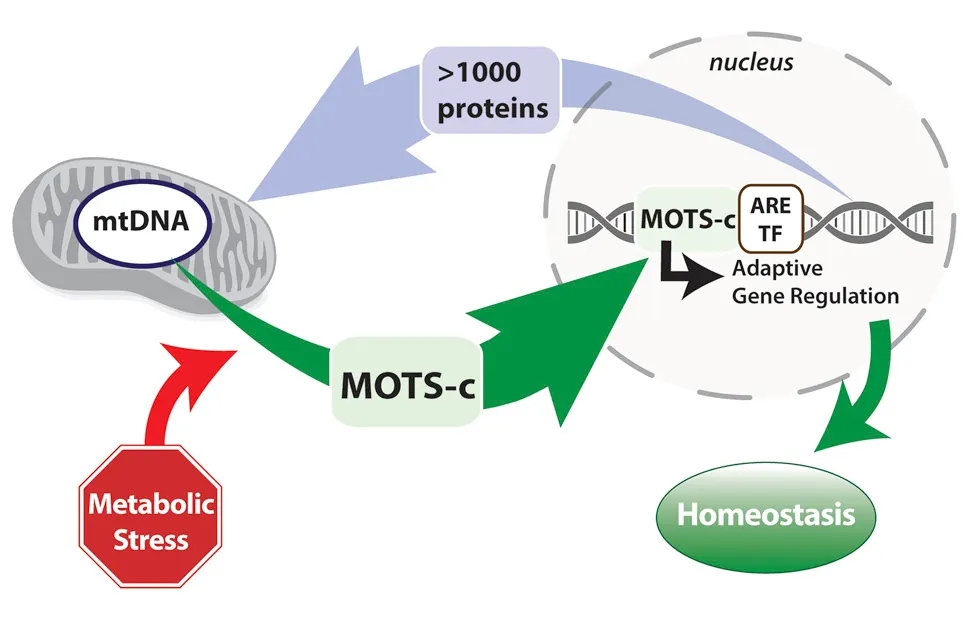
Dr. Pinchas Cohen's laboratory at the School of Gerontology, USC Leonard Davis identified the MOTS-c peptide as one of the thousands of peptides acting as chemical messengers in the human body. It was discovered when Dr. Cohen combed through the 97 percent of human DNA that does not encode for genes. Once dismissed as "junk DNA", or the "Dark genome", this biological hoard has been recognized as being full of hormones and microproteins playing vital roles in directing systems and processes in the body.
When he became aware his discovery was being promoted by longevity seekers, fitness enthusiasts and wellness influencers as "exercise in a bottle", he felt dismayed. While not approved by the U.S. Food and Drug Administration, the peptide was available widely online, frequently found in vials marked "for research use only". Social media hype and a public consumer zest for experimental peptides has overwhelmed the public seeking magical fountains of youth and energy, and unregulated peptides now fuels a high-stakes federal government policy conflict.
Unsurprisingly, U.S. Health and Human Services Secretary Robert F. Kennedy Jr. is a self-confessed "big fan" of peptide use personally, pledging to put an end to government's "aggressive suppression" of the peptides. Some of which, like insulin, human growth hormone and glucon-like peptide-1 have seen transformational therapeutic effects to humans. However, every one of these peptides (think Ozempic) on a pharmacy shelf has undergone decades of clinical trials and testing for safety.
 |
| Photo by Innerbody Research |
The same cannot be said for MOTS-c and a host of other peptides now widely available online. Those wedded to their use claim the substances' effectiveness in aiding weight loss, boosting energy and muscle mass, frequently citing research conducted only on animals, or with a very limited number of humans. Leading to the situation where it is unknown how or when the peptides should be used for humans; no data exists that can attest to their safety and effectiveness.
An FDA committee was recently struck to vote whether to recommend compounding pharmacies be permitted to manufacture six different peptides currently available online: BPC-157, TB-500, KPV, epitalon Semax and MOTS-c. Last month, Health Canada announced that a Canadian court had approved their request to permanently ban a Quebec-based online store from selling unauthorized injectable peptides in Canada.
Many of the members comprising the FDA committee work for telehealth, longevity and wellness companies that will profit from the regulation of peptides. Dr. Cohen arrived in Washington to speak before the committee; stating that he believed "quality-controlled, prescriber-supervised" compounding was the safest way forward. FDA staff who also spoke at the meeting advised against peptide compounding on the reasonable basis that insufficient safety data exists to justify the move.
It is unknown how long-term use of these peptides would affect humans. Claims by influencers that peptides have a positive effect on human weight loss, muscle mass, longevity and energy have been taken from effects seen on laboratory animals. Nor is it known what formula or dosage might be effective for human use. Molecules are viewed by scientists as a promising area of research where significant health breakthroughs could result. Rigorous science on the other hand takes time; guesswork is just that; unproven assumptions.
 |
| viviana loza//Getty Images |
"Peptides are neither miracle cures nor snake oil. They are signalling molecules. Some have strong evidence. Some have intriguing or early data. Some are wildly overhyped, and some probably should never leave the laboratory.""Patients are looking for alternatives, and they are looking not at physicians. They're looking at this grey market source."Dr. Ben Gonzales, former emergency medicine physician, Walter Reed Army Medical Center"The big picture is that we're transitioning as a nation from the 20th-century model [in which] all health care was dictated by physicians and insurance companies to a new 21st-century model where consumers are demanding and receiving health and wellness services and products that they pay for in cash.""I'm not saying that's a better model. But it's the model we're transitioning into."Dr. Pinchas Cohen
 |
| MOTS-c peptide hype |
Labels: Athletes, Black Market, Clinical Trials, Health Canada, Influencers, MOTS-c, Online Availability, Peptides, Telehealth, U.S. Food and Drug Administration
posted by Pieface @ 8:39 PM
0 comments