Ruminations

Blog dedicated primarily to randomly selected news items; comments reflecting personal perceptions

Friday, June 05, 2026

Ozempic a Cancer-Fighting Drug?

"Our study was observational and does not definitively confirm an association between GLP-1 medications and reduced breast cancer incidence,"
"It does add to the growing body of evidence suggesting that it's worth investigating these weight loss drugs as potential cancer prevention tools."
"GLP-1 medications are intriguing from a cancer research perspective because they weren't designed for cancer therapy, but they do affect many different targets and pathways associated with cancer development, so we're eager to study them in this context,"
"We know obesity is a risk factor, but we don't understand how."
"Ultimately, we want to find better options to prevent breast cancer. It’s been encouraging to see the survival rates for breast cancer improve over recent decades, and we’d love to see the same gains in prevention."
Dr. Elizabeth McDonald, physician, radiology professor, Hospital of the University of Pennsylvania
 
"Our study found that use of GLP-1 drugs… was associated with a meaningful reduction in cancer progression across four solid tumor types."
"It provides early evidence that future studies are worth pursuing."
Mark David Orland, oncologist, Taussig Cancer Institute, Cleveland Clinic
 
"GLP-1 receptor agonists have never been just glucose-lowering drugs,"
"Their anti-inflammatory and immune-modulatory properties have long suggested broader effects."
"What's new here is the consistency across tumor types, and data this large and this consistent warrant a prospective randomized trial."
Marcin Chwistek, oncologist, Fox Chase Cancer Center, ASCO Expert in supportive care

A woman holding a weight-loss drug injection pen
One analysis found those who took GLP-1 medications were 30% less likely to develop breast cancer than those not taking weight-loss drugs. Photograph: Munro/Getty Images

Over 40 studies, abstracts, oral presentations and poster presentations examining the relationship between GLP-1-based drugs and cancer were presented at the recently-held annual American Society of Clinical Oncology Chicago meeting. What makes these studies remarkable was the consistency of their findings, suggesting that individuals who take medications like Ozempic, Wegovy and Mounjaro may develop a lower rate of certain cancers than those not using the famously popular weight-loss drugs.
 
In addition to which hopeful signs that for those for whom cancer has already been diagnosed, use of the drugs may lead to a slower decline and improved outcomes. "We're really excited to be on the forefront of looking at the effects of these drugs", stated Mark Orland, cancer researcher at the Cleveland Clinic. The findings are "super promising"
 
Many of the  13 types of cancer associated with obesity were included in the studies, the most prominent among them, an analysis from the University of Pennsylvania, which studied data from over 100,000 women, and found that lower rates of breast cancer emerged among women taking the drugs. Another study followed over 10,000 patients t o find those taking the medications were significantly less likely to progress to metastatic disease across four solid tumours. 

 
https://www.sciencealert.com/images/2026/06/BreastCancer.jpg
(Curly_photo/Moment/Getty Images)
 
 Findings related to lung cancer, not generally associated with weight, also drew attention for its impact. where taking the medications were seen to have its effect on lung  cancer, where several studies hinted that GLP-1s could enhance treatment effects. The possibility has arisen due to these findings that GLP-1s may be acting independently of weight loss, by reducing inflammation, altering metabolic pathways involved in cancer development, or perhaps slowing tumour growth itself. Doctors feel the evidence is not yet strong enough to recommend prescribing the drugs for that purpose.
 
Observation studies which can identify associations but cannot establish cause and effect cannot prove that GLP-1s prevent cancer. For the present, caution is being promoted for the observational studies leading to findings that cannot link cause and effect with certainty. GLP-1 findings remain hypothetical, eluding a conclusion. despite the growing volume of evidence turning the question toward serious investigation. What is left is the question whether medicine has underestimated how many diseases share a similar underlying biology. GLP-1s force medicine to withdraw boundaries between diseases that once appeared to be separate.
 
The emerging theory is that many conditions such as diabetes, obesity heart disease, kidney disease, addiction, dementia, and cancer may share properties -- more than researchers have understood. As far as Gilberto de Lima Lopes, chief of medical oncology at the Sylvester Comprehensive Cancer Center at the University of Miami is concerned, the cancer findings fit a broader pattern, where GLP-1s increasingly resemble "a really interesting longevity drug. The potential benefit is real, and it makes biological sense", he contends.  
 
One of the most talked about findings among the researchers was Dr. McDonald's, whose study relied on analyzing existing medical records instead of a randomized clinical trial. Records from about 100,000 women aged 45 to 60 were examined who had undergone breast imaging to find that -- accounting for differences in age, obesity, diabetes and other risk factors, -- GLP-1 users remained roughly 30 percent less likely to develop breast cancer. According to Dr. McDonald, the findings built on the scaffolding of years of studies in lab-grown cells and animals that suggested GLP-1 drugs can slow cancer cell growth, enhance effects of chemotherapy and influence other pathways linked to the development of cancer. 
 
Also presented at the ASCO meeting, Jasmine Sukumar of MD Anderson Cancer Centre, a separate breast cancer study analyzed records from over 137,000 breast cancer patients between the years 2014 and 2023. Women taking GLP-1 drugs  had markedly superior survival rates where close to 96 percent survived five years following surgery. in comparison with about 90 percent of similar patients who were not taking the medications. 


Labels: , , ,

Wednesday, December 15, 2021

The Link Between Asthma and Brain Tumours

"Of course, we're not going to start inducing asthma in anyone; asthma can be a lethal disease. But what if we could trick the T cells into thinking they're asthma T cells when they enter the brain, so they no longer support brain tumour formation and growth?"
"These findings open the door to new kinds of therapies targeting T cells and their interactions with cells in the brain."
"The most exciting part of this is that it shows that there is a normal communication between T cells in the body and the cells in the brain that support optic pathway glioma formation and growth."
"The next step for us is to see whether this is also true for other kinds of brain tumours. We're also investigating the role of eczema and early-childhood infections, because they both involve T cells."
David Gutmann, researcher, expert on neurofibromatosis, professor of genetics, of neurosurgery and paediatrics, Washington University School of Medicine, St.Louis 
Woman with asthma using inhaler
(bobex73 - stock.adobe.com)
 
Insatiable curiosity teamed with the methodology and collaboration between inquisitive scientific minds often represent the emerging blueprint for discovery of new potential therapies in solving human ills that often threaten lives. Researchers at Washington University School of Medicine in St.Louis discovered that when mice develop asthma, their T cells activate in such a manner that induces inflammation in the lungs, yet prevents growth of tumours in the brain.

In essence, the research team may just have happened upon a new method of designing a response to brain tumors after discovering just why it is that the peculiar and unproven previously-known connection between asthma sufferers being less likely than others to go on to develop this insidious form of cancer. Published in the journal Nature Communications, the study explored the relationship, mysterious as it is, between inflammation diseases and brain tumours.

These two conditions so very different from one another, long puzzled the medical community in a possible connection, despite which new research has led to the discovery that T cells in the body may hold the answer to a question that has long mystified scientists. When mice develop asthma, their T cells activate to induce inflammation in the lungs, an effect that also has the effect of preventing growth of tumours in the brain. 

It was first postulated 15 years ago that inflammatory diseases have a relation to reduced risk of brain tumours, based largely on epidemiologic observations. No obvious link presented, however, linking the two conditions, leaving many researchers in doubt that an association actually was present. Dr. Gutmann, senior scientist in the study, noticed an inverse relationship between the two conditions some five years earlier through study of neurofibromatosis; a set of complex genetic disorders leading to the growth of tumours on nerves in the brain and throughout the body.

Uncertain how to link to a connection, more recent research taking place in his laboratory identified the key role that immune cells play in formation of tumours on the optic pathways of children with type 1 NF (neurofibromatosis). A collaboration resulted with Jit Chatterjee, post-doctoral researcher who was in the process of diagnosing the underlying mechanism at work. Dr.Chatterjee exposed mice that were engineered to carry a mutation in the NF1 genes to result in tumours on their optic nerves.

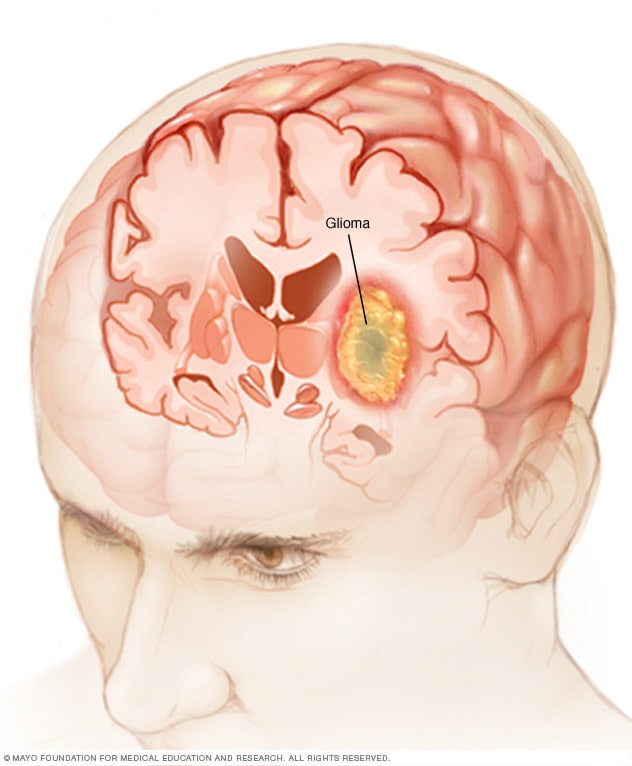
Glioma
These young mice in their formative period of growth were exposed to irritants known to be the cause of asthma, administering a salt-water solution to a control group of mice. The mice that developed asthma turned out not to experience tumour growth on their optic nerves. Then it was revealed through further study that the T cells of these mice were behaving differently after developing asthma, secreting a protein named decorin, known to act on and irritate the lining of the brain airways.

The protein blocked the activation of immune cells called microglia, that promote tumour growth. "As we understand this communication between T cells and the cells that promote brain tumors better, we’ll start finding more opportunities to develop clever therapeutics to intervene in the process", explained Dr. Gutmann.


Labels: , ,

Monday, November 15, 2021

Solving The Puzzle Of Alzheimer's

Brain Disease Alzheimer’s Treatment
"This structure had never been seen before in amyloid beta."
"If these results were to be replicated to human clinical trials, then it could be transformative."
"It opens up the possibility to not only treat Alzheimer's once symptoms are detected, but also to potentially vaccinate against the disease before symptoms appear." 
Prof.Mark Carr, Institute of Structural and Chemical Biology, University of Leicester, Britain

"In this thorough and well-conducted research carried out in mice with features of Alzheimer's disease, scientists found a vaccine administered through injections found the intended target and helped improve metabolism in brain regions associated with memory and thinking."
"Early results in a behavioural task suggest the mice had improved memory and thinking, hinting that this could be a promising new approach, and one that has so far not been tested in Alzheimer's drugs in clinical trials."
Dr.Susan Kohlhaas, director of research, Alzheimer's Research U.K.
ScienceAlert

One of the signal grails of solving one of the most devastating diseases striking down people by withdrawing personal agency with the  failure of the human thought process, memory, and eventually, neural instructions, brain-to-bodily competence leading to death may have been discovered. With a vaccine against Alzheimer's disease on the horizon following successful trials conducted by research scientists on animal models. 
 
Experimental trials saw researchers from the United States and Germany reversing memory loss in mice. With that success they are anxious to bring their vaccine to the validating trial that has the potential to change the trajectory of dementia in Alzheimer's, realizing the hope this dread disease could be conquered. The next step is in human trials.
 
What the vaccine has been geared to is directing the immune system to combat a type of sticky amyloid beta protein in the brain. The immune system undergoes a training led by the vaccine to fight off the accumulation of the sticky matter which prevents neuronal communication. Drugs previously devised to fight Alzheimer's concentrated on reducing amyloid -- but with little success in symptom reduction and on occasion negative side-effects surfaced with their use.
 
In people with dementia, scientists have now discovered, the protein folds itself into a hairpin-like structure and as such becomes a far more dangerous form of amyloid. Theorizing that engineering amyloid into the very same hairpin shape before administering it as a vaccine would spur the body to produce antibodies to fight off that specific structure, the team proceeded on that basis. In the process the immune system would ignore normal forms of the protein, required by the body to function.
 
The vaccine, once injected into mice, triggered antibodies, helping to restore neuron function. It increased glucose metabolism in the brain, reversing memory loss and reducing amyloid beta plaque formation, the 'sticky' mess associated with Alzheimer's' progress. Published in the journal Molecular Psychiatry, the researchers now are pursuing the avenue of partnering with a commercial entity for the therapeutic antibody and vaccine to be taken through clinical trials.
"In clinical trials, none of the potential treatments which dissolve amyloid plaques in the brain have shown much success in terms of reducing Alzheimer’s symptoms. Some have even shown negative side effects."
"So, we decided on a different approach. We identified an antibody in mice that would neutralize the truncated forms of soluble amyloid beta but would not bind either to normal forms of the protein or to the plaques."
Professor Thomas Bayer, University Medical Center, Göttingen, Germany
<p>The study suggested that it may be possible to treat Alzheimer’s and vaccinate against it </p>

The study suggested that it may be possible to treat Alzheimer’s and vaccinate against it  (Getty Images)


Labels: , , ,

 
()() Follow @rheytah Tweet