Ruminations

Blog dedicated primarily to randomly selected news items; comments reflecting personal perceptions

Monday, January 13, 2020

The Intelligence of Bionic Prosthetics

"Touch isn't a single sense. When you first touch objects with a natural hand, there's an extra burst of neural impulses."
"When the prosthetic hand starts to feel like the user's real hand, the brain is tricked into thinking that it actually is real. Hence, the phantom limb doesn't have a place to live in the brain anymore. So it goes away -- and with it goes the phantom pain."
"Participants can feel over 100 different locations and types of sensation coming from their missing hand. They can also feel the location and the contraction force of their muscles -- even when muscles aren't there. That's because we can send electrical signals up the sensory fibres from the muscles, so the brain interprets them as real."
Gregory Clark, associate professor of biomedical engineering, University of Utah
University of Utah biomedical engineering doctoral student Jacob George, left, and associate professor Gregory Clark, are helping develop a prosthetic arm that can move via the wearer's thoughts as well as feel the sensation of touch to make it easier to pick up and hold objects.  Dan Hixson/University of Utah College of Engineering

"We are moving toward an autonomous system that will learn to perform new actions as per the user's intentions with the least supervision from outside, and enable the user to control the prosthetic more independently."
Taruna Yadav, PhD student

"Our main goal is to let patients control the prosthetic as though they were their biological limbs."
"This new technology takes us a step closer to achieving this."
"In both cases [bionic body part for amputee or paralyzed person], it will still read the user's neural activity and generate a command to control a prosthetic limb."
"However, the time and effort required to learn to control the BCI [brain-computer interface] output may differ."
Dario Farina, lead author, 2018 paper
Photo credit: University of Utah Center for Neural Interfaces

Prosthetics designed to closely mimic part of the human body they are meant to replace are the focus of researchers around the world. Ambition sees new prosthetics transcending mere cosmetic, let alone functional purposes. The new prosthetics are bionic body parts able to touch and feel, and beyond, including learning new things. Characteristics such as firmness, texture and temperature, crucial in determining how interaction will take place with an object sees the brain "translate" these functions and feelings.

Someone using one of the new prosthetics, an arm, for example, is able to "feel" the delicate substance of an egg, in the very same manner as would occur with a natural limb, including using the prosthetic to gently lift the egg and transfer it without harm. One participant in the testing of a new prosthetic "feeling" limb, was able to  hold his wife's hand, send a text message, and pluck grapes from a bunch, despite having lost his natural arm a decade before. The phantom pain he suffered despite the absence of his natural arm had subsided.

Professor Clark's research team achieved such results through stimulating the sensory nerve fibres in a "biologically realistic" manner with the use of a computer algorithm. Through this process they were enabled to provide a more biologically realistic digital pulse with a verisimilitude to what the brain itself normally receives in neural impulses from a natural arm. Communication between the brain and a robotic body part -- the brain-computer interface -- is the critical component of a thought-powered prosthetic.

In some mind-controlled prosthetics, brain implants are used to send instructions to a robotic limb similar to the way neurons transmit messages from brain to muscle. This method comes with the risks, cost and recovery time of precision brain surgery, however, quite beyond the brain-computer interface using a neural interface. A breakthrough was announced in June of a "mind-controlled robotic arm ... that demonstrated for the first time to our knowledge, the capability for humans to continuously control a robotic device using non-invasive EEG signals" according to Bin He, professor, head of biomedical engineering at Carnegie Mellon University.

Non-invasive BCIs have demonstrated promising results in performing distinct actions; pushing a button for example. BCI use had resulted in disjointed movements of the robotic prosthesis in continuous, sustained action like tacking a cursor on a computer screen; but now the prosthetic finger followed the cursor in a smooth, continuous path, emulating a real finger with the use of a computer-wired EEG cap on the subject in the lab.

A new smartphone app programmed with EEG recordings and wireless electrodes, according to Professor He, could streamline the process for everyday use, paving the way for thought-controlled robotic devices by decoding "intention signals" from the brain, absent invasive and risky brain surgery. Prosthetics must be calibrated for specific use and to that end engineers at the lab of Joseph Francis, associate professor of biomedical engineering at University of Houston have been applying themselves to a BCI to autonomously update using implicit user feedback.

A bionic hand developed through collaboration between the Imperial College London and University of Gottingen in 2018 used  a human-machine interface interpreting the wearer's intentions to send commands to the artificial limb. Machine learning-based techniques to interpret neural signals from the brain to improve the performance of prosthetic hands were used by the team.
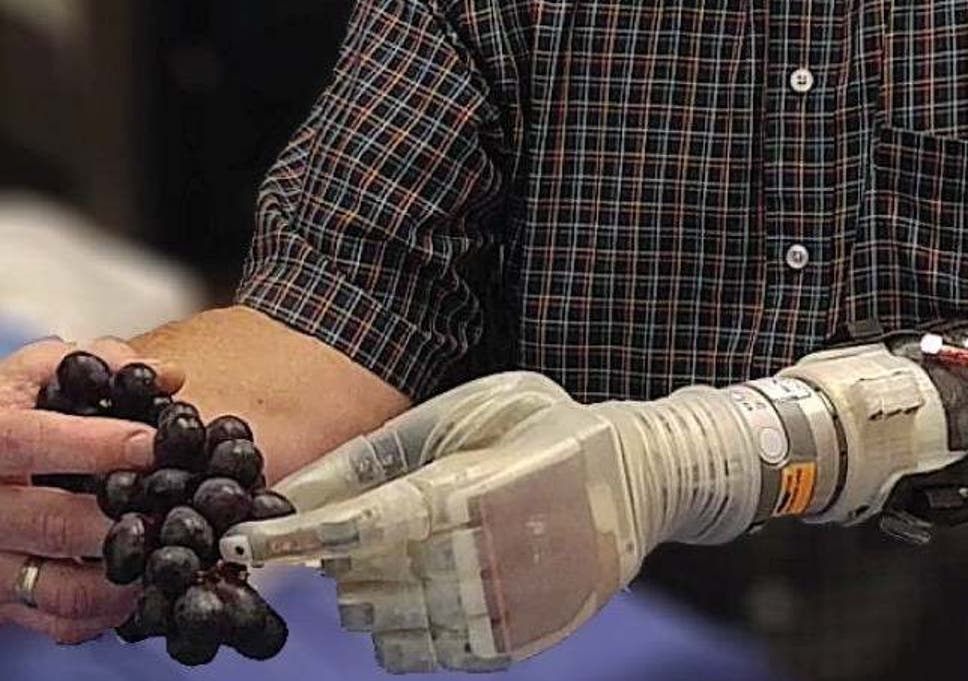
Keven Walgamott tests a robotic arm which can give amputees the sensation of touch through sensors in the hand, making it easier to pick up and hold objects
Keven Walgamott tests a robotic arm which can give amputees the sensation of touch through sensors in the hand, making it easier to pick up and hold objects ( University of Utah/SWNS )

Labels: , , , , ,

Friday, June 07, 2019

Revealing Your Inner Self Outwardly

"That big guy in a rowdy bar may use new tech to see that you despise him and take offence. Your bosses might see your skepticism regarding their new initiatives. Your church could see that you aren't feeling very religious."
"Your school and nation might see that your pledge of allegiance was not heartfelt. And so on."
Robin D. Hanson, economist, futurist

"Properly socialized grown-ups [have an understanding amongst themselves that the meaning of] Have a nice day, Glad to see you! [and] We should have lunch sometime, only occasionally intersects with what those words actually mean."
"If I was the Chinese state, the first data I want is things like associates and movements -- ordinary factual information."
"Affective computing adds a massively deeper layer. Not only is your identity subject to surveillance, your movements subject to surveillance ... what's going on in your own head is potentially subject to surveillance, too."
William Buschert, philosophy lecturer, coordinator for applied ethics programming, University of Saskatchewan
Image result for affective computing
MIT Media Lab: Affective Computing Group

Who wouldn't actually cringe at the very thought that a machine trained in human expressions through artificial intelligence could accurately see what is behind that insincere smile or expression to more or less read your mind? The way we interact socially with others, whether they are casual acquaintances, strangers, close friends, even family members follows a cultural, social script of non-offence. We automatically react to others in a manner that smooths the way to good relations.

What we really think is remote from what we say for fear of offending. We keep our counsel to ourselves, while presenting a friendly face to the world. It's considered to be good manners to interact in such a way with others, avoiding confrontation at any level. It's when we are pushed to the wall, or become angry then we fail the discipline of discretion. So, then, if computers are trained to interpret what or how we really feel, what happens to the social contract?

Do we really want technology through the rise of affective computing -- the study and development of technology enabled to recognize and interpret human emotions -- to become reality? More, that is, than has already been accomplished. If we are hypocrites in our interaction with others it is for a good cause; the well-being of relationships, large and small, and a nicely functioning public arena. Systems of artificial intelligence drawing on massive databases of subtle factial expressions (micro-expressions) already exist.

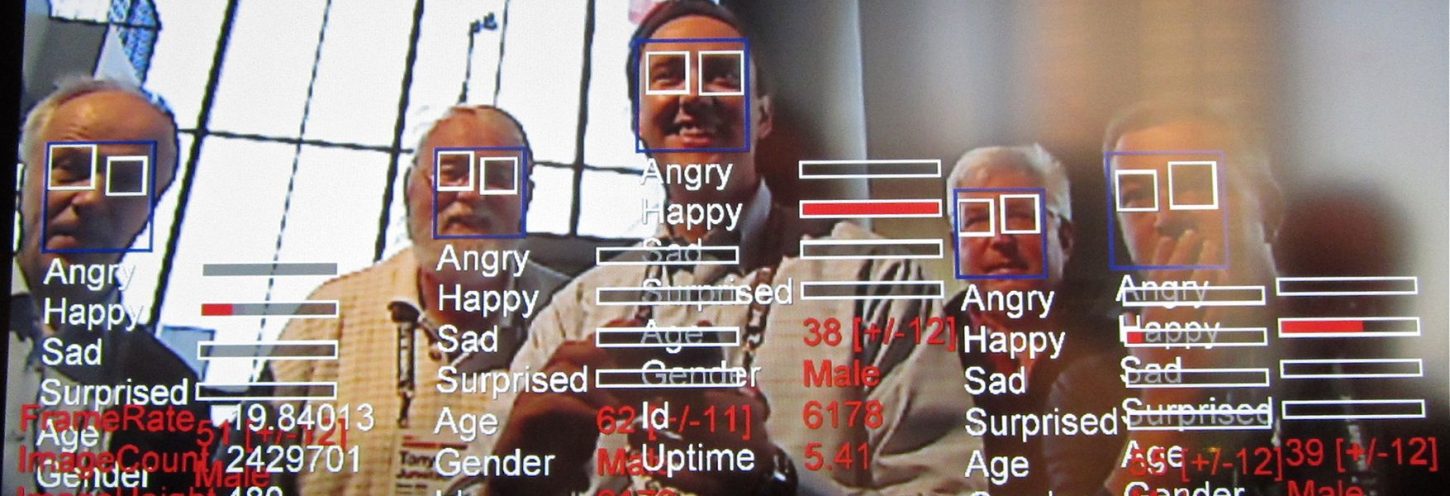
The outfit Affectiva, offshoot of MIT''s media lab, produces such a program -- that is its function after all -- affective computing. According to Affectiva, its program is able to identify human emotions from peoples' facial expressions from videos with 80 to 90 percent accuracy. Software that can distinguish between various kinds of smiles -- a joyful smile where the eyes crinkle; a polite but inauthentic smile, as opposed to a skeptical smirk.

Dr. Buschert imagines a scenario where affective computing becomes commonplace and emotional privacy comes under constant scrutiny. Amazon is planning to produce a wristband able to scan the wearer's mood and "offer suggestions on how to better interact with other people". Non-invasive technologies like Affectiva's require only a video to measure facial emotions or detect emotions from a voice. He imagines future user agreements for phone, camera, smart speaker, webcam or social-media sites.

Data privacy is related to keeping facts about individuals' privacy under your self control, including where you spend time, what your passwords are, the words you Google and who are your friends. Another separate but related privacy is that of emotions, allowing us to maintain thoughts and feelings to our own cognizance. We've always had the discretion to keep our inner thoughts to ourselves, revealing them only if and when we decide to.

"Having some emotional privacy is necessary to actually make up your own mind, to act autonomously", pointed out Dr. Buschart.

https://www.bbvaopenmind.com/wp-content/uploads/2016/06/6866541534_857f7c6b70_k-1450x496.jpeg
Artificial intelligence : Open Mind

Labels: , ,

Monday, September 10, 2018

Eye Tic Syndrome (Computer Vision Syndrome)

"It's kind of like all the things your mom lectured you about growing up: lack of sleep, staring at screens, dry eyes, caffeine, dehydration, stress."
"[If a twitch happens], something has misfired, involuntarily."
Shameema Sikder, ophthalmologist, Johns Hopkins University School of Medicine

"[Eye twitches, or chronic myokymia, represents] fine, continuous, undulating contractions [across the orbicularis oculi muscle]."
"It's annoying [but], if patients can tolerate it, it's best that they just wait it out, and it will go away."
Rudrani Banik, ophthalmologist, Mount Sinai School of Medicine
Eyelid Twitch 2

Got a twitching eye? It's annoying. It's one of those things you wonder about; you feel it you know it's there but does anyone looking at you see it? Should you mention it? Are they too polite to remark on it? Evidently doctors assure their patients that though they are themselves acutely aware that their eye is continually, delicately but definitely twitching, no one else would be aware of it, even if they happen to be looking directly at you. Perhaps it would take sustained, close observation and people don't usually engage in that kind of intrusive viewing of other peoples' faces.

For relief from that twitchy eye that keeps spasming and annoying you, take a break from that computer screen after 20 minutes have elapsed, and do it regularly. Close your eyes and relax before resuming that stare at the glare. Closing your eyes can help to hydrate your eyes. Dr. Sikder mentions that Botox which disrupts communication between nerves and muscles has a high success rate in stopping a really persistent twitch. So if matters become really, really serious with that disruptive twitch, opt for a Botox injection.

Or not. If the frequency, duration and pattern of the twitch changes notably for the worse, it's time to consult your doctor. Should other facial muscles also begin twitching, or pain result in association with the twitch, it should be medically monitored; that combination of associated symptoms could conceivably be signals of damaged nerve fibres -- or, worse-case scenario, a brain-stem disease. Heaven forfend, tuck that away somewhere deep and out of sight.

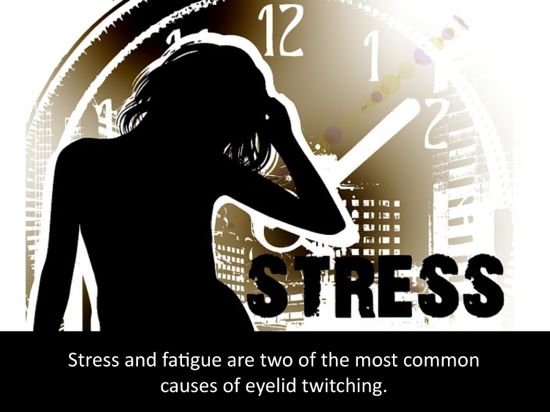
As we spend more time continually viewing screens, we have a tendency to forget our health goals in prevention of complications due to excessive lifestyle habits. Our eye muscles become fatigued when we favour remaining fixated on that screen rather than tucking ourselves into bed at a decent  hour. Although why the biological reaction to close and continuous screen bonding causing that benign eye twitch is unknown, the process is understood, that the delicate muscle fibres which open and close the eyelid are impacted.
iStock

Dr. Banik with Mount Sinai School of Medicine studied the incidence of benign eyelid twitch, following patients over a multiple-year period. It might surprise, but seven years is evidently the average length of time reported with an eye twitch; that's pretty chronic and would certainly tend to wear people down, much less impact on their screen-viewing habits, whether an iPhone or a computer screen.

None of the patients that Dr. Banik studied progressed to a neurological condition throughout the period of the study but it is known that in rare cases an eye twitch can act as a symptom of a larger issue. Remedy? Relax an eye twitch by ensuring you have enough sleep hours, take in less caffeine, don't overindulge in alcohol, and of optimum importance, take those screen breaks.

Stress 2

Labels: , , , ,

 
()() Follow @rheytah Tweet