Ruminations

Blog dedicated primarily to randomly selected news items; comments reflecting personal perceptions

Monday, September 10, 2018

Eye Tic Syndrome (Computer Vision Syndrome)

"It's kind of like all the things your mom lectured you about growing up: lack of sleep, staring at screens, dry eyes, caffeine, dehydration, stress."
"[If a twitch happens], something has misfired, involuntarily."
Shameema Sikder, ophthalmologist, Johns Hopkins University School of Medicine

"[Eye twitches, or chronic myokymia, represents] fine, continuous, undulating contractions [across the orbicularis oculi muscle]."
"It's annoying [but], if patients can tolerate it, it's best that they just wait it out, and it will go away."
Rudrani Banik, ophthalmologist, Mount Sinai School of Medicine

Eyelid Twitch 2

Got a twitching eye? It's annoying. It's one of those things you wonder about; you feel it you know it's there but does anyone looking at you see it? Should you mention it? Are they too polite to remark on it? Evidently doctors assure their patients that though they are themselves acutely aware that their eye is continually, delicately but definitely twitching, no one else would be aware of it, even if they happen to be looking directly at you. Perhaps it would take sustained, close observation and people don't usually engage in that kind of intrusive viewing of other peoples' faces.

For relief from that twitchy eye that keeps spasming and annoying you, take a break from that computer screen after 20 minutes have elapsed, and do it regularly. Close your eyes and relax before resuming that stare at the glare. Closing your eyes can help to hydrate your eyes. Dr. Sikder mentions that Botox which disrupts communication between nerves and muscles has a high success rate in stopping a really persistent twitch. So if matters become really, really serious with that disruptive twitch, opt for a Botox injection.

Or not. If the frequency, duration and pattern of the twitch changes notably for the worse, it's time to consult your doctor. Should other facial muscles also begin twitching, or pain result in association with the twitch, it should be medically monitored; that combination of associated symptoms could conceivably be signals of damaged nerve fibres -- or, worse-case scenario, a brain-stem disease. Heaven forfend, tuck that away somewhere deep and out of sight.

As we spend more time continually viewing screens, we have a tendency to forget our health goals in prevention of complications due to excessive lifestyle habits. Our eye muscles become fatigued when we favour remaining fixated on that screen rather than tucking ourselves into bed at a decent  hour. Although why the biological reaction to close and continuous screen bonding causing that benign eye twitch is unknown, the process is understood, that the delicate muscle fibres which open and close the eyelid are impacted.
iStock

Dr. Banik with Mount Sinai School of Medicine studied the incidence of benign eyelid twitch, following patients over a multiple-year period. It might surprise, but seven years is evidently the average length of time reported with an eye twitch; that's pretty chronic and would certainly tend to wear people down, much less impact on their screen-viewing habits, whether an iPhone or a computer screen.

None of the patients that Dr. Banik studied progressed to a neurological condition throughout the period of the study but it is known that in rare cases an eye twitch can act as a symptom of a larger issue. Remedy? Relax an eye twitch by ensuring you have enough sleep hours, take in less caffeine, don't overindulge in alcohol, and of optimum importance, take those screen breaks.
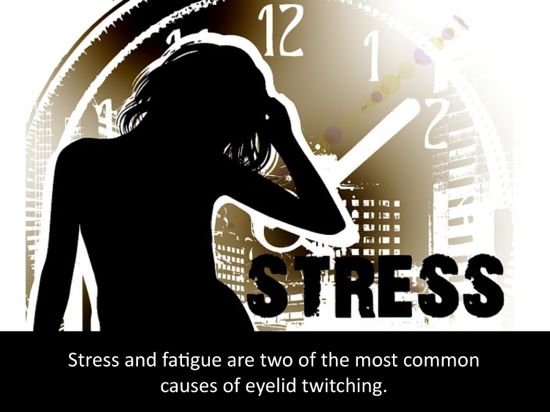
Stress 2

Labels: , , , ,

Tuesday, June 26, 2018

Laser Surgery : Know The Risks

"My vision is considered 20/20, because I see the As, Bs and Cs all the way down the chart."
"But I see three As, three Bs, three Cs."

Geobanni Ramirez, Lasik patient

"Patients undergoing Lasik surgery should be adequately counseled about the possibility of developing new visual symptoms after surgery before undergoing this elective procedure."
Report on clinical trial, U.S. Food & Drug Administration

"We want the F.D.A. to warn the public that Lasik injures eyes and causes pain, vision problems and other persistent problems that cannot be solved -- and that you don't get these problems from glasses or contact lenses."
Morris Waxler, retired senior F.D.A. official

"No eye is optically perfect, and all eyes [with or without Lasik] have at least some degree of higher-order aberrations."
"These irregularities can cause visual distortions."
Dr. John Vukich, official, American Society for Cataract and Refractive Surgery

"There is nothing wrong with eyes that undergo Lasik except for the fact that they need glasses for distance."
"They [patients] see well before the procedure and ought to see equally well after the procedure. But they don't."
Dr. Cynthia MacKay, opthalmologist, Lasik critic
Anatomy of the eye

Anatomy of the eyeYour eye is a complex and compact structure measuring about 1 inch (2.5 centimeters) in diameter. It receives millions of pieces of information about the outside world, which are quickly processed by your brain.

In the  United States the Food and Drug Administration gave its considered and informed approval when the first lasers meant to correct vision came on the market. That was back in the 1990s; the technology has been popularly used for the past three decades and approximately nine and a half million Americans have elected to undergo the procedure, along with millions of others globally. These are people who believe in a quick fix making the need of eyeglasses and contact lenses to improve their vision obsolete.

Eye doctors performing the surgery assure the public that the procedure is guaranteed to give them total satisfaction. That assurance has resulted in a wide public acceptance and the perception that this surgery is indeed without concern, that the promise of improved eyesight and the abandonment of eyeglasses is a surety. Geobanni Ramirez, a 33-year-old graphic artist, has undergone his own epiphany and he begs to differ. Laser surgery has left him with light sensitivity, double vision and visual distortions that expose him to halos appearing around bright objects. Vehicle headlights are transformed into starbursts of blinding intensity.

He also experiences dry, sore eyes requiring drops every half-hour or so and the drops themselves burn. He has been left with poor eyesight such that even venturing out at night when darkness falls is concerning. Like the old dark humour that had a surgeon remarking that the operation he had conducted went very well; unfortunately the patient died, he has been told by his eye surgeon that his is yet another success story in Lasik surgery. An assurance that means nothing to him, but which complements the fact that prior to surgery he was never given a heads-up that permanent damage might occur following surgery.
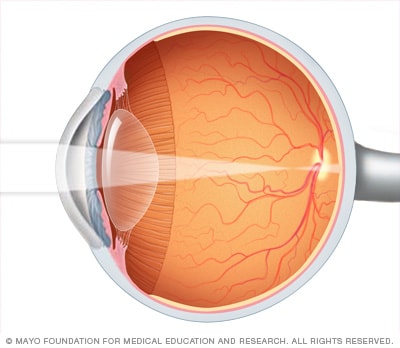
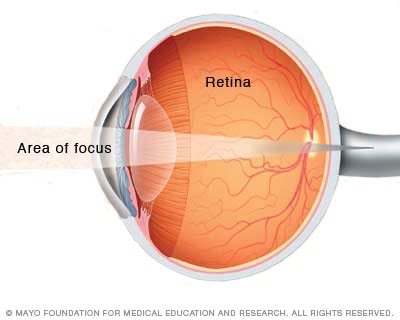
Image showing nearsightedness (myopia)

Nearsightedness (myopia)With normal vision, an image is sharply focused onto the surface of the retina. In nearsightedness (myopia), the point of focus is in front of the retina, making distant objects appear blurry.

The Food and Drug Administration convened a meeting to discuss chronic pain and impaired vision leading to job loss and disability, depression, and in worst-case scenarios, suicides -- back in 2008 in the aftermath of Lasik. As for the complications vexing Mr. Ramirez and upturning his life post Lasik, the F.D.A.'s recent clinical trial concludes that such complications are anything but rare. Close to fifty percent of people with healthy eyes prior to Lasik surgery had the misfortune to develop visual aberrations for the first time in their lives, the trial revealed.

Of that number, close to one-third developed dry eyes, representing a complication capable of causing serious discomfort. Nonetheless there are many doctors whose professional careers revolve around Lasik surgery, and they dedicate themselves to convincing potential new patients that Lasik remains the safest procedure for eye correction, and that it is "exceedingly rare" that serious complications could arise from the surgery. Among these doctors there are some who may admit that post-surgery patients may require the use of eyeglasses at times.
Farsightedness (hyperopia)

Farsightedness (hyperopia)With normal vision, an image is sharply focused onto the retinal surface. But, if you're farsighted, your cornea doesn't refract light properly, so the point of focus falls behind the retina. This makes close-up objects appear blurry.

Still, most of these surgeons insist that any soreness, dry eyes, double vision and like conditions such as those experienced by Mr. Ramirez are temporary, and within months their effect is completely reduced for most patients. "Do bad outcomes sometimes occur? Yes. But the risk is extremely low", counters Dr. Eric Donnenfeld, a past president of the American Society of Cataract and Refractive Surgery. Patient advocates disagree, however, and they have become vocal in their demands that the F.D.A. issue strong public warnings about Lasik risks.

Studies exist that suggest there may be an increased risk for long-term eye complications, including possibly earlier cataract surgery required by Lasik patients. As well as the potential for developing corneal ectasia, a serious vision-threatening condition. Lasik (laster-assisted in situ keratomileusis), in a fifteen-minute procedure, eliminates the requirement to wear glasses through the reshaping of the cornea, the clear, round dome covering the eye. The cornea focuses light on the retina at the back of the eye.

Lasik surgeons make use of an ultraviolent laser to reduce the cornea curvature for near-sighted people, and to accent the curve for those who are farsighted. According to Dr. Cynthia MacKay, an ophthalmologist who decries the procedure, this surgery has the potential to injure the eye because it severs tiny corneal nerves, thins the cornea thus making it weaker, and permanently alters the eye's shape. Should all this knowledge of possible side-effects and injuries stemming from the procedure be widely disseminated as its critics would like, the elective procedure would become far less popular.

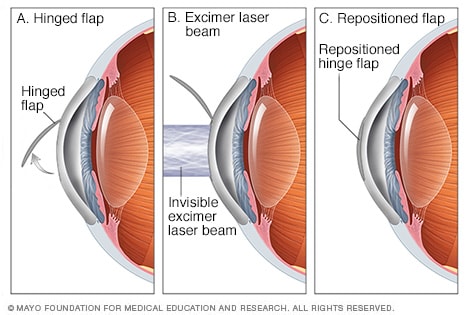
Illustration of LASIK eye surgery

LASIK surgeryDuring LASIK eye surgery, an eye surgeon creates a flap in the cornea (A) — the transparent, dome-shaped surface of the eye that accounts for a large part of the eye's bending or refracting power. Then the surgeon uses a laser (B) to reshape the cornea, which corrects the refraction problems in the eye (C).

Labels: , , , ,

Friday, June 15, 2018

Unveiling the Brain's Mysterious Ways

"I realized I was blind."
"It's almost as if everything is under water, and it's all fuzzy and hazy."
"Am I ever going to get even a little bit back [eyesight] in one eye so that I can at least see my family and friends? I hope it keeps on improving. But this might be it. Nobody knows."
"I can’t see like normal people see or like I used to see. The things I’m seeing are really strange. There is something happening and my brain is trying to rewire itself or trying different pathways."
Milena Canning, 48, Scotland
"And that particular piece of tissue [intact in the patient's occipital lobes] is an area that responds vigorously in everybody -- in her, in you and me -- to things that are moving."
"This may be the richest characterization ever conducted of a single patient's visual system. She has shown this very profound recovery of vision, based on her perception of motion."
"She is missing a piece of brain tissue about the size of an apple at the back of her brain – almost her entire occipital lobes, which process vision."
"In Milena’s case, we think the ‘super-highway’ for the visual system reached a dead end. But rather than shutting down her whole visual system, she developed some ‘back roads’ that could bypass the superhighway to bring some vision – especially motion – to other parts of the brain."
"Patients like Milena give us a sense of what is possible and, even more importantly, they give us a sense of what visual and cognitive functions go together."
"It’s important for patients and physicians to realize vision isn’t necessarily an all-or-nothing thing. It’s not that someone is blind or sighted and there’s nothing in between."
Dr. Jody Culham, neuro-psychologist, professor, Department of Psychology and Graduate Program in Neuroscience,Western University, London, Ontario

In 1999, Milena Canning of Glasgow, contracted a lung infection which led to severe respiratory collapse. Severe enough that her organs began to fail, and doctors placed her in a coma induced by drugs for a 52-day period. While still in that coma she suffered a stroke, perhaps more than one. Finally she awoke to the realization that she no longer had vision, due to damage of her brain tissue. Surgery followed to clear away the dead brain tissue, leaving large, dark vacuums. They appear as black holes on brain scans.

Her condition while rare is not entirely unique. It is a phenomenon known as Ridoch syndrome, first described, ironically enough in 1917 by Scottish neurologist George Ridoch. Five of his patients had presented with injured occipital lobes -- located at the back of the brain where most visual information is processed. They informed Dr. Ridoch they could see nothing that was stationary, but were able to see anything that moved.

Milena Canning had residual tissue that remained functional despite the horrible damage to her occipital lobes; a tiny piece of tissue, teaspoon-sized, that remained intact in both hemispheres. She is a patient of two Western University scientists who have tested her eyesight for years, validating that she can 'see objects' while they are in motion; swirling bathwater, wind blowing clothing on a clothesline or the movement of clothing in a laundry clothes drier, dangling foliage blown by the wind.

That tiny amount of residual tissue enables her to see steam rising from a kettle, her daughter Stephanie's ponytail swinging as she moves briskly along; not clear and concisely, but notionally and occasionally with a colour background of something appearing wet and shiny like a forest landscape after a heavy downpour. Like an impressionist landscape, not detailed or with any kind of perspective.

She had been referred to the Brain and Mind Institute at Western University back in 2007. Her peculiar vision has undergone a number of tests there over the years and formed a test study whose conclusions were reported for publication in the journal Neuropsychologia. Present-day advanced technology has led to sophisticated brain imaging techniques to allow scientists an improved understanding of the involvement of neural circuits.

This woman living with severely limited eyesight proved capable of catching balls in experiments where the balls were rolled or thrown at her. She was able to identify rainwater running down a windowpane. The team reported on her "remarkably robust preserved ability to perceive motions". As limited as is her ability to see stationary objects, she remains optimistic that she may one day recover more of her lost vision.

Labels: , ,

Sunday, December 24, 2017

Improved Vision = Enhance Longevity

"Not only can cataract surgery give people a better life while they're living it, they can also live more of it."
"[When people can see better] they can also move more and get more exercise. They can see their pills better and may be more likely to take them and take the right ones."
"The surgery [cataract removal] also improves visual contrast, which decreases the risk of accidental deaths from falls or driving. It's important to get the best vision a person can have."
"It's probably the most successful surgery we have -- it has a 98 percent success rate."
Dr. Anne L. Coleman, University of California, Los Angeles

"[The surgery] was quick and easy -- maybe five minutes -- and it was like a miracle."
"I couldn't believe how well I could see right after the first eye was done."
Jane Quinn, 72, Brooklyn, New York
optometrist looking at eye
Older women who undergo cataract surgery may live longer.  Medical News Today
At one time surgery to remove cataracts was performed under general anesthesia. Patients, post-surgery spent nights in the hospital and it took weeks in bed to fully recover. Medical and surgical techniques have since advanced to the point where the procedure is performed with a local anesthetic, incisions are infinitely slighter and often require no stitches. "First one eye is operated upon, then the second one undergoes surgery roughly two weeks later. Recuperation is swift.

The formation of cataracts is linked to age, an almost inevitable consequence of aging. In those over 40 they represent the most frequent cause of vision loss. Exposure to ultraviolet radiation (sunlight), smoking, obesity, high blood pressure, diabetes, prolonged use of corticosteroids, extreme nearsightedness and family history all represent risk factors in the development of cataracts.

The use of 100 percent UV ray-blocking sunglasses and a hat are considered useful preventives. Foods rich in vitamin E (spinach, almonds, sweet potatoes); carotenoids, lutein and zeaxanthin (derived from dark green leafy vegetables), and omega-3 fatty acids (found in spinach and oily fish such as salmon, mackerel and sardines) may help in reducing the risk of cataracts developing.

A 20-year study of 74,044 women between the ages of 65 and up revealed that of the total, all of whom had cataracts, 41735 having had their cataracts removed experienced a 60 percent lower risk of death. Published on line in JAMA Ophthalmology in October by Dr. Coleman and her colleagues, the results have indicated just how vital attention to cataracts can be in promoting quality of life, if not longevity.

The normally clear structure behind the iris and pupil becomes distorted so that incoming visual images fail to clearly focus on the retina at the back of the eye. Cataracts cloud and discolour the lens of the eye. As cataracts form, images become increasingly fuzzy, glare tends to bother the eyes, there is impairment of night vision, and colour shades can be lost.

In the United States, cataract surgery represents the most frequently performed of all surgeries reflecting the fact that over three million Americans undergo cataract removal annually. Tiny surgical instruments are used to suck out the cloudy lens of the eye, to be replaced by an artificial lens. For most people, a half-hour recovery after surgery is all that is required before discharge from hospital and returning home.

Interestingly, the women in the study who had undergone cataract surgery were more ill than others -- having had more heart attacks, chronic pulmonary disease, peptic ulcers and glaucoma than those who didn't undergo cataract surgery, yet they lived longer. A lower mortality risk is also associated with men following cataract surgery, confirmed by previous studies.

The conclusion of the study was that while confirming earlier studies relating to fewer deaths in women having cataract surgery, data showed that those who had cataract surgery had reduced risks of death from cardiovascular, pulmonary, neurological and infectious diseases, as well as from accidents, and cancer, following surgery.

Image: Cataract Surgery May Lengthen Women's Lives
(Copyright DPC)

Labels: , , , , ,

 
()() Follow @rheytah Tweet