Ruminations

Blog dedicated primarily to randomly selected news items; comments reflecting personal perceptions

Sunday, May 06, 2018

Measuring Greenhouse Gases

"We keep burning fossil fuels. CarboTn dioxide keeps building up in the air. It's essentially as simple as that."
Ralph Keeling, Scripps scientist, Scripps Institute of Oceanography, Mauna Loa Observatory, Hawaii
The original device used by Charles Keeling to measure atmospheric concentrations of carbon dioxide.
The original device used by Charles Keeling to measure atmospheric concentrations of carbon dioxide. (Ted Coran)

"As a scientist, what concerns me the most is not that we have passed yet another round-number threshold, but what this continued rise actually means that we are continuing full speed ahead with an unprecedented experiment with our planet, the only home we have."
Katharine Hayhoe, climate scientist, Texas Tech University

"As far as we can tell, the Earth hasn’t experienced that in the last 420 million years. How the Earth will respond, there is no precedent in the geological record."
Gavin Foster, lead author, study, professor of isotope geochemistry, University of Southampton, Britain

"Due to nuclear reactions in stars, like our sun, over time they become brighter [contributing to global warming]."
"This means that, although carbon dioxide concentrations were high hundreds of millions of years ago, the net warming effect of CO2 and sunlight was less."
"It’s a level of forcing [spike in C02] that has not been experienced by the Earth, as far as we can tell. It puts the enormity of what we’re doing in context."
Dan Lunt, study co-author, professor of climate science, University of Bristol, Britain
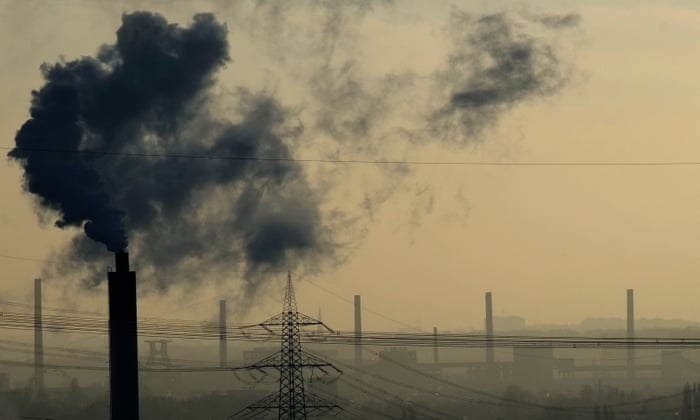
For this newly-published study in Nature Communications on C02 levels, researchers made use of the geological record, making note of previous levels of atmospheric C02 with the aim of projecting potential future warming scenarios should C02 levels reach 2,000 parts per million (ppm) within 200 years to come. Plant fossils were examined, along with soil and ocean carbons as well as the composition of fossil shells.

The conclusion researchers came to was that atmospheric C02 will top 410 ppm for 2018. The National Oceanic and Atmospheric Administration last month revealed the alarming fact that global carbon emissions have been measured and found to be at an all-time high. Measurements at the Mauna Loa Baseline Atmospheric Observatory in Hawaii registered 405.1 ppm in 2017, representing an increase of 3 ppm. The past five years of C02 increases sees an unprecedented growth rate.
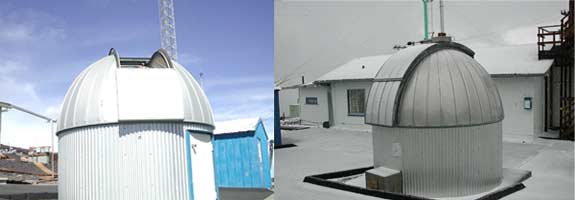
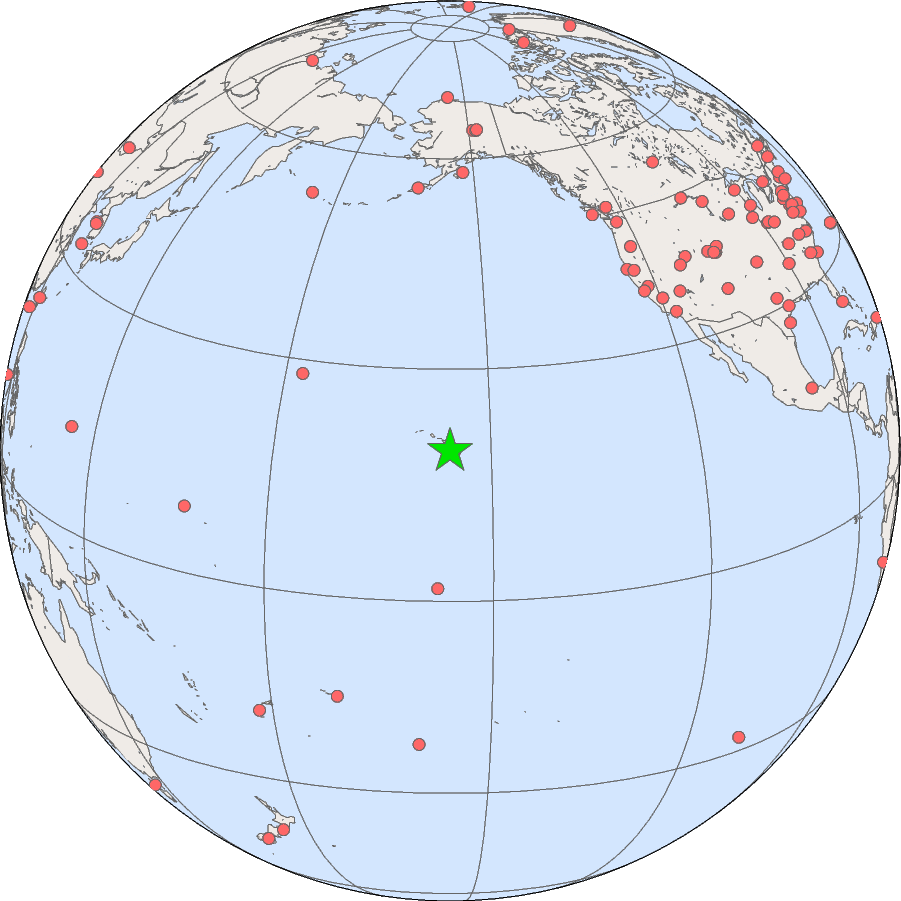
Mauna Loa

  • Photograph by Forrest Mims III
  • Photograph by Forrest Mims III
  • Photograph by Darryl Kuniyuki
  • Photograph by Forrest Mims III
  • Photograph by Forrest Mims III
  • Photograph by Forrest Mims III
    • Photograph by Forrest Mims III
    1. 1

    Looking to the future, by 2300 it appears likely the Earth will have been transformed, resulting from the endless C02 rising into the atmosphere through fossil fuel consumption, meaning the globe may hit a level not seen in 420 million years in a few centuries' time, according to the study's findings. The stunning result of the research validating a galloping rate of C02 production is taking place, doubly sounds the environmental alarm for the future.

    While carbon dioxide levels fluctuated over the millennia, it had never before exceeded 300 parts per million. Ralph Keeling as well as his father Charles David Keeling before him, have been responsible for keeping tabs on carbon dioxide measurements in Hawaii at the Mauna Loa Observatory since 1958. The month of April saw the average concentration in the atmosphere hitting 410.31 ppm, according to the Keeling Curve measurement series.

    Never before had the record of a monthly average exceeded 410 ppm in the history of Mauna Loa record, representing a 30 percent increase in C02 in the global atmosphere. Carbon dioxide's function as a greenhouse gas reflects its capacity to trap solar radiation and confine it to the atmosphere, as the most common among all greenhouse gases produced by the burning of fossil fuels.

    The measured increase in gases like carbon dioxide, methane and nitrous oxide fuels climate change to make "the planet more dangerous and inhospitable for future generations", according to the World Meteorological Organization. Natural variability cannot explain the rise of the Earth's temperature over the past century.


    Labels: , , ,

    Sunday, August 14, 2016

    Environmental Peat Bogs

    "They [peat bogs] take thousands of years to develop. And in five minutes, a wildfire can blow through that area and release 400 to 600 years of peat accumulation and change it forever."
    Merritt Turetsky, peat researcher, University of Guelph

    "It's carbon that has accumulated over several thousands of years."
    "If it were to be released, the global C02 concentration would be much higher."
    "If you have a large amount of this moss [sphagnum] in a peatland, you aren't going to get a very severe fire. The key is to keep peat wet and get that moss growing on the surface again."
    "Our research shows very conclusively that if you can re-wet the system and get the key peat mosses growing on the surface, you can essentially put a cap on the system and limit burning, or resist fire completely."
    Mike Waddington, professor of ecohydrology, School of Geology and Earth Sciences, McMaster University
    IPS

    The spongy moss layered and accumulated over hundreds of years comprising peat beds are tremendous carbon sinks and as such they are environmentally invaluable. Forests are known for their capacity to absorb and store carbon. And peat bogs do the very same thing. If and when a forest burns, carbon is released into the atmosphere. When forests are logged out as they have been in South America the vast resource they represent as carbon sinks are lost.

    Earth possesses an estimated 4.1-million square kilometres of peatlands; 3 percent of the globe's land surface is comprised of peat bogs. They're to be found for the most part in the northern latitudes of the world; in Canada, Alaska, Europe and Russia. Sphagnum and other types of mosses which have accumulated for hundreds of years make up peat bogs; a gradual but important process. Peat has its uses, as a soil corrective in gardening, even as a fuel to be burned for energy and warmth.

    Mer Bleue peat bog, Ottawa Valley, Ontario
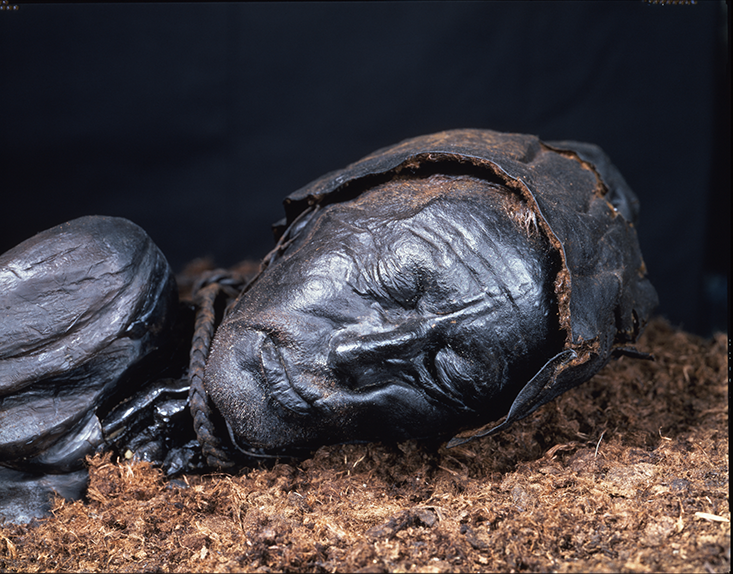
    But very little of it is actually harvested and used for any purpose. Peat, which is capable of holding large amounts of water is acidic, the compounds it is comprised of inhibit decay. (Famously, hundreds of ancient corpses have been found, perfectly preserved in European bogs.) Because it is so efficient at holding carbon, more than what the world's trees and plants contain and almost as great an amount as the atmosphere, it is left to do its job. Yet climate change has become a potential threat to peatlands.
    French_BR-1
    Unmarked by time: On display at the Silkeborg Museum, in Denmark, Tollund Man’s visage seems eerily peaceful—if you ignore the noose around his neck.   Arne Mikkelsen

    The warming trends we're becoming more familiar with over time, have the capacity to dry out bogs, and when they're dry, they become susceptible to fires which can burn deeper and more intensely than other types of fire, since a peat fire is capable of smouldering for months and in the process, can release massive amounts of carbon. Like the peat moss that accumulates gradually over time, so too does the carbon it so tenaciously holds in place.

    In Indonesia, bogs were drained to make the land available for agricultural purposes, resulting in their becoming drier through the evaporation caused by El Nino-related warmth, and they burned for months, the haze that resulted causing widespread health complications. The burning bogs released a greater amount of carbon daily during the months of September and October 2015 than the European Union in its entirety emitted for that period.

    The Fort McMurray wildfire that posed as such an immense threat and which burned uncontrollably this past spring consuming a good portion of the town's infrastructure and homes, as well as the nearby forest, also burned local bogs. By June the wildfire had been controlled to the extent that trees were no longer ablaze outside Fort McMurray, but crews were put to work turning over peat with backhoes attempting to extinguish the smouldering hot spots.

    A neighbourhood burns in Slave Lake on May 15, 2011 after a wildfire swept through the town.
    Shane O'Brien/Postmedia News files   A neighbourhood burns in Slave Lake on May 15, 2011 after a wildfire swept through the town.
     
    An early large-area wildfire that took place in and around Slave Lake, Alberta in May of 2011, saw peat continue to burn throughout the winter months. That fire in the peat bogs smouldered until the arrival of spring rains and with the help of melting snow, the fire was finally extinguished. Sphagnum moss, dominant among other types of moss in a bog, holds a lot of water and as a result peat is generally fire-resistant.

    But atmospheric warming tends to alter the environment, and peat that becomes dry sees greater amounts of oxygen aerating tree roots and other vegetation, causing them to grow larger, which in turn uses greater amounts of water, additionally drying out the peat in which they grow. In the Slave Lake fire, a huge amount of peat was burned in some bog areas. Five years on, the bog has not yet begun to recover.

    "It is definitely on the brink. There's little to no sphagnum recovery, which is very worrying, because if it's going to return to a carbon-accumulating system, which is what you would hope, really, it needs to get that sphagnum back. All that peat, combusted and gone", sighed Sophie Wilkinson, a doctoral student in ecology at McMaster University.

    Canada    The total area of peatland, reported by the Canadian WEC Member Committee to be more than 1.1 million km2, is greater than that of any other country. Deposits of peat are widely distributed, with the largest areas in the Northwest Territories (23% of the Canadian total), Ontario (20%) and Manitoba (19%). The reported amounts of peat in place are enormous, with over a billion tonnes classified as proved and an additional 300+ billion tonnes as indicated or inferred.There have been a number of assessments of the potential for using peat as a fuel (including for power generation) but at present there is virtually no use of peat for energy purposes and none is likely in the immediate future. Canada is, however, a major producer (and exporter) of peat for horticultural applications.


    The dramatic evacuation of Fort McMurray - peat part-fuelled the inferno (Pic: Chris Schwarz/Government of Alberta)
    The dramatic evacuation of Fort McMurray - peat part-fuelled the inferno (Pic: Chris Schwarz/Government of Alberta)

    Labels: , , , ,

     
    ()() Follow @rheytah Tweet