Ruminations

Blog dedicated primarily to randomly selected news items; comments reflecting personal perceptions

Thursday, May 16, 2024

Canine Life Satisfaction

"There's so much variation in what dogs might need. Not all domestic dogs are necessarily better off or happier with [the presence of] other dogs."
"Dogs are social animals [however]."
"It is somewhat debilitating, and not good for their health and well-being, to not have close social partners."
Noah Snyder-Mackler, associate professor, Arizona State University, school of life sciences

 
It's well enough known that social interaction plays an important role in ensuring that humans' emotional fulfillments are met and well balanced, for we are gregarious creatures, requiring interaction with others to fulfill an obligation and psychological need for social cohesion. The canine community can be viewed as similarly gregarious by and large, although like humans, dogs too have a wide range of needs and requirements to remain emotionally balanced and experience satisfaction in their lives.
 
Dr. Snyder-Mackler ran a study in hopes of establishing just exactly what kind of social interaction is needed to ensure physical and mental health in dogs. The result of his study was published in the journal Evolution, Medicine, and Public Health, outlining the conclusion reached through the study interviews and analyses that social companionship (of both the canine and human variety) has a major impact on a dog's health and lifespan. 

The study surveyed guardians of over 22,000 dogs relating to various aspects of their companion pet's life; whether the presence of another dog in the household provided each with a companion; the extent and quality of their physical activity and health, among other details. Pet parents provided information about themselves as well, and the researchers made use of the data in their determination of five key factors influencing a dog's social environment. 

They were: 
  1. Neighbourhood stability;
  2. Total Household income;
  3. Social time with adults and children;
  4. Social time with animals;
  5. Pet-parent age.
Of the points involved it was social companionship from adult humans along with other dogs noted to have the largest positive impact on a dog's physical and mental health, as they aged. Five times greater in impact, in fact, than any other factor under consideration. According to Dr. Snyder-Mackler, the study results did not necessarily indicate that adopting a second dog in the household would improve the quality of the first dog's circumstances impacting its life.
 
Human interaction with their pets can be equally important (and for some dogs, better) social partners for their dogs reflecting the reality that every animal has a unique personality, and not all dogs tend to relish the company of their canine peers. Strong social companionship is what results in an overall positive effect on a dog's health and well-being. Dr. Silver too, notes that a dog's social needs can be met by their human, all the more so if that human spends dedicated one-on-one time with them. 

Intraspecies companionship and play behaviours for some dogs are derived from direct companionship with other dogs not replicated by interactions with humans. There are methods, on the other hand, in providing companionship and cognitive enrichment opportunities -- that include long sniff-fixated walks, engaging in training sessions, or playing together episodically through the day -- as long as the dog's daily needs are met regularly.

 
"When there's something that's missing from a dog's routine, we see this manifest in terms of 'misbehaviour' or anxiety-related responses."
"And it's not always obvious what the source of those might be."
"There's all kinds of ways that you can give your dog the types of experiences that they need to be happy. And for some people, that might exist outside the scope of direct interactions with other animals."
Zachary Silver, assistant professor of psychology, Occidental College

Labels: , , , , ,

Monday, November 28, 2022

Massive Environmental Headache in Florida

"This is storm debris on a scale Florida hasn't seen in a long time."
"With hundreds of people moving to Florida every day and coastal development off the charts, the combination of that and more intense hurricanes results in this massive problem."
Jon Paul Brooker, director of Florida conservation, Ocean Conservancy

"We have a landfill we're trying to maximize the life of."
"And we don't have that much space in our county to create a new one."
John Elias, director, public works, Charlotte County, Florida

"There's a lot of debris we know is in the water that we can't see."
"Anything that was on the land, you should expect to be pushed, pulled, dragged into the water."
Jason Rolfe, coordinator, National Oceanic and Atmospheric Administration, Marine Debris Program 
A view of the overflow debris management site at Maximo Park where debris from Hurricane Ian collected in St. Petersburg has been taken over the past month. The city is on schedule to finish debris collection next week, an administrator said.
A view of the overflow debris management site at Maximo Park where debris from Hurricane Ian collected in St. Petersburg has been taken over the past month. The city is on schedule to finish debris collection next week, an administrator said. [ DIRK SHADD | Times ]
 
Clean-up crews are continuing to work in the removal of "ghost" lobster traps in the Florida Keys that were abandoned over five years ago when Hurricane Irma struck; traps that continue to ensnare and kill marine animals, a special concern of Jason Rolfe. It is imperative that the waste be removed, but of first concern to authorities is digging out homes and businesses, leaving environmentalists to fear that storm waste remaining in the water could damage sea grasses and fragile habitats in the shallow coastal waters of the state.

Hurricane Michael inflicted heavy damage four years ago, leaving Florida's Bay County in the position of still pulling debris and broken-down boats out of their waters today. An estimated 2.4 million pounds has been removed from their bays. "We are still cleaning up". Country Manager Bob Majka confirmed.

When Hurricane Ian slammed into the southwest Florida coast almost two months ago it destroyed thousands of homes, taking over 100 lives and leaving state and local governments to wrestle with the conundrum of how to manage a staggering amount of storm debris. Mountains of refuse sit at dozens of temporary sites throughout the state. The debris is comprised of fallen trees, mildewing carpet, sodden drywall and allied household items the storm destroyed.

State officials estimated that in the past seven weeks crews removed about 20.4 million cubic yards of debris. That's a huge amount of waste, but millions more litter the state. Hurricane Ian is estimated to have left close to 31 million cubic yards of debris. according to the Army Corps of Engineers. Representing about five times the amount of storm debris left by Hurricane Sandy in New York. 

Efforts at cleanup in Florida's coastal cities and counties hit hardest by the Category 4 storm is expected to take months of hard work, at a cost of billions. Following Hurricane Nicole's east coast hit as a Category 1 hurricane on November 10th the enormous clean-up became even more challenging. Beachside homes were toppled into the sea, leaving others uninhabitable when the November storm lashed Daytona Beach; for which no estimate of damage has yet been determined.

In 2017, after Hurricane Irma swept Florida, major damage was left in the Florida Keys, causing about two-thirds of the residents to lose power across the state and leaving close to 29 million cubic yards of debris. Hurricane Michael the next year created close to 33 million cubic yards. Science indicates that these costly disasters will continue to grow in number as sea levels rise and waming waters cause hurricanes to gain rapid strength prior to roaring ashore. 

Because of its shallow water table and potential for makeshift landfills leaching contaminants into groundwater, there are particular challenges Florida faces. "Where are we possibly going to find room for all this [debris]?", asks University of Florida professor of environmental engineering, Timothy Townsend. When damaged drywall from flooded homes reaches landfills, he points out, the wet gypsum mixes with bacteria that produce hydrogen sulfide gas. Not only does it stink like rotten eggs, the toxic gas can trigger headaches and nausea and cause health problems for people with asthma.

https://m107833-mcdn.mp.lura.live/iupl/0F7/140/0F7140CA1EF8D3F23EEC6F81C59EF606.jpg

Labels: , , , , ,

Thursday, September 23, 2021

Wash n'Wear

KN95 Mask (20 ct.)
"It's good news for sustainability. That cotton mask that you have been washing, drying and reusing? It's probably still fine -- don't throw it away."
"We were really bothered during the beginning of the pandemic, when going out on a hike or going downtown, and seeing all these disposable masks littering the environment." 
"We're assuming there are no gaps between the mask material and the person's face."
"I think the best mask might be the one that you're actually going to wear. And that is going to fit snugly against your face without being too uncomfortable."
Marina Vance, assistant professor, Paul M.Rady Department of Mechanical Engineering, University of Colorado Boulder
Published in the journal Aerosol and Air Quality Research, a new study concludes that cotton masks -- admittedly not as effective as surgical masks in filtering out viral particles -- still are useful for the task at hand, and certainly are more environmentally friendly. After an experimental 'laboratory-year' of washing and drying cloth squares in lieu of cloth masks, it was established that this care doesn't diminish their effectiveness.

Since the beginning of the global pandemic an estimated 7,200 tons of medical waste is generated daily, the majority comprised of disposable marks. Presumably in America alone. As a faculty member of the university's environmental engineering program, Dr.Vance leaped at the opportunity to collaborate with scientists from the National Renewable Energy Laboratory, testing the longevity of cloth masks.

A series of double-layered cotton squares created for the purpose of testing durability of cloth masks were washed and dried up to 52 times each, representing the equivalent of doing so weekly for the space of a year -- and then analyzed for effectiveness every seven cycles. The masks were subjected to real-world situations in the absence of being tested with human subjects, through being mounted on the end of a steel funnel exposed to a controlled flow of particles circulating in the air, including altered humidity and temperature changes simulating the breathing effect.

After that number of washings, the cotton fibres were seen to have degraded, reflecting repeated washing cycles, but the wear and tear was not found to significantly diminish filtration capacity of the fabric. One change that was detected was a resistance increase in inhalation properties as the masks became more difficult to breathe through, over the course of the study.

The capacity of the masks to filtrate properly rested on their fit, leading to their guarding against airborne particles remaining effective over time. A poor-fitting mask was found in previous studies to admit up to 50 percent of airborne particles, including the virus. Reusable cotton was found to filter out up to 23 percent of the smallest particles (0.3 microns) on which the COVID-19 virus can travel, on being inhaled. 

In contrast, surgical masks filtered out between 42 and 88 percent of particles. KN95 and N95 masks were seen to effectively stop 83 to 99 percent of particles The use of cotton on top of a surgical mask reflects a 40 percent filtration effectiveness. Dr.Vance pointed out other issues such as comfort, affordability and reusability as factors to be considered in making decisions on mask wear. And that ultimately masks should be worn, irrespective of the type, to achieve protection from the SARS-CoV-2 virus.
 
Now some brilliant scientific minds should undertake a study -- or a series of them, if necessary -- to determine why it is that the public carelessly, heedlessly, tosses away used disposable face masks rather than disposing of them properly. Presumably they are discarded because they've served their purpose; to protect the wearer against contracting COVID, and protecting others from being infected by a wearer who is carrying an undetected virus load, so they would be contaminated and yet remain in the public sphere....

Labels: , , , , , ,

Friday, July 09, 2021

Evolutionary Influences

"Our study indicates that climate -- particularly temperature -- has been the main driver of changes in body size for the past million years."
"We can see from people living today that those in warmer climates tend to be smaller and those living in colder climates tend to be bigger."
"Over a long tine, yes, we would expect a decrease in body size [due to climate change]."
"But the effects that we describe occurred over thousands of years, so a few years of warming will do little to body size. But if we were to keep changing temperature and keep them there for a long time, then yes, one would expect such changes."
"Brain size was not affected by temperature, but it was affected by long-term climatic stability."
"The likely rationale for that is that brains are expensive, and you need reliable resources to maintain them."
Professor Andrea Manica, researcher, Department of Zoology, Cambridge University
Human fossils illustrating the variation in brain (skulls) and body size (thigh bones) during the Pleistocene period.

 Over 300 fossil samples were studied by scientists to track the fluctuation in human body size over thousands of years of evolution linked to climatic conditions. The research team discovered a clear link between people who live in colder environments and the size they attained; larger bodies being the result in contrast to people living in warmer regions being smaller in size, a trend that continues to this day. 
 
Where people who live in cold environments tending to have larger body sizes than those in warmer areas of the globe.

The average person of Dutch descent as an example stands 6 feet in height whereas the average person living in India tends to be on average 5 foot, 5 inches in height. For the study, the researchers from the Universities of Cambridge in the U.K. and Tubingen in Germany, note that for every degree of warming, a corresponding 0,87 percent decrease in body mass occurs.

In other words, a 2C warming would result in a body size decrease of one kilogram (2.2 lbs.) for someone whose weight comes in at 60 kg (132 lbs.) A similar trend sees the reverse emerge; for every degree of cooling, body size increases by 0.87 percent. 
 
A larger body size results in a person's mass to surface area ratio being greater, therefore more heat efficient, so less warmth is dissipated than with smaller sized people.

This trend, according to Professor Manica, would tend to continue as climate change sees the soaring of global temperatures. Published in Nature Communications, the study concluded that brain size also changed over time; not, however, evolving in tandem with body size.
 
<p>People living  in warmer climates tend to be smaller, and those living in colder climates tend to be bigger, a study says.</p>

People living in warmer climates tend to be smaller, and those living in colder climates tend to be bigger, a study says. (Reuters)


Labels: , , ,

Thursday, July 01, 2021

Killing Heat Waves, Electrical Wildfires : Western Canada

"[The number of deaths recorded since Friday -- 486 sudden deaths -- is] unprecedented [in the province; officials will be reviewing what happened in the hopes of preventing such a tragic outcome in future heat waves]."
"On the coast, we're not used to the extreme weather events. There are many things, I think, that many of us can learn in terms of response, in terms of informing the public about the risk."
"Please arrange regular check-ins with those who live alone, and encourage everyone you know to drink water, stay in the shade as much as possible and visit cooler environments whenever they can." 
"The Coroners Service would normally receive approximately 130 reports of death over a four-day period. From Friday, June 25 through 3 p.m. on Monday, June 28, at least 233 deaths were reported. This number will increase as data continues to be updated."
Chief coroner Lisa Lapointe, British Columbia
 
"The reality is we've never seen anything like this in B.C., and in fact the country, but especially in the Lower Mainland."
"After we are past this, we will have to take a hard look at what we need to change for the future."
B.C. Public Safety Minister Mike Farnworth
Sun
 
"[Police received a flurry of calls Tuesday morning] as people are showing up in their parents’ house or relatives’ house and finding them deceased."
"It’s changing [numbers of calls coming in to police] as people are discovering their loved-ones dead. [Police usually respond to three or four sudden deaths on a typical day]."
"We have more reports that have been made to us that we have not been able to send officers to because they are currently at other scenes waiting for the coroner to take over the investigation."
"I’ve been a police officer for 15 years and I’ve never experienced the volume of sudden deaths that have come in in such a short period of time. This has been an extreme sudden spike in sudden deaths throughout the city all over the city."
Sgt.Steve Addison, Vancouver Police Department
 
"This was an unprecedented heat wave, with records being broken day after day. The public was acutely aware that we had a heat problem. And we were doing our best to break through all the other noise to encourage people to take steps to protect themselves. But it was apparent to anybody who walked outdoors that we were in an unprecedented heat wave and again there’s a level of personal responsibility."
"This is a tragedy upon a whole host of others we’ve had to address over a number of months but I believe we did what we could to get the information out and we rely also on the public press and media outlets who’ve done a really good job in my mind, of making the case, telling people to be wary and we have our internet presence and social media doing that as well."
British Columbia Premier John Horgan
A view of the city after the scorching weather triggered an Air Quality Advisory in Vancouver, British Columbia, Canada June 28, 2021.
The sweltering heat wave settling over Western Canada is widely viewed as being responsible as a contributing factor to the majority of hundreds of sudden-death calls to the RCMP since Monday in the greater Vancouver area, where Burnaby residents were treated to extremely high temperatures. The spike in calls to police has been astonishing in sheer numbers, while the deaths remain under investigation.

Temperatures in the Vancouver area reached just under 32C Monday but according to Environment Canada, the high humidity accompanying the heat made it actually feel close to 40C in those areas furthest from the water in the coastal city. Residents were urgently requested by authorities to check on  members of their family, and their neighbours, particularly those in the older age bracket.

"We are seeing this weather can be deadly for vulnerable members of our community, especially the elderly and those with underlying health issues", said Cpl.Mike Kalanj of the RCMP, of the countless calls being received of sudden deaths. No fewer than 103 heat records across British Columbia, Alberta, Yukon and the Northwest Territories were broken in the historic weather system.

A new Canadian high temperature of 47.9C was set in Lytton, B.C. leaving the previous record of 46.6 from the same village a day earlier, in the dust. In the Alberta communities of Jasper, Grande Prairie and Hendrickson Creek, temperature records continue to be broken as the mercury spiralled upward to the mid- to high-30s.

The Nahanni Bute region of N.W.T. went up to 38.1 C, the highest temperature ever recorded in the territory, Environment Canada reported. Four heat warnings have also been issued for regions along Manitoba's western boundary with forecasters warning of extreme conditions persisting across the Prairies for the remainder of the week and perhaps into next week.
 
Wildfire in Lytton
A wildfire burns in the mountains north of Lytton, B.C., on Thursday, July 1, 2021. THE CANADIAN PRESS/Darryl Dyck
 
As the extreme heat recedes, another potential emergency rises. Even as  temperatures are expected to slide back to more seasonal values, the chance of lightning has been enhanced inside the parched southern Interior; the very same area where evacuation alerts were issued as a wildfire grew close to two square kilometres on Monday. Sixty-two wildfires and 29,000 lightning strikes have now been reported in just 24 hours.

Residents of Lytton in the B.C. Interior have been told to evacuate after wildfires swept in following a record-breaking heat wave.   CBC


Labels: , , , , , ,

Friday, July 03, 2020

Ravaging Forests

"Our forests are under attack here in Eastern Ontario. We had the forest tent caterpillar. Now we've got the Gypsy moth. And you've got the drought. We're getting  hammered."
"We knew they were here. We just didn't know what numbers there were. It really blew up at this end of the province."
"You can scrape those [egg masses laid by the moths] off the tree and destroy them. You can use soapy water or you can just crush them."
"If people want to take matters into their own hands, that's something you can do, especially if you're a cottage owner. But it's very difficult to do if you have a woodlot."
"Our regional forest health network is watching at what's coming at us from across the border in the States. We're looking at oak wilt. We're looking at hemlock woolly adelgid. The list goes on."
"But right now, it's the Gypsy moth."
Jim McCready, forester, arborist, Eastern Ontario
A full-grown gypsy moth caterpillar, about 6 cm in length, in late June. Joe Shorthouse

Mr. McCready is past president of an agency dedicated to protecting and managing forests of the region of eastern Ontario. He has identified the Gypsy moth hatch this year as being particularly acute for the health of the forest mass, a destructive outbreak in a wide swath across the region. Foresters failed to anticipate that this year would be particularly bad for the presence of the moths in huge, destructive numbers. On top of which is the problems generated for the forests by a years'-long drought situation, leaving trees in an already weakened state, vulnerable to the damage caused by the moths.

My daughter lives on a rural property on White Lake, not far from Arnprior. She's seen such infestations before, but her trees have been impacted by the drought situation where no rain of any significance has fallen year after year, even when more than ample rain falls a little further to the north-east where we live, and where there has been no paucity of rain whatever. Here, in the Ottawa area, rain has been a constant throughout the spring, to the extent where the vegetation growth in our nearby forests have been even more vigorous than usual.

Gypsy moth adults laying eggs
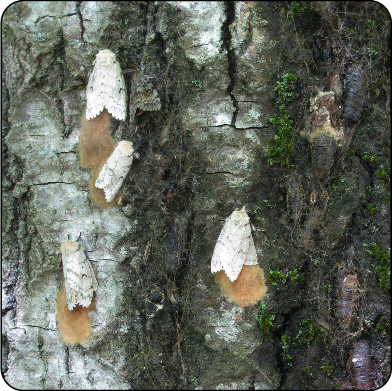
Mature female Gypsy moths laying egg masses

Originating in Europe, the
Gypsy moth is one of many invasive species that have devastated local forests. Several years ago it was the Emerald Ash borer beetle that destroyed ash trees. Those that were cut down years back in an effort to stop the advance of the beetle and to protect woodland hikers from the potential of falling trees, are struggling to re-establish themselves, putting out new growth around the ash stumps in a bid to survive.

In 1859 a silkworm breeding experiment took place in Massachusetts with the Gypsy moths. While the experiment failed to succeed, the gypsy moths themselves succeeded in escaping, becoming a destructive pest in an environment where it has no natural predators. The caterpillars can grow to over six centimetres in length, recognized by bristles and a twin row of blue and red dots on their backs. A square metre of foliage will do an individual caterpillar initial to pupation and hatch, when it becomes a grey-brown moth in late summer.

The caterpillars have been present in Ontario since 1969, with intermittent outbreaks. Creeping up trees to feed in the canopy at night, they creep back down during the day making themselves less visible. Forest tent caterpillars, native to the region, feed early in spring and summer when they present an outbreak, so trees have the opportunity to put out a second covering of foliage. With fewer predators compared to the tent caterpillars, the Gypsy moths wreak far more lasting damage.

The only bright spot in defence against their depredations is a virus called baculovirus that they're susceptible to, that destroys the caterpillars from inside out.They lay buff-coloured egg masses on tree trunks providing an opportunity for the less squeamish to scrape them away and destroy them before hatching.


Labels: , , , ,

Wednesday, July 01, 2020

 COVID Fallout: Orca Whales in the Salish Sea

"The anticipation is that the quieter environment will help the killer whales in communicating, in socializing, in navigating and most importantly, in finding food."
"What we are seeing in the Salish Sea is levels of shipping noise that haven't been present for three or four decades. So we would have to go back to the 1980s before we would have heard such a quiet environment."
"They [killer whales] echo-locate to find their salmon. It's a very sophisticated sort of acoustic capability and the quieter the environment, they would have more success in finding prey." 
"If we see them returning and staying in their critical habitat for longer periods ... if we have evidence of successful feeding on the salmon, then those are all good signs and in some sense the quieter environments can only have helped their survival."
Richard Dewey, associate director of science, Ocean Networks Canada
An endangered female orca leaps from the water while breaching in Puget Sound west of Seattle, Wash. Ocean Networks Canada says the drop in sea traffic brought on by COVID-19 will be a boon for killer whales. (The Associated Press)
A calming effect has been noted thanks to the COVID-19 pandemic in the diminution of sea traffic off the coast of British Columbia, affecting southern resident killer whales. Which has led to a study, given this rare occasion of relative quiet in normally busy traffic in sea lanes, threatening the existence of these mammals. Ocean Networks Canada has stated its belief that the change will result in a positive outlook for the survival of endangered marine mammals like orcas.

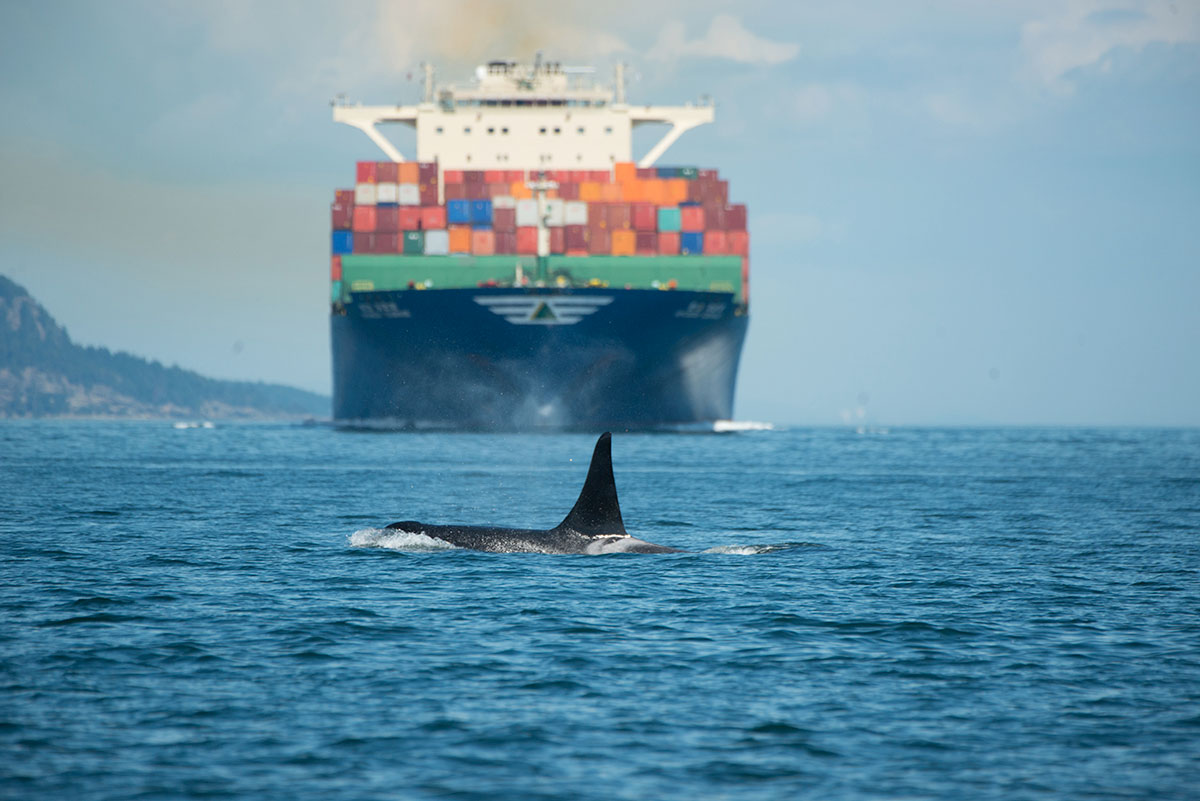
Orca L87 as a ship approaches. Capt. Alan Niles/Maya's Legacy Whale Watching

Noise from ships and sounds made by marine mammals have been studied for years, as the commotion brought about the presence of heavy traffic in the ocean has complicated and endangered life for marine animals. Last month a paper was published in the Journal of the Acoustical Society of America which concluded that a rough 30 percent decrease in commercial shipping traffic into the Port of Vancouver from China alone in the first four months of 2020 has been occasioned as a by-product of COVID-19 which has impacted on world shipping.

Along with a diminished commercial sea traffic, a pause in whale-watching boats, cruise ships, recreational vessels and tankers has also been occasioned. All of which has led to a 75 percent noise reduction. Shipping noises have been steadily increasing, close to doubling every decade, creating a major concern for the endangered southern resident killer whales. Their hearing is similar to that of humans, communicating in a frequency band also similar to that of humans.

Orcas use sound to hunt and communicate. (Elaine Thompson/Associated Press)

Whales use sound "continuously and all the time", in the ocean, said Dr.Dewey. Sound enables the whales to scope out kilometres' distance, while their eyesight allows them to see up to a distance of approximately five to ten metres in a very "turbulent" and murky environment in the Salish Sea. Loud sounds emanating as a result of human activity has a deleterious impact on the whales, increasing stress hormones when the whales are forced to 'shout' to make themselves heard in communicating over large distances.

By the time killer whales accomplish their seasonal return to the Salish Sea, scientists will have put in place 30 hydrophones to record the volumes of the sounds they make. The aim of the study is to yield vital data so that policy and regulatory changes can be enacted to aid survival of the animals.

In the past, killer whales would be seen in the Salish Sea in May and June, but their arrival has been delayed for the past four years, according to the director of the University of British Columbia marine mammal research unit.

Hypothetically, one reason for their late arrival -- sometimes as late as September -- may be insufficient numbers of salmon to feed on, although researchers believe that enough fish are present for the 72 remaining southern resident killer whales. Which has led scientists to wonder whether the whales are unable to hunt as a result of sound disruption from vessel traffic.

An orca swims in the Burrard Inlet near Port Moody. (Red Boat Charters)


Labels: , , , , ,

Tuesday, June 16, 2020

Crisis Management : Great Barrier Reef Corals

"Because COTS [Crown-of-Thorns starfish] juveniles have the ability to stay in an algae feeding form for up to six years, there could be an accumulation of multiple generations of juveniles that are happily feeding on algae until there is a specific cue that catalyzes their transition to feeding on corals."
Paul Barber, professor, Department of Ecology and Evolutionary Biology, University of California at Los Angeles

"The science tells us that elevated fertilizer and other pollutants from primary production run-off is causing an increase in phytoplankton, which is the main food source for COTS larvae."
Anna Maraden, managing director, Great Barrier Reef Foundation

"Given the extreme size of the Great Barrier Reef and many threats to humans, we wanted a 'tool' that could allow the authorities to scale back the manual eradication program."
"In 2006, I developed a robot which proved that vision can be used to allow a robot to estimate its position in the reef and avoid obstacles."
"[We] have been integrating them with robotic boats to further increase their ability to deliver large amounts of coral larvae to damaged reefs."
Matthew Dunbabin, professor of science and engineering, Queensland University of Technology
crown of thorns starfish.jpg
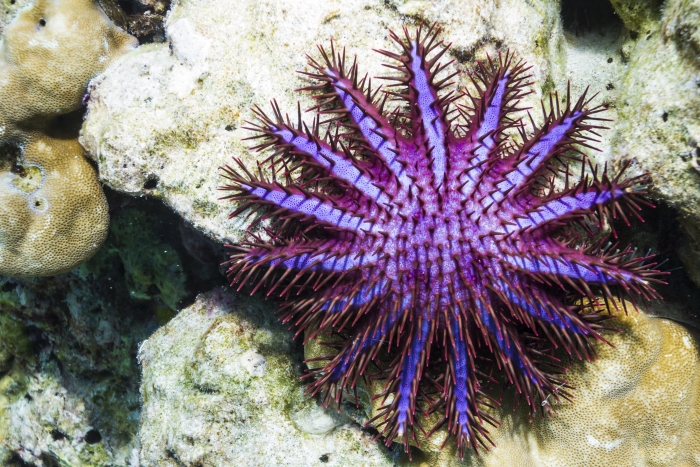
Crown-of-thorns starfish eat coral, and their booming population is causing major problems in Australia’s Great Barrier Reef. (Tarasovs/iStock)

As an irreplaceable wonder of the natural world, the Great Barrier Reef is immense, with its 3,000 reef systems spanning over 214,000 miles, home to over 1,500 species of fish, 400 kinds of hard coral, and one-third of the planet's soft coral. Half of that coral has been lost in the past thirty years, however, both to bleaching events and to outbreaks in the communities of crown-of-thorns starfish which feast on the coral.

As the world's largest coral reef system, the Great Barrier Reef has been attacked by this starfish with its long spikes covering its body, capable of reaching 2-1/2 feet in diameter, looking somewhat like a colourful landmine with 14 to 21 movable arms. The crown-of-thorns matures at four months of age, eating live coral continuously, up to their own body weight in one sitting. One such animal alone is capable of consuming 20 to 32 feet of living coral annually.

The 865 acres the Great Barrier Reef covers off the coast of Australia is host to an estimated 350 billion of the starfish considered to be the most fertile invertebrate in the world. They have stripped 150 reefs of coral and damaged 500 more, in just a few years within the Great Barrier Reef. It was recently discovered that crown-of-thorns are able to delay transition to adulthood for up to six years during which time they can be static, awaiting the healing of a damaged reef, which when healed, and healthy coral regrown, is ripe for the COTS to mature and resume feeding.

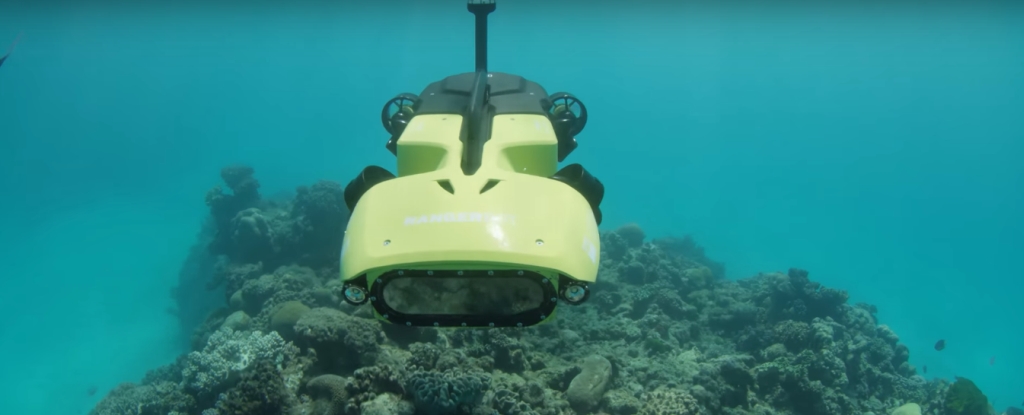
Reef RangerBot becomes 'LarvalBot' to spread coral babies
LarvalBot gently squirts the coral larvae onto damaged reef areas. Credit: QUT Media

Yet overfishing and the absence of the starfish's natural predators, the giant triton snail, have also contributed to outbreaks. Where under normal circumstances crown-of-thorns starfish have a useful role in reef vitality and diversity, preferring to consume the faster-growing coral which helps slow-growing coral varieties gain a foothold, when their population is not kept in check they have the capability of becoming a devastating invasive species.

The Great Barrier Reef Foundation recently launched a $37.5 million crown-of-thorns starfish control program, exploring innovative surveillance and control methods. The foundation has also been working with local farmers in reducing the amount of pollutant (fertilizer) run-off into the reef's waters to decrease outbreaks. Since the early 1960s when the escalation in outbreaks was first seen, scientists have been exploring methods of crown-of-throrns outbreak mitigation. Researchers at James Cook University in 2015 discovered a 20-millilitre dose of vinegar would kill a starfish in 48 hours.

crown of thorns starfish inset
A crown-of-thorns starfish. (tae208/iStock)

A practical, workable culling tool was considered only part of the battle of injectable poison such as bile salts or vinegar where diving crews were tasked with hunting the starfish one by one, making it difficult through such a laborious regimen to much diminish the population. Between four and 12 million crown-of-thorns starfish lived at the Great Barrier Reef in 2015. Two crews working full time were able to eradicate 350,000 of the creatures. To place matters into perspective, a female lays roughly 68 million eggs yearly.

A seemingly hopeless situation, but one with a more practical solution in scooping them up when an autonomous underwater vehicle, a vision-based robot specifically designed to protect coral reef systems was devised. Developed by a team of scientists led by Matthew Dunbabin, with Deep Learning technology, by 2014 Professor Dunbabin's team constructed a robot that could be programmed to detect and inject the starfish with bile salts, through autonomous operation.

The Ranger Bot is programmed to accelerate the development process. Fully operational by late 2018 in the Great Barrier Reef, the team that assembled it was able to increase its capabilities to the point where it can help with coral larvae reseeding along the Great Barrier Reef and reefs in the Philippines.

rangerbot august 2018
Ranger Bot   (TheQUTube/YouTube)


Labels: , , , , ,

Wednesday, February 19, 2020

How Many of These Delicious Waffles Would You Like?

"The ecological footprint of an insect is much smaller compared to animal-based food sources." "Besides, we can grow insects in large quantities in Europe, which also reduces the footprint of transport. After all, palm fat is often imported from outside of Europe."
"Insect fat is a different type of fat than butter. Insect fat contains lauric acid, which provides positive nutritional attributes since it is more digestible than butter."
"Moreover, lauric acid has an antibacterial, antimicrobial and antimycotic effect. This means that it is able, for example, to eliminate harmless various viruses, bacteria or even fungi in the body, allowing it to have a positive effect on health."
Daylan Tzompa-Sosa, researcher, Ghent University, Belgium
"Bakery products with insect fat are more likely to be appreciated, because the insects are merely a form of fat substitute,” said researcher Joachim Schouteten.   Getty Images
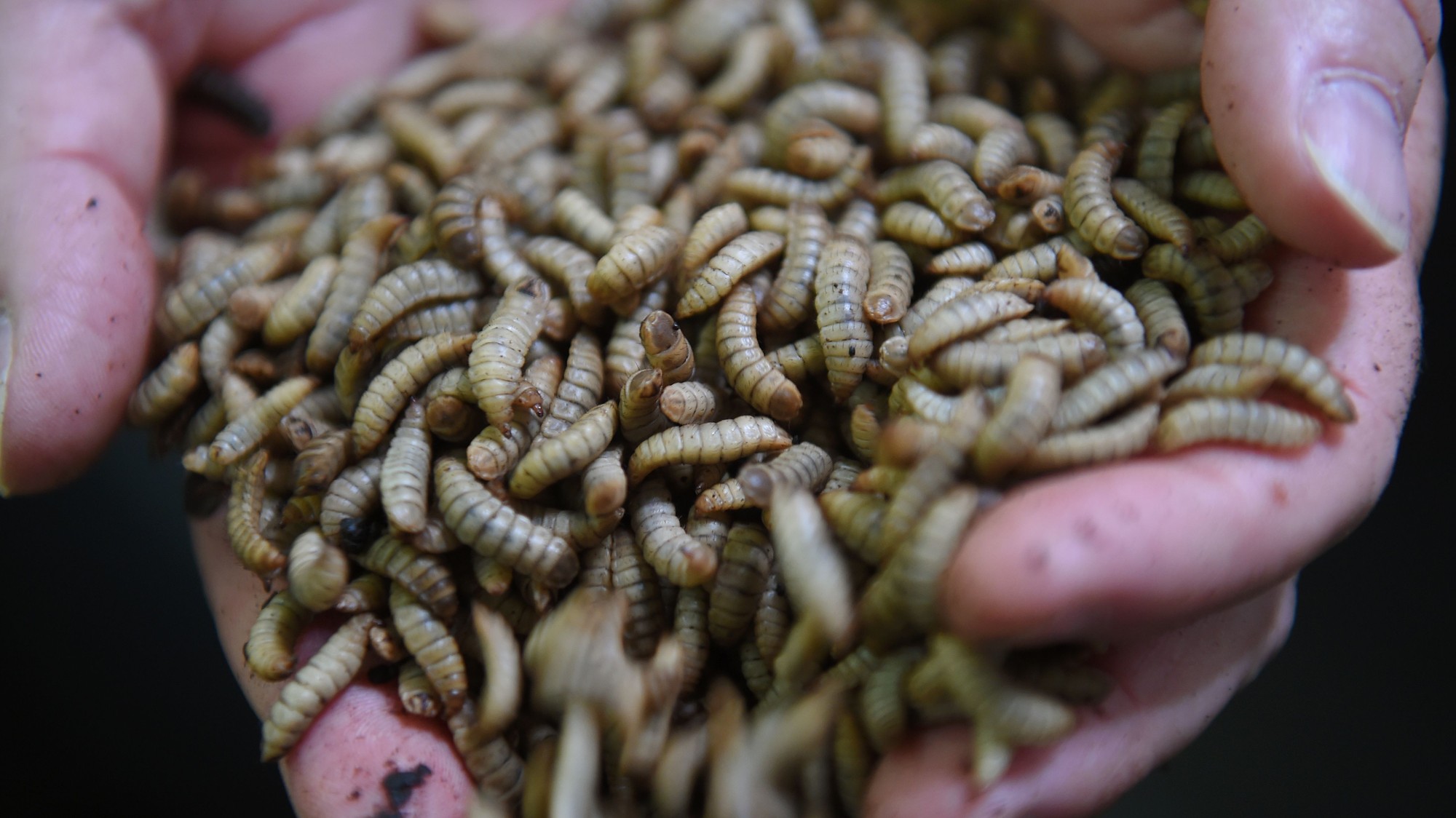
There's that "ugh" factor of course, to overcome. It doesn't exist in Africa or Asia, as an example, but it certainly does in the West. Where the prospect of foods with additives of insect content will be viewed as less than positive, even if it comes with the assurance that eating insects rather than cows is more environmentally friendly, and even more nutritious than the common, everyday diet we invest our dinner tables with. But processing common foods with a 'butter' sourced from black soldier fly larvae may be the wave of the future.

Mealworm burgers sound grim, to be sure, and most people who look for alternatives to beef burgers would prefer to be served vegetable-sourced Beyond Burgers, but this aversion may eventually be overcome as demonstrated by a newly published research study. No, study participants weren't served cricket pasta or mealworm bolognese sauce and caterpillar energy bars; that's all for the near future. This study began rather modestly by researchers at Ghent University in Belgium.

Credit: Ghent University
They decided to focus on innocuous waffles and envision that all manner of pastries at some near future date may be infused with the same kind of 'butter' they used in the waffles, taking the place of dairy butter. Reflexively you might mutter that you'd prefer to stick with 'real' butter. But the Belgian scientists conducted a blind taste test serving 344 people three different iterations of waffles, cakes and cookies. With each of the pastry types one batch was produced with all butter, another with 75 percent butter and 25 percent black soldier fly larvae fat, while the third had a 50/50 butter and larvae fat content.

Well, yum, you know... Cake samples with one-quarter insect fat succeeded in eluding the tasters' suspicions that any insect content was included; they could taste no difference between the all-butter version and the one-quarter insect fat offering. The taste participants in the study were informed beforehand that the pastries could contain "an insect ingredient", yet none among them realized that what they tasted and relished had a larvae fat content in the 25 percent apportioned to the cake.
Image result for belgian study, insect larvae
Vice

"In the case of waffles, they did not even notice the presence of insect fat when half of the butter had been replaced", wrote the researchers in their paper published in the journal Food Quality and Preference. "Also, the texture and colour were hardly affected as compared with butter", they elaborated of the cruel joke they played on initially advised, but naive taste-testers. It reminds me of when my children were young and hated liver, but relished the 'meat loaf' I'd once made with liver I had first ground up, then mixed with an egg, tomato sauce, breadcrumbs and spices.

They enjoyed that meat loaf, even asked for seconds, and I was so pleased that I blurted out when they had finished their meal that what they had just eaten and so obviously appreciated was the very same healthy kind of meal that they refused and termed disgusting. Their faces blanched, and one of the three looked as though he was prepared to upchuck. That was an experiment I never repeated because I promised them that this represented the first and last time; the only way I could convince them I didn't hate them at all, but cherished them and to prove it, put all such future attempts to permanent rest.
Carabid beetles (Photo: Thierry Hubin, RBINS)
Photo: Royal Belgian Institute of Natural Sciences

A 2012 study published in PLOS One found raising insects requires 25 times fewer land resources than is true for cattle. And a 2015 research paper published in the journal Water, demonstrated that mealworm raising uses one-third less fresh water than is needed for conventionally farmed animals.

Using insect fat, the researchers suggest, even as a partial substitute for butter or palm oil, would have clearly positive environmental impacts. An estimated two-billion people worldwide need no introduction to appreciating insects in their diets. They are high in protein and rich in number. Eventually people in the West may open their minds, their shopping habits and their dinner table preferences to include the sustainable harvest of insects. They're all around us, everywhere we look. And there's incomparably more of them on this planet than any other living creature.

Image result for belgian study, insect larvae
Without even cringing ... The Globe & Mail
 

Labels: , , , ,

Tuesday, January 21, 2020

Another Animal Species Abused by Human Culture

"The bees in the almond groves are being exploited and disrespected."
"They are in severe decline because our human relationship to them has become so destructive."
Patrick Pynes, organic beekeeper, environmental studies, Northern Arizona University

"We have to think about how we grow monocultures. And that is much bigger than an individual issue."
"We have to look at regions, like the Central Valley of California where we take billions and billions of bees to pollinate the almonds and say, 'Okay, what could we plant here so that we could have bees here all the time'?"
"Because ultimately, bees are not supposed to move. They build a colony, they stay there, they map out where everything is ... they're like us, moving into a new city."
"The solution might be diverse enough agriculture in the region so that the pollinators don't have to move."
Lenore Newman, author of Lost Feast: Culinary Extinction and the Future of Food

Over the past few decades Western society in its search for the perfect food, has invented substitutes for certain products that food 'experts' deem can be harmful to human health, or conversely reflecting a movement away from animal products to provide people with foods that are similar, considered more healthful, and aren't derived from an animal source. Almond milk falls into that category. Blended and strained in huge quantities to serve a specialized market, nut milk is seen as a nutritious and sustainable non-dairy beverage popular among today's consumers.
Image result for almond crop, california
Food Navigator, U.S.A.

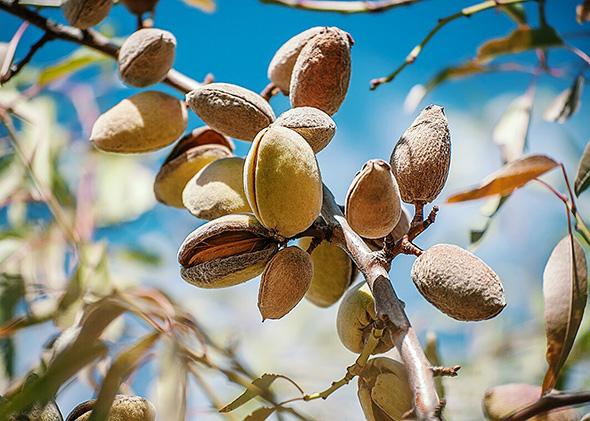
Almonds, originating and native to the Tian Shan Mountains of Central Asia, hosts a honeybee population that specializes (as in species-specific) in pollinating almond blossoms, as a byproduct of their honey-making process. Almond tree seedlings have long since been transplanted to California which now grows 82 percent of the world's almonds, in a hot, dry climate, requiring a huge amount of irrigation in what is also a water-deficient landscape. Above all, the vast mega-farms in the state require pollinators since almond production is reliant on honeybees for pollination of the millions upon millions of blush and white blossoms on millions of trees.

Image result for almond crop, california
Slate Magazine

For over a full one-third of vegetation bearing food for our species, without pollination there would be no resulting fruit. The huge demand of the almond blossoms has created a situation of frenzied deliveries of bee pollinators. The bees packed in boxes are loaded onto trucks and vast numbers are transported to the huge California forests of almond trees. This is yet another industry linked to the growing of almond trees; bees for hire. And those hard-working bees are seen to be perishing at what beekeepers and scientists speak of as unprecedented rates.

For California, the almond industry represents a $14-billion crop. Which has resulted in fifty-billion bees dying, themselves representing 40 percent of the honeybee colonies in the United States, not surviving last year's winter, according to a national survey. Once considered an efficient and high-yielding process, mass pollination of monocultures appears to be failing. In view of almost universal record losses of bees, beekeepers were placing blame on pesticide exposure and parasites.

Organic beekeepers, on the other hand, along with environmentalists, beg to differ, placing their belief in a more fundamental causation. No other California crop uses bees in the numbers that almond orchards require. Pesticides like glyphosate (an active ingredient in the Monsanto product Roundup) is pointed out as the leading cause of colony collapse disorder, but bees also face other threats threatening their longevity.

The bees' winter dormancy is being disrupted by transporting them to California almond orchards. They are placed under huge stress by concentrating them in an area that facilitates the spread of disease. Lacking diversity in a monocrop places them under additional stress.

The full causes of colony collapse remain elusive. But it does seem clear to environmentalists that the very shipping of pollinators from crop to crop represents part of the problem. Bee die-off during the winter months is not unusual. It is the sheer scope and scale of the bee die-off that is so troubling and not reflective of nature's programming.


We ourselves discovered decades ago the presence of wild-bee hives in a forest near where we live. And winter after winter, we see hundreds of bee corpses flung out of the hive. Which each successive snowfall that occurs, new dead bees appear, in a presumed ritual of perpetual house-cleaning by the remaining hale and healthy bee population in that hive located thirty feet in height inside the trunk of a venerable, stout pine growing deep in a forested ravine.


In spring, when the forest recovers itself after a long cold, snowy winter, wildflowers begin to blossom, long after we see bees flying about the undergrowth on the forest floor when warm spring weather reactivates the bees, awakening them to activity, heralding the beginning of their busy season and nature-lovers' appreciation of the appearance of huge arrays of wildflowers.


In that forest there are wild apple trees and hawthorns, along with honeysuckle and grape vines as an understory. The forest is also rife with the growth of berries; tiny strawberries, stands of raspberries and blackberries and thimbleberries, none of which would bear their delicious fruit without the vital intervention of the wild honeybees.

Labels: , , , , , ,

Tuesday, January 14, 2020

Leisure Pleasures for Grandmothers in New Caledonia

"The study zone is in the most touristic bay in Noumea, so I often meet people when I am doing field work on sea snakes. When I was snorkelling on my own studying sea snakes, I used to meet a friend of mine called Aline that was snorkelling and taking photos on the same reef. In order to help me, she started taking photos of sea snakes and would send them to me by mail."
"We stated chatting in the water and I explained to her what I was doing, and she told me she wanted to help."
"As soon as the grandmothers set to work, we realized that we had massively underestimated the abundance of greater sea snakes in the bay. We realized they are important mesopredators on the reef."
"If there is one thing I want everyone to learn from this, it's that you should never underestimate grandmothers."
Claire Goiran, marine biologist, University of New Caledonia

"We meet every morning between 8 a.m. and 8:30 a.m. We wear our diving equipment and we swim for one hour or two."
"Sometimes in summer, we can swim for three  hours. Back on the beach we have tea and enjoy the beauty of the site. It is very relaxing."
Marilyn Sarocchi, 63, New Caledonia, Coral Sea
The “fantastic grandmothers,” from left: Geneviève Briançon, Aline Guémas, Monique Zannier, Monique Mazière, Sylvie Hébert, Cathy Le Bouteiller and Marilyn Sarocchi. Image by Claire Goiran/UNC.

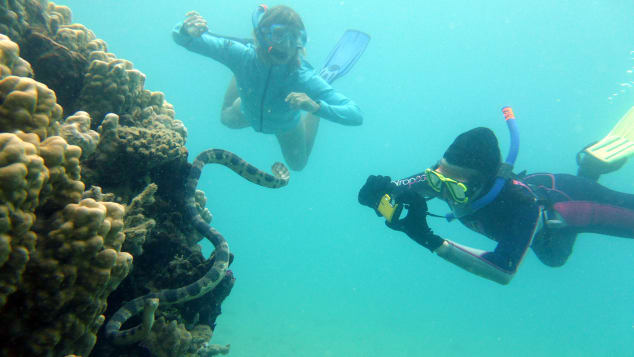
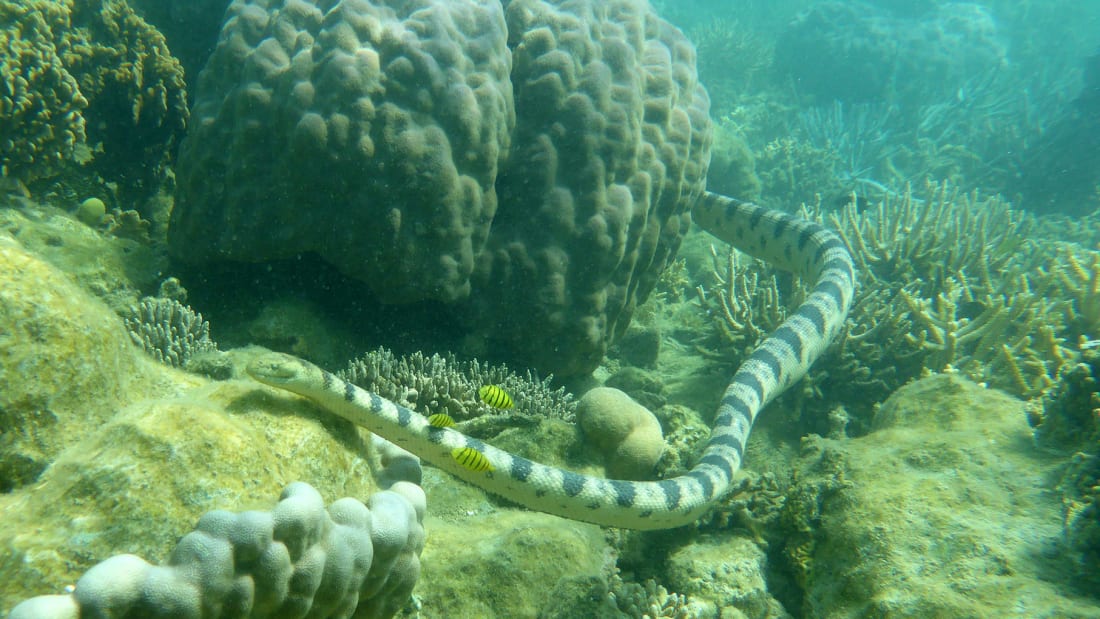
The journal Ecosphere recently published an article highlighting an unusual collaboration between scientists studying the presence of sea snakes around the waters off the coast of Australia and the French territorial island archipelago nearby of New Caledonia teeming with over 9,300 marine species, including dugongs, manta rays and venomous sea snakes. The greater sea snake, which can reach close to 1.5 meters in length, capable of killing a human with a single bite, among them.

Sea snakes for the most part live offshore and given that they are expressly dangerous to handle, few scientists are inclined to risk studying the species and their hard-to-reach habitat. Rick Shine, an evolutionary biologist at Macquarie University, Australia, and Claire Goiran from the University of New Caledonia paired up to find out what they were able to, about the greater sea snake.

Their efforts to survey the Baie des Citrons, a bay in Noumea, the capital of New Caledonia, were not very effective. They had a limited time frame to spare, and lacked full-time volunteers as assistants so theirs was a slow start. In the first three years of their study they managed to catalogue a mere 45 greater sea snakes. But then, in June of 2017, a fortuitous meeting took place on a beach between Dr. Goiran and Aline Guemas, a 61-year-old retiree, who offered to help in the search.

snorkeling grandma photographs sea snake
Monique Mazière and Sea Snake 79, nicknamed "Déborah."
Claire Goiran/University of New Caledonia

Ms. Guemas came along with Dr. Goiran on weekly surveys to photograph sea snakes and record the location where they were found. This turned out to be extremely useful for Dr. Goiran who soon suggested to Ms. Guemas she might recruit other retirees to volunteer for the same purpose. Soon, a team of seven volunteers had been assembled, their enthusiasm and usefulness soon becoming obvious, earning them the sobriquet of the "fantastic grandmothers".

Since they began their volunteer work on the bay, hundreds of snorkel surveys have taken place in the Baie des Citrons, where they identified hundreds of greater sea snakes. Monique Zannier, 75, one of the women whose ages range from 60 to 79, admits to no concern over the reputation of the sea snakes. "The Baie des Citrons is our playground", she boasts.

A group of snorkeling women who call themselves the “fantastic grandmothers” is helping scientists better understand the venomous greater sea snake. Image by Claire Goiran/UNC.

The researchers now rely on the women to help numerate and track the hundreds of greater sea snakes that come into Noumea's bays. Their data collection includes greater detailed information on the ecology of greater sea snakes than is found for any other wide-ranging sea snakes worldwide, according to Harold Heatwole, professor of zoology at the University of New England in Australia.
"Remarkably, they found a large number of lethally toxic sea snakes in a small bay that is occupied every day by hordes of local residents and cruise ship passengers — yet no bites by the species have ever been recorded at Baie des Citrons, testifying to their benevolent disposition."
Rick Shine, evolutionary biologist, Macquarie University, Australia 
Two of the grandmother dive to photograph the snake's tail for identification.
Claire Goiran

"I have been studying sea snakes in the Baie des Citrons for 20 years, and thought I understood them very well — but the Fantastic Grandmothers have shown me just how wrong I was."
"The incredible energy of the Grandmothers, and their intimate familiarity with ‘my’ study area, have transformed our understanding of the abundance and ecology of marine snakes in this system. It’s a great pleasure and privilege to work with them."
Claire Goiran

These remarkable women have documented at least 250 of the snakes. They showed through photographs they've taken, that within a 25-month period 140 greater sea snakes visited the Baie des Citrons, suggesting that greater sea snakes may have a larger role in the ecosystem function than previously thought, as animals in the middle of a food chain; both predators and prey.

The conservation status of at least 23 species of the sea snakes is unknown, resulting from a lack of data, leaving Dr. Goiran to hope that their data collected by the grandmothers will be of help to conservationists in improving protection for sea snakes of which only two of the 60 species in total are considered critically endangered.

A greater sea snake in Baie Des Citrons in New Caledonia, a French territory in the South Pacific.

Labels: , , , ,

Sunday, January 12, 2020

An Insatiable Appetite = Extinction

“It is likely that the lack of reproduction was among the major causes of extinction,”
"As no individuals exist in captivity, and no living tissues are conserved for potential resurrection, the fish should be considered extinct."
Research paper, Science of the Total Environment journal

“It’s very sad. It’s a definitive loss of a very unique and extraordinary animal, with no hope of recovery."
"This is the first of these very large freshwater fish to go and many are at risk—the concern is that more will go extinct, but the hope is that we can reverse their decline before it’s too late."
Zeb Hogan, fish biologist, University of Nevada, Reno

"The extinction of the paddlefish is a huge loss and reflects the critical status of the Yangtze River ecosystem."
"The ecology of the Yangtze River is close to collapse due to human activity in past decades [overfishing, pollution and dam construction]."
Pan Wenjing, forest and oceans manager, Greenpeace East Asia
Chinese Paddlefish
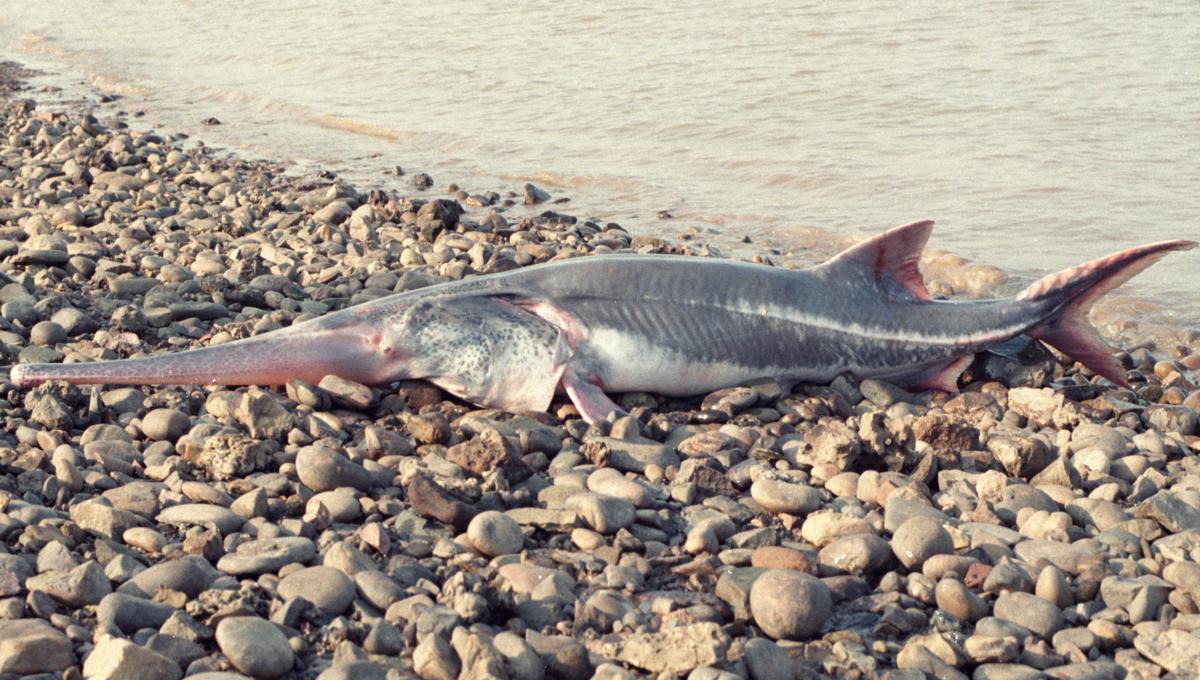
A Chinese paddlefish specimen made in 1990 is seen on display at the Museum of Hydrobiological Science of the Chinese Academy of Sciences in Wuhan, China. The Chinese paddlefish's sharp, protruding snout made it one of the largest freshwater species in the world. (Museum of Hydrobiological Science of the Chinese Academy of Sciences via AP)
"The Chinese paddlefish, Psephurus gladius, was one of only two extant members of a relict lineage that was most diverse and widespread 34–75 million years ago."
Hui Zhang, Chinese Academy of Fishery Sciences, Wuhan, China

"Of the estimated 8 million animal and plant species on Earth, about 1 million are threatened with extinction."
"The problem in China, with its rapidly developing economy and urbanizing population, has been particularly acute. Since 1970, almost half of China’s terrestrial animals have vanished."
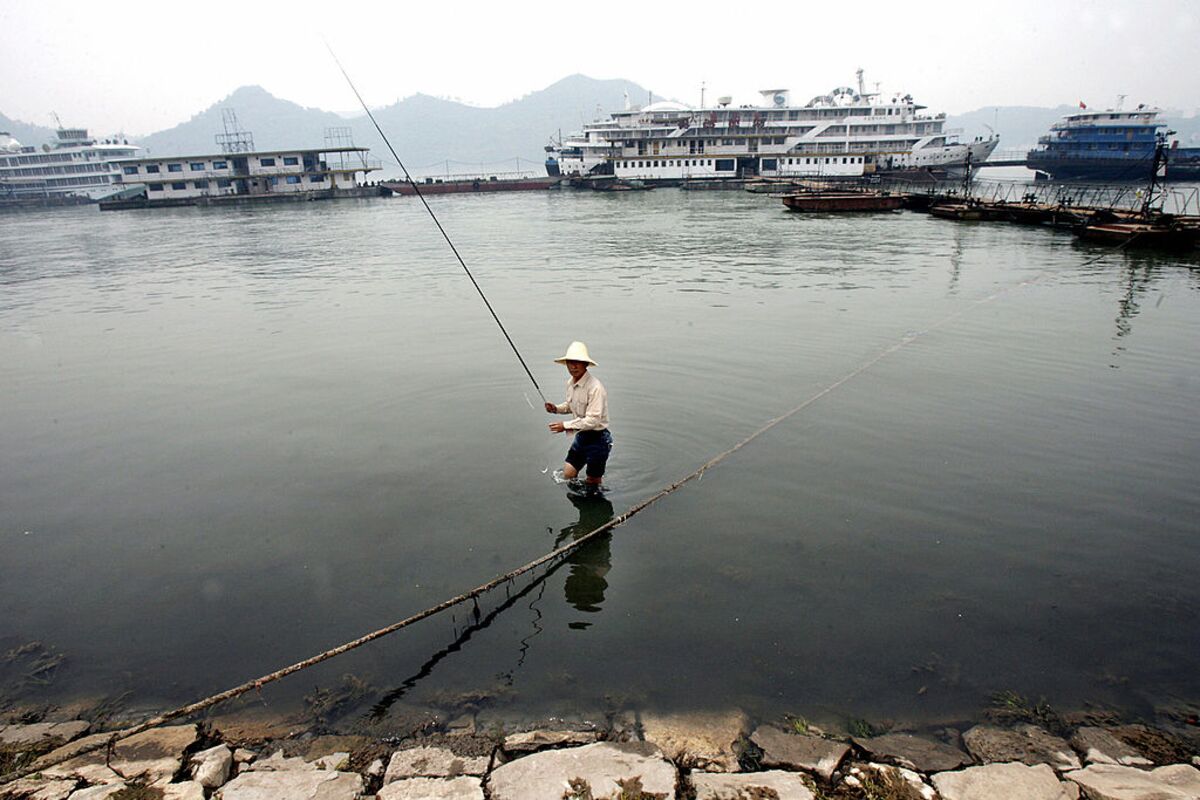
"The Yangtze River, a key fishery and former home to the Chinese paddlefish, is so dead that President Xi Jinping has said it has reached a 'no fish' level."
"Meanwhile, consumer demand for wildlife products, like tiger-skin rugs or bear bile for medicinal use, is responsible for a boom in the trafficking of endangered species."
Adam Minter, Bloomberg Opinion
No paddlefish here.
No paddlefish here. Photographer: Goh Chai Hin/AFP/Getty Images
It was once considered one of the largest freshwater species of fish in the world. It is now considered extinct. The Chinese paddlefish was one of those strange-looking specimens of the piscine world with its overly-lengthened snout, and it was also identified as a Chinese swordfish. Its ancient lineage dated it back to at least 34 million years. A fish that could grow to aged maturity of seven metres in length. Overfishing, habitat fragmentation and loss of biodiversity in its Yangtze River home spelled its demise.

Scientists from the Chinese Academy of Fishery Sciences, the University of Kent in England, and the University of South Bohemia in the Czech Republic collaborated on the research that produced the paper pronouncing the end of the ancient fish. They found the fish's existential collapse matching all the criteria for inclusion on the International Union for Conservation of Nature's Red List (IUCN).

Since the late 1970s, populations of the Chinese paddlefish saw a dramatic decline corresponding with major dam construction on the Yangtze River, to which it was a native fish. The Gezhouba Dam, built on the main stream of the immense river, followed by the opening of the gargantuan Three Gorges Dam project in 2003, represented the very last year that anyone was able to sight a live Chinese paddlefish.

In 2017 and 2018, a survey discovered 332 species of fish in the Yantze, yet a single specimen of Chinese paddlefish eluded the researchers who estimate that the fish became extinct between 2005 and 2010. Overfishing in the most populous country of the world; pollution and dam-building reduced its numbers. Not all that long ago, in the 1970s, fishermen harvested 25 tons of Chinese paddlefish from the Yangtze River. By the 1990s, almost none remained.

A predictable outcome for a species of fish that had been on Earth longer than humanity, but whose unfortunate and tragic end resulted from the presence of humans who sought the delicate flesh of this giant fish predator for their dinner tables. A great predator of the seas, a relative of the sturgeon and American paddlefish, had suffered the fate of being victimized by a predator more populous and more dedicated to its dinner table than its own hunting habit.


 Chinese paddlefish

Labels: , , , , ,

 
()() Follow @rheytah Tweet