Ruminations

Blog dedicated primarily to randomly selected news items; comments reflecting personal perceptions

Wednesday, October 15, 2025

All Together Now ... In a Union of Like Minds ...

 
 https://www.amnesty.org/en/wp-content/uploads/2025/05/250103-1468x710.jpg
 
"For us, it is important that the Commission recognizes that Belgium already has a disproportionate burden."
"[The federal government has decided that it will contribute to the solidarity mechanism only with] financial means, because our reception centres are full."
"[Belgium is ready to pay] on condition that everyone else also takes responsibility."
"Solidarity and responsibility go hand in hand; every country must apply the Dublin rules."
Anneleen Van Bossuyt, Minister for Asylum and Migration of Belgium  
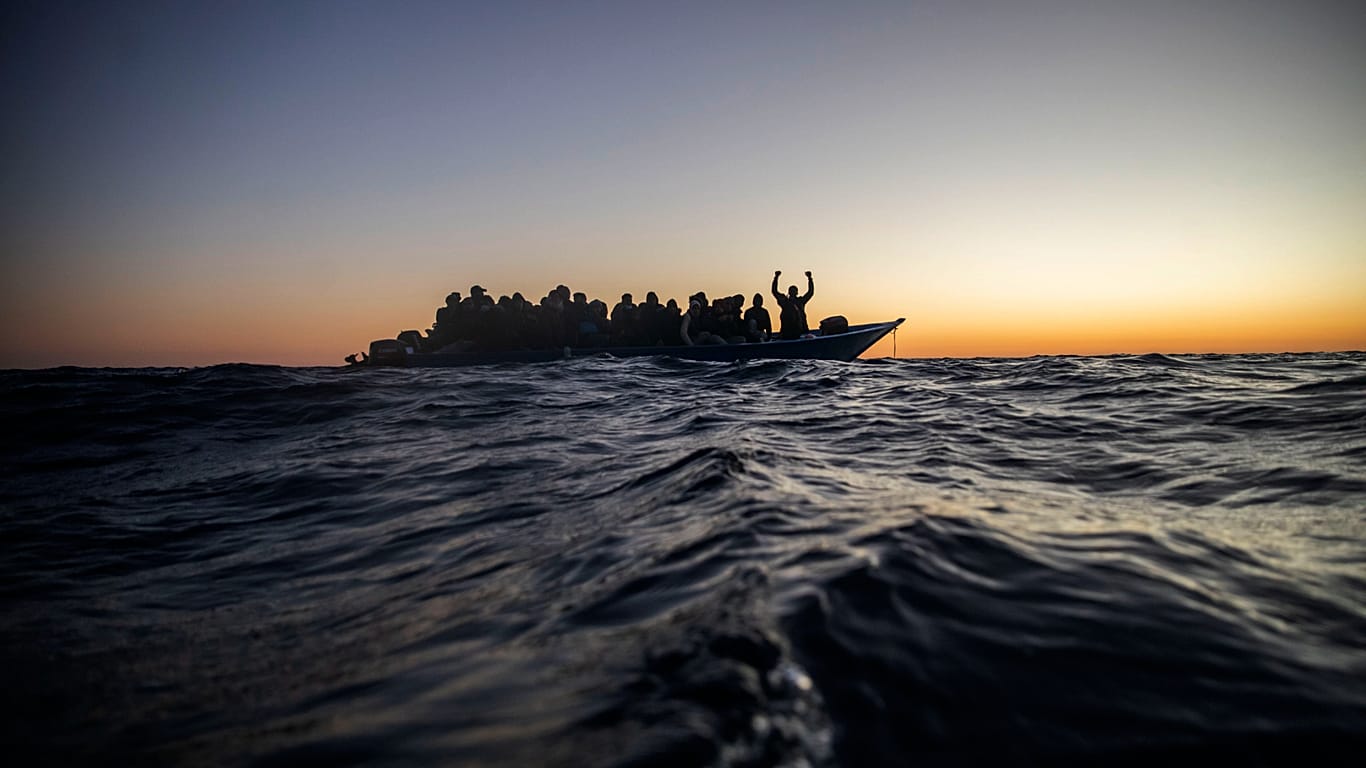
The 27-member European Union is staring down a Christmas deadline on agreement for the relocation of, at minimum, 30,000 asylum seekers on a 'fair' allocation system meant to be voluntary, to guarantee a level of relief for front-line countries which have received the lion's share of migrants as a result of geographic placement. Tuesday saw interior ministers gathering from the EU's member-nations in Luxembourg to begin negotiated talks on the 'solidarity mechanism' representing a key platform of migration reform that saw adoption in 2024, and meant to enter fully into force this year.
 
Frontline countries like Greece and Italy are groaning at their seams, overburdened by the humanitarian intake of asylum seekers washing up on their Mediterranean shores. The pact represented by the 'solidarity mechanism' is meant to ease the pressure on them, requiring other member states either to accept asylum seekers or to obligate themselves to the tune of 20,000 euros each person  in support of the strain that Greece and Italy's find themselves in by involuntarily accommodating so many arrivals.  
 
https://images.euronews.com/articles/stories/09/51/02/63/1366x768_cmsv2_a512f1c5-446e-5a8a-b074-a409b0b2d626-9510263.jpg
AP Photo
 
Unsurprisingly, the plan has been hobbled by  resistance from some EU nations. Prior to Tuesday's meeting, Poland let it be known that it had no intention of accepting relocated asylum seekers in any number. That unaccommodating position is one echoed by Austria, Belgium and Sweden. "This is going to be a painful discussion", one European diplomat stated, leaving no alternative but to reach a final decision by the end of the year.
 
The new solidarity mechanism, once in place, is meant to apply to at least 30,000 asylum seekers each and every year. The European Commission was on the cusp of publishing a list of countries deemed under "migratory pressure", the list  compiled and comprised based on irregular arrivals and population size criteria. With the list finding agreement among members, negotiations will go forward on how many people each member state is willing to absorb or relocate -- alternatively -- how much financial aid will be offered instead. 
 
No one expects immediate agreement, anticipating a number of rounds of talks will be held to build consensus before a final agreement is accepted. In the wake of heavy pushback from a number of heavyweight capitals including Germany, Brussels has asked for an additional "couple of days" to enable it to refine its methodology. "It's not easy because it's the first time" the system is being tested, remarked Magnus Brunner, EU commissioner: "We're discussing that throughout the day".  
 
https://www.eunews.it/wp-content/uploads/2016/07/Rimpatri-migranti.jpg
Still from video   eunews
 
 Parallel discussions saw ministers debating how to improve the return of migrants with rejected asylum claims. Only about 20 percent of those ordered to leave the EU are actually returned, currently. Measures that would allow states to open "return hubs" outside EU borders to process rejected asylum seekers, alongside tougher rules for migrants refusing to leave have been proposed, yet even so, divisions have a tendency to persist.
 
There is a growing anti-immigrant sentiment throughout Europe, making the issue politically fraught. And pressure mounts from critics insisting that a harder line must be developed that goes beyond the humanitarian impulse to offer haven to those who have undertaken long and perilous journeys in hopes of reaching Europe, given the outsized influx of migrants gaining Europe's shores in the last decade.  
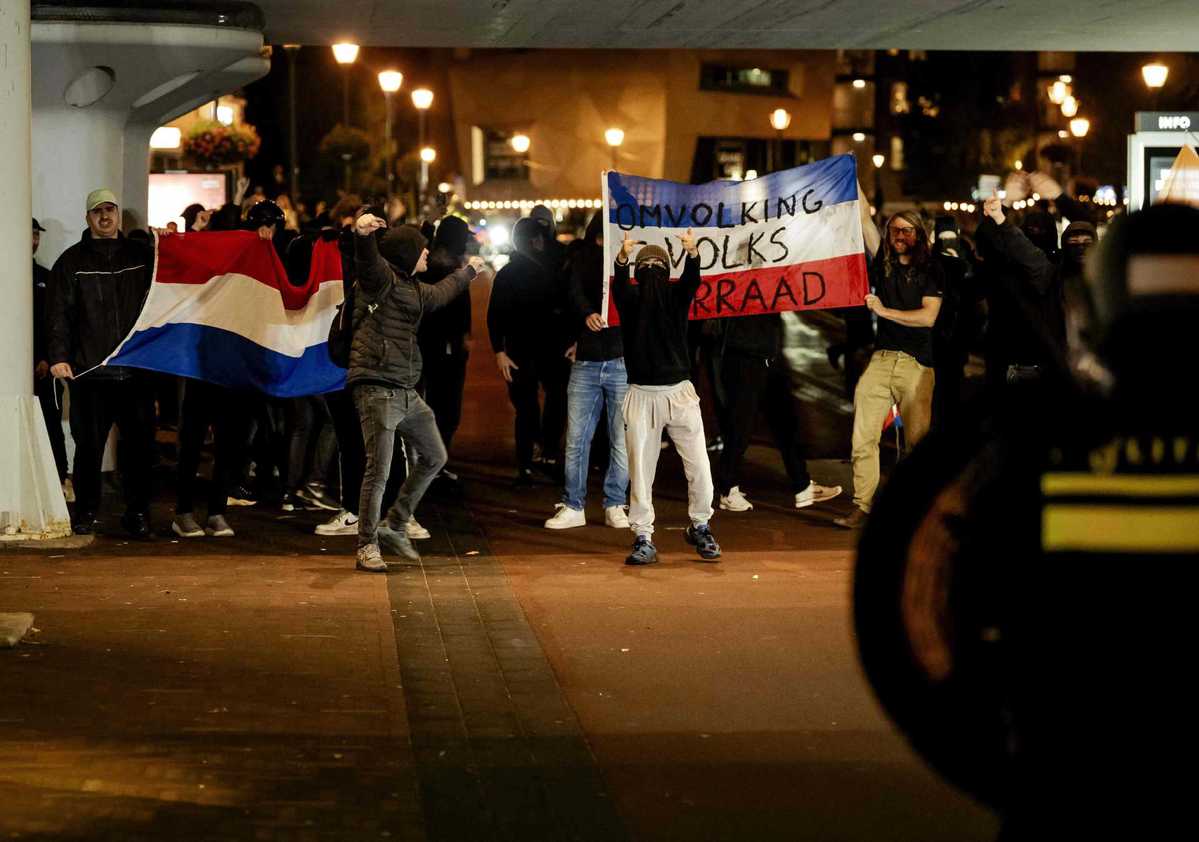
 
https://img2.chinadaily.com.cn/images/202510/16/68f04585a310f735017eecea.jpeg
People wave Dutch flags as they confront riot police during a second demonstration outside the Houten town hall against the city project to welcome a center for asylum seekers in Utrecht Province, Netherlands, reported on Oct 15. [Photo/Agencies]


Labels: , , , , , ,

Monday, November 06, 2023

With All Due Respect

"As a medical and humanitarian organization, we could not stay silent in the face of the exceptional scale and severity of the violence reported to our teams [on Samos and the island of Lesbos]."
"Non-Assistance [to migrants], violence and pushbacks have become part and parcel of a system of border management [on the two Greek islands]."
"From land, testimonies point to a pattern of practices including physical assault, handcuffing, informal detention, groups being forcibly taken to the shore before being pushed back at sea, as well as humiliating strip searches." 
"[The perpetrators were described as] groups of unidentified people with covered faces] who often stole migrants’ phones, money and other possessions."
"MSF has witnessed people running out of the forest screaming, crying and reporting being beaten, and MSF medical staff have treated people on the spot for suspected violence-related injuries."
Doctors Without Borders (MSF)
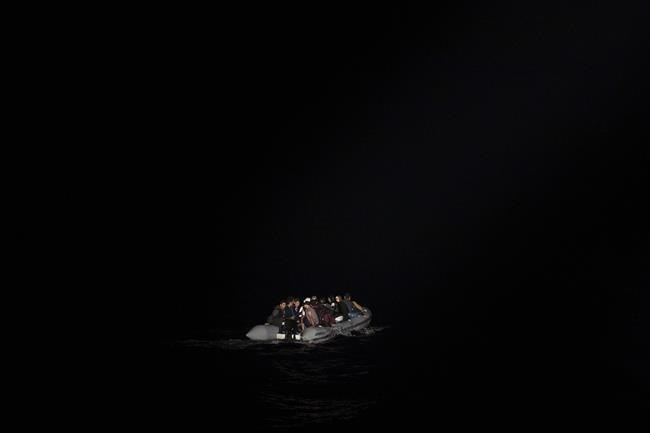
https://infotel.ca/images/news/cp/photos/20231102091136-6543a6a32945b085d30e7cc5jpeg.jpg?q=90
Refugees and migrants in a dinghy are lit by a a Greek coast guard patrol boat's spotlight during a rescue operation near the eastern Aegean Sea island of Samos. A leading international medical charity said on Thursday, Nov. 2, 2023 that has received scores of testimonies over the past two years from migrants that point to a "recurring practice" of alleged secret, illegal and often brutal deportations back to Turkey from two eastern Greek islands. (AP Photo/Petros Giannakouris)
 
Europe, and not only Europe, has been undergoing years of forced 'occupation' by an unending stream of migrants claiming to be refugees needing haven in their escape from repressive, controlling, abusive regimes in countries with high crime rates and often civil war. The majority of the migrants are young men looking for economic opportunities; in many instances a lack of employment in their home countries and in other instances regional conflict may add too the influx of these migrants streaming to Europe and North America, all through clearly illegal routes that pose a danger to the migrants themselves.
 
For years tens of thousands of migrants, mostly from Africa and the Middle East have posed a problem in their endless numbers arriving on shores that can barely manage to answer to their most immediate needs of shelter, food, health care and a future. Their non-stop arrivals now number in the millions scattered throughout Europe where most countries at the urging of the European Union have agreed to receive these migrants. And for years, the suspicion that among them are also men with ties to known terrorist groups.
 
The infiltration of Europe generally by mostly men from cultures unlike that of the receiving countries has posed a problem. Crime has become more prevalent, as have violent attacks and particularly attacks against women. Cultural, tribal and sectarian roots reflect a heritage alien to that of Europe. Many of those arriving are culturally unadaptable to the values and the laws of democratic countries. And all too many of the migrants take advantage of generous social welfare programs to the detriment of people native to the welcoming countries living in poverty.
 
Greece and Italy have suffered disproportionately from the avalanche of migrants teeming onto their shores necessitating costly and complicated measures for accommodating the sheer numbers that engender resentment on the part of native Europeans. Doctors Without Borders has produced a report critical of Greece in particular, ostensibly drawing on interviews they have conducted with migrants between 2021 and 2023, claiming harsh and violent treatment. 

MSF's report accuses Creek authorities of a "recurring practice" of secret, illegal and sometimes brutal deportations back to Turkey from the two eastern Greek islands. Turkey had opened its borders in 2020 into the EU, actively encouraging migrants to move on and cross into Greece. Turkey wants to be rid of the migrants that have flooded en route to move onward to Europe. Turkish authorities cite the burden Turkey has taken on, giving shelter to millions of Syrians who fled the Syrian regime's war on its Sunni Syrian population.

Turkish authorities along with the charity, refugee activists and others allege that in the Aegean Sea and Greece's northeastern land border with Turkey, forced returns had been carried out by uniformed officers or unknown masked individuals. Strong denial to these "pushbacks" has come from the government in Athens which argues that its coast guard has acted in a humanitarian fashion by saving hundreds of thousands of migrants from the Middle East and Africa attempting to reach Greece, crossing in small boats from Turkey.
 
A boat used to patrol the seas for migrants is seen in the harbour in Samos. (Romain Chauvet/CBC)
 
There is a national need to protect Greece's borders, which in effect are those of the European Union, from mass illegal immigration. The MSF report included a case where migrants reported to its staff that two people, one a pregnant woman, died off the island of Samos when their boat was towed at high speed toward Turkish waters. The islands of Lesbos and Samos represent key landing points for migrants arriving from Turkey.

Migrants are now turning to alternate, longer voyages as a result of the enforced returns to Turkey, claims the report. Longer voyages that risk greater hardship or death, with an increase of yachts in recent years crammed with migrants leaving Turkey to round southern Greece heading directly for Italy.
Logic might have it that given the great dangers involved in making such illegal migrant voyages and entries, the migration would cease, but it does not. People are knowingly placing themselves in danger.

That being the case, are countries at the receiving end of millions of illegal migrants -- whose arrivals will alter those countries' demographics, with incoming flocks of people who cannot or will not adapt to values common to Europe, to their laws, accommodating themselves to what is normal and socially accepted in a country unlike their own -- not obligated to its own heritage, history, culture and values to maintain them and refuse further entries?

https://i.cbc.ca/1.6655280.1668714374!/fileImage/httpImage/image.jpg_gen/derivatives/16x9_780/closed-controlled-access-centre-in-samos-greece.jpg
Opened in September 2021, this camp on the Greek island of Samos is the first Closed Controlled Access Center (CCAC) for asylum seekers. Fully funded by the EU at a cost of 43 million euros, the camp is surrounded by multiple barbed wire fences and equipped with a security system that includes CCTV cameras. (Romain Chauvet/CBC)

Labels: , ,

Friday, July 30, 2021

A Mixed Tale of COVID Response

Staff help people at Toronto Western Hospital at a vaccination clinic in March. The hospital is part of the University Health Network, which will soon mandate that all unvaccinated staff participate in frequent COVID-19 testing to ensure patient safety.
University Health Network vaccination clinic for medical staff.  The Star


"Health-care workers in general should be vaccinated to protect themselves, their family and their patients."
"We know that COVID-19 vaccines are safe and effective, and we're seeing that across Ontario. They keep numbers coming down, and we're seeing improvements in terms of hospital capacity, ICU capacity."
"I think it's important to understand that we have flu vaccine campaigns and many flu vaccine protocols."
"It's institution-specific, but the vast majority of the [places] where I've worked do have a mandated policy for flu vaccines."
"I think anything that increases hesitancy or makes people more reluctant to pursue vaccinations should always be thought of as a potential side effect for any policy measure."
Dr.Adam Kassam, president, Ontario Medical Association
Humber River Hospital ER physician Dr. Tasleem Nimjee describes what the COVID-19 vaccine will mean for the health-care workers who’ve been on the front lines of the pandemic    CBC
"I believe it is not unreasonable that when you choose to work in health care, like any profession that includes certain bonafide occupational requirements, that you acknowledge that you will take vaccinations and tests that are required."
Isobel Mackenzie, Seniors Advocate, British Columbia

"When it comes to our health-care workers, I think it's really important that they're protected, not just for them and their families but also for the people that they treat. We don't want to have a situation where unvaccinated health-care workers are falling ill and then transmitting the virus to people they're treating."
"We're all human. I think the reasons behind people being uncertain about getting the vaccine have shifted. People are still influenced by family and culture. If you've been raised where your parents or grandparents may not necessarily believe in certain kinds of medications or vaccines, that can still influence people, even when they're science-literate and have that education."
Dr. Krishana Sankar, biologist, science communicator, COVID-19 Resources Canada
Personal support worker Michael Gellizeau gets a dose of COVID-19 vaccine from nurse practitioner Victoria Pierri at a clinic put on by the University Health Network in Toronto. (Evan Mitsui/CBC)
 
Many within the sphere of Canadian public health fully applaud the news that several countries now require their health-care workers to be vaccinated against COVID. Some epidemiologists and advocates don't hesitate to urge Canadian authorities to adopt similar measures in Canada -- while others feel concerned over mandatory shots' messages and how they will be received by their target audience.

In the U.S. the Department of Veterans Affairs was the first federal agency in the country to require employees be vaccinated. That has now been extended to all federal employees in the U.S. Greece and France both announced they will require working doctors, nurses and other professionals in the field of medicine to be vaccinated. Italy was ahead of the game with a similar mandate announced in April. In hours following the announcement, vaccination appointments increased in France.

Greece options unpaid suspension from work for any who fail to be inoculated against COVID, as health-care professionals. Quebec now requires oncologists to be vaccinated or to take three COVID tests every week, following a deadly outbreak in a Sherbrooke hospital cancer ward. In Ontario, staff at long-term care homes are required to be vaccinated or to have proof of medical exemptions. 

The largest hospital network in Ontario -- the University Health Network in Toronto -- states that any staff refusing vaccination must undergo mandatory and frequent testing. The province, however, still hesitates to ensure that vaccinations are picked up by health workers by enacting mandatory provisions. The majority of young adults contracting COVID-19 in the past three months in Ontario were unvaccinated.

Dr.Sankar is among several volunteers operating a twice-weekly Zoom call to listen to people with concerns about the COVID vaccine, responding to their questions. Anyone may use the service, despite that when it opened in January it was geared specifically to people working in long-term care homes. It seems puzzling that people exposed to science education through their profession would hesitate to become vaccinated, even though they have experienced harrowing episodes of sick and dying patients infected with the SARS-CoV-2 virus.

"It's a complete slap to the face. I'm really just so confused why we're removing the only safety net we have left in place to protect everybody", stated Dr.Shazma Mithani who works at the Royal Alexandra Hospital emergency room in Edmonton, Alberta. She is responding to the news from the province that close contacts of confirmed COVID cases are no longer obligated to isolate, and from mid-August onward isolation requirements will be lifted even for those who test positive for the virus. Masks will no longer be required anywhere.

In Alberta, all COVID-19 testing centres are to close by the end of August, changes announced by the province's chief medical officer of health, Dr.Deena Hinshaw. This, despite a surge in Alberta's COVID-19 daily case rates. The province's rate of immunization lags far behind the average in Canada as a whole, despite announcing 233 new cases on Thursday, 188 of them linked to the Delta variant.
"I guess we're back to personal responsibility, where if you're not vaccinated, you need to be willing to suffer the price, and if you can't be vaccinated or if you can't have a good response to vaccine due to comorbidities or medication, well that's too bad, you live in Alberta."
"It's hard to believe Hinshaw's saying this, that this is like any other respiratory virus, when it's nothing like the other respiratory viruses that are around. Any way you look at it, it just doesn't make any sense."
Dr.Alain Tremblay, Pulmonologist, University of Calgary
And then, there is Sydney, Australia's most populous city, where despite an extended lockdown since an outbreak of the  highly infectious Delta variant, 239 new locally acquired coronavirus cases were counted over a 24-hour period. "We can only assume that things are likely to get worse before they get better given the quantity of people infectious in the community", stated Premier Gladys Berejiklian, New South Wales state, where Sydney is the capital.

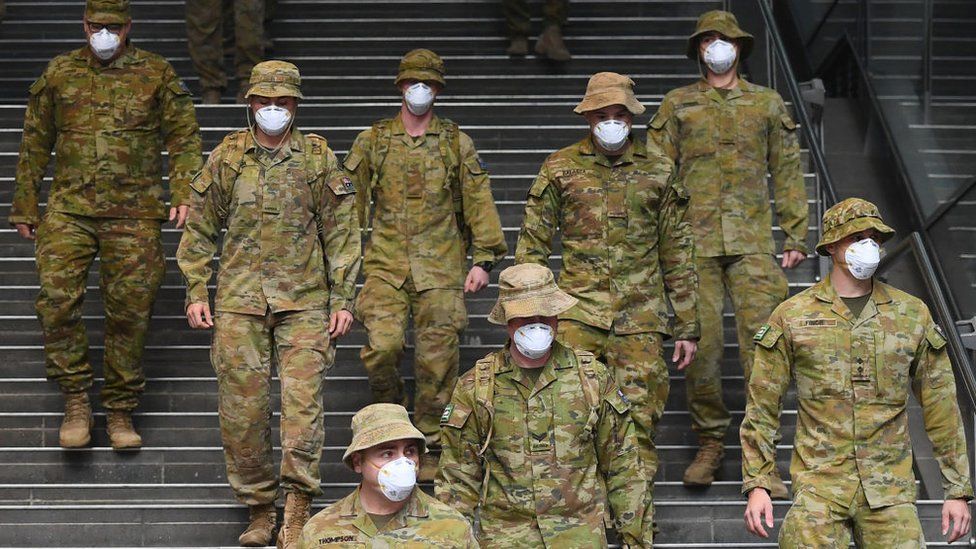
The situation in Sydney is considered so desperate that the Australian military has been called on to help enforce a new lockdown in the city of six million residents. New curbs are set to be imposed on the southwestern and western areas of the city where most COVID-19 cases are found. Residents of those areas must wear masks outdoors and are warned to remain within five km of their homes. New South Wales police had requested 300 military personnel to assist in enforcing lockdown orders.

Australian Defence Force soldiers walk through the city during Melbourne's lockdown last year.
The army was also used to help enforce a lockdown in Melbourne last year   Getty Images

Labels: , , , , , ,

Wednesday, April 02, 2014

Greece’s Romaniote Jews remember a catastrophe and grapple with disappearing

JTA The global Jewish news source

Greece’s Romaniote Jews remember a catastrophe and grapple with disappearing

The members of the Ioannina Jewish community, foreign diplomats and local dignitaries take part in a memorial service inside Ioannina's  Kahal Kadosh Yashan synagogue to mark 70 years since the Nazi  deportations. (Gavin Rabinowitz)
The members of the Ioannina Jewish community, foreign diplomats and local dignitaries take part in a memorial service inside Ioannina’s Kahal Kadosh Yashan synagogue to mark 70 years since the Nazi deportations. (Gavin Rabinowitz)

IOANNINA, Greece (JTA) — When the Jews of Ioannina gathered in their whitewashed-stone synagogue over the weekend, it was to commemorate 70 years since the Nazis destroyed their community.

But the March 30 gathering also served to highlight a source of present-day sadness: the withering of the unique 2,300 year-old Romaniote Jewish tradition.

Ioannina, a postcard-pretty town in northwestern Greece with a medieval fortress perched by a bright blue lake and surrounded by snow-capped mountains, once was the center of Romaniote Jewish life. Today, however, the community in Ioannina numbers fewer than 50 members, most of them elderly. The last time the community celebrated a bar mitzvah was in 2000.

The community’s leaders fear for its future.
“It is very difficult,” said Moses Elisaf, the community’s president. “We try to do our best to keep the traditions, but the numbers are very hard.”

“I don’t like to think about the future. It is very hard to be optimistic,” he said, standing on the peaceful lakefront Mavili Square, where the Nazis loaded the town’s Jews onto trucks to be shipped to Auschwitz.

The Romaniote Jews, neither Ashkenazi nor Sephardic, emerged from the first Jewish communities of Europe. Records indicate the first Jewish presence in Greece dating back to 300 BCE. A ruined second-century BCE synagogue on the Aegean island of Delos is believed to be the oldest discovered in the Diaspora.

These Jews became known as the Romaniotes, speaking their own language, Yevanic, or Judeo-Greek, a version of Greek infused with Hebrew and written with the Hebrew script.
Auschwitz survivor Zanet Nahmia-Sevi (center) lights a candle in memory of the residents of Ioannina who were killed in the Holocaust (Gavin Rabinowitz)
Auschwitz survivor Zanet Nahmia-Sevi (center) lights a candle in memory of the residents of Ioannina who were killed in the Holocaust. (Gavin Rabinowitz)

Romaniote synagogues had a unique layout. They had their own religious traditions and prayer book, the Mahzor Romania. Much of the worship was in Yevanic, and the tunes, including for reading the Torah, were heavily influenced by Byzantine music.

“The Romaniote tradition is hugely important. It is a pre-Diasporic tradition based on the Talmud Yerushalmi,” said Zanet Battinou, the director of the Jewish Museum of Greece and herself a Romaniote who grew up in Ioannina.
But it is a community and a tradition that has long been in decline.

Following the expulsion of the Jews of Spain in 1492, many Sephardic Jews found refuge in the Ottoman Empire that then ruled Greece. Soon, major Sephardic communities sprang up, most notably in Thessaloniki, known as the Jerusalem of the Balkans.

The preexisting Romaniote communities often were absorbed into the larger, wealthier Sephardic Ladino-speaking ones that eventually became largely synonymous with Greek Jewry.
“People don’t know about the Romaniote ancient Jewish community,” Battinou said. “Thessaloniki was so massive and successful, it overshadowed everything.”

It was only on isolated islands and in the rugged mountains of western Greece that the Romaniotes remained the dominant tradition, and Ioannina was the largest of these communities.
By the start of the 20th century, some 4,000 Romaniote Jews lived in Ioannina. But amid the economic hardship and the turmoil that accompanied the breakup of the Ottoman Empire, many joined their Greek compatriots and emigrated.

Most went to the United States and Palestine, setting up Romaniote synagogues in New York City and Jerusalem. Later, a third was established in Tel Aviv. At the start of World War II, about 2,000 Jews remained in Ioannina.

On March 25, 1944, the German Nazi occupiers rounded up the Jews of Ioannina. As snow fell, they were put into open trucks and taken to a nearby city. From there, a nine-day rail journey took them to Auschwitz.

The names of the town’s 1,832 Jews who were murdered are carved on marble tablets on the walls of the synagogue. Among the dead were more than 500 children under the age of 13.
One  of the marble tablets on the walls of the synagogue engraved with the names of the 1,832 Jews of Ioannina who perished in the Holocaust.  (Gavin Rabinowitz)
One of the marble tablets on the walls of the synagogue engraved with the names of the 1,832 Jews of Ioannina who perished in the Holocaust. (Gavin Rabinowitz)

Only 112 Ioannina Jews survived the death camps. Another 69 escaped the roundup, hiding with Christian families or fleeing into the mountains, where some fought with the Greek resistance. When they returned to Ioannina, many found their properties looted and homes occupied.

But it was not just the people who were wiped out. Centuries of tradition disappeared, too.
“Oral tradition is very dependent on the third generation — all the grandfathers and grandmothers disappeared, were murdered, all at once,” Battinou said. Among the few survivors was her grandmother Zanet, after whom she is named.

“The youth who survived only perpetuated what parts they remembered,” she said.

While Ioannina was the largest and the most iconic Romaniote community, several other small communities that identify with the Romaniote tradition continue to exist in places like Chalkida and Volos. But today, most of the remaining Romaniote Jews, like their Sephardic compatriots, live in Athens, Greece’s largest Jewish community. Athens has one Romaniote synagogue, built in 1906, but it is used only on the High Holidays.

Meanwhile, the Romaniote Jews who moved to the United States and Israel have intermingled with the larger Jewish communities.
Youth from Ioannina's Greek community, in traditional dress, hold  candles to be lit in memory of the more than 500 children who were deported to Auschwitz.  (Gavin Rabinowitz)
Youth from Ioannina’s Greek community, in traditional dress, hold candles to be lit in memory of the more than 500 children who were deported to Auschwitz. (Gavin Rabinowitz)

Several Israeli Romaniotes attended the anniversary commemorations, drawn by family ties.
Yosef Baruch came with his brother and his uncle at the behest of his 90-year-old grandmother who survived the Nazis and moved to Israel after the war. Baruch says he has never prayed at the Romaniote synagogue in Jerusalem.
“It’s a tradition that was destroyed in the Holocaust,” he said.

None of the American Romaniotes attended the memorial ceremony.
In Greece, with the Jewish community so devastated after the war, there was no place for separate communities. Most religious services are now held according to Sephardic rites.

Today, only Cantor Haim Ischakis, who led the memorial prayer service, knows how to chant the Torah in the Romaniote tradition — something he learned from his father, also a cantor, who survived the camps.

“I am the only one left,” Ischakis said. He is teaching his two sons, but if they don’t take up his profession, the only examples left will be recordings on YouTube.

In fact, the Internet is emerging as the most likely tool for preserving Romaniote tradition. And the impetus for this online push has come from an unlikely source.

The Canadian ambassador to Greece, Robert Peck, who was instrumental in helping organize the commemorations, with Canada heading the International Holocaust Remembrance Alliance, noted the lack of available information about the Jews of Ioannina.

At his behest, the New Media Lab at Vancouver’s Simon Fraser University designed a website detailing Ioannina’s Jewish history, and a soon-to-be-launched app will let people explore Jewish sites in the town and listen to survivor testimonies.

“I came to Ioannina and visited the synagogue, and I felt it was very important to carry beyond the borders of Greece what Ioannina represents, the legacy of the Jewish community here,” Peck said.
Still, the Romaniote Jews hope that through their efforts and dedication, something of their legacy, their community, will survive in the real world.

“It is very precious to me, and I try to pass it on to my children and hope they appreciate that from their mothers’ side, they inherit such a unique tradition,” Battinou said. “It is still alive, it is not extinct, yet.”

Labels: , ,

Sunday, October 27, 2013

What Are Their Chances?

"I like her very much. She looks very much like me, and I want her back home. We will take care of her, and I can help my mother."
Minka Ruseva, 14, Nikolaevo, Bulgaria
Minka Ruseva, daughter of Sasha Ruseva,  covers her face in a Roma neighborhood of Nikolaevo, Bulgaria, Friday, Oct. 25, 2013. Sasha Ruseva, a Bulgarian Roma woman, is  under investigation by Bulgarian authorities trying to find out  if she is the mother of a suspected abduction victim in neighboring Greece known as "Maria" whose case has triggered a global search for her real parents. (AP Photo/Vadim Ghirda)
Minka Ruseva, daughter of Sasha Ruseva, covers her face in a Roma neighborhood of Nikolaevo, Bulgaria, Friday, Oct. 25, 2013. Sasha Ruseva, a Bulgarian Roma woman, is under investigation by Bulgarian authorities trying to find out if she is the mother of a suspected abduction victim in neighboring Greece known as "Maria" whose case has triggered a global search for her real parents. (AP Photo/Vadim Ghirda) / AP
"We are very, very happy with this outcome, because we have proved what we said from the outset. ... The adoption, as it happened, was not of a legal nature but it was not abduction."
Costas Katsavos, lawyer for Christos Salis and Eleftheria Dimopoulou
Christos Salis and Eleftheria Dimopoulou experienced the profound misfortune of having their intimate family relations with their five children -- one of whom was informally adopted as a baby -- viciously disrupted by a state authority accustomed to hounding Roma and suspecting them of every manner of brutality and criminality possible to impose upon an ethnic group of huge unpopularity.

They had taken in a newborn whom its mother, an impoverished Roma woman working temporarily in Greece from Bulgaria, was unable to take back home with her, out of the goodness of their hearts. They had young children of their own, but they willingly responded to the pleas of the desperate Bulgarian mother of the newborn, to care for the child along with their own, as if she were their own.

And they did just that until government agency workers, noting that the four-year-old child living with the other children of the Greek Roma couple bore no resemblance to them, and leaped to the conclusion that she was with them as a result of criminal child trafficking. Their repeated reassurances that she was their own were ignored, and they were accused of criminality, and jailed.
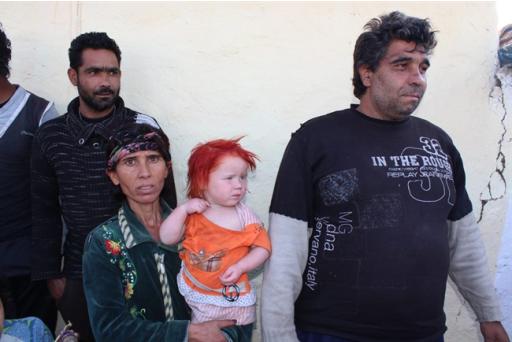
Mother Sasha Ruseva holds two-year-old Penka, one of her ten children, whom she claims is albino with father Atanas, right, as they talk to journalists in the town of Nikolaevo , Bulgaria, Thursday Oct. 24, 2013. DNA tests have confirmed that a Bulgarian Roma couple living in the impoverished village with their nine other children are the biological parents of the girl found in Greece with another Roma couple, authorities said Friday. Genetic profiles of Sasha Ruseva, 35, and her husband, Atanas, matched that of Maria, Interior Ministry official Svetlozar Lazarov said Friday. Ruseva says she gave birth to a baby girl four years ago in Greece while working as an olive picker but gave the child away because she was too poor to care for her. She since has had two more children after Maria. Maria has been in a charity's care since authorities raided a Roma settlement in Greece last week and found she was not related to the Greek Roma couple she was living with. (AP Photo/BGNES) BULGARIA OUT
The Canadian Press
But their story of having taken the child in, responding to the desperation of a Bulgarian Roma mother has proven to be true. Sasha Ruseva, 35, and her 37-year-old husband Atanas, stepped forward to declare themselves the biological parents of the little girl the news media in their frenzy to support the theory of Roma malfeasance, named "Maria".

There are six million Roma living in Europe. Racist bigotry against them is endemic in the countries of their birth where they are relentlessly slighted, and constantly vulnerable to violations of their human rights. They live in high unemployment, poverty and social dislocation, viewed with distaste for their cultural habits and accused of criminality, their children maltreated and their future prospects dim.

Sasha Ruseva explained she had given birth to a baby girl while in Greece working as an olive picker, but was too poverty-stricken to care for the little girl. She has since given birth to two more children, and is mother to a total of ten. Some of her other children bear a striking resemblance to the child found with the Greek couple. The inference on the little girl's 'discovery' was that she was abducted from some 'white' European family.

Both Greek authorities and the Bulgarian prosecutor's office are trying to establish whether there are  grounds to prosecute both parties on the theory that the mother sold the child. Despite that the Greek family love the little girl, raising her as their own, Bulgarian social services say the little girl is to be returned to Bulgaria for adoption. "Maria will first be brought to a family crisis centre, and after, they (authorities) will seek for suitable foster family."

Fourteen-year-old Minka Ruseva, one of the Rusev family's ten children saw pictures of Maria on television and thinks of her as being her sister. In pre-trial incarceration, charged with abducting Maria and committing document fraud, Christos Salis 39, and Eleftheria Dimopoulou 40, plan to seek legal custody of the little girl who has been their daughter for the first four years of her young life.

With so many "authorities" determined to wrest the child from those who love the little girl, one can only wish them the very best of luck.

Labels: , , , , , ,

 
()() Follow @rheytah Tweet