Ruminations

Blog dedicated primarily to randomly selected news items; comments reflecting personal perceptions

Saturday, December 25, 2021

Psychoanalysing Gift-Giving

"What we find in our work is that thoughts count pretty importantly for the givers."
"Putting a lot of thought, spending time thinking about what a recipient might like tends to make the givers feel closer and more connected to a receiver."
"If thoughtfulness comes not from the amount of thought you put into a gift but just from the fact that you were thinking about somebody and you got them something -- maybe when they weren't expecting it -- that's really meaningful."
Nicholas Epley, John Templeton Keller Professor of Behavior Science and Director of the Center for Decision Research at the University of Chicago Booth School of Business 

"We think that people would prefer something we've chosen for them rather than what they've explicitly asked for. When in fact, people actually like when they get a gift that they actually like."
"Giving love is a blessing and so is receiving love. One doesn't have to be superior to the other."
"[Givers often] only think as far as what it's like to be the instantaneous recipient of a gift. They think a showy, expensive present -- will really drop jaws to the floor, and it might."
"[But] the gift giver walks away from the interaction and the recipient is left with a beautiful, expensive thing that collects dust..."
Marisa G.Franco, psychologist, friendship expert

"Givers often end up overshooting, getting things that are maybe more unique or more narrow than what the receiver might want."
"They'd rather have that Visa gift card or Amazon gift card that allows them to get whatever they want or need."
Mary Steffel, Associate Professor of Marketing, Northwestern University
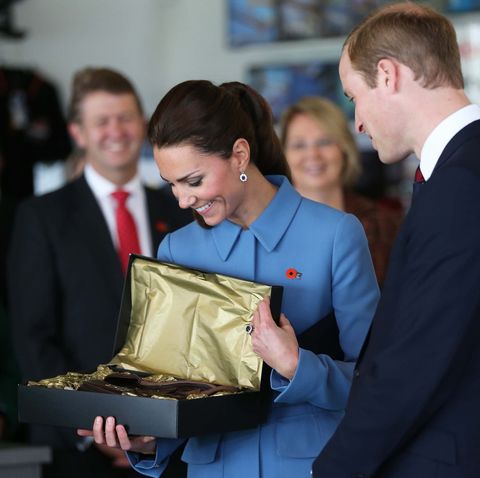
gift giving etiquette
Samir Hussein     Getty Images
 
Research he conducted, states Dr. Epley from his academic perch as a professor of behavioural science, points out that when people receive gifts it can be seen how much they appreciate the gift by their reaction expressing the 'dominant effect' of the gift. Insider knowledge; how well the giver knows the preferences of the recipient plays a dominant role in this type of transaction. Even so, in some situations the perceived thought that led to the choice of gift plays a dominant role.

In some instances people's aversion to simply giving cash or gift cards reflecting their perception that it's too impersonal acts as a deterrence in that type of choice. The practical choice of a gift card can be viewed as a lazy decision, taking the easy road rather than investing in the anxious mind search to think of what a particular person would appreciate most from a giver. Recipients, on the other hand, may have a decided preference for gift cards, but hesitate to make that suggestion for fear of offending.

People on the receiving end who are given experiential gifts like event tickets, gift certificates to restaurants or special trips, tend to feel more emotionally fulfilled, more connected than those who receive merely material gifts, and a greater attachment to the thoughtful nature of the gift giver, according to results of multiple studies published in the Journal of Consumer Research in 2016,

According to Dr.Steffel, a benefit of giving experiences relates to a person's time expenditure making them feel enriched by the experience. "Time-poor" people tend to value a gift that endows them with the gift of time. "You can buy them time by hiring a babysitter for them so that they have the space to go out and spend their time in ways that are satisfying for them."

Additionally those very special gifts that needed a lot of effort put into them; for example, something handmade, or an item that took an extensive search; can be important ways in which givers can "symbolically show just how much they care", explained Dr. Steffel. More ideally, added Dr.Franco, a gift that someone took additional effort into acquiring is best when it reflects what the recipient is known to want for themselves.

A heartfelt gift can sometimes take on the guise of sentimentality, according to experts where research shows that givers' inclination is to move away from sentimentality to avoid awkwardness, whereas in reality potential recipients in actual fact appreciate gifts with emotional value attached. 

Sam Maglio, a consumer psychologist who co-authored a paper in 2017 studying effects of buying a gift for someone that you also bought for yourself, states: "sharing is caring". Relaying the information to someone being gifted that the giver thought that an item they bought first for themselves and thought so highly of they felt inspired to give a like item to someone else, is a spur to the giftee appreciating the item all the more.

Dr.Franco spoke as well of the obligation of appreciation from the receiver to the gifter: "It's a skill to be good at accepting gifts. Someone had a positive feeling that they wanted to express toward you in the act of giving, and a receiver should be able to recognize that, whether the gift given is something wanted and thus appreciated, or not."
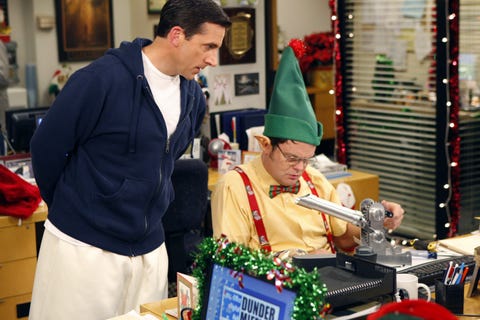
The Office
Gift giving as seen on NBC’s The Office.
NBCGetty Images
"Sharing is caring. Our data shows that receivers feel closer to gift givers when they say, 'I bought the same thing for myself'."
"[More so than] 'It got great reviews online' or 'I put a lot of effort into it'."
Sam Maglio, consumer psychologist

Labels: , , ,

Sunday, March 29, 2020

Optimistic Good-Humour Survivor

"I shouldn't have been here past last summer. Nobody knows why I am still here, but here I am, and I am doing fine."
"It's black humour, you know. Really, I have to laugh, because if you can't laugh at it what else can you do?"
"I said to the doctor, who was dressed like a Martian in a protective suit, are you kidding me?"
"I can probably renovate any house now [after having watched innumerable home renovation shows while in isolation]. So, if you are looking for someone, let me know."
"I remember thinking, when the doctor told me I had COVID-19, 'Screw this, I'm not letting a stupid virus get me, not after making it this long with my brain tumour'."
"I know that sounds crazy, but that's what I thought: Forget it. I'm not dying now -- and I came through it."
Rene Galipeau, 75, Toronto
The retired mining executive has indeed experienced quite a few health challenges in his lifetime. Enviably, he managed somehow, to retain both his sense of humour and his hold on life. This man has had a long history with cancer -- all kinds of cancer. Not in itself surprising, perhaps, since there is a family history of cancer, and deaths resulting from that genetic inheritance. The first time he waltzed with cancer was 28 years ago when he was diagnosed with a late stage lymphoma.

That was a time when it was very handy to have close relatives. His identical-twin brother volunteered with a bone marrow transplant, and that meant his survival. Over the years that followed Rene Galipeau was diagnosed with skin cancer, bladder cancer and prostate cancer. And he managed to survive them all. And then, a year-and-a-half ago, came news of another cancer. The specialists advised him this time it was a brain tumour, and in their experienced wisdom he had eight months to live.
René Galipeau on a walk with two of his six grandchildren. Courtesy René Galipeau
What he did within that eight months was to focus on his family. With six grandchildren that meant a lot of time spent giving all of them special attention. Of the two grandchildren who love hockey he planned a trip to Boston to watch the Toronto Maple Leafs play the Boston Bruins. Two of the grandchildren focus on baseball, so he went with them to Cooperstown, New York, home of the Baseball Hall of Fame. With the final two grandchildren, their grandfather planned a trip to Quebec City for a live history lesson.

"Everybody said I was crazy, but I got all the trips done in the first six weeks. But now I am still here", he mused. Then, more latterly, he experienced several seizures and was hospitalized on March 17. There, doctors confirmed that it wasn't his brain tumour that was involved, but another illness altogether; COVID-19. And then, the following day his wife of 32 years was confirmed with the novel coronavirus as well. The hospital sent them home to "ride things out", together.

Their 19th floor condominium has a picturesque view of Lake Ontario and no doubt they spent many hours gazing out at the winter lake. Mary Galipeau was bedridden with a high fever and was much more ill than her husband whose symptoms galvanized around a cough and heavy fatigue. Neither has any idea how they might have become infected with the virus. They hadn't travelled, and there was nothing out of the ordinary in their usual routine.

But that's the thing about this mysterious new respiratory disease; it is readily transmissible, and its active phase on hard surfaces is prolonged and easily picked up by the unaware, left to infect others by people who in all likelihood themselves had no symptoms and had no idea that they were infected and acting in society as vectors.

Mr. Galipeau attributes his body's ability to withstand the truly deadly illnesses he has been exposed to, to the influence of his wife. Her sunny, optimistic outlook on life reflects his own. His identical twin brother had contracted the same brain cancer that now afflicts Rene, but his brother died of it. An older brother had lung cancer at age 48 and died from that. 

Now, both Mary and Rene are looking forward to summer, where they plan on spending quality time on Lake Erie, at the family cottage.
Details from article by Joe O'Connor, National Post
Bruce Trail
Lake Erie, Cottage Life

Labels: , , ,

Wednesday, December 18, 2019

Friendly Visits -- With Family Pets

"Our hostess went in to the kitchen to get the vanilla cake, but it was gone. There was frosting on Bodhi's mouth."
"The lesson is that as well as  you think you know y our dog, they can always surprise you."
"Our dog [Bodhi] sleeps with us, but a lot of people don't like a dog in a bed. So we bring our dog bed [for overnight visits], but I confess, our dog doesn't always stay in it."
Sean Sheer, Urban Dog blog

"Do not presume that when you and your family are invited for the holiday or the weekend that this extends to your dog."
"Don't just show up after a six-hour car ride and have your dog pop out of the back seat to a look of horror on the host's face."
"I try to avoid situations that are going to be fraught with peril."
Jodi R.R. Smith, president, Mannersmith, etiquette consulting

"A pet as a weekend guest adds a lot of responsibility for a host, even if they are dog people."
"Sometimes that means getting a pet sitter [if it appears likely the invitation doesn't include the family pet]."
"It's nice to also bring a roller brush so you can keep hair off of the furniture."
Lisa Grotts, etiquette expert, San Francisco

"I would not bring my trio overnight unless someone was literally begging me to do it."
"My dogs are used to a lot of attention. It's better to leave them at home with housesitters and to keep their routine as normal as possible."
"Don't set your dogs up for failure [as a result of constant concerns on your part to have them avoid doing unpleasant things while in someone else's house]."
Becky Pugh, owner, grooming and boarding business

Tricky business, that. You receive an invitation that you were hoping would be forthcoming. But there is no mention of an important part of your family. You speculate that the person doing the inviting knows how important your dog is to your life, and just assume the invitation is all-inclusive. And you may be wrong. It's awkward, when you respond that you'd love to come and thank you for inviting us; do you expand hesitantly to enquire whether that means all of 'us'? This is when assuming too much can be fraught with complications.

It's embarrassing, yes, but that unspoken barrier must be broken and the subject broached. 'Is it all right if Brandy comes too?' 'Did you mean to invite Cocoa along with the rest of us?' 'Would it complicate matters if we were to bring Jangles along for that wonderful weekend with you that we're so excited about?' However it's put, it can be awkward, but there are times when these things cannot be avoided, and that time is not when you've arrived and innocently assume what you haven't bothered to be certain of.

Your furry friend may be allowed on the furniture at your house, but it's important to know the rules at other homes. Check out these dog pictures.
It's important to know the rules at other homes. Photo: tshortell

Could be your dog would never stand up to a kitchen counter to see what's on offer. But can you extract a promise from him that he won't indulge in someone else's kitchen? Blogger Sean Sheer discovered to  his huge embarrassment that  his beloved eight-year-old Weimaraner did just that. He had the kitchen to himself while everyone else was having dinner in the dining room. And there was this irresistible aroma wafting down to him from the kitchen counter...

The people who have invited you to visit their home may have dogs of their own, or cats, or both, but don't assume they'll be delighted to have to cope with situations where their own family pets are disquieted at the presence of other animals and your hosts then have to walk on tiptoes of suspense over how their home, suddenly turned into a bit of a zoo with animals snarling at one another, perhaps threatening physical action, and/or indicating displeasure by leaving unanticipated 'gifts' of protest, end up regretting the invitation....

Make sure the whole family -- including all the pets -- are OK with your visit.
Make sure the and host pets -- are OK with your visit.
Photo: Elenathewise

So balance your pleasurable anticipation of an enjoyable overnight or weekend stay with people you like with the obligation as a guest to ascertain clearly what is expected of you; minus the family pet, or alternately inclusive, but with the expectation that certain rules must be recognized and followed. There will be strain of some kind, but better that than an aura of irritated annoyance plus strain. Take no offence if the invitation is limited; respond intelligently and with courtesy. It is your host who faces a raft of planning complications.

Should you be informed graciously that your hosts fully expect the arrival of  your pet along with the rest of your family, make yourself knowledgeable about their house rules. Whether dogs are permitted on furniture, or not allowed into certain rooms of the house. Above all, whether they are forbidden to expect food from the table when everyone is dining. Consider bringing along with you everything your dog would normally require, from its bed, to food, feeding bowls, toys and waste bags.

Determine whether your hosts would take offence at your pet sharing  your bed. It is their bed, their home, after all. And what if there's an accident? Clean it up and say nothing? Or alert your host and offer to take care of the resulting mess? Could be they use a certain cleaning formula, so make certain that you follow their orders for the cleaning up of messes in their home. And think twice, and then again, if you've been invited to a house with more than its share of fragile ornaments, antiques or family heirlooms which bespeak a special commitment to good behaviour.

Things will go more smoothly if your pet is friendly to everyone.
Photo: tzooka

Be prepared to apologize profusely should your pet have done something to embarrass you and discommode your hosts. And because your host went to the extremes of accommodation in extending their invitation to include  your pet, go beyond a thank-you note, to include with it after your stay a memorable gift of appreciation. That having been said, enjoy yourself and be a good guest, fully appreciative of everything your hosts have done to make your stay with them pleasant.

Labels: , , , , ,

Tuesday, October 15, 2019

The Family Unit and Marriage

"A 2018 survey of 1,520 Canadians by the Angus Reid Institute asked 'When two people plan to spend the rest of their lives together, how important is it to you that they legally marry, meaning exchange vows in a public ceremony, whether civil or religious?' Fifty-three per cent said it wasn’t important. According to the pollster, this means a majority of Canadians now think 'marriage is simply not necessary'."
"Evidence that the institution of marriage is in decline hardly counts as news anymore. Marriage rates have been sliding for decades. In 1981, over 60 per cent of Canadians above the age of 15 were married; today that’s fallen to 45 per cent as cohabitating couples and lone parent households rise in step. The fact a majority of Canadians now think legal marriage is obsolete looks to be the logical conclusion of this long-term trend."
"In the U.S., where the relative success of racial groups is an area of intense focus, research by the Brookings Institution points to the 'success sequence' as a key factor in avoiding poverty. This refers to a multi-stage process of finishing high school, getting a job, getting married and then having children. Do these steps in this order and your chances of entering the middle class or higher rise dramatically, regardless of race."
"Recent work by the Institute for Family Studies shows that among Americans aged 28 to 34 who failed to complete the sequence in order, 53 per cent were poor. By comparison, those who followed the traditional path to adulthood had a 90 per cent change of being middle class or above. Marriage is the central aspect of this sequence; and as a defense against poverty it is an option available to all in a way that a college education – another indicator of future success – may not be. (Although children from married homes are more likely to graduate college.) Being married combines 'sex, parenthood, economic cooperation and emotional intimacy into a permanent union', observes Bradford Wilcox, a University of Virginia sociologist and co-author of the above report. It also makes you happy."
Peter Shawn Taylor, Macleans Magazine
A new poll suggests nearly half of Canadians aren't interested in getting married. Wedding planner Rebecca Chan explains why. .
A new poll suggests nearly half of Canadians aren't interested in getting married.  Getty Images

So there's all of that information, data, speculation on marriage, and why the younger generation shrugs its collective shoulder at the venerable institution of marriage, the marriage vows and the marriage covenant as irrelevant to their personal, intimate lives which value more casual relationships or intimate relationships unburdened by society's and religions' compacts and strictures on sexual intimacy and partnerships.

It is not only generational differences that will predict how people will react to the institution of traditional marriage, versus simply living together as in common-law relationships.

Recently, the Institute for Family Studies launched a study and its conclusion, perhaps unsurprisingly, is that conservatives and liberals regard the institution of marriage and all its traditions differently, with 62 percent of conservatives taking marriage vows, while 29 percent of liberals feel it necessary to, along with 46 percent of 'moderates', neither conservative nor liberal, but somewhere in between. Conservatives were observed to be likelier to marry, even controlling for factors such as age.

More Than Half Of Canadians In New Survey Think Marriage Is
RoBeDeRo via Getty Images

Social scientists have long pointed out the equally obvious, that sharing life with someone else has its bonuses. People managing to live together in harmony, sharing common values and priorities find greater pleasure in life. Within a stable marriage people are generally healthier, and certainly more satisfied with life. That, apart from the fact that with a shared partnership, raising children is easier with two people to share the burden, responsibility and happiness that is generated within an intact family group.

And then there is the purely practical "social insurance" of being able to rely on someone emotionally close to you, when you're depressed, feeling ill, facing poor health outcomes, lose employment, even the elemental sharing of child-centered tasks when one parent is called away, leaving the other to take sole charge temporarily. There is no over-estimating the emotional security in knowing that someone is deeply concerned about your welfare, and is there to prop you up when needed by circumstances. The comfort inherent in knowing love and returning it makes for a happier person.

Conservatives, according to the IFS study simply value marriage more than do moderates or liberals to the point where 80 percent feel marriage is critical to the creation of strong families, whereas among liberals the figure descends to 33 percent who feel similarly. Greater numbers of conservatives commit to marriage simply because they feel marriage is an important part of one's life, and all the more so before children are born.

More Than Half Of Canadians In New Survey Think Marriage Is
www.davingphotography.com via Getty Images

This results in 52 percent of conservatives claiming to be completely satisfied with their family lives in comparison to 41 percent of liberals and moderates. The social sciences tend to agree with this generalized conservative tendency to value marriage and practise what they value in greater numbers than their liberal counterparts. Marriage is recognized as vitally critical to individual and societal health altogether. Research has verified that married people tend to live longer, happier and more prosperous lives.

Benefits to children within a family situation where two parents are equally engaged in child care and support, are innumerable and irreplaceable. With the attention of two parents focusing attention and emotional and practical resources on a child's needs, a more structured, healthier situation results, both for the parents and for their offspring. A study of economic mobility concluded that one of the most reliable predictors of income mobility was to grow up within a neighbourhood of majority two-parent families, irrespective of a child being raised by a single parent.

In light of which, the fact that an estimated 40 percent of children are born in the current generation outside marriage to parents who largely feel that it is preferential to bypass marriage, when studies and actual outcomes reflect otherwise, is troubling.

More Than Half Of Canadians In New Survey Think Marriage Is
Westend61 via Getty Images


Labels: , , , , ,

Tuesday, September 03, 2019

Stable Intimate Relationships in Marriage

"I think that tendency to just move on and want to start fresh, for many people they don't really reflect on that relationship. So when they start a new partnership, well, they just end up falling into the same old patterns again."
"Although some relationship dynamics may change, you are still the same person, so you likely recreate many of the same patterns with the next partner."
"Just starting a new partnership doesn’t mean things are going to be different. This research shows that chances are, you are going to fall into the same patterns in many aspects of the relationship. Even if things are different, they’re not guaranteed to be better."
"In order for that type of relationship [previously married with children] to end, things had to get pretty bad, to blow up your life, to separate, to figure out the joint custody of children and a new place to live."
"Potentially they had a higher threshold [older, more experience in marriage and parenthood] to start a new partnership because they were a bit more guarded. things were especially good for them when they started a new relationship."
"I know that young adults are incredibly pessimistic about their prospects for lasting love. I spend the whole semester trying to deconstruct that myth."
Matthew Johnson, associate professor of family science, University of Alberta
New romantic relationships tend to take on the familiar patterns of previous, broken relationships once the honeymoon phase is over, according to a new study by a U of A relationship expert. (Photo: Getty Images)

If at first you don't succeed, try, try again. That advice of venerable vintage holds promise in so many areas of life. And for many, it extends to new intimate relationships. When a marriage fails, the dissolved partners each seek another to form a relationship with in the hopes that the new one will be lasting, a permanent fixture in their lives, satisfying their need for a partner in whose company they can be prepared to face the future alongside, someone who will love them as they themselves love the other in a lasting commitment.

A new study titled "(Eventual) stability and change across partnerships", published in the Journal of Family Psychology, has concluded that on average those who separate from their partners for issues of incompatibility and begin another relationship with high hopes of success ultimately discover themselves to be no further ahead, with yet another attempt that has led to failure.

Data extracted from over 500 German subjects over an eight-year period measured for factors such as the amount of conflict between partners, the level of satisfaction achieved, and the tendency to express thoughts and emotions to one another, used by the research team led by Dr. Johnson with a view to establishing why it is that so many intimate relationships fail. They discovered that using these measures as guidelines, over the course of a year a second relationship reflected conditions similar to the original partnership that failed.

(People have a tendency to repeat themselves, and in so doing situations run along a predictable track. If individuals are not emotionally flexible, capable of compromise, able to communicate with grace and tolerance, they become habitually accustomed to antagonistic perceptions and reactions.}

The study concluded that similar patterns of emotional behaviour lead to pairing with partners similar in personality type, attractiveness and socio-economic status. Which makes sense, since ostensibly the more that people have in common with one another the greater the likelihood that interests will converge and sympathies with them.

Dr. Johnson has a background as a former couple's therapist. He found that the most common outcome was for the second relationship to be more fraught than the previous one, with greater issues leading to conflict, fewer expressions, less satisfaction.

Research participants happened to be German in view of the fact that the data was extracted from the German Family Panel, a huge study of 12,000 individuals that began in 2008. There were no Canadian data since Canada has no comparable collection of data. Statistics Canada no longer tracks divorce rates. Although the vast majority of participants included in the German Family Panel were heterosexual, gay participants were not excluded from the sample used, making it fairly inclusive.

The year 2008 saw Statistics Canada release its last divorce data which envisaged that 43 percent of marriages would end before a couple's 50th wedding anniversary. Marriage at a young age is considered a risk factor for divorce. Still, two-thirds of couples who remain in a marriage find themselves in high-quality relationships through those marriages.

It was found that the decline in relationship success was more prevalent among people who have a tendency toward negative emotions and to hold pessimistic world views; which Dr. Johnson referred to as "neuroticism". And for this group, the partnership sundering was particularly difficult, reinforcing their neuroticism as they were found never to fully rebound in new relationships.

For older people, on the other hand, second relationships saw an improvement. In the final analysis people are not advised to remain within a relationship that causes distress. "I would say the data is increasingly clear -- among couples who get married at least -- lasting love is actually the norm."

Couple.
(Credit: luizclas / Pexels)

Labels: , , , ,

Tuesday, June 11, 2019

Sex or Text?

"Several high income countries have recently reported a decline in the frequency with which men and women have sex. Sexual inactivity might not seem an obvious focus for public health attention—concern is generally reserved for sexual activity and its adverse outcomes such as unintended pregnancy, sexually transmitted infection, and sexual dysfunction—but regular sexual activity has benefits for health, well being, and quality of life."
"Research indicates that men and women who enjoy an active sex life are fitter, happier, and have better cognitive function and increased life expectancy. Evidence shows that sexual activity might help prevent infection by bolstering immune function; protect against cardiovascular disease by lowering heart rate and blood pressure; and reduce stress by increasing release of oxytocin."
Authors: Kaye Wellings, professor, Melissa J.Palmer, research fellow, Kazuyo Machiyama, assistant professor, Emma Slaymaker, associate professor, London School of Hygiene and Tropical Medicine study, British Medical Journal

"[There appears a connection between smartphone tyranny and the weakening of] the boundary between the public world and private life ... You get home and continue shopping or buy tickets -- everything except for ... talking."
"You don't feel close when you are constantly on the phone."
"Several factors are likely to explain this decline, but one may be the sheer pace of modern life."
"It is interesting that those most affected are in mid-life, the group often referred to as the ‘U-bend’ or ‘sandwich’ generation. These are the cohorts of men and women who, having started their families at older ages than previous generations, are often juggling childcare, work and responsibilities to parents who are getting older."
"What is important to well-being is not how often people have sex but whether it matters to them.
More than half of the men and women taking part in the study said they’d prefer to have sex more often, which could partly stem from unfavourable comparisons with what they think is the norm."
“Most people believe that others have more regular sex than they do themselves. Many people are likely to find it reassuring that they are not out of line."
Kaye Wellings, lead author, study Changes in, and factors associated with, frequency of sex in Britain: evidence from three National Surveys of Sexual Attitudes and Lifestyles (NATSAL)


A study on mobile phone use while performing other activities was presented at a symposium on how digital technology is affecting relationships
A study on mobile phone use while performing other activities was presented at a symposium on how digital technology is affecting relationships ( Getty )

A recently published major sex survey of 34,000 Brits points out the grip of the Internet has led the United Kingdom to join other countries ranging from Finland to Australia, in research validating that populations are less engaged in sexual union. One of the world's most thorough sex surveys -- The National Survey of Sexual Attitudes and Lifestyles (NATSAL) which has conducted surveys every decade since 1991, released its latest findings representing the period up to 2012.

That finding validates that sex life in Britain, as in many other countries of the world where the Internet has taken precedence over all other modes of communication, including face-to-face, is responsible for people fixating on social media and all manner of Internet searches and communications, at the expense of one-on-one relationships of an intimate order; namely sex or conjugal relations, which are steadily on a downward spiral.

In 2012, 13.2 percent of women in Britain reported having sex on ten occasions or more in the past month, as compared to 20.6 percent back in 2001. For men, the figure over the same period dropped from 20.2 percent in 2001 to 14.4 percent by 2012. Those are the numbers representing couples who have continued to engage in sex. In sad contrast both men and women who had not experienced any sex in the past month had risen to almost 30 percent whereas in 2001 the figure stood at 23 percent of women and 26 percent of men.

As far as the authors of this latest study are concerned, it is the rise of smartphone use (the ubiquitous and hugely popular iPhone was launched in 2007), where the Internet has made its way into all aspects of peoples' lives. Digital life for most people has become an endless 24/7 affair. The compulsion to endlessly check email, to scroll, to scrutinize alerts, to engage in games and tab-opening are all identified as playing their part in destroying peoples' personal, intimate lives and concentration on other day-to-day concerns.

It is the social life of millennials that has fixated the interest of researchers, who delve into their sex lives for data applicable to that demographic. They, after all, came of age online. As a result the social contract requiring face-to-face relationships to bloom has passed them by with the disinterest of those who have more interesting fish to fry. The gap that exists in social awareness and custom between people over 35 and those under 28 in the modern social construct is immense.

Yet, this most recent NATSAL survey identifies that the steepest decline in having sex appears not among the young and single, but rather within the over-age 25 demographic who happen to be in long-term stable relationships; married or cohabiting. In this group the odds of having had sex ten or more times by either men or women was about halved between 2001 and 2012. These are the people who bring the Internet into bed, where the tendency is to continue working, organizing, shopping, communicating.

The survey looked no further than 2012 for its conclusions. But no one doubts that the situation has only exacerbated as the public ever more fiercely embraced their indispensable iPhones, abandoning flesh-to-flesh contact. The Wall Street Journal conducted a poll, finding a rising number of Americans (36 percent of 28-to-38-year-olds, and 16 percent of those over 39), will make the inevitable choice of Internet over sex.


Fig 1


Labels: , , , , ,

Monday, November 26, 2018

"Sovereignty in Birth"

"Why am I not feeling the head yet? [Am I pushing against a tilted cervix? Am I pushing against a cervix that's not fully open]?"
"I just prayed to the universe to God. I tapped into my baby, 'Can you please show me what's going on'?]"
"I wanted to be the one calling the shots at my birth. I would know if I had to transfer myself to hospital."
Kristie, podcast, Free Birth Society

"No one ever talks about how traumatic it is for the OB [hospital obstetrical] team to receive these patients."
"We often have minutes to intervene and so the rush to prevent catastrophe is interpreted as 'you only want to cut me open'."
"Free birthers are] monstrously egotistical [emotionally immature and seriously reckless]."
Dr. Amy Tuteur, clinical instructor, Harvard Medical School 

"[...When women try to speak up] they're bulldozed, told they're crazy, threatened and punished with even more damaging interventions."
"[Medical professionals] sabotage [what should be the] most profound experience of ecstasy, love, power and beauty in our human experience."
"For medical professionals, the idea that 'all that matters is a healthy baby' is predicated on a profound unconscious hatred of women and the assumption that women are mere incubators, rather than full human beings."
Yolande Clark, Free Birth Society, Fredericton, New Brunswick, mother of seven

"Over time, with repeated contractions, they're [fetuses] not getting as well oxygenated and that can lead to complications for the baby, obviously."
"[Under Canadian law, fetuses are not considered] legal persons [with rights. However, should the baby require emergency care after birth and a delay ensued in seeking care] there might be some grounds for charges."
Liz Darling, assistant dean of midwifery, McMaster University

"The bright side of all this weird media attention is it's brought a TON of women to this movement."
"F--k yes to transmuting people's traumatized s--t energy into something powerful and exciting."
Emilee Saldaya, Free Birth Society founder, CEO


And for anyone who is interested in free birth, "coaching" packages are available should you wish to shell out the (US)$899 it will take to acquire such a package which generously is inclusive of phone or Skype sessions alongside audio recordings of free birth "affirmations" so you can "prime your subconscious for a peaceful, powerful birth". One that seems to appeal to some women who believe that childbirth is a simple, natural process that rightly occurs "on your own terms, wild and free".

When Kristie quoted above delivered it was on her own terms, so to speak. She decided on sitting in a birth tub for the delivery, complete with candles, crystals and burning sage. She did feel a bit of concern, but kept on pushing and finally was rewarded when she felt her baby's head, shoulders and body emerge. She "soaked up that beautiful baby bliss" as she held her newborn daughter's head above the water. Present with her was her husband and their 11-year-old, both eager to be useful, happy to help her out of the tub. Quite the experience for an 11-year-old.

The Free Birth Society is comprised of 'activist' members as an online community, their 23,000 followers on Instagram encouraging one another to be natural. All is not sweetness and light, however, as when a few weeks ago one of its private Facebook group members was identified as a "baby killer" in a social media backlash when her daughter was born dead after six days of labour, meant to be a "natural" birth. She received no lack of encouragement with members urging her to "trust the process". Lacking medical attention the baby perished of Group B strep, picking up her mother's uterus infection.

But that hasn't chastened the two leaders of the group, Yolande Clark and Emilee Saldaya. Their business is freeing women up to be themselves. And being themselves they have no need of the "oppressive medical model" of childbirth with its birth interventions, like checking the cervix for dilation; nothing but obstetrical "rape", according to the two.  Hospitals are institutions where women are "brutalized". Midwives are of course, dangerous "birth workers" who operate alongside obstetricians within "the system".

An Ecstatic Freebirth on the South Coast of New South Wales

According to Candace Johnson, a professor of political science at University of Guelph, her study of the group has concluded it is comprised mostly of privileged women from developed countries who demand less medical intervention throughout pregnancy. After the stillbirth of the California baby the group was condemned as attention-seekers. And it isn't difficult to arrive at that conclusion given that the movement has left women feeling free to birth in yurts and teepees in southern Oregon, in the Daintree rainforest in Australia, in a bamboo forest in Maui. Many see no need for pediatric care and fail to vaccinate their babies.

On the other hand those who find the claims of the free-birthers making sense point out that they have arisen in response to the high-intervention birth climate of the present day, and a "broken system" that can have the effect of leaving women feeling under pressure, coerced, unsafe and disrespected. Caesarean sections now account for 28 percent of all births in Canada, and labour induction rates have doubled to 25 percent of all births in the past three decades. A startling rise in physical injuries has been documented by a summer study, along with trauma to babies from forceps deliveries.

Women informed researchers they had no wish to be restricted, monitored or informed when and how they must push, in one 2015 study out of New Brunswick on free birthers. Of the nine women interviewed, half described their previous hospital birth experience as traumatic. On the other side of the equation, experts report home births can be risky. One 2010 literature review concluded that though low-risk women with planned birth at home may have fewer haemorrhages, infections, lacerations and tearing, a near tripling in death rates for babies ensued, in comparison to planned hospital births.

Data from over 13 million American births attended by doctors or midwives found home birth increased the risk of stillbirth ten-fold, in a 2013 study. On the other hand a study published in 2015 in the Canadian Medical Association Journal found there was no increase in risk of harm to babies among low-risk women in Ontario birthing at home with a midwife where midwives attend about ten percent of births in the province, and about 20 percent of those take place at home. There were 7,799 "non-hospital" births reported in Canada in 2017 according to Statistics Canada.

Of the 371,356 hospital births, 2,899 recorded stillbirths ensued (0.7 percent). The most common complication of unattended home births along with an elevated risk of post-partum haemorrhage is a very long, slow labour, and in these conditions the fetus is hard put to cope. The backlash from the California baby stillbirth last month hasn't dampened the free birthers enthusiasm, however. Its CEO closed down their Facebook page with its over 6,000 members, but now sells private memberships for $108.

Hey, business is business.

Freebirth in New Hampshire: Kate's Story

Labels: , , , ,

Wednesday, October 24, 2018

Gratuities Or Not?

"Overall, the current findings suggest that, if any restaurants are going to lead the movement away from tipping, it should be upscale restaurants and those restaurants should replace tipping, not with service charges, but with service-inclusive pricing."
"Indeed, the data suggest that only upscale restaurants can abandon tipping without suffering a reduction in overall customer satisfaction and only if they replace it with service-inclusive-pricing."
"These findings indicate that restaurants at all price tiers should expect the elimination of tipping to reduce online customer ratings. The only exception is expensive restaurants replacing tipping with service-inclusive-menu-pricing; in that case only can tipping be eliminated without reducing online customer ratings."
"Many restaurateurs hope to offset such costs [increase in minimum wages] by replacing tipping, which generates revenue management cannot legally access, with service charges or higher menu prices, which generate revenue management can control and distribute more equitably between front- and back-of-house employees."
"[Research] adds to a limited body of evidence that tipping increases overall customer satisfaction relative to that under alternative compensation/pricing systems -- especially when compared to service charge systems at less expensive establishments."
Hospitality research team, lead: Michael Lynn, Cornell University
waiter table
Tipping benefits customers, while its elimination can harm their sense of self esteem.

We like to feel good about ourselves, and being generous to others helps us feel we're doing the 'right thing', it would seem. And when you're taking a taxi, being served in a restaurant, or tipping a bell-hop for example, it seems the right thing to do in the knowledge that these are low-wage services leaving those being tipped dependent on the generosity of those whom they're serving to supplement their earnings. There is a standard for tipping in the West, and people generally adhere to it, viewing it as a small part of the generalized social contract.

A research paper published in the International Journal of Hospitality Management had those involved in this study convinced that tipping makes people feel they have done the right thing. And that to institute a no-tipping rule would have negative effects. If there is no method by which customers who have been well-served can indicate their appreciation beyond a simple 'thank you', by proffering a cash award to a server, the feeling would be that server would lack motivation to continue providing good service.

So the impulse to tip isn't entirely altruistic in nature, obviously. Customers become concerned that with no incentive to the server through a cash award to provide good service, the level of care in serving would deteriorate. The study authors carried out by researchers at Cornell University point to tipping as a form of "altruistic conspicuous consumption" whose result is that in having the tipper feel good is psychologically beneficial, leaving people with the impression they are generous to others less wealthy than themselves.

Their research also led them to the conclusion that customer satisfaction would be hugely reduced were tipping to be left out of the equation. Customers actually self-report on their eating-out experiences and are inclined to feel better served where tipping is customary, attested to by online ratings. Where restaurants have experimented with alternatives to tipping, the comments tend to be more critical in nature; something is missing, that feel-good attitude.

Implementing a no-tipping policy for a restaurant leads to a reduction in customer satisfaction, according to the research. Which concludes that should eating establishments want to entirely satisfy their clientele, allowing free and voluntary tipping is the key instead of building tips into the meal price or by addition to the bill. The issue is a live one at a time when minimum wages have escalated so that restaurant owners try to make up for added operating expense by absorbing tips into general revenue that otherwise are directed to wait staff.

Data used by the research team was provided by the website ReviewTrackers with about ten thousand ratings of 41 restaurants at all price levels in a two-year period. The ratings gathered there had been posted originally on websites more familiar to must users, such as Yelp, Google, Facebook, or TripAdviser. This, at a time when one in five restaurants had committed to no-tipping policies, and other restaurants are moving in the same direction.

Needless to say the issue of tipping is a cultural one. And not all cultures agree with tipping. In Japan, famously, it is considered insulting to tip anyone in the service industry. There is pride in providing outstanding service, and it is expected by society that service will be outstanding. To imply that someone in the service industry requires an impetus provided by an additional cash reward is not looked on kindly in that culture.

Businessman paying the check at restaurant

Labels: , , , ,

Tuesday, October 16, 2018

The Penalties for Defrauding and Victimizing an Elderly Woman?

"[The lawyer's actions] were a direct infringement of Mrs. Piela's fundamental rights."
"She was deprived of her freedom, forced to leave her home and taken by force into a private seniors' residence."
Quebec Bar Association, disciplinary committee

"[The subsequent medical report found] that she was totally capable of taking care of herself, she had an excellent memory, [and] she didn't have Alzheimer's."
"The police officers came to the house, they entered by the back door, so she started to scream and so the police officers called an ambulance and covered her mouth."
Igor Dogaru,lawyer for Veronika Piela, 94
Veronika Piela, 92, in December 2016. She says people took control of her life with a forged mandate and had her placed into a residence with no access to a phone or visitors. Phil Carpenter / Montreal Gazette

Imagine you've reached beyond 90 years of life, are a capable individual with a home of your own and manage all your own affairs. Age has done nothing to impair your memory, your facility with looking after yourself. You value your independence, and treasure your lifestyle, including your enjoyment in continuing to live in your home. You have a healthy bank account and decide to advertise for someone to come in from time to time to help manage some of the aspects of living independently, so you hire a woman and trust her and then everything goes wrong.

Veronika Piela who had immigrated to Canada after the Second World War, was most comfortable speaking Polish or Ukrainian. While she was still physically active, her knees were becoming a problem getting around, and she needed some help. She knew someone from the church she attended, and it was that person's daughter, in her 50s, whom she hired for general help in 2013. She paid Anita Obodzinski to help in her apartment, a bit of cleaning, shopping for groceries, feeding the cats. With no relatives close by much less children of her own, she relied on this woman to aid in her independence.
Anita Obodzinski prepared a mandate that gave her control of Veronika Piela’s personal protection and belongings if Piela were ever to become incapacitated. She later claimed she was Piela’s niece.

One day when she discovered money was missing, Veronika confronted Anita and dismissed her, informing the younger woman her services were no longer required. Six months passed, when suddenly Anita appeared at her apartment, accompanied by her husband ArthurTrzciakowski, demanding that she sign some papers, and she refused. The two rough-handled the elderly woman, who sustained cuts to her arms, insisting she sign the documents, until she relented: "I said 'Please, take everything. Please, leave me alone. Leave me alive. I need that'."

As soon as the two left, Veronika called the only two people she knew well in Montreal; her pastor and a notary, who referred her to lawyer Igor Dogaru who responded by sending a formal notice for Obodzinski to refrain from contacting her former employer at any future time. Unknown to both was that Obodzinski had prepared a mandate to give her control of Piela's personal protection and belongings should Piela ever become incapacitated, claiming she was Piela's niece, in a later affidavit.

She then proceeded to hire a social worker, Alissa Kerner, who just happens to be lawyer Gelber's wife. and advised her to prepare a psychosocial report, to state that Piela was incapable of looking to her affairs, impaired by ill health, both physical and psychological, which would accompany a medical report by Dr. Lindsay Goldsmith stating that Piela suffered from Alzheimer's disease. Obodzinski's plan was to have Piela declared mentally unfit to result in Obodzinski being placed in charge of Piela's affairs.

The report claimed Piela not only had irreversible Alzheimer's and dementia such that she was unable to take personal care of herself, was living in squalid conditions with cats, and that alcohol abuse made it additionally risky for her to continue to live on her own. "Mrs. Piela is unable to express herself within reason as her memory, insight and judgment are all severely impaired", wrote private social worker Alissa Kerner in her psychosocial report. Gelber, holding Piela's savings in trust, transferred $100,000 from Piela's account to Obodzinski.

The disciplinary committee of the Quebec Bar Association found that lawyer Charles Gelber, in acting for Obodzinski hadn't bothered to inform Piela or her lawyer that a court judgement had declared her legally incompetent. It found as well that he had failed to advise Igor Dogaru, lawyer for Piela that a request had been made to remove Piela from her home and into a residence for seniors. As well, Gelber's action in transferring substantial sums of Piela's savings to Obodzinski was clearly a criminal act, since reimbursed.

Obodzinski and her husband Arthur Trzciakowski both pleaded guilty in their roles plotting a scheme to defraud her former employer, with Obodzinski sentenced to two years house arrest and her husband, a conditional discharge. After pleading guilty to mischief and being unlawfully in Piela's home, Gelber's wife, social worker Alissa Kerner, received a conditional discharge, but was suspended by Quebec's order of social workers.

And the lawyer who used his legal know-how to underhandedly scheme with Piela's former employee to defraud the elderly woman who only managed to get a hearing in a court of law establishing her complete mental competence and outlining the manner in which all five people schemed to criminally defraud her -- has been suspended from practice, citing his role in forcing an elderly woman from her home by having her declared mentally unfit -- will serve an 18-month suspension after pleading guilty to seven disciplinary infractions.

A virtual slap on the wrist for all who were involved in his mendacious scheme to deprive an elderly woman of all she held dear, and take possession of her life savings in the process. A slap on the wrist for terrorizing an old woman, forcing her to live in a freezing basement where she was denied access to a telephone or any way in which she might contact the outside world. In the dead of a Montreal winter, she escaped, was found by police on a street without a coat and taken into custody. She asked for someone who could speak Polish and to that police officer described all that had occurred. The wheels of justice, as bitterly inadequate in this case as they proved to be, turned into action:
"A judge had ordered the curator to take charge of her file while the suit worked its way through the court system. It had been a long two years, but the personal documents that had been taken from her — her will, marriage papers, family photos, and more — were to be returned. A physical manifestation, of sorts, that she’s fully capable of taking care of herself."
"She’s also gotten most of her money back: Nearly $300,000 that had been transferred to the public curator from the in-trust account has been returned. Cheques for another $100,000 were sent to her last week. Another roughly $46,000 is gone, spent, and Piela’s lawyer says he is still trying to get it back. Ordered by a judge to account for the money spent from the in-trust account, Gelber wrote that $20,000 went to Obodzinski for items and services for Piela. Kerner was paid about $5,000 for her social work. Gelber was paid roughly $12,000 in legal fees. The rest went to Piela’s rent and a company to clean her apartment."
Montreal Gazette
Veronika Piela feels safe in her new residence, though her trust in people is shaken and a toll has been taken on her health.

Labels: , , , ,

Saturday, August 25, 2018

The Neighbour Who Cares

"Every eight-yer-old is different, every neighbourhood is different, and every parent is different, so you can't make an overall judgement like that."
"Apparently whoever called the police didn't think the police were a good enough judge of what was okay and not okay."
"Then they called DCFS [Department of Children and Family Services]. The police did not call DCFS."
"The funny thing is … I’m a joke with my friends because my kids are around me all the time. These are upper-middle class, stay-at-home moms [her friends] who have been investigated because someone didn’t have anything better to do with their time and called the police on them."
"For something like this to happen to me, there’s something really wrong. She was gone for five minutes. I was in the backyard and I could see her through the yard."
"Everyone needs to allow the parent to do what is best for their family. No one will dictate my parenting choices."
Corey Widen, 48, mother, Wilmette, Illinois
Corey Widen (right), daughter Dorothy and dog Marshmallow near their Wilmette, Illinois, home
Chris Walker/Chicago Tribune/TNS via Getty

Parents have a duty and an obligation to teach their children many social and personal lessons, building on their natural traits as they learn how to become disciplined and responsible individuals. And Dorothy Widen's mother Corey, took her responsibility as a mother seriously. When her children clamoured, as children do, to have a family pet she considered their request and spoke to them about their zeal for the pleasure of having a little dog around, having to match the level of personal responsibility they would exhibit in learning to take care of that pet.

Most parents know that when their children wax enthusiastic about the sweet little dog they see being walked by someone on the street and how wonderful it would be to share a little companion animal of their own, that it is they, in the long haul, that will have to do the required maintenance work once the excitement of acquiring a family pet has become normalized with the pet in place and no one wanting to offer to do the work of care, feeling satisfied with doing the playing about with the pet.

Corey explained in an interview that when she and her children discussed acquiring a pet it was with the proviso that they would have to share all the responsibilities of pet care, including walking their pet. In the interests of teaching her daughter Dorothy, eight years of age, a little responsibility and giving her a sense of independence along with it, she allowed Dorothy to go out with leashed Marshmallow for a walk on August 2nd.

A neighbour, seeing the child and the dog and no adult accompanying them reported to police, claiming a child who looked about five years old was walking a dog on her own. The concerned neighbour has not been identified. Wilmette police in their response to the call visited the Widen home, arriving just as Dorothy returned from her walk with Marshmallow. When Dorothy saw police at the door linked to her walk with her little dog, she was understandably upset.

"I was like really scared. I saw the police just there, like the police's car and I heard the like sirens going off", Dorothy later recalled of her experience. While no charges were filed after the police spoke to the family, swiftly determining there was nothing awry, the investigation was dropped. The unnamed neighbour, however, forged on, contacting the Illinois DCFS which launched a weeks-long investigation of their own.

The DCFS representatives interviewed family members, family friends and went so far as to interviews the pediatrician looking after the Widen family, eight-year-old Dorothy and her 17-year-old brother. As it was explained by a spokeswoman from the DCFS, when a complaint is lodged the agency doesn't know whether it represents a legitimate concern until it investigates. When it did so in this instance the agency closed the case since nothing amiss was revealed.

So is this an instance of a 'neighbour's' legitimate concern for the welfare of an under-age child exposed to a situation that could be a problem for that child's safety, just doing the responsible thing by alerting authorities when she could have approached the mother to discuss her concerns and have them allayed? Or is it conceivably a malicious intervention by someone who disapproves for whatever personal reason of the family concerned?

Does this call for the police laying charges of unjustifiable mischievous slander against a neighbour by a nasty character posing as a social conscience?

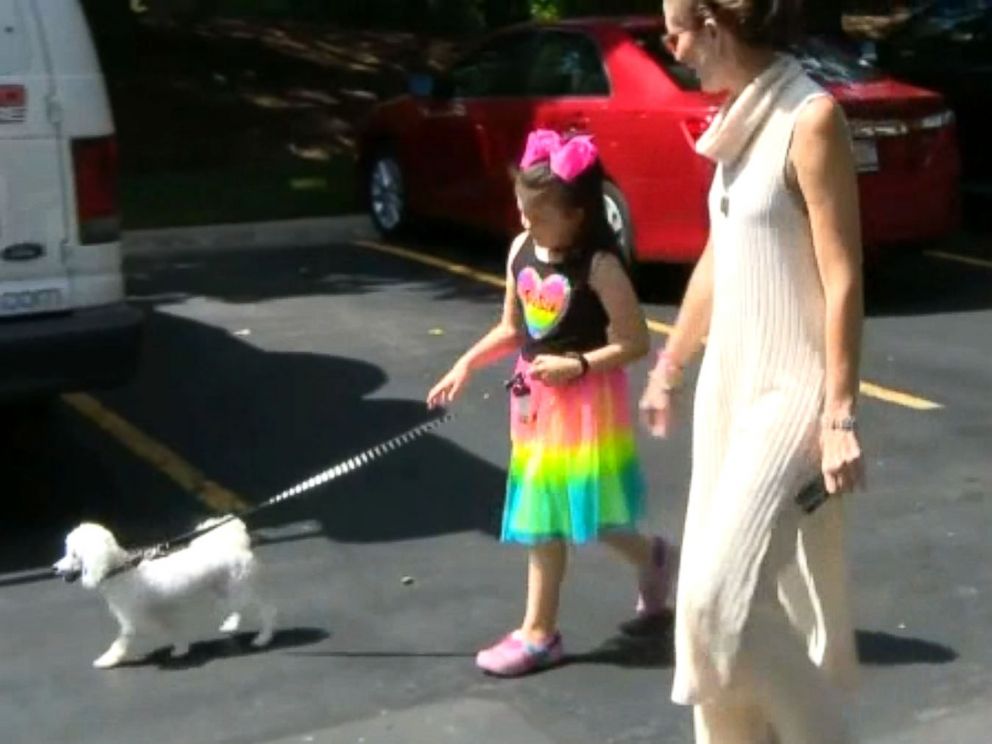
PHOTO: Wilmette, Illinois, resident Corey Widen was investigated by the Illinois Department of Children and Family Services after an anonymous caller reported that her daughter was walking the family dog alone.
Wilmette, Illinois, resident Corey Widen was investigated by the Illinois Department of Children and Family Services after an anonymous caller reported that her daughter was walking the family dog alone.WBBM

Labels: , , , ,

 
()() Follow @rheytah Tweet