Ruminations

Blog dedicated primarily to randomly selected news items; comments reflecting personal perceptions

Tuesday, October 12, 2021

That Classic Catch-22

Nurses close the curtains of a COVID-19 patient's room at an ICU in Surrey, B.C. (Jonathan Hayward/The Canadian Press)
"A shortage of workers can mean people's health and well being. It's scary."
"We're in an ethical situation where it's also scary not to ensure that all health workers are vaccinated."
"So it's a bit of a Catch-22."
Devon Greyson, assistant professor, public health, University of British Columbia

"I have a hard time understanding how there are nurses, with scientific training, who refuse to get vaccinated."
"If I were a nurse, in the field, in a clinic with unvaccinated colleagues, I would feel uncomfortable for our patients, for myself, for our loved ones."
"Starting Wednesday, we will reach [out] to them to make a last verification on their vaccination status and if they are not adequately vaccinated, they will be suspended."
Luc Mathieu, president, Ordre des infirmieres et infirmiers du Quebec

"I feel like a terrible nurse. I bust my ass 60 hours a week for what? To hear the pandemic's over, the vaccines are a poison, COVID is a conspiracy. I'm not putting that in my body; and on and on. I work consistently short-staffed and I mean dangerously short staffed."
"Nursing was a calling for me. I always wanted to be in the medical field. Today I want to go off the grid and say f--- this. We've suffered an overwhelming trauma that I'm not so sure we are going to recover [from]."
"...Now I'm tired, I cry before my shifts, I have severe anxiety, but I still give the best care I can."
Season Foremsky, Calgary nurse, suicide

"Our front-line physicians and nurses are under extreme stress and pressure. The pandemic is impacting individuals and our teams both physically and mentally."
"Our people have been working tirelessly to care for Albertans throughout this long and exhausting pandemic."
Dr.Verna Yiu, president, CEO, Alberta Health Services

"Season's death is a red flag for every individual healthcare worker to take a pause and reflect, to say, 'I need to take care of myself."
"A lot of politicians are saying, 'Oh, just hang on, just hang on. It's the pandemic, we have no control'."
"Sorry -- we were saying the same thing before the pandemic."
Linda Silas, president, Canadian Federation of Nurses Unions
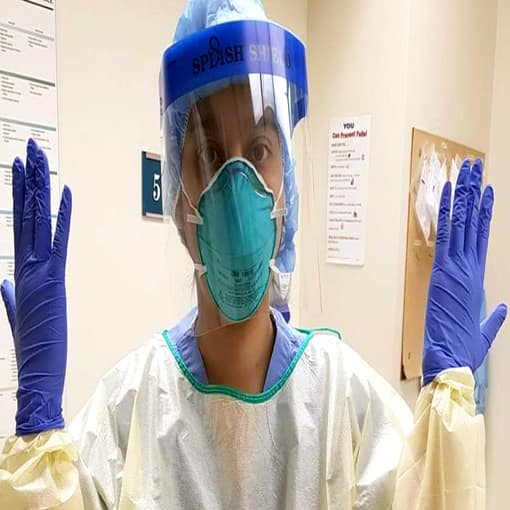
Nurses on the front line of the COVID-19 pandemic say they’ve seen many of their colleagues quit or transfer jobs because they’re burnt out after months of abuse from some patients and exhaustion from staff shortages.   CBC
 
Hospitals across Canada, already short-staffed with medical personnel, many of whom under constant pressure, have decided to leave the profession altogether, are now facing an impossible situation. A relatively small proportion of medical staff are adamantly against being vaccinated. And given that the majority see the need to be inoculated against the novel coronavirus, the presence of colleagues who are unvaccinated pose a contagion threat to themselves as well as to the patients entering hospital and trusting that they will be safe from the the highly communicable Delta strain now dominating case numbers.

The situation is such that provincial mandates as well as individual hospital and long term care homes have mandated the necessity for vaccinations for all staff to protect themselves and the vulnerable individuals in their care. Deadlines for vaccine mandates now on the near horizon, see the potential for greater staff shortages in a prevailing atmosphere of already-existing staff shortages, hugely exacerbating an already unsteady position of reliable care for patients. The overburdened workforce due to the pandemic is on track to become ever more burdened.

Health care personnel layoffs have begun, with employees being informed, due to their refusal to be inoculated against COVID, that they are being placed on unpaid leave. Employees at the Toronto Hospital network, reporting a 97 percent vaccination rate, have been informed they have until the 22nd of October to be vaccinated, or they will no longer be employees of the hospital system. British Columbia is set to place staff at long-term care and assisted living on unpaid administration leave should they fail to be vaccinated.

Quebec has offered $15,000 bonuses in hopes of attracting and retaining some 4,300 full-time nurses. In total 25,000 health-care workers not yet fully vaccinated with an October 15 deadline looming, risk being suspended without pay. In Edmonton, Louis Hugo Francescutti, an emergency room physician, worked with several hospital staff refusing vaccination, despite their employment being on the line; they are committed to reserving themselves from COVID inoculation.

In Calgary, nurse Season Foremsky wrote on social media of the toll the pandemic had taken on her mental and physical resources; the trauma of seeing people die, the abuse she suffered from anti-vaccination protesters she faced, and the tediously strenuous long work hours and lack of support. As a mother of two young children hers was a delicate balancing act to keep her head above the stress that was suffocating her. She cared for COVID-19 patients as an emergency room and intensive-care unit nurse at the South Health Campus in Calgary.

And on September 27, the once-vibrant woman was gone, dead of a suspected drug overdose that occurred at home, a suicide. One in three nurses report thoughts of suicide, according to a recent poll conducted by the Canadian Federation of Nurses Unions. Of nurses surveyed, 98 percent reported symptoms consistent with a high-to-moderate risk of suicide. Among them, fewer than ten percent attempted to access mental health services. 

That same survey noted a study of Alberta nurses saw similar or slightly elevated rates of alcohol and substance use disorders, comparable to numbers in the general population. Linda Silas, president of CFNU, speaks of nurses working "in a pressure cooker"; work shortages, worsening physical and mental health, and workplace violence are not new in their workplace, caused by the stressors surrounding the SARS-CoV-2 virus causing COVID. They were present long before the pandemic and since then, have boiled over.

Health-care workers tend to COVID-19 patients in the intensive care unit of a Toronto hospital. (Evan Mitsui/CBC)

Labels: , , , , ,

Sunday, January 24, 2021

Vaccine Hesitancy versus Vaccine Envy in the Medical Community

"I've never had people request a photo when they've gotten a vaccine before. I think it points to how terrible the pandemic has been and what a historic moment it is ... I'll be very excited and enthusiastic for when my turn comes up."
"One of the personal support workers I was vaccinating said her mom who lives in the Philippines was  told by her local public-health official that she wouldn't be getting it [inoculated] until 2023."
Monika Winnicki, dermatologist, Toronto, vaccine volunteer administer
 
"When we are on the front lines and seeing, on social media, vaccinations being given to child psychiatrists doing Zoom meetings or doctors on maternity leave ... it gives us the message that we've been forgotten."
Alan Drummond, emergency physician, Perth, Ontario
 
"I feel like the urban centres are getting covered. I feel like rural Canada is being missed."
"Every time I see a friend posting, I'm happy for them but feel incredibly anxious."
"We were told [a vaccine] is three months away. There is no vaccine rollout where I'm working -- no one has received a vaccine."
"I'm just disappointed. My hospital covers several different communities and there are outbreaks and we definitely see COVID-positive patients ... Rural lives matter too." 
Sarah Giles, rural family and emergency physician, Kenora, Ontario
Image
Photo: Michelle Morais
"As selfies continued to show up, the emotions turned a little bit complex. I caught myself in a more envious state, and then feeling guilt around feeling envy."
"It's never about individuals; it's more about feeling [the rollout] should be going faster than it is."
"I think it's a normal feeling. But I think it's important to acknowledge the feelings of envy and guilt."
Audrey Marcotte, emergency medicine resident, Montreal

"We haven't really seen a ton of cases ... My life hasn't really changed a whole lot in the past year ... I've had Thanksgiving and Christmas dinners with my family. Birthday parties have been celebrated."
"I haven't posted anything for fears of how it would make my deserving colleagues who haven't gotten theirs yet feel. Seeing their anxiety on social media has made me realize that posting a picture ... might not help their morale."
Aleisha Murnaghan, emergency doctor, Charlottetown, P.E.I.

"When Ontario Public Health put out its guidelines for vaccinations, they excluded pregnant and lactating women."
"About eight to 11 percent of pregnant women who acquire COVID19 will end up sick enough to be admitted to hospital, and two to four percent end up in ICU with severe complications, including being on a ventilator for weeks to months and [with] long-term effects from COVID."
"The risk for non-pregnant women is one to two percent by comparison, so we're looking at a two to four times higher rate of severe disease in the unvaccinated."
"Pregnant doctors are posting to show people that they feel it's safe enough to get it themselves."
Constance Nasello, chair, Ontario Society of Obstetrics and Gynaecology
In a sense, the medical community, comprised of individuals from all backgrounds and beliefs and walks of life in their private lifestyles is no different than the general public in their concerns, their likes and dislikes ,their distrust of systems. People from outside the medical community likely think that those within it have some kind of insider knowledge and confidence the general public lacks. A general public among whom a substantial contingent of people view the prospect of being vaccinated askance, not willing to trust medical science when it says the vaccines are safe and effective. 

People in the medical community have their own groups of medical professionals unwilling to chance taking a vaccine they feel has been inadequately tested and researched, much less the time it has taken to develop the vaccine; they view it with distrust. So much for being a medical insider; those job descriptions don't automatically come with an app to instill confidence and trust. And so, from within the medical community itself a campaign was initiated to persuade their unwilling collegial peers that all is well -- look, I've taken the vaccine and I'm fine!

Image
Photo: Michelle Morais
As part of their convincing campaign, medical personnel have been taking selfies of having their vaccination and posting them on social media sites for the benefit of their colleagues in medical practise. And those selfies have garnered some surprising results. One emergency doctor in Vancouver who happens also to be an outstanding athlete was amazed to see her vaccine selfie acquire more likes than a Facebook post showing her finishing an Ironman competition. "I think it speaks to how everyone is looking forward to the light at the end of the tunnel".

There are, however, critics of the vaccine-selfie campaign, those who feel the new social media campaign has been the cause of anxiety, envy and frustration at a time that many physicians still await their turn in a slow-motion rollout across the provinces. Dr.Drummond the emergency physician in Perth as an example, feels the postings to be "tiresome" and "demoralizing". 

Dr.Giles in Kenora has had experience working with Doctors Without Borders in Sierra Leone, Pakistan, South Sudan and Myanmar and her concern is the effect the vaccine postings of photographs may have on people living in lower-income countries: "My friends in those countries are not posting vaccines selfies", she said of countries where vaccines are not in circulation and most certain not to be for years to come in an unequal world of access and non-access. 

Many other doctors are convinced the selfies have a useful purpose; to educate and motivate those who remain vaccine-hesitant within health care to be convinced inoculations are the best course of action for themselves personally, their families and their communities at large. "There's a lot of mistrust and conspiracy theories around 'Big Pharma'", explained Jennifer Chu, a St.Michael's Hospital emergency physician in Toronto. "A lot of people also don't understand how drugs are made and think that the vaccine can't be safe because it was rolled out so quickly."

In Canada, the South Asian population is notorious from within the medical community for its suspicion of vaccinations. Kashif Pirzda, a Toronto emergency doctor who works with Canada's South Asian COVID Task Force, posted a selfie with captions in Hindi and Urdu meant to turn the situation of false information around. "Usually the same claims will come up, such as that the vaccine will change your DNA, or that it hasn't been properly tested, or that it contains pork products, which would make it forbidden for Hindus or Muslims", he said.
 
As well, a situation of vaccine hesitancy has emerged among health-care workers at long-term care facilities where some centres in Ontario see vaccination rates of a mere 20 percent. Since many of those workers are of South Asian heritage working with vulnerable elderly and infirm residents, it's critical for them to accept inoculations. 
"I think we have an obligation as medical experts to spread sound medical knowledge and facts to our non-medical friends and family."
"I think the time to address and remove vaccine hesitancy is now ... as physicians, we are highly mindful of staying in our own lane when it comes to various societal issues."
"This is our lane."
Kavitha Passaperuma, oncologist, Richmond Hill, Ontario

Labels: , , ,

Thursday, November 26, 2020

The Anguish and the Agony

The spread of COVID-19 ramps up. (Ben Nelms/CBC)
"In the next two weeks, that's when we're really going to start feeling that [burnt-out] in our hospitals. We are very worried. We're terrified."
"It 's inevitable it's going to happen and we just need to brace ourselves for it [a COVID 'third wave']."
"Let's say the ICU is full. That's a real risk right now. How do you make the choice about which person deserves a ventilator or an ICU bed more [than another patient]?"
Dr.Shazma Mithani, emergency room doctor, Edmonton, Alberta 

"We're all really, really scared about what the next -- not even just the next couple weeks, it's the next few days -- we know that ICU numbers can increase by leaps and bounds in a matter of hours."
"We don't know if we're going to be able to keep up tomorrow or the next day, forget the next couple of weeks."
"Everyone is just extra tense, extra nervous."
"[With workers off sick or caring for family, or resulting from virus exposure, the] pool of nurses is getting smaller and smaller."
Edmonton emergency room nurse, name withheld

"It's so busy. this is the forgotten part of the pandemic."
"When we talk about burnout, it's because we are really being called to go above and beyond what we would naturally do in our general family practice."
"I'm really tired, I'm really, really tired ... we're just at the early stages of this wave."
Dr.Christine Gibson, Calgary family doctor
Students not impressed with PAB program
Quebec Orderlies train on the job   CTV News

Canada has seen the number of COVID-19 cases sweep past 344,000 with deaths linked to the coronavirus over 11,600 in number leaving medical workers fearful of the health system breaking down. They also worry that while treating patients with COVID they are exposed to the virus; will they become ill, will they bring the virus back home with them? Who will look after their family if they're ill? For that matter, who will be left to look after patients' needs, if health workers continue to succumb to the virus? 

Even now, staff shortages bedevil the system resulting in part from nurses and orderlies becoming ill. Burnout and illness continue to sideline medical workers right across Canada. This second wave that has inundated the country has taken its toll, and even while it has not yet reached an anticipated crescendo, fears of a third wave haunt the health community. Health care workers are doing double duty given the growing shortage of workers and they're exhausted.

Doctors like Shazma Mithani feel Alberta's government has failed to bring in sufficiently stern legislation, leaving people free to gather indoors at places of worship, in bars, casinos and restaurants. Contact tracing has broken down while up to 80 percent of cases are without data to show where they were contracted. COVID-related hospital occupancy and ICUs across the country both on the rise in an already difficult situation where most hospitals have reached their capacity.
 
COVER.Stress-Workers-Surrey-Hospital.jpeg
‘This is the most scared I’ve seen people in my 27 years as a nurse.’ BC’s health care workers are doing their best to find relief. Photo by Joshua Berson
 
Two days ago Ontario had 523 people in hospital, 159 of those in ICU, while in British Columbia 284 people were in hospital, 61 in ICU. "It becomes a daily struggle to find the right place to care for people and the right tools to apply your knowledge well", remarked Dr.Kevin Smith, president and CEO, University Health Network, Toronto. Hospital staff fear longer wait times in crowded hospitals will result in worsening health outcomes for their patients.

The first wave in the spring presented a problem of shortage of protective gear and medical supplies, along with hospital beds, whereas this second wave threatens outcomes through a shortage of trained medical personnel. Demands of the pandemic has led to 'moral distress' for health workers. "When you can't provide the quality of care that you have in the past, it becomes that much harder to tell yourself you're doing a good job", explained Lonee Rousseau, a registered nurse, and vice-president of the union local at Royal Alexandra Hospital in Edmonton.

In Steinbach, Manitoba, nurses point out that patients are now forced to wait in their cars as a result of insufficient hospital space, calling out for more staff in a province that has recently seen its case load explode. Over 3,200 health-care workers in Alberta alone have been infected by COVID-19. According to data published by the Ontario government, over 8,400 health-care workers ranging from dentistry to first-responders, to respiratory therapists, to personal care workers, have contracted COVID-19 since spring.
 
851px version of PHOTO1.COVID-Worker.jpg
Care workers are ‘constantly on edge waiting for the next step and reflecting on the last step,’ says Dr. Ed Marquis of Prince George. Photo by Joshua Berson
"The fear right now is that this is only getting worse and so there's an anticipation, a dread anticipation, going on within our system."
"We really need to see people when they're sick. There was this mortality bump [in May and June] ... basically due to people putting off hospital visits for illnesses when they should've [come in]."
"And that [seeing two COVID-19 deaths recently] may seem like, whatever, you're an emerg.doc, you see death."
"But this is different. And so fast. And we just know that it's going to get worse."
Dr.Joe Vipond, emergency room doctor, Calgary

Labels: , , , , , ,

Sunday, April 19, 2020

Helping the Helpers

"I need to still work, I want to still work, I want to help out where I can, but my family comes first. This is a solution to the problem."
"Obviously I want to be in my home and my home is the most comfortable place I can be."
"But this is a great second option."
Rick Stewierski, 35, Paramedic, Orillia, Ontario

"We have a lot of requests, but we need to have more relationships with dealers and places that are willing to lend their campers out."
Ashley Oriet, Windsor, Ontario, originator RVs for Canada's Frontline

"We kind of went, 'wait a minute, we have really great customers, and they're not allowed to use their units right now."
"I wonder if any of them would be willing to maybe lend [their recreational vehicles for temporary use of novel coronavirus first-responders]."
Stacey Robinson, co-owner, Great Canadian RV dealership, Peterborough, Ontario
Josie Beck_1
2011 Thor Four Winds
Josie Beck
Taking inspiration from what they understood to be happening elsewhere, a number of people involved in the recreational vehicle industry gathered themselves to make an effort in trying to solve a problem related to health-care workers' exposure to the coronavirus, needing a temporary place to stay that would keep them separated -- out of necessity and understandable caution to protect their loved ones -- from their families. 

A movement has started across the country reflecting motor homes and other recreational vehicles standing unused in view of public health guidelines cautioning people not to travel at a time when the border between Canada and the United States is temporarily closed, and so is the border between Ontario and Quebec, leaving people unable to access their summer cottages; RV camping areas and tourism sites closed while the international community battles COVID-19.

At the same time public health guidelines caution first responders and health care workers to find alternative places to sleep rather than returning to their homes after their workplace shifts in fear of transmitting the dread coronavirus to their family members. This was the dilemma facing Rick Stewierski. And then he heard of a growing movement to loan out motorhomes to health-care workers.
Nikki Fannin 5
2018 Cruise Radiance 28QD.
Nikki Fannin
Going to work, when that workplace is known to be contaminated with COVID-19 does not inspire confidence that returning home afterward will not adversely affect others. Looking for alternative places to stay during this pandemic can put a strain on front-line emergency workers, both psychologically and economically. Yet the need to self-isolate for those who are required to do so for 14 days after exposure to the virus is real and must be observed.

A woman in Windsor felt it incumbent on herself to try to help those whose professionalism helps others. She knew that in the United States there was a movement to match front-line workers with RVs and other mobile shelters, and saw no reason why she shouldn't do the same. Which led her to launch a Facebook group for that purpose. Ashley Oriet's RVs for Canada's Frontline has seen a flood of requests for campers come in, as well as offers from RV owners willing to loan them out.

Her team of nine volunteer administrators log front-line workers and donors into a database, then match them by region. Entirely successfully so, to the extent that demand has outstripped supply. And nor is she the only one who sees the advantage in helping others at this time of national stress. In Peterborough, Ontario Al and Stacey Robinson, RV dealers, joined the group started by Oriet.

They had received a request from a local doctor which alerted them to the necessity of helping medical personnel find temporary accommodation to self-isolate. With the vast listing they have as a dealership of RV owners and knowing they're unable to take their vehicles to parks or camp grounds they decided to approach these contacts with a proposal to help front-line workers. Just several weeks into the venture they have united 30 front-line workers with RVs on loan which they deliver themselves.

As for Orillia's Rick Siewierski, his experience is that with the use of a loaned RV he can still be at home in a sense, since he has parked the vehicle in the driveway of his family home. He can speak with and see his pregnant wife at a safe distance, even share meals together outdoors while he 'lives' next door in the RV.
"We have amazing customers."
"We said, guys, if you have an RV and you’re not using it, and you’re comfortable with it, tell us and if we have a front-line worker that is in need, we can match the RV with the health-care worker."
Stacey Robinson, Peterborough, Ontario
Paramedic Rick Siewierski, centre, poses for a photo with his wife Mariam Siewierski, left, and Al Robinson of Great Canadian RV, near Orillia, Ont.  HO/The Canadian Press

Labels: , , , , ,

 
()() Follow @rheytah Tweet