The Holy Grail of COVID Vaccination
"We have to put away that idea that our value to society has anything to do with where we are on the priority list. If you're in a priority group for whatever reason, you can't say 'Skip me for now and give my dose to someone who needs it more.""[There's a constant refrain from young and middle aged staff members] don't vaccinate me. Give it to my 77-year-old mother.""[Providing inoculation to essential caregivers as priority groups means an [iron ring] is developed protecting long-term care residents and personal care workers].""There's a lot of consistent data that vaccination prevents you from getting sick and dying of COVID. And there's a substantial drop -- about 75 percent -- in your ability to transmit the virus."Dr.Gerald Evans, chair, division of infectious disease, Queen's University
 |
| Anil Reddi has been allowed back inside his mother's care home to help feed her but only because she stopped eating. (Submitted by Anil Reddi) |
"[Getting vaccinated was] emotionally complicated. I wonder if my acceptance of the vaccine takes it away from someone who would have worse outcomes if they contracted the virus.""My main role on the hotline was advising callers about when and where to seek care. The guidance and protocols we’d been given were simple. Given capacity constraints in New York City, covid-19 tests were only being offered to people sick enough to need hospital admission. Thus, in guiding the callers, we were to screen people for dyspnea over the phone. I would listen to the story of each caller and assess their breathing, and tell them: if you ever feel short of breath, seek medical care immediately. Otherwise, stay home.""But, as more evidence has emerged on covid-19, it appears that hypoxia caused by the virus doesn’t necessarily make people feel short of breath even if their oxygen saturations are dangerously low. People who may need medical intervention may not actually be dyspneic.""In retrospect, I can’t help but wonder: did the advice I and other volunteers gave—to stay home unless severely symptomatic—cause unintended morbidity and mortality? Were there people I spoke to who should have presented to a hospital earlier, and would they have had better outcomes if they had? What about the other symptoms I didn’t discuss with them: how many patients had electrolyte derangements from diarrhea? Or strokes with neurological features I never warned them to look out for? Data suggest that many people in New York died at home —and that they were disproportionately from black and minority ethnic groups. I was following guidelines, but even so, did I ever inadvertently exacerbate these inequalities by telling some of the most vulnerable people not to seek care?"Dr.Eric Kutscher, New York ICU physician, opinion piece, British Medical Journal
 |
Regrets, guilt, second-guessing, overwhelming emotions; feelings of helplessness. Emotions felt by everyone for a variety of reasons; from people in the medical profession checking back on their recent memories and wondering why or if they could have or should have done things differently with the limited information on hand in trying to cope with the fallout from a new, voracious, threatening and harmful virus about which very little was known.
To the ordinary person feeling afflicted and fearful over the spread of the SARS-CoV-2 virus that news stories focus on, particularly the unknowns and those unfortunates who died in droves and others, post-COVID still suffering symptoms, much less the findings of its destructive capability on the body's internal organs. Everyone wants to be vaccinated to augment their body's immune system resistance against the dread foreign invader. Vaccine rollouts reflect the amount of doses available through the few pharmaceuticals that have succeeded in creating a safe and effective COVID vaccine.
And those scarce doses are being carefully husbanded as medical committees and governments at every level consider which are the most vulnerable populations to be prioritized for early vaccinations. Front-line medical workers, of course. The elderly and health-compromised living in long-term care institutions and retirement 'residences'. Those with chronic diseases that make them more vulnerable to the effects of the virus. People in low-income, disadvantaged circumstances; ethnic groups known to be more vulnerable.
 |
| Naila Shah, 60, is a resident at Seven Oaks long-term care home. Before the pandemic, her family visited twice a day to help with her care. (Submitted by Shah Family) |
And there are some groups who are surprised when they are informed they are considered to be priority. They are younger, healthier than the conventional target groups yet they are persuaded that they belong, through circumstances among those prioritized for inoculation against COVID. They know that there are many, many others awaiting the psychological relief and the physical protection awaiting them once they've been vaccinated; people whose age and health dictate logically that they be vaccinated before the younger, hale demographic.
Those making the decisions about who comes first and who can wait, know that lives hang in the balance, linked to how they decide and who they decide must be first in line. It is well enough known that vastly disproportionate numbers of deaths have occurred among elderly residents of long-term care homes and retirement residences -- about 70 percent of deaths. It is logical that they must be inoculated before others less needful of protection. Just imagine the surprise when family members of the elderly in long-term care homes are given consent forms to sign, not only on behalf of their elderly relative, but themselves.
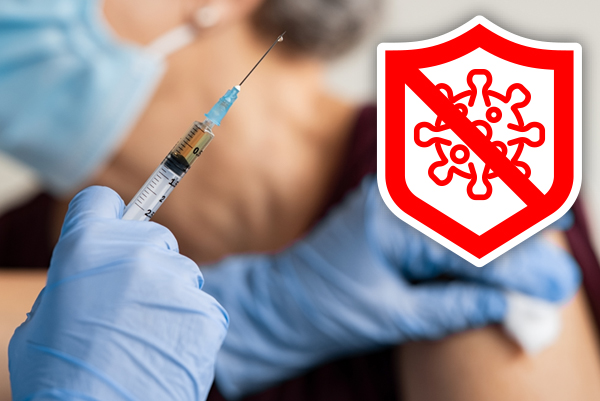 |
They are considered to be essential caregivers. And essential caregivers; basically family members who were accustomed to attending the care facilities on a frequent basis to give personal touches of care to their elderly family members some of whom suffer from various forms of dementia and cannot recognize their sons and daughters, are 'essential caregivers', slated for early vaccination at the very same time their elderly relatives are. That too seems logical and needful, until the rest of the story is absorbed.
That since long-term care homes and residences became hotbeds of COVID-19 infections and highly contagious, all family members, those who visited only occasionally and those who devoted hours upon hours of personal care to their elderly in close personal contact, have not been permitted entry physically to the premises holding their parents. It has been a year since visits have been out of bounds. Although communication can be made waving hands at one another through closed windows. Or speaking on cellphones. Or personal care worker-assisted Zoom calls.

Labels: COVID Vaccines, Inoculation, Long-Term Care Homes, Medical Personnel, Novel Coronavirus, Personal Care Workers, Priority Groups, Retirement Residences
posted by Pieface @ 7:39 PM
0 comments