Ruminations

Blog dedicated primarily to randomly selected news items; comments reflecting personal perceptions

Monday, March 15, 2021

The Elusive Search for Definitive Answers to Questions of Animal Behaviour

"I think that collaboration [between researchers with different specialities — including ants, birds, fish, and humans] was really fruitful because we had so many different perspectives about this topic."
"If you were going to the grocery store right now, and someone sneezes right next to you, you’ll probably take a step back [just as do birds, mice and lobsters, such that if an individual is identified as being sick, others actively go out of their way to avoid them]."
"How do other individuals sense that there’s an exposed individual around? We have the media and so on, but how do these ants know that there’s a threat going on?"
"It’s not surprising to see animals doing these things. Animals are encountering pathogens every day too, so we’re not the only ones being affected by infectious diseases. It’s just fascinating to see that there are certain behaviours that have evolved in certain animals that serve that purpose."
"For some people it’s hard to pinpoint the benefits, like why do they do it, why does it evolutionarily make sense to do this. There might be delayed benefits, and there’s all these things that you can’t get a grasp on that play a role in there that you might not have going on in animal societies."
Lead author Sebastian Stockmaier, PhD candidate, University of Texas’ Integrative Biology Department
Some species of ants actually practice social-distancing measures when an infection breaks out.

"Non-human animal systems, particularly those with social structures similar to those of humans, present unique opportunities to inform relevant public health questions, such as the effectiveness, variability  and required duration of social distancing measures."
Authors, Social Distancing in Animals Avoiding Infections
Social distancing in humans and nonhuman animals.
(A) Pathogen-exposed forager ants self-isolate and their nestmates increase social distance to each other (image: Timothée Brütsch). (B) People social distance during COVID-19 (image: Forest Simon). (C) Sick vampire bats reduce grooming non-close kin (image: Gerald Carter). (D and E) Under certain conditions, Trinidadian guppies avoid parasitized individuals (D), (image: Sean Earnshaw, University of St. Andrews) and house finches avoid sick conspecifics (E) (image: Jeremy Stanley).
Science Journal
Human animals are not all that different from other animal species in many respects. Research into animal and insect behaviour has revealed that among them many species react similarly to human species when faced with an epidemic of infectious diseases; in taking steps to isolate the ill from the well for the purpose of protecting those that have not been infected from the effects of highly infectious and often deadly pathogens. In the instance of this research the appearance of the global pandemic caused by SARS-CoV-2 virus causing COVID-19 was the impetus to look again and make comparisons.
 
A research team led by Sebastian Stockmaier, a doctoral candidate at the Integrative Biology Department of University of Texas who deviated from his original field research into vampire bats' reaction to pathogens, to study the effects of the novel coronavirus and how it affected the human world. To that end he assembled a group of researchers whose specialities fed into the research; those who studied ants, birds, fish and humans.

The team of researchers identified five common methodologies frequently made use of by certain wildlife in protecting themselves against infectious diseases. Avoidance came in first; once an individual is identified as ill, others of the species tend to go out of their way to actively avoid the presence of their sick members. This is a phenomenon that has been identified as common to birds, mice and lobsters.

The following two methods -- passive and active self-isolation, with the first identified when an animal's infection shows distinct symptoms impelling them to move away from the pack. A comparison is humans' tendency to remain at home rather then venture out in public when ill. There are some animals that become lethargic, less involved in social interactions; states of conditions that tend to distance them from their group. Infected bees share less food, sick vampire bats avoid grooming others within their intimate group. 
 
This form of self-isolation is considered to be accidental in nature, but is recognized as a condition that helps to prevent future infections, whereas active self-isolation occurs most often in animals with strong social bonds. Animals identify they are ill and of their own volition and deliberately, separate from their group. Some ants, as an example, will choose to vacate their colonies and die alone in a form of "altruistic suicide" should they become infected.

What the global human community is now experiencing and practising at the moment is considered to reflect a fourth method where health experts, having advised that infected or not, everyone in society should maintain a social distance from others in preventive infection mode. In so doing, we are minimizing the opportunity for infection to spread. 

Zoo Daytime Nights

 Co-author Nathalie Stroeymeyt had discovered some species of ants initiated a separation of distance when several in a colony of ants become infected with a fungal pathogen. Social distancing was observed to be extremely effective in preventing the spread of such pathogens. Researchers had assumed that this type of prevention was specific to humans, realizing the efficacy of separating themselves physically from the contagious ill among them. A practise which far predates the present situation of the novel coronavirus in human history.

There is a final identified method in prevention of infectious disease spread noted by the review and that is exclusion. Whereby the infected individual is prevented forcibly from mingling with those not ill; alternately sent into exile to prevent infection from spreading. Insects in particular practise this type of isolation, the researchers found, but it is not exclusive to insects since such behaviour has also been identified in primates which have been seen behaving aggressively to the ill among them.

Lead author Stockmaier considers that additional research is required to determine how an animal's behaviours evolve in reaction to certain types of infections, as well as how it is that the pathogens evolve in adapting to the animals. Just as humans became the target of the novel coronavirus held to have crossed the species barrier from bats to humans.
 
While it appeared somewhat simpler to the researchers to reason why it is that an animal might evince some of the self-protective behaviours against infectious diseases, it's more problematical to understand why humans behave the way they tend to. For example, caretaking resists the natural instincts in preventing viruses, since it places the caretaker at risk of infection. And that's where the elusive altruistic gene makes its entrance; compassion and care for others at risk to oneself, competing with the instinct for survival.
 
F3.large
 
"Studies in eusocial insect societies have been especially productive because these animals practice seemingly altruistic behaviors such as active self-isolation and caregiving, which decrease the risk of outbreaks through the colony. These social networks share many characteristics with those of human societies and have evolved properties to prevent pathogen transmission. As a result, their social distancing strategies may prove key to investigating the epidemiological effects of such behaviors and thus their potential public health utility. There are, however, important differences in interpreting how social network structures evolve in response to pathogenic threats. In eusocial insects, the behavioral repertoire known as “social immunity” most likely represents group-level adaptive behaviors that evolve in response to high relatedness in the group and result in collective properties. By comparison, pathogen-induced changes in social networks of other animals including humans often do not have the same properties, such as high relatedness levels, and can create conflicts of interest that incentivize selfish behaviors."
"Public health measures experienced during past and current pandemics have raised awareness for social distancing, and epidemiological studies are actively evaluating their effectiveness and required duration. Humans are by no means alone in using social distancing to mitigate risk of infection. The widespread occurrence of pathogen-induced changes to social behaviors across animals in diverse taxa represents a valuable opportunity to investigate underlying mechanisms, epidemiological consequences such as effectiveness and required duration, and host-parasite coevolution. Nonhuman animals’ social distancing strategies may be experimentally tractable, enabling manipulative experiments or multigeneration observations that are impossible with humans. These systems represent a valuable guide to understanding how contagious pathogens spread through social networks, how networks change in response to pathogens, and how these bidirectional feedbacks alter pathogen dynamics and evolution."
Science Journal   Social distancing in humans and nonhuman animals
 

Labels: , , , , ,

Thursday, May 28, 2020

Communication That Resonates and Informs on COVID

"We need to be wearing masks in public when we cannot social distance. It's really critically important."
"We have the scientific evidence of how important mask-wearing is to prevent those droplets from reaching others."
Dr.Deborah Birx, response co-ordinator, White House Coronavirus Task Force

"You have to convey that this is a serious issue and that people should take precautions. However, you don't want to make people feel fatalistic or hopeless."
"You want to make people feel like they have self-efficacy and you want to make them feel like what they do matters."
"If  you think the virus is very, very infectious, you're basically just saying to yourself, we're all going to get it anyway, why bother taking these annoying precautions?"
"People are already very misinformed about how infectious COVID-19 is. they already think it is far more infectious than it actually is."
"Just kind of going out in the media and saying, for example, that COVID is extremely infectious might upwardly bias people's estimates even more and induce more fatalism."
Jesper Akesson, managing director, The Behaviouralist Research Consultancy, U.K.


The findings of a new study emphasize that acutely warning people of the danger inherent in a virus that has proven to be extremely infectious with sometimes extremely serious outcomes, dulls their sense of self-responsibility to act rationally. When they are confronted with a dire warning emphasizing the danger of a widespread public menace like the SARS-CoV-2 virus, many people tend to believe there is nothing they can do to avoid it, they might just as well do nothing.

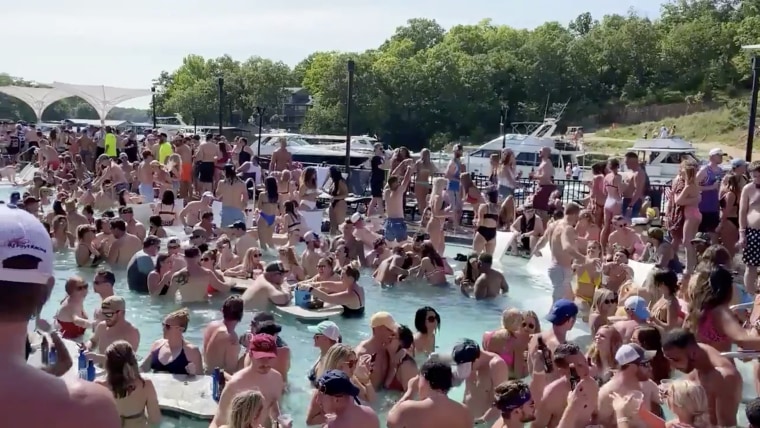
Image: Revelers celebrate Memorial Day weekend at Osage Beach of the Lake of the Ozarks, Missouri
Lake of the Ozarks, Mo., on May 23, 2020.Twitter/Lawler50 / Reuters
"This result [that people massively overestimate how infectious the disease is, believing the average person spread the disease to 28 other people] is consistent with previous studies that suggest individuals are likely to overestimate risks that are unfamiliar, outside of their control, inspire feelings of dread, and receive extensive media coverage."
Report on Study, British and American economists

One of the difficulties in communicating effectively to a concerned public details of a widespread public health issue is that people who tend to be readily alarmed will simply adopt a fatalistic attitude toward the situation. Steven Taylor, as a professor at the University of British Columbia has written of the psychology of pandemics and argues that governments, attempting to strike a balance between communicating to low anxiety and high anxiety sectors of their population face a difficult proposition.

On the one hand, low anxiety people respond to stark messaging while high anxiety people require a more gentle introduction to the seriousness of a disease that has laid waste to many countries' health systems and economies, and the need for their populations to react sensibly in self-protection for the greater good of the entire population. Strike the wrong communication note with the wrong audience and an effect completely at odds with the communication's intention is certain to emerge.

Case in point: in the United States where the death toll has surpassed 100,000 from COVID-19, the Memorial Day weekend signalling the start of summer in the United States, saw hordes of people  out sunbathing on beaches, fishing from boats, strolling on boardwalks and generally comporting themselves with scant attention to the warnings to continue social isolation. Coronavirus restrictions have been relaxed in all 50 states.

Beachgoers swarmed Indiana Dunes National Park in Porter Sunday.
Beachgoers swarmed Indiana Dunes National Park in Porter Sunday

In Illinois and New York, restaurants remain closed for in-person dining and hair salons remain closed, but in many southern states most businesses have opened, albeit with restrictions on capacity. A week earlier, a record number of new COVID-10 cases were reported in Alabama, Arkansas, Minnesota, North Dakota, New Hampshire, Maryland, Maine, Nevada, Utah, Virginia and Wisconsin, according to Reuters. There is uncertainty whether this has resulted from a second wave.

The United States has seen the highest number of cases reported in the world, at over 1.6 million. Forecasting models for potential deaths by June 1, reached the figure of the projected 100,000 mark well before the turn of the month. Many state governors and health officials have issued pleas to the public to wear masks in stores and in public, messages that have been received with resistance from some of the population, evidenced by social media full of videos of businesses turning angry customers refusing to wear face masks away from entry.

Packed beaches in Florida and other gulf states on the Memorial Day weekend, left authorities with little option but to break up the large gatherings. Parties elsewhere with people crowded into pools and clubs elbow-to-elbow, have been prominently viewed in videos posted on social media. A party at a club in Houston saw the city's mayor order firefighters across the metropolitan area to enforce social distancing rules.

During the study on communicating with the public over the presence of an infectious disease like COVID, the lead author, Jesper Akesson, acknowledged a feeling of encouragement that most participants were positively impacted by hearing expert information about the virus with some participants having chosen not to believe the information and half retaining their original beliefs at first. But as the study ended, most had revised their opinion in favour of the information given by health experts.

A large crowd enjoys the boardwalk in Ocean City on May 24.

Labels: , , , ,

Sunday, April 19, 2020

Helping the Helpers

"I need to still work, I want to still work, I want to help out where I can, but my family comes first. This is a solution to the problem."
"Obviously I want to be in my home and my home is the most comfortable place I can be."
"But this is a great second option."
Rick Stewierski, 35, Paramedic, Orillia, Ontario

"We have a lot of requests, but we need to have more relationships with dealers and places that are willing to lend their campers out."
Ashley Oriet, Windsor, Ontario, originator RVs for Canada's Frontline

"We kind of went, 'wait a minute, we have really great customers, and they're not allowed to use their units right now."
"I wonder if any of them would be willing to maybe lend [their recreational vehicles for temporary use of novel coronavirus first-responders]."
Stacey Robinson, co-owner, Great Canadian RV dealership, Peterborough, Ontario
Josie Beck_1
2011 Thor Four Winds
Josie Beck
Taking inspiration from what they understood to be happening elsewhere, a number of people involved in the recreational vehicle industry gathered themselves to make an effort in trying to solve a problem related to health-care workers' exposure to the coronavirus, needing a temporary place to stay that would keep them separated -- out of necessity and understandable caution to protect their loved ones -- from their families. 

A movement has started across the country reflecting motor homes and other recreational vehicles standing unused in view of public health guidelines cautioning people not to travel at a time when the border between Canada and the United States is temporarily closed, and so is the border between Ontario and Quebec, leaving people unable to access their summer cottages; RV camping areas and tourism sites closed while the international community battles COVID-19.

At the same time public health guidelines caution first responders and health care workers to find alternative places to sleep rather than returning to their homes after their workplace shifts in fear of transmitting the dread coronavirus to their family members. This was the dilemma facing Rick Stewierski. And then he heard of a growing movement to loan out motorhomes to health-care workers.
Nikki Fannin 5
2018 Cruise Radiance 28QD.
Nikki Fannin
Going to work, when that workplace is known to be contaminated with COVID-19 does not inspire confidence that returning home afterward will not adversely affect others. Looking for alternative places to stay during this pandemic can put a strain on front-line emergency workers, both psychologically and economically. Yet the need to self-isolate for those who are required to do so for 14 days after exposure to the virus is real and must be observed.

A woman in Windsor felt it incumbent on herself to try to help those whose professionalism helps others. She knew that in the United States there was a movement to match front-line workers with RVs and other mobile shelters, and saw no reason why she shouldn't do the same. Which led her to launch a Facebook group for that purpose. Ashley Oriet's RVs for Canada's Frontline has seen a flood of requests for campers come in, as well as offers from RV owners willing to loan them out.

Her team of nine volunteer administrators log front-line workers and donors into a database, then match them by region. Entirely successfully so, to the extent that demand has outstripped supply. And nor is she the only one who sees the advantage in helping others at this time of national stress. In Peterborough, Ontario Al and Stacey Robinson, RV dealers, joined the group started by Oriet.

They had received a request from a local doctor which alerted them to the necessity of helping medical personnel find temporary accommodation to self-isolate. With the vast listing they have as a dealership of RV owners and knowing they're unable to take their vehicles to parks or camp grounds they decided to approach these contacts with a proposal to help front-line workers. Just several weeks into the venture they have united 30 front-line workers with RVs on loan which they deliver themselves.

As for Orillia's Rick Siewierski, his experience is that with the use of a loaned RV he can still be at home in a sense, since he has parked the vehicle in the driveway of his family home. He can speak with and see his pregnant wife at a safe distance, even share meals together outdoors while he 'lives' next door in the RV.
"We have amazing customers."
"We said, guys, if you have an RV and you’re not using it, and you’re comfortable with it, tell us and if we have a front-line worker that is in need, we can match the RV with the health-care worker."
Stacey Robinson, Peterborough, Ontario
Paramedic Rick Siewierski, centre, poses for a photo with his wife Mariam Siewierski, left, and Al Robinson of Great Canadian RV, near Orillia, Ont.  HO/The Canadian Press

Labels: , , , , ,

Sunday, March 15, 2020

For Your Own Good : Self-Isolation 

"Depriving people of their liberty for the wider good] needs to be orchestrated carefully."
"If quarantine is essential, then our results suggest that officials should take every measure to ensure that this experience is as tolerable as possible."
"Confinement, loss of usual routine and reduced social and physical contact with others were frequently shown to cause boredom, frustration and a sense of isolation from the world."
"They also became particularly worried if they experienced any physical symptoms potentially related to the infection."
Researchers, King's College London
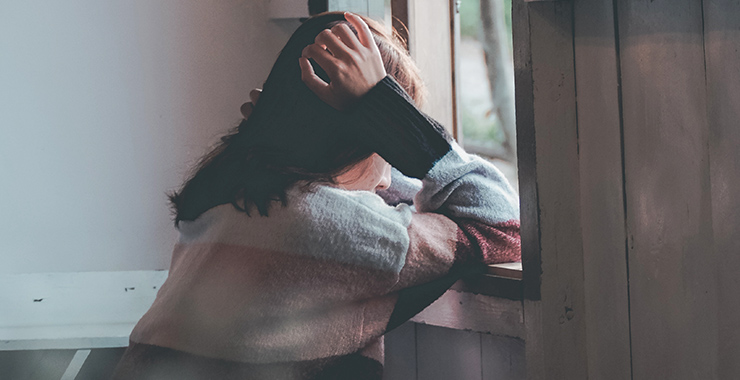
Young woman alone looking out window

Researchers whose study was printed in The Lancet, wrote of the psychological impacts of isolation when people are placed in quarantine as substantial and "long-lasting". This, at a time when three-quarters of the globe's countries are diagnosing ever-growing numbers of their nationals with the novel coronavirus, and advising people to self-isolate to wait out the outcome if symptoms are not severe, and others to do so to protect themselves from the scourge increasingly infecting people.

The researchers drew their conclusions from a study they undertook, where 15,000 residents of Toronto agreed to take part in their study by voluntarily self-quarantining for a ten-day period during the earlier outbreak of severe acute respiratory syndrome (SARS) almost 20 years ago, yet another virus that had come out of China, and which had struck Toronto particularly hard, given its large Chinese-Canadian population where the virus was brought back to Canada from trips to China.

Their findings are timely in anticipating large segments of the North American, European and Asian population under COVID-19 watch and containment, as self-isolation has become a very familiar term. A study undertaken in 2004 found symptoms of depression and PTSD in Toronto residents who had been quarantined during SARS, a more lethal disease than the pandemic novel coronavirus now making its way across the globe. SARS killed ten percent of those infected, over double COVID-19's estimated fatality rate.
"It was very much an isolating type of experience [causing people to become hyper-vigilant."
"It it [going to strike] going to be today? Tomorrow? How many more days do I have left in isolation before something happens?"
Dr.Rima Styra, associate professor of psychiatry, University of Toronto
"[People who are isolated or quarantined need to be told [if they can walk their dogs, go out to the barn to care for animals, go for a run or a hike in their local park as long as they stay six feet away from other people and wear a mask, or, is it indoors always, end of story?"
"What about roommates if you've still got to share a bedroom and a bathroom, can your partner still go to the store for you, let in workmen, accept deliveries? Few seem to know what to do if they are advised or ordered to stay home. And if they don't...Tasered, arrested, fined or cited?"
Dr.Arthur Caplan, medical ethicist, NYU School of Medicine

"On the plus side, people can learn how much they don't really need in order to be happy and what is really most meaningful in their lives."
"Being socially isolated in our homes can also paradoxically bring us closer together as a community. We are all in this together and the crisis reminds us how interdependent we are on this tiny pebble of a planet."
"Dangers have always reflected part of the human condition and we adapt, yet the outbreak must be taken seriously] and requires much more competent responses than those so far managed by our leaders."
Dr.Allen Frances, professor emeritus, former chair, department of psychiatry, Duke University

"It's a little unfortunate that some places tend to be moving toward too much isolation and really drastic measures. [It increases panic, worry and] fear of the other [where anyone is regarded as a possible disease vector]." 
"Conditions of extreme danger and disruption of public order -- like natural disasters -- typically trigger a lot of solidarity, co-operation, care and spontaneous help between strangers."
Samuel Veissiere, anthropologist, cognitive scientist, McGill University

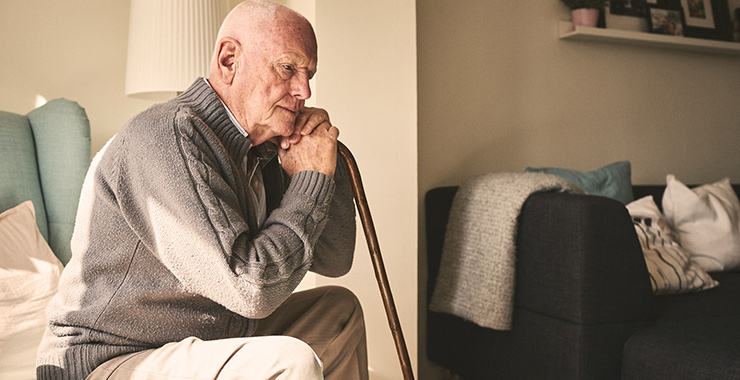
Older man sitting and leaning on a cane

Labels: , , ,

 
()() Follow @rheytah Tweet