Ruminations

Blog dedicated primarily to randomly selected news items; comments reflecting personal perceptions

Thursday, June 11, 2026

In Canada, Safe Consumption Sites, Children Under 16

"If the Liberals' proposed digital safety bill passes as written, Canada would enter a unique legal environment in which its minors would be barred from accessing social media, but would still be able to inject illicit drugs at a government-run safe consumption site."
"Thus, Canadian 15-year-olds could soon face a regime in which they are not allowed to use Facebook, but could face no barriers to injecting fentanyl at a government-run facility."
"The relatively easy access of harm reduction services to Canadian minors stands in contrast to a growing number of areas in which authorities are looking to impose ever-tighter age restrictions, a federal social media ban being only the latest example."
Tristin Hopper, Journalist, National Post 
 
"Youth under 19 years of age can access harm reduction supplies, naloxone, overdose prevention services, and, in appropriate circumstances, witnessed consumption by a regulated or nonregulated health or social service provider, without a capacity assessment."
"[If minors were to be denied access to supervised drug consumption, it risked creating a] lasting imprint on the relationship between the youth and the health system." 
"[Children were cleared to use drugs at] nonregulated [facilities, even] without a capacity assessment."
British Columbia Medical Journal, 2023 paper 
https://i.cbc.ca/ais/1.3572057,1709489233000/full/max/0/default.jpg?im=Crop%2Crect%3D%28263%2C34%2C1654%2C955%29%3BResize%3D796

The Sandy Hill Community Health Centre on Nelson Street opened a supervised consumption site in 2018. (CBC)

Heaven forfend that underage children -- facing a concerned health system that denied them free-and-easy access to recreational drugs to speed them along the passage from youthful curiosity to hard-core drug use, a life of unregulated indiscipline, the incapacity to hold down a job, live a normal life, facing the potential for homelessness, criminality and poverty -- end up resenting a federal health authority from roadblocking them from the full realization of negative future prospects.
 
In woke societies, which Canada has become, it is wrong and socially inept leading to great harm in self-esteem to deny youth the intriguing opportunities to explore new horizons in an atmosphere, current and growing, where recreational narcotics are cool, and 'everyone' does it, so why not me? In households where parents too, value the use of soft drugs to enhance their lives, it is only natural that their offspring gravitate to similar habits. Presuming that adults can be more cautious and observe limits, it's unlikely that children are imbued with a similar sense of caution, with curiosity impelling them toward 'enhanced' trips into the promised world of deep self-exploration.
 
https://i.cbc.ca/ais/1.5896676,1684427110000/full/max/0/default.jpg?im=Crop%2Crect%3D%280%2C73%2C1402%2C788%29%3BResize%3D860
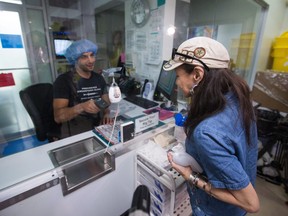
Hydromorphone, a type of opioid, is pictured at a managed opioid program in Ottawa, Ont. Most patients who take prescription opioids such as hydromorphone or fentanyl patches in B.C., will have to do so under the supervision of a pharmacist or health professional. (Ashley Burke/CBC)
 
"Supervised consumption services save lives and benefit communities. Supervised consumption sites provide a safe, clean space for people to bring their own drugs to use, in the presence of trained staff. This prevents accidental overdoses and reduces the spread of infectious diseases, such as HIV."
"Supervised consumption sites may offer a range of evidence-based harm reduction services, such as drug checking. The sites also provide access to important health and social services, including substance use treatment for those who are ready."
Government of Canada 
"If someone comes to the [safe consumption] site looking for help and a place to be supported when they're using a substance, there is no requirement for ID", stated Health Canada official Kendal Weber, affirming no age limit for service at safe consumption sites. Canada's supervised drug consumption clinics were pioneered as a social welfare experiment in British Columbia. The rationale behind the sites was well-intentioned; for government to step in with a social solution to the growing epidemic of drug overdoses that became a public menace with the introduction of fentanyl flooding Canadian streets.
 
"In B.C., there is no set age when a child is considered capable to give consent. This means there is no legal age limit for youth to access harm reduction services", an information sheet by Interior Health, part of the provincial government's health authority, states. And nor is parental consent sought when servicing the perceived needs of an underage person. The use of the sites was diversionary as well as ostensibly geared toward protecting the vulnerable. With drugs and paraphernalia available free of charge to users there would be no need for them to seek out more harmful drugs than what was available free.
https://harmreduction.org/wp-content/uploads/2020/07/SupervisedConsumptionSites-01-1024x819.png
Harm Reduction Coalition
 
What was eventually revealed is that drug users all too frequently eschewed the use of the free drugs like hydromorphone. It wasn't long before the free drugs were being sold in the street, the profit used to buy fentanyl instead. In Quebec there is a policy of distributing free syringes, snorting straws and allied drug equipment for children as young as 14, through its harm reduction sites. "People who wish to obtain drug injection equipment do not need to register anywhere, consult someone to get a referral or have a Quebec health insurance card", an official guide states online.
 
That same guide alerts users under 14 that though ID is not checked for access to "safe drug use equipment", young users are expected to "meet with a healthcare professional in order to access new consumption equipment". As an accompaniment to the distribution of drug use equipment, a healthcare worker will carefully explain to the 14-year-old how best to use the equipment; how very convenient, assuaging the conscience of those that make the rules that children whose parents are not notified are being taught nonetheless best-practise in the use of drug paraphernalia.
 
https://smartcdn.gprod.postmedia.digital/nationalpost/wp-content/uploads/2026/06/injection-site.jpg?quality=90&strip=all&w=564&h=423&type=webp&sig=hiOP8OTDtZW4wX9W3ti4Gw
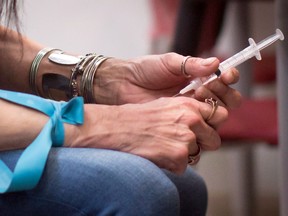
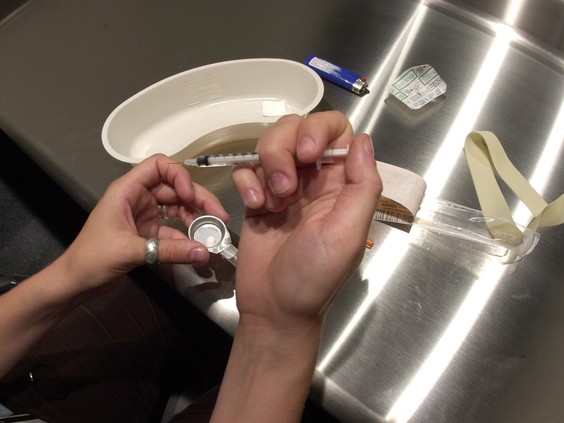
A client shoots up drugs at a safe injection site in Vancouver. Photo by Handout/File


Labels: , , , ,

Monday, February 17, 2025

Pioneers in 'Safer Supply' British Columbia Benefits the Opioid Black Market

"Significant [quantities of] safer supply [opioids are being diverted to the black market with assistance of organized gangs and some unscrupulous health-care providers]."
"Taxpayer-funded 'safe supply' drugs are flooding the streets, enriching organized crime, in some cases with diversion fraudulently facilitated by pharmacies and medical professionals."
"A significant portion [of safer supply opioids are being diverted to the black market, where they are being trafficked] provincially, nationally and internationally."
Power Point presentation produced by British Columbia's Ministry of Health 
https://static01.nyt.com/images/2024/07/11/multimedia/00canada-overdose-01-vmcg/00canada-overdose-01-vmcg-superJumbo.jpg?quality=75&auto=webp
A memorial wall for people who died as a result of using drugs is featured inside the offices of the Vancouver Area Network of Drug Users, a nonprofit group. The New York Times
"The last six months of 2020 they dispensed 577,000 opioid pills. In the two years between 2022 and 2024, it was over 22 million. It's humiliating. How many people are living in British Columbia, for goodness sake?"
"We've got to stop calling things harm reduction. It's not proven."
"Is giving people giant buckets full of hydromorphone to dump into the community harm reduction? No. It's not proven to reduce harm. It's not evidence-based. It's an experiment."
"Of course we need to deal with kickbacks from pharmacies. Even if every pharmacy is on the straight and narrow, it would still be a problem. A huge problem."
"We're not talking about safe injection sites at all. You're giving dope to people who are addicted and they're not taking it. They're using it as a currency to buy street drugs and still put themselves at risk."
B.C. MLA Elenore Sturko
https://i.cbc.ca/1.5896676.1684427088!/cumulusImage/httpImage/image.jpg_gen/derivatives/16x9_1180/hydromorphone.jpg?im=Resize%3D780
Hydromorphone, a type of opioid, is pictured at a managed opioid program in 2019. The drug is among those whose prescriptions have dramatically increased in recent years. The province is investigating the diversion of a 'significant portion' of opioids. (Ashley Burke/CBC)

Part of a confidential report produced by British Columbia's Ministry of Health summarizing findings of a special investigative unit looking into the fallout of the province's initiative to react to the growing phenomenon of fentanyl overdoses leading to death that has swept Canada, and manifested hugely in British Columbia, has been leaked. Its findings discovered that the freely distributed hydromorphone that has been handed out to people addicted to opioids has flooded the streets, the result of that free hydromorphone being bartered for more potent fentanyl craved by drug addicts.
 
The cheaper and more freely available handout drugs on the streets have made their way into the hands of teenagers which has resulted in a growing use of drugs with occasionally fatal consequences for young people. Government agencies have denied that the 'safer supply' they have invested so heavily in relating to their open-minded search for a solution to the fentanyl black market, could be ending up on the streets in a black market bonanza. Yet reports from hospital personnel, police, and community investigators have all held the government to fault for a situation that really is imperilling a greater swath of the population, despite government denials.
 
Now, years after the accusations of government ineptness and malcompetence made the news, a leaked document -- that investigators have produced verifying the accusations -- has surfaced. Even before that, however, the government of B.C. came to a decision to curtail their experiment in 'harm reduction' through 'safer supply'. No longer able to deny that throughout this experiment, accidental deaths due to overdoses have increased, not diminished, and a wider net has been cast in the process, capturing a younger cohort in the drug spiral.
 
Within the presentation photos of diverted safe supply prescriptions still in their original packaging were included; evidently having been confiscated during vehicle searches by police. At least 60 British Columbia pharmacies were identified by the investigative unit as having provided prohibited paid "incentives" to clients, doctors and assisted living residences for the purpose of increasing their operating profits. 
 
https://smartcdn.gprod.postmedia.digital/vancouversun/wp-content/uploads/2025/02/0907-bi-qw-council-addictions-bi.jpg?quality=90&strip=all&w=564&h=423&type=webp&sig=WKvXF3OKFTn4nSlCv_3Fnw
 
A dispensing fee is charged for each prescription filled; in this instance billed to the provincial government. Up to three prescriptions a day can be dispensed for a single safer supply patient. Dispensing fees are around $10 each, so the potential for pharmacies to earn up to $11,000 annually for each safer supply patient served is a compelling temptation. Normal customers are worth around $120 in dispensing fees yearly. The obvious conclusion is that a single safer supply patient can result in more revenue than 90 others not related to safer supply combined, would produce.
 
According to the leaked presentation, some 'incentivized' patients may procure only one of their three daily prescriptions while diverting their extra opioids to the black market. Alternately, the pharmacy involved could fraudulently bill the province while failing to dispense the drugs, so that patients don't receive some or all of their prescriptions. Either way, extra opioids end up on the black market fueling organized crime and leading to an increase in drug use in the population. 

According to the presentation, between 2022 and 2024, some 20-million milligrams of hydromorphone (an opioid as potent as heroin) and 232,000 fentanyl patches were dispensed through safer supply, equal to 19 percent of all the hydromorphone and 13 percent of all the fentanyl patches dispensed during this period in the province.
 
https://i.cbc.ca/ais/1.7156186,1717224314156/full/max/0/default.jpg?im=Crop%2Crect%3D%280%2C0%2C1919%2C1079%29%3BResize%3D620
Some pharmacies are paying cash kickbacks to vulnerable patients in Vancouver’s Downtown Eastside to attract more business — years after crackdowns related to the practice.    CBC News
 

Labels: , , ,

Friday, February 07, 2025

British Columbia's Experimental 'Safer Supply' Flop

"A significant portion of the opioids being freely prescribed by doctors and pharmacists are not being consumed by their intended recipients."
"[Those opioids are being trafficked]provincially, nationally and internationally."
"As long as [safer supply] gives valuable things away for free, or for far below market prices, one should expect there to also be 'profiteers' wishing to profit by obtaining supply for resale."
Leaked B.C. document
 
"You can stand in front of just about any of these pharmacies that are involved in this -- usually close to the safer supply prescribing office -- and you can sit outside for five minutes and watch all kinds of transactions going down."
Addiction outreach worker David McEvoy
 
"We have noted an alarming trend over the last year in the amount of prescription drugs located during drug trafficking investigations, noting they are being used as a form of currency to purchase more potent, illicit street drugs."
RCMP spokesperson Cpl. Jennifer Cooper 

"We have been concerned about this increasingly polarized rhetoric that is not informed by evidence, that is not paying attention to evidence, as a matter of fact, and is sharing opinion or anecdote that, in fact, is clearly not defensible if you look at the data."
"[Hydromorphone was not] present in a significant number [of the bloodstreams of the roughly 200 people per month dying of overdoses in B.C.]" 
Former B.C. Chief Coroner Lisa Lapointe
https://i.cbc.ca/ais/1.7156186,1717224314156/full/max/0/default.jpg?im=Crop%2Crect%3D%280%2C0%2C1919%2C1079%29%3BResize%3D620
Some pharmacies are paying cash kickbacks to vulnerable patients in Vancouver’s Downtown Eastside to attract more business — years after crackdowns related to the practice. Still from video
 
For years health officials in British Columbia dismissed concerns expressed relating to freely handed out opioids to drug addicts through 'safer supply' outlets, in a program designed to charitably provide a product considered safer than street opioids, in an effort to wean people off more dangerous drugs like fentanyl in response to an epidemic of deadly overdoses. Those overdoses have occurred across Canada, but British Columbia remains the poster child of drug-induced accidental overdoses. 

Which is what led the government of B.C. to develop a ground-breaking system of 'safer supply', representing, since 2020, one of the world's most comprehensive such programs. Once the program was operational, sharp eyes began to notice a proliferation in the illicit street market of diverted opioids and it wasn't difficult to conclude that the giveaway drugs were being sold on the black market in exchange for more powerful drugs like fentanyl. 
 
And while the less dangerous drugs were selling on the street at very competitive prices, they lured teenagers into venturing into the temptation of 'trying them out', creating a new generation of drug users.
 
The evidence of diversion was clear, and investigative reportage delved into the problem, publishing their damning results; the larger availability of drugs flooding the marketplace thanks to 'safer supply' initiatives, doing far more harm to society broadly; in effect enabling addicts who spurned the lesser highs of hydromorphone for the attraction of infinitely more potent (and dangerous) fentanyl-laced street drugs. These were dismissed by the province's health authorities as unsubstantiated rumours and 'false news'. 
 
This week, however, the provincial Opposition Conservatives in the province released a leaked presentation that had explored the issue without prejudice, finding that those accusations of 'safe supply' boosted opioid availability at the street level, and leading in fact to more accidental drug overdoses rather than preventing them as intended, were indeed reflecting reality. The Conservatives labelled the issue of diversion, as evidence of "taxpayer-funded drug trafficking".
 
https://smartcdn.gprod.postmedia.digital/vancouversun/wp-content/uploads/2024/09/png-0502n-overdose-037.jpg?quality=90&strip=all&w=564&h=423&type=webp&sig=SwU4R5fpM3qvebKB1TNPlg

The undeniable evidence that the government health authorities had been apprised, despite their denials, even led B.C. Health Minister Josie Osborne to confirm that the claims about diversion outlined in the report were a reflection of reality, that the report's destination was intended for the attention of law enforcement. "These allegations are here. There's absolutely no denial of it. There's no diminishing of it, and there should be no acceptance of it."
 
The very direction of distributing free recreational drugs to addicts was meant for the purpose of weaning them away from illicit drug supplies tainted by fentanyl or heroin. "Safer supply services can help prevent overdoses, save lives, and connect people who use drugs to other health and social services", an official Government of Canada policy backgrounder explained. 

In the years from 2022 to 2024, 19,751,000 mg of hydromorphone was handed out representing safer supply equivalent to 2.5 million 8-mg pills, while 1.4 million mg of oxycodone was also distributed, equating to 70,000 20-mg pills. When the program was initiated, critics gave warning that users would end up selling their rations of 'safer sup' to use the profits from their sale to acquire illicit drugs. Which led to government-supplied drugs flooding the market and addicts gaining money to buy illicit drugs.
 
"We ... know that about 50 percent of the hydromorphone pills that we come across can indeed be attributed to safe supply", the Standing Committee on Health was told by Vancouver's Deputy Chief Constable Fiona Wilson. Which did not deter drug policy advocates and government of B.C. officials from repeatedly insisting diversion was no problem; contending otherwise represented misinformation or political posturing.
 
https://i.cbc.ca/1.5896676.1684427088!/cumulusImage/httpImage/image.jpg_gen/derivatives/16x9_1180/hydromorphone.jpg?im=Resize%3D780
Hydromorphone, a type of opioid, is pictured at a managed opioid program in 2019. The drug is among those whose prescriptions have dramatically increased in recent years. The province is investigating the diversion of a 'significant portion' of opioids. (Ashley Burke/CBC)


Labels: , , , , , ,

Monday, May 29, 2023

Canada's 'Safer Supply' Drug Addiction Mitigation Program

"We quickly assembled health-care teams to dish out and prescribe mass quantities of opioids and it wasn't very long until gangs infiltrated the hotels."
"These are disabled people. Old people. Little women. So very early on, we knew it was happening."
"My colleagues have had some high-profile overdoses -- a 12-year-old and a 14-year-old, fatally over-dosed. We've never seen kids that young overdosing before."
Dr. Caroline Ferris, front-line addiction physician, Victoria, British Columbia
Greg Sword.
"As in many Canadian cities, the pandemic created a homelessness crisis in Victoria, which lead to the rise of several dangerous encampments, whose residents were eventually relocated to hotels that had been converted into supportive housing."
"At first, Dr. Ferris thought it was  beneficial that dirt-cheap, diverted hydromorphone was flooding into Canadian communities, as she assumed that it would mitigate fentanyl consumption. However, Dr. Ferris said that 'it hasn't really gone that way' and that diverted hydromorphone is going to youth and to 'regular Joes who would never use opioids unless their colleague was offering them one for a buck a pill'."
"She now believes that it's 'a bit facile' to argue that hydromorphone diversion mitigates fentanyl consumption, especially given the increasing number of fentanyl overdoses in British Columbia."
"Though safer-supply advocates claim that the strategy's critics are merely fringe voices, Dr.Ferris said that half of the health-care professionals she knows have been 'passionately lamenting this since the start of the pandemic'.
Adam Zivo, Investigative Journalist, National Post
Canada's 'safer supply' drug strategy has come under some intense scrutiny of late, and deservedly so. Front-line addiction physician Dr. Caroline Ferris prescribes safer supply hydromorphone, an opioid more potent than heroin, where she works in community settings in British Columbia's capital city, Victoria. The idea behind safer supply was to reduce the incidences of overdoses and deaths. British Columbia has been experiencing an alarming increase in both.

Making free pharmaceutical opioids available to drug users was seen as an attractive and life-saving alternative to street drugs which could be tainted with, for example fentanyl and carfentanil, two potentially deadly drugs mostly manufactured in China, entering the illicit market to capture ever increasing numbers of users as merchants of death, drug dealers, bring it to the streets and adulterating less potent drugs with the potentially lethal products.

Dr. Ferris initially was taken with the thought that progressive drug policies inclusive of drug legalization would be of benefit. It was during the coronavirus pandemic when the initiative was taken to increase safer supply across the country that she began to have second thoughts. She would be informed by vulnerable patients their experiences of gang members confiscating their drugs. And so it became understood within the profession that criminals were acquiring hydromorphone and shipping it across Canada.
 
Harm reduction artwork and medical supplies
Artwork about harm reduction adorns an appointment room at Parkdale Queen West Community Health Centre in Toronto. Laura Proctor for STAT
Now, she and some of her colleagues meet to discuss the issue, all of whom are "concerned by the number of youth using hydromorphone, or who started with it and then moved on to fentanyl." Youth whose ages between 12 and 14, are "unprecedentedly young". The number of patients of all ages also alarms Dr. Ferris for those who have relapsed or have developed new addiction issues resulting from hydromorphone use. She conducted a survey of her patients to discover that of 41 current patients requiring assistance for opioid use disorder five used hydromorphone alone, but another ten were using hydromorphone along with another drug.

She has seen and recognized some benefit to the safer supply program among patients in the early stages of recovery-oriented treatments, like methadone. Because many patients expect they will receive hydromorphone in perpetuity, however, they occasionally become abusive when informed they must discontinue the drug once it has performed its required function to bring them to the next stage of recovery.

As well, patients suffering from chronic pain and who as a result of prescribing restrictions cannot access the opioids they need for pain-free living, can benefit from safer supply. "True" safer supply for fentanyl users requires pharmaceutical fentanyl options, she feels, which should be provided with caution. A very limited model of safer supply differing dramatically from the grossly irresponsible 'one-size-fits-all' in use in Canada today, has its attractions. The current safer supply, she feels, represents an inadequate solution for chronic pain management, and the diversion crisis must be addressed since it serves to add fuel to the opioid epidemic.

Hydromorphone clinic
"The anecdotal evidence precedes the data collection. Somebody sounds an alarm and then we collect data. With the OxyContin crisis and fentanyl, we in the field knew what was happening before there was data to support it."
"It's disrespectful to discount our observations."
"It's disrespectful to ignore the concerns of prescribers and communities who see this happening."
"A lot of these folks are, in fact, older people who have chronic pain conditions and have been de-prescribed due to fear from our professional college [as a result of onerous prescribing restrictions implemented after the OxyContin crisis], or they've lost their family physician and can't find anybody to prescribe, because, of course, the optics of going around to clinics and asking for Dilaudid [hydromorphone] are very poor."
Dr. Caroline Ferris, front-line addiction physician, Victoria, British Columbia
 
Booths for supervised consumption services. Laura Proctor for STAT

Labels: , , , ,

Saturday, May 13, 2023

The Great Compassionate Progress in Safe Injection Sites

"Patients who diverted [hydromorphone given to addicts at Safe Injection Sites entering the street market for sale to enable the sellers to afford the more potent and desirable fentanyl] were able to have an increase in their standard of living."
"What I saw at the very beginning was absolutely that. But as fentanyl became more available in the community, I've seen more and more people divert to get fentanyl."
Dr. Sharon Koivu, addiction physician, London Health Sciences Centre

"[Diversion is an issue; high opioid tolerance among fentanyl users was a] top challenge."
"[Safer supply program staff said] Even maximal doses of [hydromorphone] have little effect except withdrawal management."
"This leads people to continue to use street fentanyl, as [hydromorphone does] not approximate the effect they get from fentanyl."
Health Canada report findings from safer supply pilot projects
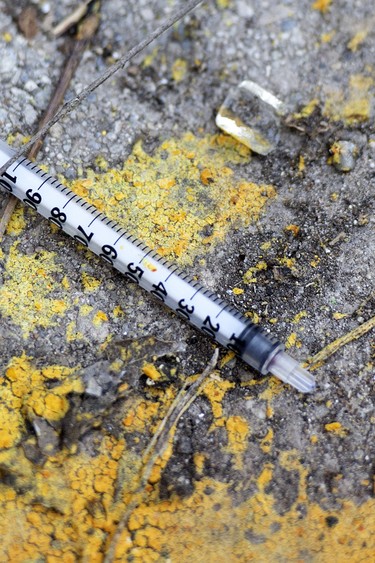
A needle outside of The Hamilton Clinic.
 
Compassionate progressives want to believe that by providing drug users with government-funded substitutes for what is often potentially tainted illicit substances, people can be saved from overdosing with ultra-potent street drugs such as fentanyl and even worse, carfentanil. Unfortunately theory doesn't match human idiosyncracies leading people to value brief and fleeting mood changes brought by psychotropics, an excess of which could usher them out of this world.
 
An opioid crisis in Canada has been responsible for the death of over 35,000 people since 2016. The safer supply drugs distributed through government-funded programs are frequently left unconsumed by the recipients who choose to sell them on the black market at irresistible prices which then goes on to fund the procurement of fentanyl, preferred by the recipients of the 'safer' drugs. The black market resale is formally referred to as 'diversion'. The result of this situation is that across Canada communities are being flooded with cheap opioids.
 
With little incentive to switch to hydromorphone, fentanyl addicts sell their safer supply at bargain prices to buy their substance of choice.
Fentanyl addicts sell their safer supply at bargain prices
Hydromorphone, the primary opioid dispensed at such supply sites has dropped in price significantly in cities that operate safer supply programs. Addiction physicians are being informed by drug users that diverted hydromorphone leaves these cities to enter other markets where opioids are less accessible, to sell for higher prices. This has attracted the attention and invited the presence of gangs and drug dealers.

A 2017 study published in Psychopharmacology  establishes that hydromorphone produces "similar subjective and physiological effects as heroin", but is "more potent than heroin", while another 1990 study published in The Journal of the International Association for the Study of Pain estimated hydromorphone is in fact, five times stronger than heroin.

Relating to the increases in availability and affordability of hydromorphone as a black market drug, there have been negative consequences where physicians report a new wave of opioid addictions pronounced among youth. Addiction physicians also report that many patients once thriving in recovery now relapsing as patients, either abandon treatment to enroll in safer supply programs or are drawn to return into addiction by the abundance and cheap cost of hydromorphone on the streets.

Drug users looking for a quicker rush often crush hydromorphone tablets meant for oral consumption in favour of injecting them intravenously, leading to excruciating, disfiguring infections where paralysis has resulted for some patients. The Canadian government saw virtue in investing almost $80 million in 28 safer supply projects. According to Dr. Koivu of the London Health Sciences Centre, fentanyl was not seen widely in London in 2016, then over ensuing years spread and with it came the abuse of safer supply programs.

The typical 8-milligram tablet of hydromorphone delivers four times the dose generally used in hospital settings, yet it is still not as powerful as fentanyl. Since users prefer to sell their government-provided hydromorphone pills in favour of using the sale funds to supply themselves with fentanyl, the safer supply program, whose primary benefits include mitigation of fentanyl use, is actually in reality, subsidizing fentanyl usage.

A nurse at the Crosstown Clinic, a supervised injection site in Vancouver, British Columbia, handed out a syringe of medical-grade heroin to a patient in May.
Credit...Jackie Dives for The New York Times

Labels: , , , ,

 
()() Follow @rheytah Tweet