Ruminations

Blog dedicated primarily to randomly selected news items; comments reflecting personal perceptions

Saturday, May 01, 2021

The Many Mysteries of SARS-CoV-2 Infections

"We've taken the elderly, the above-80s and, to a large extent, the above-70s, our most vulnerable patients, out of play [through inoculation]."
"But what we're left with is a group of patients who have a good chance of being saved, but the resources required to save them are sometimes astronomical."
"[Patients are remaining in intensive care longer, numbers intubated and attached to a ventilator increasing], and I think that's because we have a more salvageable population. They are appropriate to intubate, they are appropriate to care for, for a very long period of time, in the hopes that they eventually improve."
"There are some people in whom it was 100 percent predictable they were going to get bad disease because they have really bad co-morbidities [cancer, compromised immune systems]."
"But then we have a lot of people who either have no co-morbidities or just the usual things that so many people in that age group have, and why did they end up in the ICU? They were really unlucky. They got a really bad disease or their body reacted to it badly."
"You give the same virus to 20 people, one of them ends up in ICU, five of them don't have any symptoms, and they caught the same disease. It's bad luck. And nobody likes that answer."
"About a third of my ICU beds are taken up with COVID patients. We're not seeing waves, we're seeing non-stop COVID for over a year. But we've been very lucky we've been able to handle it."
"[Watching what's happening in Toronto], and we're terrified. Toronto has top-level hospitals with top-level ICUs and with a good number of ICU beds per capita, and they're struggling."
Dr.Paul Warshawsky, chief, Division of Adult Critical Care Medicine, Jewish General Hospital, Montreal 
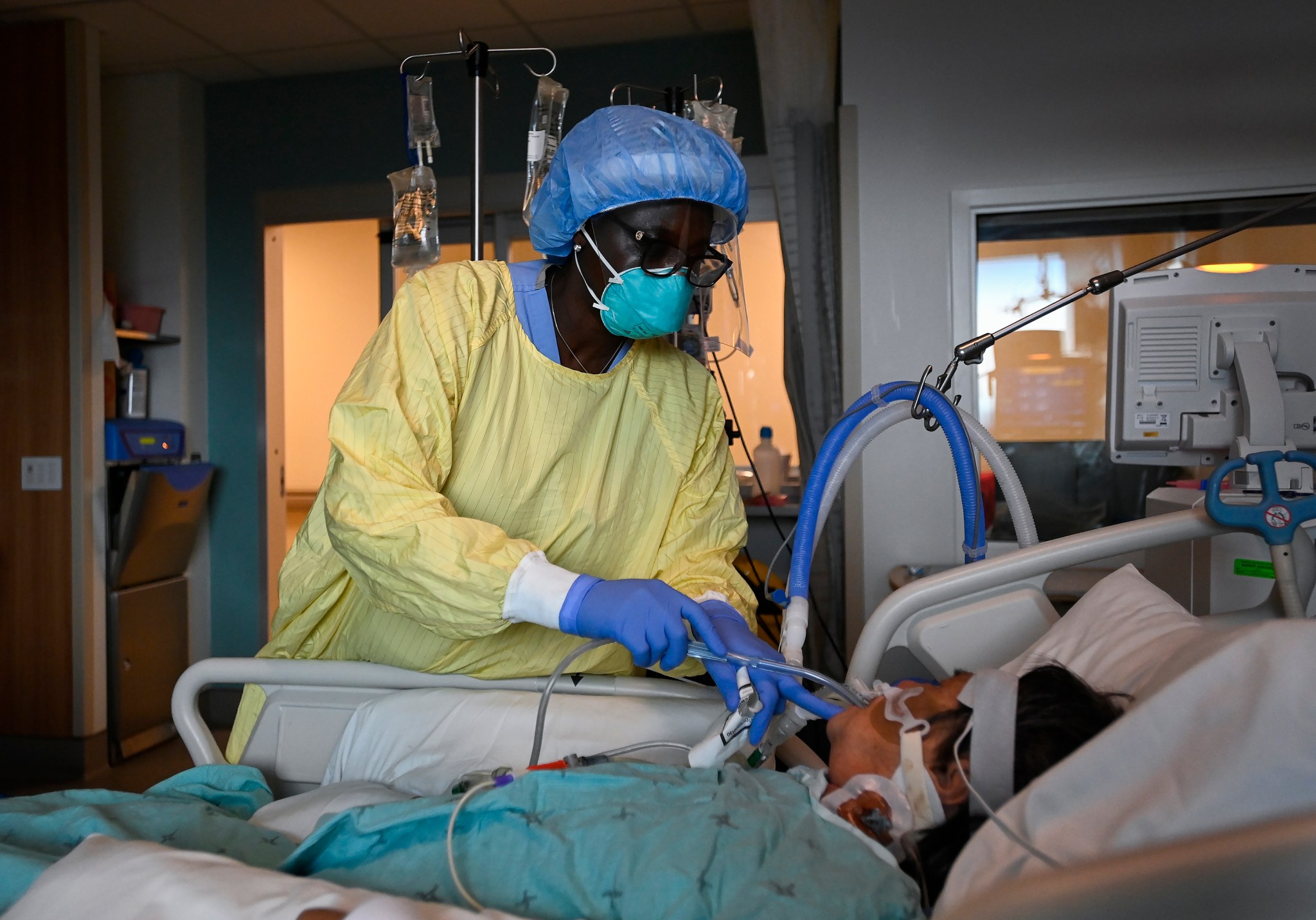
Registered nurse Jane Abas tends to a COVID-19 variant patient who is intubated and on a ventilator in the intensive care unit at the Humber River Hospital during the COVID-19 pandemic in Toronto on Tuesday, April 13, 2021.
Registered nurse Jane Abas tends to a COVID-19 variant patient who is intubated and on a ventilator in the intensive care unit at the Humber River Hospital during the COVID-19 pandemic in Toronto on Tuesday, April 13, 2021. Nathan Denette/CP
"Their hypoxemia was really out of keeping with their symptoms."
"The bulk of the ICU cases are still people in their 50s and 60s, but the ones that are standing out in everyone's attention are the ones in their 40s and into their 30s."
"There is clearly something different about this wave. It does seem like it's affecting younger people more."
"It's workplace exposure that's driving most of these infections, not children getting it at school and bringing it home to their parents."
Dr.James Downar , palliative and critical care specialist, Ottawa
 
"They're in a demographic that hasn't been vaccinated yet, and the variants are more infectious."
"We're seeing this greatly in all of the hospitals."
Dr.Anju Anand, respirologist, Toronto
 
"[While a few older teens have required ventilation}, all have been discharged in pretty good health. So kids have done well."
"I don't think we've seen more severe illness over the course of the year."
Dr.Jeremy Friedman, associate pediatrician-in-chief, Hospital for Sick Children, Toronto
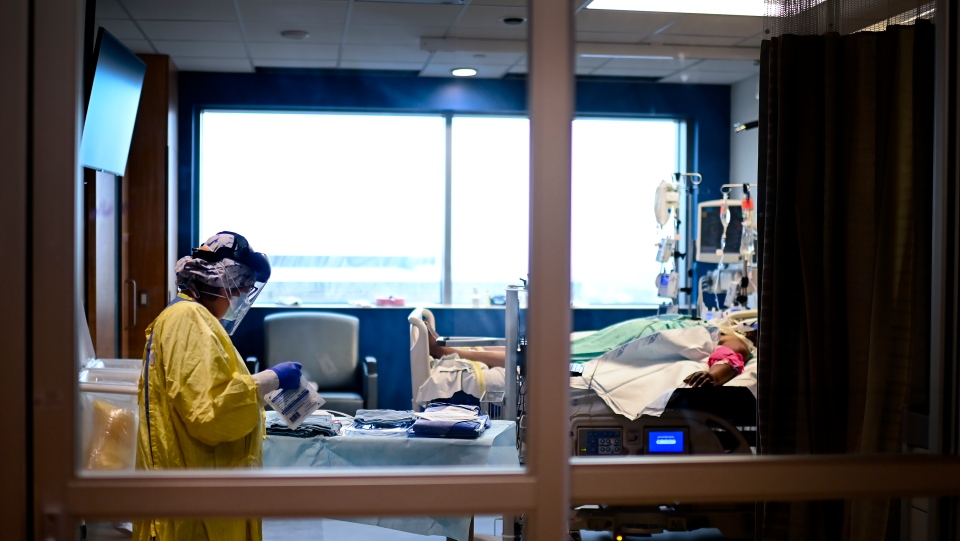
ICU
 
In this, the third wave that has struck British Columbia, Alberta, Quebec and Ontario, the face of the pathogen that is COVID has changed in its targeting. In the first wave, COVID struck the health- compromised elderly in long-term care residences more than any other age group and more elderly people died than in any other age demographic. Younger people were thought to be fairly safe and children virtually immune. Now, outcomes have changed so dramatically with the SARS-CoV-2 virus infection that people are dying at home. Their symptoms advance so quickly they haven't the opportunity to go to hospital before they succumb.
 
They're being identified with hypoxia, it's what overcomes mountain summiteers when they rise too quickly in ascending toward mountain peaks where the oxygen becomes progressively diluted and it becomes difficult to breathe in enough oxygen without become acclimatized gradually at lower levels. The silent hypoxia creeping up on people so unexpectedly presents as a baffling condition of low levels of oxygen, people failing to understand how ill they are absent symptoms such as shortness of breath or gasping for air. 
 
"Younger daycare workers, ride-share drivers, factory workers ... and their families are dying", commented Dr.Michael Warner, head of critical care at Michael Garron Hospital in Toronto. In
Calgary, ICU nurses have reported entire families -- husband and wives, mothers and sons -- in critical care. Of those arriving to emergency many are essential workers or racialized populations without work-from-home options as well as those living in multi-generational homes or in cramped student housing. The more elevated community transmission is, the more opportunity of becoming infected.

Now, close to 90 percent of Canadian seniors age 80 and above have at least one dose of a COVID vaccine, leaving them with a level of protection not yet available to the younger population. And these younger people are remaining in intensive care longer with those being intubated and attached to a ventilator on the increase. It is specifically that increase of younger patients that is inexplicable. Many experts believe logically enough that variants are driving the increase leading to the "younger and sicker" phenomenon.

Close to 95,000 confirmed cases of variants of concern have been reported, the UK version accounting for fully 96 percent. Variants in Ontario are responsible for 90 percent of new infections. Mutants, according to the province's science table, carry a 63 percent higher risk of  hospitalization, a 103 percent increased risk of requiring intensive care, and a 56 percent increased risk of dying, in comparison to earlier versions of the SARS-CoV-2 virus.
 
Researchers reported in the European Journal of Epidemiology on the P.1 variant that emerged in Brazil and now spreading in Canada, linking it with a noted increase in the 20 to 59 year-olds in Amazonas requiring hospitalization and intensive ventilation care "as well as increased mortality in this age group during the second wave". Evidence has surfaced that the variants spread a higher virus dose, presumably affecting how sick someone exposed to it may become.

People sit at a restaurant patio to take advantage of sunny weather in Ottawa, March 20, 2021.
"[In the first wave it took ten to 14 days post-symptoms of] grumbling along [staying home until people got short of breath ending up in emergency or straight to the ICU]."
"[Now], it's becoming more in the neighbourhood of five to seven days. [Why?] Is it because younger people react differently to the virus, and we're only seeing  younger people now?"
"Is it because of the variants? It's still not 100 percent clear to me."
Dr.Paul Warshawsky, Jewish General Hospital, Montreal

Labels: , , , , , ,

Thursday, April 22, 2021

Seriously Ill COVID Variant Pregnant Women

"There have never been this many pregnant women in ICU in the history of our country or our province. This is unprecedented."
"It is heartbreaking and terrifying. These are young, otherwise healthy women."
"[COVID-19 critical illness is] a new disease for us. It  hit us like a bullet train."
Dr.Mark Walker, professor of obstetrics, University of Ottawa

"Pregnant women who have COVID-19 appear more likely to develop respiratory complications requiring intensive care than women who aren't pregnant."
"Providing ventilator support in pregnancy is more challenging and the risks are greater to both mother and child."
"[SOGC members are reporting] a wave of daily pregnant women coming into Ontario ICUs, many requiring ventilators. These women are getting extremely sick, very quickly."
Society of Obstetricians and Gynecologists of Canada
Megan, 33, with no underlying health conditions, was hospitalized at Mount Sinai with the South African variant, while 33 weeks pregnant. The next week was terrifying.
 
Dr.Walker is scientific director of BORN (Better Outcomes Registry and Network), based in Ottawa, whose purpose is to improve care for mothers and children through the collection, interpretation and sharing of data relating to maternal and newborn health. Currently the group is involved in gathering information about the COVID-19 situation as it relates to pregnant women, in an effort to better understand it and to be in a position to render aid with their care.

As a high-risk obstetrician and researcher, Dr.Walker speaks of feeling utterly terrified in the face of growing numbers of pregnant women being admitted to intensive-care units across Ontario, as a result of seriously troubling cases of COVID-19. In Toronto, some intensive care units see women representing half, even more, of critically ill COVID-19 patients. And of their numbers, a large percentage have been placed on ventilators, a situation that has become critical in recent weeks.

These are the sickest pregnant women that Dr.Walker -- throughout the course of his career of several decades as an obstetrician -- has ever treated. There is now an urgent call by physicians and national and provincial organizations of obstetricians and gynecologists for pregnant women to be prioritized for vaccines. The situation currently is that unless pregnant women are in other priority groups, there is no move as yet to inoculate them as a demographic in need, against COVID-19.

Pregnancy is listed among at-risk health conditions in Ontario and in that category people are scheduled to receive vaccinations beginning mid-to-late May. While AstraZeneca is available now to people over age 40, that excludes many younger, pregnant women. Women who are pregnant must have a prescription from their physician, under guidance from the National Advisory Committee on Immunization when they do qualify for vaccination.

Unvaccinated, pregnant women with COVID-caused respiratory illness become three times likelier to end up in intensive care, and two times more likely to die, than those women who happen not to be pregnant. Variants, now dominating in Ontario, appear to be associated with greater levels of risk and sickness for women who are pregnant than had occurred with the original variants, points out Dr.Walker.

Growing numbers of women in pregnancy, have become critically ill in the past two weeks, at levels far surpassing the beginning of the pandemic. Rumours of a similar phenomenon had reached the ears of obstetricians and researchers, occurring in the United Kingdom, where the B.1.1.7 variant became the dominant strain. Published data had been unavailable until recently. The medical community in Ontario was taken by surprise at the degree to which the U.K. variant is affecting pregnant women.

"It is not often we run into a situation where we are not sure how to manage", stated Dr.Walker of a situation where experienced specialists are trying -- on the basis of their new and growing familiarity with the situation -- to understand its implications. Women's oxygen-saturation levels are being closely watched because of its impact on the health of both mother and baby. In treatment, some women are being subjected to the technique of proning, widely used during the pandemic where severely ill patients are turned on their stomachs to improve oxygen absorption.

For obvious reasons, the prone position becomes extremely difficult in pregnancy. There are also higher rates of pre-eclampsia in pregnant women infected with COVID-19, a pregnancy complication characterized by high blood pressure and symptoms damaging to organs, most frequently the liver and kidneys. Emergency C-sections are performed in some cases, in an effort to save the baby. Preterm labour is also associated with severe COVID-19-related illness in pregnant women.

These women, in their pregnancy make every effort to avoid close contact with others. Many of the women who are pregnant, however, already have children who have been attending school or daycare, and thus contact at some level is unavoidable. 


Labels: , , , , ,

Saturday, March 27, 2021

The Race for COVID-19 Death Prevention

"The results are encouraging, they definitely support moving forward into a larger randomized trial."
"This is a population that has extremely poor outcomes, so anything that can reduce the severity of the disease and improve survival and recovery is really, really important."
Dr.Duncan Stewart, CEO, The Ottawa Hospital Research Institute

"This idea here is that you're using a cell that is capable ... of reversing the damage caused by a huge activation of the immune system."
"In a way, you are bringing some order and direction to the immune system."
"You really are trying to tackle more than one thing at once [in] modulating [the immune system]."
Dr.Ines Colmegna, McGill University
Shutterstock
 
Medical science continues to struggle in coping with the worst manifestation of the COVID-19 pandemic, against a virus that adamantly refuses to surrender any of its weak points of entry to researchers to enable humanity to meet the destructive challenge of a pathogen threatening the globe. As yet, research has found no solution to a virus whose effects in some of its victims causes an out-of=control response from the body's immune system which tends to attack lungs, sapping peoples' capacity to breathe.

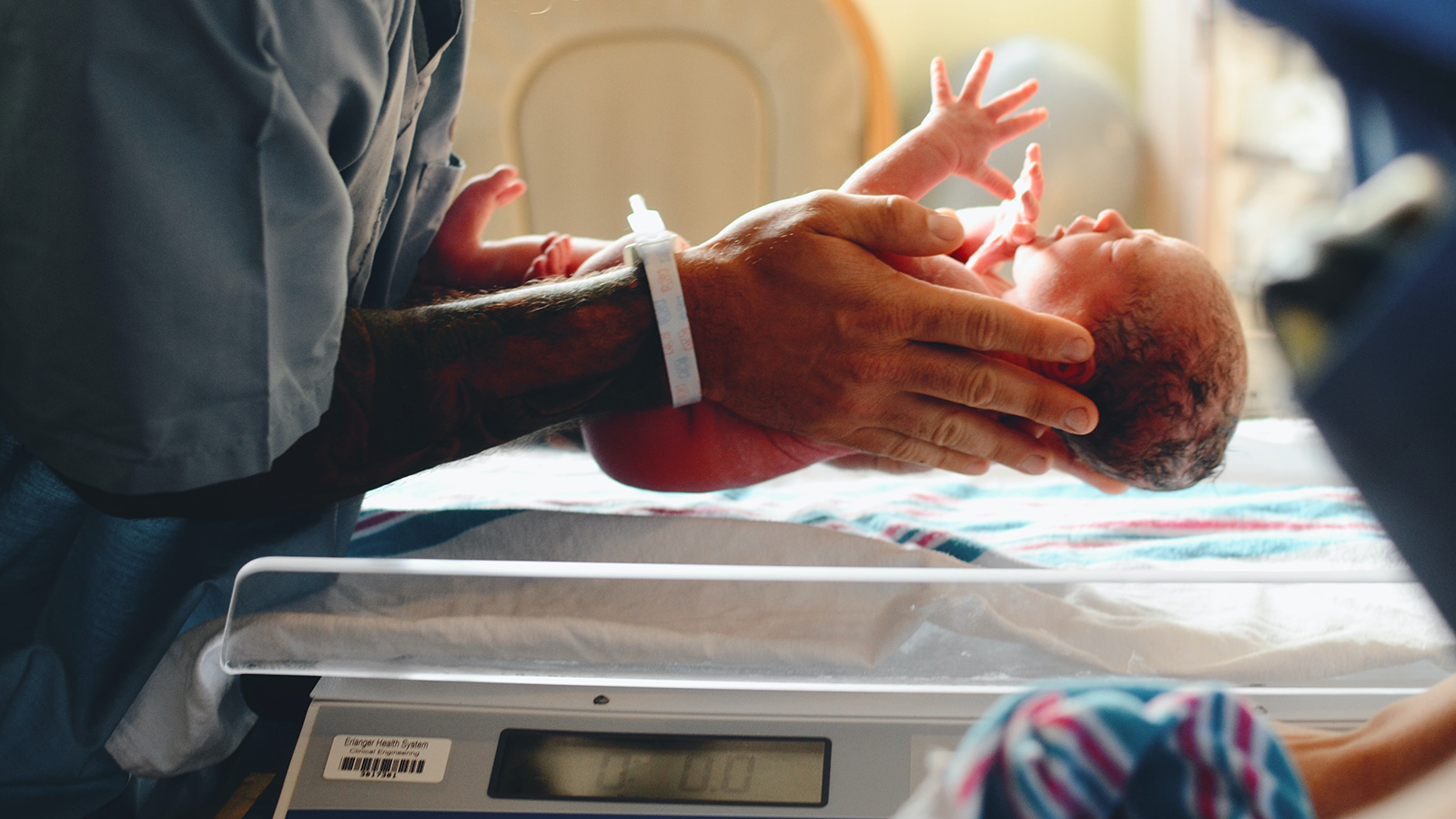
Even as some improvement in treatment has eventuated over the past year, up to 40 percent of COVID patients who end up in the intensive-care unit are destined never to emerge again, alive. New on the horizon is a belief within the research community in Canada and elsewhere that an unlikely source exists to alleviate the conundrum, one that happens to be a byproduct of childbirth. Where discarded umbilical cords, a rich source of mesenchymal stromal cells (a type of stem cell scientists hope may be able to reset that berserk immune system and tamp down damaging inflammation) may provide some answers.

In Canada two clinical trials are underway, with dozens more embarked upon in other countries, with an aim to test the idea on the most ill of COVID patients. Still to come are results of randomized, controlled tests of the cells' efficacy, yet there are encouraging early signs. A small number of observational studies without a placebo group for comparison, have produced hopeful results, including one recently published by an Iranian team of researchers.
 
A phase one safety trial of the cells on eleven patients has been completed at the Ottawa Hospital Research Institute, indicating that the treatment was well tolerated. Another research team at McGill University plans to test yet another MSC product derived from umbilical cord blood, produced by a Swedish company. 

COVID-19 has been described by some experts as being similar to two different diseases; the first with the virus itself triggering various symptoms which eventually tend to clear in most patients -- while the second occurs when the immune system becomes hyperactive, inciting massive inflammation while impacting the cells of the lung, strangling their ability to shift oxygen to the bloodstream. Which can result in acute respiratory distress syndrome (ARDS), the most dangerous of COVID-19 symptoms, leading to many patients placed on ventilators to fight for their lives.

Potential treatments of various types for the condition have been attempted, but none has proven successful. However, mesenchymal stromal cells (MSCs) having the capacity to transform into other types of cells, invited investigation as a method by which damaged or diseased tissues could conceivably regenerate. While the results turned out less than completely encouraging, they did appear proficient at "modulating" the immune system, readjusting it to fight off disease while stopping the immune system from turning against the body.

Those elementary cells also -- unlike single-molecule treatments -- have a unique ability to multi-task, targeting a number of factors causing damage. Prior to the appearance of the global pandemic a phase one trial with the use of MSCs to treat acute respiratory distress syndrome -- caused by septic shock --  had been undertaken by the Ottawa team. In October, a team of Chinese researchers reported on a study of 61 patients suffering from ARDS due to H7N9 flu. Where fewer of the 17  receiving stem cells died than those who wee not given the treatment.

Dr.Stewart believes his team's MSC product has an advantage over others since it is derived from fresh living cultures, and as a result is likelier to be more potent than others that have been frozen, then thawed. "Off-the-shelf" products, on the other hand, tend to provide more flexibility in emergency cases when speed is of the essence.

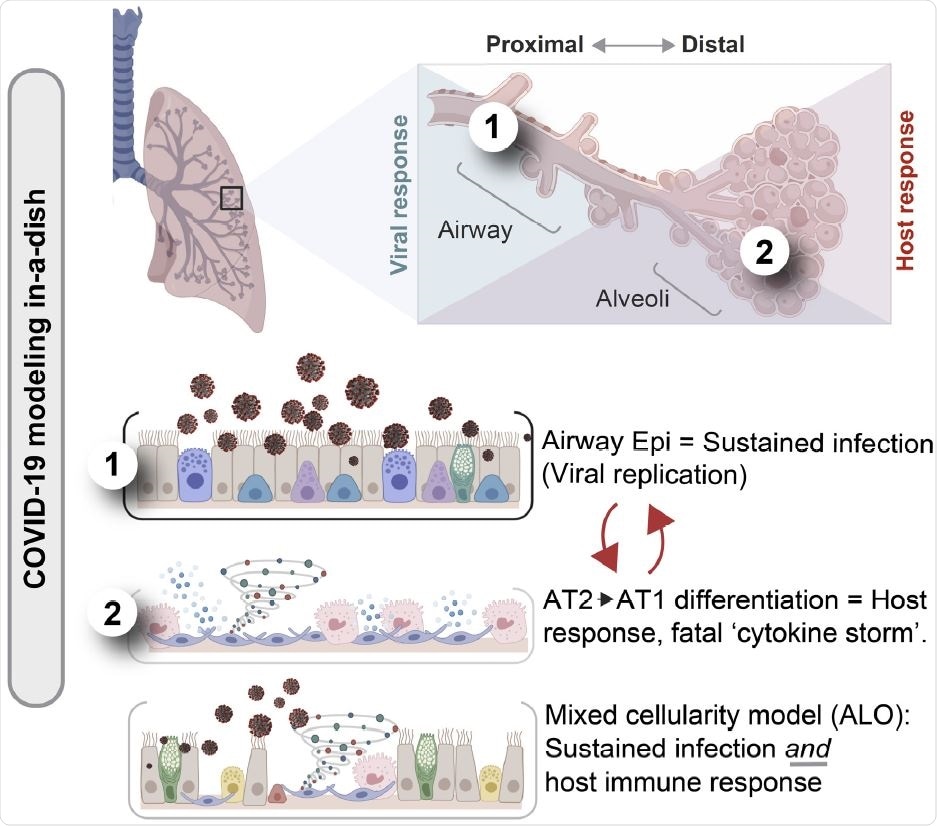
An integrated stem cell-based disease modeling and computational approach demonstrate how both proximal airway epithelium is critical for SARS-CoV-2 infectivity, but distal differentiation of alveolar pneumocytes is critical for simulating the overzealous host response in fatal COVID-19.

Labels: , , , ,

 
()() Follow @rheytah Tweet