The Elusive Search for Definitive Answers to Questions of Animal Behaviour
"I think that collaboration [between researchers with different specialities — including ants, birds, fish, and humans] was really fruitful because we had so many different perspectives about this topic.""If you were going to the grocery store right now, and someone sneezes right next to you, you’ll probably take a step back [just as do birds, mice and lobsters, such that if an individual is identified as being sick, others actively go out of their way to avoid them].""How do other individuals sense that there’s an exposed individual around? We have the media and so on, but how do these ants know that there’s a threat going on?""It’s not surprising to see animals doing these things. Animals are encountering pathogens every day too, so we’re not the only ones being affected by infectious diseases. It’s just fascinating to see that there are certain behaviours that have evolved in certain animals that serve that purpose.""For some people it’s hard to pinpoint the benefits, like why do they do it, why does it evolutionarily make sense to do this. There might be delayed benefits, and there’s all these things that you can’t get a grasp on that play a role in there that you might not have going on in animal societies."Lead author Sebastian Stockmaier, PhD candidate, University of Texas’ Integrative Biology Department
 |
| Some species of ants actually practice social-distancing measures when an infection breaks out. |
"Non-human animal systems, particularly those with social structures similar to those of humans, present unique opportunities to inform relevant public health questions, such as the effectiveness, variability and required duration of social distancing measures."Authors, Social Distancing in Animals Avoiding Infections

Social distancing in humans and nonhuman animals.(A) Pathogen-exposed forager ants self-isolate and their nestmates increase social distance to each other (image: Timothée Brütsch). (B) People social distance during COVID-19 (image: Forest Simon). (C) Sick vampire bats reduce grooming non-close kin (image: Gerald Carter). (D and E) Under certain conditions, Trinidadian guppies avoid parasitized individuals (D), (image: Sean Earnshaw, University of St. Andrews) and house finches avoid sick conspecifics (E) (image: Jeremy Stanley).Science Journal
Human animals are not all that different from other animal species in many respects. Research into animal and insect behaviour has revealed that among them many species react similarly to human species when faced with an epidemic of infectious diseases; in taking steps to isolate the ill from the well for the purpose of protecting those that have not been infected from the effects of highly infectious and often deadly pathogens. In the instance of this research the appearance of the global pandemic caused by SARS-CoV-2 virus causing COVID-19 was the impetus to look again and make comparisons.
A research team led by Sebastian Stockmaier, a doctoral candidate at the Integrative Biology Department of University of Texas who deviated from his original field research into vampire bats' reaction to pathogens, to study the effects of the novel coronavirus and how it affected the human world. To that end he assembled a group of researchers whose specialities fed into the research; those who studied ants, birds, fish and humans.
The team of researchers identified five common methodologies frequently made use of by certain wildlife in protecting themselves against infectious diseases. Avoidance came in first; once an individual is identified as ill, others of the species tend to go out of their way to actively avoid the presence of their sick members. This is a phenomenon that has been identified as common to birds, mice and lobsters.
The following two methods -- passive and active self-isolation, with the first identified when an animal's infection shows distinct symptoms impelling them to move away from the pack. A comparison is humans' tendency to remain at home rather then venture out in public when ill. There are some animals that become lethargic, less involved in social interactions; states of conditions that tend to distance them from their group. Infected bees share less food, sick vampire bats avoid grooming others within their intimate group.
This form of self-isolation is considered to be accidental in nature, but is recognized as a condition that helps to prevent future infections, whereas active self-isolation occurs most often in animals with strong social bonds. Animals identify they are ill and of their own volition and deliberately, separate from their group. Some ants, as an example, will choose to vacate their colonies and die alone in a form of "altruistic suicide" should they become infected.
What the global human community is now experiencing and practising at the moment is considered to reflect a fourth method where health experts, having advised that infected or not, everyone in society should maintain a social distance from others in preventive infection mode. In so doing, we are minimizing the opportunity for infection to spread.

Co-author Nathalie Stroeymeyt had discovered some species of ants initiated a separation of distance when several in a colony of ants become infected with a fungal pathogen. Social distancing was observed to be extremely effective in preventing the spread of such pathogens. Researchers had assumed that this type of prevention was specific to humans, realizing the efficacy of separating themselves physically from the contagious ill among them. A practise which far predates the present situation of the novel coronavirus in human history.
There is a final identified method in prevention of infectious disease spread noted by the review and that is exclusion. Whereby the infected individual is prevented forcibly from mingling with those not ill; alternately sent into exile to prevent infection from spreading. Insects in particular practise this type of isolation, the researchers found, but it is not exclusive to insects since such behaviour has also been identified in primates which have been seen behaving aggressively to the ill among them.
Lead author Stockmaier considers that additional research is required to determine how an animal's behaviours evolve in reaction to certain types of infections, as well as how it is that the pathogens evolve in adapting to the animals. Just as humans became the target of the novel coronavirus held to have crossed the species barrier from bats to humans.
While it appeared somewhat simpler to the researchers to reason why it is that an animal might evince some of the self-protective behaviours against infectious diseases, it's more problematical to understand why humans behave the way they tend to. For example, caretaking resists the natural instincts in preventing viruses, since it places the caretaker at risk of infection. And that's where the elusive altruistic gene makes its entrance; compassion and care for others at risk to oneself, competing with the instinct for survival.

"Studies in eusocial insect societies have been especially productive because these animals practice seemingly altruistic behaviors such as active self-isolation and caregiving, which decrease the risk of outbreaks through the colony. These social networks share many characteristics with those of human societies and have evolved properties to prevent pathogen transmission. As a result, their social distancing strategies may prove key to investigating the epidemiological effects of such behaviors and thus their potential public health utility. There are, however, important differences in interpreting how social network structures evolve in response to pathogenic threats. In eusocial insects, the behavioral repertoire known as “social immunity” most likely represents group-level adaptive behaviors that evolve in response to high relatedness in the group and result in collective properties. By comparison, pathogen-induced changes in social networks of other animals including humans often do not have the same properties, such as high relatedness levels, and can create conflicts of interest that incentivize selfish behaviors.""Public health measures experienced during past and current pandemics have raised awareness for social distancing, and epidemiological studies are actively evaluating their effectiveness and required duration. Humans are by no means alone in using social distancing to mitigate risk of infection. The widespread occurrence of pathogen-induced changes to social behaviors across animals in diverse taxa represents a valuable opportunity to investigate underlying mechanisms, epidemiological consequences such as effectiveness and required duration, and host-parasite coevolution. Nonhuman animals’ social distancing strategies may be experimentally tractable, enabling manipulative experiments or multigeneration observations that are impossible with humans. These systems represent a valuable guide to understanding how contagious pathogens spread through social networks, how networks change in response to pathogens, and how these bidirectional feedbacks alter pathogen dynamics and evolution."Science Journal Social distancing in humans and nonhuman animals
Labels: Animal Behaviour, Enforced Distancing, Infectious Diseases, Intuitive Responses, Research, Self-Isolation
posted by Pieface @ 8:03 PM
0 comments


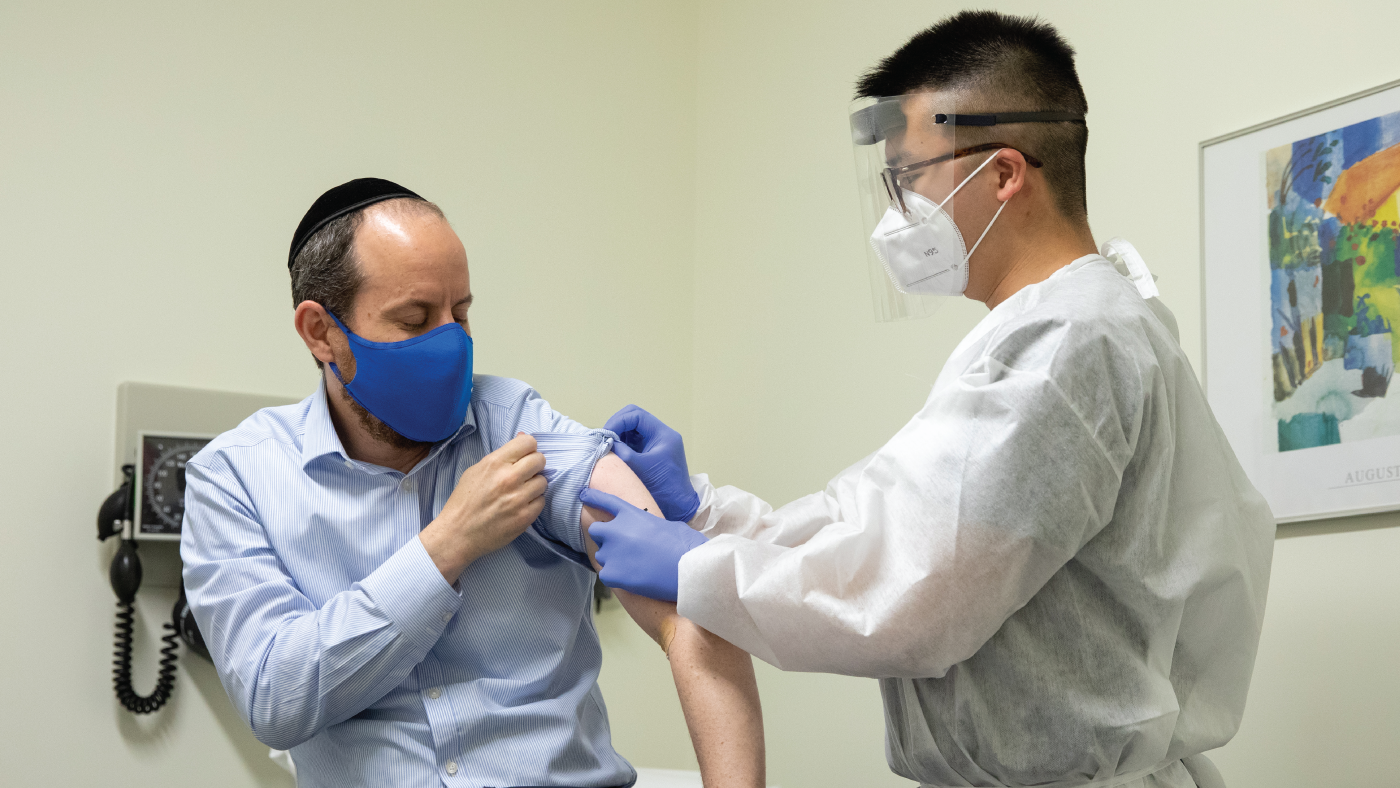
 And then there is the fact that the efficacy rates boasted of are not reflective of the ability of the vaccines to prevent infection; the clinical trials of the third phase tracked cases in which participants developed symptomatic diseases. The studies highlighted that a high percentage of those contracting the virus failed to experience symptoms; even so remain capable of transmitting the disease onward.


