Ruminations

Blog dedicated primarily to randomly selected news items; comments reflecting personal perceptions

Friday, July 29, 2022

Medical Professionals Who Ignore the Science on COVID

"I find it absolutely fascinating [that a medical professional with years of science-based training could align with evidence-defying ideas]."
"It's tremendously problematic because they're leveraging the legitimacy they have with the general public to push misinformation."
"It just confuses and clouds the public perception of what the evidence actually says."
"Misinformation kills people. That's how serious this topic is."
Dr.Timothy Caulfield, Medical ethicist, health law and policy professor, University of Alberta 

"When someone certified by the American Board of Internal Medicine [ABIM], says something like ... 'vaccines don't prevent COVID deaths or hospitalizations', we are not dealing with valid professional disagreement."
"We are dealing with wrong answers."
Dr.Richard Baron, New England Journal of Medicine
Throughout the pandemic, complaints have poured into colleges of physicians and surgeons accusing doctors of flouting public-health rules, promoting conspiracy theories, and issuing bogus vaccine-exemption letters.
During the endless time the pandemic has been bedeviling the globe, medical science has had to deal with vectors of misinformation, doubters about the science, those who sneer at governments' and medical bodies' reactions to the pathogen, and attempts to shield society from its worst effects. Colleges of physicians and surgeons in Canada have seen complaints flooding in with accusations of doctors flouting public-health rules, promoting conspiracy theories, prescribing unproven treatments, and issuing bogus vaccine-exemption letters.

One example can be taken by Toronto-area physician Dr.Jeff Matheson who refused to wear a mask, instructed patients not to wear them claiming they were harmful and informing his patients that the pandemic was a hoax driven by the media whose purpose was to bring profit to people like Bill Gates. COVID test results, he stated with a certainty, were being sold to China for DNA sequencing. Parents whose children's schools insist on students wearing masks should sue those schools, he urged.

His licence to practice was suspended for a nine-month period by Ontario's medical regulator which spoke of his actions as "disgraceful dishonourable and unprofessional". Six MDs in Alberta have seen their practice restricted, resulting from similar actions. A doctor in British Columbia was suspended, another cited, as numerous investigations are taking place across Canada by medical licensing bodies against some of their members.

Another Ontario MD, Kulvinder Kaur Gill, pediatrician and physical activist in Brampton, early in the pandemic received three cautions from the college of physicians and surgeons. She expressed her opinion in the public sphere that vaccines were unneeded to combat the SARS-CoV-2 virus. The response by some of these doctors, chided by regulators, was to challenge their disciplinary action with the argument they violate their right to free expression.

In the U.S., Republican politicians introduced legislation prohibiting state medical boards from disciplining doctors who spread COVID misinformation or prescribe unproven treatments. A warning was removed from the  website of the Tennessee Board of Medical Examiners in response to such legislation. Just 55 percent of the Tennessee population has been double-vaccinated. The state suffered over four times the COVID deaths per 100,000 compared to Ontario.

Labels: , , ,

Saturday, December 14, 2019

Preventing Suicide when the Patient is a Doctor

"The impact is huge when we hear of a student or another physician committing suicide."
"Although we don't know the actual circumstances around this particular tragedy [the most recent suicide by a medical student at University of Ottawa], I think we do understand what is happening in the profession itself where there is growing concern over how much burnout we are seeing and lots of depression and suicidal ideation."
"[There has to be a cultural shift within medicine from a] shame and blame culture that pushes you until you just don't know anymore. If you admit failure or a mistake, it is considered weakness."
"I believe it is time to open a national conversation about it. To face it. I believe we have to create an environment of psychological safety to get the best care for patients."
Dr.Sandy Buchman, president, Canadian Medical Association

"Any time anything like this happens, it is really difficult for the medical community as a whole. We have heard too many cases."
"All medical faculties have been working very hard and recognizing it is an issue, but there is still a long way to go in terms of stigma and learning environment pressures."
"Overall, we know the trend in medicine is that a lot of people are struggling. [There is] still a lot of work to do in the area of destigmatizing mental health in medicine."
Dr.Victor Do, president, Canadian Federation of Medical Students 

"[Culprits? How about medical schools perpetuating a culture that becomes ingrained — one where] powering through [consecutive work shifts means you've arrived]."
"These people who have been previously abused are now the teachers. They're teaching the next generation of doctors."
"I know a lot of them [doctors who must seek psychiatric treatment without jeopardizing their medical licenses.] They're having to sneak out of town, pay cash and use a fake name to do it. Why are we putting these people in such a situation?"
Dr.Pam Wible, family practitioner, Eugene, Ore
CDC: U.S. Suicide Rates Have Climbed Dramatically

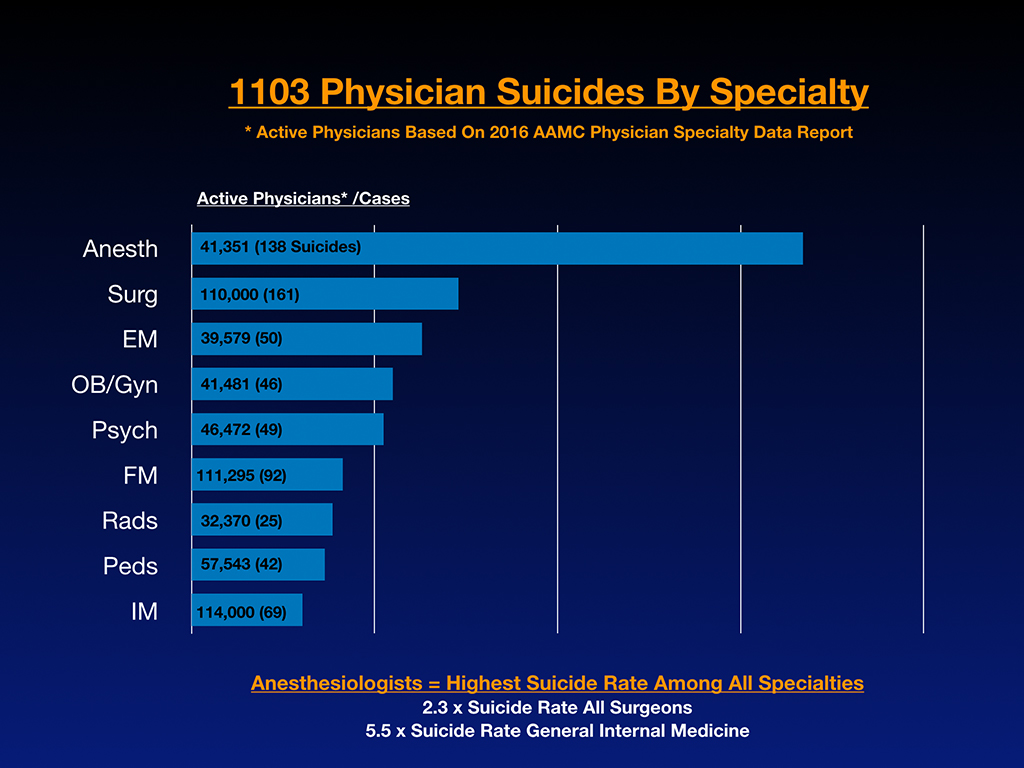
In the United States an estimated 300 to 400 doctors commit suicide annually, representing a suicide rate of 28 to 40 per 100,000. That is over twice the rate of suicide seen in the general population, according to a mega review; a study of ten years of literature on the subject presented several years back at an annual meeting of the American Psychiatry Association.

Last year's survey by the Canadian Medical Association highlighted high rates of depression and burnout among doctors, with an especial emphasis on residents and female physicians.  A student doctor who had recently committed suicide had been known for his work toward destigmatizing mental-health issues in the medical profession, where a student who admits to depression and concerns over mental illness may jeopardize their medical career.
"The concerns here mirror those in the United States. We've known for a number of decades that physicians have a higher risk of attempted and completed suicide."
"One of the unique things about Canada is we have a lengthy history of trying to reach out and support doctors right from the very beginning of their careers to try to prevent such tragedies."
"[Although doctors face the same challenges in their personal lives as average Canadians], they've also chosen to work in a part of our society that is full of pain and tragedy."
"Often, we're the ones, like other health care professionals, who witness and contain incredible amounts of trauma, loss – some things that are truly horrific."
"So there are a number of workplace factors. And again we're like every other human in the country: we're vulnerable to things like depression, anxiety, substance use."
Dr. Derek Puddester, associate medical director, Ontario Medical Association’s Physician Health Program

According to statistics, doctors kill themselves at rates significantly higher than what occurs in the general population. For female physicians the risk of suicide is two to three times greater than for women in other professions, and for male doctors the risk is twice as high as males in the general population. Research points to Canadian medical students struggling with pressure, depression, mental health issues, diagnosed with mood and anxiety disorders and psychological distress at levels in excess of the general population.

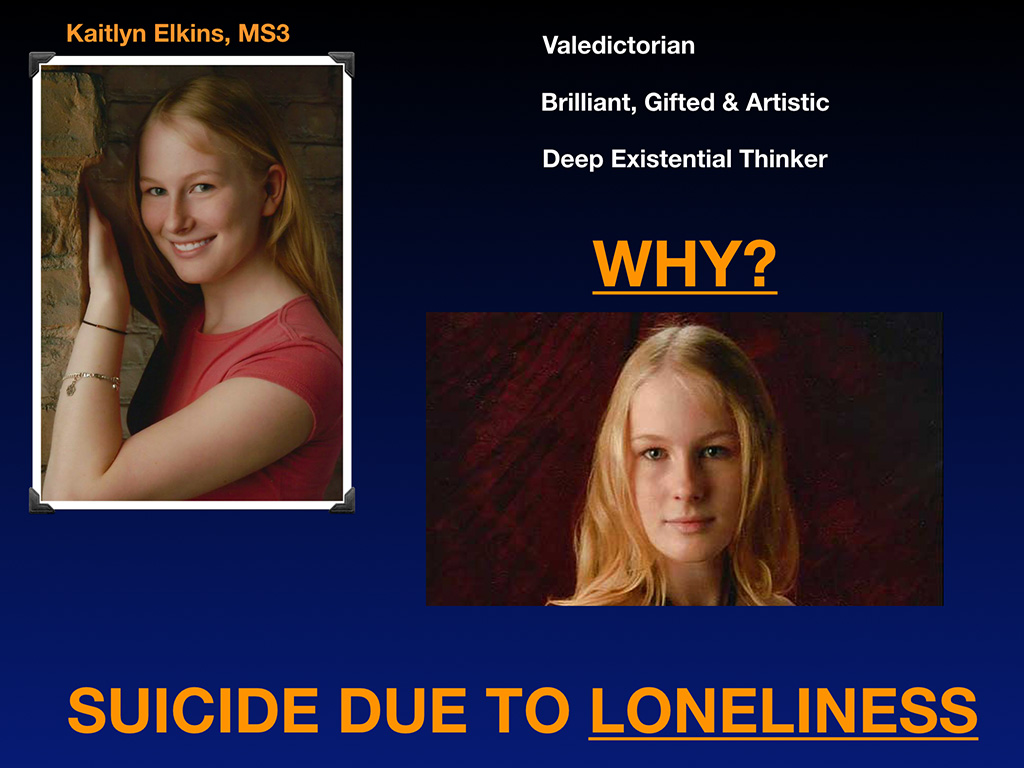
Published in the Journal of the Association of American Medical Colleges, the survey pointed out suicidal ideation among medical students is higher than average. The faculty of medicine at University of Ottawa posted a note on social media referring to the young male medical student whose suicide shocked the profession, as "a caring, positive individual, always smiling and ready to help his fellow students learn", whose death "leaves a hole in the hearts of all those who knew him." That description and that horribly sad end has its counterparts in previous such events of suicide among medical practitioners.


The  high-pressure environment of medical school often leads to those who pass the academic bar for entry, to nurse perfectionist tendencies and to submit to chronic self-criticism. When there are occasions of failure resulting from work-exhausted professionals making errors that result in patient harm, the doctor involved can be the most self-blaming, haunted by the event, leaving them with the burden of feeling responsibility to the extent they become virtually incapable functioning, ending up being driven to despair and suicide.

The culture of perfectionism linked with caring for patients who are extremely ill and totally dependent on the professional skill of doctors takes its toll. Medicine is not a risk-taking profession. The assurance of a medical procedure such as a surgery is that the surgeon is a skilled professional with years of experience behind them, and when events go awry as they can, a surgeon can feel overwhelmed and incapable of carrying on. The spectre of medical lawsuits, of reputational damage, of guilt-induced feelings of failure can all singly and collectively destroy confidence and mental stability.

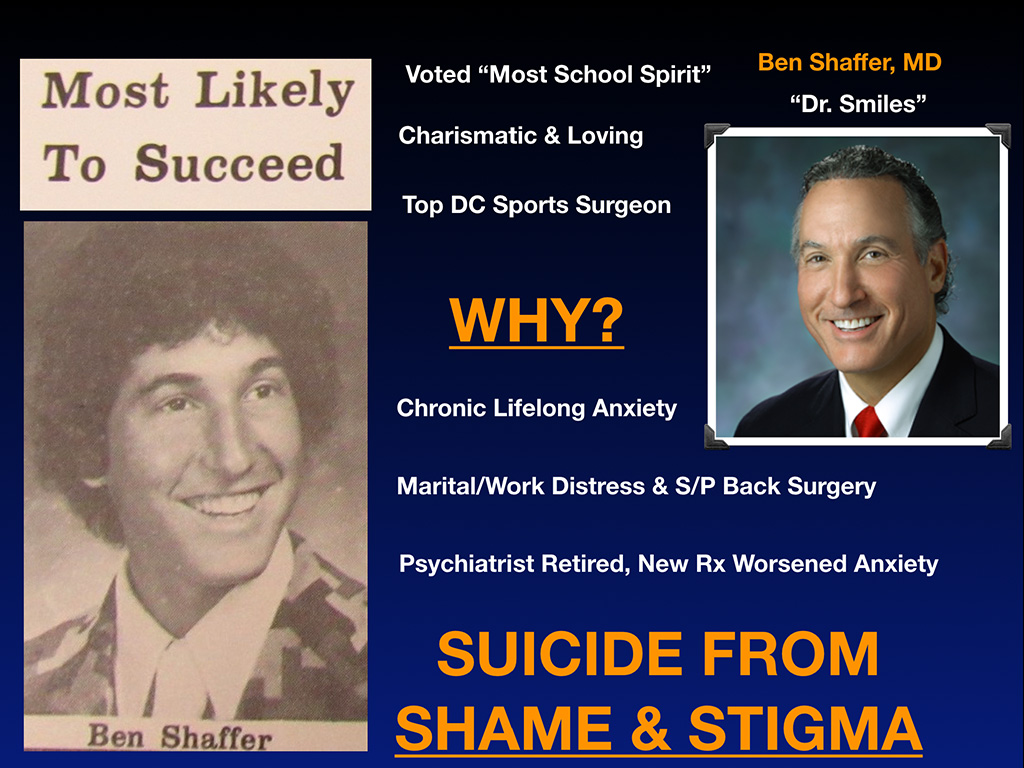
Stigma is a difficult burden to overcome, to convince the medical community that its practitioners are only human and as such require the support of their peers and their overseers. As long as a confession by a medical professional of uncertainty and fear, of unease in their capability to perform and a need for counselling and care is seen as professional failure, driving that individual to submerge those fears and allow depression to fester and mental health to disintegrate, suicide will appear as a 'way out' of the dilemma they face.

The Canadian Medical Association produced a brief general impression of physician attitudes to the profession based on a survey, which discovered that almost a third of surveyed respondents had experienced burnout, even while those within the group reported high emotional, psychological and social well-being.

Labels: , , , ,

Wednesday, May 08, 2019

Physicians, Heal Thyselves  

"There is a point where I feel cognitively drained; after about twenty patients, there is not an iota of empathy left."
Dr. Jonathan Harte, Nottinghamshire GP

"I did feel suicidal. That's what sparked my interest and desire to talk about it [physician job pressure, depression]."
"A lot of people do a pretty good job of  hiding it [high rate of depression among medical students, residents and doctors]."
"I'm doing really well and I want people to know that recovery is certainly possible."
Dr. Sarah Tulk, family doctor, Milton, Ontario

"When I did this research [for his new book] and I saw there were these families where the [doctor] husband or wife went from well to ill, to death, without going to anyone, like a family doctor, an internist, a psychologist, a social worker, the clergy, a psychiatrist, none of that."
"They killed themselves. And I thought, this is unprecedented in medicine."
Dr. Michael Myers, professor, clinical psychiatry, SUNY Downstate Medical Center, Brooklyn
Doctors say that burnout and stress can lead to higher rates of suicide in their profession. (David Donnelly/CBC)

"Some operations you go into knowing that you’re likely going to produce a neurological deficit for this patient."
"You do an excellent job; you do everything right. But despite that there’s a decent chance the patient is not going to be a perfectly happy camper at the end of the day. And, that weighs on you."
"If all the family doctors and neurologists who send me brain tumour patients, if they all read this article [a theoretical admission of deep depression through a piece of creative fiction] and said, ‘this guy is depressed, I better not send him any more cases,’ I could have seen a drop in referrals."
"It didn’t happen. Instead, I had people reaching out." 
"So her parents [of an 18-year old patient], these lovely, lovely people, were there with their precious daughter, who they know is probably going to die of brain cancer before she sees her 20th birthday. If that doesn’t get you, then you’ve got to hang up your spurs and get another job. Because you can’t stop caring."
"I think the bigger piece is the workload, the bandwidth issue — the making patients wait, the not-having-enough-hours-in-the-day …. the administrative crap, the system imperfections, the constant worry that you’re not going to serve patients well enough… It’s that sensation of drowning all the time. And that’s the way a lot of doctors are functioning in our system. It’s frightening and it’s exhausting and it leads to depression."
Dr. Mark Bernstein, Toronto Western Hospital, Neurosurgeon  
In her mid-30s, Pamela Wible experienced suicidal thoughts after becoming disillusioned with the medical profession. (Submitted by Pamela WIble)

Dr. Tulk for one, began thinking suicide. The pressure while training as a resident on her way to achieving her medical degree sapped her of a normal life and normal thought processes once depression set in as a result of having to work up to 24 hours at a time. She managed to complete her residency in family medicine at McMaster University in Hamilton, but while she did so she witnessed first-hand a system that was too demanding of normally resilient people already hard-wired toward hard work through their competitive drive.

The system failed them to the extent that they became burnout victims. Victims who remain silent in the face of the misery they feel for fear that if it became known that they were unable to cope with the stress, their careers would suffer as a result of a personal 'weakness'. She, on the other hand, sought help through a physician health program, in 2016. A program geared to raising awareness and to lead to the change so badly required speaking to her own experience, leading her to become involved.

The very fact of hearing about doctors taking their own lives in despair, as a result of deep depression led her to make common cause with psychiatrist Joy Albuquerque, medical director of the Ontario Medical Association physician health program. Five critical areas relating to physician suicide were related in a paper they had published in the Canadian Medial Association Journal, where they wrote that suicide has become an occupational hazard in the medical profession.

The suicide rate for male doctors came close to doubling in comparison with suicides taking place among the general public. For female physician that rate was two-and-a-half times greater than that of the general public. Doctors, as an example, are aware of how much drugs they would need to efficiently poison themselves to death, occasionally using benzodiazepines. Firearms are also used to speed the process from an agonizing depression to death.

In their paper, Drs. Tulk and Albuquerque point out that physicians face barriers to care in comparison to care provided to the general public, among people whose suicidal thoughts can begin in medical school. Those thoughts can be associated with complaints to regulatory bodies by patients. The realization that self-care in the medical profession while negotiating the professional challenges of a medical practise has been neglected in the academic environment at medical schools has led to changes there.

Dr. Tulk herself has undertaken the teaching of undergraduate programs at McMaster University. A 2007-08 Canadian Physician Health Survey conducting a random sample of over 3,200 doctors elicited the data of close to a quarter reporting a two-week depressed-mood stint. A flattened emotional numbness called "Anhedonia" was reported by one-fifth of the group. There are 300 doctors on disability, mostly for mental illness in Ontario today.

Dr. Michael Myers, professor of clinical psychiatry at SUNY Downstate Medical Center in Brooklyn, NY, explained: "We’ve done pretty well with the general public in terms of reducing the stigma associated with going for help, but we still have so far to go in the house of medicine". He recently published a new book: Why Physicians Die By Suicide: Lessons Learned from their Families and Others Who Cared, where he chronicles "the inner conflict and the irony of self-destruction and despair" among doctors.  
"We just really need to make it normative for physicians to get help if there’s a problem."
"We need to help them realize it doesn’t make them a worse physician or a worse person."
Dr. Katherine Gold, department of family medicine, University of Michigan
In the United Kingdom. the advice to patients is to avoid appointments to see their GPs in the afternoon since overworked doctors are empathy-drained by noon, according to research. Over half of family doctors in Britain feel the pace of their work places them above safe limits, with too many cases seen each day. Overload places patients at risk and fatigue leads to poor decisions, errors and irritability.

Pulse magazine polled 1,681 general practitioners to discover they deal, on average, with forty-one patients daily at the very time when they feel thirty patients should represent a 'safe' number. Risks to safety for patients rise as the day wears on. And concomitantly, the risk to the physician's well-being is on track to overwhelm him/her leading down the path to uncertainty that they are practising their chosen profession well.

Labels: , , ,

 
()() Follow @rheytah Tweet