Ruminations

Blog dedicated primarily to randomly selected news items; comments reflecting personal perceptions

Saturday, February 29, 2020

The Bleak Hopelessness and Despair of Suicide

"People can have a cognitive shutdown or blank, as any of us do, when we can't remember things during times of extreme stress."
"[Having a three-digit hotline would] facilitate people's access to care at times when they are in dire need."
Madelyn Gould, psychiatrist, Columbia University
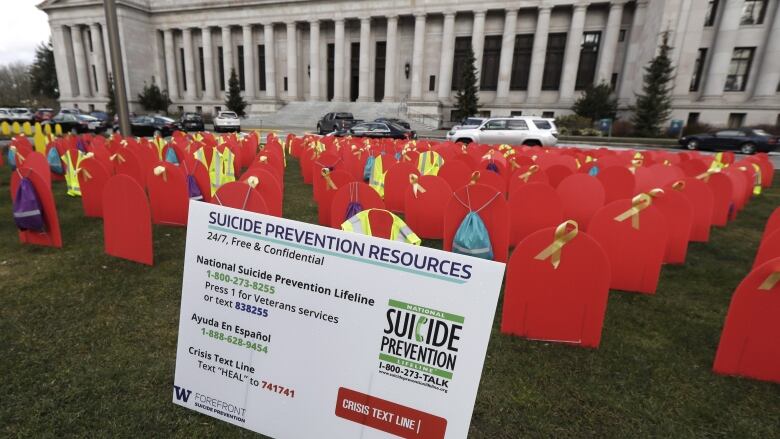
Suicide prevention phone numbers and red mock tombstones designating some of the more than 1,000 people who took their lives by suicide in Washington state in 2017 are displayed on a grassy area in March 2019, in Olympia, Wash. (Ted S. Warren/Associated Press)

"People tell you how they feel every day at every moment [on line]. People don't realize that they are putting out these signals. The beauty of AI is that it's all training data. We don't know who anyone is. We're not reading stuff. Everything is just converted to numbers. It's very clinical and non-invasive."
"You can't always prevent suicide, but it is valuable to know who is at risk and who is not at risk."
"The more we're trained to help our friends, the more power we have. Research can't be the magic answer. We still have to interact."
"I'm excited about the next couple of years. We will go from 'We built it' to 'This is what we are going to do with it'."
"In science, you can be on the frontier, or you can be in the application. In psychiatry, there's a big need for application. I think there's room for tools that do something different. It's exciting when you find something that you think is true, and  you can build something that hasn't been built before."
Zachary Kaminsky, molecular biologist, researchers, Royal Ottawa Mental Health Centre
Some common warning signs of suicide

In the United States the issue of suicides is of such concern that Congress, intending to help in the nation's growing suicide epidemic pushed for a three-digit number for the national suicide prevention hotline, in the hopes of saving lives. Seconds count in responding to people's extreme emotional distress, dialling 911 proved of little help and the current 11-digit U.S. national hotline number eluded desperate people's memory at times of high emotional stress.

Canada is struggling with a similar situation where on a daily basis people feel hopeless enough to commit suicide, at the estimated rate of 11 individuals daily, with 100,000 attempting to kill themselves every year. And so, the 9-8-8 innovation dialing code for the national suicide prevention hotline that went into effect at the turn of the year has attracted the attention of activists attempting to persuade government authorities to follow suit in Canada with its 988 Campaign for Canada.

Now, a researcher with the Royal Ottawa Mental Health Centre, formerly with Johns Hopkins University, has conducted novel research in artificial intelligence and the detection of suicidal ideation. Artificial intelligence capable of assessing millions of social media posts to isolate words or images to send up a red flag identifying thoughts of suicide. Adolescents whose growing incidence of suicide horrifies society, often disclose suicide risk factors on social media rather than speak to family or doctors.
In June, 2018, food writer Hadley Tomicki is accompanied by his daughter Kira as he takes a picture of a mural of Anthony Bourdain in Santa Monica, Calif. The culinary celebrity and documentarian killed himself on June 8, just a few weeks before his 62nd birthday.  Chris Pizzello/The Associated Press
By transforming data into a mathematical score, artificial intelligence has the capacity to aid in suicide prevention, according to Dr. Kaminsky, the DIFD Mach-Gaensslen chair in suicide prevention research at The Royal's institute of mental health research. In the recent space of ten months, five University of Ottawa students committed suicide, shocking the university, the city and health care providers. According to Algonquin College, a 2010 survey of students at the college saw 11 percent reporting having considered suicide within a previous 12 month-period.

People have a tendency to place their most candid thinking and personal information on social media. The question was, how to make  use of the information in hopes of preventing suicides. Reading hundreds of thousands of posts represented an impossible task. Which led Dr.Kaminsky to the thought that artificial intelligence could be trained to recognize words and patterns of words and then automatically respond; through an algorithm that might send a suicidal person information on counselling, as an example.
Dr. Zachary Kaminsky  Tony Caldwell/Postmedia

Prevention campaigns in schools or neighbourhoods could be deployed through an AI system used to discover 'hot spots' for suicidal thinking. AI has the potential to isolate the ten percent of the general population thinking of suicide from the 0.5 percent that tend to act on their thoughts. Dr.Kaminsky points out that predictions linked to individuals cannot ever be failsafe; false negatives will always occur.

The researcher's two-year initial study scanned Twitter accounts from English-speakers worldwide. Tests screened for words like 'burden, loneliness, stress, depression, insomnia, anxiety', and 'hopelessness'.  Words specifically selected since researchers acknowledged they were related to feelings experienced by suicidal people who often think of themselves as a burden to others, as an example.

Machine learning results in artificial intelligence reaching beyond the initial words to identify patterns and networks of other associated words such as 'love', a commonly-used word among people thinking of suicide, distressed through the breakdown of romantic relationships. Math is used to allocate each Twitter feed with multiple scores, capable of plotting a year's worth of scores rather than a year's worth of tweets, and in the process illustrating patterns of thought.

Some people, noted Dr.Kaminsky, tend to feel better once they tweet about suicide, whereas some people tend to feel worse. A large, sympathetic response from within a social network has the potential to help people feel better about themselves. The algorithm has been tested solely on Twitter but the technique can lend itself for use with other social media, based on images rather than words.

Suzanne and Raymond Rousson point to a collage of photographs of their son, Sylvain, at their home south of Ottawa. Sylvain killed himself last January. He was 27.


Labels: , , , ,

Saturday, December 14, 2019

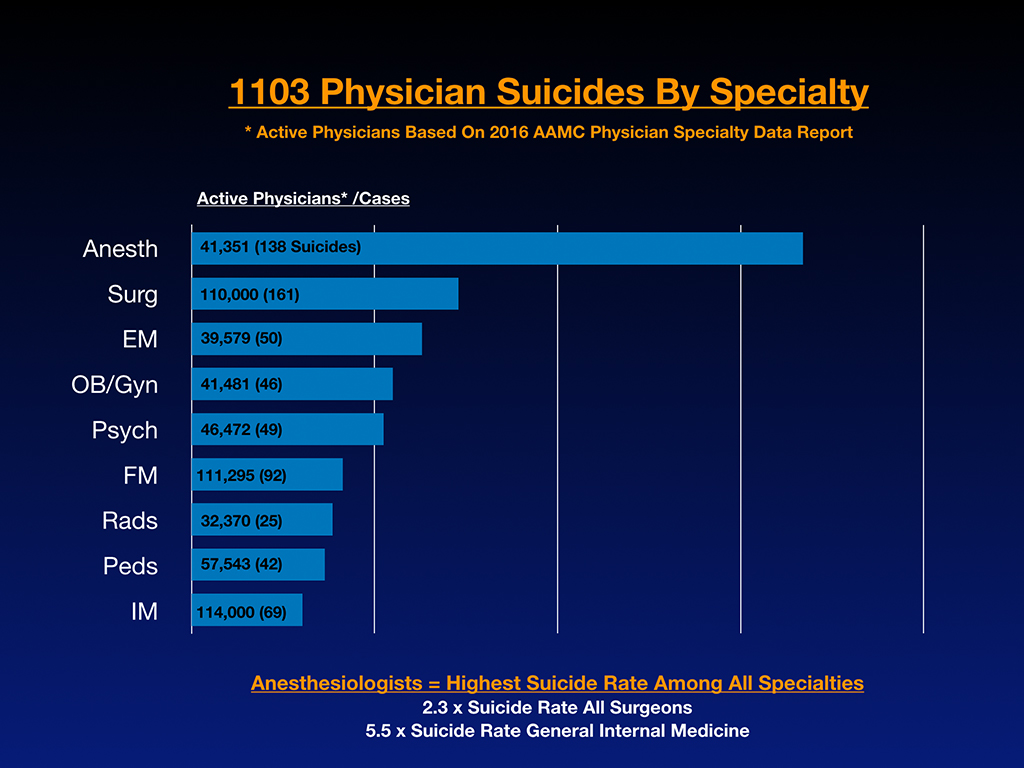
Preventing Suicide when the Patient is a Doctor

"The impact is huge when we hear of a student or another physician committing suicide."
"Although we don't know the actual circumstances around this particular tragedy [the most recent suicide by a medical student at University of Ottawa], I think we do understand what is happening in the profession itself where there is growing concern over how much burnout we are seeing and lots of depression and suicidal ideation."
"[There has to be a cultural shift within medicine from a] shame and blame culture that pushes you until you just don't know anymore. If you admit failure or a mistake, it is considered weakness."
"I believe it is time to open a national conversation about it. To face it. I believe we have to create an environment of psychological safety to get the best care for patients."
Dr.Sandy Buchman, president, Canadian Medical Association

"Any time anything like this happens, it is really difficult for the medical community as a whole. We have heard too many cases."
"All medical faculties have been working very hard and recognizing it is an issue, but there is still a long way to go in terms of stigma and learning environment pressures."
"Overall, we know the trend in medicine is that a lot of people are struggling. [There is] still a lot of work to do in the area of destigmatizing mental health in medicine."
Dr.Victor Do, president, Canadian Federation of Medical Students 

"[Culprits? How about medical schools perpetuating a culture that becomes ingrained — one where] powering through [consecutive work shifts means you've arrived]."
"These people who have been previously abused are now the teachers. They're teaching the next generation of doctors."
"I know a lot of them [doctors who must seek psychiatric treatment without jeopardizing their medical licenses.] They're having to sneak out of town, pay cash and use a fake name to do it. Why are we putting these people in such a situation?"
Dr.Pam Wible, family practitioner, Eugene, Ore
CDC: U.S. Suicide Rates Have Climbed Dramatically

In the United States an estimated 300 to 400 doctors commit suicide annually, representing a suicide rate of 28 to 40 per 100,000. That is over twice the rate of suicide seen in the general population, according to a mega review; a study of ten years of literature on the subject presented several years back at an annual meeting of the American Psychiatry Association.

Last year's survey by the Canadian Medical Association highlighted high rates of depression and burnout among doctors, with an especial emphasis on residents and female physicians.  A student doctor who had recently committed suicide had been known for his work toward destigmatizing mental-health issues in the medical profession, where a student who admits to depression and concerns over mental illness may jeopardize their medical career.
"The concerns here mirror those in the United States. We've known for a number of decades that physicians have a higher risk of attempted and completed suicide."
"One of the unique things about Canada is we have a lengthy history of trying to reach out and support doctors right from the very beginning of their careers to try to prevent such tragedies."
"[Although doctors face the same challenges in their personal lives as average Canadians], they've also chosen to work in a part of our society that is full of pain and tragedy."
"Often, we're the ones, like other health care professionals, who witness and contain incredible amounts of trauma, loss – some things that are truly horrific."
"So there are a number of workplace factors. And again we're like every other human in the country: we're vulnerable to things like depression, anxiety, substance use."
Dr. Derek Puddester, associate medical director, Ontario Medical Association’s Physician Health Program

According to statistics, doctors kill themselves at rates significantly higher than what occurs in the general population. For female physicians the risk of suicide is two to three times greater than for women in other professions, and for male doctors the risk is twice as high as males in the general population. Research points to Canadian medical students struggling with pressure, depression, mental health issues, diagnosed with mood and anxiety disorders and psychological distress at levels in excess of the general population.

Published in the Journal of the Association of American Medical Colleges, the survey pointed out suicidal ideation among medical students is higher than average. The faculty of medicine at University of Ottawa posted a note on social media referring to the young male medical student whose suicide shocked the profession, as "a caring, positive individual, always smiling and ready to help his fellow students learn", whose death "leaves a hole in the hearts of all those who knew him." That description and that horribly sad end has its counterparts in previous such events of suicide among medical practitioners.


The  high-pressure environment of medical school often leads to those who pass the academic bar for entry, to nurse perfectionist tendencies and to submit to chronic self-criticism. When there are occasions of failure resulting from work-exhausted professionals making errors that result in patient harm, the doctor involved can be the most self-blaming, haunted by the event, leaving them with the burden of feeling responsibility to the extent they become virtually incapable functioning, ending up being driven to despair and suicide.

The culture of perfectionism linked with caring for patients who are extremely ill and totally dependent on the professional skill of doctors takes its toll. Medicine is not a risk-taking profession. The assurance of a medical procedure such as a surgery is that the surgeon is a skilled professional with years of experience behind them, and when events go awry as they can, a surgeon can feel overwhelmed and incapable of carrying on. The spectre of medical lawsuits, of reputational damage, of guilt-induced feelings of failure can all singly and collectively destroy confidence and mental stability.

Stigma is a difficult burden to overcome, to convince the medical community that its practitioners are only human and as such require the support of their peers and their overseers. As long as a confession by a medical professional of uncertainty and fear, of unease in their capability to perform and a need for counselling and care is seen as professional failure, driving that individual to submerge those fears and allow depression to fester and mental health to disintegrate, suicide will appear as a 'way out' of the dilemma they face.

The Canadian Medical Association produced a brief general impression of physician attitudes to the profession based on a survey, which discovered that almost a third of surveyed respondents had experienced burnout, even while those within the group reported high emotional, psychological and social well-being.

Labels: , , , ,

Wednesday, May 08, 2019

Physicians, Heal Thyselves  

"There is a point where I feel cognitively drained; after about twenty patients, there is not an iota of empathy left."
Dr. Jonathan Harte, Nottinghamshire GP

"I did feel suicidal. That's what sparked my interest and desire to talk about it [physician job pressure, depression]."
"A lot of people do a pretty good job of  hiding it [high rate of depression among medical students, residents and doctors]."
"I'm doing really well and I want people to know that recovery is certainly possible."
Dr. Sarah Tulk, family doctor, Milton, Ontario

"When I did this research [for his new book] and I saw there were these families where the [doctor] husband or wife went from well to ill, to death, without going to anyone, like a family doctor, an internist, a psychologist, a social worker, the clergy, a psychiatrist, none of that."
"They killed themselves. And I thought, this is unprecedented in medicine."
Dr. Michael Myers, professor, clinical psychiatry, SUNY Downstate Medical Center, Brooklyn
Doctors say that burnout and stress can lead to higher rates of suicide in their profession. (David Donnelly/CBC)

"Some operations you go into knowing that you’re likely going to produce a neurological deficit for this patient."
"You do an excellent job; you do everything right. But despite that there’s a decent chance the patient is not going to be a perfectly happy camper at the end of the day. And, that weighs on you."
"If all the family doctors and neurologists who send me brain tumour patients, if they all read this article [a theoretical admission of deep depression through a piece of creative fiction] and said, ‘this guy is depressed, I better not send him any more cases,’ I could have seen a drop in referrals."
"It didn’t happen. Instead, I had people reaching out." 
"So her parents [of an 18-year old patient], these lovely, lovely people, were there with their precious daughter, who they know is probably going to die of brain cancer before she sees her 20th birthday. If that doesn’t get you, then you’ve got to hang up your spurs and get another job. Because you can’t stop caring."
"I think the bigger piece is the workload, the bandwidth issue — the making patients wait, the not-having-enough-hours-in-the-day …. the administrative crap, the system imperfections, the constant worry that you’re not going to serve patients well enough… It’s that sensation of drowning all the time. And that’s the way a lot of doctors are functioning in our system. It’s frightening and it’s exhausting and it leads to depression."
Dr. Mark Bernstein, Toronto Western Hospital, Neurosurgeon  
In her mid-30s, Pamela Wible experienced suicidal thoughts after becoming disillusioned with the medical profession. (Submitted by Pamela WIble)

Dr. Tulk for one, began thinking suicide. The pressure while training as a resident on her way to achieving her medical degree sapped her of a normal life and normal thought processes once depression set in as a result of having to work up to 24 hours at a time. She managed to complete her residency in family medicine at McMaster University in Hamilton, but while she did so she witnessed first-hand a system that was too demanding of normally resilient people already hard-wired toward hard work through their competitive drive.

The system failed them to the extent that they became burnout victims. Victims who remain silent in the face of the misery they feel for fear that if it became known that they were unable to cope with the stress, their careers would suffer as a result of a personal 'weakness'. She, on the other hand, sought help through a physician health program, in 2016. A program geared to raising awareness and to lead to the change so badly required speaking to her own experience, leading her to become involved.

The very fact of hearing about doctors taking their own lives in despair, as a result of deep depression led her to make common cause with psychiatrist Joy Albuquerque, medical director of the Ontario Medical Association physician health program. Five critical areas relating to physician suicide were related in a paper they had published in the Canadian Medial Association Journal, where they wrote that suicide has become an occupational hazard in the medical profession.

The suicide rate for male doctors came close to doubling in comparison with suicides taking place among the general public. For female physician that rate was two-and-a-half times greater than that of the general public. Doctors, as an example, are aware of how much drugs they would need to efficiently poison themselves to death, occasionally using benzodiazepines. Firearms are also used to speed the process from an agonizing depression to death.

In their paper, Drs. Tulk and Albuquerque point out that physicians face barriers to care in comparison to care provided to the general public, among people whose suicidal thoughts can begin in medical school. Those thoughts can be associated with complaints to regulatory bodies by patients. The realization that self-care in the medical profession while negotiating the professional challenges of a medical practise has been neglected in the academic environment at medical schools has led to changes there.

Dr. Tulk herself has undertaken the teaching of undergraduate programs at McMaster University. A 2007-08 Canadian Physician Health Survey conducting a random sample of over 3,200 doctors elicited the data of close to a quarter reporting a two-week depressed-mood stint. A flattened emotional numbness called "Anhedonia" was reported by one-fifth of the group. There are 300 doctors on disability, mostly for mental illness in Ontario today.

Dr. Michael Myers, professor of clinical psychiatry at SUNY Downstate Medical Center in Brooklyn, NY, explained: "We’ve done pretty well with the general public in terms of reducing the stigma associated with going for help, but we still have so far to go in the house of medicine". He recently published a new book: Why Physicians Die By Suicide: Lessons Learned from their Families and Others Who Cared, where he chronicles "the inner conflict and the irony of self-destruction and despair" among doctors.  
"We just really need to make it normative for physicians to get help if there’s a problem."
"We need to help them realize it doesn’t make them a worse physician or a worse person."
Dr. Katherine Gold, department of family medicine, University of Michigan
In the United Kingdom. the advice to patients is to avoid appointments to see their GPs in the afternoon since overworked doctors are empathy-drained by noon, according to research. Over half of family doctors in Britain feel the pace of their work places them above safe limits, with too many cases seen each day. Overload places patients at risk and fatigue leads to poor decisions, errors and irritability.

Pulse magazine polled 1,681 general practitioners to discover they deal, on average, with forty-one patients daily at the very time when they feel thirty patients should represent a 'safe' number. Risks to safety for patients rise as the day wears on. And concomitantly, the risk to the physician's well-being is on track to overwhelm him/her leading down the path to uncertainty that they are practising their chosen profession well.

Labels: , , ,

Thursday, January 17, 2019

Suicidal Ideation

"Ketamine works differently from other antidepressants. The prevailing theory is that it affects the brain's glutamate system, which scientists now realize may be involved in depression, rather than the better-known serotonin pathway used by drugs like Prozac. Animal research suggests that partly blocking certain glutamate receptors increases brain plasticity -- the ability of the brain to make new neuronal connections -- and corrects some of the abnormalities that result from chronic stress. These effects on the brain, coupled with how quickly ketamine works, have inspired a flurry of research. A number of drugs either derived from ketamine, or based on how scientists think it works, are in development."
"But ketamine has what many view as a major flaw. It can produce dissociative and hallucinatory side effects while it is being administered. Patients can feel as if they have left their bodies or that they are dying."
"Questions also remain about the safety of long-term use. Depressed patients often have to return for 'booster' treatments. The drug is considered safe when given once, but no one is sure how repeated doses may affect the brain. And it can be addictive, too."
Moises Velasquez-Manoff, science writer, California
"It makes sense that it [ketamine as a treatment for depression] move up in the treatment algorithm in E.R.s [emergency rooms] and inpatient units [with some caveats relating to addicts falsely claiming suicidal intentions, to be given ketamine to get high; similar to opioids]."
Dr. Michael Grunebaum, psychiatrist, Columbia University, New York
Party drug ketamine closer to approval for depression

Ketamine's potential as an antidepressant was discovered by researchers at Yale University in the late 1990s. Later, in the mid-2000s, scientists at the United States National Institute of Mental Health confirmed that finding of the efficacy of ketamine in the treatment of depression or suicidal tendencies. Follow-up studies served to confirm the drug can be of immeasurable help in the treatment of people vulnerable to deep depression leading to suicide.

The drug turned out to be an almost perfect candidate to fill a needed treatment gap where conventional drugs and therapies used traditionally failed to help patients; although it may not work for everyone for whom nothing seems to work, its effectiveness is swift, when it does succeed with most who try it. It is a drug already approved by the U.S. Food and Drug Administration, one that treatment physicians are able to prescribe 'off label' which is to say for a use other than the most commonly recognized application for which it originally gained approval.

According to the Centers for Disease Control and Prevention, suicide is now recognized as the tenth leading cause of death in the United States. The prevalence of suicide as an increasingly common cause of death is certainly not confined to the United States; it is a phenomenon that appears to be cropping up elsewhere; in Canada, Europe and other parts of the world, for some inexplicable reason. A growing sense of universal social alienation, a sense of overwhelming isolation, loneliness, social desolation, loss of hope...?

At a time when more people worldwide are being raised out of poverty, where food is more widely available, where opportunities for education are on the rise, and where communication is more accessible and the means of improving one's life growing, it seems peculiar beyond reason that people are becoming more estranged from community life which has always tended to buoy people's spirits; on the other hand, religious conviction which has always been a traditional mainstay in the lives of people and their communities, is waning.

The growing incidence of dark depressing and suicidalthoughts has for some reason not been matched with new discoveries in drug treatments nor workable protocols to help improve peoples' conditions leading to such dissatisfaction with their lives. Selective serotonin reuptake inhibitors of which Prozac is the most famous have been around for three decades in the treatment of depression and suicidal tendencies.
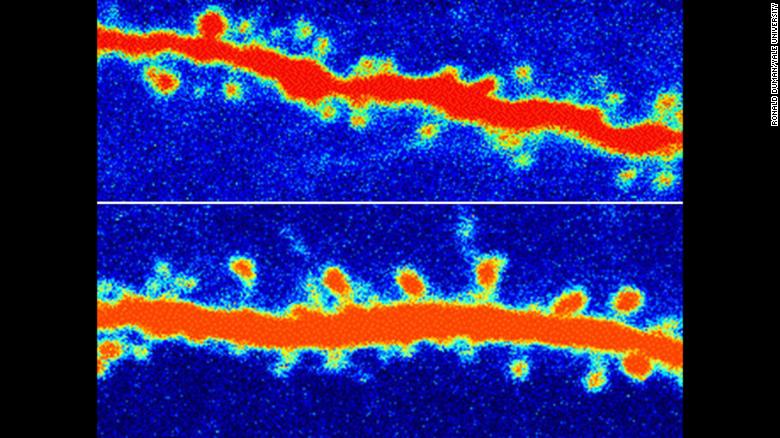
A rat neuron before, top, and after ketamine treatment. The increased number of orange nodes are restored connections in the rat's brain.

Ketamine, used successfully as a safe and reliable anaesthetic seems to fit the bill with trials demonstrating that at low doses it is effective in cutting off suicidal thoughts in the psychically affected. Reaction to its use as a deterrent to suicide and lifting of depression is surprisingly swift, a matter of hours from administration of the drug to perceptible relief. But it is a controversial drug in that a number of small studies show that while holding promise there is the unknown of long-term use.

Placebo-controlled trials are being conducted with hundreds of patients. At the same time, ketamine has gained popularity not in the field of practising medicine, but as a club drug. Ketamine abusers have been known to develop symptoms so severe they include brain damage. The hope is that if proven safe and effective in the administration of small, calibrated doses this drug capable of inducing feelings of euphoria may, in strictly controlled protocols entirely transform how the medical community treats depressed patients with suicidal ideation.

Antidepressents used currently work tediously slowly, from weeks to months to begin demonstrating any positive working symptoms; and sometimes after experimenting with them it is discovered they deliver no benefit to specific patients whatever. Such antidepressents may on occasion even increase some patients' suicidal thoughts. As well, therapeutic protocols take agonizingly long to deliver recognizably useful affects.

The safety of long-term use of ketamine, which acts swiftly and positively for most people, is an unknown, particularly since some patients find they require 'booster' treatments, some as frequently as once-monthly, with a drug though considered safe with its initial application may have a cumulative effect if applied frequently -- quite apart from its addictive qualities. Its success as a treatment has inspired the opening of clinics offering ketamine infusions for depression as an off-label treatment.
a sad woman looking out of a window
Ketamine appears to be a safe and effective drug for use in treating depression -- with some caveats

Some therapists are concerned that ketamine's unknowns should mitigate against its use before all other options have been explored, including electroconvulsive therapy which has advanced in application and efficacy from its initial uses decades ago. Dr. Samuel Wilkinson, a psychiatrist at Yale who studies ketamine is aware of patients' suicidal impulses returning after successful ketamine treatments in a rebound effect.

Like much in life there is at present a trade-off; use of a drug that may at some future date exhibit seriously deleterious side effects opposite a psychological condition leading to the urge to destroy one's life. Other specialists like psychiatrist Dr. Michael Grunebaum at Columbia University whose study of ketamine convinces him that the drug should be moved up to a first-line treatment urges for its immediate use.

A certain amount of confidence rests in the use of ketamine as an anaesthetic safe and reliable enough to be used on children. "We could help so many people", states Dr. Lowan Stewart, an emergency room doctor in New Mexico who feels ketamine should be the drug of choice in emergency rooms where doctors could offer it to suicidal patients.

Labels: , , , , ,

Friday, August 17, 2018

Suicide, the Impulse of Despair : Survival the Compulsion to Live


"When you do a face transplant, you’re trying to match a dead person’s face on another person. And there are no two people alike, so the bone height is not the same."
"Even if you practice on cadavers, obviously the person that you are getting right now might not be an exact match, so you still have to match those two people to fit as a puzzle."
"Of all the surgeries that we do as a surgeon, this is the most gratifying, because you’re giving a person a new start on life."
"[Pre-surgery, over 20 cadaver dissections were done to] perfect and optimize the results for Katie. By the time you come to the surgery, you are basically executing what you practiced."
Dr. Gaby Doumit, plastic surgeon and cranial facial surgeon, former director of craniofacial surgery, Cleveland Clinic
face
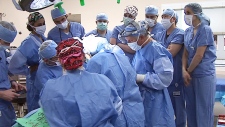
Ten surgeons were on a medical team that spend 31 hours performing a face transplant on Katie Stubblefield.
"Her injury may have been the worst injury of any face transplant injury ever. We can't necessarily make all of her muscles move again. Her tongue is not working well because she lost a lot of tongue muscle and nerves."
"We [the transplant team of 15 specialists] all like her nose. Her lips are pretty."
"My first wish for Katie is to be happy. That's number one, but beyond that, I'd like her to have some level of normalcy."
"Then, she can do all that and become a spokeswoman for so many aspects - for how to be strong in the face of adversity and not to make a singular decision dictate who you are."
Dr. Brian Gatsman, supervisor of transplant team, Cleveland Clinic
The pretty young woman of eighteen is now 22 years old. Katie Stubblefield decided at 18 that her life was no longer worthwhile. Depression leads many young people to despair their condition in life and many decide, like Katie did at 18, to simply forego life. So she took her brother's rifle and shot herself directly in the face and her brother discovered her in his home in Tennessee essentially with no face left, covered in blood and gore, her brain fully exposed. The bullet that failed to kill her tore through her forehead, nose, sinuses, jaw bones and left her eyes badly damaged. But she lived.

Surgeons in the Memphis hospital that responded to the emergency that Katie had become made an effort to cover her facial wounds with a tissue graft taken from her abdomen. That effort failed and when she arrived at the Cleveland Clinic it was with "her brain basically exposed". And there, 22 different operations took place in the hope that her face could be repaired, none of them approaching close to restoring what she looked like before she decided to die. A face transplant might work where plastic surgery failed, it was determined.

She waited, and she waited and three years passed during which two possible donors failed to fully materialize, and then a third was found, that of 31-year-old Adrea Schneider who had died from a drug overdose and who had been a registered organ donor. Adrea's grandmother gave her donation consent. Her granddaughter's heart, lungs, kidneys and liver were donated as well to other patients awaiting transplants; one lost life led to seven saved across the United States in this single, unfortunate/fortunate exchange.

A 31-hour surgery, using two separate operating rooms took place in May of 2017 at Ohio's Cleveland Clinic when Katie became the 40th individual known to have received a new face and one of the youngest. The bullet that failed to kill Katie but that caused such horrible damage was the cause of a traumatic brain damage and her hormones and sodium levels were also severely impacted, along with frontal lobe function. The team created a nasal passage, patched her face, formed jawbones with the use of her fibula and titanium. Her eyes were moved closer together and part of her thigh and Achilles tendon used to help patch the wounds. 

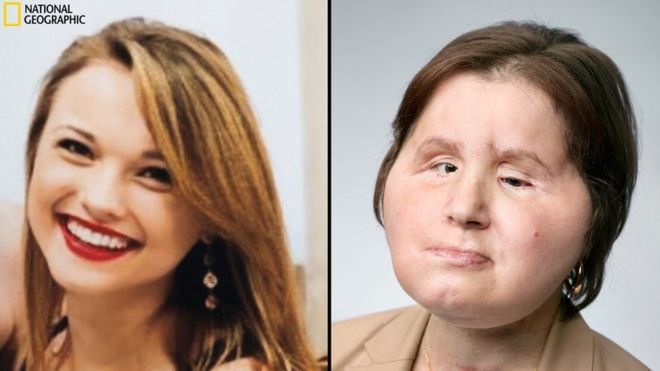
Side-by-side of Katie Stubblefield.
Family/Martin Schoeller -- Katie, before her catastrophic injury and after her facial transplant
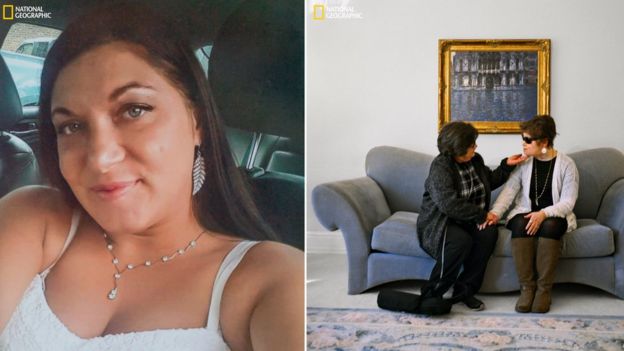
Sandra Bennington, Adrea Schneider's grandmother, visited Katie after her transplant, telling her that she could make out some of her granddaughter's features in Katie's new face. But that regardless, Katie's face was unique to her and, she said, "You look beautiful". An additional three major revision surgeries took place fourteen months later. All of this detailed in a cover story by National Geographic magazine. Additional surgeries yet are being contemplated, to slim her face down, reduce scarring and to improve her eyelids. She has been given a second chance and she is grateful for that opportunity.

Side-by-side collage of Adrea Schneider and her grandmother meeting Katie
Benningdon Family/Maggie Steber/ National Geographic
  Adrea's grandmother said she recognised some features of her granddaughter (L) in Katie no

Labels: , ,

Wednesday, June 13, 2018

Ending It All

"It's a troubling and a sad stat[istic]." It shows the seriousness of suicide and how important it is that we not shy away from conversations about suicide."
"We did have a very slight decrease [down slightly from 2014], but it's definitely not something to celebrate."
"This report is really a starting point for us. We hope this report will help us explore other questions. Where are the gaps in the data? What opportunities do we have from this data that can help inform or shape future policies or programs? We have the data. Now we want to hear the stories."
"The wonderful awareness campaigns we have are a great step, but it's also important that these young people feel confident and that they trust those who they're reaching out to."
Benjamin Leikin, supervisor, mental health unit, Ottawa Public Health
Hands holding
"We weren't reaching the young people themselves [through the 24/7 crisis line operation]."
"We all know that technology and mobile services are where kids typically communicate more, so we looked at a chat line as part of our crisis line."
Jeanne Lowe, executive director, Youth Services Bureau
KNOW WHAT TO WATCH FOR
Mental health experts advise parents and others working with children and teens to watch for changes in behaviour. These can include:
  • Changes in behaviours, friends, or normal activities
  • Changes in physical health and/or hygiene
  • Low energy, poor concentration
  • Declining school performance
  • Increased absenteeism
  • Marked personality change
  • Increased risky behaviour
  • Prolonged negative mood or attitude
  • Sudden positive mood after a long period of being ‘down’
  • Preoccupation with appearance and/or body image
  • Comments about feeling worthless, helpless, or hopeless
  • Comments about suicide and/or dying
Teens in crisis may talk more easily to their peers than to adults. All kids and teens should be encouraged to speak up if they are concerned about a friend—to tell a trusted adult, whether their own parents, a friend’s parent or a teacher, guidance counsellor or coach.

KNOW WHAT TO SAY
So if a parent, teacher or friend is noticing these changes, what can they do?  Sometimes it’s not easy talking to our kids.
  • Say something! Don’t be afraid of sounding clumsy
  • Be patient, compassionate, and non-judgmental
  • Ask the person how they are feeling and if they are thinking of suicide
  • If someone is suicidal, talking about suicide will not put them at greater risk
  • Really listen. Give 100% of your attention
  • Be sensitive, but direct
  • Let the person know you are concerned, and give examples of why
  • Example:  “I’ve noticed that you’ve been not yourself lately, I’m concerned about you. Could we talk about it?”
It cannot be considered anything but a mystery that so many people in any society seek to end their lives. In the New England States, suicide rates are on the increase, and though youth are thought to make up the greater proportion of those seeking to end their lives before they have even lived them into adulthood, statistics appear to belie the common perception that suicidal teens lead the death rate by one's own hand. There, it seems to be rural dwellers in their mid-50s and beyond who seem to top the scales for suicide.

People who suffer from mental illness, those who are facing economic turmoil, those who are lonely and/or have no one to depend upon to see them through emotional upsets. Figures in the Province of Ontario and more particularly in the nation's capital area appear to point elsewhere. The bulk of the increase leading to hospital admissions for mental-health conditions and addictions were seen to rise between 2007 and 2015 a whopping 45 percent, that increase led by those between the ages of 15 and 24.

Among Ottawa high school students, fifty-six percent surrender between two to four hours daily of their time to the use of smartphones and other electronic devices; over a quarter of that number claim to spend five or more hours daily using these devices. The question might very well be, are they a communication assist or an alienation tool taking constant users in a widening disconnect of normal social values?

The Champlain health region which includes Ottawa and the greater Ottawa Valley sees twenty-nine percent of Indigenous youth reporting symptoms of substance abuse in a truly problematic scenario. That represents one viral clue of alienation both from the wider society and the community group, the solution to which situation appears frustratingly elusive.

A newly published report by Ottawa Public Health, titled the Status of Mental Health in Ottawa, has determined that one of every nine students in the city has considered committing suicide in the year just past, with over 1,300 claiming to have made the attempt. Of those claiming to have attempted suicide, 60 percent made an effort to seek out guidance and emotional support, but failed to succeed in so doing for the simple reason it wasn't clear to them whom to turn to.

Of those questioned, it was discovered that 91 percent of those aged 12 or older felt satisfied with their lives, while 75 percent responded their feelings of happiness buoyed them on a daily basis the month previous. Clearly, this segment of society felt little in common with a much narrower segment for whom life satisfaction is elusive, leaving them to cope with darker emotions and puzzling over where they can find relief and support.

Ottawa's population is often thought of as a transient one, owing in no small part to the fact that a significant proportion of the population is employed by government as public servants. An average of 80 suicides take place each year in the city, of which roughly ten percent represent youth between 15 and 24 years of age. These numbers are reflected elsewhere in the Province of Ontario. A sense of belonging to their community is reflected in 63 percent of the city's residents, a rate lower than elsewhere in the province.

Unsurprisingly that proportion of the population living in low-income areas of the city are three times likelier to report "fair" or "poor" personal mental health conditions. In recognition of the vulnerability of youth in particular, the city's Youth Services Bureau has adjusted its educational and help programs to reflect how young people communicate; with the introduction of a chat-based crisis line.

Apart from the chat line with its 24/7 monitoring function, the agency has tasked itself to provide counsellors in four area high schools, offering twice-weekly walk-in mental health clinics, from noon to eight in the evening. This is in recognition of a vital role to fulfill to narrow the gap of the number of young people who are  unaware that help is available, and where to turn to attain it.
Key facts about suicide
Every suicide is a tragedy, and affects people of all ages and backgrounds.
  • A prior suicide attempt is the single most important risk factor for suicide
  • In Canada over 4000 people die by suicide every year
  • For every suicide there are many more people who attempt suicide
  • Suicide is the second leading cause of death among 15-29 year olds
  • Men in their 40s and 50s have the highest rate of suicide
  • Women are three to four times more likely to attempt suicide than men
  • Men are three times more likely to die by suicide than women
  • Average of 66 people die by suicide every year in Ottawa

Labels: , ,

Tuesday, March 06, 2018

AI: Studying Suicide Cluster Prevention

"I'm always in awe of the incredible power of big data but I don't understand how to make the leap from identifying group trends [such as in] elections to individual behaviour, which is suicide."
"I cannot reveal details of the Cape Breton case because I can't but there was absolutely no way, zero chance, that it could have been predicted which kids were going to die by suicide from the social media messages that those kids were sending because they didn't send any."
"You can't prevent the death of an individual by finding group trends. If you are able to spot a group trend then it's not going to help predict which kid is going to die by suicide and which is not."
Dr. Stan Kutcher, psychiatry professor, Dalhousie University, Halifax

"We also have additional safeguards in place to make it very difficult or even impossible for our own staff to look in and see who is having issues and finding out who that person is."
"What we would like to try and understand is what are the signals … that would allow us to forecast where the next hot spots are so that we can help the government of Canada to provide the resources that are … going to be needed to help prevent suicide before the tragedies happen."
"This is not Minority Report and we are not identifying individuals who … have risk of self harm. We are not knocking on doors or contacting individuals. We have nothing that is personally identifiable about any individuals in this study."
"So many times in AI research we hear the stories about AI is going to take jobs … Big Brother is spying on us. If you can show that [suicide] rates have gone down because we have deployed this sort of study, that would be most gratifying."
Kenton White, chief scientist, Advanced Symbolics Inc.

"The problem is you could [examine] the past like that but it's not necessarily generalizable to the future. There's such a unique set of circumstances that may not quite align themselves again that led up to that clustering in Saskatchewan."
"We had no confidence in those results [from an earlier 2015 study] but it also gave us a lot of doubt about these kinds of big data approaches [to predicting suicides]."
James Coyne, Emeritus psychology professor, University of Pennsylvania
Using artificial intelligence to analyze social media trends, the company hired by the federal government claims it could predict surges in suicide rates, including the precise region where they will occur.
Using artificial intelligence to analyze social media trends, the company hired by the federal government claims it could predict surges in suicide rates, including the precise region where they will occur. (CBC)

In Canada, daily deaths as a result of suicide impact eleven people, making suicide the second leading cause of death for those between the ages of ten and 19, according to the Public Health Agency of Canada. The Canadian government has undertaken an experimental study to be conducted by an Ottawa-based market research firm, Advanced Symbolics Inc. The pilot project will start off by working with health officials to define "suicide related behaviours".

Following which the company plans to scan random samplings of social media extracted from 160,000 public accounts, for the purpose of determining whether red flags can be detected -- particularly with a specific area -- to give warning it may become the locus of a group of suicides. Previous suicide hot spots, such as one in Cape Breton where three middle-school students committed suicide within a short period last year, will begin the focus.

The company plans to report its findings, if it succeeds in detecting patterns in suicide clusters, to the Public Health Agency of Canada, the information to be used to understand how and where and when mental health resources should be deployed preempting tragedy. Dr. Kutcher of Dalhousie University, a youth suicide expert, worked closely with the Cape Breton community and has expressed his considered doubts that any data collected through research into social media would be effective in discovering red flags in an efficient manner, connecting resources with those deemed at risk.

Suicide, points out Dr. Kutcher, is an extremely personal issue and as such behaviours flagged as suicidal are individualistic. He also points out that the age group representing the greatest numbers of death by suicide fall into the age 50 to 54 range, a demographic, he points out, less attuned to the regular use of social media. Moreover, even if the artificial intelligence to be used does pinpoint spates of potential suicide, no proof exists that rushing in with mental health resources at the area at risk would have any effect in lowering suicide rates.

PHAC plans to consider whether to proceed with the surveillance and "market research on the general population of Canada", as a follow-up phase of the project, should Advanced Symbolics succeed in accurately predicting patterns in suicide behaviours linked to past instances. Dr. Coyne, cited above, with over 350 research papers to his credit on big data and suicide, feels doubtful that examining social media samples would lead to suicide clustering predictions focusing on First Nations' communities.

Professor Coyne had worked with a graduate student on a project that gathered Twitter data to determine whether angry tweets could connect with increases in heart attacks in a number of counties in the United States. The algorithm proposed for use in this current study was used in their effort to determine whether angry tweets could be connected to an increase in suicides. Their study resulted in the realization that it was in fact positive tweets that predicted an increase in suicides.

Pilot will examine all parts of country including Indigenous communities

Labels: , , , ,

Thursday, March 02, 2017

Epigenetics Fracturing Aboriginal Youth

"Suicide is not a traditional aspect of indigenous culture in Canada."
"This commentary raises the possibility that the effects of tetraethyl lead poisoning during the 1970s and 1980s contributed to the rise in suicides, and continues to contribute to the growing problem through epigenetic modifications."
New research paper on aboriginal youth and suicide

"I think it [1970s/80s gasoline sniffing among aboriginal youth] is a contributing factor [in current-day suicide rates], but I don't think it's the primary one."
"It's not just going to be one thing, there are going to be a lot of interactions between environmental risk factors and the biological ones, too."
Trehani Fonseka, leader, First Nations depression and suicide-prevention program, St.Michael's Hospital, Toronto, study co-author
THE CANADIAN PRESS/Nathan Denette
THE CANADIAN PRESS/Nathan Denette   A cemetery at Attawapiskat First Nation, which declared a state of emergency over suicide attempts last year.

A newly re-discovered letter sent in 1973 from a scientist with Health Canada to colleagues at the hospital in Sioux Lookout alerting them to his finding tests indicated that gas sniffing had become a widespread practise among aboriginal youth, and it led to research findings and theories resulting in a paper recently published in the journal Psychiatry Research. The finding was that gas-sniffing as a source of lead poisoning was responsible for triggering genetic changes in the users.

And those genetic changes passed on through the generations, a process named as epigenetics. The scientists at St. Michael's Hospital and the University of Toronto arrived at a hypothesis that neurological problems surfaced in the original sniffers' descendants making them more susceptible to depression and suicide. That theory is partially supported by the fact that indigenous communities had minimal suicide rates before the mid-1980s while at the present time their rates of suicide rank among the highest in the world.

The lead poisoning leading to genetic alterations, added to impoverished communities breeding in their residents attitudes of hopelessness -- along with family histories of mental illness and addictions, childhood abuse and the unfortunate after-affects of the residential-school era, when aboriginal children were removed from their homes and placed in teaching institutions whose programs steered them to a rejection of their heritage and toward European values -- constitutes a lethal mixture of social dysfunction.

"We're always struggling to find some simple explanation for complex, multi-factorial things. It's a mistake to interpret this (suicide epidemic) as some kind of inevitable consequence", stated Dr. Laqurence Kirmayer, a professor of psychiatry at McGill University who heads a national network on aboriginal mental-health research, and who seems less than impressed with the conclusion reached by this latest research paper, though it makes no effort to attribute epigenetics entirely being the sole fault in the spate of recent suicides.
An unidentified Sheshatshiu Innu youth openly sniffs gas in the community on Friday Nov. 17, 2000.
CP PHOTO/Ted Ostrowski    An unidentified Sheshatshiu Innu youth openly sniffs gas in the community on Friday Nov. 17, 2000.

Yet the effect of the past 30 years of surging suicides among aboriginal youth has transfixed the scientific community through endless discussions with no solution in sight. On a single day at the Attawapiskat reserve in northern Ontario last spring, eleven suicide attempts occurred. While in northern Saskatchewan there were six deaths by suicide among girls from age ten to fourteen, and another six suicides in 2014 in a remote Quebec indigenous community. A staggering loss.

A coroner's enquiry in 2010 stated that young indigenous people commit suicide at five to six times the rate of non-native youth, when it looked into 15 child suicides at the Pikangikum First Nation in Ontario. Thirty years ago the twenty First Nations in northwestern Ontario recorded one or two suicides a year in comparison, according to the coroner's office figures.

Tests in the 1970s showed lead volumes in gas sniffers of up to 85 micrograms per 100 millilitres of blood, when neurological damage is known to begin with levels as low as five micrograms. Dr. Fonseka allows that additional studies to test the hypothesis are required, and if confirmed the very presence of genetic changes linked to lead poisoning that occurred in earlier generations could provide an "early warning", identifying groups at risk of suicide so preventive programs can be designed in response.

Angela sniffing
"I think I'll never stop sniffing gas. I want the same thing to happen to me that happened to my brother Charles," Angela says. "I want to die the same way my brother died... while sniffing gas."   CBCnews

Labels: , , ,

Saturday, September 17, 2016

Recognizing Problems, Finding Solutions

"[Addressing the acute problem of First Nations suicide epidemics] will require co-ordination among education, justice, employment and social welfare sectors."
Laura Egertson, Kirsten Patrick, Canadian Medical Association Journal

"Some factors driving suicide are] crowded housing, intergenerational trauma, family violence, family history of suicide [as well as] witnessing or experiencing physical or sexual abuse, [medical problems such as] depression, substance abuse, mental health disorders [and social dysfunction related to] intoxication, access to means, hopelessness [and] isolation."
Inuit Tapiriit Kanatami

Sky-high suicide rates are blooming on some of Canada's most isolated and economically depressed First Nations reserves where miserable life outcomes have become all too common. So how to solve issues contributing to hopelessness and misery caused by isolation? First Nations tribes tend to cling to their heritage lands and memory of living off the land, though they currently live on the land, but not off it, preferring to emulate the use of convenience foods, commercially produced durables and food, and watching television, over being actively engaged.

Solving such intractable problems as familial dysfunction, community violence, drug abuse, scorn for education and independence given by seeking sources contributing to earning a living and subsequent lack of pride in subsisting on universal welfare doled out to aboriginals goes well beyond daunting. How to convince First Nations that it is in their best interests, to solve these intractable problems, to pursue a fully advanced lifestyle by being absorbed by the prevailing social lifestyle in Canada's larger community?

Which cannot be achieved while First Nations tribes insist on living dependent on government handouts in geographic areas that confine them to an untamed wilderness where there are no employment opportunities, where direct access to science and advanced health care, and exposure to sound education for their children is denied them. If competently trained health care workers, fire fighters, policing services and teachers cannot be found from within their own communities, why is it surprising that those services will not come to the isolated regions courtesy of non-native volunteers?

Canada's suicide rate is 11.4 per 100,000 population, about average for many countries similar to Canada in their advanced-level functioning capabilities. Yet some countries admired for the success of their socially advanced communities have come under scrutiny for the level of their suicide rates, higher than Canada's. Germany has a rate of 13 per 100,000, Sweden 13.2, and Finland a whopping 16.7 per 100,000. Canada's rate would be even lower if it were not influenced by the suicide rates in First Nations communities.

On First Nations reserves the suicide rate comes in at five and a half times the rate throughout the country, in Canada. Canada's Inuit populations most particularly rate as being among the highest on the globe. Inuit Tapiriit Kanatami's suicide prevention statistics give the Nunavut suicide rate at 117 per 100,000; a number twice Russia's rate which qualifies as a world leader in suicides. In Nunavut suicides accounted for 13.5 percent of all deaths.

'I do not believe that it is respectful for the government to prescribe solutions for Indigenous peoples when it comes to suicide,' Natan Obed, president of Inuit Tapiriit Kanatami, told parliamentarians Tuesday. CBC -- Natan Obed, president, Inuit Tapiriit Kanatami
"Each one of us is personally affected by suicide and this comes from a very early age and it affects our entire life course."
"Imagine a scenario where you grow up understanding how to die by suicide. You have friends, family members, loved ones who have died by suicide. And suicide is normalized in your community."
"I came away frustrated and have continued to be frustrated by the way in which the discussion has happened to date."
"It is as if Indigenous suicide and Inuit suicide is something completely outside a public health context and somehow the answers only lie with us and us alone."
"What they are looking for in many cases is a particular component of suicide prevention that is Indigenous only that usually has something to do with on-the-land camps or cultural continuity, that is relatively cheap."
"I do not believe that it is respectful for the government to prescribe solutions for Indigenous peoples when it comes to suicide."
"Many of the reasons why our communities are the way they are is because of colonization and because of programs and policies of the Canadian government."
"Specific interventions and investments are going to be necessary from different federal departments."
"This, of course, isn't a three to five year push. This is a generational thing."
Natan Obed, president, Inuit Tapiriit Kanatami
Bitterly critiquing the federal government in its attempted approaches to bringing a solution to such dreadful problems, insisting that it is not non-Indigenous who must plan and implement working solutions, but complaining that cheap won't do it, and funding must be lavished on communities which have thus far dismally failed to solve their problems, preferring to lay the blame on the colonialist past solves nothing, but it is typical.

Only once the non-Indigenous and the Indigenous people make a sincere effort beyond well-meaning on the part of government, and determined-to-succeed on the part of Indigenous leaders, will any kind of remedy to the current problems afflicting First Nations come close to solution.

Labels: , ,

 
()() Follow @rheytah Tweet