Ruminations

Blog dedicated primarily to randomly selected news items; comments reflecting personal perceptions

Wednesday, May 01, 2024

China's Export of SARS/CoV-2 Under State Wraps

 
“I would like to sincerely thank all the netizens and people from all walks of life who have supported me and my team for a long time.”
“I won’t leave, I won’t quit, I am pursuing science and the truth! The Public Health Center are refusing to let me and my students go in the laboratory and take shelter.”
“I trusted myself. I have so much experience, my team has made so many discoveries over the years, that we were able to make accurate judgments.”
Dr. Zhang Yongzhen, research virologist, Chinese Center for Disease Control and Prevention

https://media.cnn.com/api/v1/images/stellar/prod/gettyimages-1195534971.jpg?q=w_1110,c_fill/f_webp

When the World Health Organization issued its pandemic alert globally, scientists everywhere lauded the swift assistance they were given when the SARS/CoV-2 sequencing was distributed worldwide, enabling pharmaceutical companies an early start on their search for an effective and reliable vaccine against the dread COVID-19 virus that lost no time escaping its place of origin in Wuhan, China, replicating itself and infecting people all over the world with utterly disastrous results in illness and death. 

But the release of the sequencing was not the result of a conscientious leadership in Beijing, anxious to help the world cope with an impending natural disaster of a virus leaping from wild animals to humans with a consequential human-to-human infectiousness that soon saw Europe brought to its knees, attempting to stem the tide of an implacable pathogen, leaving hospitals overcome with new patients, incapable of tending to the needs of the infected, speedily leaving countries with soaring death rates.

Dr. Zhang's generosity of spirit in releasing the priceless data was a lifesaver, enabling researchers to formulate a vaccine to help stave off the infection for a large proportion of the world's population, as the virus underwent various mutations that made it ever more infectious and dangerously lethal in the numbers it was infecting. Beijing, however, was anything but pleased with the release of the sequencing. It had not given its assent and regarded the fact that Dr. Zhang and his colleagues sent out 'proprietary' data in the name of open science and a true regard for the welfare of humanity, an unforgivable insubordination.

The result was that Dr. Zhang, his research team and any who were associated with them were harassed, pressured and punished. Once the sequencing had been completed in Dr. Zhang's laboratory, Chinese authorities were notified of the dangerous and lethal nature of the coronavirus and the urgency to act. What Chinese authorities were interested in was maintaining an aura of secrecy, more invested in seeing that the global community not become aware that a globe-threatening virus had come out of China leaving them with no intention of alerting the WHO and by extension the world community.

Nothing has changed since then. From hampering international investigations, refusing to permit investigators from the WHO open access to the Wuhan Market, much less the Wuhan Institute of Virology, withholding scientific papers, and controlling what investigators could see, who they could interview and what they could have access to in the interests of discovering the source of the virus, Beijing still maintains that the virus might have entered China from elsewhere.

Now, Dr. Zhang has found himself and his colleagues locked out of their laboratory as Beijing continues to repress those scientists conducting ongoing research on the coronavirus. Having been abruptly notified that they were being evicted from their lab, the most recent setback to the researchers after demotions and ousters since the sequence was published in January of 2020, the latest assault on open science has left Dr. Zhang helpless, with guards barring entry to his lab.

He did not go quietly and accept the inevitable, but has since been protesting, sitting outside his lab, sleeping on the ground in the rain overnight on Monday. The Shanghai Public Health Clinical Center claimed in an online statement on Chinese social media platform Weibo that the lob was in the process of renovation and therefore closed for "safety reasons", and Dr. Zhang's team had been provided with an alternative laboratory. Dr. Zhang on the other hand, denied an alternative had been offered until after their eviction.Moreover the lab in question failed to meet the safety standards required for conducting the type of research that they were engaged in.

From the very first weeks of the viral outbreak in China, its government froze domestic and international efforts to trace its source, a pattern that continues. Labs have been closed, collaborations with other, foreign scientists have been blocked, foreign scientists were forced to leave, while Chinese researchers found themselves barred from leaving the country. And Dr.Zhang finds himself now in a position where he is under close scrutiny and communicating with outside, unauthorized sources forbidden to him.

A man lying down covered in sheets while two police officers watch over him
The virologist Zhang Yongzhen is staging a sit-in protest after Chinese authorities allegedly locked him out of his lab.

Labels: , , , ,

Wednesday, February 02, 2022

Urgency of Normal Movement

"The approach moving forward with COVID needs to be more sustainable. What we're doing right now -- closing economies, restaurants, gyms, schools -- that is not a sustainable solution."
"Mom has to choose between going to work or educating the kids."
"Those impacts can be life-long."
"This is a heated time and there are a lot of emotions when it comes to COVID response."
Dr.Kwadwo Kyeremanteng, ICU head, Ottawa hospital
 
"We're doing a lot of harm to the fabric of society."
"We need to understand what the endpoint is, what the rationale is, for any of this we're doing."
Dr.Martha Fulford, pediatric infections-disease specialist, McMaster University, chief of medicine, Hamilton hospital 

"Your slides on mental health [in the Urgency of Normal Power Point presentation] are beyond bad."
"By being unscientific and biased in your selection and presentation of data, you are part of the misinformation crisis of this pandemic."
Dr.Tyler Black, clinical professor of psychiatry and suicide expert, University of British Columbia

"We have a vaccinated population that should be largely protected from severe disease. So what else do people want before you have the conversation about going back to normal?"
"We are going to have to live with it, basically."
Dr.Ari Bitnun, pediatric infectious-disease specialist, professor, University of Toronto
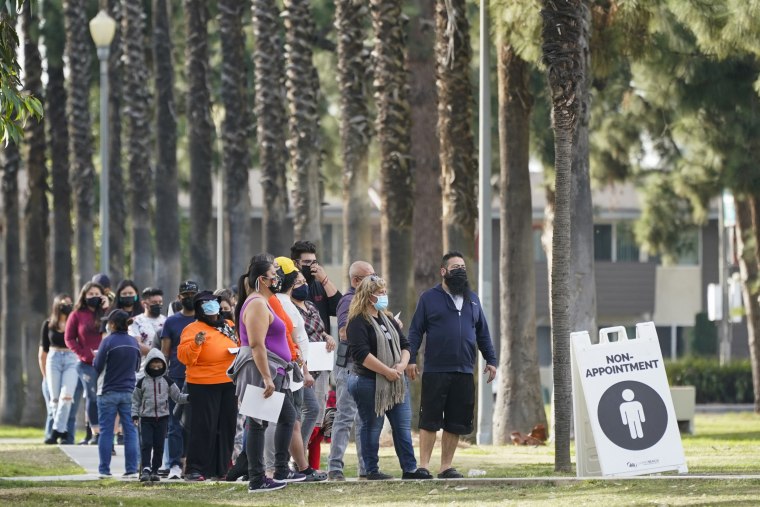
People wait in line to test for Covid-19 on on Jan. 12 in Long Beach, Calif.
People wait in line to test for Covid-19 on on Jan. 12 in Long Beach, Calif. Ashley Landis / AP
 
Staff burnout in hospitals everywhere is taking a tremendous toll. Not just the professional physical labour of taking care of very sick patients in a hospital's intensive care unit, but the emotional toll of witnessing people arriving at the ICU and then painfully succumbing to the worst excesses of the coronavirus that has swept the world community. According to Dr.Kyeremanteng, head of a hospital ICU, watching as desperately ill patients die: "That was a very under-recognized source of stress".

Most physicians in the medical community are in agreement with the measures taken to date in attempting to come to grips with COVID-19, in hopes of controlling its spread and its malign outcomes. Most would not think of easing any public-health restrictions. Yet this critical-care specialist is actively attempting to persuade his colleagues and government officials for schools to move quickly toward opening, to achieve pre-pandemic norms, while questioning the need for other limits to social normalcy.

This doctor is among the leaders of a new U.S.-based group calling themselves the Urgency of Normal, pushing for a rapid return to unrestricted in-person teaching for children. Their argument is unassailable, that children have unduly suffered as a result of pandemic lockdowns; it's just their solution that is questionable.

There is an estimated 400 signatories of the organization's goals that include 32 Canadian physicians other than Dr.Kyeremanteng. There is among them, four infectious disease of medical microbiology specialists, emergency medicine doctors, university professors, and a hospital chief of medicine. They do not consider themselves as representative of a fringe group of physicians such as have denied the virus's seriousness and who advocate for the use of discredited antiviral drugs while spreading misinformation on vaccines.

While in a minority, the Canadian MDs who see fit to support the Urgency of Normal believe in the efficacy of COVID vaccines, they have been front line workers on the pandemic, and are respectful of  the science behind its treatment. Their argument is that scant evidence exists in support of closing schools, ensuring students wear masks. Nor do they agree with vaccine mandates. Even while restrictions are opening up in most provinces as infection rates drop, they consider the potential arising of further lockdowns.

However, the advocacy "tool kit" posted online by the group for parents and school boards as an information source, is criticized by experts in the field as being rife with incorrect or misleading science. One statement in particular -- that child suicides have been increasing in the U.S. during the pandemic has been challenged by a suicide expert pointing out that the rate was in actual fact higher in 2018, before the pandemic.

The conclusion reached in a recent review in the Canadian Journal of Public Health stating a shortage of rigorous studies comparing rates of youth mental-health problems before and during the pandemic as a problem, but that there is nonetheless "reason to believe" the pandemic has the potential to leave long-term impacts. Eating-disorder cases have seen a sharp increase and are well documented. Quebec public health reported actual suicides remain stable, but emergency room visits by teenage girls for suicidal behaviour leaped upward in 2021: "The distress remains very palpable", it reported.

While citing the relatively mild impact of COVID on children, the Urgency of Normal recommends maintaining in-person learning irrespective of case counts, and eliminating school mask mandates. A return to pre-pandemic life must go beyond classrooms, according to the Canadian supporters, citing the harms of public-health restrictions at a time when the large majority of Canadians are vaccinated and protected against serious COVID disease.

"We need to keep in mind that health is about more than just COVID-19, and look at the bigger picture", stated Dr.Jocelyn Srigley, clinical professor of medical microbiology at the University of British Columbia.
Dr. Kwadwo Kyeremanteng of Ottawa is among the leaders of a U.S. group pushing to end COVID restrictions.


Labels: , , , ,

Monday, November 29, 2021

Woof! Not To Worry

"I get so many questions about this issue."
"Will there be a vaccine? When will there be a vaccine?"
Dr.Elizabeth Lennon, veterinarian, University of Pennsylvania 

"It doesn't look like cats or dogs would ever be a reservoir for this virus."
"We believe that if there weren't sick people around them, they would not be able to continue spreading it from animal to animal -- it would not continue to exist in their population."
"The best way to prevent SARS-CoV-2 in our pets is to prevent the disease in people."
"So please get vaccinated."
Dr.Jeanette O'Quin, veterinarian, Ohio State University
A veterinarian holds a syringe while a cat lays on an exam table.
Science
 
Jaguars are being inoculated against COVID-19, so are bonobos, orangutans and otters, ferrets and fruit bars, at various zoos in the past year, as cases have erupted among them. Billions of people worldwide are now vaccinated against COVID-19, with billions more yet to go. The global medical community and government agencies are working around the clock to ensure that as many populations become inoculated against infections by the coronavirus as possible to present a united front against a frequently-deadly pathogen.

Cat or dog vaccines have been developed; those initial vaccines were then deployed to vaccinate zoo animals. But the issue of having a vaccine against COVID available for household pets appears for the time being and perhaps for the foreseeable future, a dead issue, so to speak. Not so much to ignore a need, or to leave the impression that dearly beloved household companion pets are no one's concern, but because experience has shown that though cats (more so than dogs) and dogs can acquire the infection, they readily rise above it.

Simply put: not a priority. Household pets display few symptoms of COVID, some, like their human counterparts, are asymptomatic and most cases are very mild. When at first it was imagined that a pet pandemic could arise, the possibility of developing a dog/cat-specific vaccine appealed to Zoetis, a veterinary pharmaceutical company in New Jersey, and work began on producing a vaccine candidate. There were, in fact, four promising candidates by fall of 2020.

And then it became obvious to researchers that after all, the issue of pets being infected would not be likely to pose a serious threat to either animals or people. One study of 76 pets living with people who had developed COVID saw 17.6 percent of cats and 1.7 percent of dogs testing positive for COVID and 82.4 percent of the infected pets showed no symptoms.

The most common effect on pets infected with the virus are fairly mild symptoms including lethargy, coughing, sneezing, runny noses or diarrhea. Typically the infected pet makes a full recovery without the need of any treatment. Nor is there strong evidence that cats or dogs may spread the virus to humans. All these factors convinced experts a vaccine for pets was unnecessary.

The U.S. Department of Agriculture which regulates veterinary medicine in the US, announced in November of 2020 that it would not accept applications for cat or dog vaccines "because data do not indicate such a vaccine would have value". At the same time the possibility is not discounted that at some future date it is possible that changes in the virus could mandate that a pet vaccine be given wide use.


Labels: , , , , ,

Friday, January 15, 2021

Antipsychotic Medication As an Answer to Elderly Depression, Loneliness

"In the days before nursing homes became so highly regulated, many facilities used medications to chemically sedate their residents. Elders who were calm and slept a lot were easier to manage and required less attention from staff members. Therefore, many homes considered drugging patients to be both efficient and cost effective."
"Anti-psychotics and sedatives were frequently prescribed to calm patients, especially those who had Alzheimer’s disease or other forms of dementia. In some cases, a low dose may have been beneficial for residents and staff alike, but these medications are very powerful. They can affect seniors and dementia patients differently compared to the general population, and some even carry black box warnings, indicating that adverse reactions may cause injury or death."
Carol Bradley Bursack, Minding Our Elders, AgingCare 

"[An] additional 1,000 residents are being prescribed antipsychotics who were not on the medication before the pandemic."
"[Such] knee-jerk reactions to try and medicate the distress of residents in nursing homes [during the COVID-19 pandemic] are a serious concern."
"[Antipsychotics come with a] black-box warning [for the elderly. They increase the] risk of stroke, falls and all-cause mortality, and are not recommended for frail, older adults [such as those with dementia, who make up about 70 per cent of nursing-home residents in Ontario]."
Toronto geriatrician Dr. Nathan Stall
Long-term care homes
 

During the pandemic, nursing homes have seen fit for safety reasons during a time of high viral contagion, to restrict visits from outside sources to elderly residents of long-term care homes. In some instances, residents have been confined to their rooms in a contagion-preventive measures, and see no one but the personal care worker assigned to them, on an irregular basis. They fall into a state of confusion and depression, and are consequentially drugged to make them more complacent, less aware, the drugs leading them to long periods of sleep when overworked and/or insufficient staff haven't the time to look after their needs.

This, at a time when nursing and long-term care institutions lack modern upgrades in hygiene practices, where in many homes, they place their residents in double-, triple- and more -occupied rooms with shared bathrooms where it is difficult to maintain distancing, much less adequate hygiene. Nursing homes throughout Ontario, throughout Canada, account for fully 80 percent of the national deaths attributed to COVID-19, among their frail, elderly residents. They are badly understaffed, unequipped and trained to be able to handle their patients at this critical time of a global pandemic.

The practise of dispensing drugs in this manner has been criticized in the past for using drugs to pacify elderly patients so that they require less care and fewer concerns, and the practise, given bad publicity, was seen to abate. Since the SARS-CoV-2 epidemic has entered country after country, threatening the elderly and the health-compromised, psychotropic medications prescribed for older people has once again entered the scene. Care homes see older people's emotional turmoil, a lapse in cognitive abilities, and have once again turned to drugging patients.

Antipsychotics, antidepressants and benzodiazepines like Valium or Klonopin are in increasing use. Scientific research shows links between social isolation and loneliness, contributing to physical and mental health deterioration and often contributing to the development of dementia -- including Alzheimer's. Above all, when the elderly are confused and isolated and the opportunity to see and touch those who love them is removed, a critical element of human need is denied them.

Lenora Cline, 88, has lived in a nursing home for years. She has Alzheimer’s disease.
Lenora Cline, 88, Alzheimer’s  Ed Kashi/Human Rights Watch
Seeing the use of these drugs as a remedy for the acute state of disequilibrium in the elderly, may keep them quiet, but its deleterious effects on the elderly can be just as devastating as contracting COVID-19. A dramatic increase in the use of medications to older people was found through a study of care homes in Ontario. In the United States, clinical studies have pointed to serious side-effects of antipsychotics; nervous system problems, cognitive decline, strokes and an increased risk of death in those with dementia. Benzodiazepine is associated with increased falls, pneumonia and death in the elderly.

"The effects of prolonged social isolation during lockdowns", including restrictions on visits from loved ones and suspension of social activities and group dining is linked to the increase of harm to the elderly in long-term care homes, according to the Ontario study. Similar findings were reached in the United Kingdom when it was noted increased loneliness and human touch deprivation during the pandemic led to an increase in drug use "probably in response to worsened agitation and psychosis" associated with restrictions due to COVID-19.

Research from 2017-18 in the United States and 2018-19 in Australia discovered psychotropic medications to be overused in nursing homes, according to documentation by Human Rights Watch. Typically, the medication comes into use when residents become more of a burden of care, the drugs leading to more compliant behaviour, the patients more easily handled. "Chemical restraint" is what medication used for the purpose of behaviour control lacking a therapeutic purpose, is referred as.

Photo of people sitting outside a nursing home.

Labels: , , , , , , ,

Sunday, October 18, 2020

Mental Health Fallout from COVID Stress

"[Though women are likelier to admit to anxiety], my suspicion is there are more men who are anxious but they chose not to say so. [Even as people are searching out different ways to deal with coronavirus stress, alcohol as a choice is] deeply problematic and could haunt people in the future."
"[During the summer months, COVID declined and so did peoples' anxiety but now] more COVID, more problems. We need to get our game up."
Dr.David Gratzer, psychiatrist, Centre for Addiction and Mental Health (CAMH), Toronto 

"It's even left the people who don't trend into the territory of clinical diagnosis with a sense of impermanence and fragility that I think there is no comparison for."
"[The pandemic] has given us the sense that there can be something not which is immediate and horrifying, like 9/11 or a hurricane, but something that is sustained and completely changes the way that we interact and socialize with one another."
"[Our struggle is between uber-caution and under-caution] and we have to balance all the time the sense of the terrible physical risk attached to seeing people, and the sense of mental or psychological risk that is attached to not seeing people."
Andrew Solomon, writer, lecturer, professor of clinical psychology, Columbia University

"Until we have a better understanding of this virus, its behaviour and a vaccine, many people are going to experience stress."
"The psychological footprint of the pandemic is likely as big, if not bigger, than the medical footprint."
Dr.Gordon Asmundson, professor of psychology, University of Regina
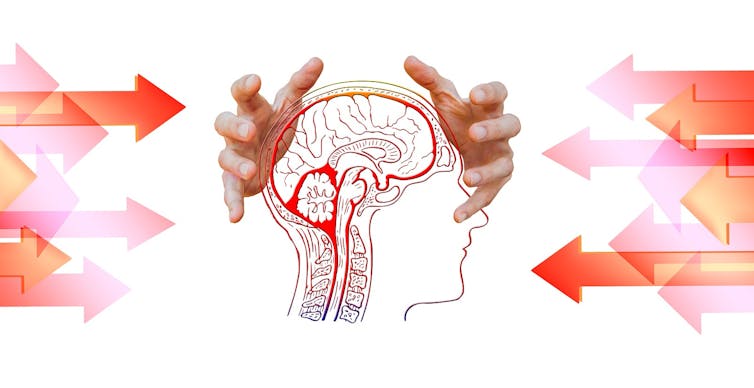
The pandemic has brought with it numerous stressors, including health issues, financial issues, relationship issues, isolation and changes in home and work responsibilities. (Pixabay)
It was recognized early on in the global pandemic that the most critical change in people's lives requiring social isolation, distancing, mask-wearing, cautionary messages to refrain from undue exposure as protection against contracting the SARS-CoV-2 virus, with the accompanying lock-downs of schools, businesses, gyms, restaurants, people would react to the burden of fear and isolation in a manner that would do them great psychological harm. 

That focus on mental health problems scarring people's lives has led to surveys and research, all of which simply validate the initial concern, as health experts see a marked decline in mental stability in patient presentations. Simply put COVID-19 stress is taking its heavy toll on  populations wherever it strikes. A new study and the polls it produced from a collaborative undertaking between Toronto's Centre for Addiction and Mental Health and the Angus Reid Institute along with human resources firm Morneau Shepell, bring up a vision of a worrying issue of strained emotions.

The big question being asked and answers sought is how much of what people experience is to be considered normal human reaction to an absolutely abnormal situation? CAMH's national survey, still ongoing, conducted along with Delvinia, established that 24 percent of women experience higher levels of anxiety than men, at 18 percent; 29 percent of parents with children under age 18 at home are likelier to feel depressed, compared to 19 percent of adults with no offspring at home in the same age group.

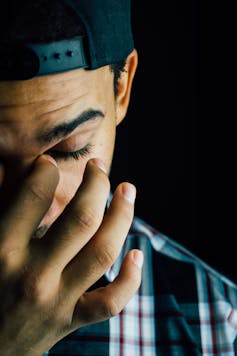
The pandemic has increased stress levels (Piqsels)
In addition, 25 percent both of women and men stress over becoming infected with COVID-19; 29 percent of men and 23 percent of women cope with that stress by engaging in episodic heavy drinking. Seven months following the incursion of the first wave of the coronavirus, people are seen to be emotionally exhausted, reflecting the mental health index produced in the latest report by Morneau Shepell based on an online survey of 3,000 people in late August.

People are seen to be less work-motivated, are struggling to concentrate, have concerns over job security and their dwindling emergency savings. Juggling multiple 'mental and situational distractions added to work' has been a draining experience. Angus Reid finds the percentage of Canadians with the potential of being categorized as "The Desolate" -- people suffering from both loneliness and social isolation -- has increased from 23 percent of the population a year earlier to 33 percent at the present time.

"Most made an effort to mitigate the spread of COVID-19 by avoiding personal contact with others", the pollster revealed, even over the summer, in spite of reopened patios and beaches and opportunities to expand social 'bubbles'. The strain on many people represented by too much time alone took its toll, while for others alone-time is hard to find. Days spent confined to homes, the strain of lost employment, the missing physical connection with family and friends, all has been overwhelming to people who had never manifested mental illness, but now try to cope with anxiety and depression. 

Frontline workers like nurses, doctors, personal support workers, first responders, retail clerks, all have been exposed to relentless stress, according to a Royal Society of Canada policy brief published this week. Those who experienced symptoms awaiting test results are full of anticipatory angst. People have been hospitalized, some placed on ventilators and over 9,700 Canadians died from the effects of COVID. Continual health warnings and the daily case counts have become numbing. According to the survey, 20 to 25 percent of Canadians experience "moderate or severe COVID-29-related mental health problems".

Indigenous groups, people living in poverty, some racialized groups and those with pre-existing mental health problems are seen to be particularly vulnerable to worsening mental health strain. Dr.Gordon Asmundson, one of the authors of the Royal Society paper, admonishes that roughly 15 percent may not be capable of adapting, and stand a good chance of becoming "functionally impaired" consequentially. He is only too aware that the country's mental health system pre-pandemic was stretched to its hilt.

Fear, sadness, grief, loneliness, frustration, irritability are all common responses and completely normal in view of the pandemic, states Dr.Allen Frances. He advises that psychotherapy, available now through virtual care, is able to assist people to cope with abnormal stressors. He draws the line, however, at the increase in the use of antidepressants. "This is terrible, but it's not as bad as being in the blitz in [wartime] London", he says.
  Exercise when we need it most. (Unsplash)
"The increased rates of painful emotions in the general population do not necessarily mean an increase in rates of clinical mental disorder, and it doesn't mean you're going to have a chronic mental illness."
"I think we have to normalize this as the new normal -- the idea that we're going to face tremendous stressors from pandemics, and even more from climate change."
"And so people have to start thinking long term, not waiting, 'oh, I'll be OK', or the world will be OK next month, or even next year."
"People have to start planning their next several years in a way that doesn't have them constantly anxious and sad and regrettng what's been lost, but rather finds the most in each day under these new circumstances."
"Find things you enjoy the most, and fill your day with as many good minutes as possible. Find the people who matter the most to you and the things that matter the most to you, the things that make life worth living, most of them can be preserved even in -- a pandemic."
"So a rational person should be cautious and fearful for probably the next several years, especially if they are in high-risk groups."
Dr.Allen Frances, professor emeritus, former chair, department of psychiatry, Duke University
https://images.theconversation.com/files/336797/original/file-20200521-102642-102vz8q.jpg?ixlib=rb-1.1.0&rect=0%2C305%2C5802%2C2901&q=45&auto=format&w=1356&h=668&fit=crop
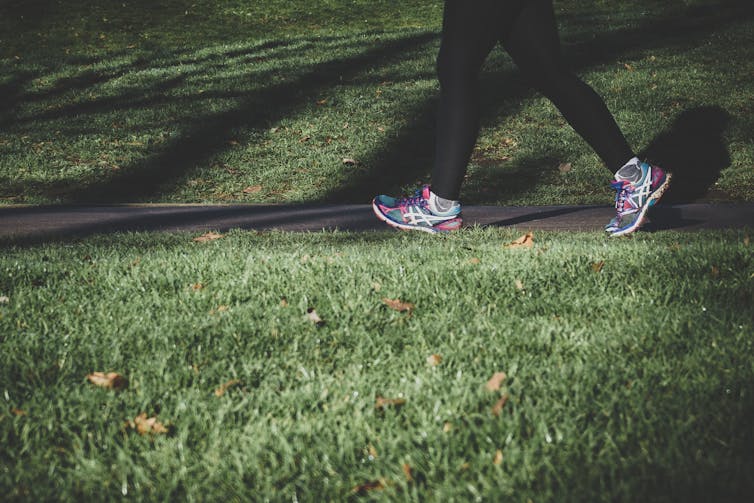
A brisk 30-minute walk three times a week is enough to prevent stress-induced depression. (Shutterstock)

Labels: , , ,

Saturday, October 17, 2020

Cause and Effect : Sleep Disorder

"Our brain is active and dynamic while we're sleeping. Sleep is not a quiescent state. Our brains are very active -- even more so than when we are awake."
"Good quality sleep can be a remarkable benefit to memory. The more you sleep, the more intact your sleep the more  you stand to benefit." 
"As we age, the quantity and quality of our sleep declines. Changes in sleep may affect memory processes that depend on sleep."
"When we learn something new these newly-formed memories are in a fragile state. They need to be strengthened to be made permanent and easily retrieved. It happens gradually over time. Sleep is an opportune time for this to happen."
"Sleep is largely all about the brain. The brain craves regularity. The brain will know when to go to sleep and when to wake up. The brain is very attuned to light."
Stuart Fogel, researcher, The Royal's Institute of Mental Health Research, Ottawa
https://www.aastweb.org/hubfs/how-to-diagnose-treat-the-5-most-common-sleep-disorders.png
"In order to survive, we need to sleep."
"You are so much more productive if your brain is functioning properly. Especially the frontal lobe, which is extremely demanding in terms of energy. Your brain uses more energy than some of your muscles. It has to be rejuvenated. If it's not, then everything collapses." 
"After fourteen hours, it's like your brain is drunk."
"If an adolescent has the internet in their room, they lose half an hour of sleep If they have a smartphone, another half-hour of sleep is gone."
"There is more and more competition for people to work during the night. But only 25 to 30 percent of the population can adapt to shift work."
"Life expectancy is actually reduced for those who work shifts. If you change your shifts constantly, you are always having to change your biological clock."
Joseph De Koninck, professor emeritus in psychology, University of Ottawa
A major virtual sleep conference took place in Ottawa, in August where a group of Canadian sleep researchers outlined results of an online sleep survey that succeeded in receiving 5,525 responses from Canadians between April and June. Sleep difficulties pre-pandemic was reported by 36 percent of the study respondents, while 50 percent reported that in the early months of the outbreak, they experienced difficulty in sleeping.
 
The researchers placed respondents into three distinct "clusters" of sleep changes based on respondent reports. The first group was noted for spending an extended time in bed in comparison to the time before the pandemic struck. This was manifested in their going to bed roughly the same time as per usual, but awakening later than usual. In the second cluster, people tended to reduce their time spent in bed by going to bed later and waking up earlier. While the third group distinguished itself by delaying bedtime, and sleeping in a bit later than usual.

The third group was found to be likelier to work from home, and less likely to have family responsibilities. Both the reduced-time-in-bed and delayed-sleep subgroups reported higher perceived stress, anxiety and depressive symptoms in higher proportions. Leading the researchers to conclude that the global pandemic has dramatically changed daily life, likely to affect sleep patterns, with the potential downstream of serious impacts on physical and mental health.

Sleep apnea, a condition where an individual stops breathing, then awakens gasping for air, has been associated with cardiovascular disease, while sleep disorders in general are linked to obesity, Type 2 diabetes, depression, and dementia. In 2019, the Society for Research on Biological Rhythms recommended adopting permanent standard time claiming it would be healthier for the heart and weight leading to a decrease in the incidence of cancer and tobacco and alcohol consumption, and would result in better psychological health and improve performance at work and school.

Even gut microbiome can influence sleep quality, according to growing (albeit controversial) evidence where a recent study discovered that sleep deprivation leads to alterations in the microbiome composition. When people tend to suffer from sleep deprivation their diet and exercise balance becomes affected. Sugar craving often assails people in sleep deprivation since it disrupts the regulation of body glucose. Mood and motivation are both impacted deleteriously which has the potential to affect exercise habits.

Blue light has been highlighted, with electronic devices interfering with sleep, as does caffeine, work and the pace of modern life in a 24/7 connected world. As an example, U.S. President Donald Trump claims sufficient sleep with three or four hours nightly, but according to Dr.De Koninck the man evidences classic symptoms of sleep deprivation; with mood swings, muddled decision-making and an inability to concentrate. "There's still this notion that sleep is a loss of time and people who sleep a lot are lazy people", points out Dr. De Koninck.

Neuroscience, psychiatry, psychology, respirology, even dentistry, according to Dr. De Koninck are all involved in sleep science. Dr. Jean-Philippe Chaput claims strong evidence exists that demonstrates that not enough sleep leads to obesity and the associated health problems emerging from obesity. About 43 percent of Canadian men and 55 percent of women report difficulty falling or staying asleep, according to Statistics Canada. Sleep apnea, sleepwalking, narcolepsy, restless-leg syndrome and shift-work all represent sleep problems and are treatable once diagnosed.
  • Insomnia, in which you have difficulty falling asleep or staying asleep throughout the night.
  • Sleep apnea, in which you experience abnormal patterns in breathing while you are asleep. There are several types of sleep apnea.
  • Restless legs syndrome (RLS), a type of sleep movement disorder. Restless legs syndrome, also called Willis-Ekbom disease, causes an uncomfortable sensation and an urge to move the legs while you try to fall asleep.
  • Narcolepsy, a condition characterized by extreme sleepiness during the day and falling asleep suddenly during the day.
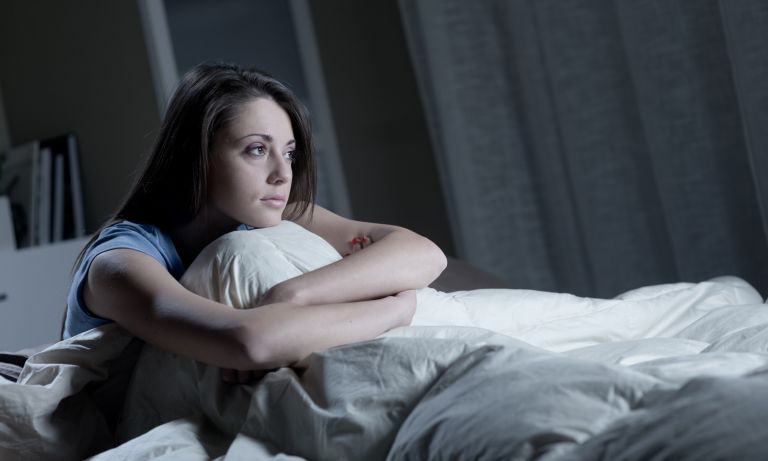
Woman, legs covered by comforter, sitting up in bed, clutching her knees, gazing out
 
"Lack of sleep increases food intake and is associated with more screen time. A good night's sleep can improve the success of weight loss interventions by facilitating appetite control and increasing physical activity level in some individuals."
"Even [U.S. president Bill] Clinton said he made bad decisions because he didn't sleep enough. I don't know anyone whose genes are good with four hours. I would like it if I needed less sleep, but it's just not possible."
"It's a good sign you're getting enough sleep if  you wake up spontaneously without an alarm clock. I always wake up around 6 or 6:30 without an alarm clock. If  you need an alarm clock, it's a sign you're sleep-deprived."
Jean-Philippe Chaput, researcher in healthy lifestyles, Children's Hospital of Eastern Ontario 
 
"I'm really interested in the intersection of mental health and sleep. I see sleep as having an impression on mental health."
"If you focus on improving sleep, it will have a positive impact on mental well-being."
Rebecca Robillard, director, clinical sleep research sleep laboratory, University of Ottawa


Labels: , , , ,

Wednesday, September 02, 2020

Time, of the Essence in SARS-CoV-2 Inoculation

Yoshua Bengio, a Montreal-based artificial intelligence pioneer and co-winner of the prestigious A.M. Turing prize in 2019, urges provinces to get data flowing so scientists can better combat the coronavirus.

"I am actually quite optimistic that we will have a vaccine and it will be distributed to the whole world as quickly as possible in 2021, perhaps bleeding into 2022."                           "I don't know which of the vaccine candidates undergoing clinical testing in humans will ultimately be shown to be safe and effective. But the encouraging news is that all of the vaccine candidates that have entered trials in humans so far are safe and have elicited high levels of antibodies against COVID-19."                                                                              "The COVID-19 story illustrates the tremendous capacity and speed of science in the 21st century and the power of international collaboration."                             "We have got what we wanted -- a diverse portfolio of vaccines based on different platforms. We have now signed those deals and there are more coming."              "This disease is not one that anybody wants to get. I think we have underestimated the severity of the disease and the lingering complications for many people. It is not like the flu. This is a serious disease."                                                                          Alan Bernstein, scientist, member, Canadian COVID-19 task force, President & CEO of CIFAR (Canadian Institute for Advanced Research) 

Literally, dozens of prospective vaccines to inoculate the world community against the dread novel coronavirus are on tap in the near future to complete essential clinical trials, clear authorization by government health agencies to proceed with manufacturing, and distribute their products world wide. Many countries, anxious to be able to resume normalcy, have signed contracts with the world's leading pharmaceutical companies for hundreds of millions of doses of the COVID-19 vaccines. Without an effective vaccine no country is immune from the virus's ongoing predation and death toll.

So great is the urgency to get on with producing, distributing and inoculating the greater world public that even before the authorization to proceed with production gained by approval, many pharmaceutical companies producing vaccines have begun anticipatory production. Moderna is on track for results from its Phase 3 trials by November, while Novavax has a vaccine candidate ready for production but is yet in Phase 1 trials though even there it succeeded in producing antibodies in patients four times as high as those who have recovered from COVID-19.

An engineer tests a vaccine at a lab in Beijing. Photo: Nicolas Asfouri/AFP

In the race for approval and production countries like the United States, Britain, France and Canada have committed to multiple agreements with various pharmaceutical companies close to completing their second and third phase trials. No fewer than 172 countries are engaged in their own research and preparing for production as soon as authorization can be achieved. For the most part, production will begin for many of them in 2021, but hopes are  high that a handful of the more advanced trials -- some of which have produced papers published in prestigious journals -- will see success before the year is out.

In two countries governments have authorized the inoculation of certain segments of the population who have offered themselves as volunteers even before final phases of the trials of the vaccine have not concluded. China boasts that it is the first country to begin inoculation its citizens, those earmarked as essential in reflection of the work they perform. International scientists view this as potentially hazardous. It is not only China, but Russia as well where volunteers have made themselves available as proverbial guinea pigs.

Because of the urgency to establish a protocol against the SARS-CoV-2 virus to return the world to the state it was in pre global pandemic, advance purchase agreements are allowing vaccine companies to begin early production to ensure that some vaccines will be available for distribution just as soon as they are approved. Advanced purchase agreements ensures that countries, hedging their bets by signing agreements with not only one, but several companies, can anticipate that one of the vaccines at the very least should be ready at an early date for inoculations.


Companies such as Moderna, Pfizer, Novavax and Johnson and Johnson make use of different, innovative methods in the creation of a vaccine to protect people from the virus. Dr.Bernstein notes that Canada has a relatively high rate of vaccine acceptance in the industrialized world alongside high trust by Canadians in their public health system which has as well a good track record of distribution and administering vaccines through the medium of the annual influenza vaccine campaign.

He has concerns, however, that go well beyond the timely infusion of a reliable and efficient vaccine for Canadians, in his consideration of the difficulties faced by areas in the developing world. International efforts have gone forward in financial contributions to ensure that poorer countries have swift and equal access to COVID-19 vaccines, once they're available. Dr.Bernstein would go further: 

U.K. scientists work on a potential COVID-19 vaccine. Carl Recine/Reuters

"If you think of the pandemic as a house fire, say a grease fire in your kitchen, it spreads really quickly. If you want to make sure you put the fire out, it has to be out in every room in  your house. If any embers are burning, it will flare up."  "Unless we get rid of it everywhere, not just in Canada, we have not got rid of it. Say we don't choose to buy vaccines for Africa or the Caribbean, is nobody going to travel? It is in our selfish interest to get rid of it and it's also the right thing to do."

Labels: , , ,

Thursday, August 27, 2020

COVID-19 Heart-Stopping Alert

Coronavirus
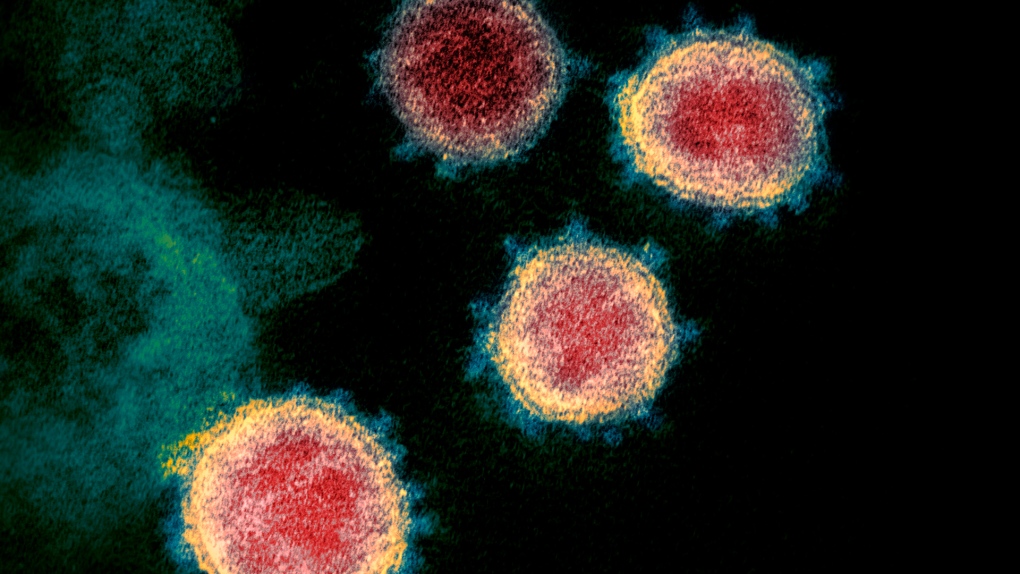
Electron microscope image COVID-19. CP/NIAID-RML via AP

"[It is clear that COVID-19] is a disease that affects multiple organ systems. Everyone thinks of the lungs first and foremost, but we know there are quite a few patients who have involvement of the heart." "What is really scary about this infection is its unpredictability. You have the occasional story of the 25-year-old marathon runner in perfect shape who dies from COVID. That can happen. That freaks everybody out."                                                              "We know that COVID and heart disease don't marry very well. You don't want to bring the two together."                                                                                              "I think we are going to have to manage both threats for a long time -- the COVID threat, but also the heart disease threat, and make sure people don't forget to seek medical attention when they need it."                                                                    Dr.Marc Ruel, head, cardiac surgery, Heart Institute, Ottawa

Doctors and nurses inspect a patient’s scans in Istanbul. Concern is growing that the lungs and other organs can struggle to heal after infection. Chris McGrath/Getty Images

Specialists at the University of Ottawa Heart Institute are on alert in recognition of medical experts now acknowledging that COVID-19 constitutes an especial threat to the heart-health of those who contract the virus. Though once it was felt people with heart disease were likelier to become infected with COVID-19 now evidence has shown that those with heart disease, though not likelier to contract COVID-19, are nonetheless likelier to have a severe form of the disease.

An even stronger link between COVID-19 and the heart has been revealed by new research. Research that leads to the belief that COVID-19 could result in long-term detrimental impacts on the state of heart health of some patients with no prior heart disease condition. Dr. Ruel of the Ottawa Hospital Heart Institute estimates that the number of patients with heart involvement resulting from COVID could be as high as 20 percent.

Because COVID-19 stresses the body in a number of ways, it specifically does so to the cardiovascular system. In that it can both reveal the presence of previously unknown heart disease and on the other hand, become the catalyst to produce new issues in some patients, though its frequency is not yet clear. According to Dr. Ruel, COVID-19 ultimately will have a profound effect on the heart health of some patients once recovered from the disease.

A recent study from Germany, published in JAMA Cardiology discovered troubling cardiac signs in patients recovered from COVID-19 in comparison to people who were similar but never infected. Comparing cardiac MRIs of 100 relatively healthy previously infected patients and 100 non-infected patients, the study found those who had COVID-19 likelier to come out of the experience with signs of heart disease, including structural changes to the heart in 78 percent of recovered patients. 

Yet another study found elevated levels of the virus in the hearts of patients who had died as a result of having contracted COVID-19 early in the appearance of the pandemic. Some characteristics of COVID-19 clearly have direct influence on the heart. Unusual blood clotting issues in a significant number of patients, along with widespread inflammation which can damage cells and affect the function of the heart, included. 

There have been instances of relatively young and healthy people suffering serious outcomes, even death, while many other people who contract COVID-19 recover completely. No cases of COVID-19 have occurred among open-heart surgery patients at the Heart Institute, but the potential of such an occurrence must be contemplated, with the continuation of the global pandemic.

Another issue is raised in the presence of the pandemic, one of persuading people reluctant to enter a  hospital for fear of contracting COVID-19 there. Evidence exists globally of patients deliberately avoiding entering hospital for any reason, for fear of contracting the virus there, leading to more severe illness of various types; in some cases death.

"These are two studies that both suggest that being infected with Covid-19 carries a high likelihood of having some involvement of the heart. If not answering questions, [they] prompt important questions about what the cardiac aftermath is."  "The question now is how long these changes persist. Are these going to become chronic effects upon the heart or are these — we hope —  temporary effects on cardiac function that will gradually improve over time?" 
Matthew Tomey, cardiologist, assistant professor of medicine, Icahn School of Medicine, Mount Sinai Health System, New York

1 Brain fog Difficulty thinking can occur after acute COVID-19infection. The virus may damage brain cells, and inflammation in the brain or body may also cause neurologic complications.Other viral infections can also lead to brain fog. 

2 Shortness of breath Doctors are eyeing lung and heart complications including scarring.Patients who become critically ill with COVID-19 seem more likely to have lingering shortness of breath, but those with mild cases are also at risk. 

3 Heart arrhythmia The virus can harm the heart, and doctors are concerned about long-term damage. How the heart heals after COVID-19 could help determine whether a patient develops an irregular heartbeat. 

4 Hypertension Some patients have high blood pressure after an acute infection,even when cases were relatively mild and people were previously healthy, possibly because the virus targets blood vessels and heart cells.   V. Altounian/Science


Labels: ,

Saturday, August 22, 2020

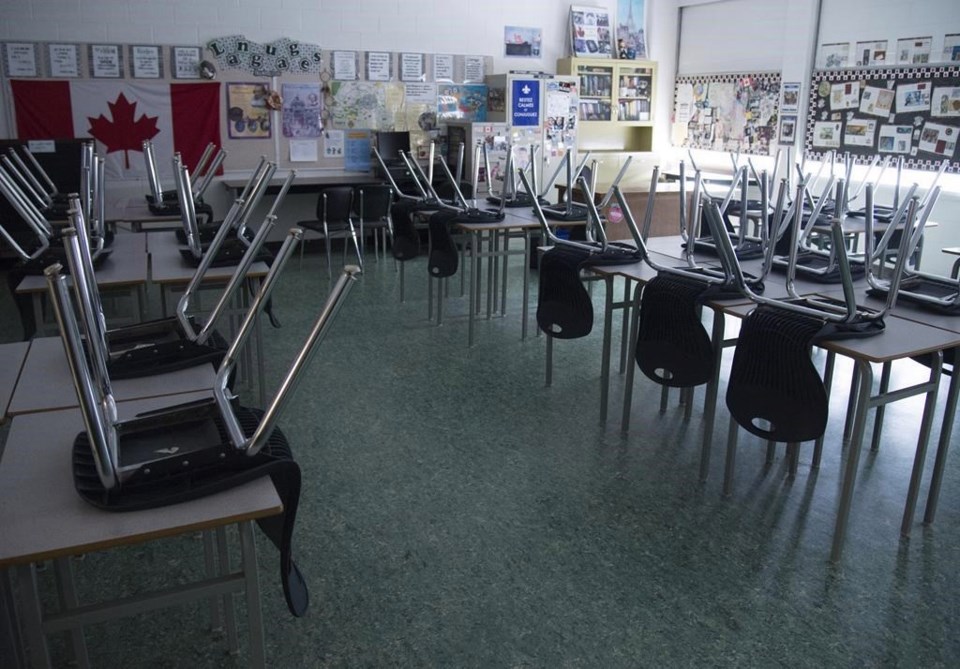
Risking Student Infection in Return to School

mask 2
Stock Image

"As you double the class size, from eight to 15 to 30, the number of cases and also the lost student days of instruction not only double each time, they triple or quadruple or quintuple. Those losses accelerate as you go to larger and larger classes."        "[Policy makers planning for elementary school class sizes of 30 kids or more] need to immediately reconfigure their school opening plans [to switch to hybrid models of part in-person, part online]."                                                                                  "Student days are like passenger miles -- it's the number of students affected, times number of days lost. When you put mores students in a classroom there is a higher chance one of them will test positive at some point for COVID, and so you've got to close that classroom. By the time you've identified that COVID case there might be other cases in the classroom already.You get aerosol transmission and you generate more cases by the time the classroom gets closed."                    "Many people may infect only one person, or even no one, but in some cases you have a so-called super-spreader who infects a huge number of people."                   Chris Bauch, mathematician, professor of mathematics, Waterloo University

"School is going to accelerate spread of the virus if it's already in the community. This is the same thing that happened when we reopened stores and restaurants. [School reopening] is not going to create more virus, but it's going to make it easier for the virus to spread."                                                                                          "It's very possible you could see cases."                                                        Dr.Chris Labos, cardiologist, epidemiologist, Montreal

jfj50173952-4

A new study undertaken by mathematics professor Dr.Chris Bauch and collaborators to determine the ideal class size in preventing COVID outbreaks affirmed through modelling that the very size classes many provinces are contemplating for their September school reopenings will predict the numbers of infections of COVID-19 certain to break out in each community. The infection numbers will be analogous to the size of classes in primary school classrooms as well as before-and-after school daycare programs.

Universally, teachers in British Columbia, Alberta, Quebec and Ontario are all making demands to their governments to mandate smaller class sizes in fear of just such scenarios unfolding with the reopening of the new school year. Students attending kindergarten to Grade 8 are set in Ontario to return to school with no reduction planned in class sizes. They are scheduled to spend the school day in a single group, limiting contact with other children in their school 'bubble'. Masks are required in grades 4 to12 only.

As a test instance, experts view what has happened in Israel as high schools reopened in May, when weeks afterward, major COVID-19 cases began spiking. In Berlin, hundreds of students and teachers from dozens of schools were infected with the coronavirus; now are in quarantine, two weeks following their school reopenings. 

Researchers who designed the new modelling study looked at the effect of different student-to-teacher ratios in a primary school class, along with school-based daycare to obtain an understanding of transmission of the SARS-CoV-2 virus causing COVID-19.  Despite masking, social distancing and hand washing, the model predicted an average of 53 infections in a school community of 150 students, parents and teachers in classes of 30 students.

Classes of 15, on the other hand, saw viral outbreaks of 12 infections, where students attend alternative weeks in groups of 15 students each class. For the 30-students-to-one-teacher ratio, outbreaks occurred over 40 to 60 days on average resulting in the number of student-days lost as a result of classroom closures ranging from 75 for the smallest ratio to 1,000 for the largest. 

The larger the class the greater number of students affected; the more students to a classroom the more difficult social distancing becomes to achieve.

According to the modelling, the teacher occasionally would be the first to become infected, though more generally it would be a student "because there are more of them. They bring it in somehow and we model what happens -- where they spread it in their household and where they spread it in school." It remains unclear as yet how efficient children are in spreading the virus causing COVID-19. 

As for childcare, the 15 children to two teachers ratio appeared the worst across all possible scenarios. Childcare optimally would be operating on a seven or eight children per room model, according to Dr.Bauch's mathematical reasoning, which would see siblings grouped together in daycare. 

Labels: , , , , , ,

Tuesday, August 18, 2020

Obesity and COVID-19 Morbidity

"Although this study examines a variety of factors that may be associated with risk of death from COVID-19, our main objective in this paper was to understand risk related to obesity, and obesity-associated chronic conditions in our health care system."                                                                                                                "Our findings suggest that it is not race or ethnicity alone that increases risk of death, but rather other correlated factors, including access to health care, comorbidities, and obesity, that also play an important role."                                   Lead researcher, Sara Y. Tartof, PhD, MPH,  Kaiser Permanente Southern California Department of Research & Evaluation

Getty Images

"By viewing the risk posed by obesity through the prism of COVID-19, this study advances the characterization of obesity as a disease that demands a public health and clinical response similar to that for diabetes or heart disease." "One pandemic is expanding our understanding of another, and we hope this work not only provides physicians and patients a better grasp of the risk obesity poses in the setting of COVID19, but also to overall health."  Senior author, Sameer B. Murali, MD, an internal medicine physician at Kaiser Permanente Fontana Medical Center

A new study on obesity and COVID-19 has been published in the peer-reviewed journal Annals of Internal Medicine. A team of researchers from Kaiser Permanente responsible for the paper, used data from the health-care body's insured patients to derive the results of their study from the health characteristics of 6,916 patients who had contracted the SARS-CoV-2 virus that causes COVID-19 in the period between when the epidemic struck the U.S. in March and the beginning of May.

The goal was to determine whether and how greatly obesity had an effect on the risk of dying from COVID complications. The Kaiser Permanente model verified that obesity is a dominant driver and an independent risk factor for mortality caused by COVID-19, factoring out hypertension. Issues such as sex, age, race, smoking status, heart failure, history of myocardial infarction, socioeconomic status, vascular disease, asthma and diabetes were all taken into account.

When all was accounted for, obesity stood out as uniquely dangerous in COVID-19. Risks linked to overweight and COVID were seen to increase morbidity by 81 percent higher as compared to people within normal weight parameters in COVID infection. Excess risk rose for those with a BMI in the 35 to 39 kg/sq.m range at 16 percent; a BMI of 39 equal to 288 pounds weight for someone six feet tall.

BMI in the range of 40 to 44 raises risk to 168 percent, and 45-plus BMI rises to 318 percent risk. Cardiologist David Kass of John Hopkins was invited to write an accompanying editorial by the journal; to envision how obesity affects mortality risk in COVID-19. Dr.Kass made the observation that obese individuals are endowed with weaker immune systems and poor endotheliums (cellular layer on the interior surface of blood vessels). Their breathing is impaired at night or while in a prone position.

A more elevated "docking" protein results from fatty tissue, which the COVID viruses makes use of to break into cells, according to Dr.Kass, conceivably permitting fat to "serve as a viral refuge and replication site, prolonging virus shedding."

Medical workers prepared to transport the body of a patient who died of Covid-19 at the United Memorial Medical Center in Houston.
  Credit...Go Nakamura/Getty Images

  • Patients who were severely obese had nearly 3 times the risk of death and those who were extremely obese had over 4 times the risk of death from COVID-19 compared to those of normal weight.
  • Severely and extremely obese people who were 60 years old and younger had a substantially higher risk of death than severely obese people over age 60.
  • Severely and extremely obese men had a very high risk of death, while women had no increased risk of death associated with obesity. searchers were able to control for a variety of risks previously reported in the literature and did not detect increased risk of death from COVID-19 associated with Black or Latinx race/ethnicity alone.

Labels: , , ,

 
()() Follow @rheytah Tweet