Ruminations

Blog dedicated primarily to randomly selected news items; comments reflecting personal perceptions

Wednesday, June 18, 2025

Unfathomable Mother Love

"I thought she ran off. I was so afraid. I kept sending her messages on MSN back then urging her to let somebody know where you are and that you are OK."
"I think she [Penny Bourdreau] should serve what she was sentenced to. I read that her assessment to reoffend is really low and that she's not probable to commit the same crime."
"Killing Karissa was unprovoked, so who is to say it wouldn't take the right situation for her to do something again."
"If she is given parole, I don't think she should have access to children whatsoever." 
Courtney Sarty, childhood friend
 
"You can never call yourself 'mother in conjunction with Karissa's name again, and the words 'Mommy don't' from a trusted and loving Karissa are there to haunt you the rest of your natural life." 
Judge Margaret Stewart, Halifax, Nova Scotia
 
"It is their opinion [unnamed police agency] that you were issued a life sentence with no parole before 20 years served which needs to be followed." 
"[There is still a] deep sense of lost and grief, be it family members, friends or the community at large."
"The grief and opposition to your release continues to this day."
Parole Board of Canada 

"My whole world changed the day Karissa was taken away from me."
"Now, she’s only memories, pictures and a name etched on a stone."
"Am I a failure as a father? Should I have seen this coming?"
"[Karissa’s murder had] long effects on her family, friends [and] schoolmates that knew and loved her."
"Hearing the horrific tale has changed them in many ways forever. Life will never be the same for any of us."
Paul Boudreau, Karissa’s father
https://smartcdn.gprod.postmedia.digital/nationalpost/wp-content/uploads/2025/06/karissa-boudreau-1.jpg?quality=90&strip=all&w=564&type=webp&sig=cxK4-I1PxhGApzYTOJeOWA
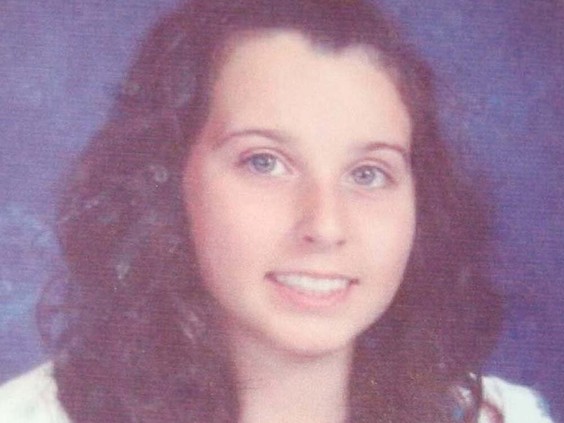
Karissa Paige Boudreau. Photo by Courtesy Bridgewater Police Department
 
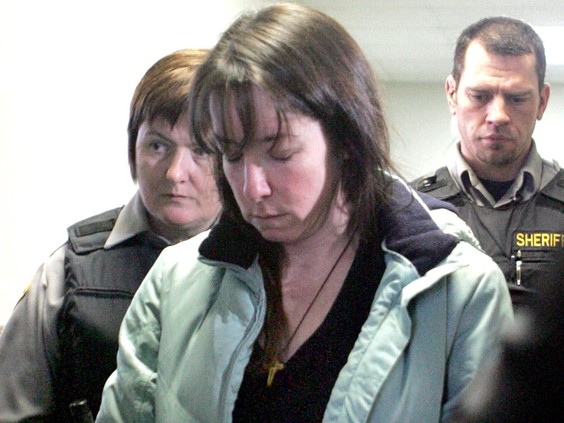
Penny Boudreau, serving a life sentence for murdering her twelve year-old daughter Karissa, has been a model prisoner at the Nova Institution for Women, located in Truro, Nova Scotia. At the prison she works as a cleaner and is entrusted with ordering groceries for her unit in the prison. She was sentenced seventeen years ago to 20 years' incarceration after confessing to having killed her only child. Under that sentence which did not allow for parole until two decades had been served in prison, she would be eligible for release on June 13, 2028. But she has been given the opportunity to convince a parole board she represents no threat to society and should be given early release. 
 
Under the Corrections and Conditional Release Act she is eligible to apply for unescorted passes and day parole three years before completion of her life sentence. Day parole for rehabilitative purposes allows an offender to participate in community-based activities preparatory to full parole or statutory release. A backlash has resulted by the woman's decision to apply for unescorted release. The reality of her daughter's death is that her mother with sinister motivation aforethought, had placed packing twine in her vehicle with the intention of its use in disposing of an impediment to her relationship with a lover.
 
https://smartcdn.gprod.postmedia.digital/nationalpost/wp-content/uploads/2025/04/ew061608pennyboudreau1_291927081-1.jpg?quality=90&strip=all&w=564&type=webp&sig=eLtb2aCvNi60nd76T0Lr_Q
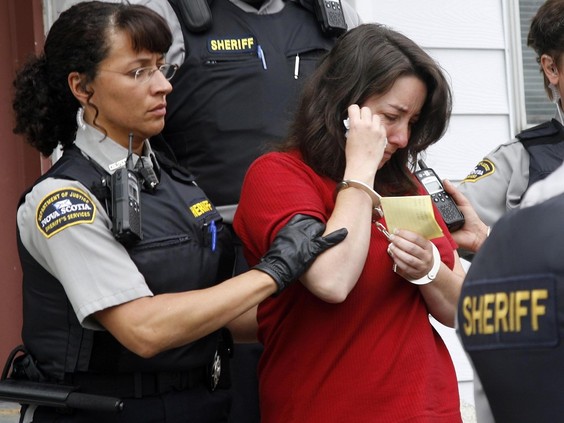
Penny Boudreau is led from court in Bridgewater, N.S., in June 2008, after her appearance in the murder of her 12-year-old daughter, Karissa Boudreau. Photo by Eric Wynne
 
Seventeen years ago, Penny Boudreau at age 33 was living with her boyfriend. Both were workers at a grocery store in the town of Bridgewater on the South Shore of Nova Scotia. Living together in a small two-bedroom apartment, they were destined to share that apartment with a third person: Karissa Boudreau had arrived to live with the couple, after having been in her father's care. The girl, it would seem, was a source of friction in the apartment between the three residents. Karissa resented her mother's boyfriend living with her and her mother.
 
On Saturday, January 27, 2008, mother and daughter took a drive to be alone together, to discuss house rules and the conflict that existed between the girl and her mother. Penny Boudreau stopped briefly at a grocery store in the midst of a snowstorm, while her daughter waited in the car. When the mother returned to the parked vehicle Karissa, she claimed, was nowhere to be seen. Two hours on, the mother dialled 911 to report her grade six child missing, out in a snowstorm wearing a hoodie, vest, jeans and pink Crocs.
 
A search involving helicopters, police dogs and concerned people ensued, while for 13 fruitless days the girl remained missing. Penny Boudreau appeared on television, appealing for help to find her daughter: "Karissa, we love  you. We are all looking for you, just come home or call or something", the mother urged her absent daughter. During their search, police contacted friends of the girl, including Courtney Sarty, to alert them to the possibility that their friend might be  hiding somewhere on their property. 
 
It took two weeks, but Karissa's frozen body was discovered less than five minutes from Boudreau's apartment, on the LeHave riverbank. An undercover operation was then launched by the RCMP, initially focusing on Penny's boyfriend, briefed and alerted by reports of shouting and fighting at the apartment.  A plan was hatched to target Boudreau's boyfriend, investigators attempting to determine whether the couple was responsible for Karissa's death. 
 
https://smartcdn.gprod.postmedia.digital/nationalpost/wp-content/uploads/2025/06/Memorial-for-Karissa-Boudreau.jpg?quality=90&strip=all&w=564&type=webp&sig=LHnOXcsHVyGPHkWG6S_yuQ
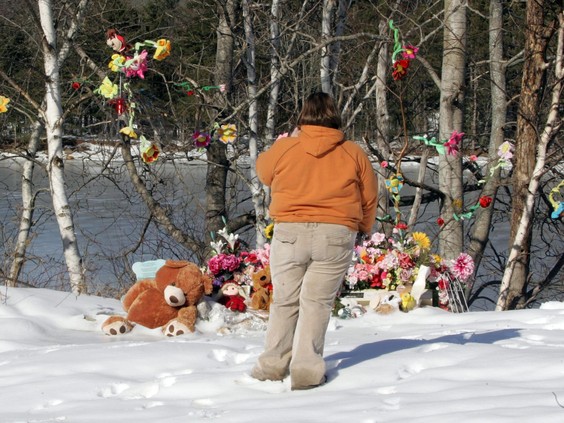
The memorial site along the river bank in 2009 where Karissa’s body was found still exists today.
 
Eventually, the boyfriend was cleared of suspicious involvement, leaving police to organize a Mr. Big fake crime scenario in hopes of eliciting a confession from Boudreau. And it was a successful gambit; feeling she was speaking to someone involved in crime, and not to a police investigator, the mother re-enacted the scene that unfolded as she strangled her daughter on a deserted road. Boudreau was charged with first-degree murder, later pleading guilty to second-degree murder, to bypass a trial.
 
Now parole board members are set to hold a 18 June hearing to determine whether Boudreau represents a risk to society, reviewing her psychological risk assessments that described Boudreau in a dysfunctional relationship, fearing abandonment by her boyfriend at the time of the murder. In reflection of her model jail behaviour, she has been granted regular escorted temporary absences to leave prison for several hours under supervision to attend  church services, Bible study meetings and visiting a friend from the congregation. 

Since murdering her child, Boudreau has been estranged from her family. A pastor at a church she attends has confirmed Boudreau will receive continued support, working her way toward proving she is able to integrate back into society. She was given the opportunity to tour a community residential facility -- a halfway house -- and met with the director. 
 
A memorial for Karissa remains on the LeHave riverbank where her remains were found. Her friend Courtney Sarty visits that memorial, still struggling to understand how a woman could forsake her unconditional love for her daughter. "I have my own son and my love is deep. He could curse me and put me down to the lowest, and I'm still going to look at him and say, 'I love you'", she said. 
 
https://smartcdn.gprod.postmedia.digital/nationalpost/wp-content/uploads/2025/04/dp013009boudreau2_292032211.jpg?quality=90&strip=all&w=564&h=423&type=webp&sig=BZRGx0D3iJG76iTBsHGo-Q
Penny Boudreau, who strangled her twelve year old daughter, in 2009. Photo by Darren Pittman /
 
"The residents of the South Shore, Halifax and communities across Canada deserve to feel safe in their own neighbourhoods."
"Like many Nova Scotians, I am appalled to learn that Penny Boudreau ... has been on day passes from prison and could soon be granted unescorted leave from prison."
Rick Perkins, former Conservative Member of Parliament for South Shore-St.Margarets 

Labels: , , ,

Sunday, April 10, 2022

The Venerable, Trusted, Federal Policing Agency

"Wortman drove for about six minutes from Hunter Road and was approaching the New Annan Road intersection. He could likely see Lillian Hyslop turning the corner and walking away from him on the other side of the road. She got a little more than 100 metres down the road, just pas the big, green rectangular road sign alerting drivers to turn right for West New Annan and Tatamagouche."
"It was around 9:34 a.m. when Wortman either drove across the highway or made a U-turn, stopped near Hyslop, took aim at her head with his laser sight and shot her, killing her instantly. She was his seventeenth victim in about eleven and a half hours."
Excerpted from 22 Murders, Paul Palango
Lawyer Roger Burrill, part of the presenting counsel team, releases details at the Mass Casualty Commission inquiry in Halifax, N.S. on Tuesday, March 1, 2022.

Two years ago, in April, Gabriel Wortman, a Halifax, Nova Scotia denturist, 51, set out on a nightmarish vendetta against people he knew, innocent of the knowledge that they would be hunted down and murdered by a man known to be violently irascible and controlling, who collected firearms and decommissioned RCMP vehicles. He would end a two-day killing spree by killing 22 men and women, some of whom he knew, others complete strangers, including an RCMP constable.
 
Those two days in April constituted the deadliest mass shooting event that Canada had ever experienced. And the federal police agency tasked with maintaining peace and good order failed to demonstrate on that singular occasion that they remain the stuff of legendary policing history. An enquiry was called, and now the Mass Casualty Commission is in the process, begun in February, of hearing testimony to enable them to reach a consensus on how this mass murder spree failed to be apprehended on the very first day that thirteen people in Portapique, lost their lives.
 
Gabriel Wortman committed mass murder in Portapique, where he and his common-law wife had a cottage, and set fire to homes of many of those he shot to death. 911 calls went out immediately the first of the killings began on his murderous rampage and he eluded capture as RCMP began entering the town. He spent the night in hiding, and by 6:36 a.m. the following morning set out to continue his killing spree. The enquiry heard that the RCMP failed to make use of its Alert Ready system which would have ensured an audible warning was circulated to the community and beyond.
 
The RCMP blocks the path to Gabriel Wortman's property in Portapique during a criminal investigation into the shootings. (Jonathan Villeneuve/Radio-Canada)

Reasonable speculation has it that notification of the community and its further surroundings would have alerted people to danger, and possibly saved an additional nine lives. It took too long for police to begin sending out alerts, including the predator's description -- and took even longer for additional alerts to be circulated warning that he would be driving an RCMP look-alike vehicle. Initially, back in Portapique, the first three responders to the "shooting" came close to firing on an innocent person thinking him to be the shooter.
 
He was actually a man visiting his father who lived in Portapique and had gone out to look for his brother, who, hearing inexplicable sounds had gone out to investigate. The man had gone to a nearby forest, shining his flashlight, when he discovered the body of his brother, shot dead. This was the man the RCMP constables mistook for the killer, but they lost sight of the figure when he turned off his flashlight because he saw the lights illuminating figures in the distance that he thought might be the killer.
 
Another RCMP constable saw the killer bearing an "unsettling grimace", drive past him in the opposite direction on the highway on the second day of the massacre when a hunt for the murderer was well underway. "If I stop and this is the bad guy, I'm going to get shot here, I'm going to get killed", the constable told lawyers for the enquiry. He drove on before finally turning back, thinking if he attempted to turn, on the tight two-lane highway he could be ambushed. When he finally drove in the direction the killer had taken, he had lost him.
 
Soon afterward, Wortman encountered RCMP Const. Heidi Stevenson, who recognized who he was, rammed his vehicle, and was shot to death by Wortman in a follow-up exchange of gunfire. The killer took Const.Stevenson's firearms and set off again. On another occasion, RCMP came across another victim on April 19. Heather O'Brien 55, was on the phone with a friend while seated in her parked Volkswagon Jetta. Wortman fired several shots into the vehicle that hit the woman. And then sped away.
 
When RCMP arrived they checked the woman's condition, declaring there was no pulse and her digits were 'cold'. They would not permit paramedics to approach, nor would they allow the woman's daughter to go to her mother's vehicle, telling them it was unsafe to remain there, the killer could be nearby. "You need to go. It's not safe for you to be here", one constable said to the woman's daughter. It was later discovered through the woman's Fitbit that she was registering a heartbeat nearly eight hours after being shot.
 
Twenty-two people died on April 18 and 19. Top row from left: Gina Goulet, Dawn Gulenchyn, Jolene Oliver, Frank Gulenchyn, Sean McLeod, Alanna Jenkins. Second row: John Zahl, Lisa McCully, Joey Webber, Heidi Stevenson, Heather O'Brien and Jamie Blair. Third row from top: Kristen Beaton, Lillian Campbell, Joanne Thomas, Peter Bond, Tom Bagley and Greg Blair. Bottom row: Emily Tuck, Joy Bond, Corrie Ellison and Aaron Tuck. (CBC)

Labels: , , ,

Monday, August 02, 2021

The Fishing Industries' "Ghost Gear"

Lobster traps, like these seen in Cape Breton, are one of the most common forms of ghost gear in Atlantic Canada. JESSICA SMITH • CAPE BRETON POST
"When it starts impacting the bottom line of one of the most important industries in Nova Scotia ... it becomes apparent that we need to do something about it."
"We can actually make more money if we clean up our act."
"There's probably way more gear out there than this study suggests. Those economic losses are only going to increase."
"You get fish and crab in the lobster pots all the time. If the [trapped creatures] die in place, then they themselves become fresh bait for other creatures to enter the trap. As long as the trap stays intact, that [cycle]  can keep on going. Those [traps] older than four years old and still intact continue to catch bycatch."
"Our estimate of the diversity of species and the total number trapped is a massive underestimate. It's important that policy changes should be made."
Tony Walker, associate professor, School for Resource and Environment Studies, Dalhousie University
Over seven tons of abandoned lobster traps and other fishing gear were found over1,523 square kilometers in South West Nova Scotia. (Cape Breton Environmental Association)
 
Canada's federal Ghost Gear Fund succeeded in removing 225 tonnes of old gear from Canadian and international waters in the past two  years; 159 tonnes of gear from the Atlantic, and 65 tonnes from the Pacific Coast. The issue of lost and discarded fishing gear dumped off the southwest coast of Nova Scotia, the site of the country's most lucrative lobster fishery, has been trapping species at risk and harming the lobster industry. Traps are supposed to be checked to allow for the release of bycatch every 24 hours. Bycatch referring to any species other than market-size lobster/

A new study out of Dalhousie University in Halifax saw researchers determining that abandoned traps, ropes, hooks and other fishing equipment cost the industry close to $200,000 in lost catches on an annual basis. The landed value of Nova Scotia lobsters in 2019 was estimated at $880 million. Ghost gear and all the problems associated with the issue is a problem that exists on a global scale. This is the first study designed to provide a preliminary assessment of the environmental and economic impacts of the problem.
 
The conclusions reached are based on findings researchers came up with last summer and fall when five fishing boats were put to use in hauling in over seven tonnes of lost, discarded and abandoned gear -- with the vessels having conducted 60 trips over 1,500 square kilometres. About 66 percent of the gear pulled to the surface represented lobster traps, while additional gear included cables, ropes, marker buoys and other debris of a marine nature.
 
Ghost gear
Fishing gear collected in 2020 from the Atlantic Ocean is shown in a handout photo from the Department of Fisheries and Oceans. THE CANADIAN PRESS/HO-DFO
 
The traps referred to frequently as lobster pots could be linked to $176,000 in annual commercial losses since many continue to catch bottom-feeders once they've been left behind. Untended traps continue to indiscriminately capture creatures such as groundfish, considered species at risk. Once the traps are abandoned, a cycle is initiated, with sea creatures continuing to be trapped. Yet precisely determining numbers captured by derelict traps can be problematical. 

When researchers managed to free some trapped creatures they found 15 different live species -- five representing species-at-risk; a wolffish, a cod, a cusk and two sculpins. "It adds weight to the negative environmental impact. These are federally protected species, and they're dying unnecessarily." According to Dr.Walker, fishers are loathe to bring in any traps they come across to shore that aren't their own for fear of facing allegations of poaching other people's traps.

An emaciated Atlantic wolffish, shown in this handout image provided by Coastal Action via Dalhousie University, with chaffing injury was released from a retrieved lobster trap near Shelburne, Nova Scotia.

Labels: , , , ,

Tuesday, May 12, 2020

Escape From Fear

"For anyone looking to isolate, you can stay there minimally for a year, if not longer, without ever having to leave the island."
"The primary goal of the island was and still is to create a safe, totally self-sufficient place where the island owners live without fear of whatever ails the outside world."
"That was the initial reason why he [U.S.developer Fred Kern] built the home, post 9/11, to have that getaway. That was very important to him as the initial developer of the property. That is how it came about, to build this wonderful property as a safe haven."
"He thought maybe there was opportunity, that this time may be the time to sell it. It is quite a unique property."
Mariana Cowan, real estate broker, Nova Scotia

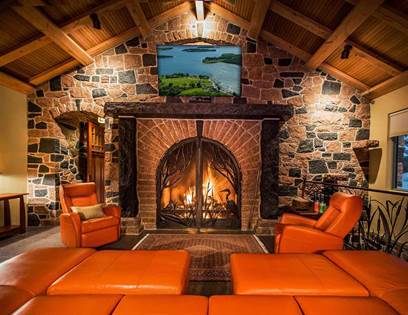
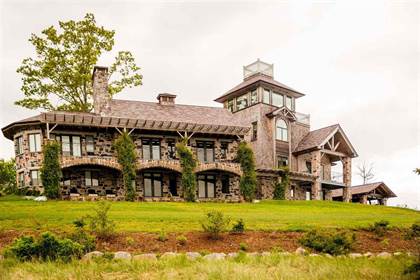
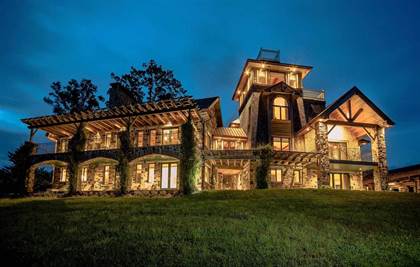
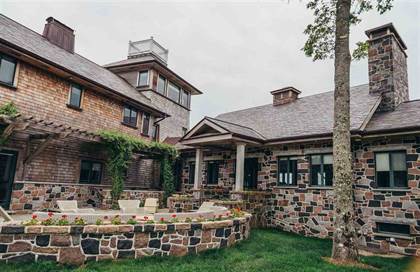
Built for "security, seclusion and self-sustainability" the private island off the coast of Nova Scotia in eastern Canada awaits a buyer. The rather palatial home located on the island is named The Lodge, located in Mahone Bay, on Strum Island. It is, in fact, the private island that is for sale, and with the island comes everything on it, natural and man-made. In the man-made category count in its private source of power, heat, light, water and food. Boats, docks, gardens, greenhouse and security. Separate out-building living quarters: "another place someone can go and quarantine" in the words of the agent.

A year ago the island and its buildings were offered as a rental property for ambitious vacationers who might not be able to quite afford the $21-million selling price, but might splurge on a special vacation offered for $9,950 for each night's accommodation for a minimum four-night stay. Near the head of Mahone Bay, not too distant from the quaintly picturesque fishing town of Lunenburg, Strum Island represents 9.88 acres of private security, a perfect getaway from, for example concerns over contracting CoV-2.


It is secluded but not entirely isolated, should the whim to leave it temporarily take hold, since a boat ride of a mere few minutes takes one to the mainland close to the town of Mahone Bay, or an hour's drive to the provincial capital city of Halifax. Alternately, a 15-minute flight from Halifax airport to the helicopter pad on the island is another choice. A granite stone exterior with slate roofing and copper gutters describes the outward appearance of the main house with its 9,500 square feet.

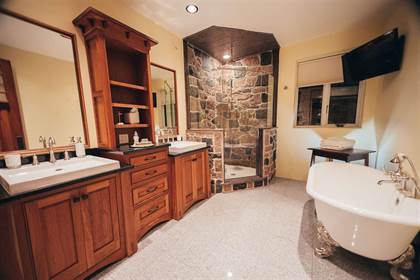
Apart from the eight bedrooms, there is a walnut hand-carved bar with hammered copper sink in the Great Room, the top storey featuring a widow's walk, in maritime tradition, accessible by a telescopic staircase, raised and lowered with the push of a button. An underground cable connects the island to the mainland electrical grid, but the property is replete with back-up generators. Boilers and wood stoves can be found throughout the buildings, including air conditioning, and two 1,000-gallon propane tanks are hidden by the pump house.


The buildings come complete with hurricane-proof windows, drilled wells provide UV filtration, and a year-round greenhouse is co-located with the main building along with vegetable gardens, apple, pear, peach and plum orchards. There are herb and berry gardens, a lobster holding-pen and an 820-square-foot building for lobster cooking and barbecuing; The Lobster Temple.

Multiple security cameras are assigned to each building, complete with security systems for each.

There is a 2,000-squarefoot boathouse with living quarters attached. There are small cottages, a pump house and a heated doghouse. It's hard, really hard, to think of any other convenience or luxury that might have been missed in planning this hideaway from life-inconvenient threats. Maintenance costs? Well, if anyone can afford the price of this kind of out-of-the-world luxury, the costs of maintenance should be of no concern whatever.


Labels: , ,

Thursday, May 17, 2018

Revelations in the Primal Fossil Record

"New actinopterygian fossils from the Tournaisian provide an opportunity to improve our understanding of earliest Carboniferous faunas and test whether other osteichthyan lineages follow the tetrapod pattern. Here, we describe a new genus of actinopterygian from a three-dimensionally preserved partial skull from Blue Beach, Nova Scotia, a locality in the Tournaisian Horton Group. This locality has previously yielded a diverse tetrapod fauna, as well as undescribed actinopterygian and sarcopterygian material [8,15,17]. Mirroring trends in the tetrapod fauna of this locality, this specimen demonstrates close affinity to taxa more typical of the Devonian, with clear implications for end-Devonian extinction survivorship among vertebrates."
A primitive actinopterygian braincase from the Tournaisian of Nova Scotia
Conrad D. Wilson, Jason D. Pardo, Jason S. Anderson
Figure 1.
Avonichthys manskyi gen. et sp. nov. Photograph and interpretive drawing of specimen in dorsal view. Scale bar = 10 mm. br.psp, broken dorsal surface of parasphenoid; dsph, dermosphenotic; ?esc, indeterminate extrascapular; f, frontal; hm, hyomandibular; ifc, infraorbital canal; it, intertemporal; mx, maxilla; nIII, foramen for oculomotor nerve; p, parietal; por, post-orbital process; st, supratemporal.

Labels: , , , ,

 
()() Follow @rheytah Tweet