Ruminations

Blog dedicated primarily to randomly selected news items; comments reflecting personal perceptions

Saturday, August 22, 2020

Risking Student Infection in Return to School
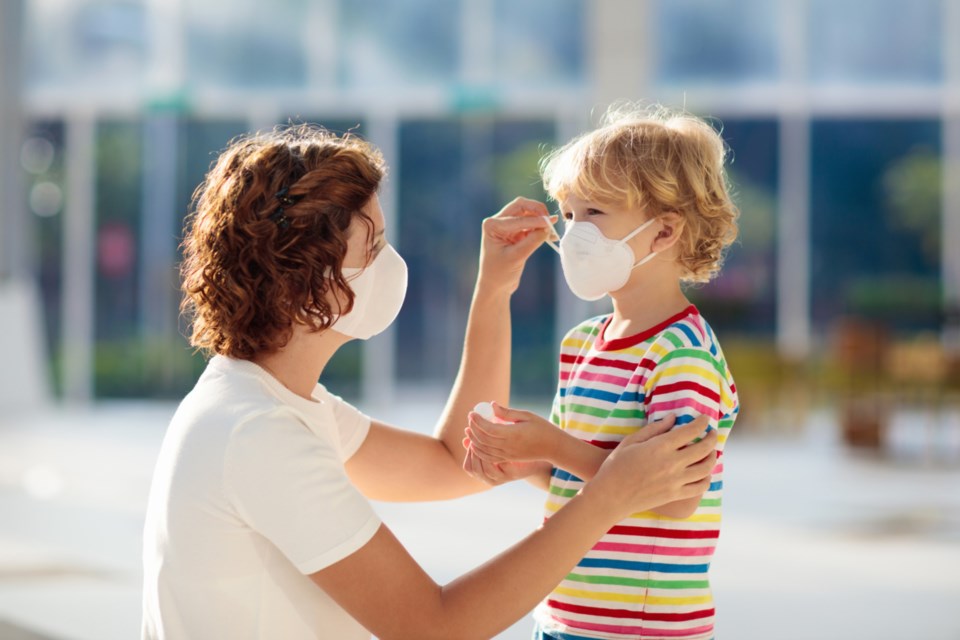
mask 2
Stock Image

"As you double the class size, from eight to 15 to 30, the number of cases and also the lost student days of instruction not only double each time, they triple or quadruple or quintuple. Those losses accelerate as you go to larger and larger classes."        "[Policy makers planning for elementary school class sizes of 30 kids or more] need to immediately reconfigure their school opening plans [to switch to hybrid models of part in-person, part online]."                                                                                  "Student days are like passenger miles -- it's the number of students affected, times number of days lost. When you put mores students in a classroom there is a higher chance one of them will test positive at some point for COVID, and so you've got to close that classroom. By the time you've identified that COVID case there might be other cases in the classroom already.You get aerosol transmission and you generate more cases by the time the classroom gets closed."                    "Many people may infect only one person, or even no one, but in some cases you have a so-called super-spreader who infects a huge number of people."                   Chris Bauch, mathematician, professor of mathematics, Waterloo University

"School is going to accelerate spread of the virus if it's already in the community. This is the same thing that happened when we reopened stores and restaurants. [School reopening] is not going to create more virus, but it's going to make it easier for the virus to spread."                                                                                          "It's very possible you could see cases."                                                        Dr.Chris Labos, cardiologist, epidemiologist, Montreal
jfj50173952-4

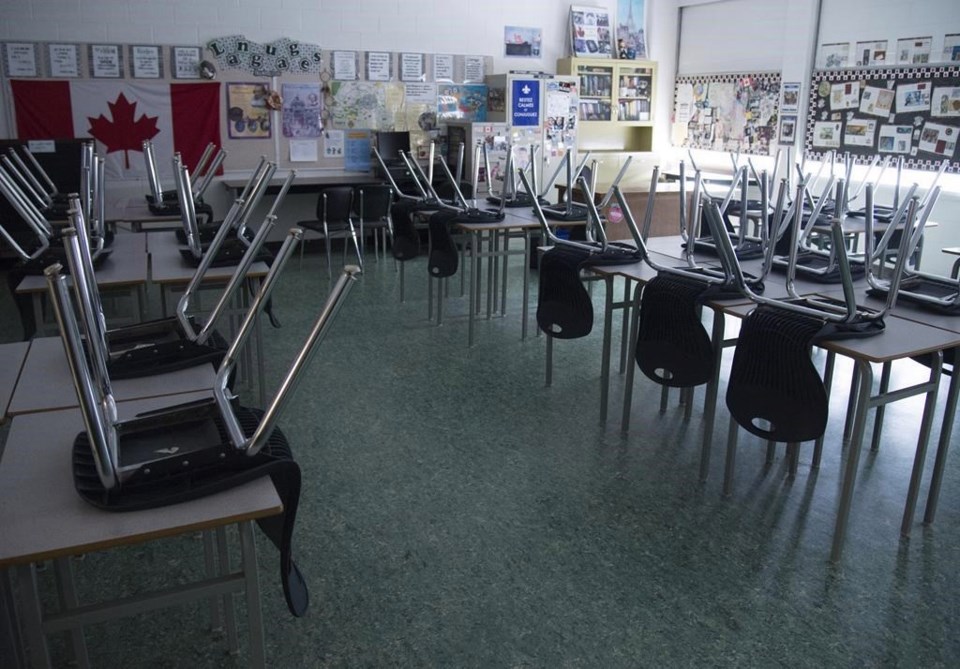
A new study undertaken by mathematics professor Dr.Chris Bauch and collaborators to determine the ideal class size in preventing COVID outbreaks affirmed through modelling that the very size classes many provinces are contemplating for their September school reopenings will predict the numbers of infections of COVID-19 certain to break out in each community. The infection numbers will be analogous to the size of classes in primary school classrooms as well as before-and-after school daycare programs.

Universally, teachers in British Columbia, Alberta, Quebec and Ontario are all making demands to their governments to mandate smaller class sizes in fear of just such scenarios unfolding with the reopening of the new school year. Students attending kindergarten to Grade 8 are set in Ontario to return to school with no reduction planned in class sizes. They are scheduled to spend the school day in a single group, limiting contact with other children in their school 'bubble'. Masks are required in grades 4 to12 only.

As a test instance, experts view what has happened in Israel as high schools reopened in May, when weeks afterward, major COVID-19 cases began spiking. In Berlin, hundreds of students and teachers from dozens of schools were infected with the coronavirus; now are in quarantine, two weeks following their school reopenings. 

Researchers who designed the new modelling study looked at the effect of different student-to-teacher ratios in a primary school class, along with school-based daycare to obtain an understanding of transmission of the SARS-CoV-2 virus causing COVID-19.  Despite masking, social distancing and hand washing, the model predicted an average of 53 infections in a school community of 150 students, parents and teachers in classes of 30 students.

Classes of 15, on the other hand, saw viral outbreaks of 12 infections, where students attend alternative weeks in groups of 15 students each class. For the 30-students-to-one-teacher ratio, outbreaks occurred over 40 to 60 days on average resulting in the number of student-days lost as a result of classroom closures ranging from 75 for the smallest ratio to 1,000 for the largest. 

The larger the class the greater number of students affected; the more students to a classroom the more difficult social distancing becomes to achieve.

According to the modelling, the teacher occasionally would be the first to become infected, though more generally it would be a student "because there are more of them. They bring it in somehow and we model what happens -- where they spread it in their household and where they spread it in school." It remains unclear as yet how efficient children are in spreading the virus causing COVID-19. 

As for childcare, the 15 children to two teachers ratio appeared the worst across all possible scenarios. Childcare optimally would be operating on a seven or eight children per room model, according to Dr.Bauch's mathematical reasoning, which would see siblings grouped together in daycare. 

Labels: , , , , , ,

Tuesday, May 12, 2020

Escape From Fear

"For anyone looking to isolate, you can stay there minimally for a year, if not longer, without ever having to leave the island."
"The primary goal of the island was and still is to create a safe, totally self-sufficient place where the island owners live without fear of whatever ails the outside world."
"That was the initial reason why he [U.S.developer Fred Kern] built the home, post 9/11, to have that getaway. That was very important to him as the initial developer of the property. That is how it came about, to build this wonderful property as a safe haven."
"He thought maybe there was opportunity, that this time may be the time to sell it. It is quite a unique property."
Mariana Cowan, real estate broker, Nova Scotia

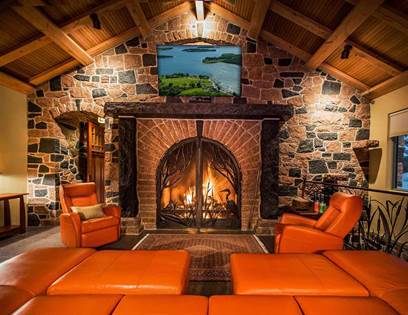
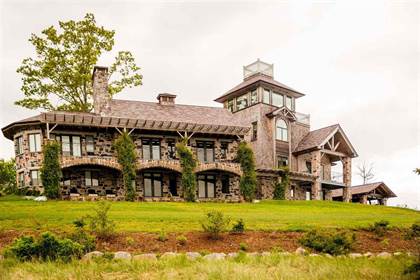
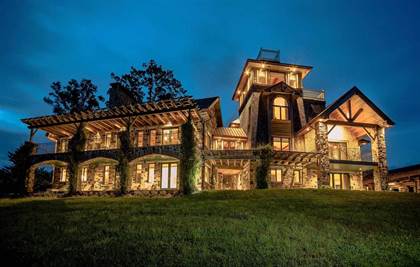
Built for "security, seclusion and self-sustainability" the private island off the coast of Nova Scotia in eastern Canada awaits a buyer. The rather palatial home located on the island is named The Lodge, located in Mahone Bay, on Strum Island. It is, in fact, the private island that is for sale, and with the island comes everything on it, natural and man-made. In the man-made category count in its private source of power, heat, light, water and food. Boats, docks, gardens, greenhouse and security. Separate out-building living quarters: "another place someone can go and quarantine" in the words of the agent.

A year ago the island and its buildings were offered as a rental property for ambitious vacationers who might not be able to quite afford the $21-million selling price, but might splurge on a special vacation offered for $9,950 for each night's accommodation for a minimum four-night stay. Near the head of Mahone Bay, not too distant from the quaintly picturesque fishing town of Lunenburg, Strum Island represents 9.88 acres of private security, a perfect getaway from, for example concerns over contracting CoV-2.


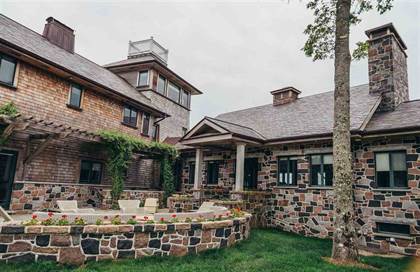
It is secluded but not entirely isolated, should the whim to leave it temporarily take hold, since a boat ride of a mere few minutes takes one to the mainland close to the town of Mahone Bay, or an hour's drive to the provincial capital city of Halifax. Alternately, a 15-minute flight from Halifax airport to the helicopter pad on the island is another choice. A granite stone exterior with slate roofing and copper gutters describes the outward appearance of the main house with its 9,500 square feet.

Apart from the eight bedrooms, there is a walnut hand-carved bar with hammered copper sink in the Great Room, the top storey featuring a widow's walk, in maritime tradition, accessible by a telescopic staircase, raised and lowered with the push of a button. An underground cable connects the island to the mainland electrical grid, but the property is replete with back-up generators. Boilers and wood stoves can be found throughout the buildings, including air conditioning, and two 1,000-gallon propane tanks are hidden by the pump house.


The buildings come complete with hurricane-proof windows, drilled wells provide UV filtration, and a year-round greenhouse is co-located with the main building along with vegetable gardens, apple, pear, peach and plum orchards. There are herb and berry gardens, a lobster holding-pen and an 820-square-foot building for lobster cooking and barbecuing; The Lobster Temple.

Multiple security cameras are assigned to each building, complete with security systems for each.

There is a 2,000-squarefoot boathouse with living quarters attached. There are small cottages, a pump house and a heated doghouse. It's hard, really hard, to think of any other convenience or luxury that might have been missed in planning this hideaway from life-inconvenient threats. Maintenance costs? Well, if anyone can afford the price of this kind of out-of-the-world luxury, the costs of maintenance should be of no concern whatever.


Labels: , ,

Monday, March 30, 2020

We Have Everything to Fear, Aside from Fear Itself

"This [coronavirus threat] hits all the hot buttons that lead to heightened risk perception."
"We're hearing about the fatalities. We're not hearing about the 98 or so percent of people who are recovering from it and may have had mild cases."
"We're conditioned by our experiences. But experience can mislead us to be too comfortable."
"Our feelings don't do arithmetic very well."
Paul Slovic, psychologist, modern risk psychology, University of Oregon
Woman relaxing reading a book and drinking tea
Coping with stress and anxiety   CAMH

Famously, millions of people are transported yearly by airplane. There are vanishingly few plane crashes with serious loss of life given the amount and regularity of air traffic. On the other hand, the death toll of highway accidents is far greater but we take that for granted. When there's an airliner crash, people can feel somewhat vulnerable, but they can also rationalize that it's only one crash. On the other hand, when there are two successive airplane accidents with significant loss of life for each, peoples' inner warning signals sound the alarm and flight becomes very risky in peoples' minds for a period of time.

When a tentative flight goes as scheduled with nothing untoward happening, and then another, the reassurance of flight safety resumes in peoples' minds and the feeling of fear evaporates. Any time a risk presents itself the brain, on autopilot, looks for memories of similar situations in an effort to swiftly assess possible risk. If it can dredge up memories that link to that particular risky situation the brain rates the danger as high.

With the current state of universal alarm over the appearance of a novel coronavirus that has been ripping across continents, laying populations low, killing the health-vulnerable and the elderly, a state of shared alarm has arisen. And then there are those in the minority who feel the situation and the danger it presents is hugely overblown. They're the ones who cannot take orders to physically isolate seriously. They might dredge up figures for seasonal flu which yearly kills the elderly and the health-impaired.

The death rate of the novel coronavirus is still in dispute; it varies from country to country and it has been busy mutating, to the extent that it is now estimated that eight versions of COVID-19 are currently in circulation. Some 'experts' estimate the coronavirus can be up to 20 times as deadly as the effects of the flu, while others estimate it at 0.15 percent for those outside of Hubei Province. And now Italy has overtaken Wuhan for the number of fatalities and the infected, with the U.S. moving right up to overtaking both with infections and deaths.
COVID-19 screening at CAMH
Stigma and prejudice -- CAMH

The mind, according to Dr.Ann Bostrom at University of Washington, has its ways of measuring danger and the virus happens to ping on close to every cognitive trigger in people's minds. Here, we speak of human nature and the survival imperative, bringing brain/mind to high alert. These are subconscious biases inherited by all humans, to consider risk, leading to the impulses guiding responses.

In the 1980s, researchers discovered that people make use of a set of mental shortcuts to measure danger, tending to perform these shortcuts unconsciously, succumbing to instinct. In the case of the novel coronavirus; its background is still obscure enough, its infectious rate alarming enough, its kill-rate uncertain and most certainly frightening enough, adding hugely to a universal sense of insecurity when even medical personnel treating the ill are dying, though they're neither elderly nor necessarily health-compromised, but virally exposed.

Yet the ordinary seasonal flu that kills thousands of people yearly is a known quantity, one we're familiar with; it returns like clockwork, and there is a vaccine against it, however imperfect since that pathogen too changes year-over-year and vaccines go into swift production to produce a herd-immunity effect. Because the yearly influenza virus is so familiar to us, it is casually regarded, as a mild threat because of its reliability of presentation.

Humans are genetically conditioned to click onto new threats, to try to detect causes for alarm. And when such causes are discovered, the human mind launches into an obsession over imagined possibilities based on exterior warnings -- and the news media everywhere seems to have clasped the novel coronavirus and its deadly trajectory through population bases as a thrilling new horror story, transfixing the public with dread.

After all, our best, most seasoned scientific minds, the experts in virology and epidemiology are themselves uncertain, frantically searching for reliable understanding of this new threat to human health and longevity. They view the consequences of the SARS/coVid-2 advance with professional but not detached focus knowing its toll, and stressing on its emergency nature to respond. Under such circumstances, why wouldn't the greater public be alarmed?


Labels: , , , ,

 
()() Follow @rheytah Tweet