Ruminations

Blog dedicated primarily to randomly selected news items; comments reflecting personal perceptions

Sunday, December 06, 2020

COVID-19 Long-Haulers : Persistent Symptoms, Organ Damage

"[The clinics were established to learn more about the disease and to] create a platform for various researchers to study long-term outcomes of patients in comprehensive and collaborative ways."
"About half [of referred COVID patients] have significant abnormalities in patient-reported outcome measures."
"The frightening message really is that this one hit probably ended up reducing lung function by an average of 20 percent in these patients, which may be permanent based on what was seen with SARS and MERS."
Dr.Christopher Ryerson, respirologist, associate professor, University of British Columbia Centre for Heart Lung Innovation

"[The LHSC clinic monitors COVID patients and identifies long-term complications early], so we can intervene early and prevent consequences of the disease that have been seen in past pandemics, including H1N1 and SARS."
Dr.Erin Spicer, general internist, LHSC Clinic, London-Middlesex region

"The goal of the clinic is to help people who've been left with long-term consequences of COVID to get back to their normal life and to understand why they're having difficulty and not able to get back to their normal life."
"Even the patients that didn't have severe COVID were having difficulties. They were complaining of extreme fatigue, they were complaining of nerve pain, they were complaining of brain fog."
"Some were feeling anxiety, some were showing symptoms of PTSD and almost all were complaining of an inability to exercise."
"Whenever you start up a clinic that's a new population, you have to learn enough about the population before you figure out what's common enough that you want to bring it into your clinic."
"It seems to be somewhere between five to ten percent [of COVID survivors] who have persistent problems. Even at that proportion, the health system really will have trouble managing that magnitude of people."
Dr.Mark Bayley, medical program director, Toronto Rehabilitation Institute
COVID-19 modelling suggests we're in it for a long haul ... CBC
 
The medical community is now increasingly aware that many survivors of COVID struggle to return to their normal lives, suffering from what conceivably can be long-term health challenges. Doctors only now, experts in their field, are trying to fully understand what this signifies, having identified many long-term effects such as shortness of breath, nerve pain, fatigue and mental-health issues. Experts are in agreement that, as COVID cases continue to rise, many Canadians will face long-term health challenges.

This has resulted in clinics being established in an effort to become more knowledgeable about the disease and its after-effects. In Vancouver, when the pandemic first surfaced, every patient with COVID who was discharged from hospital was referred automatically to a respiratory clinic. During the early stage of the pandemic doctors used a standardized clinic research model designed for respiratory patients including breathing tests, heart ultrasounds, chest X-rays and questionnaire' the plan being that for every patient to be seen following, six, 12 and 24 months.

It soon became evident that COVID patients bore more complex issues beyond respiratory, so that an increasing number of specialists were required to be involved in their care. Staffed primarily by general internists the clinic can now refer their patients to 15 different medical specialists. Dr.Ryerson studied along with his colleagues, patients' quality of life, frailty, shortness of breath, mood and sleep patterns. A loss of lung function appears to be suggested; at three months post-infection, survivors show a 20 percent reduced lung ability to exchange gases.

Among the Vancouver clinic's patients, 88 percent were seen to have abnormal lung CT findings, twenty percent were seen with scarring in the lungs suggesting the likelihood of permanent lung damage from the disease, points out Dr.Ryerson. A study in Beijing followed 71 patients with SARS from 2003 to 2018 discovering that while lung injury improved following the first year of SARS diagnosis, the improvement plateaued and decreased lung function was experienced by patients throughout the remainder of the study.

And in London, Ontario, where the follow-up LHSC clinic was developed, everyone in the London-Middlesex region diagnosed with COVID is now offered a referral to the clinic which is currently following over 100 patients, some of whom require more frequent follow-up than others. What is seen, however, is that patients indicate persistent nerve symptoms, brain fog and confusion, and accordingly are referred to neurologists. 

Many others at the LHSC clinic complain of weakness months following their initial COVID diagnosis and a significant number of patients require referrals to ear, nose and threat specialists reflecting their prolonged inability to smell. Dr.Spicer at the London clinic states that up to 46 percent of patients complain of anxiety, mood changes, symptoms familiar with post-traumatic stress disorder, social isolation and bullying, as a result of their diagnosis.

The Canadian COVID-19 Prospective Cohort Study involves multiple studies across Canada, including sites in British Columbia, Alberta, Quebec and Ontario where the group operates research clinics and provides clinical care. Hospitalized and non-hospitalized COVID-positive patients are included in the studies, where patients can be physician-referred or self-referred. Assessments are done at one, three, six and 12 months post-COVID, and under the CANCOV umbrella, specialists are available to provide detailed testing depending on patient needs.

The goal of CANCOV is to raise the standard of care for patients with COVID, and it hopes to provide clinical guidelines for policy-makers and chart a full description of the various ways COVID can affect the body's organs, with over 100 investigators with clinical and research expertise involved. "We are trying to understand what it means to be a long-hauler", noted Dr.Angela Cheung, who along with Dr.Margaret Herridge co-leads the Canadian COVID-19 Prospective Cohort Study.

Back at the Toronto Rehabilitation Institute, Dr.Bayley explains that the institute's staff realized people who survive COVID may be similar to those who have had lung disease or long stays in intensive-care units where it is acknowledged that patients who have been intubated and ventilated for over a week are likely to emerge with long-term health problems. Along with physical symptoms, Dr.Bayley estimates that 30 to 50 percent of survivors experience some mental-health issues, leading the rehab centre to use social work services.

Over 315,000 cases of COVID have surged across Canada. Even so, Dr.Ryerson believes the country is less than halfway through the pandemic from an absolute numbers perspective, and the number of people who will bear long-term challenges is an unknown.
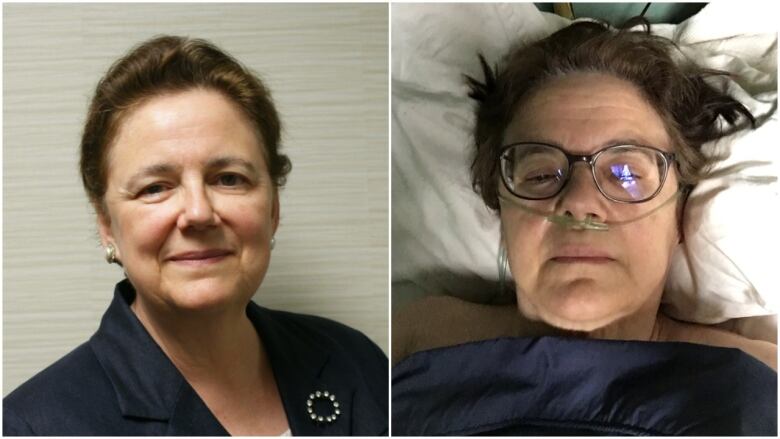
Lorraine Graves, a science journalist, contracted COVID-19 in March. She's pictured, right, receiving oxygen to help with her breathing. But months later, she says she's still sick. (Submitted by Lorraine Graves)

Labels: , , ,

Tuesday, September 08, 2020

Hydroxychloroquine Cancelled Due to RECOVERY Trial

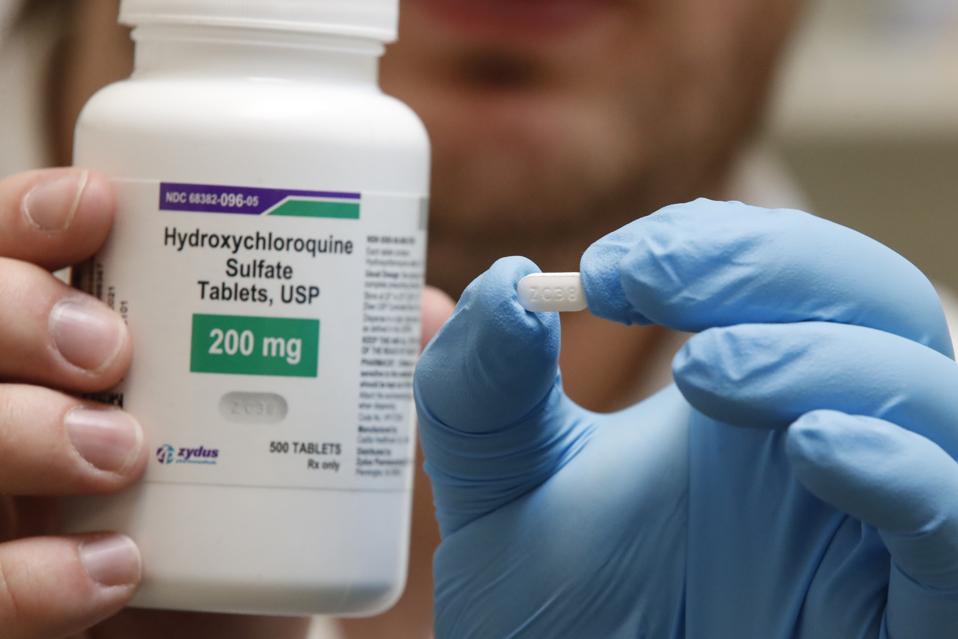
hydroxychloroquine pills & bottle
John Locher/AP
"Today’s preliminary results from the RECOVERY trial are quite clear – hydroxychloroquine does not reduce the risk of death among hospitalized patients with this new disease."
"This result should change medical practice worldwide and demonstrates the importance of large, randomized trials to inform decisions about both the efficacy and the safety of treatments."
University of Oxford epidemiologist Martin Landray 
 
"This is a hugely important finding that will likely end use of the drug in hospitalized COVID patients, given the other existing data as well. [He is curious to see the results of other ongoing studies, and that it is still an open question whether the medicine might work earlier in the disease.] We need real answers there as well."
Walid Gellad, director, Center for Pharmaceutical Policy and Prescribing, University of Pittsburgh 
"Dozens if not hundreds [of studies on hydroxychloroquine and lopinavir have been cancelled, funding withdrawn]."
"The scientific community has been no better versed on the complications of COVID than the general public."
"I'm tremendously disappointed in the scientific community and what I see is a lack of critical interpretation of this complex disease."
Edward Mills, Department of Health Research Methods, McMaster University
 
"[A number of trials] are now under substantial threat, as some regulatory agencies have actively stopped ongoing studies."
"Never before have we seen a medical scenario become such a public topic, where you have the president of the United States and the president of other countries weighing in on whether a drug works or not."
"And then you have the public weighing in on whether they agree with that individual, based on their own politics. This is unheard-of."
Sir Nick White, Oxford University tropical-medicine professor
Early results on hydroxychloroquine released in June by British scientists in their study of the drug as a potential treatment for COVID-19, had the effect of cancelling just about all trials -- and there were many -- that examined the use of the anti-malarial in various stages and for a number of purposes in the trajectory of the pandemic virus causing COVID-19. But the conclusion was that for patients whose condition was severe enough with the virus to be hospitalized, no evidence exists that the controversial malaria drug had a positive effect.

The same finding resulted for the HIV therapy lopinavir, the findings dramatically affecting how funding bodies went on to end "dozens if not hundreds" of studies using the two drugs. Dr.Mills, an expert on clinical trials. finds this profoundly disturbing. In that other trials were studying the medicines as treatments for out-patients in a milder phase of the disease or as a 'prophylaxis' in the prevention of the infection to begin with, and as far as these studies were concerned, the impact on very ill patients -- the focus of the U.K. trial -- was irrelevant to the work involved in these trials.

US-HEALTH-VIRUS-MEDICINE
Misinterpretation of trial data has become a critical problem resulting in 'disastrous' outcomes for other studies in the COVID-19 pandemic, argue Dr.Mills and his colleagues in a medical journal commentary recently published in Lancet Global Health. Scientific oversight boards fail frequently to recognize distinct phases to COVID-19 sickness, they argue, and that what may work at one point in the disease's progress may be of no use at another stage -- or vice versa. 

Oxford University professor Nick White was able to convince U.K. authorities to reverse their decision to shut down his own planned study of hydroxychloroquine as a preventive as a result of the RECOVERY findings, but acknowledged in a journal paper of his own that trials such as his own now face similar threats of discontinuance as funding is removed under the influence of the RECOVERY conclusion. The result is that it will remain unknown whether drugs like hydroxychloroquine could be useful as preventives or in early illness usefulness.

The problem, as far as he is concerned, can be traced to the unprecedented manner in which science is being communicated throughout the global pandemic. Rather than sober, informed exchanges of peer-reviewed journal papers, research now is frequently published on 'pre-print' websites or through news releases absent review, then journalists report them and the results spread through social media platforms as though science has given its last word on the subject.

According to Dr.Mills' paper, experts who rule on funding requests and ethics approvals may lack awareness that other distinct phases of COVID-19 exist, so that a drug with possible anti-viral capabilities like hydroxychloroquine may help a patient suffering early stages of the disease against the threat of the virus, while a patient severely ill in the intensive-care unit is unlikely to be helped by the drug because an exaggerated immune response and inflammation cannot respond positively to its application.

One study of Remdesivir was found to have little benefit when initiated 11 days following the start of symptoms, but it has become a modest success among COVID treatments used at an earlier date; it hastened recovery when administered a mere two days earlier. Only hospitalized patients were studied in the RECOVERY trial. Washington University was set to study hydroxychloroquine use as a prophylaxis for 40,000 front-line health workers until researchers were informed the study would be discontinued as a result of RECOVERY's findings, and the trust placed in them as the last word on the subject.

In South Africa, an ethics board stopped a trial using lopinavir on COVID outpatients in view of RECOVERY's hospital patient results until investigators persuaded the board to amend its ruling. In the interim, eight critical weeks was lost until the issue was resolved. Dr.Mills' concern is that a satisfactory understanding on how best to treat people who become ill from the SARS-CoV-2 virus will fail to eventuate in good time before people end up in hospital.

vials of the drug Dexamethazone
The Recovery trial’s multi-armed adaptive design and its fast-twitch release of results into the world have opened up an unusual pathway of absorption into the body of accepted scientific knowledge.  Photograph: Mariusz Burcz/Alamy

Labels: , , ,

Thursday, July 16, 2020

COVID Long-Haulers

"I'm week 17. I had mono[nucleosis] when I was a kid and this is tenfold worse. I've been isolated, I'm paranoid about seeing people. It really affects you deeply."
"[First came a scratchy sore throat, then] bam -- it felt like something slammed me in the back of the neck [body aches, heartburn, a] strange, twitching feeling in my heart."
"[I'm struggling with] absolutely terrible brain fog."
"They only had a few symptoms listed [at first, back in March]. Now you go to hospital and there's a long list of symptoms. If you have anything but a cut finger."
Susie Goulding, single mother, Oakville, Ontario, COVID recovery

"I still feel strange things, but I have never been so long in my life without playing a basketball game."
"I don't know if that is it or the aftermath of the virus ... But I had experiences, a month and a half ago, which scared me. I felt like ants in my toes and wondered what it could be."
"There were quite a few little things like that."
Rudy Gobert, NBA Utah Jazz centre, 28

"Many of us have had cases that did not require hospitalization and yet we are having persistent symptoms three, four, even five months after symptom onset."
Long Haulers Support Group Canada

"This stuff is real. These people are trying to navigate an illness that bites back like a demon if you overdue it, batters you physically and mentally, and leads you to doubt your own sanity." 
"[For some people recovery from COVID-19 relates to arms and legs] permanently fizzing as if injected with Szechuan peppercorn."
Dr.Paul Garner, professor of infectious diseases, Liverpool School of Tropical Medicine

"We are seeing strokes, we're seeing hemorrhages in the brain, we're seeing some diffuse brain injury, kidney failure problems, involvement in the heart in various ways, some liver problems as well."
"I would never say that this was just some sort of a psychological manifestation and be dismissive of it -- I would never say that."
"We have to be very respectful of the symptoms that people are reporting to us and take them seriously."
"We need to keep a very open mind, not be judgmental, not be dismissive, and to study it and really understand how the virus is affecting people in often profoundly different ways."
Dr.Margaret Herridge, professor of medicine and critical care, University Health Network, Toronto
Chandra Pasma and her husband Matt Helleman say they first got sick with COVID-19 in mid-March, along with their three children. The entire family is still battling the illness 10 weeks later. (Supplied by Chandra Pasma)
According to the February statement coming out of a World Health Organization mission to China, it takes  about two weeks to recover from mild COVID-19, and for severe or critical infections, three to six weeks are required for full recovery from the respiratory disease. That was then. This is now. Now, John Hopkins researchers noted that though early testing for COVID is critical, by Day 21 of infection, the chance of a false negative result, when a virus fails to be detected where someone has contracted or was recently infected, is 66 percent.

The Public Health Agency of Canada refers to 72,000 Canadians having "recovered" from COVID-19, some of whom it is now known, are experiencing mysterious residual symptoms related to their bout with the disease. Widely reported symptoms are inclusive of mind-numbing fatigue, profuse sweating, muscle aches and joint pain, gastrointestinal complaints, bubbling, burning feelings in the chest, pounding headaches, skin rashes, and severe shortness of breath. Recovery for many is not a short-lived and symptom-free process.

Support groups have been appearing on line, enlisting the participation of thousands of long-haulers to share their symptoms and find encouragement and emotional support of others suffering similar, puzzling and life-complicating illnesses. There is strength in numbers, and in this instance a collective membership of such self-help groups can have an impact, urging federal and provincial chief public health officers to engage in research and support for those undergoing COVID symptoms of long-lasting effect.

Throughout the medical community there have been supportive doctors and alternately, many who are dismissive, telling patients that it is anxiety that is complicating their lives. A research letter coming out of a study of 143 people with COVID who were hospitalized found 87 percent reported at least one lingering symptom; in particular, fatigue and shortness of breath, and chest and joint pain, as well, 60 days following the onset of COVID, the results published in JAMA.

Of the total number in the study, only 121 percent 60 days following COVID onset, were free of any COVID-19 related symptoms, while 44 percent reported "worsened quality of life", had ensued. Research conducted by Dr.Herridge, a world expert in the legacy of critical illness, corroborated the findings, relating to her own experience as a professional in critical care.

A study of 109 people hospitalized with acute respiratory distress syndrome (ARDS),  where relatively young individuals were seen with "persistent exercise limitations and reduced quality of life", and were reported by Dr.Herridge and colleagues, published in the New England Journal of Medicine.

Caregivers reported a significant drop in mental well-being of 117 SARS-1 survivors from Toronto, 17 percent of whom had not returned to work after a year -- 51 of the total had needed 668 appointments with psychiatrists or psychologists. The illness caused by the SARS-CoV-2 virus not only attacks the lungs, causing acute respiratory distress syndrome but attacks the endothelial cells, lining the inside of blood vessels in the gut, kidney, heart and brain, as well.

"We've had five cases of patients who've had to have their gut removed. You see these cases and you say, wait a minute, the virus is doing this, too?", remarked Dr.Rochelle Walensky, infectious diseases physician at Massachusetts General Hospital. Those people who survived an ICU stay are now experiencing lingering symptoms as well; in problems linked to thinking and memory, fatigue and weak muscles. Whether this is a direct effect of the virus or instead a combination of the virus and medications meant to purposely paralyze the muscles to ease intubation is unknown.

Dr.Larry Pancer spent 17 days on a breathing machine at Markham Stouffville Hospital, where once he had directed the department of pediatrics there. He was informed that for each day spent on a ventilator, seven days are required to recover. "I was having chest pain and shortness of breath, probably for several days before I went into hospital. I'm used to being on the other side of the bed. I feel 24 hours a day like you would feel if you climbed 20 flights of stairs."

"I had to reteach myself how to walk. Cognitively, I feel okay. I'm doing well.  I'm living independent. I'm cooking and tidying and paying my bills. I've got my dogs that I walk three times a day", he says. Sealed off in the ICU, unable to see family and friends because of strict COVID-19 "no visitor" rules was the most difficult part of the situation for him. "Some are very, very weak and very fatigued", explained Dr.Mark Bayley, program medical director for the Toronto Rehabilitation Institute.

The mental health issues, depression and other symptoms afflicting some people post-COVID are theorized to be related to changes in blood flow to the brain, injuring areas vital to mood. The virus and the injury itself is responsible for the complications. "Some [people] are really anxious that they aren't going to get back to the way the were before", sad Dr.Bayley. "It's still early days -- nobody has survived a year out, of being infected with COVID, so we don't know what the long-term implications and outcomes are", explained Dr.Andrew Morris, infectious disease expert at the University Health Network in Toronto.
CREMONA, ITALY - APRIL 02: A nurse checks a patient in a Covid ward at Cremona Hospital on April 02, 2020 in Cremona, Italy. The Italian government continues to enforce the nationwide lockdown measures to control the spread of the Coronavirus (COVID-19).(Photo by Marco Mantovani/Getty Images) ORG XMIT: 775500688 [PNG Merlin Archive]


"But it will not surprise any of us that there will be a substantial portion of the population with severe COVID who will have lingering effects down the road."  It is the symptoms being reported by people who were not critically ill suffering dizziness, trouble sleeping, ringing int he ears that present difficulties in explaining. "It's been a three months since recovering. Now my hair is falling out, is anyone else experiencing this joyful crap", posted a woman on the 72,000-member Survivors Corps Facebook page
"It's still early days -- nobody has survived a year out of being infected with COVID, so we don't know what the long-term implications and outcomes are."
"But it will not surprise any of us that there will be a substantial portion of the population with severe COVID who will have lingering effects down the road."
"There will be people who have had COVID infections who are definitely going to fit into this longhauler kind of category."
"And then there's probably going to be a substantial portion of those people who won't have COVID, and I think what we've learned over decades with poorly categorized illness is that there are people, for a variety of reasons, who have complaints and symptoms that we can't fully explain."
Dr.Andrew Morris, infectious diseases expert, University Health Network, Toronto


Labels: , , ,

Monday, September 11, 2017

Enduring Reality ... Overcoming

"I try not to think about it, but every single day, I'm reminded of it. I can't forget, because when I wake up in the morning, my legs are still gone, my arms and hands are still damaged. I'm still in a wheelchair; I still have prosthetics."
"I can never forget about it. From now until the day I die, I'll always be reminded of the war. It doesn't just go away."
"You have to get out of bed: You have to get your coffee and breakfast and get your day started. You have to carry on with your life."
"It was very depressing seeing all of my friends, people I've worked with, they're progressing, getting promoted, and moving on with their lives. And I'm just like a ghost: in the corner, not progressing, not gaining anything."
"I hate to lose. This is where the Invictus Games helps a lot. Now I'm gaining, I'm improving, I have a focus."
"I don't think about politics. I was a soldier: I was responsible for my men on the ground and my mission for the day. That's it."
"It's made me a better person in the lung run. My emotional range is much greater than it ever was. I'm more tolerant, more experienced ... I've had to learn to adapt and overcome."
Mike Trauner, retired soldier, Pembroke, Ontario
Retired soldier Mike Trauner lost parts of both legs in 2008 in an IED explosion and has been battling complications ever since. Now hes is training for the Invictus Games and will compete in rowing and cycling. Darren Brown / Postmedia
His wife Leah, salutes that very fact; that he has adapted and that he is finally overcoming the handicaps that life has handed him. "He'll try anything once, and if he fails, he'll try it again. He doesn't quit", she says of the man she now must daily provide assistance to in small ordinary matters of everyday life that he cannot manage -- yet -- on his own with his impaired physical facilities. This is  a man whose every minute of every day is carefully mapped out, hinging basically on whether his skin is in fair enough condition to bear his prosthetics; failing which he must rely on a wheelchair.

For a former man of action and pride in self, this has been a difficult transition for Mike Trauner. And a long period in the 37-year-old's life that has been devoted to making some progress. A man who received the Medal of Military Valour for conduct under fire because his "selfless and tenacious actions undoubtedly saved many Canadian and Afghan lives". He just happened to be the target in December 2008 of a remote-detonated IED. Whose blast caused shrapnel injuries to his legs, left forearm and hand, as well as a concussion impairing his short-term memory.

The result was that his left leg had to be amputated above the knee, right leg just below the knee while his left hand suffered 25 broken bones which a marathon operation saved. He has since learned to walk on two prosthetic legs. He has in the years since his traumatic injuries, gone through 18 surgeries; his hand had been torn in half, requiring an 11-hour operation to make it functional, but not perfectly so, once again. Massage therapy breaks up scar tissue and Botox injections -- up to 200 at a sitting -- treats the skin, sensitive under his prosthetic legs.

The pain in what is left of his limbs is never far from the surface. Needless to say, he is far from being the only veteran of Canada's mission of twelve years in Afghanistan. But just as every case, every incident causing mutilating injuries, and every individual behind the history and the pain is unique, this man certainly qualifies as a unique specimen of courage and determination. In September of 2017, he decided he would participate in the Invictus Games, an international athletic competition for injured soldiers, held in Toronto. He felt the structured training regimen would help his injured psyche; the goals, his progress, all of it positive.
Credit: Darren Brown    Trauner never felt comfortable behind a desk: He missed the relentless physical challenges of active service, its rough-hewn camaraderie and common purpose. He even missed the 6 a.m. fitness runs and the mid-winter bivouacs.

So now he trains six days a week, up to four hours each day, to prepare for the rowing and cycling competitions. His ambition has grown, along with his confidence, leading him to consider additional competition in the Paralympic Games. Because now he also feels he might conceive an interest in politics and run for public office at some future date, he also sees utility in treatment for post-traumatic stress. "I'd like to be able to sleep a lot better", he offers.

He knows that the remotely triggered IED responsible for his altered physical condition was made of an artillery shell placed atop a mortar bomb. It was sufficiently explosively effective to sever three major arteries, sending shrapnel into his left forearm, his hand, and destroying his legs. He worked for a number of years as a member of the Integrated Personnel Support Centre with the military, and then finally in May of 2017 retired from the military. His other life is now beginning.

Labels: , ,

 
()() Follow @rheytah Tweet