Ruminations

Blog dedicated primarily to randomly selected news items; comments reflecting personal perceptions

Monday, August 29, 2022

"Sharenting" : Posting Child Photos Online

"It's kind of like having bragging rights, but it's sharing to much bigger audiences Much of the fodder for pedophiles is not manufactured. It comes from parents, from these public posts."
"If we saw some random guy peering into our child's window, what would our reaction be? Think of that situation online. The only difference is the physical versus the virtual realm."
"It's very obvious that there's no real consent going on with many of these children."
"The opinion my colleagues and I have is that if the child is not able to understand and give consent -- whatever age that might be for that child -- then all that information should probably be kept private."
"A lot more people have access to information about a minor than I think the world knows. It's the fact that -- No.1 -- there's zero consent. No.2, sharenting information may be used for vile purposes in some cases and there's a commerce component to that."
"So, there is money exchanging hands for these sorts of images and videos. And then No. 3, now it has become even more socially accepted to be commodified."
"Through sponsorships, parent influencers are now profiting from using images of their children online."
Laurel Cook, associate professor, John Chambers College of Business and Economics, University of West Virginia
Adults hold their phones up to take a picture of a baby.
Studies: kids will have well over 1,000 pictures of themselves on social media before they’re 5.  
Photo Illustration by Thomas Trutschel/Photothek via Getty Images
 
In actual fact there is nothing new about this at all. People posting photographs on social media of young children have been advised for decades that those photographs have the potential to fall into wrong hands and that caution should be observed. What is now being termed "sharenting", the posting by proud parents of photographs of their clever, adorable, talented children certainly seems innocent enough to those who couldn't begin to imagine the ulterior motives of co-opting such photos for purposes other than parents meant them for.

Laurel Cook, social marketing and public policy researcher, has an article published in the Journal of Consumer Affairs, highlighting the dangers of uploading images of children and the risk such action carries. Questions with respect to consent and privacy, she points out, are in the beginning stages of study, yet to be fully understood. The global pandemic served to drive more face-to-face interactions online, making more people more vulnerable than ever before.

Parents, writes Ms.Cook, make the assumption that privacy settings suffice to protect photos they happen to upload. However, this does not appear to be the case in all instances; once a photo is shared online, it is there in circulation and won't be removed. Candid photographs taken by schools and summer camps are often used as spontaneous examples of situations and environments felt to be of benefit to children, the photographs embellishing a point being made. Without awareness of just what may be the outcome.

 
sharenting, social media, sharing child pictures online
A lot of parents tend to share too much information about their kids online. (Source: Getty Images)
 
Posting photographs of attractive, active young children on line draws the attention of those that influencers want to attract, leading to a growing trend of social media being used to monetize the concept of a busy social aspirant and their offspring. Forming part of the research undertaken by Ms.Cook is a focus on dark design, a type of deceptive online interface employing design elements to make them attractive to purposefully manipulate users to click an option giving consent to data sharing.

Ppublic policy researcher, Laurel Cook, works with regulators on a shared recognition of what is meant to consent. In so doing, she anticipates being able to give assistance to parents and caregivers in the realization of risks of dark design and its enabling behaviour. Essentially, giving false assurances to parents and caregivers that uploading such sensitively intimate photos of young children is perfectly safe, when clearly that is not always the case.
"What's what makes me wake up excited every day to know that my work isn't just theory."
"It's something that might move the dial a little bit, to help things change or at least bring awareness to the situation and come up with solutions."
"I want this environment for children and teens to be addressed. I'm very passionate about it."
Laurel Cook, social marketing and public policy researcher

A mother is seen taking a selfie with her child. (Pexels)

Labels: , , ,

Monday, March 09, 2020

Colour Me Grey - Oh Wait! How About Silver?

"With influential people like Billie Eilish dyeing their hair grey, people of all ages are incorporating the look, and many who are naturally grey are no longer trying to cover it up."
Swasti Sarna, insights manager, Pinterest
Getty Images

"[The study's new findings are] concerning [but not quite definitive]."
"We wouldn't make any recommendations off these findings. We need more evidence [of heightened risk of breast cancer linked to hair dye]."
"Researchers have been studying the possible link between hair dye and cancer for a long time, but results have been inconsistent."
"In our study, we see a higher breast cancer risk associated with hair dye use, and the effect is stronger in African American women, particularly those who are frequent users." 
"For the chemical straighteners, one of the big concerns there is formaldehyde, which is a known carcinogen."
Alexandra White, epidemiologist, head, National Institutes of Environmental Health and Cancer Epidemiology Group
main article image
sciencealert

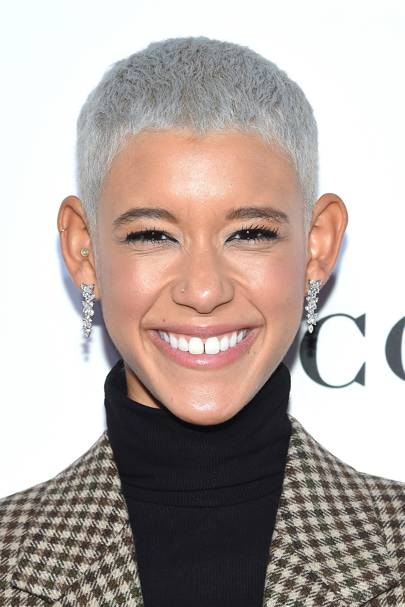
The latest in hair fashion for elegant woman of the celebrity variety of a certain age appears to be acceptance of the inevitable; being newly relaxed about a head full of grey locks. It has become au courant in casual elegance to defy the years and allow nature to take its course in one's coiffure. Grey is in. Hair dye is out. Oh, perhaps not universally, but the trend is there, and proudly alive. Grey and silver. White? A shade too far, no doubt. It even has a stamp of approval from L'Oreal Paris and Vogue where silver was announced the hair colour of the year.

Now younger women not willing to be left behind though the years have yet to catch up, bleach and colour their youthful dark or blonde hair in such wan shades as titanium, blue steel, smoky grey and gunmetal even as many older women commit to continuing covering their grey/silver hair with artificial colouring, belying their newly acquired wrinkles. There is no one, single track. Facebook groups have sprung up naming themselves Gray and Proud, Going Gorgeously Gray and Silver Revolution, tips and photos included.


For years it has been bruited about that hair colour, particularly the very dark colours, have been linked to increased chances of acquiring dread cancer. When the panache of style and personal ego are concerned such 'urban legends' fail to make much of an impact; women have continued to use temporary, semi-permanent and permanent dyes to make themselves look more sensuously alluring. To themselves presumably, and anyone else looking to be impressed by the results.

Now, new research asks the question, is there indeed a risk inherent in the use of hair dye chemicals? Recently the International Journal of Cancer published the results of a study that reported African-American women who colour their hair with permanent dye every five to eight weeks become 60 percent likelier to be diagnosed with breast cancer than other women who don't colour their hair. All women included in the study had a family history of breast cancer.

For white women though, risk of contracting cancer was far less, though the risk was indeed elevated, even while no cause and effect had been established for either group. White women who dyed their hair every five to eight weeks were eight percent more likely, according to researchers, to be diagnosed with breast cancer. Over an average of eight years, researchers studied 46,709 women aged between 35 and 74. Though none of the participants had been diagnosed with cancer, all had at least one relative diagnosed with breast cancer.

Glamour

And of those women in the study, fully 55 percent used permanent hair dye. Throughout the study period 2,794 African-American and white women were diagnosed with beast cancer, with black women 45 percent more likely to be diagnosed, while white women were seven percent more likely. Study co-author Alexandra White estimated heightened risk as five additional cases of breast cancer for every one hundred black women, and one additional case for every one hundred white women.

Black women tend to be diagnosed with more aggressive forms of cancer, the end result that they are likelier to die from their cancer. According to the American Cancer Society, some doctors advise women to refrain from colouring their hair while pregnant; at the very least, not to colour their hair during the critical first trimester of pregnancy. Permanent dye causes lasting changes to the hair shaft, remaining in the hair until it grows out. Temporary dye washes out after a shampoo or two, while semi-permanent tends to need up to ten shampoos to wash away.


Labels: , , , , , ,

Monday, December 25, 2017

Hormone Risks in Oral Contraceptives

Photo: Getty Images

"In aggregate, over a woman's lifetime contraceptive use might prevent more cancers [than it causes]."
"There is good data to show that five or more years of oral contraceptive use substantially reduces ovarian cancer and endometrial cancer risk, and may reduce colorectal cancer."
"And the protection persists for ten or twenty years after cessation." 
David J. Hunter, professor of epidemiology and medicine, University of Oxford, Britain

"[While results of the new study on breast cancer are important], these results are not a cause for alarm."
"It's really problematic to look at one outcome in isolation. Hormonal contraception has a complex matrix of benefits and risks, and you need to look at the overall pattern."
"We should be talking about vasectomy more. It should be seriously considered in many relationships."
Dr. JoAnn E. Manson, professor of women's health, Harvard Medical School

"We now have proof that you can lower  your risk at any age by modifying these factors [when the use of oral contraceptives has outlived their usefulness in reflection of the user's age and need, to turn to alternatives]."
Dr. Marisa Weiss, oncologist, founder of breastcancer.org
"[The study results suggested a] rapid disappearance of excess risk of breast cancer after discontinuation of use among women who have used hormonal contraceptives for short periods."
"The number of cases increases with age because the risk of breast cancer increased with age."
"The risk does decline over time since ceasing their use."
Researchers, University of Copenhagen
Doctors still divided on when women should start mammograms
CNN

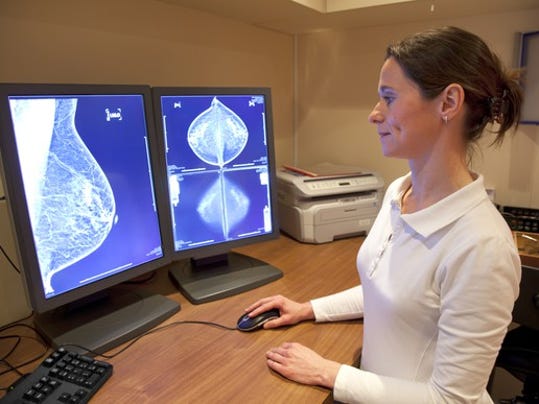
Since the risk of breast cancer increases with age it does so in lock-step with the risk of complications linked to oral contraceptives; for example, blood clots in the leg and the lungs. Gynecologists are mostly in agreement that women under ages 35 to 40 need not be concerned over the conclusions of a new study out of Denmark recently published in The New England Journal of Medicine. 

According to Dr. Marisa Weiss of breastcancer.org, if oral contraceptives were being used other than for birth control; to solve the problem of irregular menstruation instead, her advice is to take a break from oral contraceptives. It is possible the condition may have improved over time with use of the pills; alternately, another management option may be identified to replace the pills.

The concerns have been raised after the Danish study linked an increased risk of breast cancer developing with the use of birth control pills. Despite which, many in the medical profession caution there is no reason to feel alarmed, and nor should pills be discarded. Weighing the risk of an unwanted pregnancy against the one-in-seven-thousand risk of breast cancer calls for a weighty discussion revolving around age, general health and other risks for breast cancer.

For the vast majority of women in their 20s and 30s, breast cancer is a rare event in any event. Birth control pill use may slightly raise the odds of breast cancer (they have also been associated with increases in cervical cancer); the relationship between cancer and the contraceptive use is complex. At the same time, oral contraceptives seem to reduce the incidence of less common reproductive cancers, such as endometrial and ovarian cancers, often detected when they have advanced to a stage where they are difficult to treat. Some evidence also exists that birth control pills may reduce the odds of colorectal cancer, as well.

During the earliest days of the pill use in the 1960s, a British study of over 46,000 women were followed up to 44 years to find that despite increases in breast and cervical cancers among women using the pill, the overall cancer rate effect was actually neutralized, taking into account the reduction of risk of other cancers. And it is not the only study which has reached a like conclusion.

Previous research had linked birth control pills to a slight breast cancer risk even decades ago. The surprising element in this more recent study and its conclusions is associated with the fact that the risk has persisted even though new pills use lower doses of estrogen and that the increased risk was experienced as well by women who use implanted intrauterine devices which are geared to release a hormone directly into the uterus.

It is recommended that women using an IUD identify whether it releases the hormone progestin which the Danish study has implicated in increased breast cancer risk, or whether a nonhormonal IUD such as the copper version is being used. It's just as well to be aware that bearing children before age 30, breast-feeding at any age for any length of time, minimizing radiation exposure and eschewing hormone therapy after menopause can all help reduce breast cancer risk.

Add to that not smoking, losing weight, exercising daily and limiting red meat consumption and alcohol may also reduce risk, according to Dr. Weiss.

Labels: , , , , ,

 
()() Follow @rheytah Tweet